パワースポット

Japan Power Spots: The Complete Guide to 120+ Sacred Sites by Region (2026)

Japan is home to thousands of *power spots* (パワースポット) — places where sacred energy is said to gather and where visitors come to pray, reflect, and recharge. From the great shrines of Ise and Izumo to volcanic craters, ancient cedar forests, and crystal-clear springs, these sites have been treasured for centuries. But with so many […]

Japan Power Spots: The Complete Guide to 120+ Sacred Sites by Region (2026) Read More »
Shuri Castle (Naha, Okinawa): Ryukyu Kingdom Palace & 2026 Reconstruction — Visitor Guide

“It burned down in the fire—is it even worth visiting now?” “Can I see the main hall?” “It’s a World Heritage Site, but what exactly should I walk through?” If you searched Shuri Castle with questions like these, this guide is for you. Here is the short answer. Shuri Castle (Shurijo) is the symbol of

Shuri Castle (Naha, Okinawa): Ryukyu Kingdom Palace & 2026 Reconstruction — Visitor Guide Read More »

Oishi Kogen (Wakayama): A 13-Hectare Pampas-Grass Plateau, 360° Views & Megalith Photo Spots (2026)

“What makes Oishi Kogen so special?” “When is the best time to see the pampas grass?” “Is the mountain road really that narrow—can I go with kids or a pet?” If you searched with questions like these, this guide is for you. Here is the short answer. Oishi Kogen (Oishi Highland) is a plateau rising

Oishi Kogen (Wakayama): A 13-Hectare Pampas-Grass Plateau, 360° Views & Megalith Photo Spots (2026) Read More »

Dorokyo Gorge, Wakayama: Emerald Canyon & the Dorohatcho River-Boat Cruise — Visitor Guide (2026)

“How do you actually see Dorokyo?” “Can you still ride the jet boat?” “Is it okay to go with kids or a pet?” If that’s what brought you here, read on. In short, Dorokyo (瀞峡) is a great gorge carved by the Kitayama River — a tributary of the Kumano River — that straddles the

Dorokyo Gorge, Wakayama: Emerald Canyon & the Dorohatcho River-Boat Cruise — Visitor Guide (2026) Read More »

Yatsugatake, Nagano: the Moss Forest of Shirakoma Pond at 2,100m — Access & Visitor Guide (2026)

“Which part of Yatsugatake is the ‘power spot’?” “Do I have to climb a mountain to get there?” “Can I enjoy it with a wheelchair or with kids?” If that’s what brought you here, read on. In short, Yatsugatake (八ヶ岳) is not a single shrine or temple. It is a volcanic mountain range straddling Nagano

Yatsugatake, Nagano: the Moss Forest of Shirakoma Pond at 2,100m — Access & Visitor Guide (2026) Read More »

Hiranuma Jinja (Suitengu): Yokohama’s Water-Deity Shrine for Safe Childbirth, Steps from Yokohama Station (2026)

“Is there a shrine near Yokohama Station where I can worship in peace?” “Where should I go for a safe-childbirth prayer?” “Is there a Suitengu in Yokohama too?” If that’s what brought you here, read on. In short, Hiranuma Shrine (平沼神社) sits right in the heart of the city, within walking distance of Yokohama Station,

Hiranuma Jinja (Suitengu): Yokohama’s Water-Deity Shrine for Safe Childbirth, Steps from Yokohama Station (2026) Read More »
Kattamine Shrine (Zao): The Summit Inner Shrine Beside the Okama Crater Lake — Access & Seasons (2026)

“I want to see the Okama crater lake at Zao.” “Is there really a shrine on the summit?” “Can I visit in winter?” If that’s what brought you here, read on. In short, Kattamine Shrine (刈田嶺神社) is one of the signature power spots of Mt. Zao in Miyagi Prefecture. It consists of two shrines: the

Kattamine Shrine (Zao): The Summit Inner Shrine Beside the Okama Crater Lake — Access & Seasons (2026) Read More »

Niukawakami Shrine (Nara): The Rope-Hung Dragon Falls, Emerald Yumebuchi Pool & Water-God Visitor Guide (2026)

Looking for a shrine of the water deity — a quiet, sacred place where you can almost feel the presence of a dragon god? Then head deep into the mountains of Nara, to Niukawakami Shrine (丹生川上神社), the Middle Shrine (Nakasha). The shrine enshrines Mizuhanome-no-kami (also written 罔象女神 / 彌都波能売神), the goddess who governs all things

Niukawakami Shrine (Nara): The Rope-Hung Dragon Falls, Emerald Yumebuchi Pool & Water-God Visitor Guide (2026) Read More »

Kifune Shrine (Kyoto): Lantern Stairway, Floating Water Fortunes & the Kurama Hike (2026)

Just 30 minutes from central Kyoto by train, hidden in a forested river valley behind Mount Kurama, lies one of the city’s oldest and most atmospheric shrines — Kifune Shrine (貴船神社), dedicated to the water deity. In the height of summer, when Kyoto’s basin becomes oppressively humid, the air along the Kibune River runs roughly

Kifune Shrine (Kyoto): Lantern Stairway, Floating Water Fortunes & the Kurama Hike (2026) Read More »

Hogonji Temple (Chikubu Island, Lake Biwa): National Treasure Karamon Gate & Boat-Only Pilgrimage Guide (2026)

In the northernmost part of Lake Biwa, about 6 km offshore, lies a small island just 2 km in circumference — Chikubu Island (Chikubushima), where the entire landmass is covered by two sacred sites: Hogonji Temple (宝厳寺) and Tsukubusuma Shrine (都久夫須麻神社). This is the “island of prayer.” Hogonji was founded in 724 CE by the

Hogonji Temple (Chikubu Island, Lake Biwa): National Treasure Karamon Gate & Boat-Only Pilgrimage Guide (2026) Read More »

Lake Kussharo (Hokkaido): Japan’s Largest Caldera Lake — Lakeside Sand Baths, Swans & Bihoro Pass (2026)

In eastern Hokkaido’s Teshikaga Town lies Japan’s largest caldera lake—Lake Kussharo. With a circumference of 57km, surface area of 79.7km², maximum depth of 125m, and elevation of 121m, the lake also holds Nakajima Island, the largest island within a freshwater lake in Japan (source: Mashuko Tourism Association). Among the three caldera lakes of Akan-Mashu National

Lake Kussharo (Hokkaido): Japan’s Largest Caldera Lake — Lakeside Sand Baths, Swans & Bihoro Pass (2026) Read More »

Gotenzan Park & Mount Goten|The Pyramid-Shaped Quarry Mountain and Sapporo’s Forgotten Shrine (2026 Guide)

“What is Mount Goten?” “Can I visit Gotenzan Shrine?” Here is the honest answer: Mount Goten (Goten-zan, approximately 303 m) is a striking pyramid-shaped mountain in Nishi-ku, Sapporo, formed by decades of quarrying that sliced away half the original peak. At its foot, the City of Sapporo developed the 25-hectare Gotenzan Park, a family-friendly green

Gotenzan Park & Mount Goten|The Pyramid-Shaped Quarry Mountain and Sapporo’s Forgotten Shrine (2026 Guide) Read More »

Hassamu Shrine (Sapporo): One of the City’s Oldest Shrines, Founded in 1856 — Goshuin & Nishi-ku Guide (2026)

A three-minute walk from JR Hassamu-Chuo Station in Sapporo’s Nishi-ku ward, Hassamu Shrine (発寒神社, Hassamu-jinja) sits quietly in a residential neighborhood. According to the Hokkaido Shrine Office, the shrine was founded as an Inari shrine in 1856 (Ansei 3)—19 years before the 32 Tondenhei (military farmer-settler) households arrived in Hassamu in 1875 (Meiji 8). This

Hassamu Shrine (Sapporo): One of the City’s Oldest Shrines, Founded in 1856 — Goshuin & Nishi-ku Guide (2026) Read More »

Toyotaki Shrine (Sapporo, Minami-ku) | A Local Guardian Shrine Founded in 1908 Enshrining Amaterasu and the Mountain Deity

In the southwestern reaches of Sapporo, along National Route 230 toward Jozankei, sits Toyotaki Shrine (豊滝神社, Toyotaki-jinja), about a 10-minute walk from the “Toyotaki Elementary School” bus stop on the Jotetsu Bus line. Founded in September 1908 (Meiji 41) during the development of the Toyotaki area, it enshrines Amaterasu-omikami and Oyamatsumi-no-kami—a local guardian shrine registered

Toyotaki Shrine (Sapporo, Minami-ku) | A Local Guardian Shrine Founded in 1908 Enshrining Amaterasu and the Mountain Deity Read More »

Ryugu Shrine (Otaru, Hokkaido) | Complete Guide to the Sea Deity Shrine 5 Minutes from JR Otaru Station

Just a 5-minute walk from JR Otaru Station, in the heart of the port city of Otaru once flourishing with the Kitamaebune (northern-sea trade ships), stands Ryugu Shrine (龍宮神社, Ryūgū-jinja), dedicated to the three pillars of the sea deity Watatsumi. The shrine’s origin traces back to 1869 (Meiji 2), when Bakumatsu-era statesman Enomoto Takeaki built

Ryugu Shrine (Otaru, Hokkaido) | Complete Guide to the Sea Deity Shrine 5 Minutes from JR Otaru Station Read More »

Kinko Inari Shrine (Hiroshima, Mt. Futabayama) | Complete Guide to 120+ Red Torii & Mountain Shrine

Just a 15-minute walk from JR Hiroshima Station’s Shinkansen exit (north exit), Kinko Inari Shrine (金光稲荷神社, きんこういなりじんじゃ) is a subsidiary shrine of Hiroshima Toshogu where over 120 vermilion-painted torii gates wind up the slope of Mt. Futabayama. From the main hall, roughly 500 stone steps lead further up to the inner shrine (奥宮 *Okumiya*), with

Kinko Inari Shrine (Hiroshima, Mt. Futabayama) | Complete Guide to 120+ Red Torii & Mountain Shrine Read More »

Lake Onneto (Hokkaido): the ‘Lake of Five Colors’ — Autumn Foliage, Mount Meakan & Visitor Guide (2026)

At the westernmost edge of Akan-Mashu National Park, nestled at the foot of Mount Meakan and Mount Akan-Fuji, lies a quiet lake with a circumference of just 2.5 kilometers—Lake Onneto. The name comes from the Ainu language, meaning “old, large lake.” Depending on the weather, season, viewing angle, and wind direction, the lake’s surface shifts

Lake Onneto (Hokkaido): the ‘Lake of Five Colors’ — Autumn Foliage, Mount Meakan & Visitor Guide (2026) Read More »

Zuiryuji (Kozan Zuiryuji) | Toyama’s National Treasure Zen Temple Complete Visitor Guide

A 10-minute walk from Takaoka Station and 15-20 minutes from the Hokuriku Shinkansen’s Shin-Takaoka Station, hidden in the heart of a quiet provincial city, stands one of Japan’s finest examples of early-Edo Zen architecture: Kozan Zuiryuji. Its Sanmon (mountain gate), Butsuden (Buddha hall), and Hatto (lecture hall) are all designated National Treasures; the Sōmon, Zendo,

Zuiryuji (Kozan Zuiryuji) | Toyama’s National Treasure Zen Temple Complete Visitor Guide Read More »

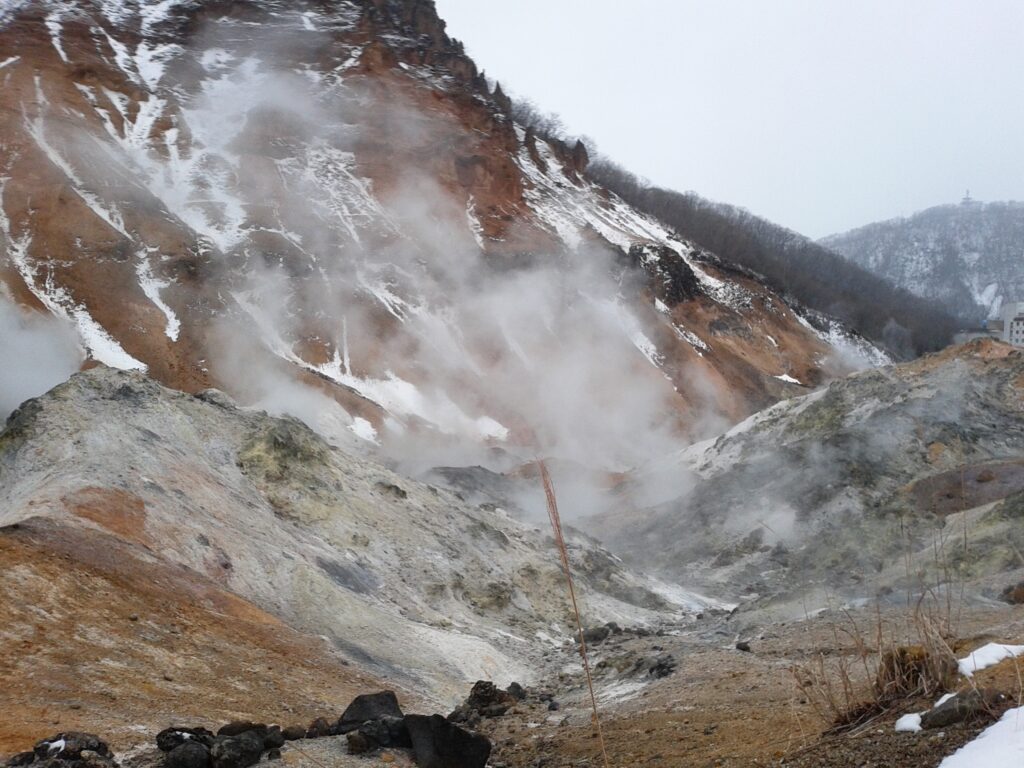
Noboribetsu Jigokudani | Hokkaido’s “Hell Valley” Complete Visitor Guide

Walk fifteen minutes from Noboribetsu Onsen’s main street and the world opens into something hard to find anywhere else on Earth: a 450-meter-wide explosion crater where white steam rises from countless vents, the air smells of sulfur, and the ground itself is still alive—a hot-spring reservoir that pours 10,000 tons of mineral water per day

Noboribetsu Jigokudani | Hokkaido’s “Hell Valley” Complete Visitor Guide Read More »

Kinkakuji (Rokuon-ji) | Kyoto’s Golden Pavilion Complete Visitor Guide

About 40 minutes from Kyoto Station by subway and bus, on the wooded slopes of Mount Kinugasa, sits one of Japan’s most photographed buildings: the Golden Pavilion of Rokuon-ji, known worldwide as Kinkakuji. The three-tier shariden, its upper two floors covered in pure gold leaf, reflects perfectly in the Kyoko-chi (Mirror Pond) that surrounds it—an

Kinkakuji (Rokuon-ji) | Kyoto’s Golden Pavilion Complete Visitor Guide Read More »

Mount Asahidake | Hokkaido’s Highest Peak & Complete Visitor Guide

When the doors of the Asahidake Ropeway open at Sugatami Station, you step out at 1,600 meters into a world few places on Earth can match: Hokkaido’s highest peak (2,291m) towering above, steam rising from active fumaroles, and alpine ponds reflecting the volcano’s silhouette. This is Kamuy Mintar—what the Ainu called the “playground of the

Mount Asahidake | Hokkaido’s Highest Peak & Complete Visitor Guide Read More »

Lake Mashu (Hokkaido): One of the World’s Clearest Caldera Lakes — Best Viewpoints & Misty Legend (2026)

Lake Mashu in winter. The small island at center is Kamuishu — the petrified grandmother of Ainu legend — with Mt. Kamuinupuri (Mashu-dake) rising on the right (Photo: Suicasmo / Wikimedia Commons, CC BY-SA 4.0) In 1931, scientists measured the water clarity of Lake Mashu (摩周湖, Mashū-ko) at 41.6 meters — at the time the

Lake Mashu (Hokkaido): One of the World’s Clearest Caldera Lakes — Best Viewpoints & Misty Legend (2026) Read More »

Zentsu-ji Temple (Kagawa): Kobo Daishi’s Birthplace, Pilgrimage Temple 75, the Five-Story Pagoda & Dark-Tunnel Walk (2026)

The 45-meter five-storied pagoda and bell tower at Zentsu-ji, rebuilt in 1902 (Photo: Zairon / Wikimedia Commons, CC BY 4.0) Most visitors to Shikoku know Zentsu-ji as Temple 75 on the famed 88-Temple Pilgrimage. Far fewer realize that this is the actual birthplace of Kobo Daishi (Kukai) — arguably the most influential religious figure in

Zentsu-ji Temple (Kagawa): Kobo Daishi’s Birthplace, Pilgrimage Temple 75, the Five-Story Pagoda & Dark-Tunnel Walk (2026) Read More »

Oasahiko Shrine (Shikoku): The German Bridge, 1,000-Year Camphor Tree & Pilgrimage Start (2026)

The main hall of Oasahiko Shrine viewed through the stone torii gate, set against the forested slopes of Mt. Oasa (Photo: 663highland / Wikimedia Commons, CC BY 2.5) At the foot of a sacred mountain in Tokushima, there stands a shrine so old that its founding is attributed to the reign of Japan’s legendary first

Oasahiko Shrine (Shikoku): The German Bridge, 1,000-Year Camphor Tree & Pilgrimage Start (2026) Read More »

Tanegashima Space Center (Kagoshima): JAXA’s Seaside Spaceport, Free Museum & Rocket Launch Viewing (2026)

A rocket launch pad framed by turquoise ocean and subtropical forest. White sand beaches curving beneath satellite tracking towers. Waves breaking against cliffs just meters from where Japan’s most powerful rockets leave the Earth. Tanegashima Space Center (TNSC) in Kagoshima Prefecture is Japan’s largest and most important rocket launch facility — and it has been

Tanegashima Space Center (Kagoshima): JAXA’s Seaside Spaceport, Free Museum & Rocket Launch Viewing (2026) Read More »

Unzen Jigoku (Nagasaki): 30+ Steaming Volcanic Hells, Foot-Steaming & Hot-Spring Eggs — Free 24h Guide (2026)

Unzen Jigoku’s dramatic landscape: wooden boardwalks wind through steaming volcanic vents, with hot spring hotels perched along the hillside (Photo: Wikimedia Commons, CC BY-SA 3.0) “The ground hissed beneath my feet. Steam erupted from cracks in the earth. The air smelled of sulfur. I was standing in Hell — and it was magnificent.” Welcome to

Unzen Jigoku (Nagasaki): 30+ Steaming Volcanic Hells, Foot-Steaming & Hot-Spring Eggs — Free 24h Guide (2026) Read More »

Kin-gu Shrine (Okinawa): A Sacred Shrine Inside a 270m Cave with an Awamori Cellar — Kin Town Guide (2026)

The main hall of Kin Kannonji Temple with its distinctive Ryukyu-style red tile roof (Photo: N / Wikimedia Commons, Public domain) What if someone told you there’s a shrine hidden inside a cave? Kin-gū (金武宮), located in Kin Town on Okinawa’s east coast, is one of the prestigious “Ryukyu Hassya” — the eight shrines specially

Kin-gu Shrine (Okinawa): A Sacred Shrine Inside a 270m Cave with an Awamori Cellar — Kin Town Guide (2026) Read More »

Shirakawa Suigen (Mount Aso): Kumamoto’s Crystal-Clear Drinking Spring — 60 Tons a Minute & Visitor Guide (2026)

The “Meisui Shirakawa Suigen” (Famous Water: Shirakawa Spring Source) monument beside the impossibly clear spring pool. Approximately 60 tons of water surge up from the earth every minute (Photo: Minamiaso Tourism Bureau / Wikimedia Commons, CC BY-SA 4.0) The water is so clear that you can see every grain of sand on the bottom —

Shirakawa Suigen (Mount Aso): Kumamoto’s Crystal-Clear Drinking Spring — 60 Tons a Minute & Visitor Guide (2026) Read More »

Tamura Shrine (Takamatsu, Shikoku): Forbidden Dragon Pool & 200-Yen Sunday Udon (2026)

# Tamura Shrine: Kagawa’s Most Sacred Power Spot with a Dragon God, 100 Charms & Sunday Udon | Complete Guide The main torii gate of Tamura Shrine. The plaque reads “Tamura Jinja,” with the worship hall visible beyond (Photo: Saigen Jiro / Wikimedia Commons, CC BY-SA 3.0) What if a dragon lived beneath a shrine

Tamura Shrine (Takamatsu, Shikoku): Forbidden Dragon Pool & 200-Yen Sunday Udon (2026) Read More »
Kibitsu Shrine (Kibitsu-jinja): The Birthplace of the Momotaro Legend | Complete Visitor’s Guide

The National Treasure main hall of Kibitsu Shrine, featuring the unique “Hiyoku Irimoya-zukuri” architectural style found nowhere else in Japan (Photo: Reggaeman / Wikimedia Commons, CC BY-SA 3.0) Have you ever wondered if the story of Momotaro — Japan’s beloved Peach Boy — was based on a real place? It was. Kibitsu Shrine in Okayama

Kibitsu Shrine (Kibitsu-jinja): The Birthplace of the Momotaro Legend | Complete Visitor’s Guide Read More »

Bungui Pass, Nagano: Japan’s ‘Zero Magnetic Field’ Spot, Ki-Ba Energy Field & Visitor Guide (2026)

There is a mountain pass in Nagano Prefecture where compasses spin erratically, where visitors sit quietly on wooden benches in a forest clearing and report feeling warmth spreading through their palms — and where the geological explanation is as remarkable as the experience itself. Bungui Pass (分杭峠, 1,424 m elevation) sits directly on the Median

Bungui Pass, Nagano: Japan’s ‘Zero Magnetic Field’ Spot, Ki-Ba Energy Field & Visitor Guide (2026) Read More »
Takekoma Shrine (Miyagi): One of Japan’s Three Great Inari Shrines — Karamon Gate & Day Trip from Sendai (2026)

Just 20 minutes by JR Tohoku Line from Sendai Station and a 15-minute walk from Iwanuma Station’s east exit, Takekoma Shrine (*Takekoma-jinja*) in Iwanuma City, Miyagi Prefecture, is one of Japan’s Three Great Inari Shrines alongside Fushimi Inari Taisha and Kasama Inari Shrine. Founded in 842 CE by Ono no Takamura upon his appointment as

Takekoma Shrine (Miyagi): One of Japan’s Three Great Inari Shrines — Karamon Gate & Day Trip from Sendai (2026) Read More »
Chiyoho Inari Shrine (Ochobo-san): Gifu’s 700m Street-Food Approach & 120 Shops — Visitor Guide (2026)

Just 15 minutes by car from Gifu-Hashima IC on the Meishin Expressway, Chiyoho Inari Shrine (*Chiyoho Inari-jinja*) in Kaizu City, Gifu Prefecture, is affectionately known as “Ochobo-san” — one of the most beloved commercial-prosperity shrines in central Japan. The shrine’s origins trace back to the Heian period, when Minamoto no Yoshiie entrusted sacred relics to

Chiyoho Inari Shrine (Ochobo-san): Gifu’s 700m Street-Food Approach & 120 Shops — Visitor Guide (2026) Read More »
Arayama Shrine (Fujiyoshida): Mount Fuji’s Money-Luck Shrine — Okumiya at the 2nd Station & Visitor Guide (2026)

Just 10 minutes by car from Kawaguchiko IC, Arayama Shrine (新屋山神社, Araya Yama Jinja) sits at the foot of Mount Fuji in Fujiyoshida City, Yamanashi Prefecture. Known as one of Japan’s “Big Three Money Luck Shrines,” it draws visitors from across the country seeking financial fortune and business prosperity. The shrine gained national fame after

Arayama Shrine (Fujiyoshida): Mount Fuji’s Money-Luck Shrine — Okumiya at the 2nd Station & Visitor Guide (2026) Read More »
Osu Kannon Temple (Nagoya): Vermilion Temple, National Treasure Kojiki, Antique Markets & Osu Shopping District (2026)

Step out of Osu Kannon subway station and you’ll find yourself facing a magnificent vermilion temple rising from the heart of Nagoya’s busiest district. Osu Kannon — officially Kitanosan Shinpuku-ji Hosho-in — is a Shingon Buddhist temple founded in 1333 and one of the “Three Great Kannon Temples of Japan.” Home to a National Treasure

Osu Kannon Temple (Nagoya): Vermilion Temple, National Treasure Kojiki, Antique Markets & Osu Shopping District (2026) Read More »
Mishima Taisha (Shizuoka): Yoritomo’s Samurai Shrine, 1,200-Year Osmanthus Tree & Visitor Guide (2026)

Fifty minutes from Tokyo by bullet train, then a fifteen-minute walk through a city fed by Mt. Fuji’s underground springs — and you arrive at one of the most important shrines in eastern Japan. Mishima Taisha is the Ichinomiya of old Izu Province, meaning it held the highest spiritual rank in the region. But what

Mishima Taisha (Shizuoka): Yoritomo’s Samurai Shrine, 1,200-Year Osmanthus Tree & Visitor Guide (2026) Read More »
Motsu-ji Temple (Hiraizumi): A 12th-Century Pure Land Garden & UNESCO World Heritage Visitor Guide (2026)

Just 9 minutes by local train from Ichinoseki Shinkansen station, then a 7-minute walk from JR Hiraizumi Station — Motsu-ji (毛越寺) is home to one of Japan’s most precious Pure Land gardens, preserved virtually intact from the 12th century. The vast Oizumi-ga-Ike pond mirrors the sky and surrounding trees, while the yarimizu water channel —

Motsu-ji Temple (Hiraizumi): A 12th-Century Pure Land Garden & UNESCO World Heritage Visitor Guide (2026) Read More »
Shikina-gu Shrine (Naha, Okinawa): A Ryukyu Royal Cave Shrine near Shikina-en Garden & Shuri Castle (2026)

A 15-minute drive from central Naha leads you to a quiet residential neighborhood in Hantakawa—and to one of Okinawa’s most mysterious sacred sites. Shikina-gū is one of the Ryukyu Hassya (Eight Official Shrines) designated by the Ryukyu Kingdom, and behind its modest main hall lies a limestone cave (gama) that has been the center of

Shikina-gu Shrine (Naha, Okinawa): A Ryukyu Royal Cave Shrine near Shikina-en Garden & Shuri Castle (2026) Read More »
Tomioka Hachimangu (Fukagawa, Tokyo): Birthplace of Edo Sumo, the Yokozuna Monument & Water-Throwing Festival (2026)

Just 3 minutes on foot from Monzen-Nakacho Station on the Tokyo Metro Tozai Line, Tomioka Hachimangu stands as “Edo’s Greatest Hachimangu” — a shrine founded in 1627 that has served as the spiritual heart of Tokyo’s Fukagawa district for nearly 400 years. Under the patronage of the Tokugawa shoguns, this shrine became one of the

Tomioka Hachimangu (Fukagawa, Tokyo): Birthplace of Edo Sumo, the Yokozuna Monument & Water-Throwing Festival (2026) Read More »
Sensoji Temple (Asakusa): Tokyo’s Oldest Temple — Kaminarimon, Nakamise & Visitor Guide (2026)

A 5-minute walk from Asakusa Station on the Tokyo Metro Ginza Line brings you to the iconic Kaminarimon gate — the entrance to Sensoji, Tokyo’s oldest temple. Founded in 628 AD, this temple dedicated to the Sacred Kannon (Avalokitesvara) has drawn pilgrims and travelers for nearly 1,400 years, welcoming approximately 30 million visitors annually. From

Sensoji Temple (Asakusa): Tokyo’s Oldest Temple — Kaminarimon, Nakamise & Visitor Guide (2026) Read More »
Hofu Tenmangu (Yamaguchi): Japan’s Oldest Tenjin Shrine — Plum Blossom Festival & Visitor Guide (2026)

A 15-minute walk from JR Hofu Station brings you to the stone steps of Japan’s very first Tenmangu shrine. Founded in 904 AD, Hofu Tenmangu was established to honor Sugawara no Michizane — the deified “God of Learning” — making it older than both Kitano Tenmangu in Kyoto (947) and Dazaifu Tenmangu in Fukuoka (919).

Hofu Tenmangu (Yamaguchi): Japan’s Oldest Tenjin Shrine — Plum Blossom Festival & Visitor Guide (2026) Read More »
Chichibu Shrine: Tokyo Day Trip to the ‘See Well’ Three Monkeys, Hidari Jingoro Carvings & UNESCO Night Festival (2026)

Step off the train at Chichibu Station, walk just three minutes, and you’ll find yourself before the magnificent gate of one of Saitama Prefecture’s most sacred sites. Chichibu Shrine, the guardian deity of the Chichibu region, boasts a history spanning over 2,100 years and a main hall donated by Tokugawa Ieyasu himself in 1592. What

Chichibu Shrine: Tokyo Day Trip to the ‘See Well’ Three Monkeys, Hidari Jingoro Carvings & UNESCO Night Festival (2026) Read More »
Risshakuji Temple (Yamadera) Complete Guide: Breathtaking Views and Spiritual Purification at the Top of 1,015 Stone Steps

Risshakuji Temple, known as Yamadera, is one of Tohoku’s most spectacular spiritual destinations. Perched on a mountainside in Yamagata Prefecture, this 1,160-year-old Tendai Buddhist temple rewards those who climb its 1,015 stone steps with panoramic views and a profound sense of peace. “Is climbing 1,015 steps really worth it?” Absolutely. The view from Godaido Hall

Risshakuji Temple (Yamadera) Complete Guide: Breathtaking Views and Spiritual Purification at the Top of 1,015 Stone Steps Read More »
Usa Jingu Shrine | Complete Guide to Japan’s Supreme Hachiman Shrine in Oita

The grand torii gate of Usa Jingu — head shrine of all Hachiman shrines in Japan (Photo: Wikimedia Commons, CC BY-SA) Of Japan’s approximately 44,000 Hachiman shrines, one stands above them all — and it’s not in Tokyo or Kyoto. Usa Jingu in Oita Prefecture is the supreme head shrine (sohongu) of every Hachiman shrine

Usa Jingu Shrine | Complete Guide to Japan’s Supreme Hachiman Shrine in Oita Read More »
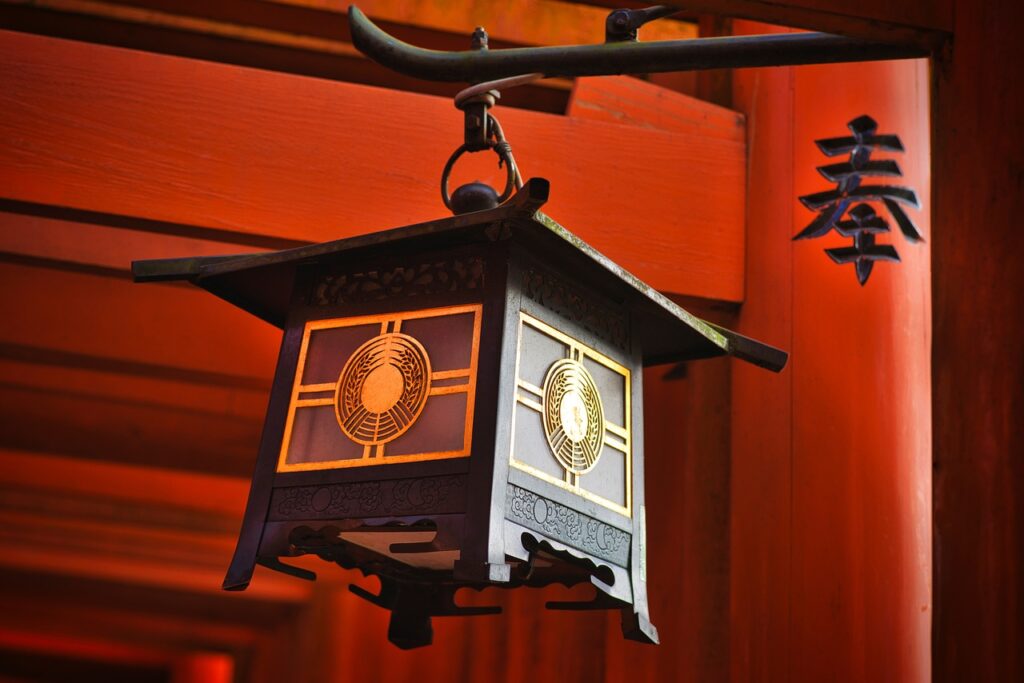
Kunozan Toshogu Shrine | Complete Guide to Japan’s Original Tokugawa Shrine in Shizuoka

Cherry blossoms frame the Kunozan Toshogu grounds (Photo: Motokoka / Wikimedia Commons, CC BY-SA 4.0) Before Nikko Toshogu became famous worldwide, there was Kunozan Toshogu — the very first shrine dedicated to Tokugawa Ieyasu, the warlord who unified Japan and established the Tokugawa shogunate. Perched atop Mount Kuno at 216 meters above sea level in

Kunozan Toshogu Shrine | Complete Guide to Japan’s Original Tokugawa Shrine in Shizuoka Read More »
Tamaki Shrine (Kumano, Nara): The Hard-to-Reach Inner Shrine & 3,000-Year-Old Jindai Cedar — Visitor Guide (2026)

The stone torii gate of Tamaki Shrine, deep in the mountain forest (Photo: Tokiwokakeru / Wikimedia Commons, CC BY-SA 4.0) “Is it true that only those who are ‘called’ can reach Tamaki Shrine?” The short answer: anyone can visit Tamaki Shrine. However, perched near the summit of Mount Tamaki at 1,076 meters elevation, this ancient

Tamaki Shrine (Kumano, Nara): The Hard-to-Reach Inner Shrine & 3,000-Year-Old Jindai Cedar — Visitor Guide (2026) Read More »
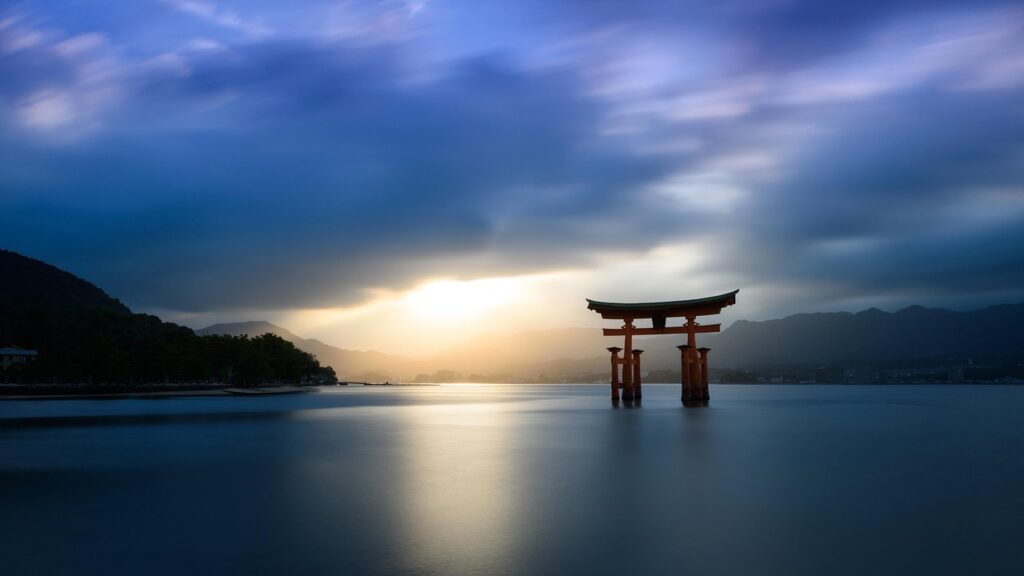
Fujisan Hongu Sengen Taisha | Complete Spiritual Guide to Japan’s Sacred Mt. Fuji Shrine【World Heritage, Wakutama Pond, Access & Blessings】

A 10-minute walk from JR Fujinomiya Station, at the foot of Mount Fuji, stands Fujisan Hongu Sengen Taisha — the head shrine of all 1,300 Sengen shrines across Japan and a UNESCO World Heritage Site. Enshrining Konohanasakuya-hime, the goddess of safe childbirth and beauty, this ancient shrine traces its origins to 27 BC. The main

Fujisan Hongu Sengen Taisha | Complete Spiritual Guide to Japan’s Sacred Mt. Fuji Shrine【World Heritage, Wakutama Pond, Access & Blessings】 Read More »
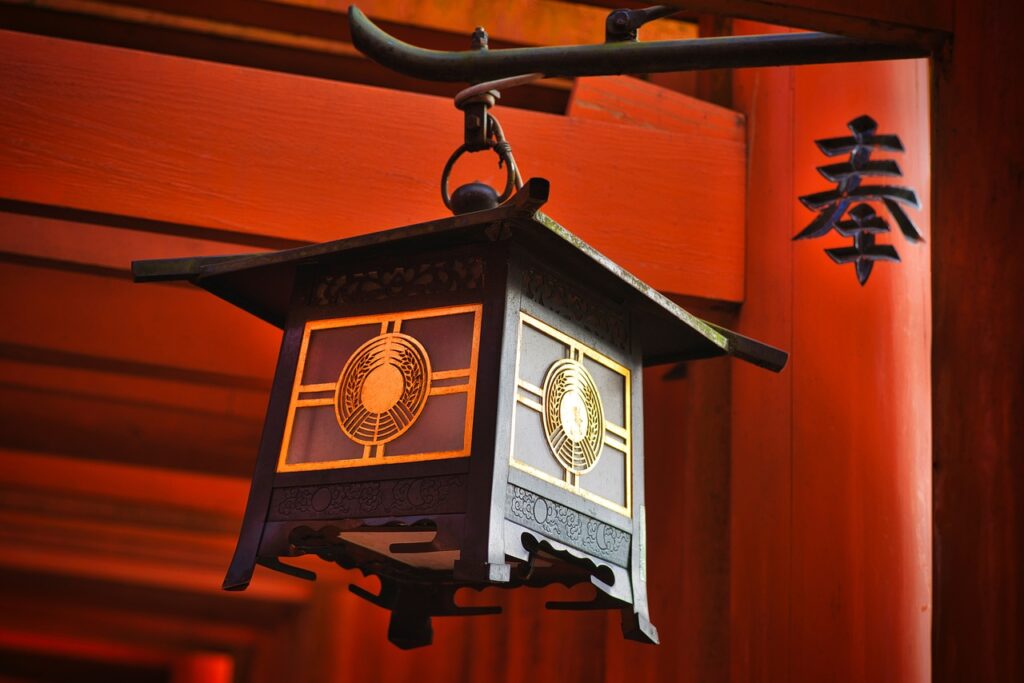
Togakushi Shrine, Nagano: the Okusha Cedar Avenue & Five-Shrine Pilgrimage — Day Trip from Nagano (2026)

You walk for forty minutes through a forest. The first half is pleasant enough—a flat path through mixed woodland. Then you pass through a moss-covered gate, and everything changes. Two hundred Japanese cedars, each over 400 years old and 30 meters tall, line both sides of the path in perfect rows. The canopy closes above

Togakushi Shrine, Nagano: the Okusha Cedar Avenue & Five-Shrine Pilgrimage — Day Trip from Nagano (2026) Read More »
Haruna Shrine (Gunma): Boulder Gorge, Dragon Gate & Ikaho Onsen Day Trip from Tokyo (2026)

The approach begins in a cedar forest. Within minutes, the world narrows to a gorge. Massive boulders rise on both sides—some the size of buildings, draped in moss, wedged between cliff faces at impossible angles. A waterfall threads down the rock. The path climbs gently for 700 meters, and at the end, you find a

Haruna Shrine (Gunma): Boulder Gorge, Dragon Gate & Ikaho Onsen Day Trip from Tokyo (2026) Read More »
Kirishima Jingu, Kagoshima: Where Japanese Myth Begins — National Treasure Shrine & Visitor Guide (2026)

In Japanese mythology, the sun goddess Amaterasu sent her grandson Ninigi-no-Mikoto down from heaven to rule the earthly realm. He descended onto Mount Takachiho in the Kirishima volcanic range, carrying the three sacred treasures. That divine descent—*tensonkorin*—is the founding myth of Japan itself. Kirishima Jingu is the shrine built at the foot of that mountain

Kirishima Jingu, Kagoshima: Where Japanese Myth Begins — National Treasure Shrine & Visitor Guide (2026) Read More »

Goshikinuma (Five-Colored Lakes): Urabandai’s Volcanic Trail of Emerald & Cobalt Lakes — Fukushima Guide (2026)

Thirty lakes, each a different color, formed by a single volcanic eruption 138 years ago. Emerald green. Cobalt blue. Turquoise. Rust red. Pale azure. The lakes of Goshikinuma sit only meters apart, yet each one reflects a completely different hue. The same water flows from Mount Bandai, but dissolved volcanic minerals—aluminosilicates, iron oxides, sulfur compounds—scatter

Goshikinuma (Five-Colored Lakes): Urabandai’s Volcanic Trail of Emerald & Cobalt Lakes — Fukushima Guide (2026) Read More »

Kanda Myojin Shrine (Akihabara, Tokyo): IT & Tech Amulets, the Kanda Matsuri & Business-Luck Visitor Guide (2026)

A 5-minute walk from the Hijiribashi Exit of JR Ochanomizu Station, down a gentle slope and through the grand hinoki-cypress Zuishinmon gate, you’ll find an atmosphere of quiet dignity that seems impossible just steps from Tokyo’s bustling office district. This is Kanda Shrine — officially Kanda Jinja, commonly known as Kanda Myojin — a power

Kanda Myojin Shrine (Akihabara, Tokyo): IT & Tech Amulets, the Kanda Matsuri & Business-Luck Visitor Guide (2026) Read More »

Dazaifu Tenmangu (Fukuoka): Japan’s Top Exam-Success Shrine, Plum Blossoms & the Kengo Kuma Starbucks (2026)

Every year, millions of students, parents, and travelers make the pilgrimage to Dazaifu Tenmangu in Fukuoka Prefecture—Japan’s most important shrine for academic success and the arts. If you are visiting Fukuoka and wondering whether this shrine is worth the 30-minute train ride from Hakata, the answer is an emphatic yes. Dazaifu Tenmangu offers far more

Dazaifu Tenmangu (Fukuoka): Japan’s Top Exam-Success Shrine, Plum Blossoms & the Kengo Kuma Starbucks (2026) Read More »

Naritasan Shinshoji Temple (Narita): Goma Fire Ritual, Eel Street & Airport Layover Guide (2026)

If you are flying through Narita Airport and have a few hours to spare, one of Japan’s most powerful Buddhist temples is waiting just 15 minutes away by train. Naritasan Shinshoji is not a hidden gem—it is a spiritual powerhouse that draws over 10 million visitors every year and nearly 3 million during the New

Naritasan Shinshoji Temple (Narita): Goma Fire Ritual, Eel Street & Airport Layover Guide (2026) Read More »

Munakata Taisha | UNESCO World Heritage Shrine Complex Spanning Three Islands off Fukuoka

Three shrines on three different islands, stretching 60 kilometers into the open sea—Munakata Taisha is unlike any other shrine in Japan. The main shrine sits on the Fukuoka mainland. The second sits on Oshima, a small island reached by a 25-minute ferry. The third sits on Okinoshima, a forbidden island where no ordinary person is

Munakata Taisha | UNESCO World Heritage Shrine Complex Spanning Three Islands off Fukuoka Read More »

Naminoue Shrine (Naha): Okinawa’s Cliff-Top Shrine Above the City’s Only Beach & the Nirai Kanai Sea (2026)

A shrine perched on a cliff directly above a public beach in the middle of a city—that alone makes Naminoue Shrine one of the most visually striking sacred sites in Japan. But what draws visitors beyond the scenery is the spiritual weight of this place: Naminoue-gu is the highest-ranked of the Ryukyu Hassha (the eight

Naminoue Shrine (Naha): Okinawa’s Cliff-Top Shrine Above the City’s Only Beach & the Nirai Kanai Sea (2026) Read More »

Mount Nokogiri (Nokogiriyama, Chiba): ‘Hell Peek’ Cliff, Japan’s Largest Stone Buddha & Ropeway — Day Trip from Tokyo (2026)

It is only 329 meters high. By any standard, Mount Nokogiri is a modest mountain. But modest is the last word you will use after standing on a rock ledge jutting over a vertical cliff, looking straight down at a forest canopy hundreds of meters below while Tokyo Bay stretches to the horizon. This is

Mount Nokogiri (Nokogiriyama, Chiba): ‘Hell Peek’ Cliff, Japan’s Largest Stone Buddha & Ropeway — Day Trip from Tokyo (2026) Read More »

Kiyotsu Gorge (Niigata): The Tunnel of Light Mirror Pool, Columnar-Basalt Cliffs & Autumn Day Trip from Tokyo (2026)

You walk 750 meters into a mountain. The tunnel is cool and dim, with occasional windows opening onto a gorge of towering columnar rock. Then you reach the end, and the floor becomes water. A thin sheet of it, perfectly still, reflecting the gorge outside and the stainless steel walls around you. The rock, the

Kiyotsu Gorge (Niigata): The Tunnel of Light Mirror Pool, Columnar-Basalt Cliffs & Autumn Day Trip from Tokyo (2026) Read More »

Izusan Shrine (Atami): Where Japan’s First Shogun Fell in Love — Twin Dragons, 837 Steps & Day Trip from Tokyo (2026)

In the 1160s, a young exile named Minamoto no Yoritomo met a woman named Hojo Masako at a small mountain shrine overlooking the sea. They fell in love against her father’s wishes, married in secret, and together went on to establish the Kamakura Shogunate—Japan’s first warrior government. That shrine was Izusan Shrine in Atami, and

Izusan Shrine (Atami): Where Japan’s First Shogun Fell in Love — Twin Dragons, 837 Steps & Day Trip from Tokyo (2026) Read More »

Motonosumi Shrine | Complete Guide to Yamaguchi’s Iconic 123 Torii Gates by the Sea【Access, History & Photography Tips】

A tunnel of 123 red torii gates descends from a hilltop shrine, down a lush green hillside, and ends at the edge of a cliff where the Sea of Japan stretches to the horizon. This single scene — captured by CNN in their 2015 “Japan’s 31 Most Beautiful Places” list — transformed a quiet Inari

Motonosumi Shrine | Complete Guide to Yamaguchi’s Iconic 123 Torii Gates by the Sea【Access, History & Photography Tips】 Read More »

Kashima Jingu Shrine (Ibaraki): Japan’s Ancient Warrior Shrine — Kaname-ishi Keystone, Sacred Forest & Day Trip from Tokyo (2026)

Kashima Jingu in Ibaraki Prefecture is one of Japan’s oldest and most powerful shrines, with a legendary founding date of 660 BCE—predating most of Japan’s recorded history. Dedicated to Takemikazuchi-no-Okami, the god of martial arts, thunder, and swordsmanship, this shrine has served as the spiritual heart of Japan’s warrior traditions for over two millennia. As

Kashima Jingu Shrine (Ibaraki): Japan’s Ancient Warrior Shrine — Kaname-ishi Keystone, Sacred Forest & Day Trip from Tokyo (2026) Read More »

Takachiho Gorge (Miyazaki): Manai Falls Boat Ride, Columnar-Basalt Cliffs & Amanoiwato Cave Shrine Guide (2026)

A volcanic gorge carved by 100,000 years of flowing water. Basalt columns rising 80 meters like the pillars of a cathedral. A waterfall named after a vessel from which the sun goddess herself poured water from heaven. And a cave where she once hid, plunging the entire world into darkness. Takachiho Gorge (高千穂峡) in Miyazaki

Takachiho Gorge (Miyazaki): Manai Falls Boat Ride, Columnar-Basalt Cliffs & Amanoiwato Cave Shrine Guide (2026) Read More »

Seimei Shrine (Kyoto): Japan’s Most Famous Onmyoji Shrine | Visitor Guide 2026

Table of Contents Toggle Find Your Guide Who Was Abe no Seimei? Key Highlights: What to See The Pentagram Torii Gate Seimei Well (Seimei-no-Ido) Yakuyoke Peach Statue Shikigami Stone Statues Ichijo Modori Bridge (Reconstruction) Spiritual Benefits What Visitors Commonly Report How to Visit: Recommended Route (30–60 minutes) Goshuin and Amulets Best Times to Visit Practical

Seimei Shrine (Kyoto): Japan’s Most Famous Onmyoji Shrine | Visitor Guide 2026 Read More »

Kiyomizu-dera Temple, Kyoto: The Wooden Stage, Otowa Waterfall & Visitor Guide (2026)

The iconic main hall and wooden stage of Kiyomizu-dera (image) Have you ever heard the Japanese expression “to jump off the stage at Kiyomizu”? This phrase, meaning to take a leap of faith, originates from this very temple. Standing on the famous wooden stage, gazing over the ancient capital of Kyoto, you will understand why

Kiyomizu-dera Temple, Kyoto: The Wooden Stage, Otowa Waterfall & Visitor Guide (2026) Read More »

Seimei Shrine for Onmyoji Fans: Ultimate Pilgrimage Guide (Anime, FGO, Drama)

The mystical atmosphere of Seimei Shrine (image) Table of Contents Toggle Quick Facts for Fans Why Onmyoji Fans Must Visit This Shrine In This Guide Abe no Seimei in Popular Culture Movies & TV Dramas Video Games Manga & Light Novels 5 Must-See Spots for Fans 1. Pentagram Torii Gate (五芒星鳥居) 2. Shikigami Stone Statues

Seimei Shrine for Onmyoji Fans: Ultimate Pilgrimage Guide (Anime, FGO, Drama) Read More »

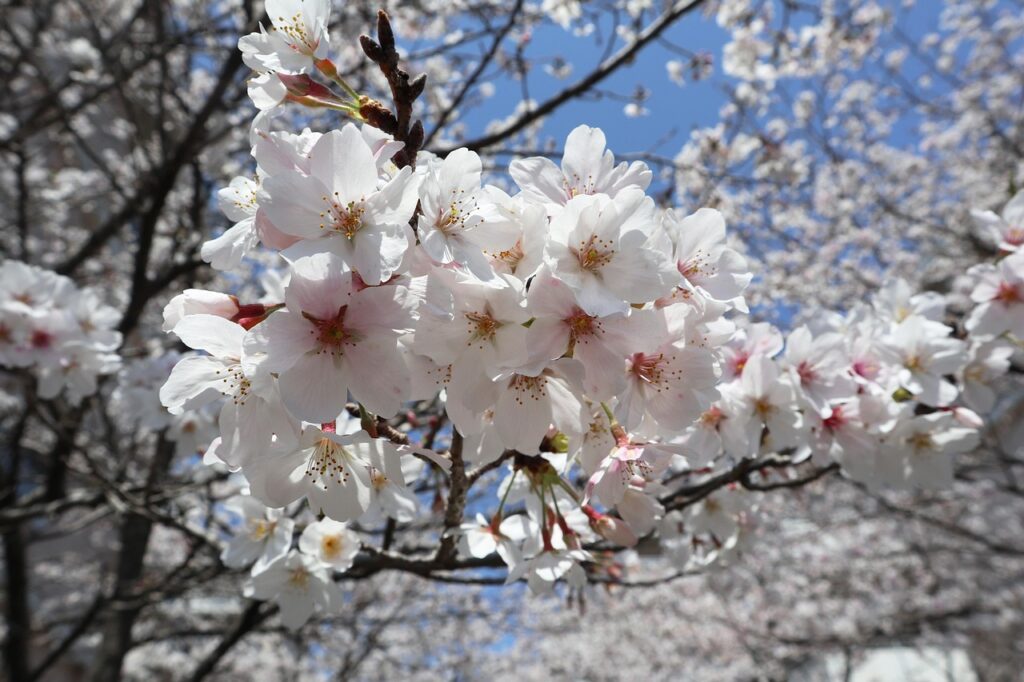
japan-cherry-blossom

Miyoshi Shrine (Sapporo): The ‘God of Victory’ Shrine by Odori Park — Central Sapporo Visitor Guide (2026)

Located in central Sapporo, just a 5-minute walk from Odori subway station, Miyoshi Shrine (Miyoshi Jinja) is a historic shrine founded in 1878 (Meiji 11). With Taiheizan Miyoshi Shrine in Akita Prefecture as its head shrine, it has been cherished as a spiritual anchor for settlers during Hokkaido’s pioneering era. The principal deity, Miyoshi-no-Okami, is

Miyoshi Shrine (Sapporo): The ‘God of Victory’ Shrine by Odori Park — Central Sapporo Visitor Guide (2026) Read More »

Breathtaking view of a serene mountain lake with lush landscape under a vast cloudy sky.

Lake Toya (Hokkaido): Volcanic Caldera Geopark — Mount Usu, Nakajima Islands & Nightly Fireworks (2026)

Located in southwestern Hokkaido, Lake Toya is a caldera lake formed by a massive volcanic eruption approximately 110,000 years ago. With a circumference of about 43 kilometers and maximum depth of 180 meters, this beautiful lake was certified as the “Toya-Usu UNESCO Global Geopark” in 2009, drawing attention as a mystical power spot where visitors

Lake Toya (Hokkaido): Volcanic Caldera Geopark — Mount Usu, Nakajima Islands & Nightly Fireworks (2026) Read More »

Autumn lake with mountain and reflection

Lake Towada (Aomori): Caldera Lake, Oirase Gorge Stream Walk & Towada Shrine Visitor Guide (2026)

A 2-hour 15-minute JR bus ride from Hachinohe Station on the Tohoku Shinkansen line brings you to Lake Towada — a double caldera lake straddling Aomori and Akita Prefectures. At 326.8 meters deep, Japan’s third-deepest lake shifts between sapphire, cerulean, and emerald with the seasons, earning its centuries-old reputation as “the lake where the dragon

Lake Towada (Aomori): Caldera Lake, Oirase Gorge Stream Walk & Towada Shrine Visitor Guide (2026) Read More »

Shiogama Shrine (Miyagi): 202 Stone Steps, Rare Cherry Blossoms & Sushi Town Near Matsushima — Day Trip from Sendai (2026)

Just 30 minutes from Sendai by JR Senseki Line, Shiogama Shrine stands atop a hill in Shiogama City as the Ichinomiya (highest-ranking shrine) of the former Mutsu Province — a guardian of the entire Tohoku region for over 1,200 years. Climb the iconic 202 stone steps of the front approach and you’ll emerge into a

Shiogama Shrine (Miyagi): 202 Stone Steps, Rare Cherry Blossoms & Sushi Town Near Matsushima — Day Trip from Sendai (2026) Read More »

Ryusendo Cave (Tohoku): Cobalt-Blue Underground Lakes & Dragon Legends — Visitor Guide (2026)

About 110 minutes by car from Morioka, deep in the mountains of Iwaizumi Town, Iwate Prefecture, lies a world of blue that locals call “Dragon Blue.” Ryusendo is one of Japan’s Three Great Limestone Caves alongside Akiyoshido and Ryugado, and the transparent cobalt blue of its Third Underground Lake — plunging to a depth of

Ryusendo Cave (Tohoku): Cobalt-Blue Underground Lakes & Dragon Legends — Visitor Guide (2026) Read More »

Mount Chokai with rice fields in foreground

Mount Chokai (Dewa Fuji): Tohoku’s Sea-of-Japan Volcano — Omonoimi Shrine, Alpine Flowers & Hiking Guide (2026)

Rising on the border between Akita and Yamagata Prefectures, Mount Chokai stands at 2,236 meters as Tohoku’s second-highest peak. Its beautiful conical shape has earned it the name “Dewa Fuji,” and it has been revered as a sacred site of mountain worship since ancient times. At the summit sits the main hall of Omonoimi Shrine,

Mount Chokai (Dewa Fuji): Tohoku’s Sea-of-Japan Volcano — Omonoimi Shrine, Alpine Flowers & Hiking Guide (2026) Read More »

Mount Norikura: Japan’s Most Accessible 3,000m Peak — Shuttle to Tatamidaira, Summit Shrine & Hiking Guide (2026)

Step off the shuttle bus at Tatamidaira (2,702m) and the world transforms: a sea of clouds stretches to the horizon, 3,000-meter peaks pierce the sky, and the air carries a purity that only exists above the treeline. This is Mount Norikura—a massive volcanic complex of 23 peaks, 7 lakes, and 8 plateaus at the southern

Mount Norikura: Japan’s Most Accessible 3,000m Peak — Shuttle to Tatamidaira, Summit Shrine & Hiking Guide (2026) Read More »

Toyokawa Inari | Complete Guide to Aichi’s Premier Power Spot【Business Success・Fox Statues・Access】

Toyokawa Inari, located in Toyokawa City, Aichi Prefecture, is one of Japan’s Three Great Inari shrines and a sacred destination for business prosperity. Despite its name suggesting a Shinto shrine, Toyokawa Inari is actually a Soto Zen Buddhist temple officially known as “Myogon-ji.” This unique blend of Buddhist tradition and Inari worship attracts over 5

Toyokawa Inari | Complete Guide to Aichi’s Premier Power Spot【Business Success・Fox Statues・Access】 Read More »

海上に浮かぶ大鳥居

Saijo Inari | Complete Guide to Okayama’s Premier Power Spot【One of Japan’s Three Great Inari・Business Success・Access】

Saijo Inari, located in Okayama City, Okayama Prefecture, is one of Japan’s Three Great Inari sites alongside Fushimi Inari Taisha and Toyokawa Inari. This massive spiritual complex attracts over 3 million visitors annually, making it the largest religious site in the Chugoku region. Officially known as “Saijo Inariyama Myokyo-ji,” it is a Nichiren Buddhist temple

Saijo Inari | Complete Guide to Okayama’s Premier Power Spot【One of Japan’s Three Great Inari・Business Success・Access】 Read More »

東大寺大仏殿の全景

Todai-ji Temple | Complete Guide to Nara’s Premier Power Spot【Great Buddha・World Heritage・Access】

Todai-ji Temple, located in Nara City, Nara Prefecture, is the head temple of the Kegon school of Buddhism, established in the Nara period (8th century) by imperial decree of Emperor Shomu. Home to the beloved “Great Buddha of Nara” (Daibutsu), the Vairocana Buddha statue stands approximately 15 meters tall and weighs about 250 tons—an overwhelming

Todai-ji Temple | Complete Guide to Nara’s Premier Power Spot【Great Buddha・World Heritage・Access】 Read More »

Tosa Shrine (Kochi): Japan’s Only ‘Dragonfly-Style’ Hall & Sakamoto Ryoma’s Shrine — Shikoku Visitor Guide (2026)

The sacred approach to Tosa Shrine (image) Tosa Shrine, located in Ichinomiya, Kochi City, is a sacred sanctuary with over 1,400 years of history as the Ichinomiya (first-ranked shrine) of Tosa Province. Affectionately called “Shinane-sama” by locals, this shrine attracts numerous visitors during the annual “Shinane Festival” held every August. The moment you step into

Tosa Shrine (Kochi): Japan’s Only ‘Dragonfly-Style’ Hall & Sakamoto Ryoma’s Shrine — Shikoku Visitor Guide (2026) Read More »

Hakone Shrine: The Lake Ashi Torii Gate, Photo Tips & Visitor Guide (2026)

Located on the shores of Lake Ashi in Hakone Town, Ashigarashimo District, Kanagawa Prefecture, Hakone Shrine is one of the Kanto region’s premier power spots with approximately 1,250 years of history. Founded in 757 (Tenpyo-hoji 1) by the monk Mangan Shonin, it has long been revered as the “Guardian of All Kanto” by samurai warriors

Hakone Shrine: The Lake Ashi Torii Gate, Photo Tips & Visitor Guide (2026) Read More »

Enoshima Shrine (Shonan): Benzaiten, the Iwaya Sea Caves & Sagami Bay Views — Day Trip from Tokyo & Kamakura (2026)

Located on Enoshima Island, the symbol of Shonan in Fujisawa City, Kanagawa Prefecture, Enoshima Shrine is a venerable shrine known as one of Japan’s Three Great Benzaiten. Said to have been founded during the reign of Emperor Kinmei approximately 1,500 years ago, this ancient shrine comprising three sanctuaries—Hetsu-miya, Nakatsu-miya, and Okutsu-miya—draws approximately 1.5 million worshippers

Enoshima Shrine (Shonan): Benzaiten, the Iwaya Sea Caves & Sagami Bay Views — Day Trip from Tokyo & Kamakura (2026) Read More »

Lake Kawaguchi (Kawaguchiko): Best Mount Fuji Views, Photo Spots & Day Trip from Tokyo (2026)

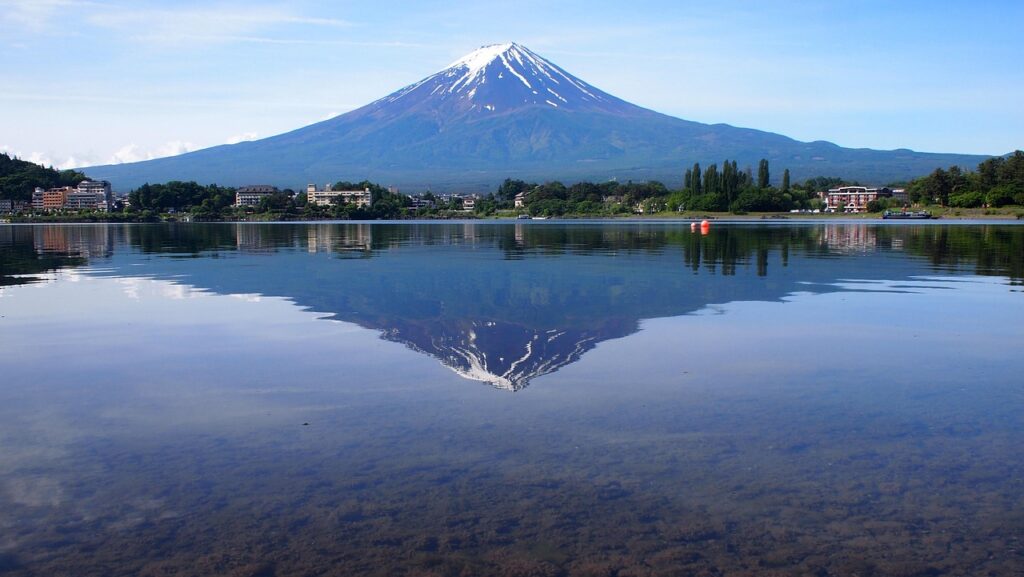
Located in Fujikawaguchiko Town, Minamitsuru District, Yamanashi Prefecture, Lake Kawaguchi is a beautiful lake with the longest shoreline among the Fuji Five Lakes. At approximately 830 meters elevation, with a circumference of about 21 kilometers and maximum depth of about 15 meters, the “Inverted Fuji” (Sakasa Fuji) reflected on the lake surface is an iconic

Lake Kawaguchi (Kawaguchiko): Best Mount Fuji Views, Photo Spots & Day Trip from Tokyo (2026) Read More »

Kamui Kotan, Asahikawa: the Ainu Gorge ‘Where Gods Dwell’ on the Ishikari River — Visitor Guide (2026)

Located at the western edge of Asahikawa City, Hokkaido, where the Ishikari River winds through the mountains, lies Kamui Kotan. In the Ainu language, “Kamui Kotan” means “the place where gods dwell,” and this land has been revered as a sacred site by the Ainu people since ancient times. The Ishikari River flows as rapids

Kamui Kotan, Asahikawa: the Ainu Gorge ‘Where Gods Dwell’ on the Ishikari River — Visitor Guide (2026) Read More »

Chitose Shrine (Hokkaido): Sacred ‘Water of Happiness’ Spring Near New Chitose Airport — Visitor Guide (2026)

Located in the heart of Chitose City, Hokkaido, on a verdant hill leading to Lake Shikotsu, Chitose Shrine (Chitose Jinja) is a venerable shrine with approximately 300 years of history. Just 15 minutes by car from New Chitose Airport, stepping into the shrine grounds instantly envelops visitors in a serene atmosphere. The enshrined deities are

Chitose Shrine (Hokkaido): Sacred ‘Water of Happiness’ Spring Near New Chitose Airport — Visitor Guide (2026) Read More »

Sounkyo Gorge (Hokkaido): Daisetsuzan’s Columnar Cliffs, Ginga & Ryusei Falls and Earliest Autumn Colors (2026)

Located in the heart of Hokkaido within Daisetsuzan National Park, Sounkyo Gorge is a magnificent canyon formed by a massive eruption of Mount Daisetsu approximately 30,000 years ago. Stretching about 24 kilometers along the Ishikari River, the towering cliffs rise 100 to 200 meters high, overwhelming visitors with their sheer scale. The Ainu people called

Sounkyo Gorge (Hokkaido): Daisetsuzan’s Columnar Cliffs, Ginga & Ryusei Falls and Earliest Autumn Colors (2026) Read More »

Mount Osore (Osorezan, Aomori): Japan’s Otherworld of Itako Mediums, Hell Landscapes & Lake Usori — Visitor Guide (2026)

Deep within the Shimokita Peninsula lies Mount Osore (Osorezan), one of “Japan’s Three Great Sacred Sites” alongside Mount Hiei and Mount Koya. Said to have been founded in 862 (Jogan 4) by the Buddhist monk Ennin (posthumously known as Jikaku Daishi), this spiritually powerful place boasts over 1,100 years of history. The temple grounds, permeated

Mount Osore (Osorezan, Aomori): Japan’s Otherworld of Itako Mediums, Hell Landscapes & Lake Usori — Visitor Guide (2026) Read More »

Shikina-gu Shrine (Naha, Okinawa): a Ryukyu Eight Shrine by Shikinaen Garden — Visitor Guide (2026)

Perched on a hilltop in Naha City, Shikina-gu is one of the prestigious “Ryukyu Eight Shrines” (Ryukyu Hassha) dating back to the Ryukyu Kingdom era. Legend holds it was founded following the successful prayer for a prince’s birth by King Sho Seni, son of King Sho En who established the Second Sho Dynasty, giving the

Shikina-gu Shrine (Naha, Okinawa): a Ryukyu Eight Shrine by Shikinaen Garden — Visitor Guide (2026) Read More »

Yutoku Inari Shrine | Complete Guide to Saga’s Grand Power Spot【One of Japan’s Three Great Inari Shrines, Business Prosperity, Access & Area Info】

One of “Japan’s Three Great Inari Shrines” alongside Fushimi Inari Taisha and Kasama Inari Shrine, Yutoku Inari Shrine is a magnificent sanctuary nestled in the mountains of Kashima City, Saga Prefecture. Approximately 3 million worshippers visit annually, making it second only to Dazaifu Tenmangu in Kyushu for visitor numbers. The vermillion-lacquered tower gate and main

Yutoku Inari Shrine | Complete Guide to Saga’s Grand Power Spot【One of Japan’s Three Great Inari Shrines, Business Prosperity, Access & Area Info】 Read More »

Seimei Shrine | Complete Guide to Kyoto’s Mystical Power Spot【Onmyoji, Evil-Warding, Access & Area Info】

Find Your Guide | If you are… | Read this guide | |—————|—————–| | Onmyoji/FGO/anime fan | Onmyoji Fan Pilgrimage Guide | | Interested in history & blessings | Continue reading below | — Seimei Shrine in Kyoto’s Kamigyo ward is dedicated to Abe no Seimei (921–1005), the most powerful onmyoji (yin-yang master) of the

Seimei Shrine | Complete Guide to Kyoto’s Mystical Power Spot【Onmyoji, Evil-Warding, Access & Area Info】 Read More »

Sado Gold Mine (Sado Island): UNESCO Mine with the Split-Mountain Doyu-no-Warito & Gold Panning (2026)

Located on Sado Island floating in the Sea of Japan, Sado Kinzan is one of the world’s most significant gold and silver mines, having supported Japan’s economy for approximately 400 years. During the Edo period, it boasted one of the world’s largest gold outputs and played a crucial role in financing the Tokugawa shogunate. Registered

Sado Gold Mine (Sado Island): UNESCO Mine with the Split-Mountain Doyu-no-Warito & Gold Panning (2026) Read More »

Itsukushima Shrine (Miyajima): World Heritage Floating Torii, Tide Times & Complete Visitor Guide (2026)

Japan’s Only Shrine That Floats on the Sea — And How Tides Change Everything The Great Torii of Itsukushima Shrine standing in the Seto Inland Sea, with Mount Misen rising behind “Can I walk to the torii gate?” Yes — but only at low tide. The difference between high and low tide at Miyajima is

Itsukushima Shrine (Miyajima): World Heritage Floating Torii, Tide Times & Complete Visitor Guide (2026) Read More »

Suwa Taisha (Nagano): Among Japan’s Oldest Shrines — Onbashira Festival & Four-Shrine Pilgrimage Guide (2026)

A five-minute drive from Suwa Interchange on the Chuo Expressway, deep within a grove of towering cedars, stands the Ichi-no-Onbashira (First Sacred Pillar)—pointing straight toward the heavens. This is the symbol of Suwa faith: a total of 16 sacred pillars, four placed at the four corners of each of the four shrines. Suwa Taisha is

Suwa Taisha (Nagano): Among Japan’s Oldest Shrines — Onbashira Festival & Four-Shrine Pilgrimage Guide (2026) Read More »

Ishizuchi Shrine (Mount Ishizuchi): Climbing Western Japan’s Highest Peak (1,982m) — Ropeway & Summit Guide (2026)

Standing as the sacred guardian of Mount Ishizuchi (1,982m)—Western Japan’s highest peak—Ishizuchi Shrine boasts over 1,300 years of history as one of Japan’s Seven Sacred Mountains. Legend holds that the mountain was first opened by En-no-Gyoja, the founder of Shugendo mountain asceticism. During the annual “Oyama-biraki” mountain opening ceremony in July, the pilgrimage routes are

Ishizuchi Shrine (Mount Ishizuchi): Climbing Western Japan’s Highest Peak (1,982m) — Ropeway & Summit Guide (2026) Read More »

Musashi Mitake Shrine (Mount Mitake, Tokyo): Dog-Friendly Wolf Shrine, Cable Car & Rock Garden Hiking Day Trip (2026)

Perched atop Mount Mitake (929m) in Ome City, Tokyo, Musashi Mitake Shrine stands as one of the Kanto region’s premier power spots with approximately 2,000 years of history. Said to have been founded during the era of Emperor Sujin, this venerable sanctuary has gathered faith since ancient times as a “Sacred Mountain of Kanto.” Despite

Musashi Mitake Shrine (Mount Mitake, Tokyo): Dog-Friendly Wolf Shrine, Cable Car & Rock Garden Hiking Day Trip (2026) Read More »

Tsukubasan Shrine (Mount Tsukuba): Twin-Peak Matchmaking Shrine, 800-Year Sacred Cedar & Day Trip from Tokyo (2026)

Located in Tsukuba City, Ibaraki Prefecture, Tsukubasan Shrine sits on the slopes of the sacred Mount Tsukuba, overlooking the Kanto Plain, and boasts approximately 3,000 years of history. Praised since ancient times as “Fuji in the West, Tsukuba in the East,” this venerable sanctuary enshrines the famous mountain—celebrated in the Man’yoshu poetry anthology—as its sacred

Tsukubasan Shrine (Mount Tsukuba): Twin-Peak Matchmaking Shrine, 800-Year Sacred Cedar & Day Trip from Tokyo (2026) Read More »

Nachi Falls (Kumano, Wakayama): Japan’s Tallest Waterfall, Seiganto-ji Pagoda & Kumano Kodo Guide (2026)

Located in Nachikatsuura Town, Wakayama Prefecture, Nachi Falls stands as Japan’s tallest single-drop waterfall, plunging 133 meters with a waterfall basin 10 meters deep. Also known as “Ichi-no-Taki” (First Waterfall), this magnificent cascade has been revered as a sacred site of Kumano worship since ancient times and is enshrined as the sacred body of Hirou

Nachi Falls (Kumano, Wakayama): Japan’s Tallest Waterfall, Seiganto-ji Pagoda & Kumano Kodo Guide (2026) Read More »

Miho Shrine (Mihonoseki): Japan’s Head Ebisu Shrine, Daily Offering Rites & the Izumo Dual Pilgrimage (2026)

Standing at the eastern tip of the Shimane Peninsula in the port town of Mihonoseki, Miho Shrine serves as the head shrine of approximately 3,385 Ebisu shrines (those enshrining Kotoshironushi-no-Kami) throughout Japan, per the shrine’s official figures. The principal deities, Mihotsuhime-no-Mikoto and Kotoshironushi-no-Kami, are revered as a goddess of agriculture and “Ebisu-sama” — the god

Miho Shrine (Mihonoseki): Japan’s Head Ebisu Shrine, Daily Offering Rites & the Izumo Dual Pilgrimage (2026) Read More »

Oyamazumi Shrine: Japan’s Greatest Samurai Treasure Hall on a Seto Inland Sea Island

Oyamazumi Shrine holds a staggering record: approximately 80% of nationally designated armor and weapons (National Treasures and Important Cultural Properties combined) are preserved here, on a small island in the Seto Inland Sea. Legendary warriors including Minamoto no Yoritomo and Yoshitsune dedicated their battle gear at this shrine — making the treasure hall an unrivaled

Oyamazumi Shrine: Japan’s Greatest Samurai Treasure Hall on a Seto Inland Sea Island Read More »

Okinogu Shrine (Naha): Ryukyu Royal Shrine in Onoyama Park, the Tentozan Utaki & Matchmaking Tree (2026)

Nestled within Onoyama Park in Naha City, Okinogu Shrine stands as one of Okinawa’s most sacred and historically significant sanctuaries. As one of the “Ryukyu Hassya” (Eight Shrines of Ryukyu), this revered site traces its origins back approximately 1,400 years to the reign of Empress Suiko, making it among the oldest sacred places in Okinawa.

Okinogu Shrine (Naha): Ryukyu Royal Shrine in Onoyama Park, the Tentozan Utaki & Matchmaking Tree (2026) Read More »

Sumiyoshi Taisha (Osaka): The 48-Degree Drum Bridge, Four National Treasure Halls & Visitor Guide (2026)

Standing majestically in Osaka’s Sumiyoshi Ward, Sumiyoshi Taisha serves as the head shrine of approximately 2,300 Sumiyoshi shrines throughout Japan. With over 1,800 years of history, this beloved sanctuary—affectionately called “Sumiyossan” by locals—welcomes approximately 2.3 million visitors annually. During the first three days of the New Year alone, nearly 2 million worshippers pass through its

Sumiyoshi Taisha (Osaka): The 48-Degree Drum Bridge, Four National Treasure Halls & Visitor Guide (2026) Read More »

Jozankei Shrine: Hot-Spring Shrine in Sapporo’s Onsen Valley, the 108 Stone Steps & Kappa Legend (2026)

Nestled in the heart of Jozankei Onsen—known as “Sapporo’s inner parlor”—Jozankei Shrine has stood as the guardian deity of this hot spring village since its founding in 1905. Approximately 30,000 visitors come each year to this special power spot where the blessings of thermal waters meet the spiritual energy of the surrounding mountains. Surrounded by

Jozankei Shrine: Hot-Spring Shrine in Sapporo’s Onsen Valley, the 108 Stone Steps & Kappa Legend (2026) Read More »

Kinkengu Shrine: The ‘Golden Sword’ Wealth Shrine near Kanazawa, Its 800-Year Cedar & Hidden Otsurugisha (2026)

Nestled in the mountains of Hakusan City, Ishikawa Prefecture, Kinkengu Shrine stands as one of Japan’s most revered sanctuaries for wealth and financial fortune. With a history spanning over 2,100 years, this hidden gem has quietly attracted Japan’s top business leaders, including legendary entrepreneurs like Masayoshi Son of SoftBank and Tadashi Yanai of Uniqlo, who

Kinkengu Shrine: The ‘Golden Sword’ Wealth Shrine near Kanazawa, Its 800-Year Cedar & Hidden Otsurugisha (2026) Read More »

Osaki Hachimangu (Sendai): Date Masamune’s National Treasure Shrine, Donto-sai Fire Festival & Access (2026)

Standing watch over the city of Sendai, Osaki Hachimangu Shrine is a masterpiece of Momoyama architecture designated as a National Treasure. The main hall, adorned with gold leaf and vivid colors against jet-black lacquer, was built by the legendary feudal lord Date Masamune in 1604. For over 400 years, this shrine has served as the

Osaki Hachimangu (Sendai): Date Masamune’s National Treasure Shrine, Donto-sai Fire Festival & Access (2026) Read More »

Atsuta Jingu Shrine (Nagoya): Home of the Sacred Kusanagi Sword, 1,000-Year Camphor Tree & Visitor Guide (2026)

In the heart of Nagoya lies a sacred forest spanning 190,000 square meters. Atsuta Jingu Shrine enshrines one of Japan’s Three Imperial Regalia—the legendary Kusanagi no Mitsurugi (Grass-Cutting Sword)—making it one of the nation’s most revered and powerful spiritual sites. With a history spanning over 1,900 years, this shrine commands a level of veneration second

Atsuta Jingu Shrine (Nagoya): Home of the Sacred Kusanagi Sword, 1,000-Year Camphor Tree & Visitor Guide (2026) Read More »

Hokkaido Jingu (Sapporo): Maruyama Park’s Forest Shrine, Cherry Blossoms & Winter Snow Torii Visitor Guide (2026)

In the heart of Sapporo lies a sacred realm encompassed by 60 hectares of primeval forest. Hokkaido Jingu Shrine, established in 1869 alongside the colonization of Hokkaido, serves as the grand guardian shrine of Japan’s northern frontier. Approximately 1.8 million visitors make pilgrimages here annually, making it the most revered shrine in all of Hokkaido.

Hokkaido Jingu (Sapporo): Maruyama Park’s Forest Shrine, Cherry Blossoms & Winter Snow Torii Visitor Guide (2026) Read More »

Tarumaesan Jinja: Hokkaido’s Active-Volcano Shrine Above Lake Shikotsu, with Mount Tarumae Views (2026)

Perched on a plateau 300 meters above sea level overlooking Lake Shikotsu, one of Hokkaido’s most powerful spiritual sites awaits. Tarumaesan Jinja Shrine venerates the active volcano Mount Tarumae as its sacred deity, drawing approximately 400,000 visitors annually to this revered sanctuary of the Dooh region. Upon entering the shrine grounds, visitors are enveloped by

Tarumaesan Jinja: Hokkaido’s Active-Volcano Shrine Above Lake Shikotsu, with Mount Tarumae Views (2026) Read More »

Lake Akan (Hokkaido): Marimo Moss Balls, Ainu Kotan Village & Caldera Lake Guide (2026)

In eastern Hokkaido, surrounded by primeval forest, lies the mystical Lake Akan—a caldera lake formed approximately 150,000 years ago through volcanic activity. With a circumference of about 26 kilometers and maximum depth of 45 meters, this lake is world-renowned as the habitat of the nationally designated Special Natural Monument “Marimo” (moss balls), attracting approximately 1.5

Lake Akan (Hokkaido): Marimo Moss Balls, Ainu Kotan Village & Caldera Lake Guide (2026) Read More »

Matsushima (near Sendai): One of Japan’s Three Great Views — 260 Pine Islands, Zuiganji & Godaido (2026)

As morning mist rises over Matsushima Bay, more than 260 islands emerge from the water like a mystical painting come to life. This breathtaking scenery, celebrated as one of Japan’s Three Most Beautiful Views (Nihon Sankei), has captivated visitors for over a millennium. More than 260 pine-covered islands dot the bay Matsushima is far more

Matsushima (near Sendai): One of Japan’s Three Great Views — 260 Pine Islands, Zuiganji & Godaido (2026) Read More »

Chusonji Temple (Hiraizumi): The Gold-Leaf Konjikido Golden Hall, Cedar Approach & UNESCO Guide (2026)

The historic architecture of Chusonji Temple in Hiraizumi (image) The Golden Hall: Paradise on Earth from Japan’s Medieval Golden Age Chusonji Konjikido (Golden Hall) in Hiraizumi, Iwate Prefecture stands as one of Japan’s most extraordinary Buddhist treasures—a small Amida hall entirely covered in gold leaf, adorned with mother-of-pearl inlay and intricate lacquerwork. Built during the

Chusonji Temple (Hiraizumi): The Gold-Leaf Konjikido Golden Hall, Cedar Approach & UNESCO Guide (2026) Read More »

Mount Haguro (Dewa Sanzan): The 2,446 Stone Steps, National Treasure Five-Story Pagoda & Cedar Path Guide (2026)

The ancient cedar-lined approach to Haguro-san (image) 2,446 Stone Steps Lead to the Sacred Mountain of Shugendo Haguro-san, located in Tsuruoka City, Yamagata Prefecture, is one of Japan’s most revered sacred mountains. Together with Mount Gassan and Mount Yudono, it forms the “Dewa Sanzan” (Three Mountains of Dewa), a pilgrimage site that has drawn devotees

Mount Haguro (Dewa Sanzan): The 2,446 Stone Steps, National Treasure Five-Story Pagoda & Cedar Path Guide (2026) Read More »

aso komezuka clouds

Mount Aso (Kyushu): One of the World’s Largest Calderas — Active Crater & Grasslands Guide (2026)

Japan’s Iconic Active Volcano: Magnificent Natural Energy Mount Aso sits at the heart of Kumamoto Prefecture—an active volcano boasting one of the world’s largest calderas, still sending white plumes into the sky. With Mount Takadake (1,592 meters) as its highest peak, the five peaks of Aso overwhelm visitors with their magnificent presence. White smoke rising

Mount Aso (Kyushu): One of the World’s Largest Calderas — Active Crater & Grasslands Guide (2026) Read More »

Nikko Toshogu Shrine: Home of the Three Wise Monkeys, Yomeimon Gate & UNESCO Guide (2026)

A Magnificent World Heritage Site Enshrining Tokugawa Ieyasu Nikko Toshogu Shrine in Nikko City, Tochigi Prefecture, stands as one of Japan’s most magnificent religious sites. Dedicated to Tokugawa Ieyasu, the founder of the Edo Shogunate, this shrine has attracted devoted visitors for over 400 years since its establishment in 1617. In 1999, it was inscribed

Nikko Toshogu Shrine: Home of the Three Wise Monkeys, Yomeimon Gate & UNESCO Guide (2026) Read More »

Explore the tranquil beauty of a Shinto shrine nestled in Kamakura's lush green foliage.

Izumo Taisha: Japan’s Grand Matchmaking Shrine — Giant Sacred Rope & Where the Gods Gather (2026)

Where Gods Gather: Japan’s Supreme Shrine for Connecting Destinies The beautiful gardens of Izumo Taisha (Photo: Immanuelle / Wikimedia Commons, CC BY 4.0) In Izumo City, Shimane Prefecture—the mythological heartland of Japan—stands Izumo Taisha (formally read “Izumo Oyashiro,” commonly “Izumo Taisha”), one of the nation’s most ancient and revered shrines. Its origins are recorded in

Izumo Taisha: Japan’s Grand Matchmaking Shrine — Giant Sacred Rope & Where the Gods Gather (2026) Read More »

A tranquil path leading to a Shinto temple in Gamagōri, Aichi, Japan, lined with lanterns and banners.

Kotohira-gu Shrine (Konpira-san): Climbing the 785 Stone Steps in Kagawa, Shikoku — Visitor Guide (2026)

Where 785 Stone Steps Lead to the Guardian of the Seas Kotohira-gu’s iconic Asahi-sha (Asahi Shrine), an Important Cultural Property built in 1837 entirely from zelkova wood (Photo: Goki / Wikimedia Commons, CC BY-SA 3.0) Nestled on the slopes of Mount Zozu in Kotohira Town, Kagawa Prefecture, Kotohira-gu Shrine—affectionately known as “Konpira-san” by locals—is one

Kotohira-gu Shrine (Konpira-san): Climbing the 785 Stone Steps in Kagawa, Shikoku — Visitor Guide (2026) Read More »

Discover the tranquil beauty of a cascading waterfall surrounded by lush green foliage in a serene forest setting in Japan.

Sefa Utaki (Okinawa): The Ryukyu Kingdom’s Supreme Sacred Site, the Sangui Triangle Rock & Kudaka Views (2026)

Sefa Utaki: The Supreme Sacred Site of the Ryukyu Kingdom The lush subtropical forest surrounding Sefa Utaki (image) Sefa Utaki (斎場御嶽), nestled in the lush forests of Nanjo City in southern Okinawa, stands as the most sacred site of the ancient Ryukyu Kingdom. So revered was this place that even kings approached it with fear

Sefa Utaki (Okinawa): The Ryukyu Kingdom’s Supreme Sacred Site, the Sangui Triangle Rock & Kudaka Views (2026) Read More »

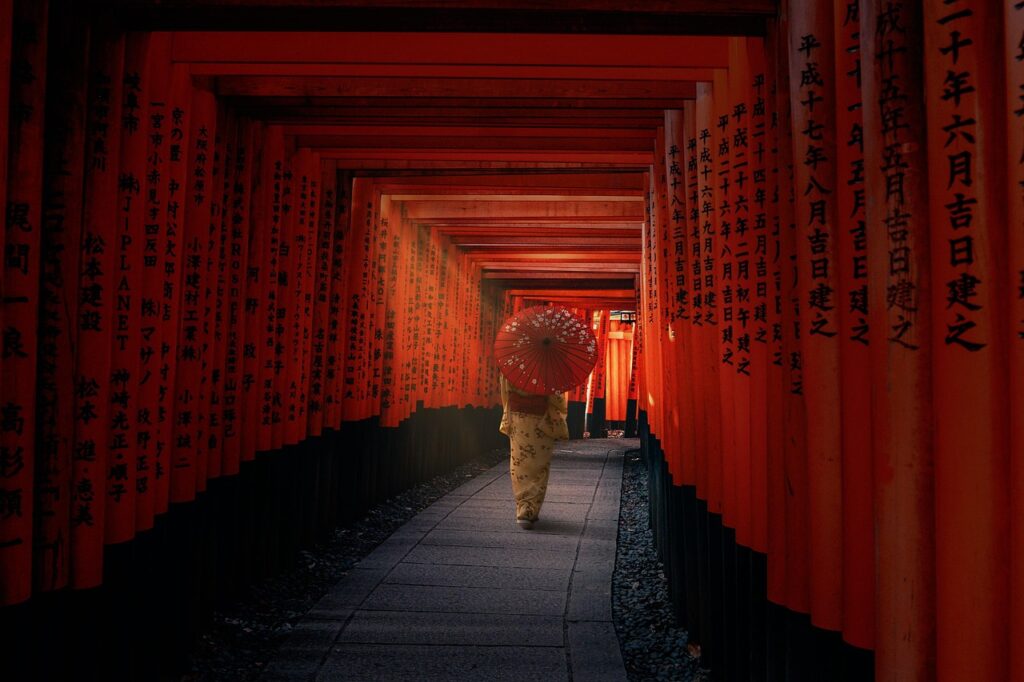
千本鳥居

Fushimi Inari Taisha: Kyoto’s Iconic Shrine | Torii Gates, Hiking Trail & Omamori Guide (2026)

The Head Shrine of 30,000 Inari Shrines — What Lies Beyond the Thousand Gates The iconic Senbon Torii (Thousand Torii Gates) of Fushimi Inari Taisha “Is it worth hiking all the way to the top of Mount Inari?” Short answer: if you have the time and energy, absolutely yes. But most visitors only walk through

Fushimi Inari Taisha: Kyoto’s Iconic Shrine | Torii Gates, Hiking Trail & Omamori Guide (2026) Read More »