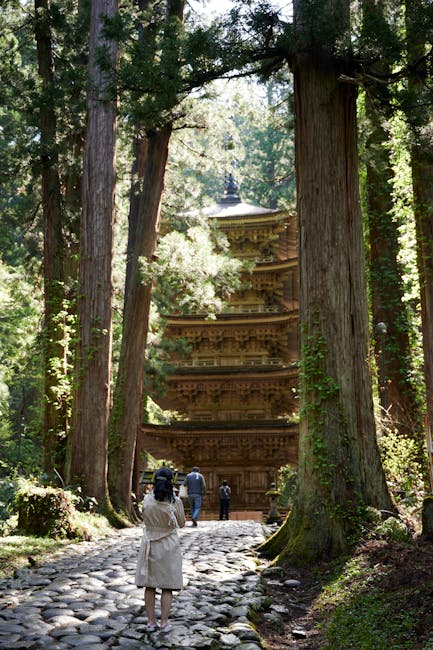
Mount Haguro (Haguro-san) is one of the three Dewa Sanzan mountains, with Gassan and Yudono, and it is open to visitors all year, while the other two close for the winter. It fits into a single day from Tsuruoka. You do not have to climb all 2,446 stone steps: a local bus runs to the summit. The real choice is how many of the steps to walk, and the timetable decides what works.
This guide gives three ways to spend the day, the bus times behind each one, and what changes in winter. Times and fares are from the operator’s timetable as of October 23, 2026. For the history, the pagoda and what is at the summit, see the Mount Haguro complete guide. This page only plans the day.
Quick answer: pick one of three ways
- A. Ride up, pagoda on the way back (half day). You walk about 300 steps down to the pagoda and back. Earliest bus up: 7:50 (April–November) or 10:40 (all year). Good for a first visit and for winter.
- B. Climb up, ride down (full day). You climb all 2,446 steps from the gate. Take the 7:50. Good for a full day when the steps are free of snow.
- C. Ride up, walk down (full day). You walk 2,446 steps down. Earliest bus up: 7:50 (April–November). Good for a full day when the steps are free of snow, and only if you are happy with an untimed descent (see C below).
Two timetable facts frame the day. The first bus to the foot of the mountain leaves Tsuruoka at 7:50 (in July–September, extra earlier buses run on some days). The last bus back from the gate leaves at 17:18 and continues the 17:00 bus down from the summit, which runs April to November only. From December 1 the operator cuts the service to the summit, and the last summit bus down that runs all year is the 16:00 (see “Winter” below).
The buses, with times
All buses here are Shonai Kotsu (庄内交通) local buses, timetable revised April 1, 2026. “Esmall” (エスモール) is the Tsuruoka bus terminal. The stop in front of JR Tsuruoka Station (鶴岡駅前) calls 3 minutes after Esmall on the way out, so the 7:50 from Esmall is the 7:53 from the station stop. At both Esmall and the station, board at stand 1 (①のりば). Zuishinmon (羽黒随神門), the “Divine Guardians’ Gate”, is where the stone steps begin. The summit stop is 羽黒山頂. These are the names to look for on signs and in the timetable.
Tsuruoka to Zuishinmon, and on to the summit
| Leaves Esmall | Reaches Zuishinmon | Continues to the summit? |
|---|---|---|
| 7:50 | 8:29 | Yes, arrives 8:47 (April–November) |
| 9:40 | 10:19 | No |
| 10:40 | 11:19 | Yes, arrives 11:37 (all year) |
| 11:40 | 12:19 | Yes, arrives 12:37 (April–November) |
| 12:55 | 13:34 | Yes, arrives 13:52 (all year) |
| 14:40 | 15:19 | Yes, arrives 15:37 (all year) |
| 15:30 | 16:09 | Yes, arrives 16:27 (April–November) |
| 17:25 | 18:04 | No |
Riding from Esmall to the summit on the 7:50 takes 57 minutes. On the timetable an arrow joins each of these buses to its summit leg, which points to one bus carrying on, but the page does not explain the arrows, so ask the driver if you are unsure. A few extra runs on the July–September Gassan bus days (marked ※ on the timetable) are left out of both tables. A weekday-only bus at 18:35 is too late for a day trip.
Summit to Zuishinmon to Tsuruoka
| Leaves the summit | Reaches Zuishinmon | Bus to Tsuruoka leaves | Reaches Esmall |
|---|---|---|---|
| 9:00* | 9:14 | 9:18 | 9:57 |
| 12:00 | 12:14 | 12:18 | 12:57 |
| 13:00* | 13:14 | 13:18 | 13:57 |
| 14:35 | 14:49 | 14:53 | 15:32 |
| 16:00 | 16:14 | 16:18 | 16:57 |
| 17:00* | 17:14 | 17:18 | 17:57 |
\* April–November only. On the way back the station stop is reached 3 minutes before Esmall.
The same arrows join each summit bus to the Tsuruoka bus after it (the times run on: 12:14 at Zuishinmon, then 12:18 from stop 2), so the bus carries on to Tsuruoka. Ask the driver as you ride down. Summit buses stop at Zuishinmon stop 1 (the Okawa Shop side), but buses leaving Zuishinmon, up to the summit or down to Tsuruoka, leave from stop 2 (the Pocket Park side) or the Ideha Cultural Memorial Hall stop just before it. So if you get off for the pagoda, wait at stop 2. If you walk down the steps instead, any bus from Zuishinmon to Tsuruoka works: 9:18, 10:41, 12:18, 13:18, 14:53, 16:18 and 17:18. A weekday-only bus also leaves at 7:21.
Times are scheduled passing times, and delays and sudden suspensions happen. Leave yourself some margin.
Fares and paying
- From Esmall or Tsuruoka Station: 900 yen to Zuishinmon, 1,400 yen to the summit (adult, one way).
- You pay when you get off. With cash, take a numbered ticket as you board and put the ticket and exact coins in the fare box. No change is given, and the changer by the driver takes only coins and 1,000-yen notes, so break large notes beforehand.
- IC cards work: tap the reader when you board and again when you get off. Suica (including mobile Suica) and other nationwide transit cards, PASMO, and the local shoko cherica are accepted.
Three ways to do the day
A. Ride up, pagoda on the way back (half day)
Between April and November, take the 7:50 and stay on the bus to the summit, arriving 8:47. Spend your time at the top, then ride down and visit the pagoda last. It is about 300 steps below the gate, roughly 10 to 15 minutes each way, and the Haguro Tourism Association puts the round trip at about 30 minutes.
The pagoda only fits if the next bus is not 4 minutes away. After the 9:00, 12:00 or 13:00 from the summit you have time for it before the 10:41, 13:18 or 14:53. After the 14:35 you can catch the 16:18. After the 16:00, from late October on, it is not worth trying: the pagoda walk would end around 16:45, near or after sunset, and the next bus is 17:18. In spring and summer the days are long enough for it.
APRIL–NOVEMBER (example)
7:50   Tsuruoka Esmall (Station 7:53)
8:29   Zuishinmon: stay on the bus
8:47   Summit: your own time
12:00  Bus down from the summit
12:14  Zuishinmon: walk to the pagoda
13:18  Bus to Tsuruoka
13:57  Esmall (Station 13:54)
From December to March, do the pagoda first. Take the 9:40 from Esmall (Zuishinmon 10:19) and walk to the pagoda if the snow allows. Then take the 13:37 from Zuishinmon to the summit (the 12:55 from Esmall carrying on, arriving 13:52), come down on the 16:00 and take the 16:18 to Tsuruoka. That leaves about three hours for the pagoda and for returning borrowed boots, which last winter had to be lent by 15:00 (see Winter below).
B. Climb up, ride down (full day)
This is the pilgrim’s way. Take the 7:50, get off at Zuishinmon at 8:29 and walk up. The Haguro Tourism Association says the climb from the gate to the summit takes about 60 minutes, and the shrine’s visitor page says about 90 minutes. The pagoda is on the way: the route goes a short way down from the gate, past the pagoda, then climbs. The sources do not say whether the 60 and 90 minutes include that first stretch, so expect to reach the summit between about 10:00 and 11:00, depending on your pace and how long you stay at the pagoda.
Decide your bus down before you start. The 14:35 leaves a relaxed afternoon at the top. The 16:00 is the last one that runs all year, and the 17:00 the last in April–November.
APRIL–NOVEMBER, DRY STEPS (example)
7:50   Tsuruoka Esmall (Station 7:53)
8:29   Zuishinmon: start climbing
~10:00–11:00  Summit
14:35  Bus down from the summit
14:49  Zuishinmon
14:53  Bus to Tsuruoka
15:32  Esmall (Station 15:29)
C. Ride up, walk down (full day)
Take the 7:50 to the summit (April–November), arriving 8:47, and walk down. No official source gives a time for the descent, so this plan cannot be timed from the timetable. Pick the Zuishinmon bus you want first. From November aim for the 14:53: sunset is 16:41 on October 31 and 16:27 by mid-November (see below). In October the 16:18 still leaves daylight. If you are unsure of your pace, choose B or A.
Wet stone steps are slippery in either direction. If rain is forecast, plan A keeps the walking to the short stretch to the pagoda.
Sunset and the last bus
Sunset times for Yamagata City (National Astronomical Observatory of Japan). Tsuruoka’s own times differ somewhat from Yamagata City’s, so use these as a guide.
| Date | Sunrise | Sunset |
|---|---|---|
| October 31 | 6:03 | 16:41 |
| November 15 | 6:19 | 16:27 |
| November 30 | 6:35 | 16:19 |
| December 15 | 6:48 | 16:19 |
| December 31 | 6:55 | 16:28 |
From mid-October the sun sets before the 17:00 bus leaves the summit, so treat it as a ride, not a walking deadline. The shrine’s visitor guidance warns that it can be completely dark on the way down when the days are short, so keep any walking to daylight. If you miss the last bus, taxis are an option (fares not confirmed), and the complete guide names a taxi company.
Winter (December to March)
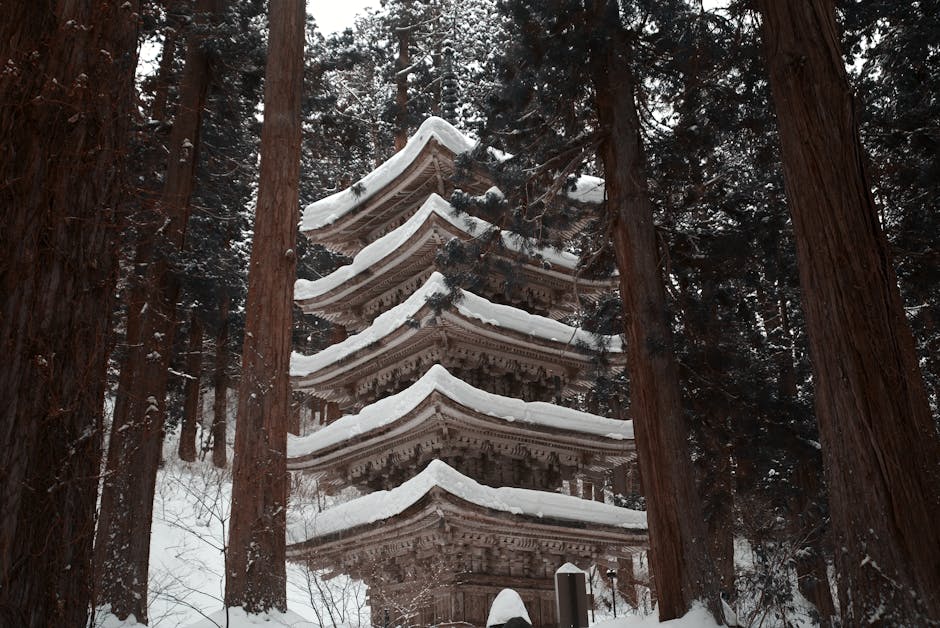
- Fewer buses. From December 1 to March 31 the operator cuts the service between the Ideha Cultural Memorial Hall stop and the summit, and the runs marked April–November drop out. Three buses a day go up to the summit: the 10:40, 12:55 and 14:40 from Esmall, arriving 11:37, 13:52 and 15:37. Three come down from the summit: 12:00, 14:35 and 16:00.
- Snow is not cleared from the steps. Depending on the snow you may be able to walk as far as the pagoda. Ask at Zuishinmon before you start, and turn back if the steps are buried. Last winter’s guidance warned that the Mamako-zaka slope turns to ice, that snow can hide the line between the steps and the path, and that people have been reported lost in some years. It gave 30 to 40 minutes to reach the pagoda in winter, without saying whether that is one way or round trip, and it advised rubber boots or snow footwear. Boots were lent at the Ideha Cultural Memorial Hall from 9:30 to 15:00 and taken back until 16:00 (closed Tuesdays), so plan any pagoda visit around those hours. The complete guide covers the gear.
- Which buses to trust. The 16:18 from Zuishinmon continues the all-year 16:00 summit bus, so it is the one to plan on. The 9:18, 13:18 and 17:18 continue summit buses that run April to November only, and winter running is not confirmed. No separate winter timetable was found. The operator warns that winter traffic can cause long delays and sudden suspensions, asks you to allow plenty of time, and posts suspensions on its service-information page. Around New Year (roughly December 30 to January 5) special timetables apply, so check those dates too.
With three buses each way, winter is a half-day plan. The 10:40 up and the 14:35 or 16:00 down is the comfortable pairing.
All three mountains in one day?
Only in summer, and the 2026 season is over. The Gassan road between the 4th and 8th stations closed for the winter on October 19, 2026. Gassan Shrine’s 2026 season runs July 1 to September 15 according to the shrine, while the tourism association’s FAQ says July 1 to August 31, so confirm the dates for the year you travel. Yudono usually opens from June to early November. From December to March, Haguro-san is the one of the three that you can visit. The complete guide lists the extra 2026 transport for the summer season.
From Yamagata City or Tokyo
Yamagata City. A day trip is possible. The tight point is the last bus: if you catch the 17:18 from the gate, you reach Esmall at 17:57 and have 8 minutes for the 18:05 to Yamagata, so the example below uses the 16:00 summit bus instead. The 7:23 highway bus from Yamagata Station reaches Esmall at 9:17 (fare 2,600 yen, about 1 hour 54 minutes to Esmall, no seat reservations). The 7:50 local bus is already gone, so your first bus is the 9:40, reaching Zuishinmon at 10:19.
YAMAGATA DAY TRIP (example, snow-free day)
7:23   Yamagata Station, highway bus
9:17   Tsuruoka Esmall
9:40   Local bus from Esmall
10:19  Zuishinmon: pagoda round trip
11:22  Bus up to the summit
11:37  Summit
16:00  Bus down from the summit
16:18  Bus to Tsuruoka from Zuishinmon
16:57  Esmall
18:05  Highway bus to Yamagata
20:02  Yamagata Station
The 18:05 is the last bus to Yamagata. The operator’s page still shows 2021 headings next to a fare table dated April 2026, so confirm the highway bus times before you book. The fastest train route found takes about 3 hours 13 minutes with 2 changes, at 2,420 yen (route finder, October 23). Other departures take longer. If you can, sleep in Tsuruoka: it gives you the 7:50.
Tokyo. Plan a night in Tsuruoka. The Haguro Tourism Association lists a flight from Haneda to Shonai Airport plus an airport bus (its page gives about 1.5 hours for this) and an overnight highway bus from Tokyo (about 8 hours). A train time is not given here, because the figures found disagree. Look it up with a route finder when you book.
By car
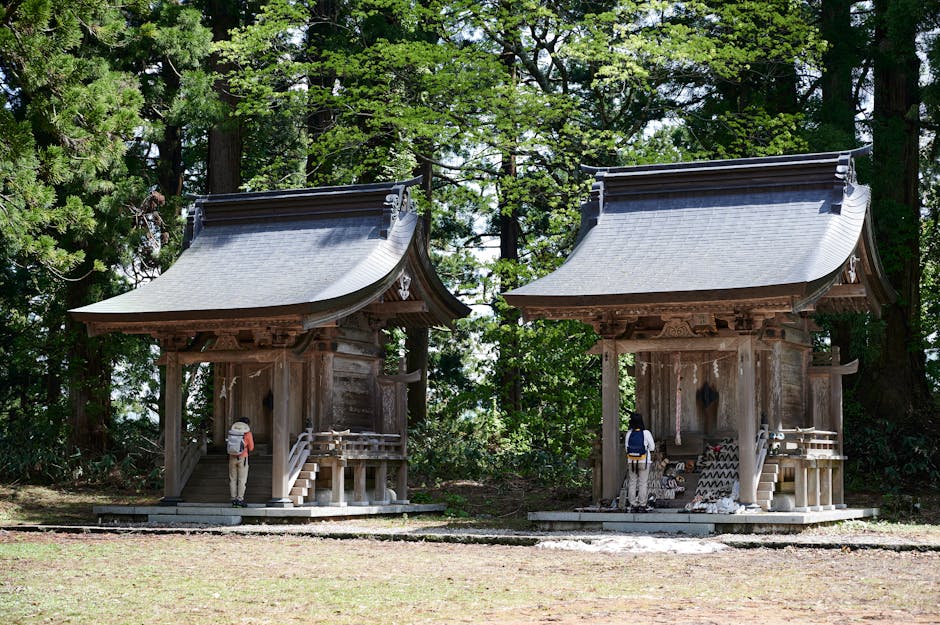
The Haguro-san Toll Road runs to the summit parking, and a passenger car pays 400 yen for the round trip. Toll hours change by season. For hours, parking and the summit, see the complete guide.
Frequently asked questions
Do I have to climb the 2,446 steps?
No. A bus goes to the summit year-round, and plan A needs only the short walk to the pagoda.
How long does the climb take?
About 60 minutes according to the Haguro Tourism Association and about 90 according to the shrine (see plan B). No official source gives a descent time.
Esmall or Tsuruoka Station?
Either. The fares are the same.
Can I go in winter?
Yes, by bus. See “Winter” above.
Sources and last checked
Timetables, fares and dates were read on October 23, 2026 from these pages. Please check them again on the day.
- Shonai Kotsu: Haguro line timetable and fare table (revised April 1, 2026), paying on local buses, Haguro-san Toll Road, Yamagata highway bus, service information with the winter changes
- Haguro Tourism Association: FAQ, winter visiting guidance (published November 2025), access from the Tokyo area and news of October 15
- National Astronomical Observatory of Japan: sunrise and sunset, Yamagata (October; the November and December pages were also read)
- A rail time and fare from Yamagata to Tsuruoka came from a route-finder search on October 23.
- Dewa Sanzan Shrine: visiting (about 90 minutes for the climb, the warning about the dark) and top page (the Gassan season)
Related guides
- Mount Haguro complete guide: history, the pagoda, the summit shrine, food and lodging, and the extra 2026 transport