Quick Answer: Is It Safe to Visit at Night?
Yes, but with limits.
| Area | Safe at Night? | Lighting |
|---|---|---|
| Main grounds to Senbon Torii | Yes | Well-lit |
| Senbon Torii to Okusha | Yes | Partially lit |
| Beyond Okusha (mountain) | Not recommended | Dark, steep |
Key rule: Stay in the lower areas. Don’t go beyond the Okusha worship hall after dark — the mountain paths have few lights, and you may meet wild animals such as wild boars.
What to Expect at Night
Lighting Situation
Fushimi Inari has no official light-up event. The lighting you see is:
- Permanent lanterns along paths
- Security lighting near main buildings
- Ambient light from the city below
| Area | Lighting Level |
|---|---|
| Main hall area | Bright |
| Romon Gate | Bright |
| Senbon Torii entrance | Moderate |
| Inside Senbon Torii tunnel | Dim to moderate |
| Okusha area | Dim |
| Mountain paths | Very dark to none |
Atmosphere
Night visits offer something completely different from daytime:
- Mysterious, almost eerie ambiance
- Nearly empty after 9 PM
- Sounds amplified – rustling leaves, distant city
- Temperature drop – noticeably cooler
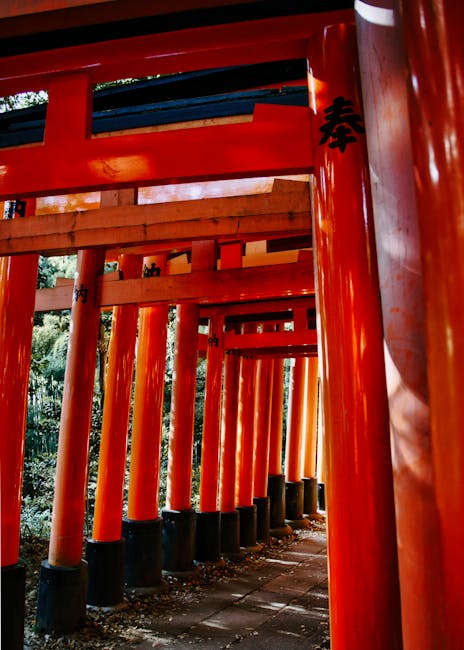
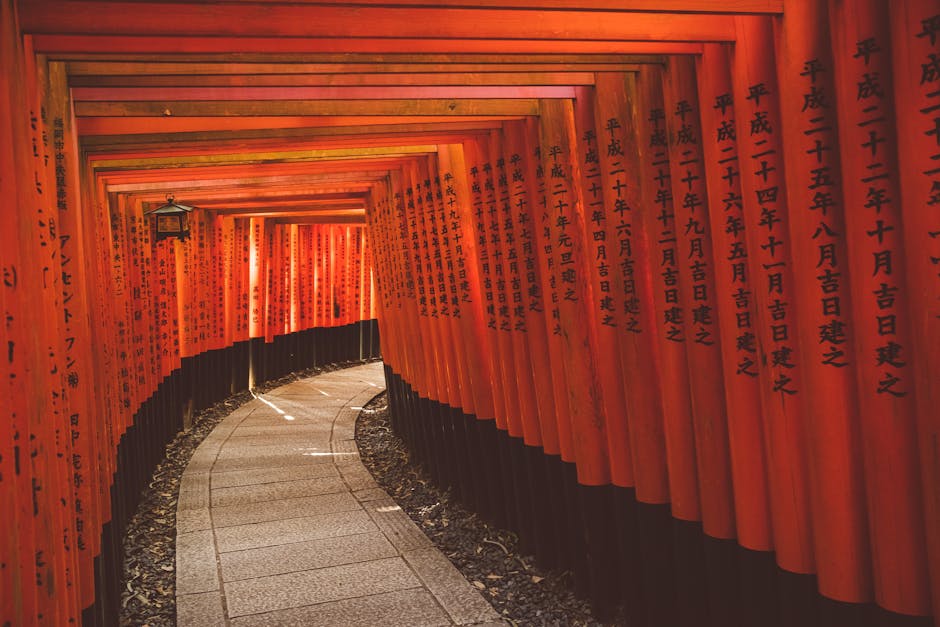
At night, the torii tunnel transforms into a mystical corridor where shadows dance between the vermillion gates
Best Times for Night Visits
| Time | Experience | Recommended For |
|---|---|---|
| 6:00-8:00 PM | Transition hour | First-timers, couples |
| 8:00-10:00 PM | Quiet, atmospheric | Photographers, solo explorers |
| 10:00 PM-12:00 AM | Very quiet | Serious photographers |
| 12:00-5:00 AM | Empty, potentially unsettling | Experienced only |
Recommended: 8:00-10:00 PM
Why this window:
- Dark enough for night atmosphere
- Some other visitors (safety in numbers)
- Restaurants nearby still open
- Last trains haven’t left yet
Safety Information
Safe Zones at Night
“`
SAFE (well-lit, maintained paths):
├── JR Inari Station
├── Romon Gate
├── Main Hall
├── Senbon Torii (main tunnel)
└── Okusha worship hall
USE CAUTION (dim, isolated):
└── Side routes
NOT RECOMMENDED (dark, steep, isolated):
├── Paths beyond Okusha
├── Mountain paths to Yotsuji
├── Summit trail
└── Any path without lighting
“`
General Safety Tips
1. Go with someone – solo night visits can feel unsettling
2. Tell someone your plans – share your location
3. Stick to lit paths – don’t explore unknown routes
4. Trust your instincts – if it feels wrong, turn back
5. Keep phone charged – for flashlight and emergency
Emergency Information
| Need | Contact |
|---|---|
| Police | 110 |
| Ambulance | 119 |
| Nearest koban (police box) | In front of JR Inari Station |
| Shrine office | 075-641-7331 (daytime only) |
Cell signal: Works throughout lower areas. May be weak on mountain.
What to Bring
Essential
| Item | Why |
|---|---|
| Flashlight/headlamp | Path visibility, safety |
| Fully charged phone | Backup light, maps, emergency |
| Cash | Vending machines, late-night taxis |
| Comfortable shoes | Uneven paths, stairs |
Recommended
| Item | Why |
|---|---|
| Warm layer | Temperature drops at night |
| Small bag | Keep hands free |
| Portable charger | Extended phone use |
| Water | Vending machines may be far |
For Photographers
| Item | Why |
|---|---|
| Tripod | Long exposure shots |
| Fast lens (f/1.8-2.8) | Low light performance |
| Remote shutter | Reduce camera shake |
Night Visit Walking Route
90-Minute Night Route (Recommended)
| Time | Location | What to See |
|---|---|---|
| 0:00 | JR Inari Station | Begin journey |
| 0:05 | Romon Gate | Illuminated entrance |
| 0:10 | Main Hall | Night prayer (optional) |
| 0:15 | Senbon Torii entrance | Highlight – gates with lantern glow |
| 0:30 | Inside the tunnel | Walk slowly, absorb atmosphere |
| 0:45 | The Fork | Two tunnels diverging |
| 0:55 | Okusha | Fox statues, Omokaru-ishi stones |
| 1:05 | Turn back point | Don’t go further at night |
| 1:20 | Return through Senbon Torii | Different perspective |
| 1:30 | Exit via shopping street | Most shops closed, but atmospheric |
Going Beyond Okusha at Night?
We don’t recommend it: the mountain paths have few lights, and you may meet wild animals such as wild boars. At night, stay around the main hall and the Senbon Torii, and save Kumataka-sha and the Yotsuji view of Kyoto for a daytime visit.
Night Photography Tips
Camera Settings
| Setting | Recommendation |
|---|---|
| Mode | Manual |
| ISO | 1600-6400 (as needed) |
| Aperture | f/2.8-4 |
| Shutter | 1/30 sec or faster handheld; slower only on a tripod in open spots |
| White Balance | Tungsten (3200K) or Auto |
Best Night Shots
1. Senbon Torii with lanterns – handheld at a high ISO (no tripod inside the tunnels; see below)
2. Silhouettes in gates – backlit by distant light
3. Fox statues – flash or light painting
Tripod Spots
The shrine prohibits blocking other worshippers by taking photos on narrow paths, so don’t set up a tripod inside the Senbon Torii tunnels or at their entrance. Use one only in open spots where no one needs to pass.
| Location | Why Good |
|---|---|
| Main hall area | Wide shots, no obstacles |
Practical Information
Getting There at Night
Last trains TO Inari:
- From Kyoto: ~11:45 PM
- From Osaka: ~10:45 PM (via Kyoto transfer)
Last trains FROM Inari:
- To Kyoto: ~11:54 PM
- To Osaka: Need to transfer at Kyoto by ~11:30 PM
After last train:
- Taxi to Kyoto Station: ~¥1,500-2,000
- Taxi to central Kyoto hotels: ~¥2,000-3,000
Food & Facilities
| Need | Availability at Night |
|---|---|
| Restrooms | Available 24/7 near main hall |
| Vending machines | Yes, multiple locations |
| Restaurants | Most close by 7-8 PM |
| Convenience stores | 7-Eleven near station (24h) |
Weather Considerations
| Weather | Night Visit? |
|---|---|
| Clear | Best conditions |
| Cloudy | Good – moody atmosphere |
| Light rain | Possible – bring umbrella |
| Heavy rain | Skip – paths become slippery |
| Fog | Excellent – mysterious photos |
Who Should (and Shouldn’t) Visit at Night
Great For:
- Photographers wanting empty shots
- Couples seeking romantic atmosphere
- Night owls who dislike crowds
- Repeat visitors who’ve seen it by day
- Those seeking spiritual/meditative experience
Not Recommended For:
- First-time Japan visitors (see it by day first)
- Families with young children
- Those uncomfortable in dark/quiet places
- Solo female travelers (unless comfortable)
- Anyone without proper footwear
Frequently Asked Questions
Q: Is Fushimi Inari scary at night?
It can feel eerie, especially alone. The foxes, shadows, and silence create an atmosphere some find unsettling. Go with someone if you’re nervous.
Q: Are there other people at night?
Usually a few visitors until 10-11 PM. After midnight, you may be completely alone.
Q: Do I need a flashlight even in lit areas?
Yes. Even “lit” areas have dark spots. A small flashlight helps with stairs and uneven paths.
Q: Can I do the full mountain climb at night?
Technically yes (it’s open 24h), but strongly discouraged. The paths are steep, dark, and isolated. Risk of falls or getting lost.
Q: Best night to visit?
Weeknights are quieter. Avoid Friday/Saturday nights when more visitors come.
Related Guides
- Fushimi Inari Complete Guide – Full shrine information
- Fushimi Inari from Osaka – Day trip planning
- Fushimi Inari Photography Guide – Best spots & times
- Fushimi Inari Hiking Guide – Mountain trail details
Last updated: September 2026 (night-safety and tripod notes; other details as of January 2026)
Train schedules may vary. Confirm last train times on JR West website or Google Maps before your visit.