Just 30 minutes from central Kyoto by train, hidden in a forested river valley behind Mount Kurama, lies one of the city’s oldest and most atmospheric shrines — Kifune Shrine (貴船神社), dedicated to the water deity. In the height of summer, when Kyoto’s basin becomes oppressively humid, the air along the Kibune River runs roughly 5°C (9°F) cooler than downtown. This is the place Kyotoites call their “cool retreat.”
Most visitors climb the famous lantern-lined stone stairway, pray at the Main Shrine, take their photo, and head back. But in doing so, they see only one-third of Kifune Shrine. The shrine is actually a trio — the Main Shrine (Hongu), the Inner Shrine (Okumiya), and the Yui-no-yashiro (the shrine of matchmaking) — and the traditional way to visit is the “Sansha-mairi” (three-shrine pilgrimage), walked in a specific order. Each of the three holds a completely different history and a different prayer.
This guide covers the correct order of the three-shrine pilgrimage, how the famous water fortune slips work, the mystery sealed inside the Inner Shrine, the truth behind the shrine’s dark “hour-of-the-ox” legend, the summer kawadoko riverside dining tradition, and the classic Kurama-to-Kifune hiking route — everything you need to enjoy Kifune to the fullest.
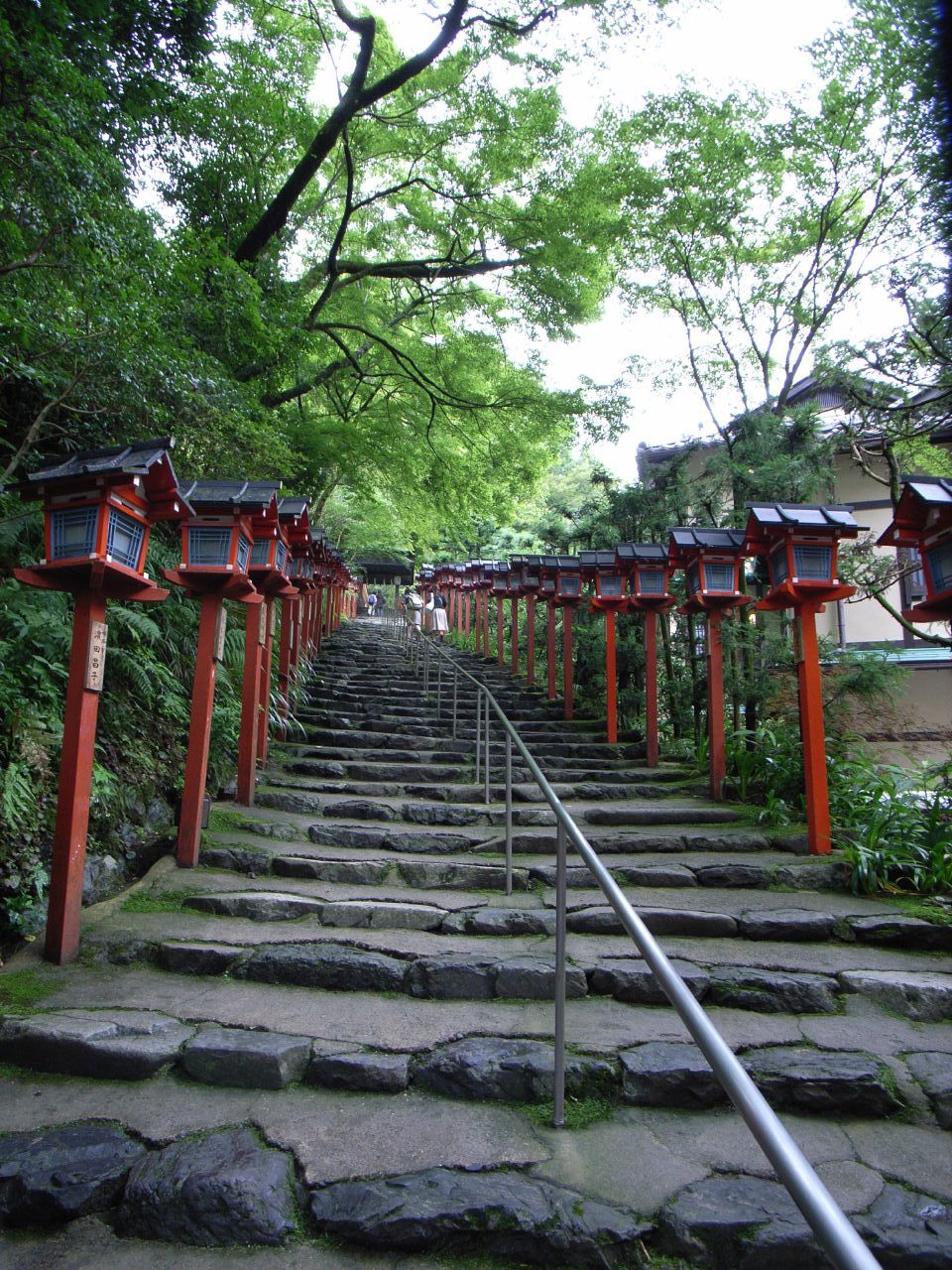
What Makes Kifune Special
The Total Head Shrine of Some 500 Water-Deity Shrines
Kifune Shrine enshrines Takaokami-no-kami, a dragon deity governing water who appears in Japan’s oldest chronicles, the *Kojiki* and *Nihon Shoki*. As the god who calls the rain, stops the rain, and rules the flow of water, this deity received especially deep devotion from the imperial court.
According to the *Engishiki* (a 10th-century record of court rituals), successive emperors offered a black horse to pray for rain in times of drought, and a white horse to pray for clear skies during prolonged rain. This tradition of offering live horses is said to be the origin of the ema — the small wooden plaques painted with horses that worshippers now hang at shrines all across Japan. In other words, the ema culture found at every Japanese shrine may well have begun here at Kifune.
Kifune is the total head shrine of roughly 500 Kifune shrines nationwide. Its founding date is unknown, but shrine tradition holds that Tamayori-hime-no-mikoto — mother of Japan’s legendary first emperor — sailed up from Osaka Bay through the rivers in a yellow boat and enshrined the water deity at this spot. Nara-period documents confirm the shrine is at least 1,300 years old.
“Kifune,” Not “Kibune” — A Detail That Reveals the Water Deity’s Will
A small but telling piece of trivia: as a place name, the area is read “Kibune,” but the shrine’s name is read “Kifune” — without the voiced consonant. Locals use the two readings naturally.
Why does only the shrine name stay unvoiced? The most popular explanation is precisely *because it is a shrine of the water deity.* Voicing it to “Kibune” evokes the image of an old, yellowed boat — water turning murky. To honor the realm of pure, clear water, the formal name keeps the crisp, unvoiced “Kifune.” Reverence for water runs right down to the syllables of its name.
The Three-Shrine Pilgrimage: How to Visit Kifune Properly
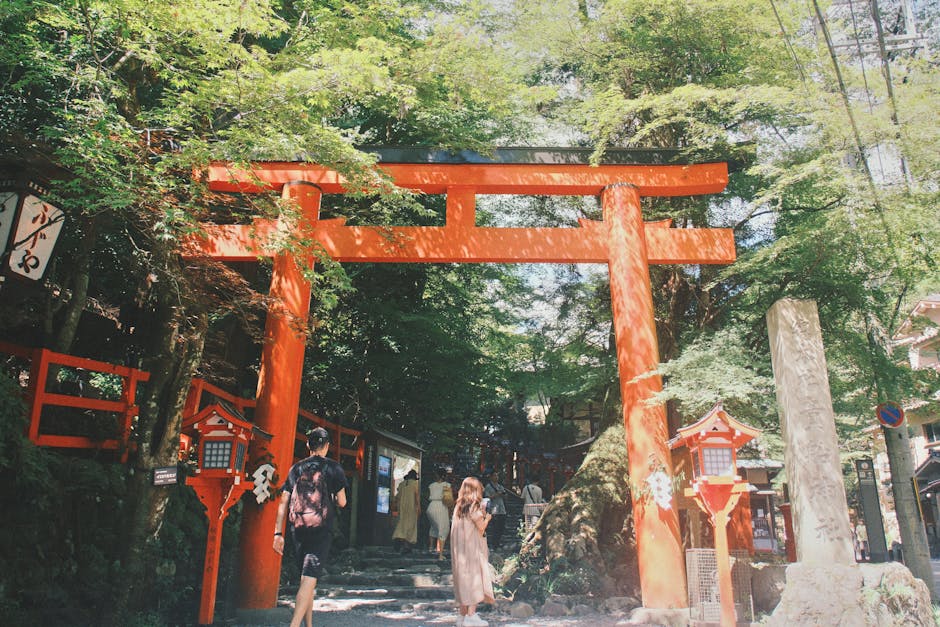
The proper way to worship at Kifune is the Sansha-mairi, walking the three shrines in a set order: Main Shrine (Hongu) → Inner Shrine (Okumiya) → Yui-no-yashiro (Middle Shrine). The key is to walk *past* the Yui-no-yashiro on the way up to the Inner Shrine, then stop there on the way back down.
Hongu (Main Shrine) — Meeting the Water Deity
The starting point. The stone stairway lined on both sides with vermilion lanterns is Kifune’s signature image. When snow settles in winter, the lantern light reflects off the white surface to create a scene so magical that some visitors return specifically to see these “snow lanterns.”
The Main Shrine’s hall was washed away by a great flood in the Meiji era; the current building was newly constructed in 2007. In front of it flows the sacred water known as Kifune no goshinsui, which you may draw freely — bring an empty bottle.
Water Fortune Slips (mizuura-mikuji)
Kifune’s most famous draw is the water fortune slip (200 yen). You receive a blank sheet of paper with nothing written on it — then float it on the sacred spring in the precinct, and the characters slowly rise to the surface. The trick is a special ink that develops in water, a fitting touch for a water shrine and a perennial social-media favorite. Because there is only one spot to float the slips, expect a 10-15 minute wait at busy times — early morning is best.
Helpfully for international visitors, each water fortune slip now carries a QR code: scan it with your smartphone and a translation appears in English, Chinese, and Korean.
Okumiya (Inner Shrine) — The True Origin of Kifune
About a 10-minute walk north along the Kibune River from the Main Shrine, the second stop on the pilgrimage is the Inner Shrine — the birthplace of Kifune itself.
This was the original location of the Main Shrine. When a great flood destroyed the hall in 1046, the shrine was relocated to its present site. So the true origin of Kifune lies here, at the Inner Shrine. The atmosphere is entirely different from the Main Shrine: a hushed space enclosed by giant trees, cool even at the height of summer, with roughly a third of the crowds — a place for quiet prayer.
The Boat-Shaped Stone (Funagata-ishi)
The most remarkable feature at the Inner Shrine is the Funagata-ishi, a roughly 10-meter-long mound of stones in the shape of a boat, sitting right beside the hall. Shrine tradition says it covers and conceals the yellow boat in which Tamayori-hime arrived. You cannot see inside the stone mound, and what lies within remains unknown — no archaeological survey has ever been conducted, so whether a boat (or any relic) actually rests inside is a genuine, enduring mystery.
The Renri no Sugi (Joined Trees)
Nearby stands the Renri no Sugi, where a cedar and a maple have fused into a single trunk partway up. Because two different species are bound together, it has long been treated as a symbol of marital and romantic union — a rare natural phenomenon.
Yui-no-yashiro — The Sacred Ground of Matchmaking
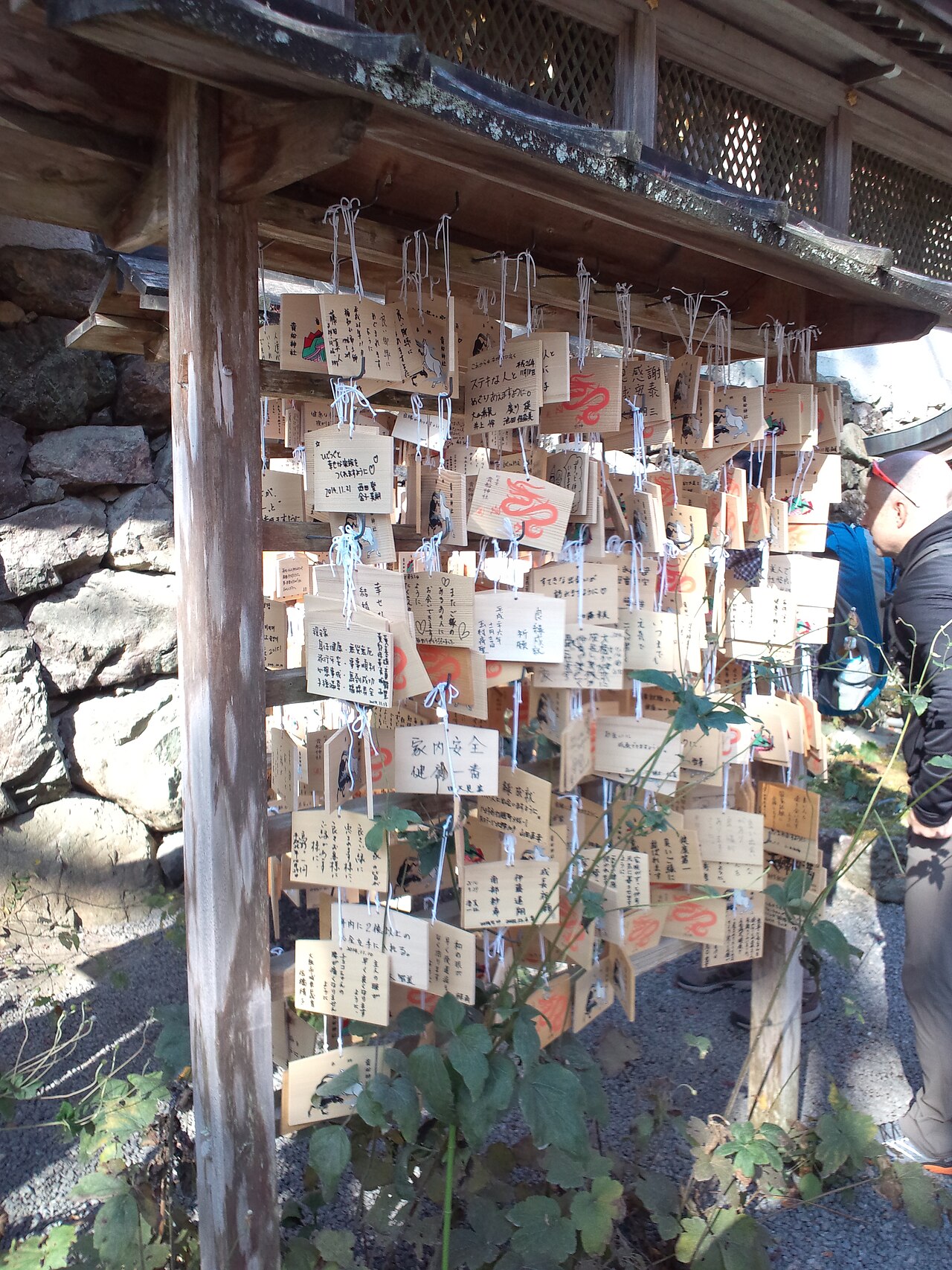
The third shrine, on the way back from the Inner Shrine toward the Main Shrine, is the most famous of all as the “Kifune of matchmaking.”
Its deity is Iwanaga-hime-no-mikoto. According to the *Kojiki*, when her younger sister Konohanasakuya-hime married the deity Ninigi, the elder Iwanaga-hime was sent back. Grieving this, she vowed: *”I shall remain here and grant good relationships to the people of the world.”* That vow is the origin of Yui-no-yashiro.
The Heian-era poet Izumi Shikibu, troubled by discord with her husband, is said to have prayed here and composed a poem — after which the couple reconciled. This legend spread Kifune’s reputation as a shrine of love. Her poem monument still stands in the precinct.
How to make a “musubi-bumi” (tied wish)
At Yui-no-yashiro you write your wish on a musubi-bumi (200 yen) and tie it at the designated rack. Many visitors come to pray not only for romance but for the improvement of relationships of every kind — at work, among friends, between parent and child.
The “Hour of the Ox” Legend — Is Kifune the Origin? The Truth
Some may associate Kifune with the “ushi-no-koku-mairi” (the cursing ritual performed in the hour of the ox). The reality is more nuanced. Heian-era texts record an *ushi-no-koku-mairi* at Kifune — praying between 1 and 3 a.m. — but originally this was a legitimate method of fervent prayer, nothing like its modern sinister image.
The dark association took hold largely through the Noh play *Kanawa*, in which a woman consumed by jealousy transforms into a demon at Kifune. Today the shrine has clearly rebranded itself as a shrine of matchmaking, not cursing. Night access to the precinct is discouraged for safety, and driving nails into the trees is property damage punishable by law. Knowing this history, you may instead feel the original meaning — the pure sincerity of praying earnestly in the silence.
A Note on Blessings
Kifune has traditionally been revered for the blessings below. This is historical and cultural context, not a guarantee of results.
| Shrine | Traditional Blessing | Location |
|——–|———————|———-|
| Hongu (Main) | Restoration of fortune, granting of heartfelt wishes | Top of the lantern stairway |
| Yui-no-yashiro (Middle) | Matchmaking, success in love | Between Hongu and Okumiya |
| Okumiya (Inner) | Fulfillment of wishes, warding off misfortune | 10-min walk from Hongu |
- Matchmaking & love — rooted in Iwanaga-hime’s vow at Yui-no-yashiro and the Izumi Shikibu reconciliation legend.
- Restoration & renewal — water symbolizes purification and rebirth; many visit during periods of stagnation, hoping life will start flowing again.
- Business & prosperity — water is the source of all industry; those in water-related trades (sake brewing, cooking, fishing) have especially deep faith, and Kyoto restaurateurs are seen praying here at New Year.
Best Time to Visit & Avoiding Crowds
Crowds by Time of Day
| Time | Crowd Level | Recommendation |
|——|————-|—————-|
| 6:00-9:00 (around opening) | Very light | ★★★★★ |
| 9:00-11:00 | Building | ★★★★☆ |
| 11:00-14:00 | Peak | ★★☆☆☆ |
| 14:00-16:00 | Easing | ★★★☆☆ |
| 16:00-closing | Dropping fast | ★★★★☆ |
Visiting hours shift by season (roughly 6:00-18:00; until 17:00 in winter). Early morning is by far the most comfortable. Note that in recent years Kifune has struggled with overtourism — the early-morning advantage matters more than ever.
Season by Season
Spring (Mar-May) ★★★★☆ — The fresh-green season is especially beautiful. From late April through May, the young maple leaves (ao-momiji) form a tunnel over the approach, set against the vermilion lanterns. Cherry blossoms arrive about a week later than in the city.
Summer (Jun-Sep) ★★★★★ — Kifune at its best. Around 5°C cooler than downtown, this is kawadoko (riverside dining) season. Tanabata bamboo decorations adorn the precinct in July. (Kawadoko requires reservations — weekends fill up a month ahead.)
Autumn (Oct-Nov) ★★★★★ — A celebrated spot for fall color. During the mid-November “Kifune Momiji Toro” illumination, lit lanterns and crimson leaves create a magical night scene — though crowds peak. Don’t miss the “Tunnel of Maples” on the Eizan train (between Ichihara and Ninose stations).
Winter (Dec-Feb) ★★★★☆ — The “snow lanterns” are the highlight. Even when central Kyoto sees no snow, Kifune often does. On snowy days, a special evening illumination may be held (announced same-day on official social media). Watch for ice underfoot.
The Kurama-to-Kifune Hiking Route
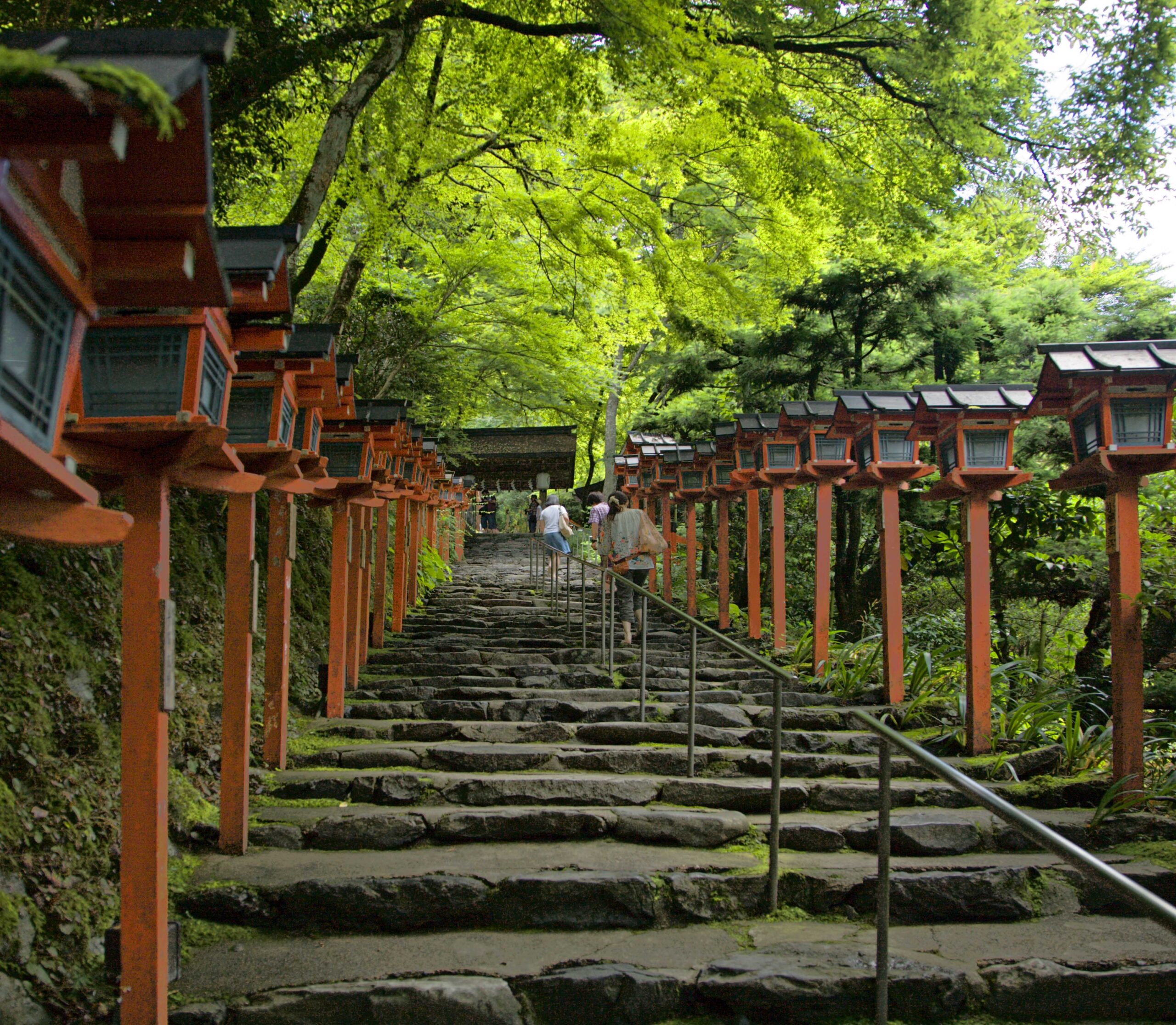
Kifune Shrine and Kurama-dera Temple sit back-to-back, separated by a single mountain. The classic hike descends from Kurama-dera’s west gate down to the Kifune side.
Route: Kurama Station → Kurama-dera (Niomon Gate) → Main Hall → Okuno-in Maoden → West Gate (Kifune side) → Kifune Shrine
| Section | Distance | Time | Difficulty |
|———|———-|——|————|
| Kurama Stn → Kurama-dera Main Hall | ~1 km | 30 min | Moderate (many steps) |
| Main Hall → Okuno-in → West Gate | ~1.5 km | 45 min | Somewhat steep (tree-root path) |
| West Gate → Kifune Shrine | ~0.5 km | 10 min | Flat |
Total: ~3 km, about 1.5-2 hours
Practical advice:
- Footwear: sneakers or sturdier. The tree-root path is slippery after rain.
- Water: there are almost no vending machines inside Kurama-dera. Carry 500 ml or more.
- Fee: Kurama-dera charges a 300 yen mountain-entry fee (aizan-hi).
- Do Kurama → Kifune, not the reverse — the reverse direction is a steep climb. Descend to Kifune, do the three-shrine pilgrimage, then enjoy a kawadoko lunch and take the Eizan train home.
Kawadoko: Kifune’s Other Great Attraction
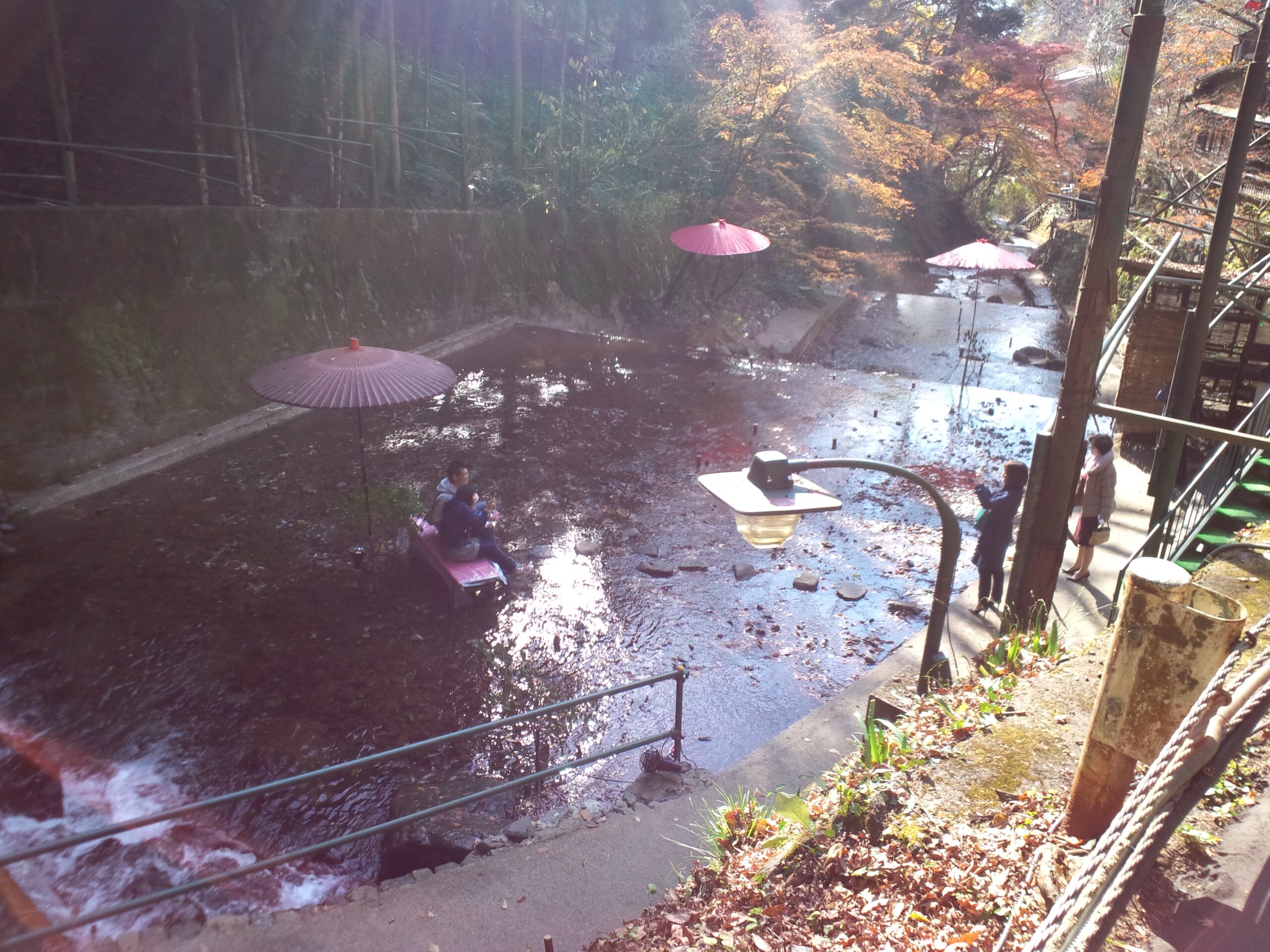
The kawadoko — dining platforms built right over the Kibune River — is a Kyoto summer tradition. Seated just above the rushing water, you eat to the sound of the current and the natural chill of the river.
| Item | Detail |
|——|——–|
| Season | May-Sep (varies by restaurant) |
| Budget | Lunch ¥5,000-8,000; dinner ¥10,000-20,000 |
| Reservations | Essential (weekends a month ahead) |
| Dress | Casual is fine; some visit in yukata |
Tip for budget travelers: café-style spots such as Kibune Club let you enjoy a river-platform seat with just a drink and dessert (around ¥1,000-2,000) — a great way to experience kawadoko without a full kaiseki meal. Among full restaurants, Hirobun is famous for its hands-on nagashi-somen (flowing noodles, ¥1,300; first-come, no reservations).
Practical Information for Your Visit
Getting There
By train (most recommended)
- Eizan Railway route (most popular): From Demachiyanagi Station, take the Eizan Railway Kurama Line to Kibune-guchi Station, then Kyoto Bus #33 to “Kibune” — about 30 minutes total.
- From Kyoto Station: Karasuma Subway Line to Kokusaikaikan, then Kyoto Bus #52 to “Kibune-guchi” (or transfer to bus #33 to “Kibune”).
- From Kibune-guchi Station, it is about a 25-minute uphill walk to the shrine if you skip the bus.
By car
- About 40 minutes from central Kyoto, but the Kibune area roads are narrow with seasonal traffic restrictions.
- Parking near the Main Shrine is paid (¥500-800 per visit) with very few spaces.
- On peak autumn and kawadoko weekends, private cars may be restricted entirely — public transport is the safe choice.
Basic Information
| Item | Detail |
|——|——–|
| Address | 180 Kuramakibune-cho, Sakyo-ku, Kyoto 601-1112 |
| Phone | +81-75-741-2016 |
| Hours | 6:00-18:00 (until 17:00 Dec-Apr); varies seasonally |
| Admission | Free |
| Time needed | Main Shrine only ~30 min; full three-shrine pilgrimage 1-1.5 hrs |
| Official site | https://kifunejinja.jp/ |
Goshuin (Shrine Stamp)
- Available at the Main Shrine office, 9:00-17:00 (seasonal), ¥300.
- A water-themed design, sometimes with seasonal limited editions.
- Goshuin are issued only at the Main Shrine — not at Yui-no-yashiro or the Inner Shrine.
Tips for International Visitors
- Language: The water fortune slips include a multilingual QR code (EN/CN/KR). Basic English signage exists, but staff English is limited — a translation app helps.
- Cash: Bring coins. The fortune slips, musubi-bumi, and goshuin are cash-only and inexpensive (¥200-300 each).
- Etiquette: At the temizuya, rinse your hands and mouth before praying. At the hall: bow twice, clap twice, pray, bow once.
- Pets: Pets are generally not allowed in the precinct, and there are no pet-sitting facilities in the Kibune area — arrange care in central Kyoto before visiting.
- Accessibility: The Main Shrine approach is a stone stairway and difficult for wheelchairs or strollers. A vehicle road bypasses the steps to near the Main Shrine (arrange in advance). The riverside path to the Inner Shrine is relatively flat but partly unpaved.
- Photography: The lantern stairway is the signature shot — early morning gives you the steps without crowds. Avoid blocking the narrow stairway for others.
What Visitors Say
Kifune draws many repeat visitors, and impressions shift dramatically with the season and time of day. Travelers frequently describe the Main Shrine’s lantern stairway as their most memorable image of Kyoto, while others say the hushed Inner Shrine is where they felt something genuinely special. A recurring note in recent reviews is overtourism — what was once a quiet escape from the city now draws large daytime crowds, which is exactly why early-morning visits are so highly recommended.
> “Arrived at 6 a.m. — almost no one there, and the air was cool and absolutely silent. Worth waking up early for.” — paraphrased from visitor reviews
As always, your own experience matters most. People feel power spots differently, and Kifune rewards those who come early and walk all three shrines.
Frequently Asked Questions
Q. How long does the three-shrine pilgrimage take?
A. About 1-1.5 hours for the full loop (Hongu → Okumiya → Yui-no-yashiro). It’s roughly a 10-minute walk from the Main Shrine to the Inner Shrine, and 5 minutes from the Inner Shrine to Yui-no-yashiro. The riverside path is flat, so comfortable shoes are all you need.
Q. Is Kifune accessible by wheelchair or stroller?
A. The Main Shrine approach is a stone stairway and difficult. A vehicle road bypasses the steps to near the Main Shrine (advance arrangement recommended). The riverside route to the Inner Shrine is relatively flat but partly unpaved.
Q. Can I bring my pet?
A. Pets are generally not permitted in the precinct, and there are no pet-sitting facilities in Kibune. Arrange care in central Kyoto, or stay at pet-friendly lodging beforehand.
Q. Is it worth visiting on a rainy day?
A. Rain has its own appeal here — the wet stone steps deepen in color against the vermilion lanterns. Wear non-slip shoes and bring an umbrella; the steps get slippery. The water fortune slips work fine in the rain.
Q. Should I visit Kurama-dera or Kifune first?
A. Kurama-dera first. The reverse direction is a steep climb. Visit Kurama-dera, cross the mountain, descend to Kifune for the three-shrine pilgrimage, then have a kawadoko lunch — the most efficient and least tiring flow.
Q. Is winter worth it?
A. Very much so. The “snow lanterns” appear only a few times a year. Even when central Kyoto has no snow, Kibune often does. Check official social media for same-day illumination announcements. Winter crowds are thin, but watch for ice underfoot.
Model Courses
Half-day course (3-4 hours, most recommended)
9:00 Arrive Kibune-guchi (Eizan Railway) → bus to “Kibune” → three-shrine pilgrimage (Hongu → Okumiya → Yui-no-yashiro) → 11:00 kawadoko lunch → 12:30 return by Eizan Railway
Full-day course (6-7 hours, for active hikers)
8:30 Arrive Kurama (Eizan Railway) → Kurama-dera → mountain hike → 11:00 reach Kifune, three-shrine pilgrimage → 12:30 kawadoko lunch → 14:00 explore Kibune → 15:00 return by bus + Eizan Railway
Summary
Kifune Shrine is far more than the “photogenic” lantern stairway. It is over 1,300 years of devotion to the water deity, three shrines each holding a different prayer, the one-of-a-kind water fortune ritual, and the unsolved mystery of the boat-shaped stone at the Inner Shrine.
Most visitors turn back after the Main Shrine and miss the three-shrine pilgrimage entirely. Walk all three. When you stand in the silence of the Inner Shrine, the bustle of central Kyoto will feel like another world.
—
We hope this guide helps you plan your visit to Kifune Shrine.
※ Information in this article is as of June 2026. Hours, fares, and seasonal events change — always check the official site for the latest information before visiting.
Primary Sources:
Find Out Your Compatibility with Kifune Shrine
Power spots have personal “compatibility” — different people experience the same place differently. This comes from individual energy patterns combined with the site’s character.
Kifune Shrine is known for matchmaking and the restoration of fortune, but whether it truly resonates with you depends on your personal energy derived from your birth date and time.
あなたに最適なパワースポットを知りたい方へ