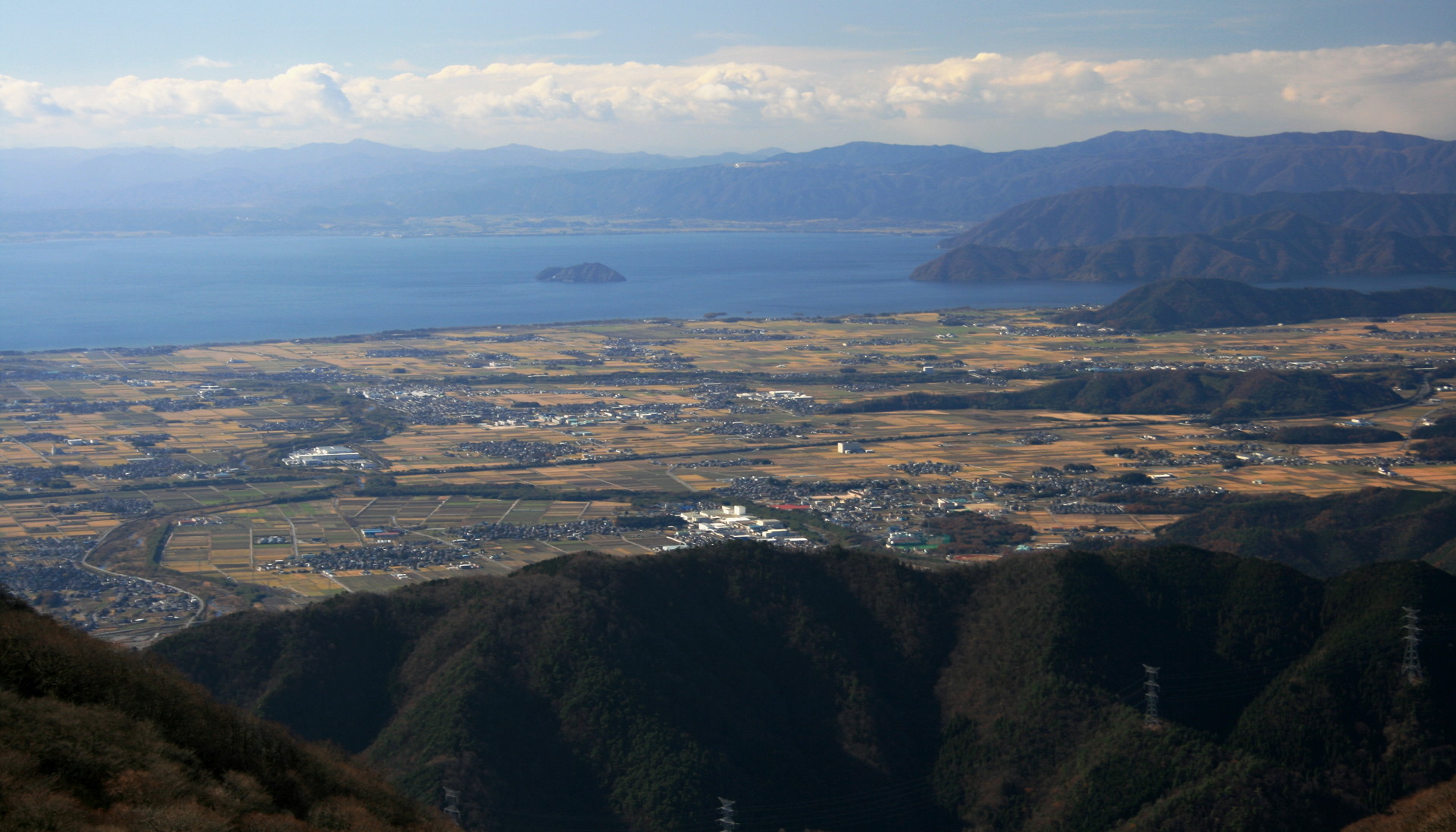
In the northernmost part of Lake Biwa, about 6 km offshore, lies a small island just 2 km in circumference — Chikubu Island (Chikubushima), where the entire landmass is covered by two sacred sites: Hogonji Temple (宝厳寺) and Tsukubusuma Shrine (都久夫須麻神社). This is the “island of prayer.”
Hogonji was founded in 724 CE by the monk Gyoki under an imperial decree from Emperor Shomu. Its principal deity, Daibenzaiten (Great Benzaiten), is enshrined as one of Japan’s Three Great Benzaiten — alongside Enoshima Shrine (Kanagawa) and Itsukushima Shrine (Hiroshima) — making this a central pilgrimage site for prayers of music, eloquence, fortune, and love. Additionally, the temple’s Kannon Hall (Kannon-do) is the 30th temple on the Saikoku Kannon Pilgrimage, dedicated to the Thousand-Armed Kannon.
But Hogonji’s greatest treasure goes beyond faith: it is the combination of the boat journey to reach it and the architectural masterpieces of the Momoyama period. The National Treasure Karamon Gate was relocated here by Toyotomi Hideyori from his father Hideyoshi’s mausoleum (Hokokubyo) in Kyoto — and is believed to be the only surviving structure from Toyotomi-period Osaka Castle. The Funaroka (Boat Corridor), an Important Cultural Property, was reportedly built using timbers from Hideyoshi’s flagship “Nihonmaru” used in the Korean campaigns — and remains the unique connecting path between the temple and the shrine.
This guide is built from primary sources — Hogonji’s official website, the Saikoku Pilgrimage Association, Biwako Kisen, Ohmi Marine, and Shiga Prefecture tourism — to help you plan a visit to a place only reachable by boat. We cover how to choose between three departure ports, how to manage your 90-minute window on the island, the reality of the 165 stone steps, winter cancellations, and everything else you need to know before going.
What Makes This Place Special
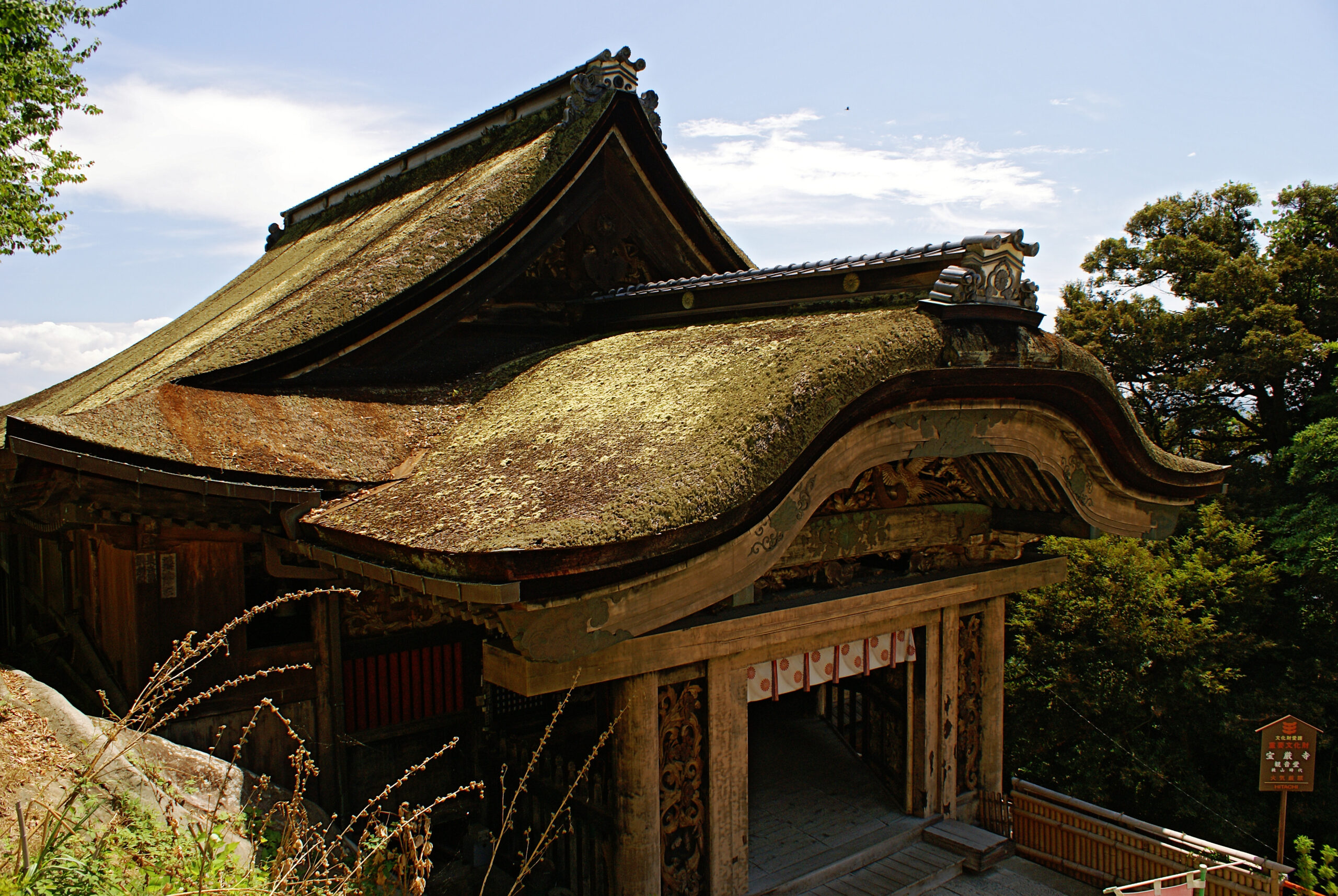
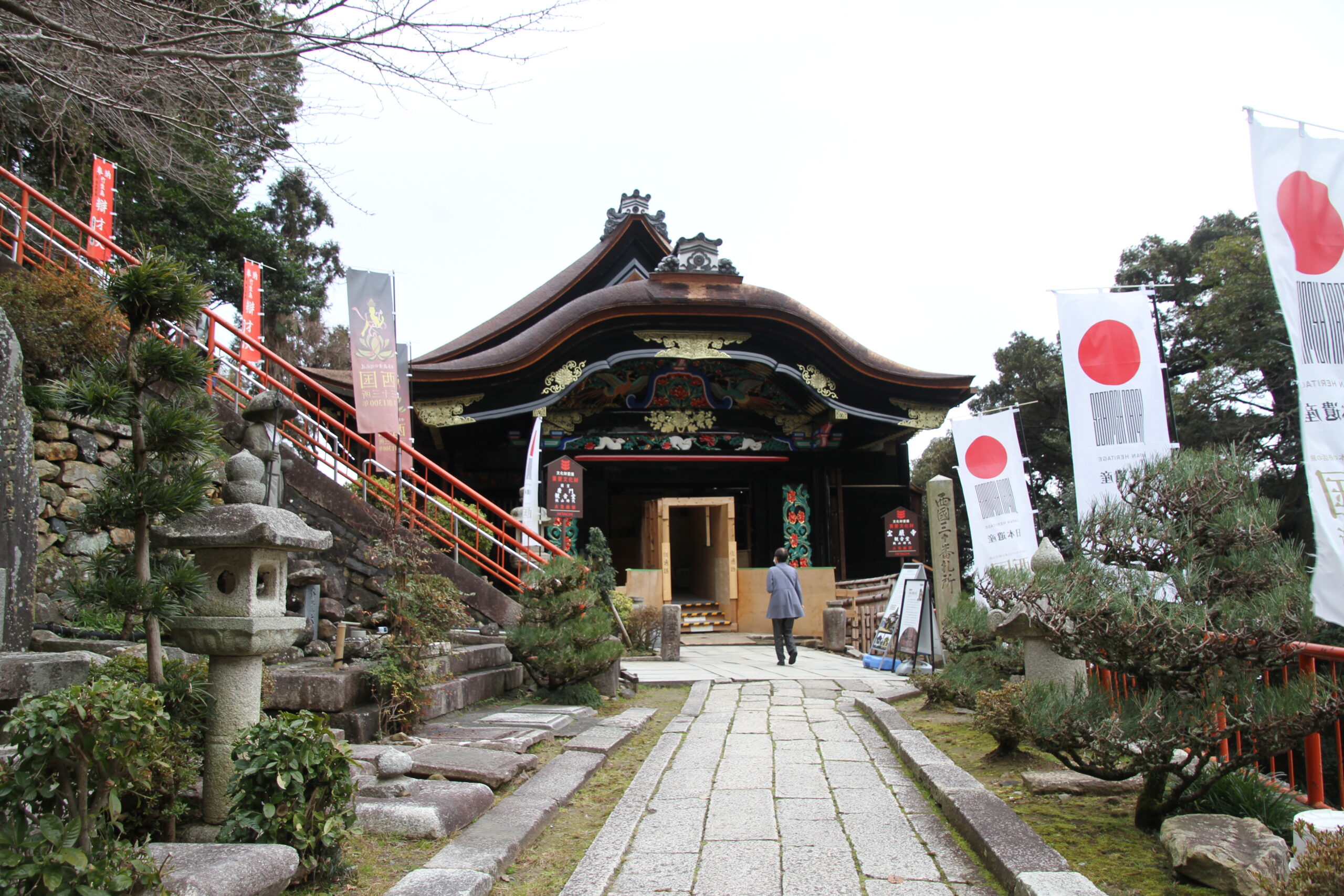
Karamon Gate (National Treasure) — The Only Surviving Toyotomi-Period Relic
At the heart of Hogonji stands the Karamon Gate, designated a National Treasure. In 1602-3, Toyotomi Hideyori carried out his father’s final wish by having the Gokurakumon Gate from the Hokokubyo mausoleum in Kyoto (where Hideyoshi was entombed) relocated to Chikubu Island.
According to Hogonji’s official documentation, this gate has an even older provenance. In 2006, a Japanese folding screen discovered at Eggenberg Castle in Austria depicted the Gokurakubashi Bridge that connected the main and second baileys of Toyotomi-period Osaka Castle. The bridge’s distinctive watchtower structure matches the Karamon’s design — meaning this may be the only surviving structure from Toyotomi-period Osaka Castle.
The gate features cypress bark roofing, full black lacquer body, gold-plated metal fittings, carvings of phoenixes, pine, rabbits, and peonies, and polychromatic peony-arabesque designs — a definitive example of Momoyama-period craftsmanship. Restoration work conducted from 2013 to 2019 was completed in 2020.
| Item | Detail |
|——|——–|
| Built | 1602-3 (Keicho 7-8) |
| Style | Momoyama, cypress bark roof |
| Designation | National Treasure |
| Origin | Hokokubyo Gokurakumon Gate, Kyoto → possibly Toyotomi Osaka Castle |
| Restoration | Completed 2020 |
Kannon Hall & Funaroka — Saikoku #30 and the Path of Shinto-Buddhist Fusion
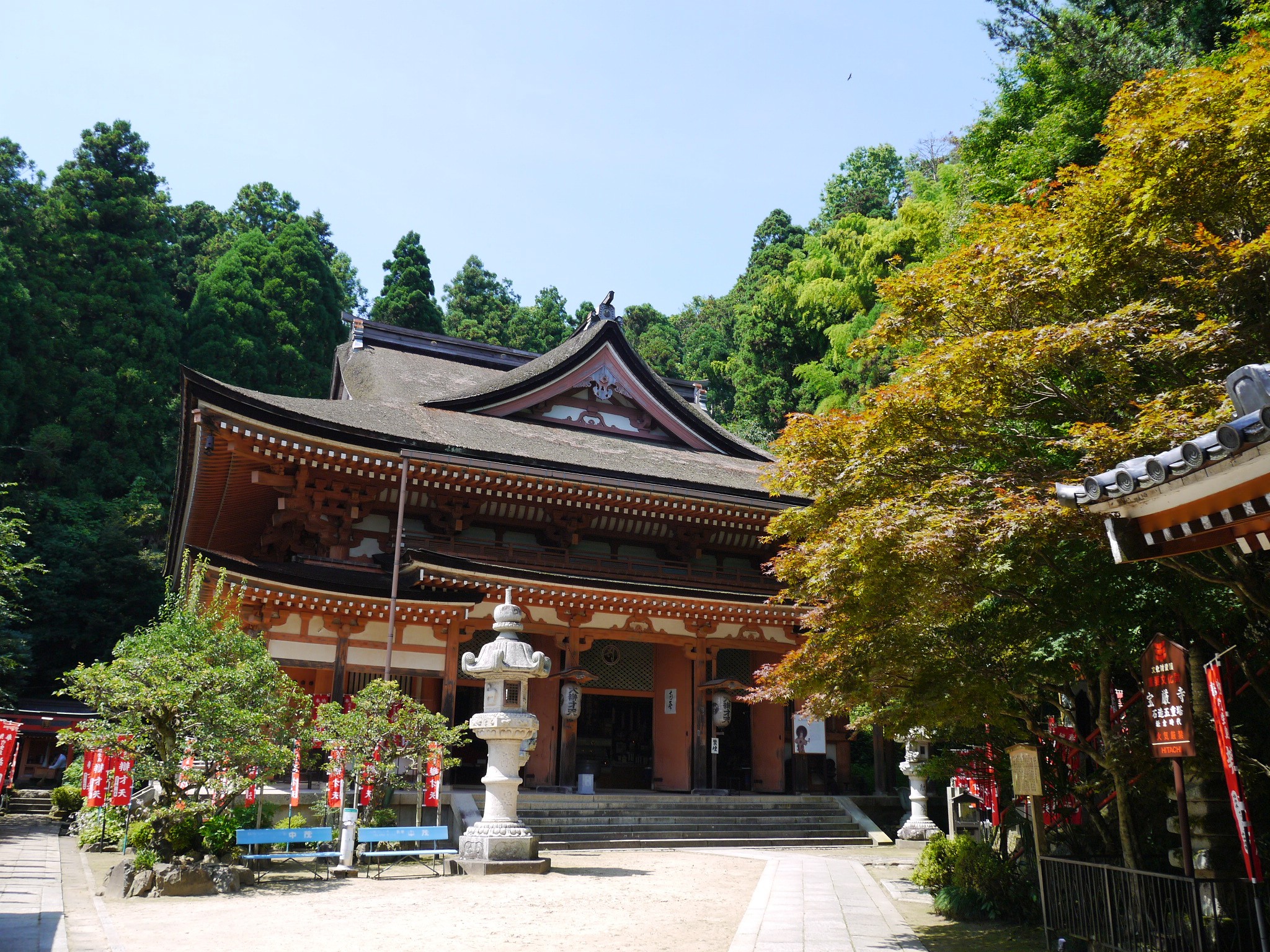
Through the Karamon, you arrive at the Kannon Hall (Important Cultural Property). Built in 1603, it features a five-bay-by-four-bay irimoya roof in cypress bark, with suspended construction (kakezukuri) elements due to the sloped terrain. The principal image is the Thousand-Armed Thousand-Eyed Kannon Bosatsu from the Kamakura period.
However, this Kannon is a hidden Buddha revealed only once every 60 years, with the next opening scheduled for 2037. During regular visits, you pay respects to the substitute image (omaedachi).
From the Kannon Hall, the roofed Funaroka (Boat Corridor, Important Cultural Property) extends to Tsukubusuma Shrine. Built in 1603, it gained its name from the tradition that timbers were reused from the “Nihonmaru,” Hideyoshi’s flagship from the Korean campaigns.
Before Japan’s 1868 separation of Buddhism and Shinto, Hogonji and Tsukubusuma Shrine functioned as a unified sacred complex. Walking the Funaroka today is to physically experience the syncretic worldview of Shinto-Buddhist fusion that once defined Japanese spirituality.
Main Hall (Benten-do) — The Center of Japan’s Three Great Benzaiten
The current Main Hall (Benten-do) was rebuilt in 1942. Its principal deity, the Great Benzaiten, is one of Japan’s Three Great Benzaiten.
Originating from the Indian river goddess Sarasvati, Benzaiten governs water, music, eloquence, and fortune. At Chikubu, Lake Biwa itself is regarded as Benzaiten’s sacred domain — making this a destination for musicians, business owners, and those pursuing artistic paths for over a thousand years.
Three-Storied Pagoda — Vermilion Symbol Restored After 350 Years
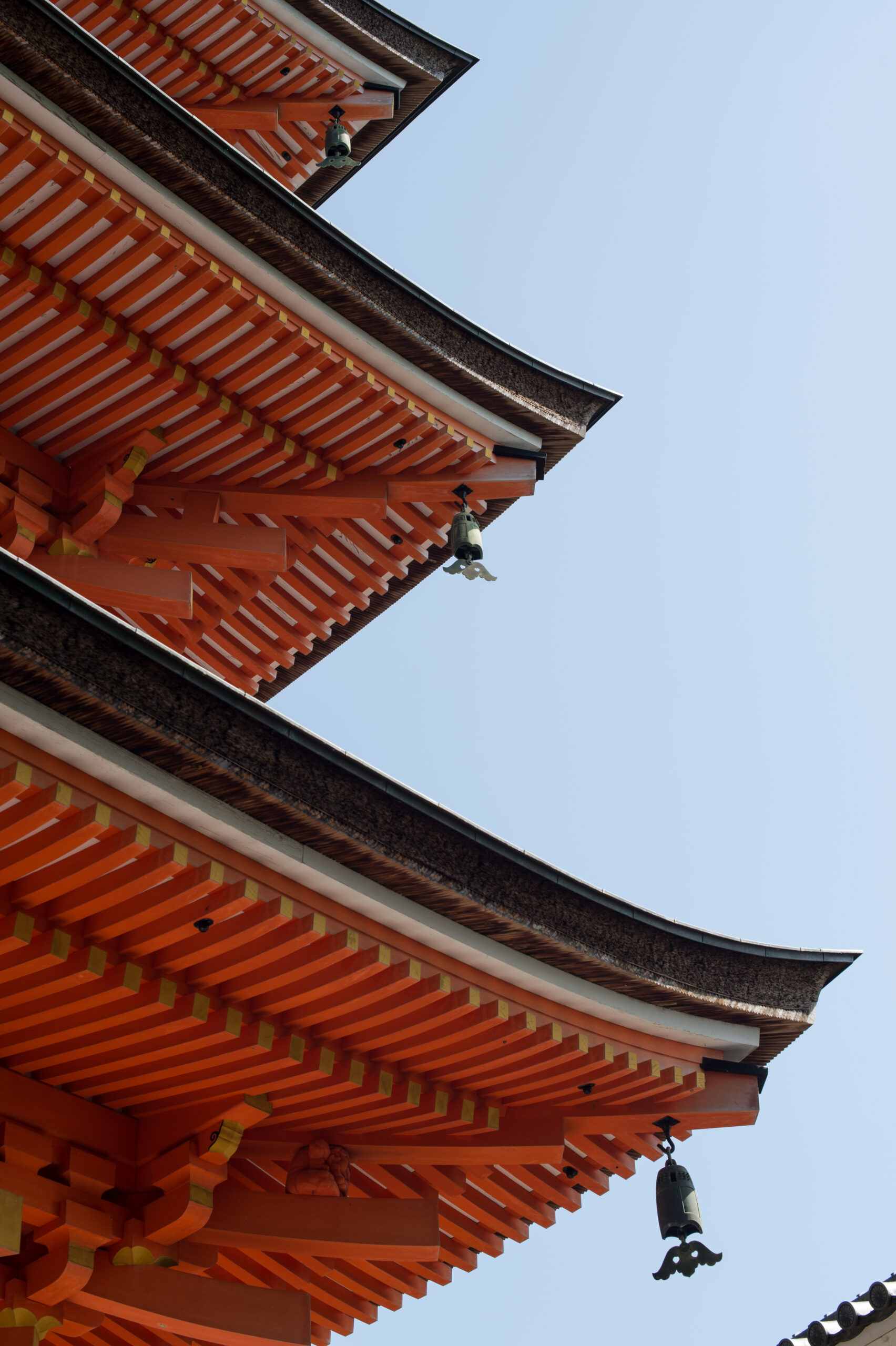
Rising from the highest point of the precincts, the Three-Storied Pagoda was rebuilt in 2000 after approximately 350 years — restoring a tower lost to fire in the early Edo period.
Built using traditional methods, its four central pillars depict 32 heavenly deities, the four walls bear the Eight Great Patriarchs of Shingon Buddhism, and pillars and lintels showcase shaded coloring (ungen) and peony-arabesque patterns. Though the interior is not normally open to the public, the contrast between vermilion paint and cypress bark roofing makes it one of the most photogenic structures on the island.
Tsukubusuma Shrine Main Hall (National Treasure) — Relic of Fushimi Castle
Across the Funaroka stands the National Treasure Main Hall of Tsukubusuma Shrine. Toyotomi Hideyori is said to have relocated and modified the Higurashi Palace from Fushimi Castle (or possibly the Hokokubyo).
The interior features fusuma paintings by Kano Mitsunobu, painted ceilings, and black-lacquer maki-e lacquerwork with floral and bird motifs — preserving the essence of Momoyama culture. However, the interior is normally closed to the public; only the exterior can be admired.
The enshrined deities are Asai-hime-no-mikoto, Ichikishima-hime-no-mikoto, and Ugafuku-no-kami — guardian gods of Lake Biwa, long worshipped for safe navigation and abundant fishing.
“Kawarake-nage” — Toss a Clay Disc Through the Lake Torii
At Tsukubusuma Shrine’s Dragon God Worship Site (Ryujin Haisho), you can try Chikubu Island’s signature ritual: Kawarake-nage.
You write your wish on a small unglazed clay disc (*kawarake*) and throw it toward a torii gate protruding into the lake (Miyazaki Torii). If your disc passes through the torii, your wish will come true.
Shiga Prefecture tourism describes it: “If the thrown kawarake passes through the torii, the wish will be fulfilled.” It’s the signature ritual for nearly every island visitor. The wind direction and throwing technique require practice — which makes succeeding all the more rewarding.
*Kawarake discs are sold on-site (fee subject to confirmation at the time of visit in 2026).*
Access — Boat Only, From Three Ports
Chikubu Island is reached exclusively by tourist boat from Nagahama Port, Imazu Port, or Hikone Port. There is no road access. Service is reduced in winter and may be canceled in high winds — checking before travel is essential.
Three-Port Comparison Table (2026)
| Port | Operator | One-Way | Round Trip (Adult) | Round Trip (Elementary) | Access |
|——|———-|———|——————-|————————|——–|
| Nagahama | Biwako Kisen | 35 min | ¥3,800 | ¥1,900 | JR Nagahama Station, 10 min walk |
| Imazu | Biwako Kisen | 25 min | ¥3,400 | ¥1,700 | JR Omi-Imazu Station, 5 min walk |
| Hikone | Ohmi Marine | 40 min | ¥3,700 | ¥1,850 | JR Hikone Station, 8 min by taxi |
| Cross-lake | Biwako Kisen | Nagahama⇔Imazu | ¥3,600 | ¥1,800 | One-way per port |
Island landing fee required separately: Adult ¥600, Elementary ¥300 (cash, paid at on-island ticket booth).
Treasure Hall admission: Adult ¥300, child ¥250 (2026).
Which Port to Choose
- Day trip from Kyoto/Osaka → Nagahama (70-90 min by JR Special Rapid) or Imazu (JR Kosei Line)
- From Nagoya → Transfer at Maibara → Nagahama
- Combined with Hikone Castle → Hikone Port
- Want a lake-crossing experience → Cross-lake route: Imazu → Chikubushima → Nagahama
Time on the Island
Standard on-island stay is 60-90 minutes depending on the route (per Biwako Kisen FAQ). Missing the last boat means you cannot return that day, so always confirm the final departure time before boarding.
Parking
- Nagahama Port: Public lot free (approx. 30 spaces) / Hokoen lot free for first 3 hours
- Imazu Port: Biwako Kisen lot free (approx. 40 spaces) / nearby paid lots when full
- Hikone Port: Approx. 4 km from Hikone IC, free parking available
Winter & Severe Weather Notes
- Biwako Kisen reduces to 2 sailings per day in late December to early March
- Ohmi Marine: All sailings canceled February 16-20, 2026 (scheduled ship inspections)
- Rain alone usually doesn’t cancel sailings, but strong winds, waves, or poor visibility can result in cancellations or no-docking
- Always check operator websites or call the morning of your visit
Sources: Biwako Kisen Chikubu Cruise / Ohmi Marine Chikubushima Route
Hours & Essential Information
| Item | Detail |
|——|——–|
| Hours | 9:30 – 16:30 (tied to boat operating hours) |
| Closed | None (effective closure if boats don’t run) |
| Admission | Landing fee Adult ¥600 / Elementary ¥300 |
| Treasure Hall | Adult ¥300 / Child ¥250 |
| Goshuin Seals | Daibenzaiten / Saikoku #30 Kannon |
| Address | 1664 Hayasaki-cho, Nagahama, Shiga 526-0124 |
| Tel (Hogonji) | 0749-63-4410 |
| Tel (Tsukubusuma Shrine) | 0749-72-2073 |
| Official Site | www.chikubushima.jp |
90-Minute Model Course
Based on the standard 90-minute landing (Nagahama Port route), this route covers all main sites of both Hogonji and Tsukubusuma Shrine.
“`
0:00 Arrive at Chikubushima Port → Pay landing fee (booth ~50m from pier)
0:05 Begin climbing the 165 stone steps (“Prayer Steps”)
0:15 Pray at Main Hall (Benten-do)
※ Goshuin seal collection more efficient on descent
0:25 Move to Three-Storied Pagoda; exterior photography
0:35 Move to front of Karamon Gate; observe polychromatic carvings
0:45 Visit Kannon Hall (Saikoku #30) and pray
0:55 Cross the Funaroka to Tsukubusuma Shrine
1:05 Pray at the Shrine Main Hall (exterior only; interior closed)
1:10 Try Kawarake-nage at the Dragon God Worship Site
1:20 Pick up Goshuin seals at the nokyosho
1:25 Return to port, board return boat
“`
Goshuin can take time during busy periods — confirming whether pre-written kakioki versions are available upon arrival is wise.
Best Time to Visit
By Season
| Season | Highlights | Rating |
|——–|———–|——–|
| Spring (March-May) | Combine with Ohmi Marine’s Kaizu Osaki cherry blossom cruise, new greenery | ★★★★★ |
| Summer (June-August) | Many festivals including Aug 15 Renge-e, but stone steps are hot | ★★★★ |
| Autumn (September-November) | Maples within the precincts, cool lake breezes, photogenic | ★★★★★ |
| Winter (December-February) | Solitude, occasional snow, but reduced/canceled service | ★★ |
Festival Calendar
- January 1-4: Shushoe (New Year prayers)
- February 1-4: Hoshi-matsuri (Setsubune)
- March 1-3: Shima-tsunagi-shinji
- June 10-15: Chikubushima Festival
- August 1: Biwako Festival
- August 3: Kigan-sai (Bussho-e)
- August 15: Renge-e
- October 20: Sanshi-sai
- 15th of each month: Tennyo-e
- 18th of each month: Kannon-e
Morning vs. Afternoon Boat
- Morning (first sailing): Avoid crowds. Morning light on the island during the boat ride is beautiful. Allows time for area sightseeing afterward.
- Afternoon: Easier scheduling, but crowded on weekends/holidays. Strict time management to catch the return boat.
User Segment Guide
For Visitors with Pets
Bottom line: Visiting with a pet is essentially not possible.
- Biwako Kisen does not allow pets (guide dogs and service dogs excepted)
- Ohmi Marine discontinued pet boarding from January 2024
- The island itself, with its many stone steps, is not pet-friendly
Alternative: Pet boarding services exist near JR Nagahama and Hikone stations. Leave your pet there and visit the island as a separate trip. Confirm in advance with pet hotels at each port area.
For Wheelchair / Stroller Users
Bottom line: Wheelchair or stroller access to Chikubu Island is extremely difficult.
- Biwako Kisen FAQ: Imazu, Nagahama, Chikubushima ports, and onboard areas are not wheelchair accessible
- Transferring from wheelchair is required for boarding (boarding itself is possible; advance consultation required)
- The island has 165 stone steps; no elevator or ramp
- Strollers: switch to baby carriers recommended
Recommendation: Visitors with walking difficulties or infants may want to consider the alternative “Nagahama Port walk + Nagahama Castle visit” itinerary instead.
For Photographers
Best photo spots:
1. From the boat: Whole-island view with Lake Biwa. Just after departure and just before docking
2. Near the pier: Looking up at the 165 stone steps (“Prayer Steps”)
3. In front of Karamon: Detailed polychromatic carvings from a low angle
4. Around the Funaroka: Unique path connecting temple and shrine
5. Dragon God Worship Site: Miyazaki Torii and the lake (be mindful of other visitors in frame)
Notes:
- Interior photography is often prohibited in halls, inner sanctums, and the Treasure Hall (follow on-site signs)
- Drones fall under multiple restricted categories (shrine/temple grounds, quasi-national park, vessel routes) — never fly without permits
For Families with Children
- Preschool children ride free with one paying adult on both Biwako Kisen and Ohmi Marine
- The 165 stone steps drain children’s energy — plan rest breaks
- For seasick-prone children: bring motion sickness medication, choose central seats (least motion), and have drinks ready
- Kawarake-nage is memorable for children, even when they don’t reach the torii
For Goshuin Seal Collectors
- Hogonji: Daibenzaiten Goshuin and Saikoku #30 Kannon Goshuin (2 types)
- Tsukubusuma Shrine: Separate seal at the shrine office (may be suspended at certain times)
- Given the short stay: submit your seal book at the nokyosho immediately upon arrival → it gets written while you tour → pick up before return boat
For International Visitors
- Hogonji’s official “E3D Map” interactive guide is part of the national Cultural Heritage Multilingual Initiative, with English, Chinese, and Korean support
- Both Biwako Kisen and Ohmi Marine websites offer English and Chinese guidance
- A day trip from Kyoto Station is feasible via JR Hokuriku Line / Kosei Line (include boat schedule planning)
Area Tourism Models
Nagahama Port Side (Half-Day Plan)
“`
9:00 Arrive Nagahama Station, walk to Nagahama Port
10:00 Nagahama Port → Chikubu Island (35 min)
10:35 Tour Chikubu Island (90 min)
12:05 Chikubu Island → Nagahama Port
12:40 Walk to Kurokabe Square for lunch
Yakisaba somen (grilled mackerel noodles), Omi beef, noppei udon
15:00 Nagahama Castle History Museum
16:30 Nagahama Station
“`
Key area spots:
- Nagahama Castle History Museum: In Hokoen Park, walking distance
- Kurokabe Square: Meiji-era machiya glassblowing district, ~15 min walk
- Keiun-kan: Winter bonbai (potted plum) exhibition venue
- Nagahama Hachiman Shrine: City-center shrine
Hikone Port Side (Combined with Hikone Castle)
“`
9:00 Arrive Hikone Station
9:30 Hikone Castle and Genkyuen Garden (National Treasure)
12:00 Lunch in Hikone (Omi beef)
13:00 Hikone Port → Chikubu Island (40 min)
13:40 Tour Chikubu Island (70-80 min)
15:00 Chikubu Island → Hikone Port
15:40 Hikone Station
“`
Imazu Port Side (Spring Cherry Blossom Plan)
Late March to mid-April: combine with Ohmi Marine’s Kaizu Osaki cherry blossom cruise.
From Imazu Port, extend to Metasequoia Avenue (Makino Plateau) for a full day.
Visitor Voices
Excerpts from public reviews on Tripadvisor and similar platforms.
> “The boat journey across Lake Biwa from Nagahama was enjoyable and I really felt the spirit of travel.”
> — Tripadvisor “Hogonji Temple,” June 2024 review
> “You climb a lot of stone steps.”
> — Tripadvisor “Hogonji Temple,” January 2019 review
> “We were all able to participate in the Kawarake-nage and prayers as a family — it was wonderful.”
> — Tripadvisor “Chikubushima,” January 2024 review
> “It was snowing in blizzard conditions, so the footing was poor and the steep stone steps were slippery.”
> — Tripadvisor “Tsukubusuma Shrine” review
Common themes from visitors: (1) the boat journey itself is a highlight, (2) the stone steps are a real workout, (3) the historical value of the Karamon and Funaroka stands out, and (4) Kawarake-nage is a memorable experience.
Safety & Practical Notes
1. Confirm boat schedules in the morning: Always check Biwako Kisen and Ohmi Marine operating status. Strong winds, waves, and poor visibility can cause cancellations or prevent docking
2. Winter reductions: Service drops significantly from late December to early March. Hikone route fully canceled Feb 16-20, 2026
3. Strict adherence to last boat: Missing the last boat means no return that day
4. 165 stone steps: Don’t push it if you have mobility concerns; handrails available
5. Food on the island: Only a rest area and two souvenir shops; no real restaurants. Eat at the port before/after
6. Restrooms: Best to use at the port. Nagahama and Imazu ports have accessible restrooms
7. No medical facilities: For health issues, consult port staff or temple staff; don’t push through — take the return boat
8. Uncertain vending machine availability on island: Buy drinks at port to be safe
9. No smoking onboard: Only one designated smoking area on the island
10. Time management: 90 minutes is surprisingly tight if you include goshuin seals, kawarake-nage, and photography
Frequently Asked Questions
Q. Do boats run on rainy days?
A. Rain alone usually doesn’t stop service, but strong winds, waves, or poor visibility can cause cancellations or no-docking. Always check the morning of.
Q. Is the island enjoyable for families with children?
A. Yes — boat ride, kawarake-nage, and the island exploration are all enjoyable for kids. But the 165 stone steps require stamina; bring motion sickness medication and drinks.
Q. How many goshuin seals are available?
A. Two at Hogonji (“Daibenzaiten” and “Saikoku #30 Kannon”), plus a separate seal at Tsukubusuma Shrine (sometimes suspended).
Q. Can I see the Thousand-Armed Kannon?
A. The principal Thousand-Armed Thousand-Eyed Kannon Bosatsu is a hidden Buddha revealed only once every 60 years; the next opening is 2037. Normally, you pay respects to the substitute image.
Q. Can I bring pets?
A. No — both Biwako Kisen and Ohmi Marine have discontinued pet boarding (except guide/service dogs). Use pet boarding services at the port towns instead.
Q. Can I do a day trip from Kyoto/Osaka?
A. Yes. JR Special Rapid trains reach Nagahama / Omi-Imazu in 70-130 minutes. Day trips including the boat work comfortably, but allow extra time for winter or evening boats.
Q. Can I photograph the Karamon Gate?
A. Exterior photography is permitted. Interior of halls and the Treasure Hall are often off-limits — follow on-site signs.
Summary
Hogonji Temple and Chikubu Island offer a rare combination of prayer, art, and waterborne journey unmatched in Japan.
The National Treasure Karamon Gate carries Hideyoshi’s Momoyama culture in a single structure. Two principal deities — the Thousand-Armed Kannon and the Great Benzaiten — sit side by side. The Funaroka and Tsukubusuma Shrine preserve the syncretic worldview of pre-Meiji Japan. And the iconic Kawarake-nage ritual passes wishes through a lakeside torii. All of this is concentrated on a single small island in the far northern reaches of Lake Biwa.
You can never reach it by road; miss the boat and you’re stranded. Climbing the 165 stone steps one by one, walking through everything within a strict 90-minute window — this very “inconvenience of access” creates a shared experience that only those who make the journey can know.
Whether you come for one of the Three Great Benzaiten, the Momoyama-period treasures, the lake voyage itself, or a milestone visit on the Saikoku Pilgrimage — you will leave saying it was worth the trip.
—
We hope this guide helps you plan your visit to Hogonji and Chikubu Island.
※ Information in this article is as of May 2026. Boat schedules, fares, and visiting hours change — always check official sites and boat operators for the latest information before visiting.
Primary Sources:
Find Out Your Compatibility with Hogonji
Power spots have personal “compatibility” — different people experience the same place differently. This comes from individual energy patterns combined with the site’s character.
Chikubu Island’s Benzaiten worship is particularly aligned with fortune, artistic pursuits, and matters of the heart — but whether it truly resonates with you depends on your personal energy derived from your birth date and time.
あなたに最適なパワースポットを知りたい方へ