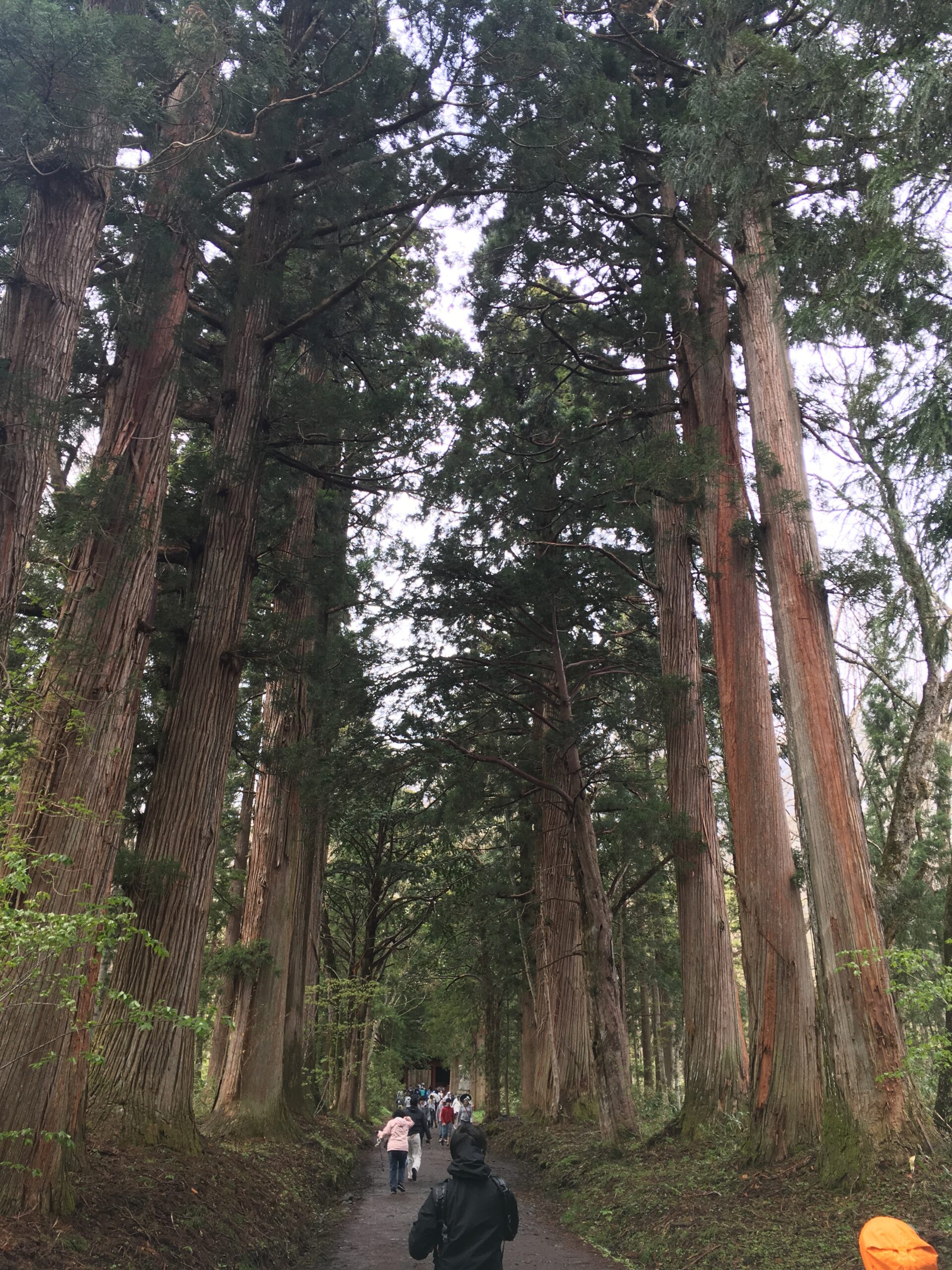
You walk for forty minutes through a forest. The first half is pleasant enough—a flat path through mixed woodland. Then you pass through a moss-covered gate, and everything changes. Two hundred Japanese cedars, each over 400 years old and 30 meters tall, line both sides of the path in perfect rows. The canopy closes above you. The light turns green. The only sounds are your footsteps and, somewhere ahead, a stream.
This is the approach to Togakushi Shrine’s innermost sanctuary, and it is one of the most extraordinary walks in Japan.
Togakushi Shrine is not one building but five separate shrines spread across the forested slopes of Mount Togakushi, at 1,200 meters elevation northwest of Nagano City. Its origin myth is the story of Ame-no-Tajikarao, the deity who hurled open the heavenly rock cave when the sun goddess hid inside—the most famous episode in Japanese mythology. The rock he threw is said to have become Mount Togakushi itself.
Visit all five shrines and you collect blessings for virtually everything: fortune, wisdom, love, safe childbirth, and the performing arts. Then sit down to a bowl of Togakushi soba—one of Japan’s three great soba noodle traditions—and you have a day trip that combines mythology, forest bathing, and cuisine in a single destination.

—
The Myth Behind the Mountain
In the most famous story in Japanese mythology, the sun goddess Amaterasu retreated into a rock cave (*Ama-no-Iwato*), plunging the world into darkness. The other gods devised a plan: the goddess Ame-no-Uzume performed a wild dance that made them laugh so loudly that Amaterasu peeked out. At that moment, the mighty Ame-no-Tajikarao seized the rock door and hurled it away. Light returned to the world.
That rock door, the myth says, flew all the way from the heavenly realm and landed here—becoming Mount Togakushi (“the mountain that hid the door”). The shrine was founded to honor the gods of this story, and each of the five shrines enshrines a different deity from the tale.
—
The Five Shrines
| Shrine | Deity | Blessing | Character |
|——–|——-|———-|———–|
| Okusha (innermost) | Ame-no-Tajikarao | Fortune, willpower, athletics | The climax. Cedar avenue and mountain backdrop |
| Chusha (middle) | Ame-no-Yagokoro-Omoikane | Wisdom, academics, business | Hub of the five. 800-year-old sacred cedars |
| Hoko-sha | Ame-no-Uwaharuharu | Safe birth, family, craft | 270 stone steps through cedars to a thatched-roof hall |
| Kuzuryu-sha | Kuzuryu-Okami | Love, water, matchmaking | Oldest of the five. Next to Okusha |
| Hinomiko-sha | Ame-no-Uzume | Performing arts, dance, marriage | The goddess who danced to lure Amaterasu out |
—
What to See
The Okusha Approach — The Walk of a Lifetime

The path to Okusha is 2 km one way, about 40 minutes on foot. The first kilometer is a gentle forest walk. After the Zuishinmon gate, the cedar avenue begins—and the atmosphere transforms completely. The final 300 meters climb steeply up stone steps. At the top, the small Okusha sits against the rock face of Mount Togakushi.
Tips for the walk:
- Wear proper shoes (sneakers minimum, hiking shoes after rain)
- No restrooms along the path—use facilities at the entrance
- The final stone steps are steep. Take your time.
- Allow 80–90 minutes round trip including prayer time
Chusha — The Central Shrine
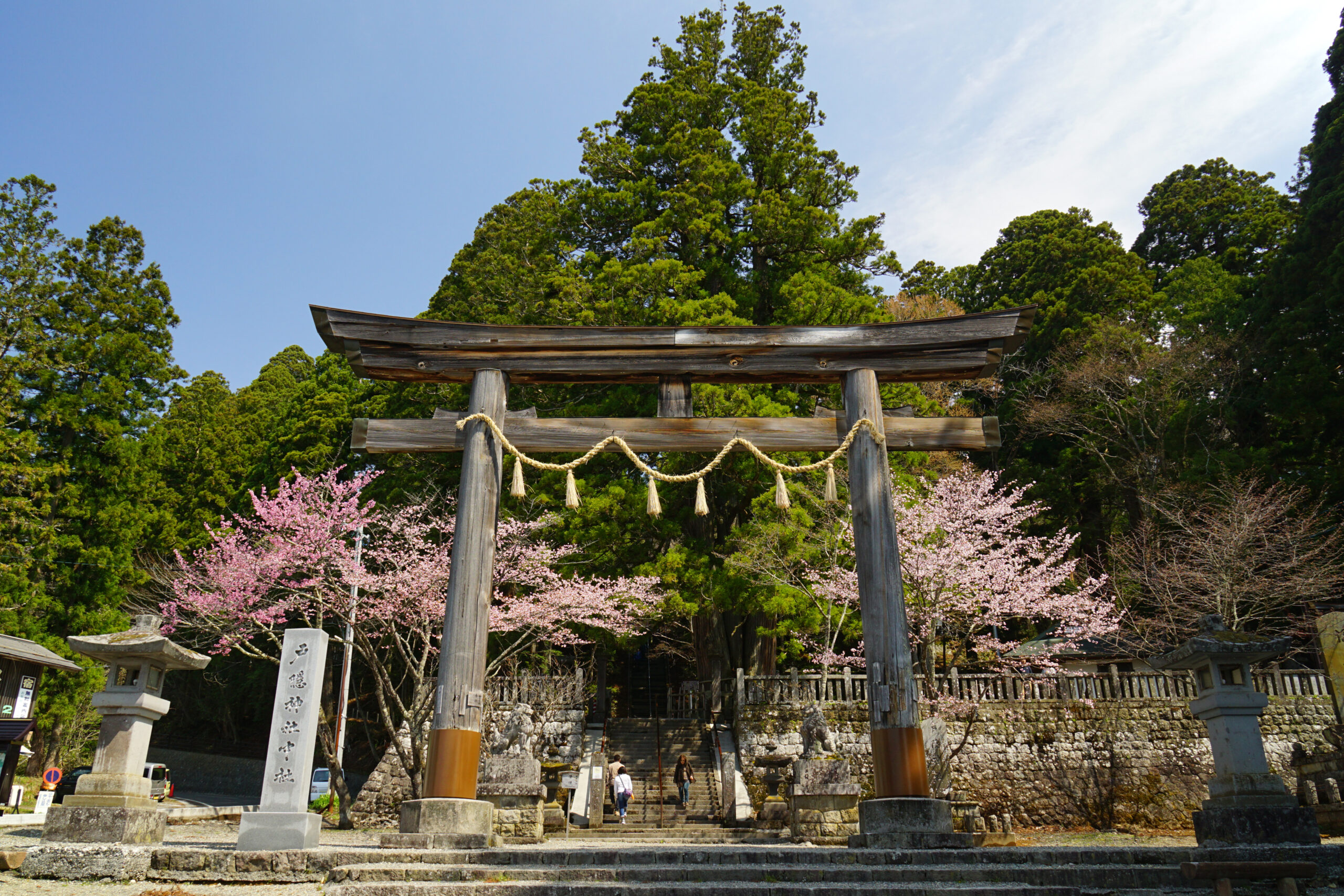
The most accessible of the five, Chusha is the administrative and spiritual center. Three sacred cedars, estimated at 800 years old, tower over the precinct. The worship hall features a painted dragon on the ceiling.
This is the only shrine with a full shrine office (*shamusho*), where you can receive goshuin stamps for all five shrines.
Kuzuryu-sha — The Love Shrine
Adjacent to Okusha, this is the oldest of the five shrines and the strongest for romantic blessings. Kuzuryu-Okami is a nine-headed dragon deity associated with water and matchmaking. Most visitors to Okusha pray here as well.
—
When to Visit
| Season | Period | Highlights | Rating |
|——–|——–|———–|——–|
| Fresh green | Mid-May — Jun | The cedars at peak green. Skunk cabbage blooms | ★★★★★ |
| Summer | Jul — Aug | Highland escape—7–8°C cooler than the lowlands | ★★★★ |
| Autumn colors | Mid — late Oct | Cedar green against maple red | ★★★★★ |
| Winter | Dec — Mar | Snow-covered cedars. Ski area nearby | ★★★ |
Best Time of Day
- Early morning (7:00–8:00) — Near empty. Morning mist in the cedar avenue.
- Mid-morning (9:00–11:00) — Sunlight filtering through the canopy.
- After noon — Crowds increase, especially on autumn weekends.
—
Visiting Guide
Five-Shrine Pilgrimage Route
Total time: 3–4 hours (excluding meals)
1. Hoko-sha (20 min) → 15-min walk →
2. Hinomiko-sha (10 min) → 15-min walk →
3. Chusha (20 min) → 5 min by car/bus →
4. Okusha + Kuzuryu-sha (90 min including the approach walk)
Short on time? Okusha and Chusha alone capture the essence of Togakushi. Allow about 2 hours for both.
Goshuin (Shrine Seals)
- Location: Chusha shrine office (handles all five shrines)
- Fee: 500 yen each
- Hours: 9:00–16:30
- Collecting all five fills a dramatic two-page spread in your seal book
Winter Access
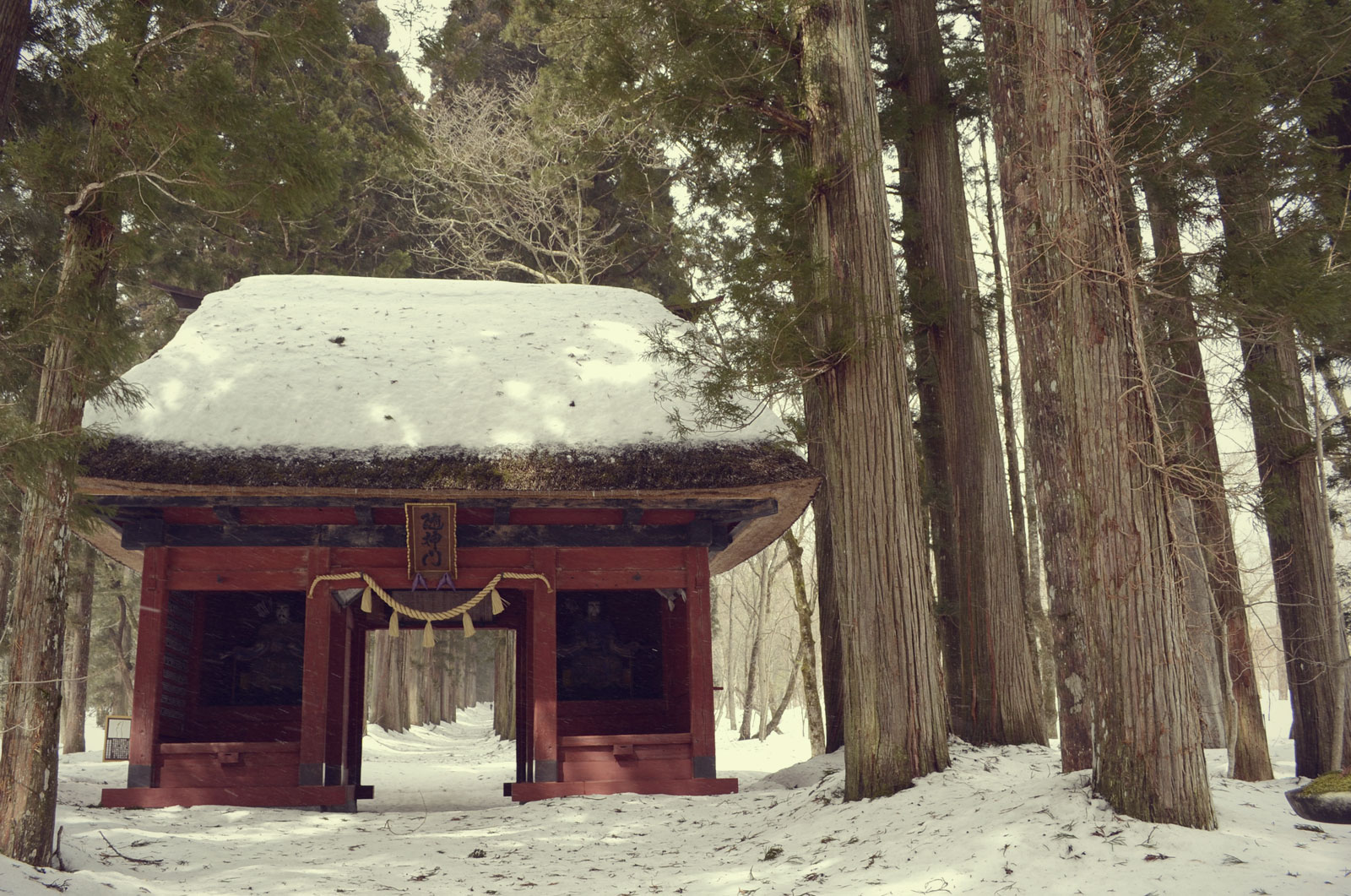
From December through March, snow exceeds one meter. The Okusha approach becomes impassable without snowshoes or *kanjiki* (traditional snow walkers). Chusha remains accessible year-round as the road is cleared. Winter visitors should bring serious cold-weather gear.
—
Getting There
From Nagano Station
Alpico Express Bus “Togakushi Line” from Exit 7 (Zenkoji side):
- To Chusha: about 55 minutes, 2,500 yen
- To Okusha entrance: about 59 minutes, 2,500 yen
- Several departures daily (6:50–14:10 in spring/summer). Check the Alpico website for the latest timetable.
By Car
- Joshin-Etsu Expressway, Nagano IC → about 40 minutes
- Joshin-Etsu Expressway, Shinanomachi IC → about 30 minutes
Parking
| Lot | Capacity | Fee |
|—–|———-|—–|
| Okusha entrance | ~200 cars | 600 yen/day |
| Chusha | ~100 cars | Free |
| Hoko-sha | ~30 cars | Free |
Essential Information
| | Details |
|——|——|
| Hours | Grounds open freely (office: 9:00–16:30) |
| Closed | Never (Okusha path impassable in heavy snow without snowshoes) |
| Admission | Free |
| Address | 3506 Togakushi, Nagano City, Nagano (Chusha) |
| Phone | 026-254-2001 |
| Website | togakushi-jinja.jp |
—
Togakushi Soba — One of Japan’s Three Great Noodles
No visit to Togakushi is complete without soba. Togakushi soba is one of Japan’s three great soba traditions (alongside Izumo soba and wanko soba). What makes it special:
- Botchi-mori: Soba served in small round bundles on a bamboo tray, not piled in a heap
- Mountain spring water: The noodles are made with water from 1,200 meters elevation
- Karamidaikon: Grated spicy radish as condiment—a Nagano specialty
Where to Eat
| Restaurant | Location | Notes |
|———–|———-|——-|
| Uzuraya | In front of Chusha torii | The most famous. Expect a line (arrive before 11:00) |
| Soba-no-Mi | Near Chusha | Superb 100% buckwheat soba. Quieter atmosphere |
| Iwatoya | Okusha entrance | Convenient before or after the Okusha walk. Tempura soba is popular |
—
Nearby Attractions
| Spot | Travel time | Highlights |
|——|————|———–|
| Zenkoji Temple | Bus ~60 min | One of Japan’s most important temples. Houses Japan’s oldest Buddhist statue |
| Togakushi Ski Area | 5 min by car | Winter only. Advanced runs with views of the Northern Alps |
| Kagami-ike (Mirror Pond) | 10 min by car | Mount Togakushi reflected in still water. Spectacular in autumn |
| Togakushi Folk Museum & Ninja House | 5-min walk from Chusha | Hands-on ninja experience. Great for children |
| Togakushi Forest Botanical Garden | 10-min walk from Chusha | Skunk cabbage colonies. Birdwatching |
Day Trip Itinerary
| Time | Activity |
|——|———-|
| 8:30 | Bus from Nagano Station |
| 9:30 | Arrive at Okusha entrance. Walk the cedar avenue, pray at Okusha and Kuzuryu-sha |
| 11:00 | Bus to Chusha |
| 11:15 | Soba lunch at Uzuraya |
| 12:30 | Explore Chusha. Sacred cedars, goshuin |
| 13:30 | Walk to Hoko-sha and Hinomiko-sha |
| 14:30 | Drive or bus to Kagami-ike for photos (autumn) |
| 15:30 | Bus back to Nagano Station |
| 16:30 | Arrive Nagano. Optional: visit Zenkoji |
—
Frequently Asked Questions
Can children walk the Okusha approach?
Upper elementary school age and older, yes. The final stone steps are steep. For younger children, Chusha and Hoko-sha are better options. Strollers cannot navigate the Okusha path.
Is wheelchair access available?
Chusha is paved from the parking lot to the shrine and is wheelchair accessible. Okusha and Hoko-sha involve unpaved paths and stone steps that are not accessible.
Are pets allowed?
The approach paths allow leashed pets, though the shrine precincts may restrict them. Please be considerate of other visitors.
Is it worth visiting in the rain?
Yes. Rain intensifies the green of the cedar bark and moss, and mist drifting through the giant trees creates an otherworldly atmosphere. Waterproof shoes are essential—the path gets slippery.
Do I need to visit all five shrines?
No. Okusha and Chusha together capture the highlights. Allow about 2 hours for both. The full five-shrine circuit takes 3–4 hours.
Can I visit Togakushi and Zenkoji in one day?
Yes. Morning at Togakushi (Okusha + Chusha + soba lunch), afternoon at Zenkoji. Both are accessible by bus from Nagano Station.
—
Summary
Togakushi Shrine is a walk through a myth. The mountain was made by a god hurling a rock door across the sky. The cedars were planted four centuries ago and now form a natural cathedral. The path takes you from the everyday world into a forest so dense and quiet that the only reasonable response is to keep walking.
At the end, a small shrine sits against a mountain face, and you realize the building is almost beside the point. The forest is the shrine.
Add a bowl of Togakushi soba—buckwheat noodles made with highland spring water, served in neat bundles on bamboo—and you have a day trip from Nagano that combines mythology, one of Japan’s great walks, and one of its great noodle traditions.
—
*Information in this article is current as of April 2026. Please check the Togakushi Shrine website for the latest updates before your visit.*
—
Want to find the power spot that matches you best?
Japan has hundreds of spiritual places, each with different energies and blessings. Discover which one aligns with your personal profile—take our free compatibility diagnosis (3 minutes).
あなたに最適なパワースポットを知りたい方へ