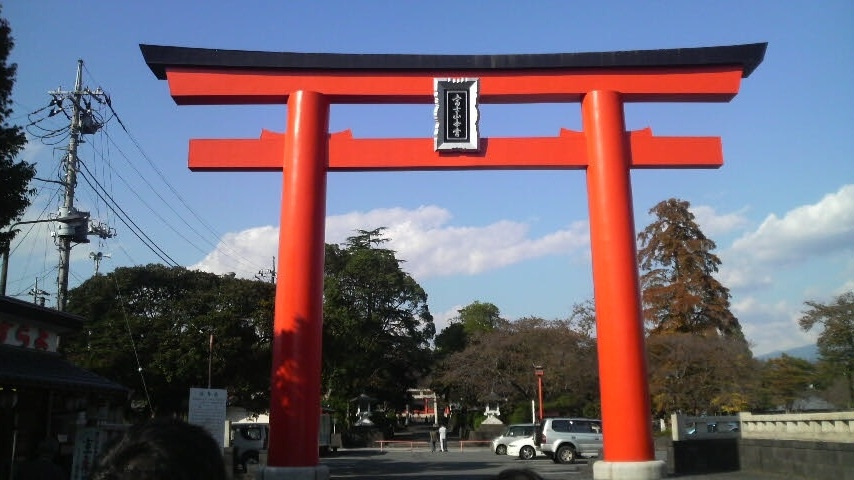
A 10-minute walk from JR Fujinomiya Station, at the foot of Mount Fuji, stands Fujisan Hongu Sengen Taisha — the head shrine of all 1,300 Sengen shrines across Japan and a UNESCO World Heritage Site.
Enshrining Konohanasakuya-hime, the goddess of safe childbirth and beauty, this ancient shrine traces its origins to 27 BC. The main hall, donated by Tokugawa Ieyasu in 1606, features the unique “Sengen-zukuri” architecture found nowhere else in Japan. In the grounds, the sacred Wakutama Pond — a Special Natural Monument — feeds crystal-clear spring water from Mt. Fuji’s underground streams at a constant 12-13°C year-round.
What Makes This Spot Special
The Grand Head Shrine of Mt. Fuji Worship — 2,000 Years of History
According to shrine tradition, Fujisan Hongu Sengen Taisha was founded in 27 BC (3rd year of Emperor Suinin) to pacify the eruptions of Mt. Fuji. Originally located at Yamamiya Sengen Shrine on the mountain’s slopes, it was relocated to its present site in 806 AD (Daido 1) by the general Sakanoue no Tamuramaro.
The principal deity is Konohanasakuya-hime-no-Mikoto — a goddess famous in Japanese mythology for proving her fidelity by giving birth to three children in a burning parturition hut. This legend makes the shrine Japan’s foremost place of worship for safe childbirth and fertility.
During the medieval period, the shrine became the starting point for Mt. Fuji pilgrimage. Climbers would purify themselves in Wakutama Pond before ascending. In the Edo period, the “Fuji-ko” pilgrimage associations brought worshippers from across Japan. To this day, everything above the 8th station of Mt. Fuji is considered the shrine’s sacred grounds, with a summit shrine (Oku-miya) at the very top.
In June 2013, the shrine was registered as a component of the UNESCO World Heritage Site “Fujisan, sacred place and source of artistic inspiration.”
The Main Hall — Japan’s Only “Sengen-zukuri” Architecture
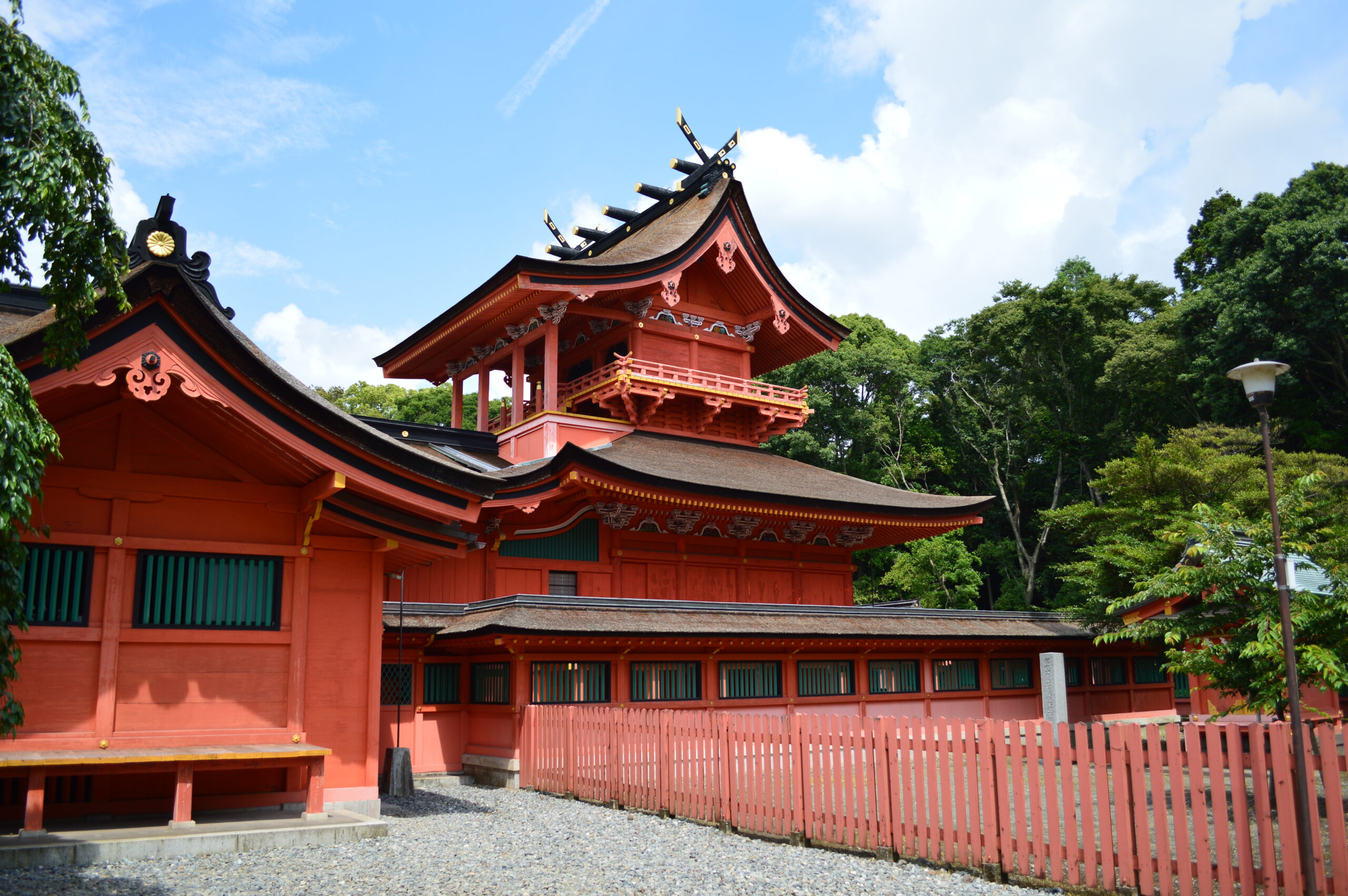
The main hall is a National Important Cultural Property, donated by Tokugawa Ieyasu in 1606 as thanks for his victory at the Battle of Sekigahara.
Its defining feature is the “Sengen-zukuri” architectural style — a unique two-story structure with a hipped roof (yosemune-zukuri) on the lower level and a three-bay nagare-zukuri style on the upper level, all covered in cypress bark. This style exists nowhere else in Japan, making this building architecturally priceless. The vermilion structure surrounded by ancient trees creates a scene of extraordinary beauty.
Wakutama Pond — A Special Natural Monument Fed by Mt. Fuji
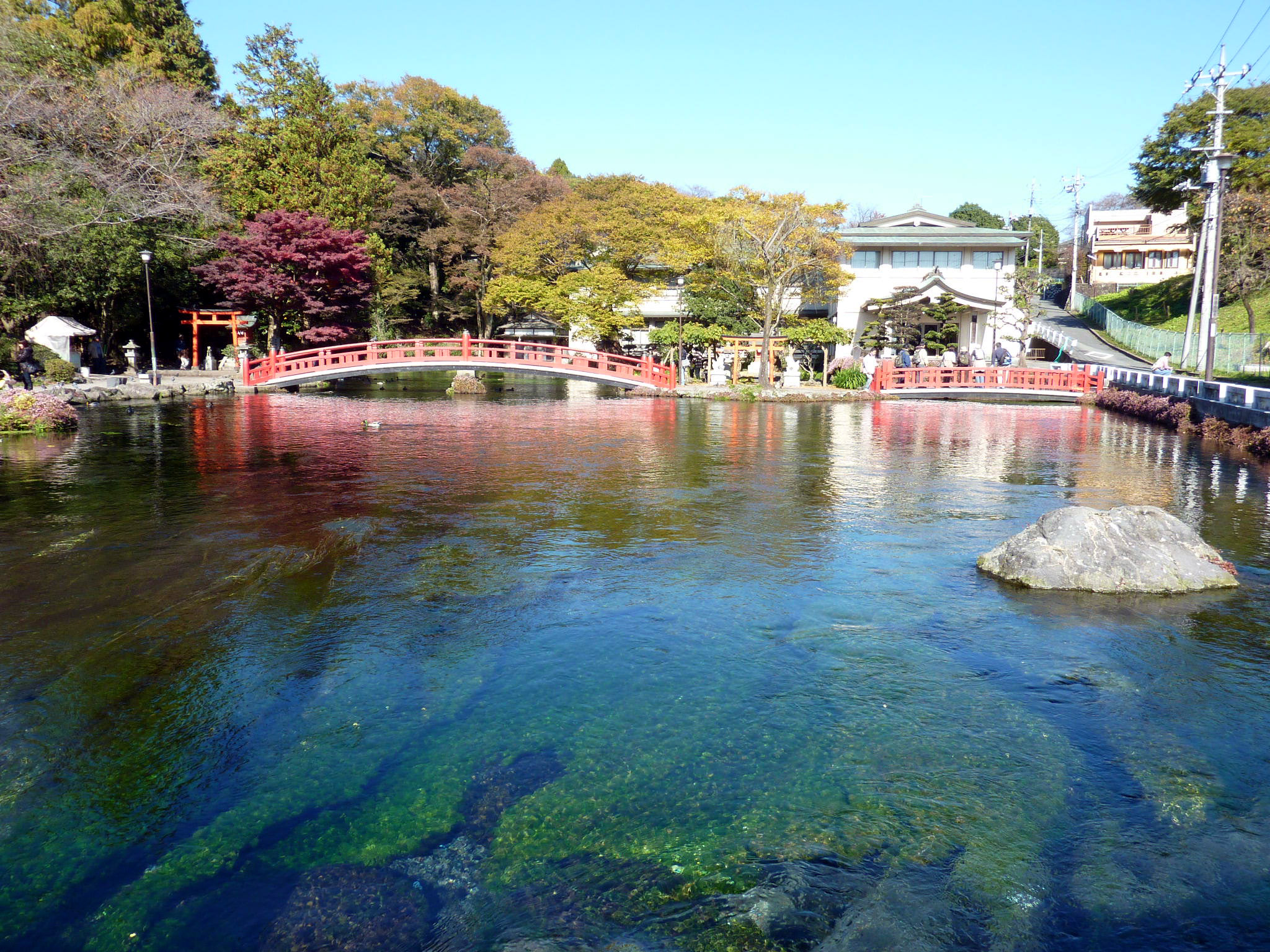
On the eastern side of the grounds, Wakutama Pond is where Mt. Fuji’s rain and snow, filtered through volcanic rock over decades, emerge as pristine spring water. Designated a Special Natural Monument and one of Japan’s “100 Best Spring Waters,” the pond maintains a year-round temperature of approximately 12-13°C.
The crystal-clear water reveals swaying aquatic plants beneath the surface, while a vermilion arched bridge adds a splash of color. Visitors can take home sacred water (“goreisuii”) free of charge (bring your own container).
Spiritual Benefits
Safe childbirth & fertility — The shrine’s most renowned blessing, derived from Konohanasakuya-hime’s mythical fire-birth. Expectant mothers visit from across Japan for pregnancy prayers, especially on “inu no hi” (Dog Days) considered auspicious for safe delivery.
Romance & matchmaking — The love story between Konohanasakuya-hime and Ninigi-no-Mikoto inspires prayers for romantic success. The cherry blossom season is particularly popular for couples seeking blessings.
Family safety & good fortune — The spiritual energy of Mt. Fuji pervades the shrine grounds, making it ideal for prayers for family harmony and prosperity.
Mountain climbing safety — The “Tozan Anzen Mamori” (climbing safety charm) is essential for Mt. Fuji climbers during summer season.
Protection from misfortune & traffic safety — The prayer hall offers formal blessing ceremonies for various needs.
Goshuin stamps are available at the shrine office. During summer (July–early September), the limited-edition summit shrine goshuin is highly sought after.
Best Times to Visit
Cherry Blossom Season (Late March–Early April) ★★★★★
Approximately 500 Somei Yoshino cherry trees bloom throughout the grounds, centered on the “Sakura no Baba” (Cherry Blossom Arena). Evening illumination adds magic to the scene. Cherry blossoms framing the vermilion shrine with Mt. Fuji in the background is one of Shizuoka’s most iconic views.
Yabusame Festival (May 4-6) ★★★★★
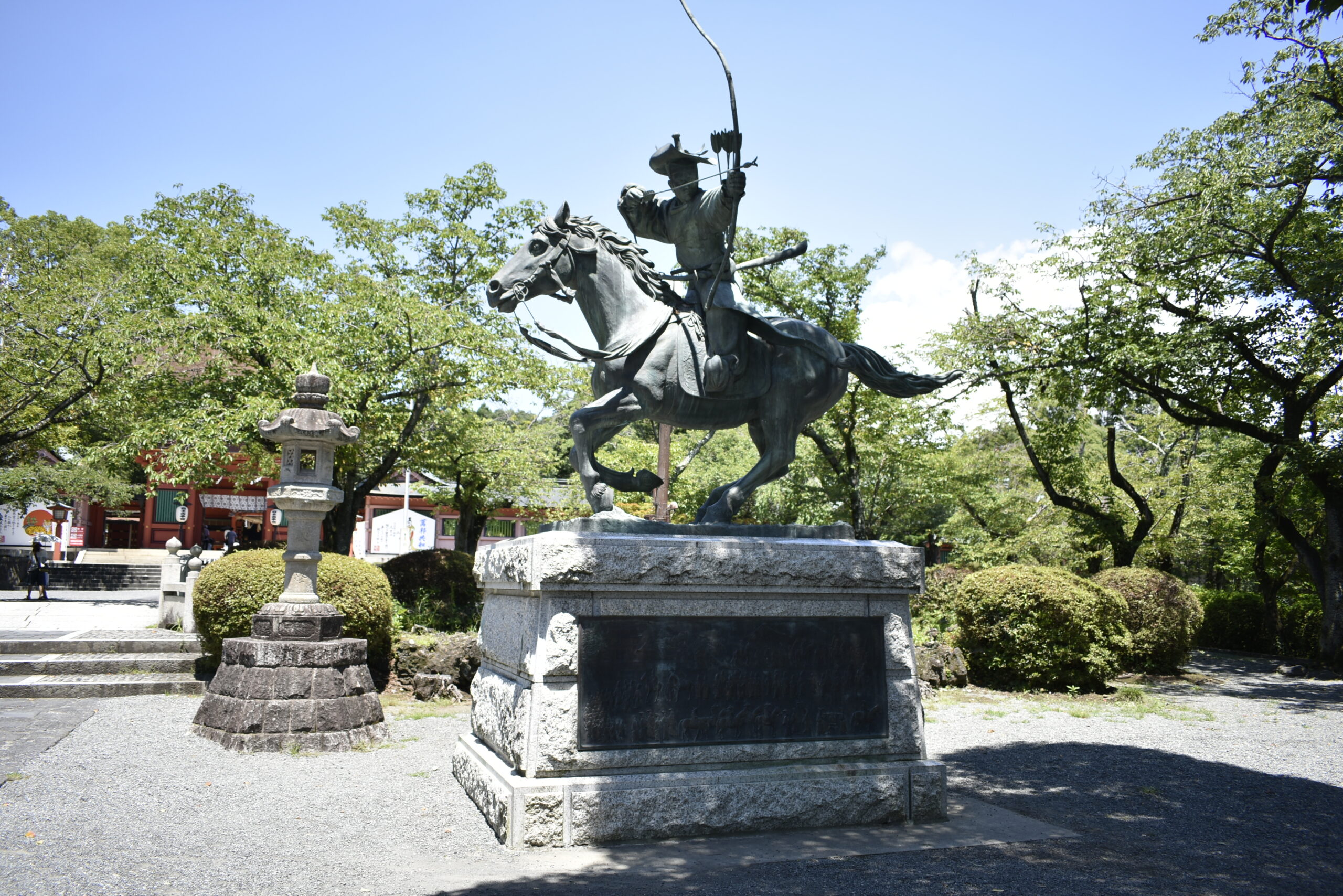
A mounted archery tradition traced back to Minamoto no Yoritomo. The main event on May 5 features horseback archers galloping down the Sakura no Baba, shooting at targets — a thrilling spectacle of martial skill.
Mt. Fuji Gojinka Festival (First Saturday of August) ★★★★☆
Sacred fire from the summit shrine is carried on mikoshi (portable shrines) through the city streets and into the Kanda River. The climactic “kawa-iri” (river entry) with flame-bearing mikoshi is unforgettable.
Autumn Grand Festival (November 3-5) ★★★★☆
Combined with the Fujinomiya Matsuri, featuring elaborate floats parading through the streets accompanied by festival music. A wonderful way to experience local culture.
Recommended Hours
Early morning at opening time is ideal. Fewer visitors, clearer air, and the best chance of seeing Mt. Fuji unobstructed. Opening times vary by season (5:00 AM April–September, 6:00 AM November–February). Morning sunlight on Wakutama Pond is particularly beautiful.
Visitor’s Guide
Recommended Route (Allow 60-90 minutes)
Step 1: Grand Torii Gate to the Approach
Pass through the vermilion grand torii gate and walk along the tree-lined approach. You’ll spot the yabusame horseman statue ahead.
Step 2: Romon Gate
Enter through the impressive two-story gate with guardian statues (zuijin) on either side.
Step 3: Worship at the Haiden and Honden
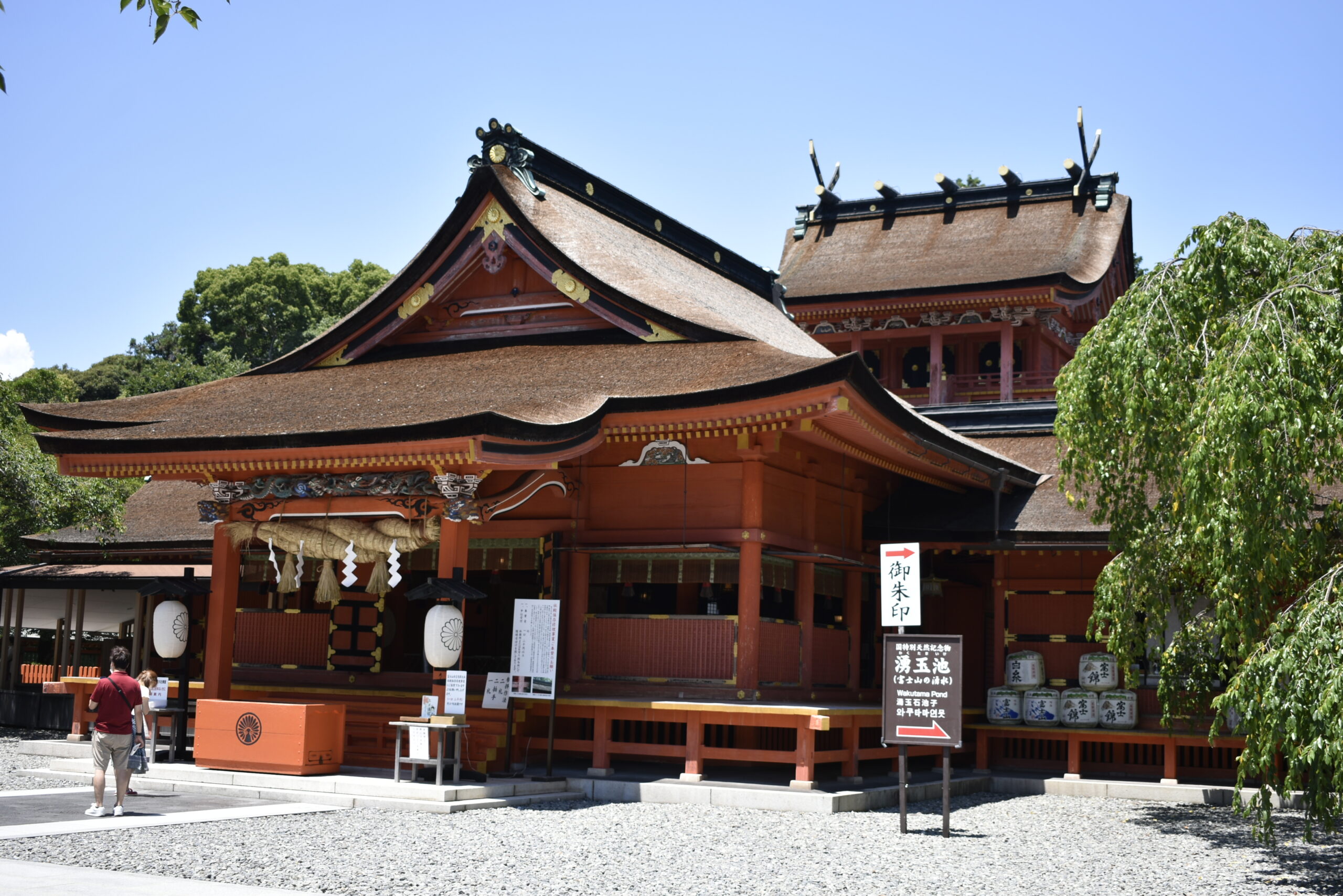
Pray at the worship hall following the standard “two bows, two claps, one bow” protocol. Take time to admire the unique Sengen-zukuri architecture of the main hall, best viewed from the side.
Step 4: Wakutama Pond
Walk to the eastern side to visit the sacred spring pond. Cross the vermilion arched bridge and take in the extraordinary clarity of the water. A designated spot allows you to collect sacred water (bring a container).
Step 5: Sakura no Baba
Stroll through the cherry tree-lined arena — spectacular during blossom season, pleasant year-round.
Step 6: Omiya Yokocho
End your visit with Fujinomiya yakisoba at the adjacent food street.
Tips for Visitors
- The main hall interior is not open to the public (exterior viewing is free)
- No swimming or wading in Wakutama Pond
- The summit shrine (Oku-miya) is only open July–early September
- During cherry blossom season and Yabusame Festival, parking fills very early — public transport recommended
Practical Information
| Detail | Information |
|——–|————|
| Official Name | Fujisan Hongu Sengen Taisha |
| Principal Deity | Konohanasakuya-hime-no-Mikoto |
| Founded | 27 BC (according to shrine tradition) |
| Address | 1-1 Miyacho, Fujinomiya, Shizuoka 418-0067 |
| Phone | 0544-27-2002 |
| Hours | Apr–Sep 5:00–20:00 / Mar & Oct 5:30–19:30 / Nov–Feb 6:00–19:00 |
| Admission | Free |
| Parking | ~150 spaces (¥200/hour, 30 min free for worshippers) |
| Official Website | https://fuji-hongu.or.jp/ |
Access
By Train
- JR Minobu Line “Fujinomiya Station” — 10 minutes walk
- From Shin-Fuji Station (Shinkansen): Taxi ~30 minutes, or transfer via JR Fuji Station to Minobu Line
By Car
- Tomei Expressway “Fuji IC” via Nishi-Fuji Bypass — about 20 minutes
- Shin-Tomei Expressway “Shin-Fuji IC” via Nishi-Fuji Bypass — about 15 minutes
By Bus
- From Fujinomiya Station Platform 4, Awakura-Manno Line to “Wakutama no Ike” stop (~¥150)
- Highway bus from Tokyo Station to Fujinomiya Station (about 2.5 hours)
Nearby Attractions
Fujinomiya Yakisoba — B-Grade Gourmet Capital
The area around Sengen Taisha is the birthplace of Fujinomiya yakisoba — thick, chewy steamed noodles with “nikukasu” (rendered lard residue) and sardine flake topping. This dish won the B-1 Grand Prix gold medal twice and is a must-try for every visitor.
Omiya Yokocho (adjacent to the shrine) offers Fujinomiya yakisoba, gelato, spring water drinks, and more. Perfect for post-worship lunch.
Shiraito Falls (World Heritage Component)
About 20 minutes by car from the shrine. Mt. Fuji’s underground water cascades across a 200-meter-wide, 20-meter-high cliff face — a fellow World Heritage component site. Bus from Fujinomiya Station takes about 30 minutes.
Mt. Fuji Fifth Station (Fujinomiya Trail)
During climbing season, many hikers pray at Sengen Taisha for climbing safety before heading to the Fujinomiya 5th Station (elevation ~2,400m). The Fujinomiya Trail is the shortest of the four main climbing routes to the summit.
Other Nearby Spots
- Shizuoka Fujisan World Heritage Center — Adjacent to the shrine. A museum exploring Mt. Fuji’s nature, culture, and faith
- Yamamiya Sengen Shrine — The original shrine site before relocation, about 15 minutes by car
Visitor Reviews
“The transparency of Wakutama Pond is breathtaking. Seeing Mt. Fuji’s spring water actually bubbling up makes you appreciate nature’s power. Bring a bottle to take home sacred water — it’s free!” (From Google Maps reviews)
“Visited during cherry blossom season. The 500 cherry trees against the vermilion shrine with Mt. Fuji in the background is an incredible photo opportunity. Note: the parking lot fills up fast, so take the train.” (From Google Maps reviews)
“Timed our visit with the Yabusame Festival. The mounted archery is more powerful than I imagined. The whole shrine was buzzing with energy, and the food stalls made it a great family outing.” (From Google Maps reviews)
Frequently Asked Questions
Q. Can I get a goshuin (shrine stamp)?
Yes. Available at the shrine office during hours. In summer, limited-edition stamps are also available at the Mt. Fuji summit shrine (Oku-miya).
Q. Can I bring my pet?
Pets on leashes are allowed in the grounds but not inside shrine buildings. The Wakutama Pond area is a pleasant walking spot for pet owners.
Q. Is the shrine wheelchair/stroller accessible?
The main approach is relatively flat and accessible to the worship hall area. Some paths around Wakutama Pond are gravel, so caution is needed.
Q. When can I visit the summit shrine (Oku-miya)?
The Oku-miya is open only from early July to early September. Reaching it requires climbing Mt. Fuji from the Fujinomiya 5th Station (approximately 4-5 hours one way).
Q. Is it worth visiting on a rainy day?
Absolutely. The shrine grounds are atmospheric in rain, and Wakutama Pond takes on a mystical quality with increased water flow. The adjacent Fujisan World Heritage Center is an indoor attraction for rainy days.
Summary
Fujisan Hongu Sengen Taisha is the spiritual heart of Mt. Fuji worship — a 2,000-year-old shrine recognized as a UNESCO World Heritage Site, home to Japan’s only “Sengen-zukuri” architecture, and guardian of Wakutama Pond’s sacred springs.
Whether you come to pray for safe childbirth, marvel at Tokugawa Ieyasu’s architectural legacy, fill a bottle with Mt. Fuji’s spring water, or simply stand in awe of Japan’s most sacred mountain, this shrine delivers an experience that connects you to the deepest roots of Japanese spirituality.
After your visit, savor Fujinomiya yakisoba at Omiya Yokocho and consider a trip to the magnificent Shiraito Falls — completing a day immersed in the blessings of Mt. Fuji.
—
💡 Want to discover your ideal power spot?
Beyond this location, Japan is home to countless spiritual power spots.
To find the ones that resonate most with you, try our free compatibility diagnosis (takes just 3 minutes).
あなたに最適なパワースポットを知りたい方へ