Just a 15-minute walk from JR Hiroshima Station’s Shinkansen exit (north exit), Kinko Inari Shrine (金光稲荷神社, きんこういなりじんじゃ) is a subsidiary shrine of Hiroshima Toshogu where over 120 vermilion-painted torii gates wind up the slope of Mt. Futabayama. From the main hall, roughly 500 stone steps lead further up to the inner shrine (奥宮 *Okumiya*), with a panoramic view of the Seto Inland Sea and downtown Hiroshima.
The officially documented divine virtues are business prosperity (商売繁盛), household safety (家内安全), and the fulfillment of all wishes (諸願成就). With unbeatable access from Hiroshima Station and the satisfying sense of accomplishment from the steep climb to the inner shrine—plus the sweeping view that awaits at the top—this shrine offers a rare combination of sightseeing and spiritual experience that you can complete in a half day.
This guide is based on first-source information from Hiroshima Toshogu’s official site and the official tourism site “Dive! Hiroshima.” We cover hours, *goshuin* stamps, the time required to reach the inner shrine, combining the visit with the Futabayama Peace Pagoda, how to avoid crowds, and photography tips—everything you need before your visit.
The Appeal of This Sacred Site
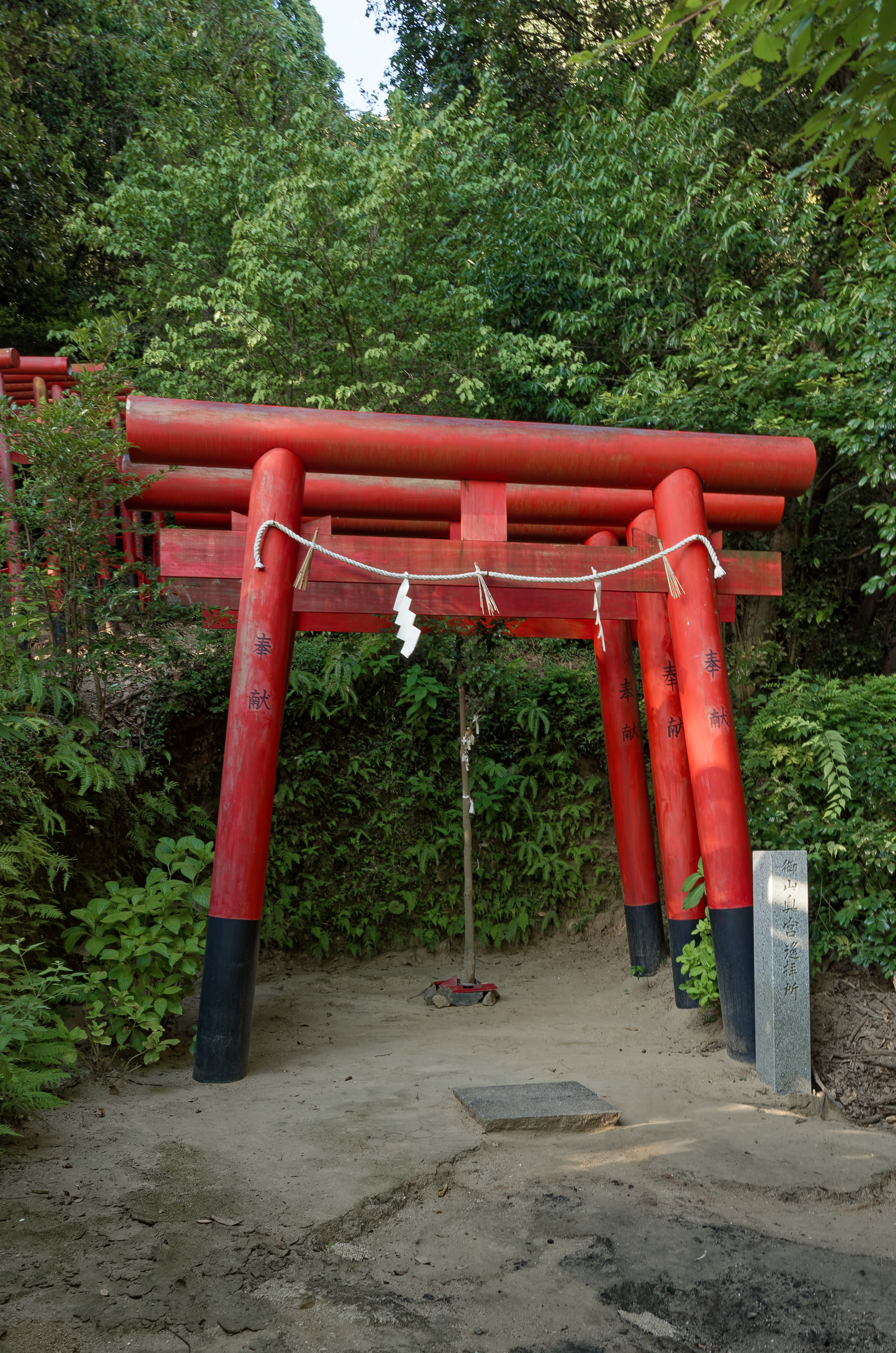
120+ Vermilion Torii—An “Urban Inari Mountain” Different from Kyoto’s Fushimi Inari
According to Hiroshima Toshogu’s official site, the approach to Kinko Inari Shrine is lined with over 120 vermilion-painted torii (the official tourism site describes it as “over 100 torii”). The scale is smaller than Kyoto’s Fushimi Inari Taisha’s famous Senbon Torii, but you can experience this just 15 minutes’ walk from Hiroshima Station—that’s the unique value here.
After passing under torii to the main hall, you’ll find approximately 500 stone steps leading to the inner shrine. A Chugoku Shimbun article reports the climb from the main hall to the inner shrine takes about 15 minutes, putting the total from Hiroshima Station to the inner shrine at roughly 30 minutes including breaks (note: not an official end-to-end time).
Officially Documented Divine Virtues
The official Hiroshima Toshogu site lists Kinko Inari Shrine’s divine virtues as:
- Business prosperity (商売繁盛)
- Household safety (家内安全, 家内平安)
- Fulfillment of all wishes (諸願成就)
The official site explains that the name “Kinko Daimyojin” (Kinko Great Deity) was bestowed because of the deity’s notable efficacy in these matters. However, “wealth gain,” “matchmaking,” and “child-bearing” are not officially listed virtues. Local information and personal websites sometimes call this a “wealth shrine,” but this article uses only the officially documented expressions.
Stunning Views from the Inner Shrine
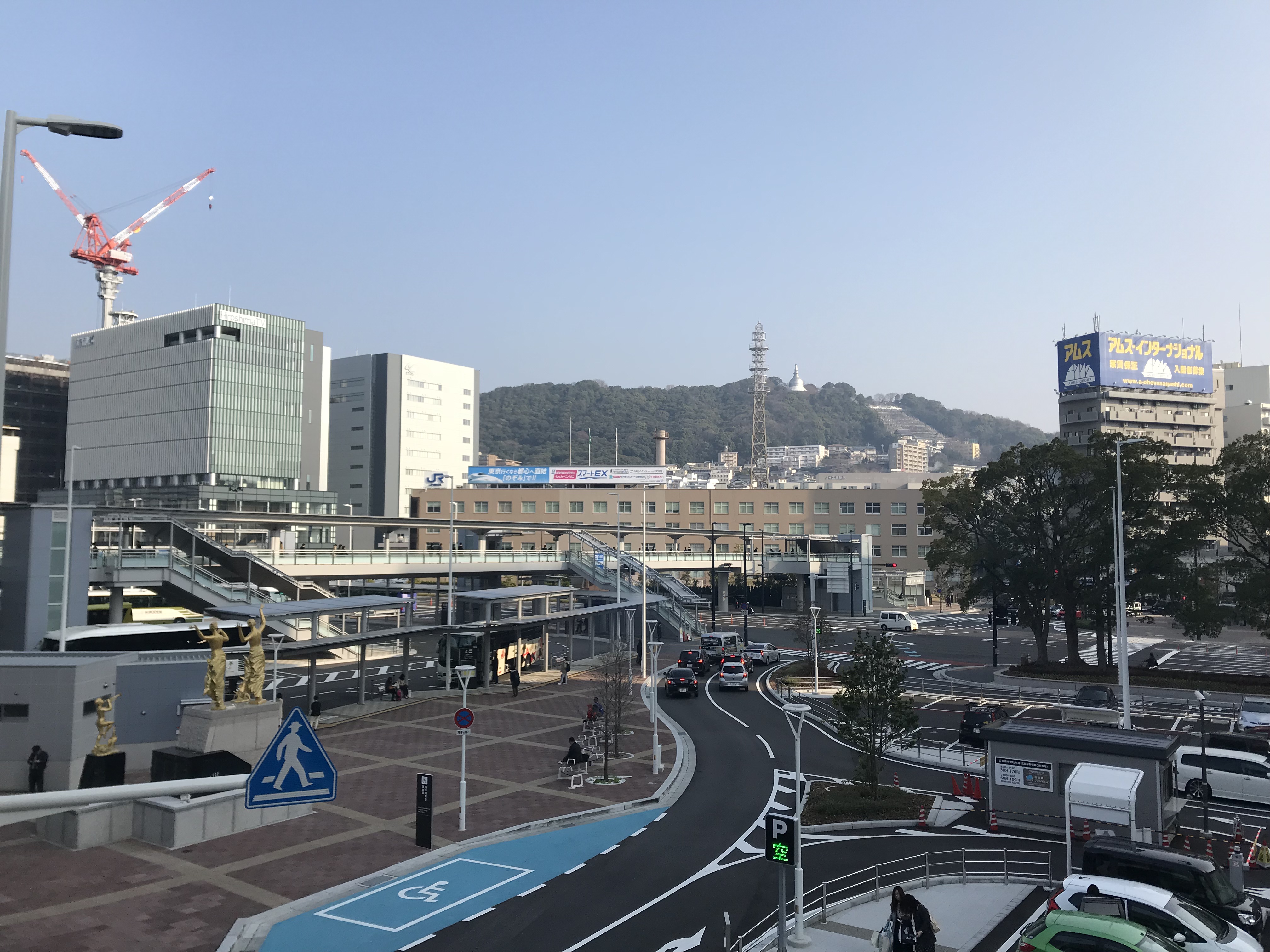
The greatest appeal of the inner shrine is the panoramic view of Hiroshima Station, downtown, and the islands of the Seto Inland Sea. This view awaits at the top of the roughly 500-step climb. Unlike other elevated spots in Hiroshima (such as Shukkeien or Peace Memorial Park), this offers an eastern-facing overhead perspective—including looking down on Hiroshima Station’s Shinkansen platforms, an experience unique to this location.
Per the official tourism site, the area around Mt. Futabayama features the largest natural grove of Shiribuka-gashi oaks in Japan—a precious natural reminder amid Hiroshima’s urban setting.
Why Kinko Inari Shrine Is Called an “Urban Power Spot”
Kinko Inari Shrine’s appeal is in offering the experience of “mountain worship within a city” in a half day.
Walking distance from Hiroshima Station — Whether arriving by Shinkansen for business or pleasure, you can easily fit this in between other plans. The main hall is a 15-minute walk; the inner shrine adds about 15 more minutes. Leave your suitcase at the hotel, and you can complete the visit in a morning.
Prayer through physical effort — The roughly 500 stone steps become a form of prayer in themselves. Each step lets you catch your breath and watch the view change—a chance to set aside the daily flood of information and ground both body and mind.
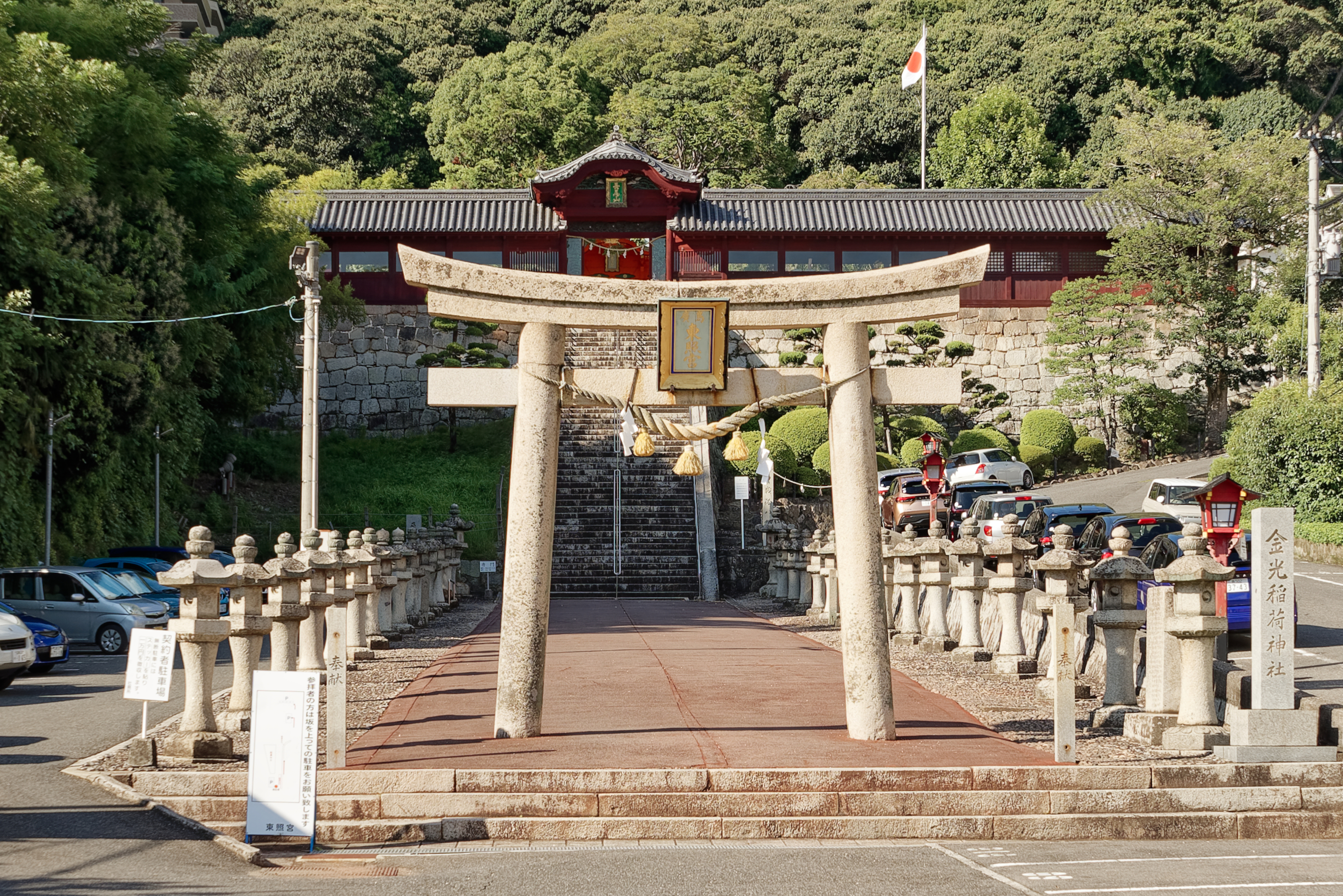
Combined with Hiroshima Toshogu — You’ll approach via Hiroshima Toshogu, built in 1648 by Hiroshima feudal lord Asano Mitsuakira. The contrast between the weight of time within Toshogu’s grounds and the openness of the inner shrine’s view defines the experience of Kinko Inari Shrine and its inner shrine.
Best Times to Visit
Seasonal Highlights and Festivals
| Time | Event | Notes |
|——|——-|——-|
| New Year’s Day (Jan 1) | *Hatsumode* (first shrine visit). Reception: 0:00–1:00 and 7:00–16:30 | Parking on Toshogu grounds is closed during the first three days; use nearby paid lots |
| Jan 2–3 | Hatsumode. Reception 9:00–16:00 | Same as above |
| Spring Festival (Apr 1) | Regular festival | — |
| Nagoshi Festival (Aug 1) | Pass through *chinowa* (sacred reed rings) and pray for health | Watch for summer heat and stay hydrated |
| Autumn Festival (Nov 1) | Regular festival | — |
| Monthly Festivals (1st and 15th) | Monthly ceremonies. Reception 6:30–15:30 | Valuable opportunity for early-morning visits |
| Mid-November | Per the official site, this is the best time for *shiribuka-gashi* acorn collecting | — |
Best Times of Day
- Early Morning (1st and 15th only): Monthly festivals start reception at 6:30. Official information does not specify whether ordinary days allow early-morning visits, so for guaranteed early access, choose these days.
- Daytime (9 AM–3 PM): Best matched with goshuin reception (9:00–16:00).
- Evening/Night: There’s no official information on regular nighttime visiting hours, lighting, or illumination events. Nighttime visits for scenic views are not recommended.
The official site does not document peak times for cherry blossoms or autumn foliage—use general Hiroshima season info (cherry blossoms: late March–early April; foliage: mid–late November) as a reference.
Trail Guide: How to Explore
Standard Route (Half-Day Course, ~2–3 hours)
1. From JR Hiroshima Station Shinkansen exit (north exit), walk to Hiroshima Toshogu (official: ~8 min)
2. Visit Hiroshima Toshogu (built 1648 by Asano Mitsuakira)
3. Visit Kinko Inari Shrine (main hall) on the grounds
4. If you want a goshuin stamp, visit the Toshogu reception (9:00–16:00)
5. Body and weather permitting, climb the roughly 500 steps to the inner shrine (about 15 min)
6. Pray and enjoy the view at the inner shrine
7. Optionally descend via Futabayama Peace Pagoda
8. Eat and shop for souvenirs at minamoa/ekie, directly connected to Hiroshima Station
If You Skip the Inner Shrine
If you’re short on energy, time, or facing bad weather, visiting only the main hall is still worthwhile. The path to the main hall (within Hiroshima Toshogu’s grounds) is relatively gentle and avoids the 500-step climb.
About *Goshuin* Stamps
| Item | Details |
|——|———|
| Goshuin available | Yes |
| Reception location | Hiroshima Toshogu reception (NOT Kinko Inari Shrine’s main hall) |
| Hours | 9:00–16:00, no closing days |
| Pre-written stamp | Available depending on the day |
| Fee | Not listed in online official info—check on site |
| Goshuincho sale | Not confirmed in online official info |
Basic Information & Access
Basic Information (as of May 2026)
| Item | Details |
|——|———|
| Official name | Kinko Inari Shrine (金光稲荷神社, きんこういなりじんじゃ) |
| Address | 2-1-18 Futaba-no-Sato, Higashi-ku, Hiroshima 732-0057 (same as Hiroshima Toshogu) |
| Enshrined deity | Uka-no-Mitama-no-Kami (宇迦之御魂神, the great Inari deity) |
| Divine virtues | Business prosperity, household safety, wish fulfillment |
| Admission | Not stated as “free” officially, but no admission fee is listed |
| Goshuin reception | 9:00–16:00, no closing days (at Hiroshima Toshogu) |
| Parking | ~10 spaces on Hiroshima Toshogu grounds (closed for New Year’s first three days) |
| Contact | Hiroshima Toshogu office: 082-261-2954 |
| Official site | hiroshima-toshogu.or.jp/kinko/ (English version at /en/kinko/) |
Access
On Foot (most common)
| From | Time |
|——|——|
| JR Hiroshima Station Shinkansen exit (north exit) → Kinko Inari Shrine (main hall) | Official tourism site: ~15 min walk |
| JR Hiroshima Station Shinkansen exit → Hiroshima Toshogu | Official: ~8 min |
| Kinko Inari Shrine (main hall) → Inner shrine | ~500 stone steps (Chugoku Shimbun: ~15 min) |
| JR Hiroshima Station → Inner shrine, total | ~30 min (excluding breaks; not an official end-to-end time) |
By Bus
- From the Toshogu-Iriguchi bus stop, Hiroshima Toshogu is a 5-minute walk (Hiroden Bus and Hiroshima Electric Railway Bus routes)
By Car
- ~3 minutes from JR Hiroshima Station Shinkansen exit (official)
- Hiroshima Toshogu grounds parking (~10 spaces, free)
- Parking on Toshogu grounds is closed during New Year’s first three days; use nearby paid lots (around Hiroshima Station)
Hiroden Streetcar
- Disembark at Hiroshima Station tram stop, head to the Shinkansen side (north exit), and walk from there (official routing uses JR Hiroshima Station as the starting point)
Area Information & Model Itineraries
Nearby Attractions
| Spot | Distance/Time | Description |
|——|————–|————-|
| Hiroshima Toshogu | The parent shrine of Kinko Inari | Built 1648 by Asano Mitsuakira; enshrines Tokugawa Ieyasu |
| Futabayama Peace Pagoda | Atop Mt. Futabayama (139m) | Completed Aug 5, 1966 as a Buddhist stupa donated to Hiroshima City. Houses Buddha relics and remembrance stones |
| Tsuruhane Shrine | ~15 min walk from Hiroshima Station north exit | Predecessor was Shiinoki Hachimangu, founded in early Kamakura period |
| Shukkeien Garden | ~10 min walk from Hiroshima Station | Built 1620 as the Asano feudal lord’s villa garden. Adults ¥350 |
| Hiroshima Peace Memorial Park | ~20 min by streetcar | Take streetcar Line 1, get off at “Hondori” or “Fukuromachi,” walk ~400m west |
| minamoa/ekie | Connected to Hiroshima Station | Food and souvenir shopping at the station complex |
About Futabayama Peace Pagoda
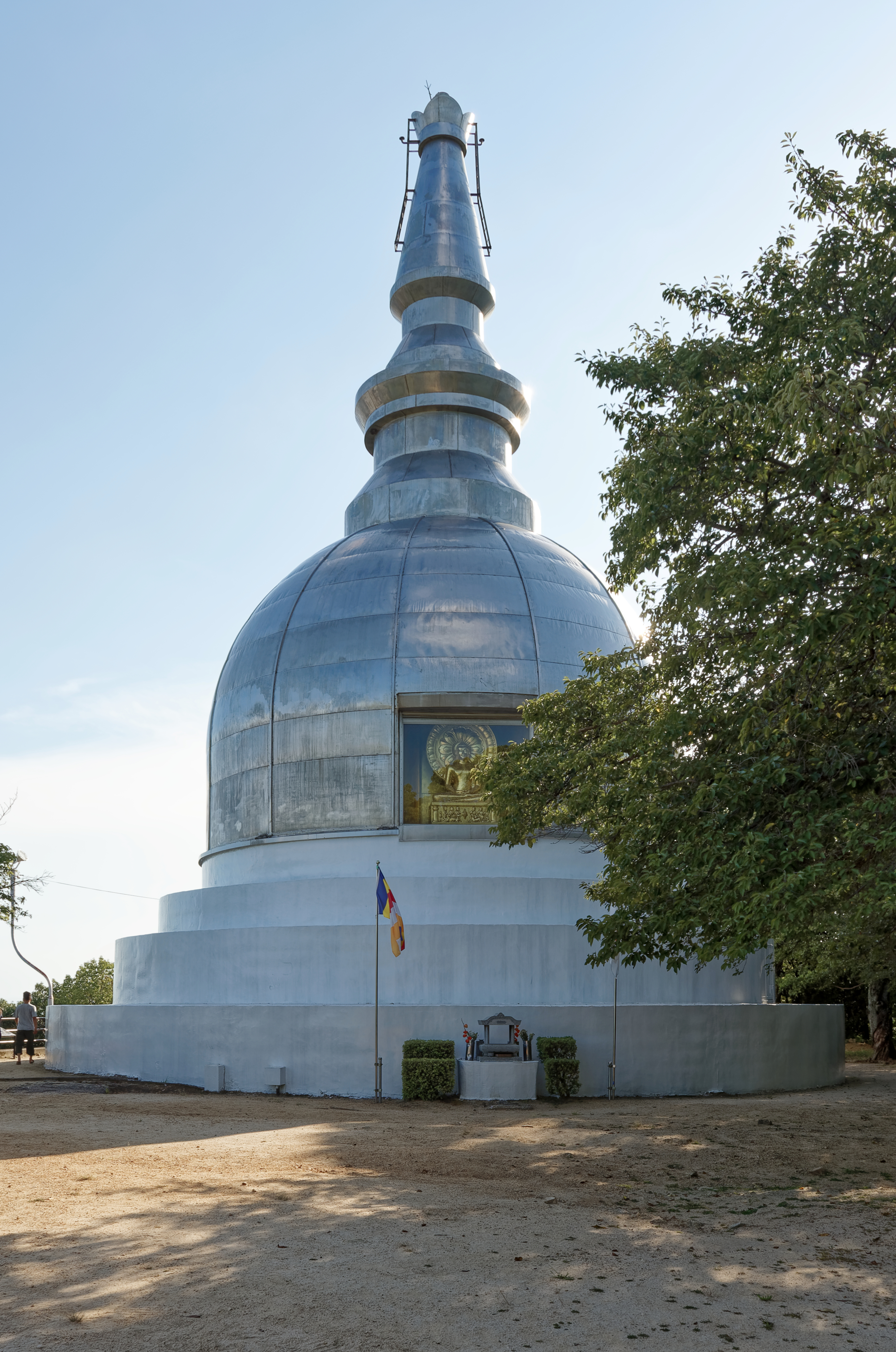
Located atop Mt. Futabayama (139m elevation), this Buddhist stupa was built to pray for permanent peace and the repose of atomic bomb victims, and was completed and donated to Hiroshima City on August 5, 1966. It houses Buddha relics donated by Prime Minister Nehru of India, Mongolian Buddhists, and the nation of Ceylon (now Sri Lanka), along with tens of thousands of remembrance stones from prefecture residents and city citizens.
After visiting the inner shrine of Kinko Inari, walking the ridge to the Peace Pagoda is a typical route. The “Futaba-no-Sato Historical Walking Path” is also maintained, making it possible to combine the climbing pilgrimage with a peace memorial visit in a half-day course.
Model Plan (Half-Day Course)
| Time | Activity |
|——|———-|
| 9:00 | Arrive at Hiroshima Station → walk from Shinkansen exit to Hiroshima Toshogu |
| 9:15 | Visit Hiroshima Toshogu |
| 9:45 | Visit Kinko Inari Shrine (main hall) and get goshuin |
| 10:15 | Climb ~500 steps to the inner shrine |
| 10:45 | Visit inner shrine and enjoy the view |
| 11:00 | Walk to Futabayama Peace Pagoda |
| 11:30 | Descend and visit Tsuruhane Shrine |
| 12:00 | Lunch at ekie (connected to Hiroshima Station) |
| 13:00 | Take streetcar to Peace Memorial Park |
Visitor Voices
Real impressions from 4travel (Japanese travel reviews):
> “Red torii gates are densely lined up.”
> — 4travel “Kinko Inari Shrine,” Komikku (Apr 2021 visit, rating 4.5)
The visual impact of the dense vermilion torii is something that only photos can convey.
> “After about 15 minutes of climbing the mountain path, I arrived at the inner shrine.”
> — 4travel “Kinko Inari Shrine,” ton114 (Nov 2021 visit)
While there’s no official confirmed time, visitor experiences suggest roughly 15 minutes is a typical guide for the climb to the inner shrine.
> “The red torii stone steps go up the mountain.”
> — 4travel “Kinko Inari Shrine,” Tabitabi (May 2021 visit)
Many visitors turn back at the main hall rather than continuing to the inner shrine. If you’re not confident in your stamina, visiting only to the main hall is still worthwhile.
Visitor Segment Guides
For Goshuin Collectors
Kinko Inari Shrine’s goshuin is issued at Hiroshima Toshogu’s reception, not at Kinko Inari Shrine’s main hall.
- Hours: 9:00–16:00, no closing days
- Pre-written stamp: Available depending on the day
Goshuincho sale and fees are not confirmed in online official information—please ask on-site. For efficient goshuin collection, stop by the Toshogu reception before climbing to the inner shrine.
For Photographers
Best Spots:
- The 120+ vermilion torii — vertical composition of the gates in succession
- View from the inner shrine — Hiroshima Station, downtown, and the Seto Inland Sea islands
- Futabayama Peace Pagoda — the white form of the Buddhist stupa
Official guidance on the best time of day is unavailable, but morning light (on the east-facing slope) and evening light beautifully illuminate the torii. Tripod use policies are unverified, so set up where you won’t obstruct other visitors.
For Wheelchair/Stroller Users
The path to the inner shrine has ~500 steps. No alternative barrier-free route is officially confirmed, so reaching the inner shrine is not easily accessible.
Driving access to Hiroshima Toshogu’s grounds (~10 spaces, excluding New Year) is possible up to the parking lot, which is near the main hall of Kinko Inari Shrine. Limiting your visit to the main hall is the practical choice.
For Families with Children
The ~500 steps to the inner shrine is considerable exercise for children. Account for children’s stamina, footing, slippery conditions in rain, and summer heat. Comfortable walking shoes are essential. Since you can return to the Hiroshima Station area easily (e.g., for breaks at ekie), don’t push yourselves—visiting only the main hall is a valid option.
For Early-Morning/Nighttime Visitors
Early morning: On the 1st and 15th of each month, monthly festival reception begins at 6:30. Whether ordinary days allow early-morning visits is not officially documented.
Nighttime: Aside from the New Year’s Day 0:00–1:00 reception, no official information confirms regular nighttime visiting access, lighting, or safety. Nighttime visits for scenic views are not recommended.
For International Visitors
Hiroshima Toshogu’s official site has an English version of the Kinko Inari Shrine page (hiroshima-toshogu.or.jp/en/kinko/). The state of on-site English signage is unverified, so prepare offline translation tools (Google Translate, etc.) for safety.
Cautions & Safety Information
The ~500-Step Climb
The biggest physical challenge to reach the inner shrine is the ~500 stone steps. Comfortable shoes, a reasonable pace, and hydration are essential. In rain or freezing conditions, steps can become slippery—check the weather before deciding to climb.
Regular Visiting Hours
The official site does not list regular visiting hours—what’s posted is the “festival reception time” (monthly and seasonal festivals). Daytime visits are no issue, but for early-morning or late-night visit plans, contact Hiroshima Toshogu (082-261-2954) in advance to confirm.
Nighttime Safety
Since lighting and pedestrian conditions at night are not officially documented, nighttime visits for scenic views are not recommended. Only the New Year’s Day 0:00–1:00 reception is officially confirmed as a nighttime visit window.
New Year’s First Three Days
During the first three days of the New Year, the on-site parking lot is unavailable. Use paid parking around Hiroshima Station.
Belonging Management
The area around Hiroshima Station is a tourist and entertainment district—exercise general travel precautions (theft and pickpocketing).
Summary
Kinko Inari Shrine is a rare power spot that combines outstanding access from Hiroshima Station (~15-minute walk) with the experience of 120+ vermilion torii, ~500 stone steps, and stunning views from the inner shrine—all completable in a half day.
The officially confirmed divine virtues are business prosperity, household safety, and the fulfillment of all wishes. Rather than the flashy “wealth shrine” tagline, this is a shrine that quietly supports those who run businesses, those who pray for family well-being, and those who want to face their own wishes head-on.
If you’re in Hiroshima by Shinkansen and have a half day free between business or sightseeing, consider experiencing the combination of Kinko Inari Shrine, its inner shrine, and the Futabayama Peace Pagoda. A completely different world just 15 minutes from the bustle of Hiroshima Station—that experience awaits you here.
—
We hope this article helps you make the most of your visit to Kinko Inari Shrine.
*Information in this article is current as of May 2026. Goshuin fees, parking conditions, festival reception times, and regular visiting hours change frequently. Before visiting, please confirm the latest information with Hiroshima Toshogu (hiroshima-toshogu.or.jp / 082-261-2954).*
あなたに最適なパワースポットを知りたい方へ