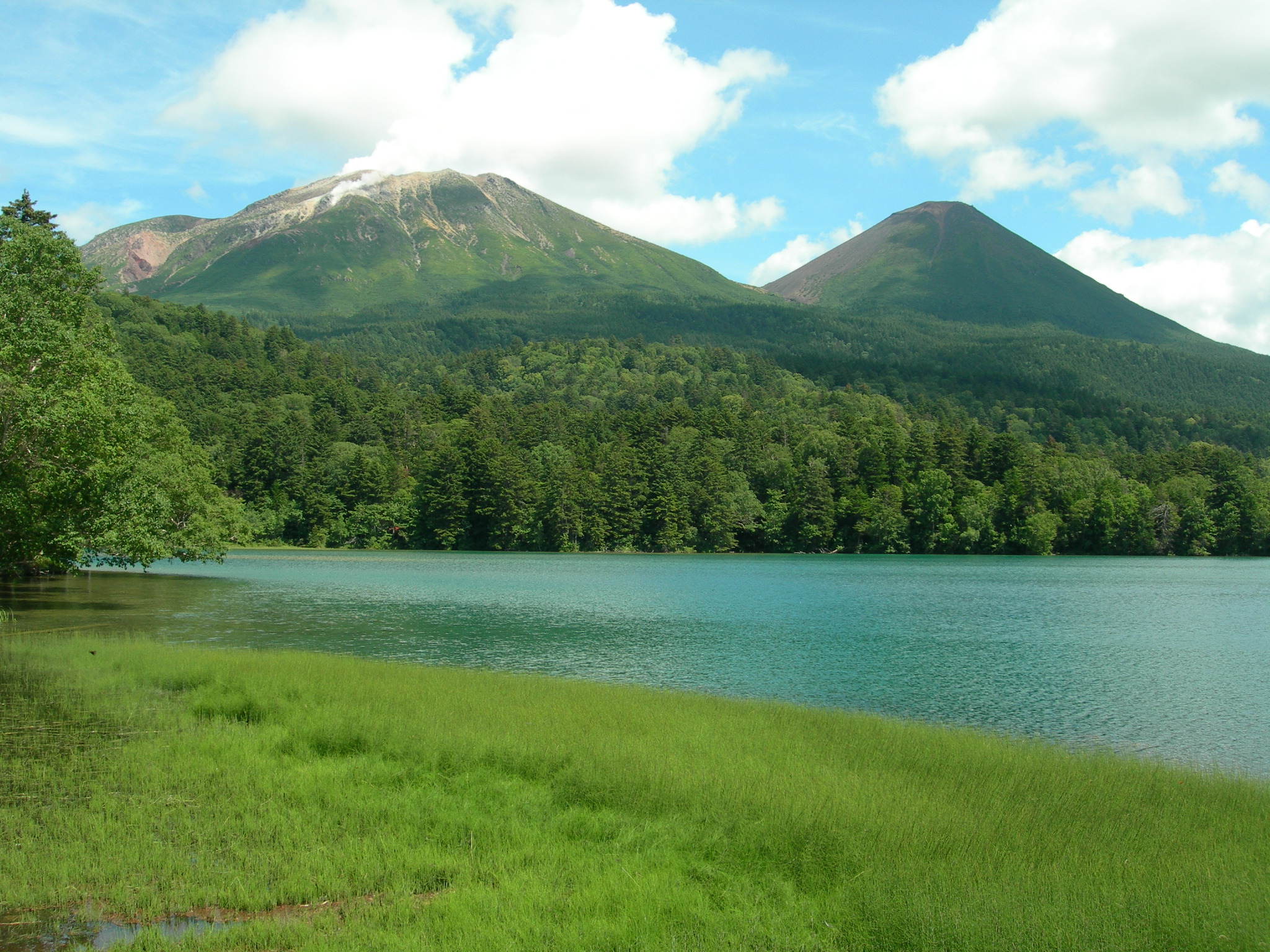
At the westernmost edge of Akan-Mashu National Park, nestled at the foot of Mount Meakan and Mount Akan-Fuji, lies a quiet lake with a circumference of just 2.5 kilometers—Lake Onneto. The name comes from the Ainu language, meaning “old, large lake.” Depending on the weather, season, viewing angle, and wind direction, the lake’s surface shifts through shades of blue, emerald green, and deep indigo. For this reason, locals have long called it the “Lake of Five Colors” (Goshiki-numa). Hokkaido’s official tourism site ranks Onneto, alongside Lake Shinonome and Lake Okotanpe, as one of the “Three Hidden Lakes of Hokkaido.”
This guide gives you everything you need to plan a Lake Onneto visit you won’t regret, based on first-source information from Ashoro Town, the Ashoro Tourism Association, the Ministry of the Environment, the Japan Tourism Agency, and the Japan Meteorological Agency. We cover the winter road closure schedule, drive times from Lake Akan Onsen, the current status of Yu-no-Taki Falls, autumn foliage timing, Mount Meakan volcanic alert info, and the best photography points—everything you should know before you go.
The Appeal of This Sacred Site
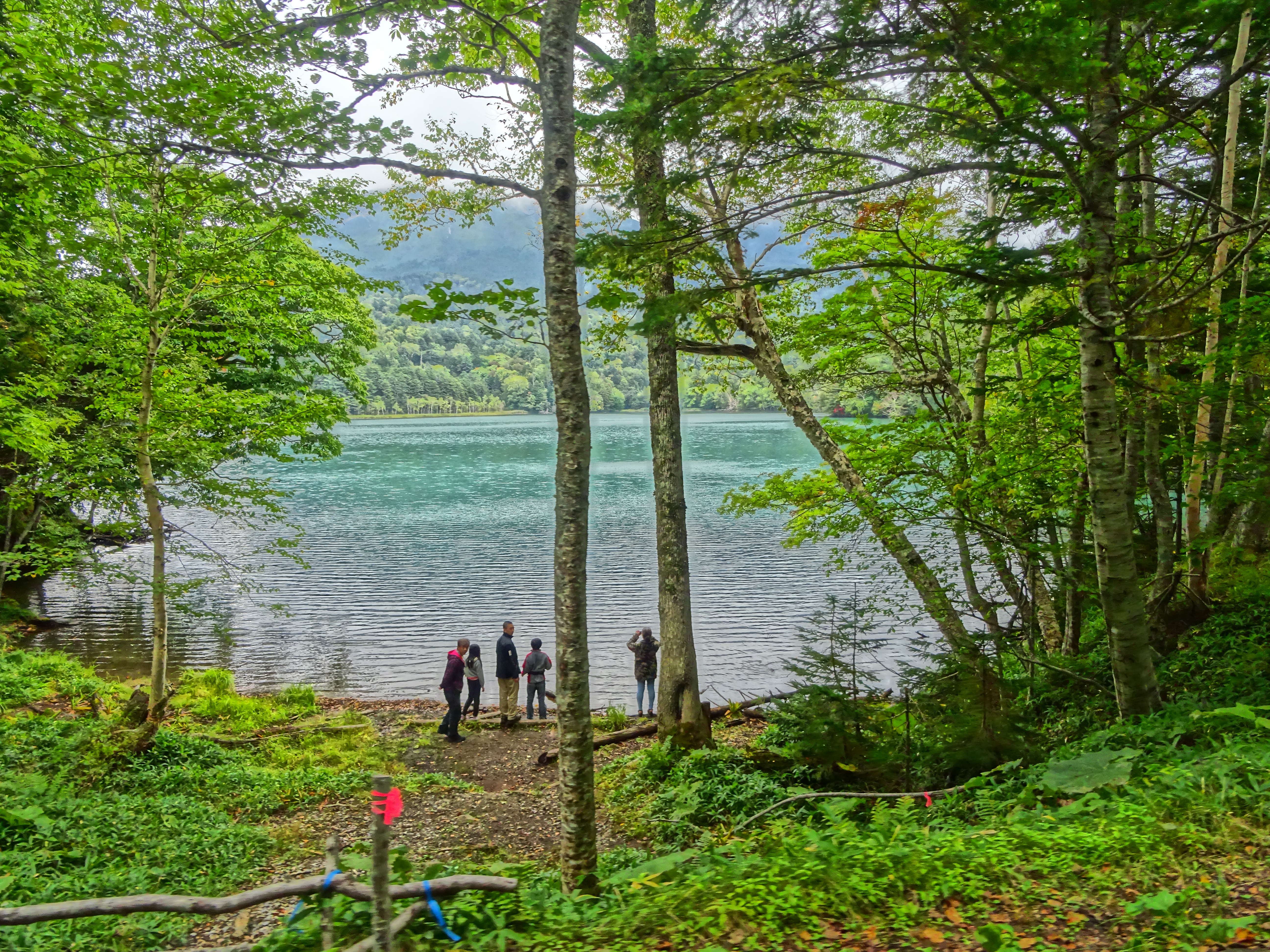
The “Lake of Five Colors”—Clear Water, Lake-Bed Mud, and Sky
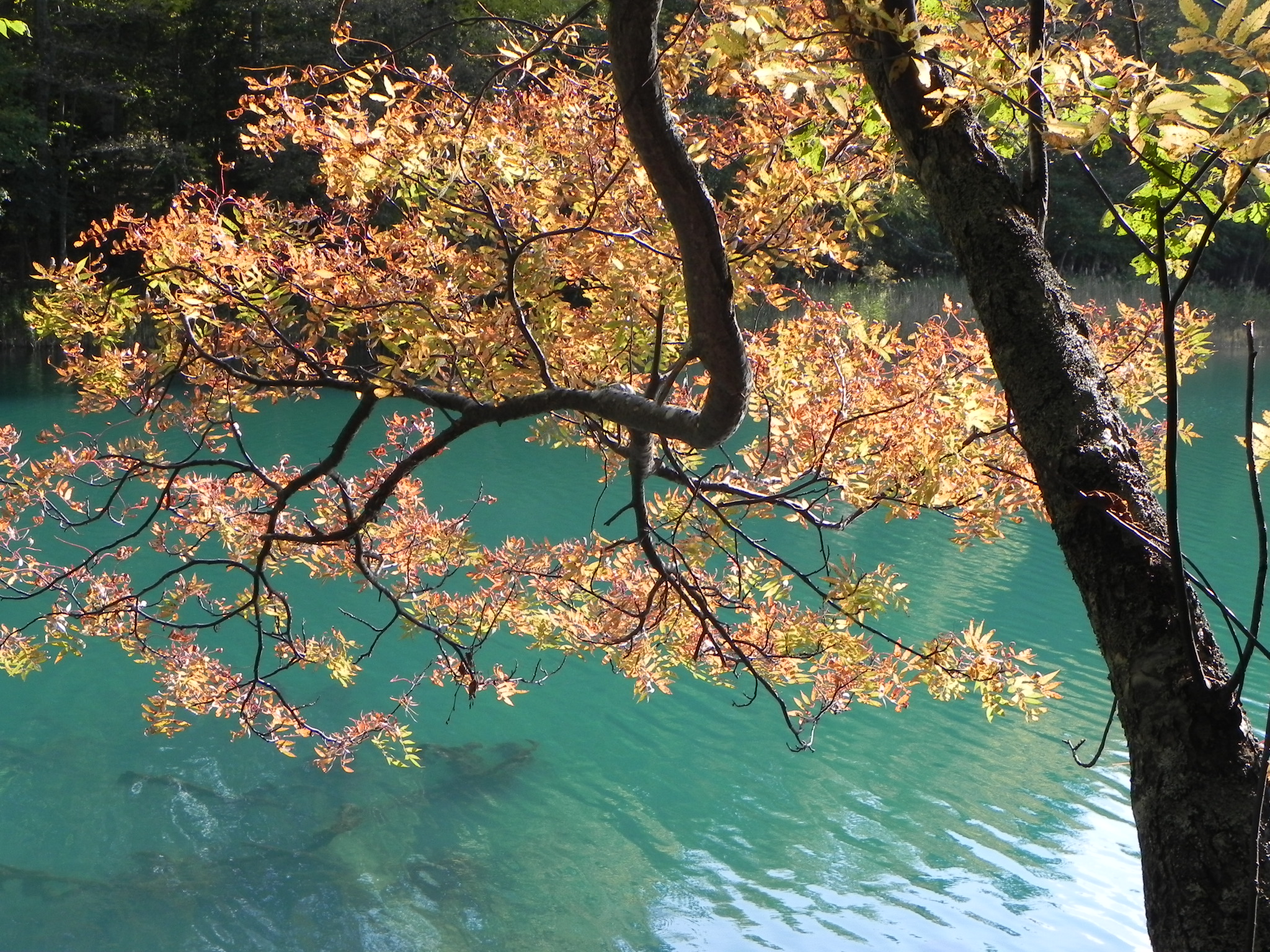
Why is Onneto called the “Lake of Five Colors”? The Japan Tourism Agency’s multilingual guide explains: the clear water combined with the lake-bed mud produces a range of blue-to-green hues that shift with viewing angle, season, weather, and wind direction. On windless mornings, the surface becomes a mirror, sharply reflecting Mount Meakan and Mount Akan-Fuji. After rain or under thin clouds, it sinks into deep blue; on sunny afternoons it glows emerald green. Visit the same lake multiple times in a day and the view will never repeat itself.
Ashoro Town’s official site also notes that water from the small, reddish neighboring pond “Nishiki-numa” flows into Onneto, contributing to its mystical coloration. Walk around the lake and the color shifts with every step—this constant *change* is the essence of what makes Onneto special.
A Dammed Lake Born from Mount Akan-Fuji’s Eruption
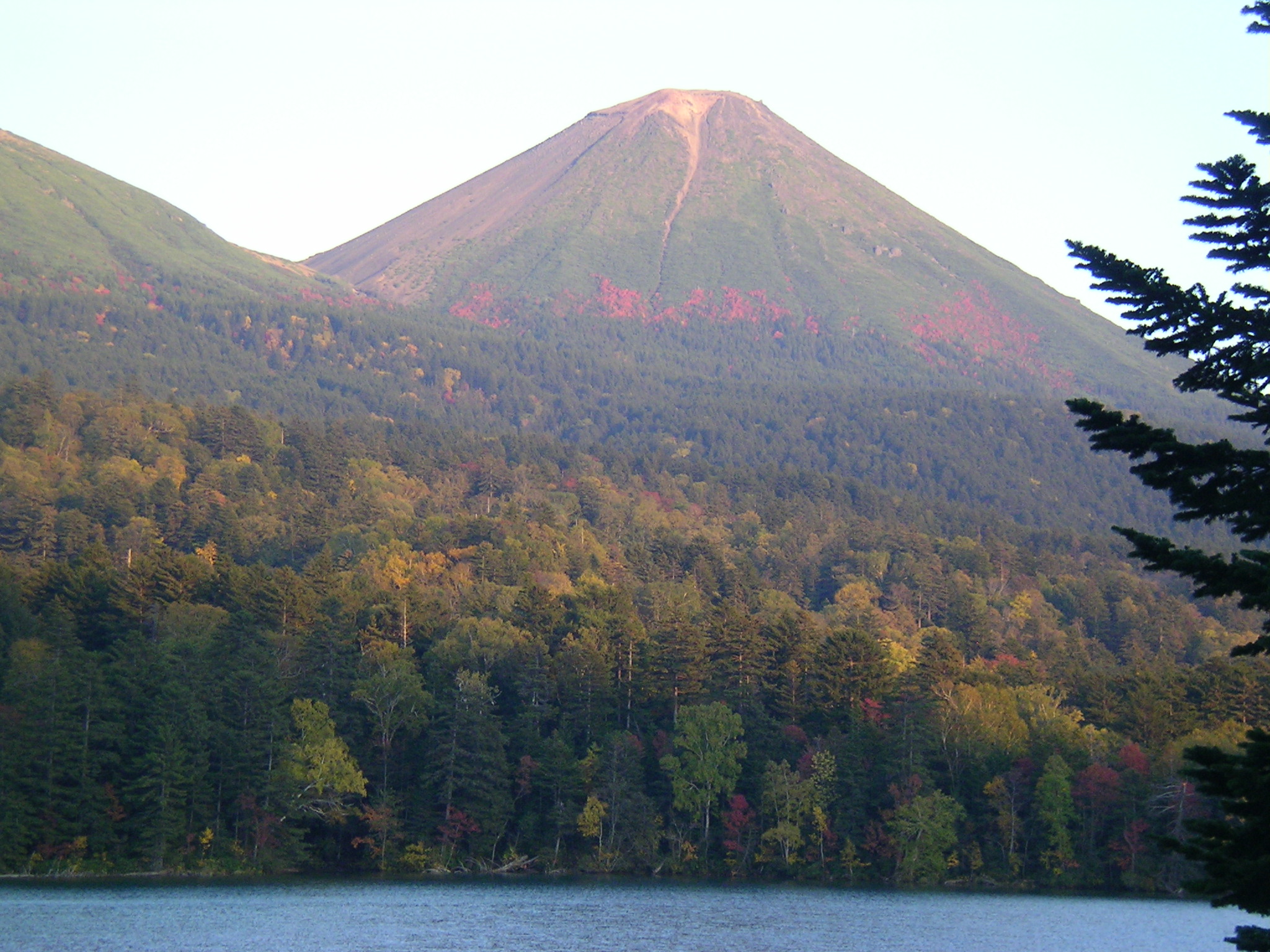
According to the Japan Tourism Agency, Lake Onneto was formed when Mount Akan-Fuji’s volcanic eruption dammed the flow of the Rawan River. The lake sits at 623m elevation, covers 0.23 km², with an average depth of 2.8m and maximum depth of 9.8m. The scale itself is modest—but the towering presence of Mount Meakan (1,499m) and Mount Akan-Fuji (1,476m) makes the lake feel far larger than its measurements suggest.
Aka-Ezo Spruce Forest and the Natural Monument “Yu-no-Taki Falls”
The eastern shore of Lake Onneto is covered with Aka-Ezo spruce, mountain ash (nanakamado), and Painted maple (itaya-kaede), and the southwest foothills of Mount Meakan feature pure stands of Aka-Ezo spruce. From the southern end of the lake, a 1.4-kilometer trail leads to Onneto Yu-no-Taki Falls—a waterfall of hot spring water designated as a National Natural Monument. The Ministry of the Environment explains that the interaction between mineral-rich hot spring water and algae/bacteria here produces manganese mineral formations on a scale considered among the world’s largest observable above ground.
Bathing was historically possible at the falls, but today bathing is strictly prohibited to protect the natural manganese deposits. The falls are now for viewing only.
Why Lake Onneto Is Called a Power Spot
No first-source records confirm Lake Onneto as a specific Ainu sacred site. But the Ainu name—“old, large lake”—shows the lake has been here long before humans settled in this region.
What Lake Onneto offers visitors is not a specific wish-granting power, but rather “a stillness that accepts all change.”
Acceptance of Change — A lake that constantly shifts color embraces every season, weather, and hour. “Don’t resist change”—this message is embodied by the water itself.
Overwhelming Silence and Reverence for Nature — Mobile phone reception is virtually unavailable beyond Meakan Onsen (per Ashoro Town’s official guide). Standing in disconnected silence, surrounded by an active volcano and primeval forest, you experience a sensory reset rarely available in daily life.
The Reward of Reaching a “Hidden Lake” — With essentially no public transport to Onneto, simply arriving here under your own initiative is itself an accomplishment. Few tourist destinations offer the same sense of having reached one of Hokkaido’s “Three Hidden Lakes.”
Best Times to Visit
Seasonal Highlights
| Season | Highlights | Cautions |
|——–|———–|———-|
| Spring/Early Summer (May–June) | Snowmelt, fresh greenery, residual snow on Mount Meakan | Prefectural Road 949 reopened April 9, 2026, 10:00. Single-digit temperatures in mornings/evenings |
| Summer (July–August) | Mirror-like lake, deep forest; campground/rest house open | Colors fade in midday hours. Insect repellent essential |
| Autumn (Late Sep – mid-Oct) | Vivid foliage against the blue lake—recommended by the Ministry of the Environment | Mornings near freezing some years. Busiest season |
| Winter (Nov–April) | Mystical icebound scenery | Road 949 closed Dec 4, 2025 10:00 – April 9, 2026 10:00. Snowshoes only with proper gear |
The Ministry of the Environment recommends autumn for the “contrast between the blue lake surface and vivid foliage.” Peak foliage typically runs from late September to mid-October, but can shift by 1-2 weeks year to year—check with the tourism association close to your visit.
Best Times of Day
- Early Morning (5–7 AM): Winds tend to be calm at this time. If you’re targeting the mirror lake, this is the best window (though it’s never guaranteed—it depends on weather and wind). Visitors are few; the silence is profound.
- Daytime (10 AM – 3 PM): The safest time to walk all the trails. Best for combining the Yu-no-Taki and Eastern Shore courses.
- Evening: Mount Meakan and Mount Akan-Fuji silhouettes against the sunset are striking. However, night brings increased wildlife risk in an area with no mobile reception, so descend and pack out before dark.
Trail Guide: How to Explore
Ashoro Town officially designates four main trails around Lake Onneto.
1. Observation Deck Trail (approx. 800m)
A short climb from across the viewing platform—closer to light hiking than walking. The observation point offers a sweeping view of the entire lake with Mount Meakan and Mount Akan-Fuji. Short but uphill; proper footwear and basic fitness required.
2. Onneto Eastern Shore Trail (1.6km)
The main lakeside trail. Walk through mixed forest of Aka-Ezo spruce, mountain ash, and Painted maple, viewing the lake from multiple angles. Trail ends at the campground.
3. Aka-Ezo Spruce Pure Forest Trail (2.2km)
Connects the Meakan Onsen town parking area to the middle of the Eastern Shore Trail. Uphill if approached from the lake side. The pure Aka-Ezo spruce stands here are a forest type rarely seen on Honshu—a rare botanical experience.
4. Yu-no-Taki Falls Trail (1.4km)
From the parking lot at the southern end of Onneto to the nationally designated Yu-no-Taki Falls. Approximately 20 minutes one-way on foot (per Ministry of the Environment patrol records), with a gentle uphill grade on a relatively easy path.
Best Plan: First-time visitors should view the lake from the western observation deck, then walk the Eastern Shore Trail (1.6km). If you have time and stamina, extend to the Yu-no-Taki Falls Trail to experience the National Natural Monument up close.
Basic Information & Access
Basic Information (as of May 2026)
| Item | Details |
|——|———|
| Address | Moashoro, Ashoro-cho, Ashoro-gun, Hokkaido |
| Admission | Free |
| Hours | Year-round (except winter road closure) |
| Contact | NPO Ashoro Tourism Association: 0156-25-6131 |
| Official site | town.ashoro.hokkaido.jp/kanko/ |
Important: There are no restrooms near the observation deck (the old facility was removed in FY2020 due to age). Use the Meakan Onsen public restroom (year-round) or the Onneto National Campground management building (late May – October 31).
Parking
| Lot | Cost | Notes |
|—–|——|——-|
| Observation deck parking | Free | Capacity not published. Inaccessible during winter road closure |
| Onneto National Campground | Free / 80 spaces | June–October. May fill during peak hiking season |
| Yu-no-Taki trail parking | Free | Starting point for the falls trail |
Access
By Car (most practical)
| From | Time |
|——|——|
| Lake Akan Onsen | About 20 minutes by car |
| JR Kushiro Station | About 1 hour 45 minutes |
| Tancho Kushiro Airport | About 1 hour 20–30 minutes |
| Ashoro town center | About 50 minutes |
By Public Transportation
- Akan Bus (Kushiro Station / Kushiro Airport → Lake Akan Onsen): Airport to Lake Akan Bus Center takes 75–80 minutes one-way; fares revised April 1, 2026 (check official PDF)
- No scheduled bus routes serve Onneto (as of May 2026). The practical option is to reach Lake Akan Onsen and continue by taxi or rental car. Taxi availability and fares are unconfirmed—arrange in advance.
Winter Road Closure (2025–2026)
- Prefectural Road 949 (Onneto Line): December 4, 2025 10:00 – April 9, 2026 10:00 (Hokkaido Tokachi General Subprefectural Bureau)
- The typical closure window is early December through early April, so vehicle access is impossible in winter. The safe option is a guided snowshoe tour.
Area Information & Model Itineraries
Nearby Attractions
- Lake Akan Onsen: 20 minutes by car. Hub for day-trip hot springs, Ainu Kotan, and lake cruises.
- Mount Meakan Hiking: Two routes from Meakan Onsen and from the Onneto side. Typically 4–6 hours round-trip. However, as of May 22, 2026, the volcanic alert level is 2—see safety notes below.
- Onneto Yu-no-Taki Falls: National Natural Monument. Viewing only (bathing prohibited).
- Roadside Station “Ashoro Galaxy Hall 21”: Ashoro town center, ~50 minutes by car.
Model Plan (Autumn, 2 Days/1 Night)
| Day | Time | Activity |
|—–|——|———-|
| Day 1 | 11:00 | Arrive at Lake Akan Onsen, lunch |
| | 13:00 | Drive to Onneto (~20 min) |
| | 13:30 | View from observation deck → Eastern Shore Trail 1.6km |
| | 16:00 | Yu-no-Taki trail to see the National Natural Monument |
| | 17:30 | Return to Lake Akan Onsen, hot spring & overnight |
| Day 2 | 5:30 | Return to Onneto for the early morning mirror lake |
| | 8:00 | Breakfast at Lake Akan, visit Ainu Kotan |
| | 11:00 | Depart |
Rather than visiting Onneto just once, splitting the visit between morning and afternoon lets you experience the color changes.
Visitor Voices
Real visitor impressions from Tripadvisor:
> “You can capture beautiful photos of Lake Onneto.”
> — Tripadvisor “Lake Onneto,” Satopon555 (posted May 2025)
The observation deck is the main photography point where you can frame the entire lake with Mount Meakan and Mount Akan-Fuji in a single shot.
> “Lovely and peaceful. Enjoyed the quiet among the few visitors, and saw leaves just beginning to change color.”
> — Tripadvisor “Lake Onneto,” Gary Y (visited and posted September 2017)
Foliage begins early at Onneto, and the lake stays quiet enough to truly enjoy the autumn colors. If you’ve grown tired of crowded tourist destinations, the silence here will stay with you.
Some reviews note that “the lakeside road is narrow—watch for oncoming traffic.” Renters should drive slowly and stay alert for vehicles approaching from the opposite direction.
Visitor Segment Guides
For Photographers
The best spot is the wooden observation deck on the western shore—the main photo point where the lake, Mount Meakan, and Mount Akan-Fuji compose in a single frame. The Eastern Shore Trail offers different compositional angles, and Yu-no-Taki Falls is a unique subject in its own right.
For early-morning mirror shots, choose a windless day and arrive at the deck around 5 AM. Tripod use is not officially documented—be considerate of other walkers when setting up.
About drone use: The Ministry of the Environment issued guidance on March 18, 2026 titled “Use of Drones (Unmanned Aircraft) within Akan-Mashu National Park.” Don’t assume drones are permission-free—verify with the Ministry’s guidance, Aviation Law, and land manager conditions before flying.
For Campers
Onneto National Campground is a popular lakeside camping site.
| Item | Details |
|——|———|
| Season | June 1 – October 31 |
| Reception | 10:00 – 17:00 |
| Overnight fee | Adult ¥1,000 / Child ¥500 |
| Day-use fee | Adult ¥500 / Child ¥200 |
| Reservations | No reservations accepted for individual/small-group free sites |
| Contact | June–Oct: 0156-28-0115 (Hotori LLC) / Nov–May: 0156-28-3863 (Ashoro Town Hall) |
Since there’s no mobile reception, bring emergency communication tools (whistle, two-way radio) and adequate gear.
For Families with Children
Viewing from the observation deck is safe, but safety railing information for the trails is not officially documented. The Yu-no-Taki and observation point trails involve walking with brown bear, no-signal, and unstable footing risks to manage. With small children, sticking to the observation deck area is the safe choice.
For International Visitors
Ashoro Town provides an English information page for the Lake Onneto / Mt. Meakan area. The Japan Tourism Agency’s multilingual guide describes the lake as `Lake of Five Colors` and `old, large lake`. On-site English signage and English-speaking staff availability are not confirmed—prepare offline translation tools (Google Translate, etc.) for safety.
For Pet Owners
Whether pets are permitted on leash along the lakeside trails is not documented in official sources. Contact the Ashoro Tourism Association in advance to confirm. Pet-friendly accommodations are available in the Lake Akan Onsen area.
Cautions & Safety Information
Most Important: Mount Meakan Volcanic Activity
As of May 22, 2026, 16:00 JMA notice, Mount Meakan remains at Volcanic Alert Level 2 (restricted area around crater) (jma.go.jp). Within approximately 500m of the Pon-Machineshiri crater, be alert for large volcanic ejecta and stay out of the danger zone. Downwind, watch for volcanic ash and small ejecta. If you’re planning to hike Mount Meakan, always check the latest JMA updates immediately before your visit.
Mobile Phone Reception
Mobile reception is essentially unavailable beyond Meakan Onsen (Ashoro Town official guidance). The campground page also states “currently no mobile phone reception.” Bring offline GPS maps, paper maps, and sound-makers (whistle/bear bell), and travel with companions whenever possible.
Brown Bears (Higuma)
Ashoro Town’s official site lists brown bears among the wildlife of the Onneto area. Make noise as you walk (bell, radio), avoid solo travel at dawn and dusk, and manage food storage carefully—these basics are essential.
Ice Safety in Winter
Gas and hot spring water seep from the lake bed, creating thin ice or ice-free patches even when the lake freezes (Ashoro Town official). Do not step onto the ice surface under any circumstances.
Protection of Yu-no-Taki Falls
Bathing prohibited; fish release prohibited. Protection of the natural manganese deposits is enforced under the Natural Parks Act and Cultural Properties Protection Law, with potential penalties.
Nature Protection Etiquette
The Ministry of the Environment lists the etiquette for Akan-Mashu National Park: do not pick plants, do not capture or feed wildlife, stay on designated trails, build fires only in designated areas.
Summary
Lake Onneto is the “Lake of Five Colors” at the westernmost edge of Akan-Mashu National Park, embraced by Mount Meakan and Mount Akan-Fuji—a lake just 2.5 kilometers around. This is not a polished tourist destination but one of Hokkaido’s Three Hidden Lakes, offering a quiet and a play of colors available only to those who make the journey.
The mirror surface at dawn, emerald green at noon, deep blue in the evening, vivid foliage in autumn—the same lake reveals entirely different faces by hour and by season. The hours spent disconnected from mobile signals offer a kind of “stillness reset” rarely possible in daily life.
It’s nothing short of miraculous that, just 20 minutes by car from Lake Akan Onsen, a lake this untouched by human hands still remains. When you visit Hokkaido, don’t stop at Lake Akan or Lake Mashu—make space in your itinerary for a half-day at Onneto, accepting the change as it comes.
—
We hope this article helps you make the most of your visit to Lake Onneto.
*Information in this article is current as of May 2026. Mount Meakan volcanic alerts, Prefectural Road 949 closure status, and facility operating hours change frequently. Before visiting, please confirm the latest information with the Japan Meteorological Agency (data.jma.go.jp), Ashoro Town (town.ashoro.hokkaido.jp/kanko/), and the Ashoro Tourism Association (0156-25-6131).*
あなたに最適なパワースポットを知りたい方へ