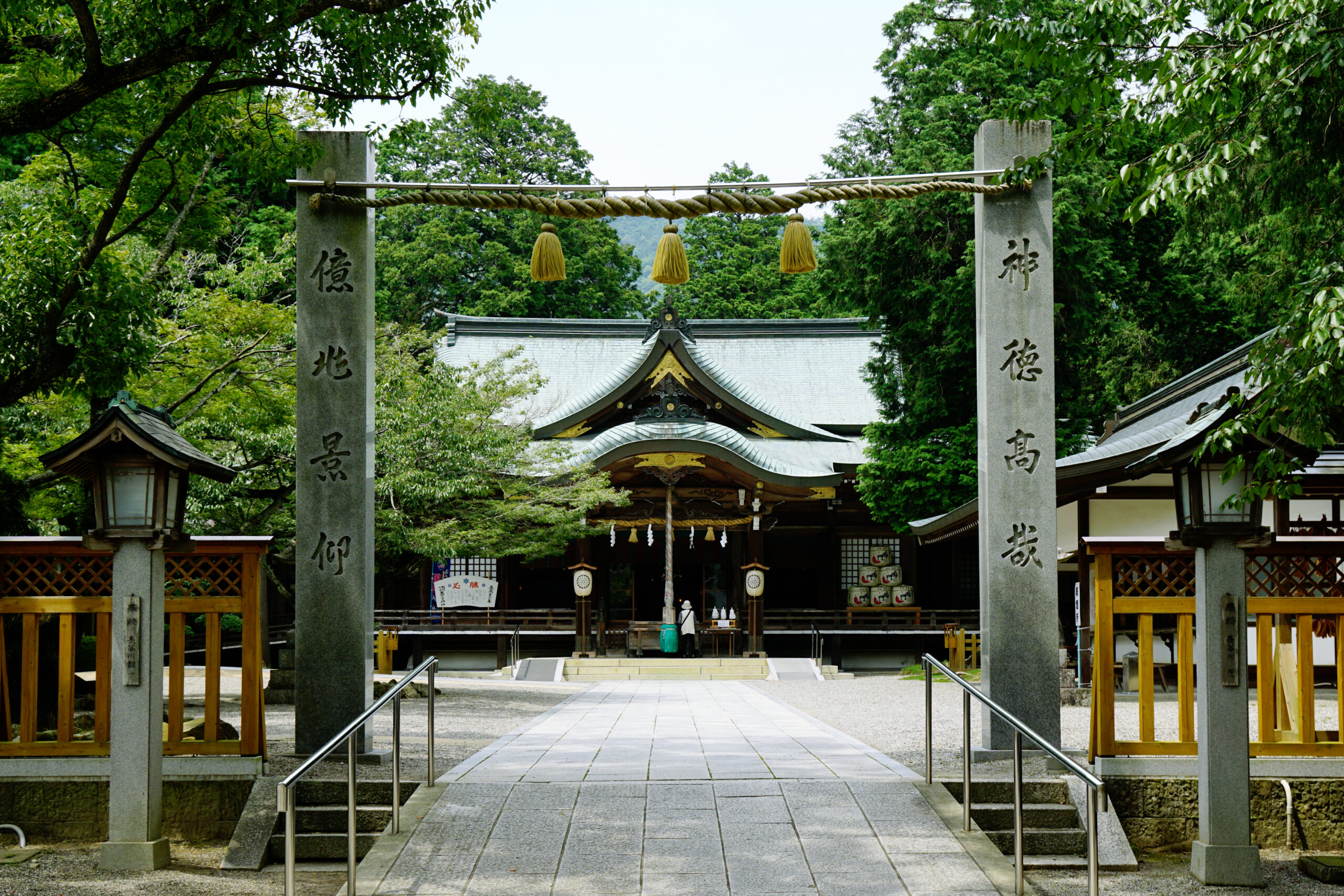
The main hall of Oasahiko Shrine viewed through the stone torii gate, set against the forested slopes of Mt. Oasa (Photo: 663highland / Wikimedia Commons, CC BY 2.5)
At the foot of a sacred mountain in Tokushima, there stands a shrine so old that its founding is attributed to the reign of Japan’s legendary first emperor. But what makes Oasahiko Shrine truly remarkable isn’t just its antiquity — it’s the unexpected story of wartime enemies who became friends, leaving behind stone bridges that still stand over a century later.
Oasahiko Shrine (大麻比古神社, Oasahiko-jinja) — known locally as “Oasa-san” — is the ichinomiya (highest-ranking shrine) of the former Awa Province, making it the most prestigious shrine in all of Tokushima Prefecture. With a 1,000-year-old sacred camphor tree, WWI-era stone bridges built by German prisoners of war, and a location just minutes from Temple 1 of the Shikoku 88 Temple Pilgrimage, this is a place where ancient spirituality and modern history converge in ways you won’t find anywhere else in Japan.
What Makes Oasahiko Shrine Special
The Ichinomiya of Awa Province
In the ancient Japanese ranking system, every province had one shrine designated as its “ichinomiya” — the first shrine that a newly appointed governor was obligated to visit. Oasahiko Shrine held this distinction for Awa Province (present-day Tokushima Prefecture), and it retains its prestige to this day. During the New Year period, roughly 300,000 visitors flock here — more than any other shrine in Tokushima — to pray for blessings in the year ahead.
The shrine enshrines two deities: Oasahiko-no-Okami, the ancestral deity of the Inbe clan who played a central role in ancient Shinto rituals, and Sarutahiko-no-Okami, the powerful guardian deity who guided the grandson of the sun goddess Amaterasu down to earth. Together, these deities are revered for direction warding (kata-yoke), traffic safety, evil-warding, and safe childbirth.
The shrine’s founding is traditionally dated to the reign of Emperor Jimmu, Japan’s legendary first emperor, placing its origins in mythological antiquity. While the exact historical date is uncertain, the shrine’s continuous presence at the base of Mt. Oasa (538m) for well over a thousand years is beyond question.
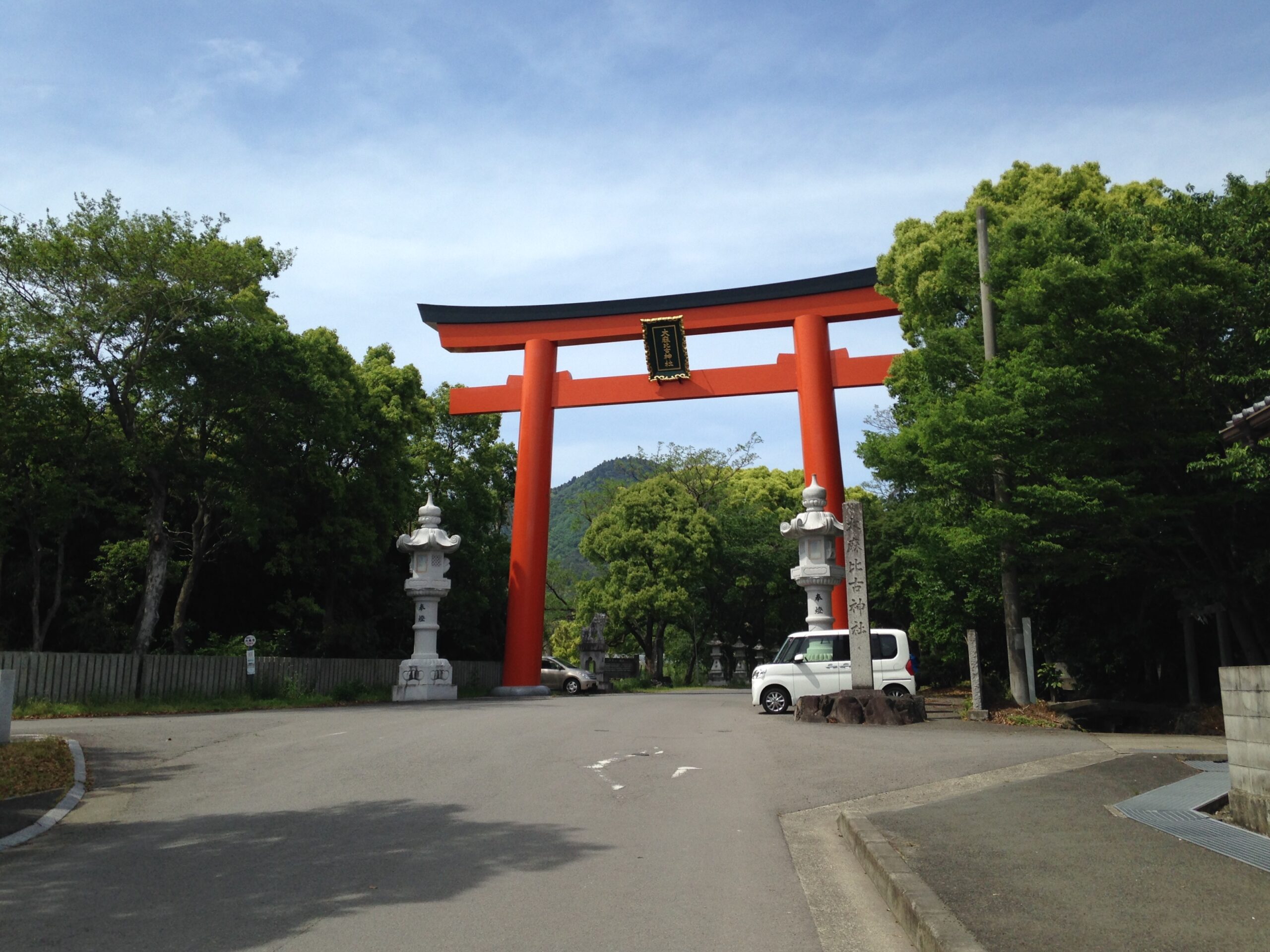
The grand vermillion torii gate marks the entrance to the shrine grounds, with the sacred Mt. Oasa rising behind (Photo: Soramimi / Wikimedia Commons, CC BY-SA 4.0)
The German Bridge — A Story of War and Friendship
Perhaps the most unexpected feature of Oasahiko Shrine is the pair of stone bridges hidden within its forested grounds — built not by Japanese craftsmen, but by German prisoners of war during World War I.
During WWI, Japan — allied with Britain — captured the German-held fortress of Tsingtao (Qingdao) in China. About 1,000 German soldiers were brought to the Bando POW Camp in Naruto, just a short distance from Oasahiko Shrine. Under the unusually humane leadership of camp commandant Colonel Matsue Toyohisa, the prisoners were allowed remarkable freedoms: they brewed beer, published a newspaper, performed theater, and famously gave the first full performance of Beethoven’s Ninth Symphony in Japan (1918).
The German soldiers also contributed to the local community, and two of their lasting legacies stand within Oasahiko Shrine’s grounds:
- The German Bridge (Doitsu-bashi) — A stone arch bridge built in 1919 using local Awa blue stone. Its elegant European engineering stands in striking contrast to the surrounding Japanese forest. This bridge is now a registered tangible cultural property of Japan.
- Megane Bridge (Spectacles Bridge) — A double-arched stone bridge nearby, also built by the German POWs.
These bridges are a testament to the remarkable cultural exchange that took place between enemies during wartime — a story that resonates deeply even today. Visiting them after your shrine worship adds a profound historical dimension to the experience.
Sacred 1,000-Year-Old Camphor Tree
Near the main hall stands the shrine’s goshinboku (sacred tree) — an enormous camphor tree estimated to be over 1,000 years old. With a trunk circumference of roughly 8 meters, this ancient giant has watched over the shrine grounds for a millennium. Many visitors place their hands on or near the tree, believing that its long life embodies a powerful vitality. Standing beneath its vast canopy, you can feel the weight of centuries in a way that few places in Japan can match.
Spiritual Significance & Benefits
Oasahiko Shrine’s two enshrined deities provide a distinctive combination of blessings:
| Benefit | Description |
|———|————-|
| Direction warding (kata-yoke) | Protection from unlucky directions — the shrine’s signature blessing. Particularly sought when building a house, moving, or traveling |
| Traffic and travel safety | Sarutahiko-no-Okami is the god of roads and crossroads |
| Evil-warding (yaku-yoke) | General protection from misfortune and bad luck |
| Safe childbirth | Prayers for safe delivery and healthy children |
| Business prosperity | As the highest-ranking shrine in the province, prayers for success carry special weight |
Goshuin (Shrine Stamps)
| Type | Fee | Notes |
|——|—–|——-|
| Oasahiko Shrine stamp | 300 yen | Hand-written at the shrine office |
| Special seasonal stamps | Varies | Available during certain festivals |
Hours: Available during shrine office hours (approximately 9:00-17:00).
Omamori (Charms)
Popular charms include the kata-yoke charm (direction warding), traffic safety amulet, and the Mt. Oasa hiking safety charm. The direction warding charm is particularly recommended for anyone planning a move, renovation, or major trip.
Best Time to Visit
| Season | Highlight | Notes |
|——–|———–|——-|
| New Year’s (Jan 1-3) | Hatsumode (first shrine visit) | Tokushima’s most-visited shrine; ~300,000 visitors. Expect crowds and paid parking |
| Spring (March-April) | Cherry blossoms along the approach | Beautiful but less crowded than New Year’s |
| Grand Festival (November 1) | Annual festival with traditional ceremonies | The most important shrine event of the year |
| Autumn (Mid-November) | Fall foliage on Mt. Oasa | Spectacular colors, especially along hiking trails |
| Weekday mornings | Peaceful, uncrowded worship | Best for photography and quiet reflection |
Best Conditions for Photography
- Early morning (7:00-9:00 AM) — Soft light filtering through the camphor trees creates a mystical atmosphere
- After rain — The moss-covered paths and bridges look their most dramatic when wet
- Autumn (November) — Fall colors against the vermillion torii make for stunning compositions
Avoiding Crowds
- January 1-3 is extremely crowded — parking fills up, long waits for worship
- Weekdays outside holiday periods are ideal — you may have the grounds nearly to yourself
- Sunday mornings see moderate visitor traffic
- The German Bridge area is rarely crowded, even during busy periods
Visiting Guide
Recommended Route (45 minutes – 1.5 hours)
1. Grand torii gate — Enter through the imposing vermillion torii with Mt. Oasa framing the background
2. Tree-lined approach (sando) — Walk the long, straight approach through towering trees. The atmosphere shifts from everyday life to sacred space
3. Sacred camphor tree — Stop to appreciate the 1,000-year-old giant. Notice the shimenawa (sacred rope) marking it as divine
4. Purification fountain (temizuya) — Rinse hands and mouth in the traditional manner: left hand, right hand, rinse mouth with left hand, rinse left hand again
5. Main worship hall (haiden) — Pay your respects. The proper form is: bow twice, clap twice, bow once
6. Main hall (honden) — View the architecture from the side; the inner sanctuary is not accessible to the public
7. German Bridge — Walk into the forest to find this remarkable stone arch bridge. Read the historical plaques explaining its origin
8. Megane Bridge — Continue to the second German-built bridge nearby
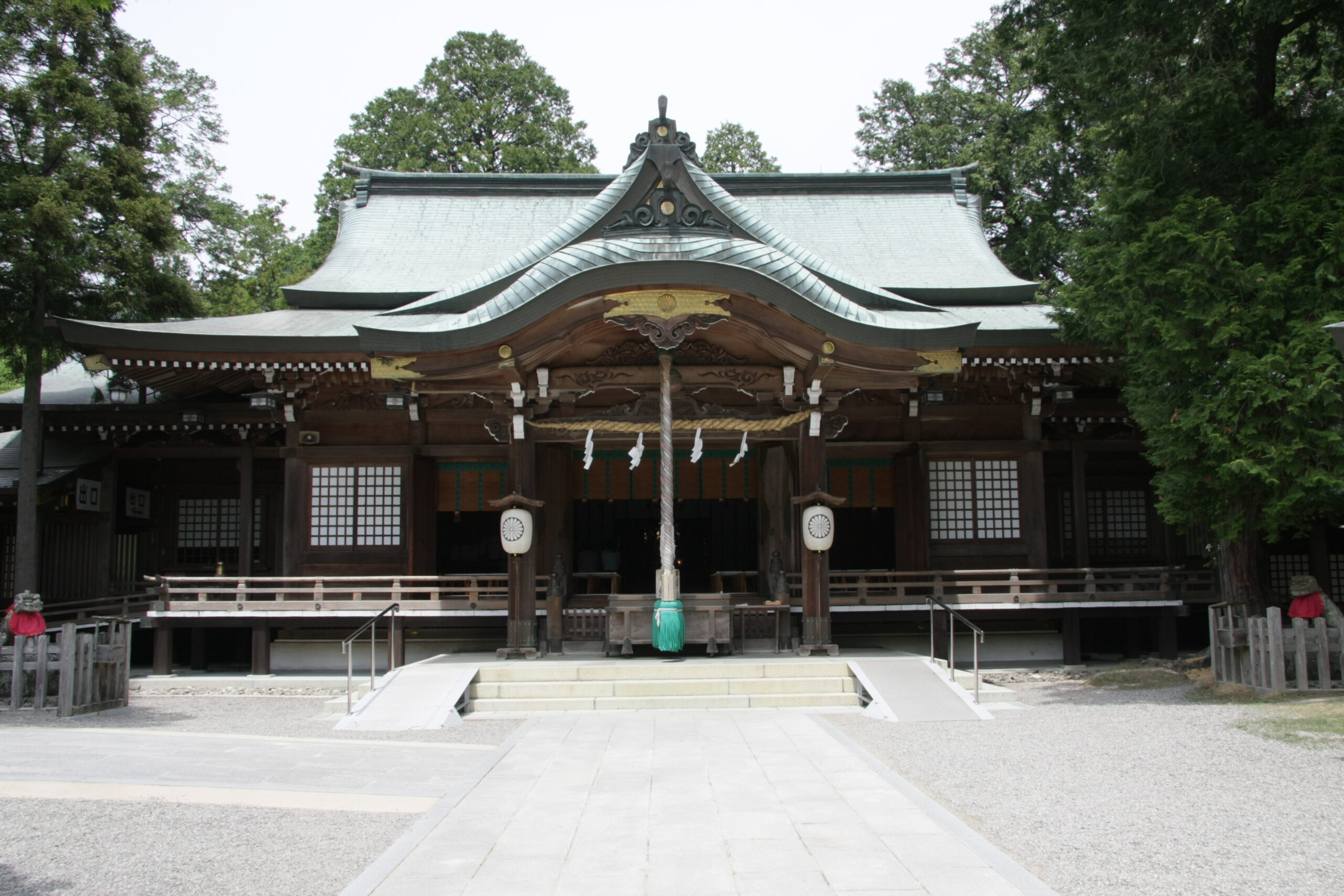
The worship hall (haiden) of Oasahiko Shrine, where visitors offer prayers to the enshrined deities (Photo: Takashi.koike / Wikimedia Commons, CC BY 4.0)
Optional: Mt. Oasa Hiking (Half Day)
For those with more time, Mt. Oasa (538m) rises directly behind the shrine and offers a rewarding half-day hike:
- Trailhead: From behind the main hall
- Summit time: Approximately 1.5-2 hours one way
- Difficulty: Moderate (well-maintained trail, some steep sections)
- Views: Panoramic views of the Naruto area, Awaji Island, and on clear days, the Seto Inland Sea
- What to bring: Water, sturdy shoes, rain jacket (mountain weather changes quickly)
The hike transforms a shrine visit into a full outdoor experience, combining spiritual pilgrimage with mountain trekking.
Photography Tips
| Spot | Tip |
|——|—–|
| Vermillion torii + Mt. Oasa | Stand back for a wide shot; mountain provides a dramatic backdrop |
| German Bridge | Frame through surrounding trees for a sense of discovery |
| Sacred camphor tree | Include a person for scale — the tree’s size is hard to convey otherwise |
| Approach road | Use the long, straight path for a depth perspective shot |
Note: Photography is permitted throughout the grounds, including the German Bridge area. Be respectful at the main worship hall.
Essential Information
| Detail | Information |
|——–|————-|
| Official name | Oasahiko-jinja (大麻比古神社) |
| Nickname | Oasa-san |
| Address | 13 Bando Hirotsuka, Oasa-cho, Naruto City, Tokushima 779-0230 |
| Phone | 088-689-1212 |
| Admission | Free |
| Grounds access | Open 24 hours (shrine office: approximately 9:00-17:00) |
| Parking | ~1,000 spaces (free; paid during New Year’s period) |
| Duration | 30 min – 1.5 hours (half day if hiking Mt. Oasa) |
How to Get There
By Train + Walk
JR Naruto Line → Bando Station → approximately 20-minute walk to the shrine
From Tokushima Station, take the JR Naruto Line toward Naruto. Bando Station is about 30 minutes from Tokushima Station. The walk from Bando Station follows a flat, straightforward road through a rural area.
By Car
| Starting Point | Route | Time |
|—————|——-|——|
| Naruto IC (Kobe-Awaji-Naruto Expressway) | Follow signs toward Oasahiko Shrine | ~15 min |
| Tokushima IC | Route 11 north toward Naruto | ~30 min |
| Tokushima Station | Route 11 north | ~35 min |
| Naruto Whirlpools area | Route 11 south, then local roads | ~25 min |
Parking is abundant — with about 1,000 spaces, you’ll rarely have trouble finding a spot outside of New Year’s.
By Bus
From Tokushima Station, take the Tokushima Bus bound for Naruto and get off at “Oasahiko-jinja-mae” (check current schedules as service may be limited).
From Kansai (Osaka/Kobe)
Take the highway bus from Osaka or Kobe to Naruto (approximately 2-2.5 hours), then taxi or local bus to the shrine. Alternatively, drive across the Akashi-Kaikyo Bridge and Onaruto Bridge via the Kobe-Awaji-Naruto Expressway — a scenic route that passes over the famous Naruto Whirlpools.
Accessibility
The main approach to the worship hall is a paved, relatively flat path suitable for wheelchairs and strollers. The area around the German Bridge involves unpaved forest paths with some uneven ground — wheelchair access is difficult in that section. The Mt. Oasa hiking trail is not wheelchair accessible.
Pet Policy
Pets on leashes are generally tolerated in the outer grounds but may not be welcome near the main worship hall. If visiting with a pet, please call ahead (088-689-1212) to confirm current policy.
Nearby Attractions
Oasahiko Shrine’s location makes it a natural hub for exploring the Naruto area and starting the Shikoku Pilgrimage.
Ryozenji — Temple 1 of the Shikoku 88 Temple Pilgrimage
Distance: About 3 km (5-minute drive, 30-minute walk)
Ryozenji is the traditional starting point of Japan’s most famous pilgrimage — the Shikoku Henro, a 1,200 km circuit of 88 Buddhist temples around the island of Shikoku. Many pilgrims begin their journey here by purchasing their white pilgrim outfit, walking staff, and stamp book.
Combining Oasahiko Shrine with Ryozenji creates a meaningful pairing: the highest-ranking Shinto shrine in the province alongside the first Buddhist temple of the pilgrimage. This Shinto-Buddhist combination reflects the deep intertwining of the two traditions throughout Japanese history.
Naruto Whirlpools (Naruto no Uzushio)
Distance: About 15 km (25-minute drive)
One of Japan’s most dramatic natural spectacles. The powerful tidal currents between Naruto and Awaji Island create massive whirlpools up to 20 meters in diameter. View them from the glass-floored walkway of the Onaruto Bridge (Uzu no Michi) or take a sightseeing boat to see them up close.
Best viewing times: During spring and neap tides — check local tide tables. The largest whirlpools occur during spring tides.
Otsuka Museum of Art
Distance: About 10 km (15-minute drive)
The largest art museum in Japan by floor space, featuring over 1,000 full-size ceramic reproductions of Western masterpieces — from the Sistine Chapel ceiling to Guernica. Allow at least 3-4 hours. A completely unique museum experience.
Bando POW Camp Memorial Museum (Naruto German House)
Distance: About 2 km (5-minute drive)
For those fascinated by the German Bridge story, this museum tells the full history of the Bando POW Camp, including the first Japanese performance of Beethoven’s Ninth Symphony. Small but deeply moving.
Full-Day Naruto Itinerary
1. 8:30 AM — Oasahiko Shrine morning worship + German Bridge (1.5 hours)
2. 10:00 AM — Ryozenji Temple 1 visit (30 min)
3. 11:00 AM — Bando POW Camp Memorial Museum (45 min)
4. 12:00 PM — Lunch: Try Naruto kintoki (sweet potato) dishes or local udon
5. 1:30 PM — Naruto Whirlpools sightseeing boat (1 hour)
6. 3:00 PM — Otsuka Museum of Art (3-4 hours)
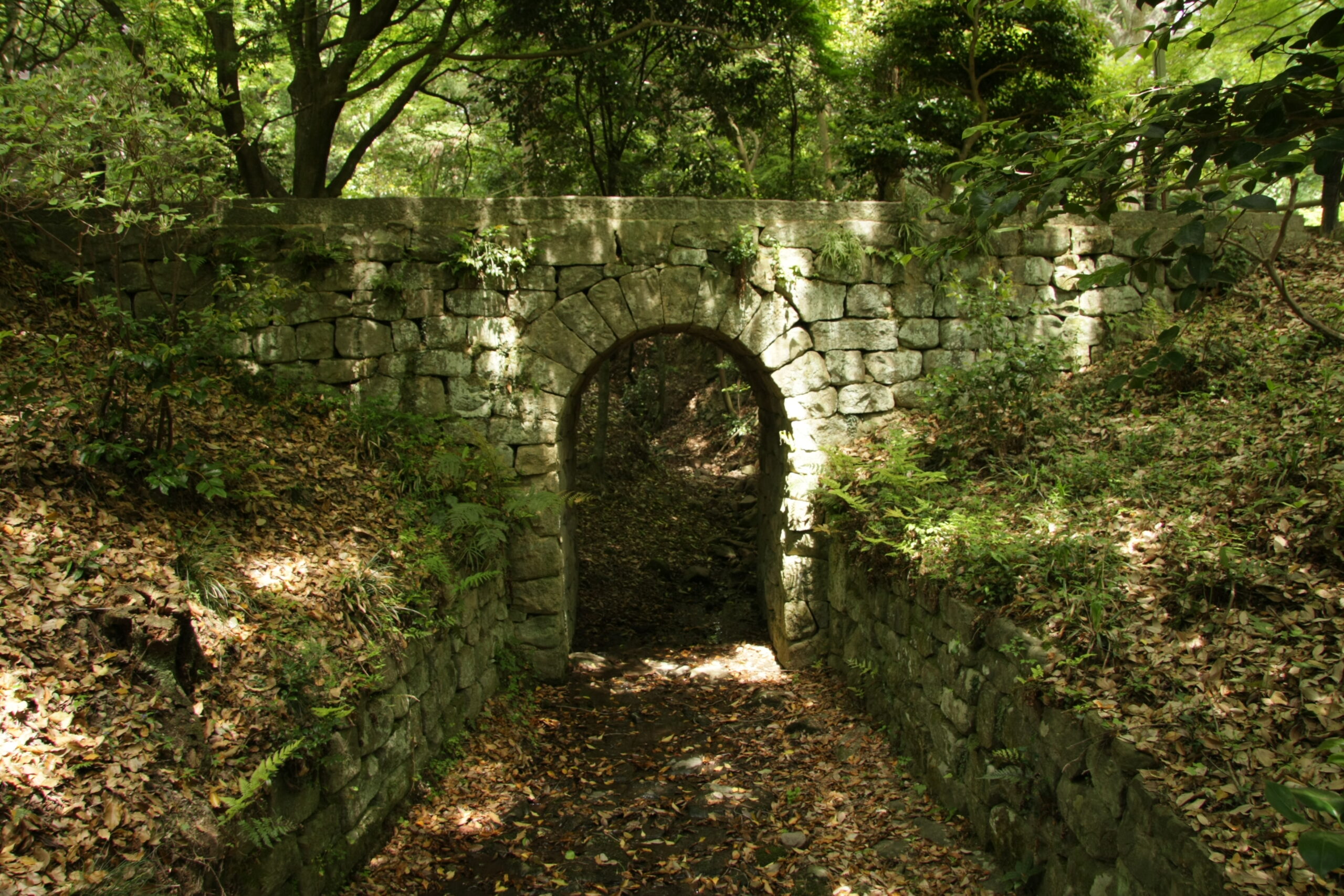
The German Bridge (Doitsu-bashi), a stone arch bridge built in 1919 by German POWs using local Awa blue stone. Now a registered tangible cultural property (Photo: Takashi.koike / Wikimedia Commons, CC BY 4.0)
Visitor Reviews
“The approach through the towering trees is incredibly peaceful. Even on a weekend, we had the German Bridge area completely to ourselves. A hidden gem in Tokushima.”
— Google Maps review
“As an ichinomiya collector, this was a must-visit. The camphor tree is absolutely massive, and the German Bridge adds a historical layer you don’t expect at a shrine. Well worth the detour from the Naruto Whirlpools.”
— Google Maps review
“We visited before starting the Shikoku Pilgrimage at Ryozenji. The shrine set the perfect tone for our journey — a feeling of solemnity and renewal. Parking was easy and the grounds are well-maintained.”
— Google Maps review
Visitors consistently highlight the serene atmosphere of the tree-lined approach, the unexpected historical interest of the German bridges, and the convenience of combining the visit with nearby attractions. Several reviewers note that the shrine is “less touristy” than more famous shrines, which many see as a positive.
FAQ
Q: How long should I plan for a visit?
A: Allow 30 minutes for a quick worship visit, or 1-1.5 hours to explore the grounds including the German Bridge. Add a half day if you plan to hike Mt. Oasa.
Q: Can I combine Oasahiko Shrine with Ryozenji (Temple 1)?
A: Absolutely. They’re only 3 km apart. Many visitors do both in a single morning. Start at Oasahiko Shrine, then drive or walk to Ryozenji.
Q: Is there an English pamphlet or signage?
A: English information at the shrine is limited. Historical plaques at the German Bridge have some English. Basic shrine etiquette: bow twice, clap twice, bow once. This article should provide all the context you need.
Q: When are the Naruto Whirlpools best viewed?
A: Check the local tide tables for spring tide dates. The largest whirlpools typically occur during spring and autumn equinoxes. The Uzu no Michi walkway is open 9:00 AM – 5:00 PM (extended hours in summer).
Q: Is the shrine busy during the Shikoku Pilgrimage season?
A: The shrine itself doesn’t see heavy pilgrimage traffic (that goes to Ryozenji). However, spring and autumn — the most popular pilgrimage seasons — do bring slightly more visitors than usual.
Q: Is there food or shopping near the shrine?
A: The area immediately around the shrine is rural and quiet. For restaurants and shops, head to the Naruto Whirlpools area (about 25 min drive) or Tokushima city center (about 35 min drive). Bring water and snacks if you plan to hike Mt. Oasa.
Summary
Oasahiko Shrine is a place where layers of history accumulate: from its legendary founding in the age of Japan’s first emperor, through a millennium of worship as Tokushima’s highest-ranking shrine, to the remarkable WWI-era bridges built by German prisoners of war who forged an unlikely friendship with their Japanese hosts.
Whether you come as a Shikoku pilgrim pausing before your 1,200 km journey, a history enthusiast drawn by the extraordinary German Bridge story, an ichinomiya collector adding Awa Province to your list, or a Naruto-area traveler seeking something beyond the whirlpools, Oasahiko Shrine rewards your visit with an atmosphere of deep calm and unexpected depth.
Place your hand near the bark of the 1,000-year-old camphor tree, walk the stone bridge that enemies built as friends, and stand before the haiden where 300,000 people begin each new year with hope. Power spots affect everyone differently — visit Oasahiko Shrine and discover what this ancient sanctuary means for you.
We hope this guide helps you plan your visit to Oasahiko Shrine.
Information in this article is current as of April 2026. Please check the official shrine website or call 088-689-1212 for the latest details before your visit.
Want to discover which power spots match your personal energy? Try our free compatibility diagnosis — it only takes 3 minutes.
→ Take the Free En-Profile Diagnosis