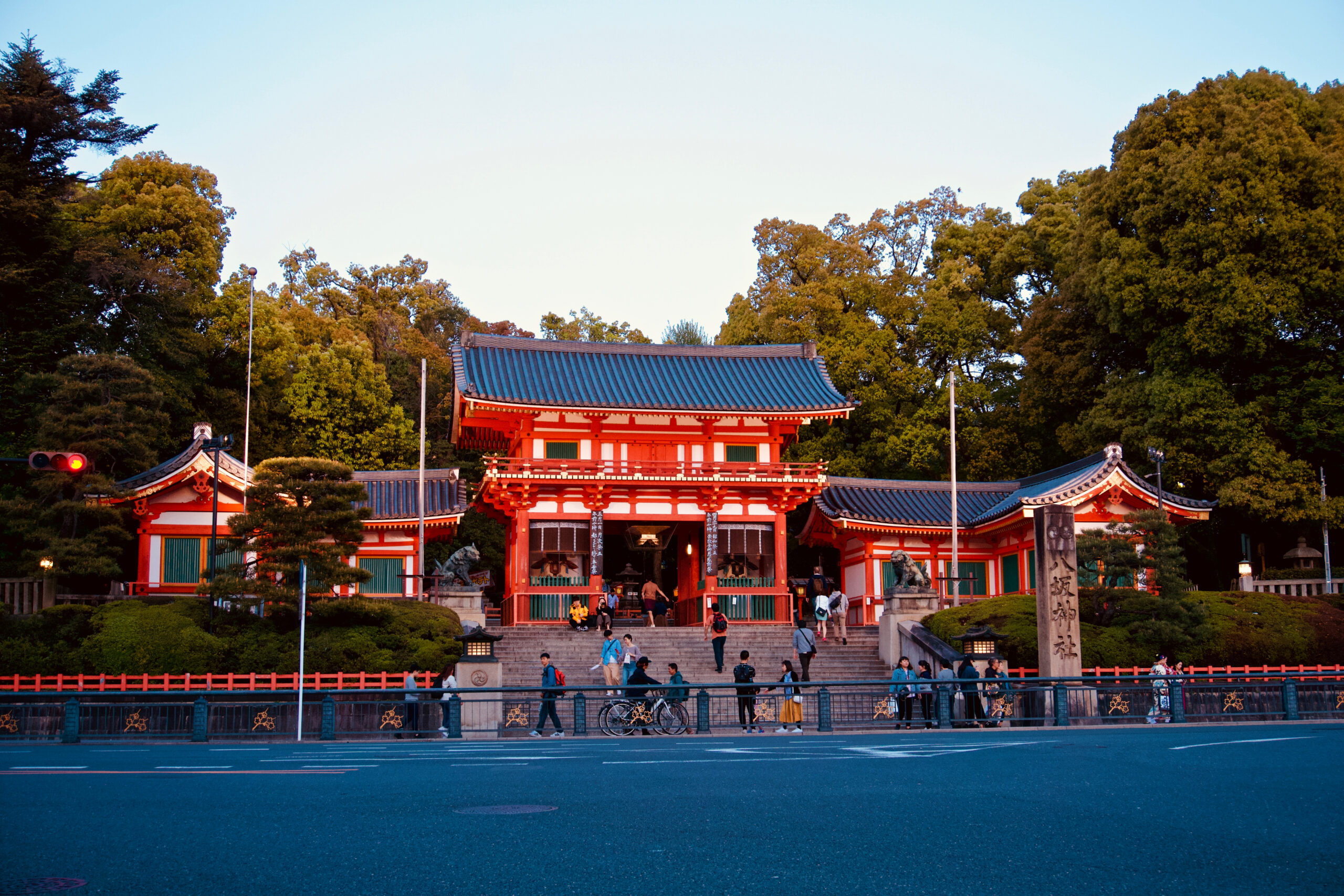
“Is Yasaka Shrine just a quick stop on a Kyoto sightseeing tour?”
Far from it. Yasaka Shrine is one of Kyoto’s oldest and most important shrines, with over 1,400 years of history. It’s the headquarters of the Gion Matsuri — one of Japan’s three greatest festivals — and the spiritual guardian of the Gion district. With blessings for protection from evil, romantic connections, and even beauty, approximately 8 million people visit each year.
This guide covers everything from hidden sub-shrines and the best time to beat the crowds to nearby dining and the perfect half-day itinerary combining Yasaka Shrine with Kyoto’s Higashiyama highlights.
—
What Makes Yasaka Shrine Special
Home of the Gion Matsuri
Founded in 656 AD, Yasaka Shrine enshrines Susanoo-no-Mikoto (the storm god who slew the eight-headed serpent), his wife Kushinadahime-no-Mikoto, and the Yahashira-no-Mikogami (eight divine children).
The shrine’s greatest claim to fame is the Gion Matsuri, held throughout July. Started in 869 AD to stop a plague, it’s now a UNESCO Intangible Cultural Heritage. The Yamaboko Junko float processions on July 17 and July 24 are among the most spectacular sights in all of Japan.
Unique “Gion-zukuri” Architecture
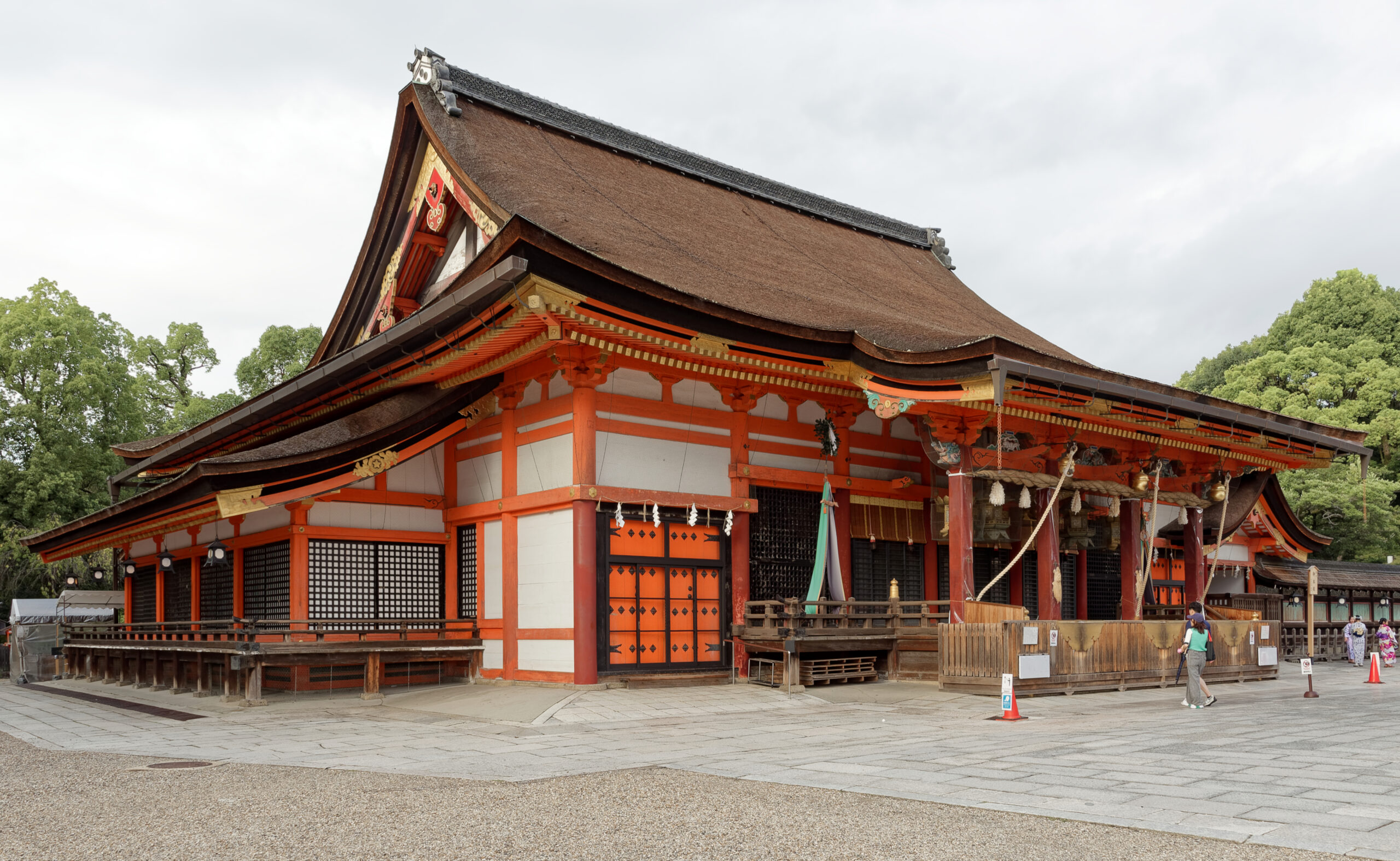
The main hall features a rare architectural style called “Gion-zukuri,” where the main hall and worship hall are covered by a single massive roof. Rebuilt in 1654 by Shogun Tokugawa Ietsuna, it’s designated as a National Important Cultural Property. The cypress bark roof changes appearance depending on your viewing angle — a feast for architecture enthusiasts.
Utsukushi-gozen-sha — Shrine of Beauty
This sub-shrine within the grounds enshrines the three Munakata goddesses and is dedicated to beauty and performing arts. In front of the shrine, “beauty water” can be applied to your skin (just 2–3 drops) for blessings of inner and outer beauty. Geiko and maiko from the nearby Gion district regularly visit, as do professionals from the cosmetics industry.
Okuninushi-sha — Shrine of Love
This sub-shrine dedicated to Okuninushi-no-Mikoto (the god of love connections) is hugely popular with young women. Heart-shaped ema prayer plaques (¥500) are a signature offering here.
—
Spiritual Benefits
What to Pray For
Protection from evil & plague: Susanoo-no-Mikoto is a warrior deity who defeated the eight-headed serpent. The Gion Matsuri itself began as a prayer against plague — this shrine has centuries of protective power.
Romantic connections: The married couple deities Susanoo and Kushinadahime embody marital harmony, while the Okuninushi-sha sub-shrine specializes in romantic matchmaking.
Beauty & artistic talent: The Utsukushi-gozen-sha is a pilgrimage site for anyone wanting to enhance their beauty or improve in the performing arts.
Business prosperity: As the guardian of the Gion entertainment district for centuries, the shrine also blesses commercial success.
Popular Charms & Souvenirs
| Item | Price | Details |
|——|——-|———|
| Yakuyoke chimaki | Varies | Gion Matsuri exclusive; hang at entrance for year-long protection |
| Love connection charm | ¥500 | From the Okuninushi-sha sub-shrine |
| Beauty charm (Utsukushi-mamori) | ¥800 | From the beauty sub-shrine |
| Goshuin (stamp) | ¥500 | Features “Gion-sha” calligraphy |
| Happiness charm | ¥500 | Cute pink design |
—
Best Time to Visit
Seasonal Highlights
Spring (late March – early April): The most spectacular season. The weeping cherry tree in adjacent Maruyama Park is Kyoto’s most famous cherry blossom. Evening illumination runs from 18:00 to around 1:00 AM. Peak bloom: March 28 – April 8. Expect large crowds.
Summer (July): Gion Matsuri month. Events run July 1–31. The Yoiyama eve festivals (July 14–16) and Yamaboko Junko float procession (July 17) are once-in-a-lifetime experiences. Extremely crowded but absolutely worth it.
Autumn (mid-November – early December): Beautiful autumn foliage in Maruyama Park. Combine with illuminated nighttime events at nearby Kodai-ji Temple and Chion-in Temple.
Winter (January – February): The hidden gem season — few tourists, peaceful atmosphere. The Setsubun Festival in February features bean-throwing by real maiko and geiko. Note: Hatsumode (New Year visit, January 1–3) brings about 1 million visitors.
Best Time of Day
| Time | Crowds | Best For |
|——|——–|———-|
| 6:00–8:00 | Nearly empty | Photography, peaceful prayer |
| 8:00–10:00 | Light | Morning freshness |
| 10:00–17:00 | Crowded | Shrine office, combining with sightseeing |
| 17:00–20:00 | Moderate | Evening atmosphere |
| After 20:00 | Quiet | Night photography of illuminated gate |
Tip: Visit between 6:00–8:00 AM. You’ll have the shrine almost to yourself, with locals walking their dogs. The morning light on the West Gate is unforgettable.
—
Visitor’s Guide
How to Visit (Allow 60–90 minutes)
1. Enter through the West Gate (5 min)
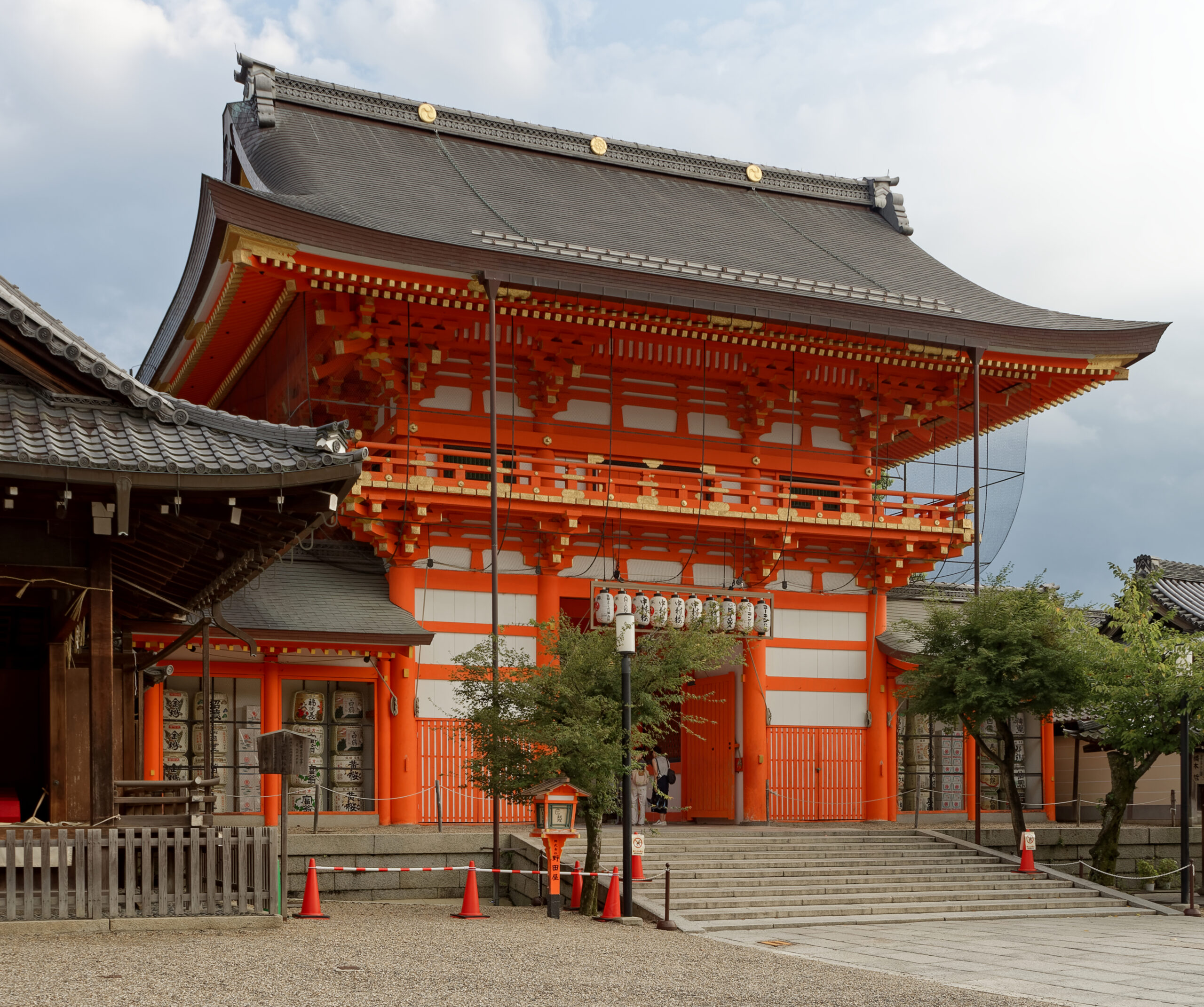
The vermilion West Gate at the end of Shijo Street is the shrine’s most recognizable landmark. While the South Gate is technically the main entrance, most visitors enter here. Climb the stone steps and pass through.
2. Purification at Temizuya (3 min)
The purification fountain is immediately to the left after the gate.
3. View the Buden Dance Stage (5 min)
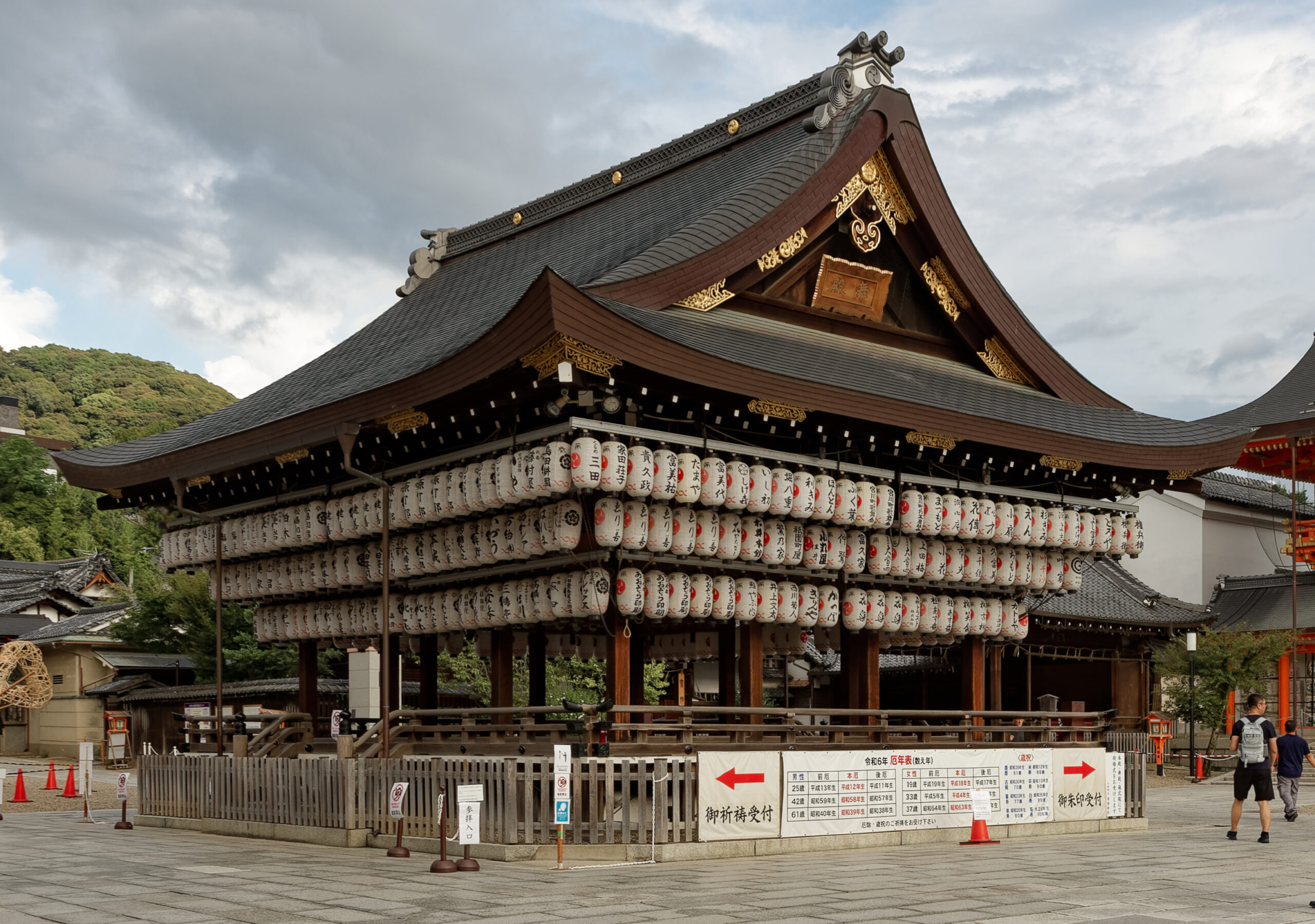
The central stage features rows of donated paper lanterns creating an iconic visual. During Gion Matsuri, traditional dance performances are held here.
4. Pray at the Main Hall (10 min)
Two bows, two claps, one bow. Take time to appreciate the massive Gion-zukuri roof from different angles.
5. Visit Utsukushi-gozen-sha (10 min)
East of the main hall. Don’t forget to dab the “beauty water” on your skin.
6. Visit Okuninushi-sha (10 min)
Write your romantic wish on a heart-shaped ema plaque (¥500).
7. Explore Maruyama Park (15+ min)
The park directly behind the shrine is Kyoto’s most famous cherry blossom spot. Worth exploring in any season.
8. Shrine office for charms & stamps (10 min)
Open 9:00–17:00.
Best Photo Spots
| Location | Best Time | What You’ll Capture |
|———-|———–|——————-|
| West Gate (Shijo side) | 6:00–7:00 AM | Empty vermilion gate, no crowds |
| West Gate (night) | After 20:00 | Dramatically illuminated gate |
| Buden dance stage | Daytime | Lanterns and traditional architecture |
| Maruyama Park weeping cherry | Late March – early April | Kyoto’s most iconic cherry tree |
—
Essential Information
| Detail | Information |
|——–|————-|
| Official name | Yasaka Jinja (Yasaka Shrine) |
| Address | 625 Gionmachi Kitagawa, Higashiyama-ku, Kyoto |
| Phone | 075-561-6155 |
| Hours | Grounds open 24/7 (Shrine office: 9:00–17:00) |
| Closed | Never |
| Admission | Free |
| Parking | None on-site (use nearby coin parking) |
| Website | yasaka-jinja.or.jp |
Getting There
By train + walk: 5-minute walk from Keihan “Gion-Shijo Station.” 8-minute walk from Hankyu “Kyoto-Kawaramachi Station.” From JR Kyoto Station, take bus #100 or #206 (~15 min, ¥230).
By bus: Get off at “Gion” bus stop, right in front of the shrine.
By car: No on-site parking. Coin parking nearby costs ¥300–500 per 30 minutes. The Gion area has narrow streets and heavy traffic — public transport is strongly recommended.
Visiting with Pets
Pets on leash are allowed in the grounds. Given the heavy tourist traffic, a carrier bag is recommended for small dogs. Maruyama Park is also pet-friendly for walks. Several pet-friendly cafes can be found in the Higashiyama area.
Wheelchair & Stroller Access
The West Gate has stone steps, but the South Gate offers step-free access into the grounds. The shrine compound is mostly flat, and the main hall is accessible by wheelchair and stroller. Some sub-shrines on gravel paths may be difficult to navigate.
—
Nearby Attractions & Dining
Gion Area Dining
Yasaka Shrine sits in one of Kyoto’s premier dining districts.
| Area | Specialty | Price Range |
|——|———–|————-|
| Gion shopping street | Yatsuhashi sweets, matcha treats | ¥300–600 |
| Hanamikoji Street | Traditional Kyoto cuisine lunch | ¥2,000–5,000 |
| Maruyama Park area | Yudofu (hot tofu) | ¥1,500–3,000 |
| Shijo Street | Kyoto souvenirs, wagashi | ¥500–2,000 |
Nearby Attractions
| Place | Walking Time | Highlight |
|——-|————-|———–|
| Kiyomizu-dera | ~20 min | UNESCO World Heritage, famous wooden stage |
| Kodai-ji Temple | ~10 min | Built by Toyotomi Hideyoshi’s wife; stunning autumn illumination |
| Chion-in Temple | ~5 min | Head temple of Jodo Buddhism; Japan’s largest temple gate |
| Hanamikoji Street | ~3 min | Traditional geiko district; you may spot a maiko |
| Kennin-ji Temple | ~10 min | Wind and Thunder Gods screen painting; Twin Dragons ceiling |
Half-Day Higashiyama Itinerary
1. 9:00 Arrive at Gion-Shijo Station
2. 9:10 Visit Yasaka Shrine (60 min)
3. 10:10 Stroll through Maruyama Park (20 min)
4. 10:30 Visit Chion-in Temple (30 min)
5. 11:00 Walk Nene-no-Michi toward Kodai-ji
6. 11:30 Explore Ninenzaka & Sannenzaka streets
7. 12:00 Visit Kiyomizu-dera (60 min)
8. 13:00 Lunch near Ninenzaka
9. 14:00 Shopping & cafe on Hanamikoji Street
—
Visitor Reviews
> “Visited at 6 AM. Zero tourists — just locals walking their dogs in the peaceful morning light. The shrine shows a completely different face from the daytime crowds.”
> — Google Maps review
> “Came specifically for the beauty water at Utsukushi-gozen-sha. It’s a small shrine, but knowing that real maiko visit here made it special. Combined with a Gion walk for a perfect half day.”
> — Google Maps review
Visitors consistently praise the excellent location and ease of combining with other Higashiyama sightseeing. Many note that “daytime crowds can be overwhelming” — early morning visits are the insider’s secret.
—
Frequently Asked Questions
Q. How long does a visit take?
A. A quick main hall visit takes about 20 minutes. Including sub-shrines, allow 60 minutes. With Maruyama Park, budget 90 minutes.
Q. When is the Gion Matsuri?
A. July 1–31, with the highlight float procession on July 17. Book accommodation at least 3 months in advance — Kyoto hotels sell out quickly during Gion Matsuri.
Q. Can I visit at night?
A. Yes, the grounds are open 24 hours. The illuminated West Gate is beautiful after dark, and nighttime visits are a hidden gem. However, the shrine office closes at 17:00, so get stamps and charms during the day.
Q. Is there parking nearby?
A. No on-site parking. Coin parking lots are scattered nearby (¥300–500 per 30 min), but the Gion area is congested. Trains and buses are strongly recommended.
—
Summary
Yasaka Shrine stands at the cultural heart of Kyoto’s Gion district, offering 1,400 years of history and the world-famous Gion Matsuri. Within a single shrine complex, you can pray for protection at the main hall, seek beauty blessings at the Utsukushi-gozen-sha, and ask for love at the Okuninushi-sha — a rare combination of spiritual benefits in one location.
As the perfect starting point for exploring Kyoto’s Higashiyama district, Yasaka Shrine connects naturally to Maruyama Park, the geiko streets of Hanamikoji, and the path to Kiyomizu-dera. Rather than treating it as a brief stop, make Yasaka Shrine the beginning of your Kyoto journey.
—
We hope this guide helps you plan your visit to Yasaka Shrine.
*Information in this article is current as of April 2026. Please check the official website for the latest details before your visit.*
—
Want to discover your ideal power spot?
Did you know that different people resonate with different spiritual places? The same shrine can create vastly different experiences depending on the visitor.
Discover which power spots match your unique spiritual profile with our free compatibility diagnosis (takes just 3 minutes).
あなたに最適なパワースポットを知りたい方へ