If you are flying through Narita Airport and have a few hours to spare, one of Japan’s most powerful Buddhist temples is waiting just 15 minutes away by train. Naritasan Shinshoji is not a hidden gem—it is a spiritual powerhouse that draws over 10 million visitors every year and nearly 3 million during the New Year period alone, making it one of the most visited temples in all of Japan.
Founded in 940 AD during the suppression of a major rebellion, Naritasan has been a center of Fudo Myoo worship for over a thousand years. The temple’s principal deity, Fudo Myoo (the Immovable Wisdom King), is revered for cutting through illusion, warding off evil, and granting unwavering determination. For centuries, commoners, samurai, kabuki actors, and modern-day business leaders alike have made the pilgrimage here seeking protection and a fresh start.
But Naritasan is more than a place of worship. The 800-meter Omotesando approach is one of Japan’s most celebrated food streets, famous for freshwater eel grilled over charcoal. Deep spiritual tradition, stunning architecture spanning five centuries, and exceptional cuisine make Naritasan one of the most rewarding day trips in the Kanto region—especially if you are already passing through Narita Airport.
Quick Facts
| Detail | Info |
|——–|——|
| Founded | 940 AD (Tengyo 3) |
| Buddhist Sect | Shingon-shu Chizan-ha (Grand Head Temple) |
| Principal Deity | Fudo Myoo (Acala, Immovable Wisdom King) |
| Famous For | Yakuyoke (evil-warding), Goma fire ritual, good fortune |
| Annual Visitors | Approximately 10 million |
| Hours | Grounds open daily; Great Main Hall 6:00 AM–4:00 PM (extended during special periods) |
| Admission | Free (Goma prayer: from JPY3,000) |
| Access | 15 min from Narita Airport by JR/Keisei, then 10-min walk |
| Phone | 0476-22-2111 |
| Website | https://www.naritasan.or.jp/ |
What Makes Naritasan Shinshoji Special
Born from Rebellion: A Temple Forged in Crisis
In 939 AD, the warrior Taira no Masakado launched a rebellion in eastern Japan, declaring himself “New Emperor.” The imperial court dispatched the monk Kancho Daisojo from Kyoto carrying a sacred statue of Fudo Myoo, said to have been carved by Kobo Daishi (Kukai), the founder of Shingon Buddhism. Kancho performed the Goma fire ritual continuously, and when the rebellion was crushed in 940 AD, the victory was attributed to Fudo Myoo’s power.
When Kancho attempted to return the statue to Kyoto, it reportedly became immovable—a fitting manifestation of the “Immovable Wisdom King.” This was taken as a divine sign, and the temple was established on that very spot. This founding shaped Naritasan’s identity: a temple of protection, of standing firm against adversity, and of spiritual fire that burns away obstacles.
The Ichikawa Danjuro Connection: Kabuki and Faith
In the early 18th century, the first Ichikawa Danjuro—patriarch of Japan’s most prestigious kabuki dynasty—prayed at Naritasan for an heir. When his prayer was answered, he created a kabuki play featuring Fudo Myoo in gratitude. The play was a sensation, establishing a bond between the Ichikawa family and Naritasan that has lasted over 300 years and twelve generations. This connection transformed Naritasan from a regional temple into a nationally famous pilgrimage destination, as Edo-period theatergoers began making their own pilgrimages here.
Architecture Spanning Five Centuries
Naritasan’s grounds cover approximately 220,000 square meters and contain an extraordinary collection of buildings from different eras, each reflecting the architectural sensibilities of its time:
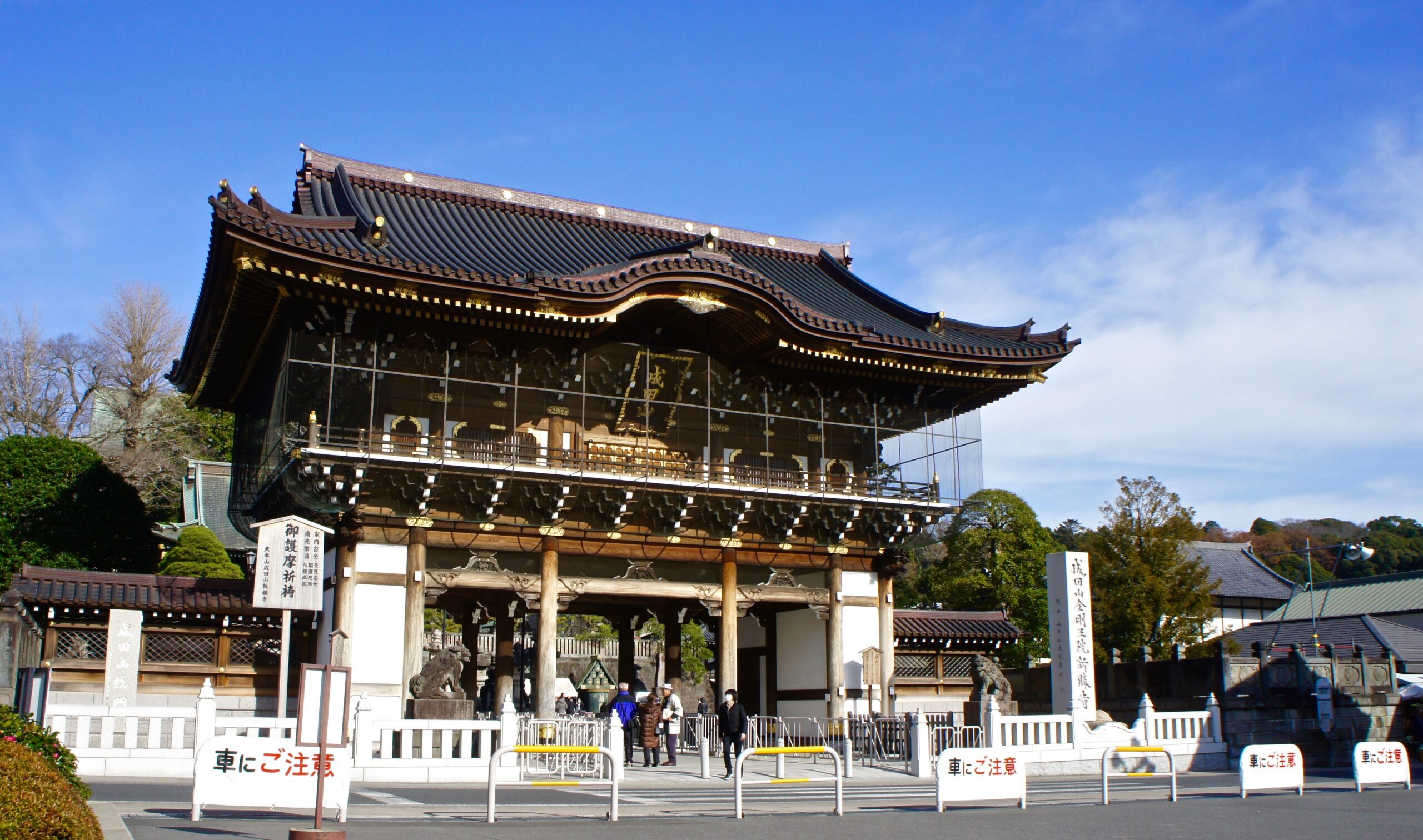
- Niomon Gate (1830): The outer gate features fierce Nio guardian figures and is designated an Important Cultural Property
- Three-story Pagoda (1712): Lavishly decorated with carved dragons, cloud patterns, and sixteen Rakan (Arhat) figures, also an Important Cultural Property
- Shakado Hall (1858): The former main hall, now housing a beautiful Shakyamuni Buddha; Important Cultural Property
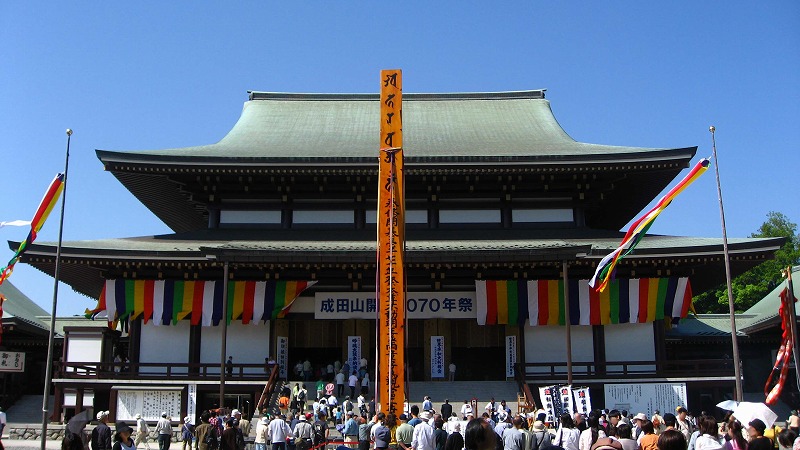
- Great Main Hall (1968): The current main hall where daily Goma fire rituals take place
- Great Pagoda of Peace (1984): A 58-meter pagoda visible from across the city, housing Buddhist relics from Sri Lanka
This layering of centuries—standing before an Edo-period gate, walking past Meiji-era stone lanterns, and arriving at a modern hall where an ancient fire ritual unfolds—is part of what makes Naritasan so compelling.
Spiritual Benefits
Yakuyoke: Japan’s Premier Evil-Warding Temple
Naritasan is most famous for yakuyoke—protection against evil, misfortune, and negative influences. The concept of “yaku” encompasses unlucky years (yakudoshi), accumulated negative karma, and unforeseen misfortune. During yakudoshi years (ages 25, 42, and 61 for men; 19, 33, and 37 for women in the traditional Japanese counting system), visiting Naritasan for a formal yakuyoke prayer is a deeply rooted tradition throughout the Kanto region.
The Goma Fire Ritual: Experiencing Living Buddhism
The Goma fire ritual is the spiritual heart of Naritasan, performed multiple times daily—something rare among Japanese temples. A priest lights a sacred fire, feeds it with gomaki (wooden prayer sticks) while chanting sutras, and the fire is believed to be the manifestation of Fudo Myoo himself, burning away worldly desires and obstacles.
Key details:
- Performed daily at 6:00 AM, 9:30 AM, 11:00 AM, 1:00 PM, and 3:00 PM
- Anyone can observe for free—simply arrive at the Great Main Hall before start time
- For a personal prayer, purchase a gomaki (from JPY3,000) at the prayer reception desk
- No reservation required
The heat, the rhythmic chanting, and the scent of burning wood create an intensely atmospheric experience that many visitors describe as one of the most powerful spiritual moments available in Japan.
Additional Blessings
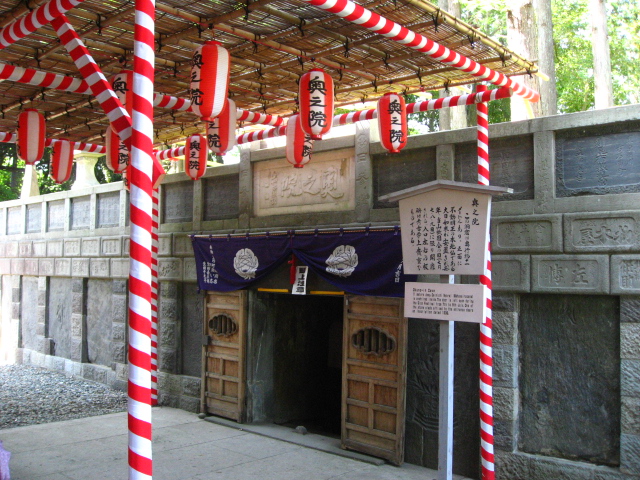
Beyond yakuyoke, Naritasan is widely visited for family safety (kanai anzen), business prosperity (shobai hanjo), traffic safety (kotsu anzen), academic success (gakugyo joju), and healing prayers at the Okunoin.
Best Time to Visit
Seasonal Highlights
| Season | Highlights | Crowd Level |
|——–|———–|————-|
| New Year (Dec 31–Jan 3) | Hatsumode with 3 million visitors; spectacular atmosphere | Extreme |
| February–March | 500+ plum trees in Naritasan Park bloom; Plum Festival | Moderate |
| April | Cherry blossoms in the park and along the approach | Moderate to High |
| May–June | Fresh greenery, hydrangeas; comfortable weather | Low |
| September–October | Autumn festivals; clear skies | Low to Moderate |
| November | Stunning autumn foliage in Naritasan Park (700+ trees) | Moderate to High |
| December | Year-end preparations; Susuharai (grand cleaning) ceremony | Low |
Best Times to Avoid Crowds
- Weekday mornings (before 10:00 AM): The temple grounds are peaceful and you can experience the morning Goma ritual with fewer people
- Late afternoon (after 3:00 PM): Most tour groups and day-trippers have departed
- Avoid: New Year week (December 31–January 7), Setsubun Festival (February 3), Golden Week (late April–early May)
Photography Tips
- Golden hour (early morning): The Somon Gate and Three-story Pagoda glow in warm light
- Niomon Gate: Photograph from the bottom of the stone stairs for dramatic perspective
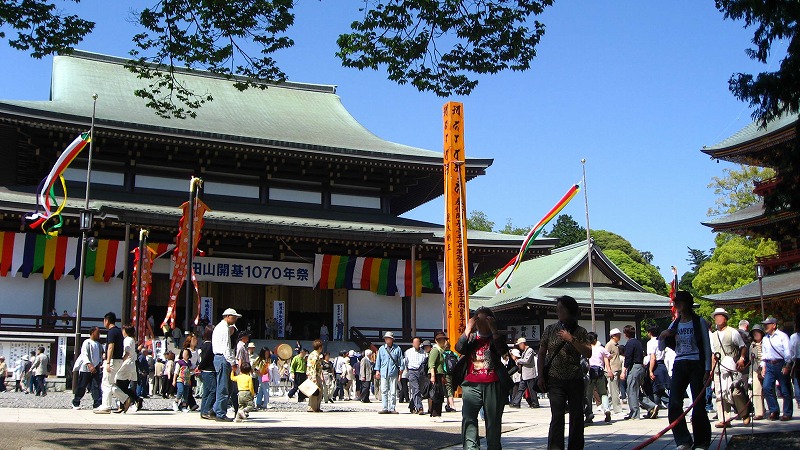
- Three-story Pagoda: The most photogenic structure; shoot from the plaza with the Great Main Hall behind
- Naritasan Park: Plum blossoms (Feb–Mar) and autumn leaves (Nov) provide stunning natural frames
- Omotesando: Charcoal smoke drifting from eel restaurants creates atmospheric street photography
Visitor’s Guide: How to Experience Naritasan
Recommended Route (60–90 minutes)
1. Omotesando approach (15 min): Walk from Narita Station through the historic shopping street, absorbing the atmosphere and aromas
2. Somon Gate: The modern main gate; pause to take in the scale of the temple
3. Niomon Gate: Admire the Nio guardians and Important Cultural Property designation
4. Three-story Pagoda: Examine the intricate carvings of dragons and celestial beings
5. Great Main Hall: Observe or participate in a Goma fire ritual (check schedule)
6. Shakado Hall: Visit the former main hall with its beautiful Shakyamuni Buddha
7. Great Pagoda of Peace: The 58-meter pagoda offers panoramic views
8. Naritasan Park: If time allows, explore the extensive gardens (especially rewarding during plum and autumn foliage seasons)
Temple Etiquette
- Bow once before entering through each gate
- Incense offering: Purchase incense at the stand near the Great Main Hall, light it, and waft the smoke toward yourself—it is believed to have healing properties
- Hands together, eyes closed: When praying before the main altar, place your palms together, close your eyes, and pray silently
- Photography: Permitted outdoors and in most areas; no flash photography inside halls during rituals
- Shoes: Remove shoes when entering any hall (shoe storage is provided)
- Hats and sunglasses: Remove when praying
How to Participate in the Goma Fire Ritual
1. Visit the prayer reception desk (Gokito Uketsuke) near the Great Main Hall
2. Choose your prayer type (from JPY3,000; JPY5,000 and JPY10,000 options available)
3. Write your name and prayer wish on the form
4. The priest will read your name during the ceremony
5. You receive a blessed charm (omamori) afterward
Tip: You can also observe the full ritual for free—simply enter the Great Main Hall before the scheduled time.
Narita Airport Layover Guide
Naritasan is the single best cultural experience you can fit into a Narita Airport layover. You need a minimum of 4 hours between flights (tight, temple only), 5–6 hours for a comfortable visit with lunch, or 7+ hours for the full experience including Naritasan Park.
Step-by-Step Layover Plan (5-Hour Example)
| Time | Activity |
|——|———-|
| 0:00 | Exit security/immigration at Narita Airport |
| 0:30 | Arrive at JR/Keisei Narita Station (15 min by train) |
| 0:40 | Begin walking Omotesando (10-min walk to temple) |
| 0:50 | Arrive at Naritasan; explore temple grounds |
| 1:50 | Attend Goma fire ritual (30 min) |
| 2:20 | Continue exploring (Shakado, Great Pagoda of Peace) |
| 2:50 | Walk back along Omotesando; lunch at an eel restaurant (45 min) |
| 3:35 | Return to Narita Station |
| 3:50 | Arrive at airport |
| 4:20 | Through security (allow extra buffer) |
Luggage Storage
- Narita Airport: Coin lockers available in all terminals (JPY400–800 per day depending on size)
- JR Narita Station: Coin lockers near the ticket gates
- Keisei Narita Station: Limited lockers available
Important Notes for Layover Visitors
- Check your airline’s minimum connection time—some require check-in 2+ hours before departure
- Take the train to Narita Station (not Narita Airport Terminal stations)
- Keep your boarding pass accessible and allow buffer time for security on return
Practical Information
Access from Narita Airport
| Route | Time | Cost | Notes |
|——-|——|——|——-|
| JR Narita Line | 10 min to JR Narita Sta. + 10-min walk | JPY200 | Most convenient; trains every 20–40 min |
| Keisei Line | 10 min to Keisei Narita Sta. + 12-min walk | JPY270 | Alternative route; slightly longer walk |
| Taxi | 15 min door-to-door | ~JPY2,500 | Convenient with luggage |
Access from Tokyo
| Route | Time | Cost | Notes |
|——-|——|——|——-|
| JR Sobu Line Rapid | ~75 min to JR Narita Sta. | JPY1,340 | Direct from Tokyo Station |
| Keisei Skyliner + Local | ~55 min total (Ueno to Keisei Narita) | ~JPY1,270 | Fastest option |
| Keisei Access Express | ~70 min (Asakusa to Keisei Narita) | JPY870 | Budget-friendly from Asakusa |
| Highway Bus | ~90 min from Tokyo Station | ~JPY1,200 | Comfortable; no transfers |
On-Site Information
- Parking: Large parking lots near the temple (JPY800/day); fills up quickly on weekends and holidays
- Restrooms: Available at multiple points including near the Somon Gate and within the park
- Wheelchair access: The main approach from Omotesando includes stairs; a barrier-free route is available via the side entrance near the parking area. The Great Main Hall has ramp access. Contact the temple office (0476-22-2111) in advance for assistance
- Pet policy: Pets are not permitted inside temple buildings. Service animals are accepted. There are no pet care facilities immediately nearby, so plan accordingly if traveling with pets
Omotesando: Narita’s Legendary Food Street
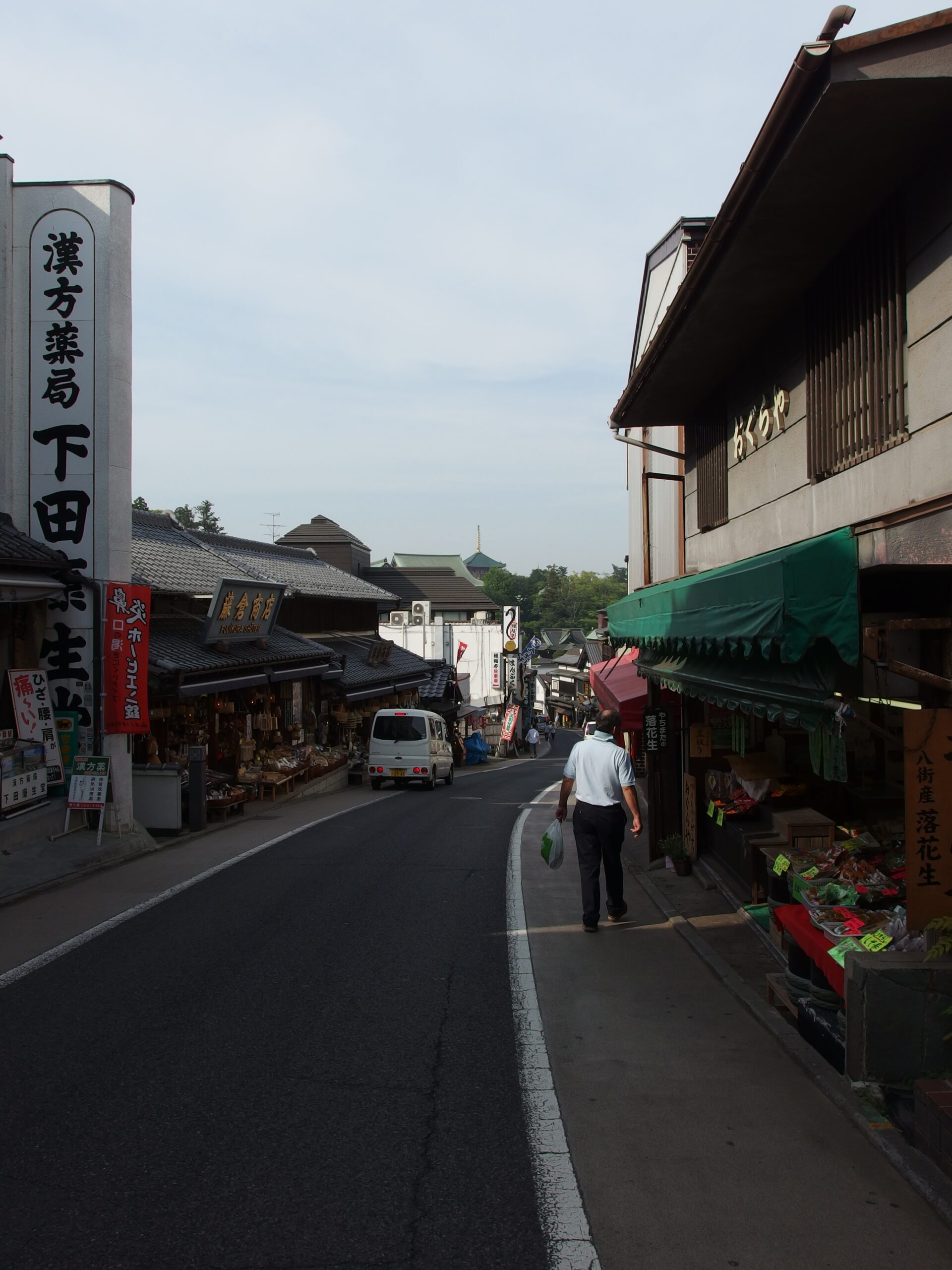
The 800-meter approach from Narita Station to the temple is lined with shops, restaurants, and vendors that have been serving pilgrims for centuries. Walking Omotesando is an integral part of the Naritasan experience—not an afterthought.
Unagi (Freshwater Eel): Narita’s Signature Dish
Narita is one of Japan’s top eel destinations, with a tradition dating back over 300 years when eel was abundant in the nearby Tone River. Multiple restaurants grill eel over charcoal at their storefronts—the aroma alone is worth the walk.
- Unaju (eel on rice in a lacquer box): JPY2,500–4,500
- Kabayaki (grilled eel fillets): Often available as a smaller portion
- Lunch peak hours (11:30 AM–1:30 PM) can mean 20–60 minute waits
Notable restaurants: Kawatoyo (the oldest, eel prepared in front of you), Surugaya (popular with locals, less crowded), and Kikuya (multi-story, long history).
Beyond Eel: Other Omotesando Specialties
- Yokan (sweet bean jelly): Narita’s traditional souvenir; Nagonoya is the most famous producer
- Teppozuke (pickled gourd): A local specialty with a satisfying crunch
- Senbei (rice crackers): Freshly grilled at several stalls
- Amazake (sweet rice drink): Warm in winter, chilled in summer—a refreshing pilgrim’s drink
- Dango (rice dumplings): Grilled on sticks with sweet soy glaze
Visitor Reviews
Here are impressions from visitors who have been:
> “The Goma fire ritual was the highlight of my Japan trip. Even though I could not understand the chanting, the power of the ceremony was palpable. The flames, the drums, the intensity—I have never experienced anything like it at a temple before.”
> — Google Maps review (2025)
> “We visited during a layover and it was absolutely worth the effort. The temple grounds are massive and beautiful. Do not skip the Omotesando—we had the best eel of our lives. Allow at least 4 hours from the airport.”
> — Google Maps review (2025)
> “Came here during plum blossom season in February. The park behind the temple had hundreds of trees in bloom. It was surprisingly uncrowded on a weekday morning. The combination of temple and nature park makes this a full half-day experience.”
> — Google Maps review (2026)
Many first-time visitors are surprised by the sheer scale of the grounds—the park section alone, with its ponds, waterfalls, and seasonal gardens, could occupy another hour or two.
Frequently Asked Questions
Is Naritasan Shinshoji worth visiting during a Narita Airport layover?
Absolutely. With just a 15-minute train ride from the airport and no admission fee, Naritasan is the most culturally rewarding way to spend a layover. You need a minimum of 4 hours between flights (including immigration and security time), but 5–6 hours is ideal. Store your luggage at the airport or Narita Station and take the JR or Keisei Line.
What is the Goma fire ritual and can anyone participate?
The Goma (fire prayer) ritual is a Shingon Buddhist ceremony where a sacred fire is lit before the Fudo Myoo statue while priests chant sutras. Anyone can observe for free by entering the Great Main Hall before the scheduled start time. To have your personal prayer included, purchase a gomaki at the reception desk starting from JPY3,000. Rituals are held daily at 6:00 AM, 9:30 AM, 11:00 AM, 1:00 PM, and 3:00 PM.
How crowded does it get during New Year?
Extremely crowded. Approximately 3 million people visit during the first three days of January. Expect long queues, limited access to certain areas, and wait times of 1–3 hours on January 1st. If you want to experience the New Year energy without the worst crowds, visit January 4th–7th or go very early in the morning (before 7:00 AM).
Is the temple accessible for visitors with mobility challenges?
The main approach from Omotesando includes stone stairs, but a barrier-free route is available from the parking area side entrance. The Great Main Hall has ramp access. The park paths are mostly flat but some areas have uneven terrain. Contact the temple office at 0476-22-2111 before your visit for specific guidance.
What is the difference between Naritasan and a Shinto shrine?
Naritasan Shinshoji is a Buddhist temple (otera), not a Shinto shrine (jinja). The principal object of worship is Fudo Myoo, a Buddhist deity, and the ceremonies follow Shingon Buddhist tradition. You will notice architectural differences: no torii gates, but rather temple gates (mon) with guardian figures. The prayer etiquette also differs—at a temple, you place your palms together silently rather than clapping as at a shrine.
Discover Your Connection to This Sacred Temple
Every person resonates differently with a spiritual place. Some visitors feel an immediate sense of calm upon entering Naritasan’s gates; others are moved by the intensity of the Goma fire ritual; still others find their deepest connection while walking quietly through the ancient park.
Discover your spiritual compatibility with this sacred temple through our free power spot diagnosis. In just a few minutes, you can learn which types of spiritual places align most closely with your personal energy.
Summary
Naritasan Shinshoji Temple combines over a thousand years of spiritual tradition, architectural grandeur spanning five centuries, and one of Japan’s finest food streets into a single destination. Whether you are drawn by the protective power of Fudo Myoo, the visceral intensity of the Goma fire ritual, or the prospect of outstanding grilled eel, Naritasan delivers an experience that few temples in Japan can match.
Its proximity to Narita Airport—just 15 minutes by train—makes it uniquely accessible to international travelers. Whether you have a layover or are planning a dedicated day trip from Tokyo, Naritasan rewards the visit with a depth of experience that stays with you long after you leave.
—
This article’s information is current as of March 2026. Please verify hours, prices, and access details on the official Naritasan website before your visit.
あなたに最適なパワースポットを知りたい方へ