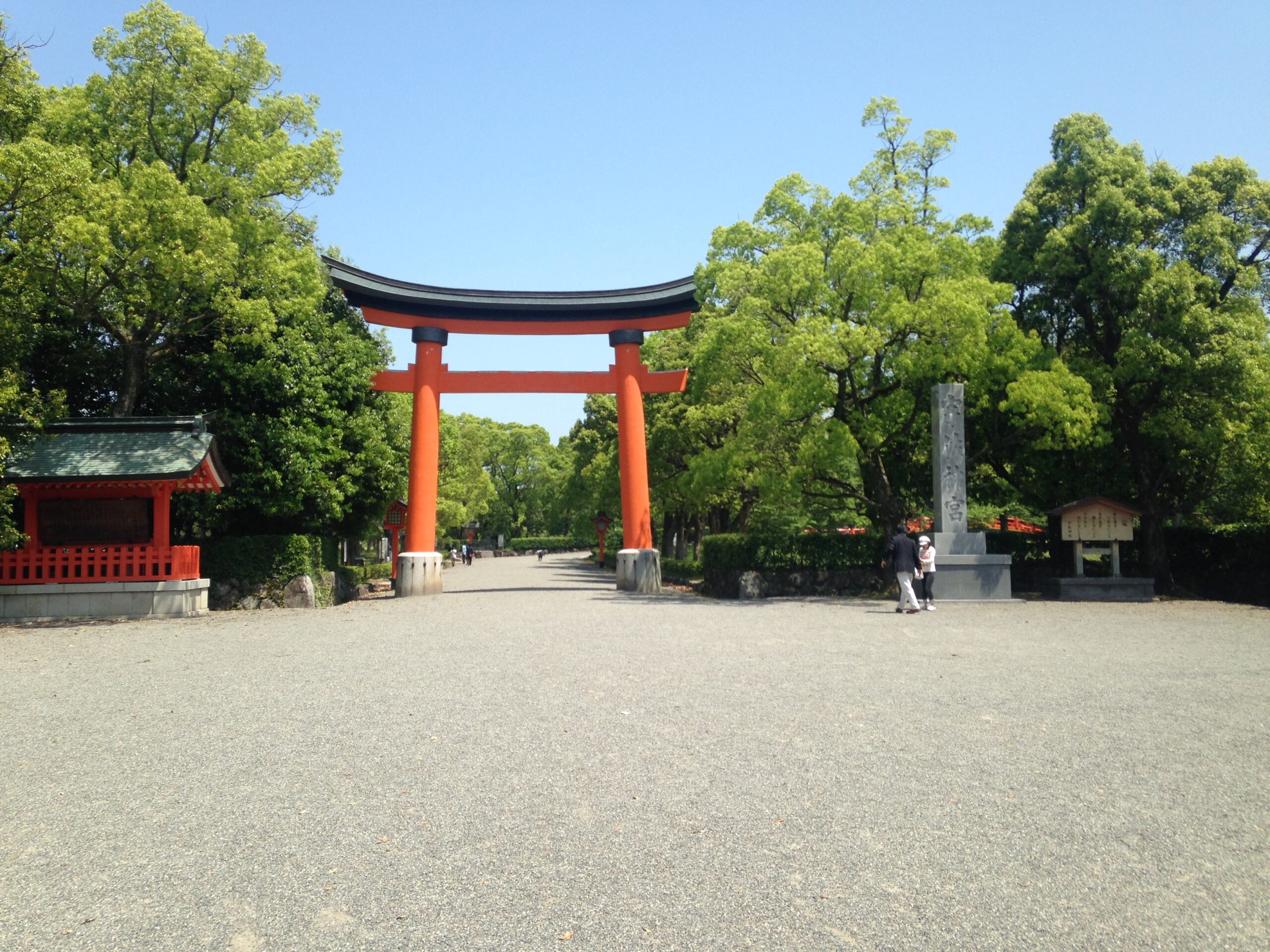
Of Japan’s approximately 44,000 Hachiman shrines, one stands above them all — and it’s not in Tokyo or Kyoto. Usa Jingu in Oita Prefecture is the supreme head shrine (sohongu) of every Hachiman shrine in Japan. Founded in 725 AD, its 1,300-year history makes it one of the country’s most historically significant sacred sites.
The principal deity, Hachiman (Emperor Ojin), has been revered as the god of victory and martial prowess by samurai lords throughout Japanese history. Usa Jingu holds the distinction of being the “Second Imperial Ancestral Shrine” — second only to Ise Jingu in the imperial hierarchy. With its unique worship ritual of four handclaps instead of the usual two, vast forested grounds, and the tradition of visiting both the upper and lower sanctuaries, Usa Jingu offers a worship experience found nowhere else.
—
What Makes Usa Jingu Special
Head of All 44,000 Hachiman Shrines
Hachiman shrines are the most numerous shrine type in Japan. Every single one — including Kyoto’s Iwashimizu Hachimangu and Kamakura’s Tsurugaoka Hachimangu — traces its spiritual lineage back to Usa Jingu through the practice of “kanjo” (receiving a divided spirit). This makes Usa Jingu one of the most influential shrines in all of Japanese religious culture.
Magnificent Vermilion Architecture
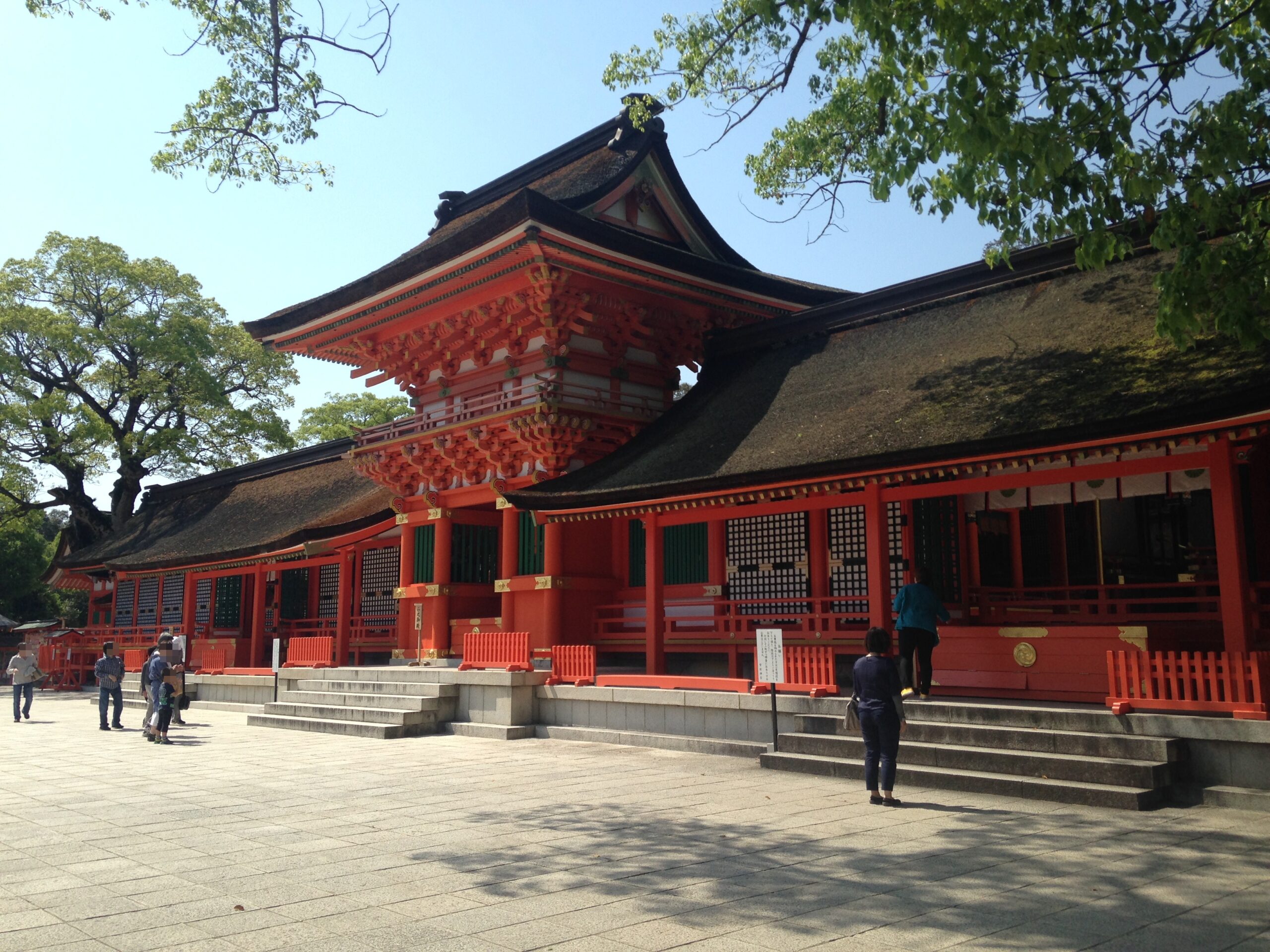
The shrine buildings feature the distinctive “Hachiman-zukuri” architectural style — two hip-and-gable roof structures connected front to back — which originated here and is designated a National Treasure. The brilliant vermilion structures set against the deep green sacred forest create a scene of remarkable beauty.
The Four-Clap Worship Ritual
Unlike the standard “two bows, two claps, one bow” at most shrines, Usa Jingu uses “two bows, four claps, one bow” — the same elevated ritual as Izumo Taisha. This special protocol reflects the shrine’s exceptional status in the Shinto hierarchy. Remember to clap four times when you pray.
The “Nisho-Mairi” Double Sanctuary Visit
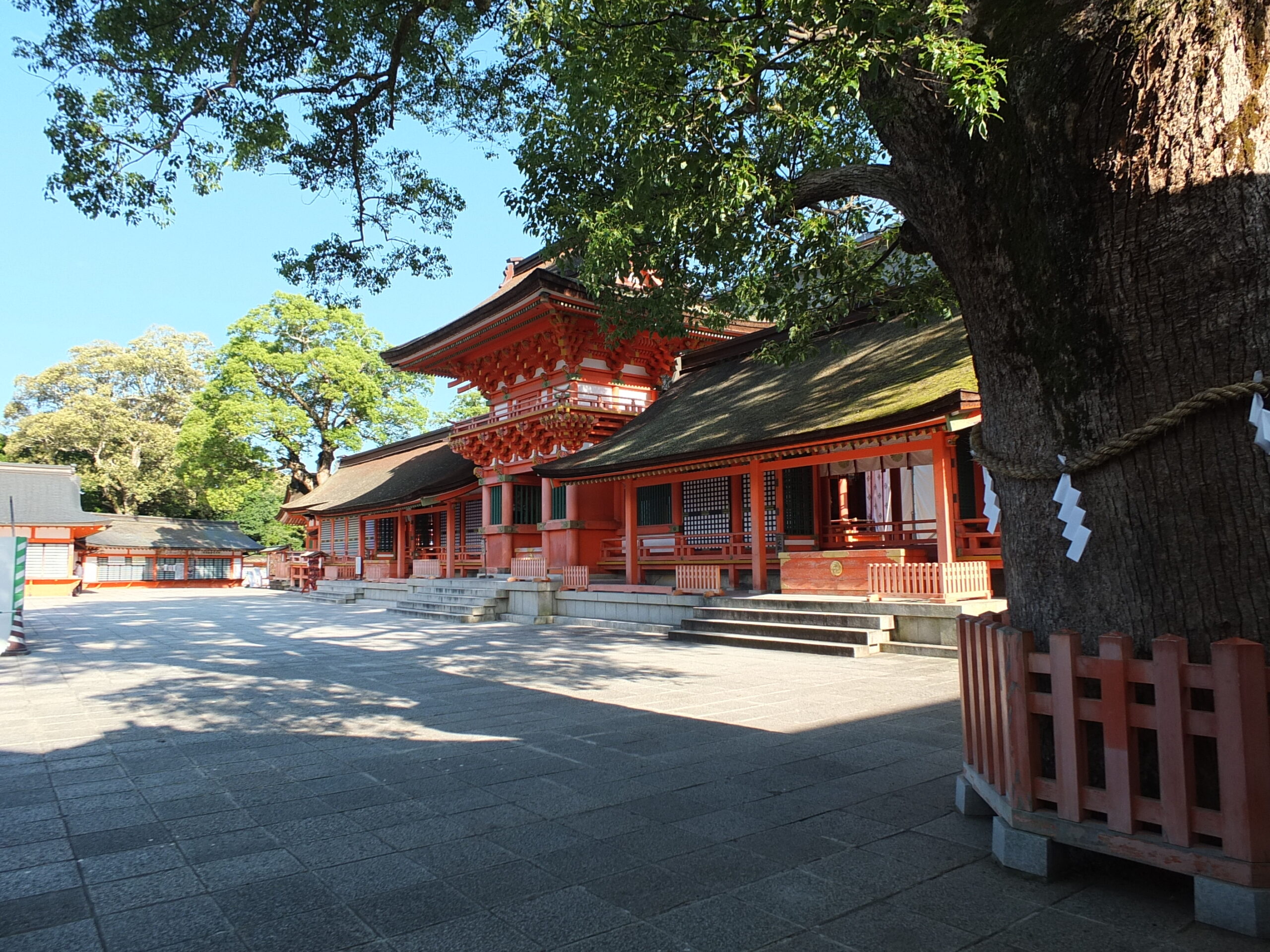
Proper worship at Usa Jingu requires visiting both the upper sanctuary (jogu) and lower sanctuary (gegu) — known as “nisho-mairi.” An old saying warns that visiting only the upper sanctuary constitutes “kata-mairi” (half worship). The upper sanctuary houses three halls dedicated to Hachiman, Himegami (the three Munakata goddesses), and Empress Jingu, with the same three deities enshrined in the lower sanctuary as well.
—
Spiritual Benefits
Victory & Success: Hachiman has been the warrior deity of choice since ancient times. Minamoto no Yoritomo built Tsurugaoka Hachimangu in Kamakura specifically to invoke Hachiman’s power. Today this translates to business success and competitive advantage.
Protection & Warding Off Evil: As a guardian deity of the nation, Hachiman provides powerful protection against misfortune and disaster.
Safe Childbirth: Associated with Empress Jingu, who according to legend went to war while pregnant and safely delivered Emperor Ojin upon her return.
Marriage & Relationships: Himegami (the three Munakata goddesses) of the second hall is associated with romantic connections and harmonious relationships.
Popular Charms & Souvenirs
| Item | Price | Description |
|——|——-|————-|
| Victory charm | 800 yen | Invoking Hachiman’s martial power |
| Protection charm | 800 yen | The guardian deity’s evil-warding power |
| Marriage charm | 800 yen | Himegami’s blessing for relationships |
| Goshuin (shrine seal) | 500 yen | Bold “Hachiman Okami” calligraphy |
| Safe childbirth charm | 800 yen | Empress Jingu’s blessing |
—
Best Time to Visit
Seasonal Highlights
Spring (March–May): Cherry blossoms complement the vermilion buildings beautifully. The April festival is particularly impressive. Golden Week brings crowds, but weekdays are peaceful.
Summer (June–August): The deep forest canopy provides surprising shade and coolness. The late July Nagoshi no Oharae ceremony (walking through a grass ring) is a special purification ritual.
Autumn (September–November): November’s fall foliage is the most visually stunning season. Red and gold leaves against vermilion buildings create extraordinary photo opportunities. The October Chusha Festival is also noteworthy.
Winter (December–February): The quietest season offers the vast grounds almost to yourself. New Year’s draws Kyushu’s largest crowd (about 400,000 visitors) — aim for January 3rd onward to avoid the rush.
Best Times of Day
| Time | Crowd Level | Best For |
|——|————-|———-|
| 6:00–8:00 | Nearly empty | Sacred early morning atmosphere |
| 8:00–10:00 | Quiet | Photography, contemplative worship |
| 10:00–14:00 | Busy | Shrine office services, guided tours |
| 14:00–16:00 | Thinning out | Afternoon light filtering through the forest |
Tip: Early weekday mornings are extraordinary — the vast grounds are almost deserted, allowing you to truly feel the weight of 1,300 years of history.
—
Visiting Guide
Walking Route (Allow 90–120 minutes)
1. Grand torii to the main approach (10 min)
Pass through the impressive vermilion torii and walk along the tree-lined approach, flanked by stone lanterns.
2. Climb to the upper sanctuary (10 min)
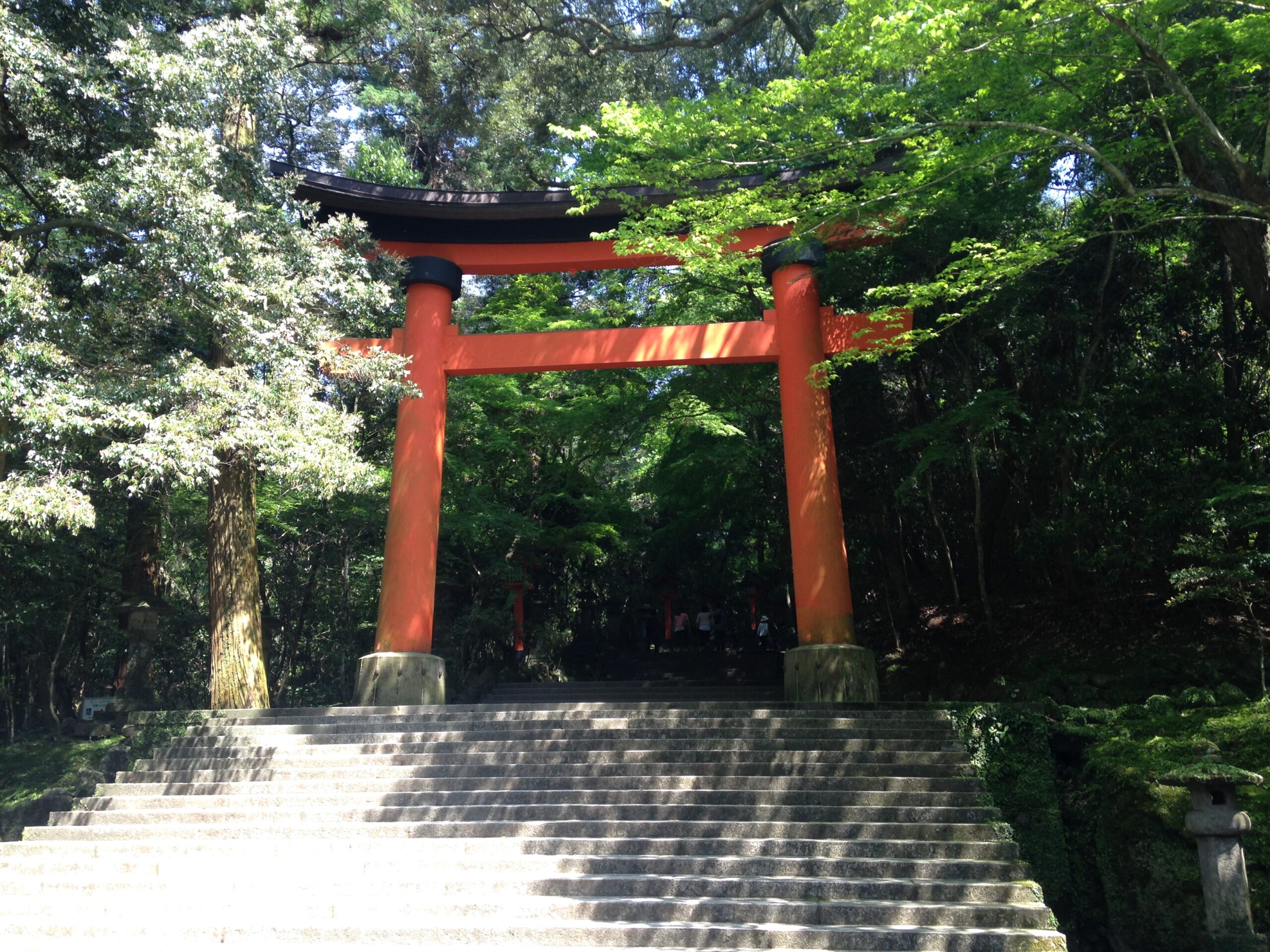
Pass through the forest torii and climb the stone steps. Emerging from the tree tunnel, the vermilion shrine buildings appear before you.
3. Worship at the upper sanctuary (15 min)
Visit all three halls in order — first hall (Hachiman), second hall (Himegami), third hall (Empress Jingu). Remember: two bows, four claps, one bow at each.
4. Visit the mausoleum at Obi-yama (15 min)
Behind the upper sanctuary lies Hachiman’s mausoleum — the most sacred and spiritually powerful spot in the entire complex.
5. Descend to the lower sanctuary (15 min)
Walk down the stone steps and worship at the lower sanctuary with the same four-clap ritual at all three halls. Skipping this makes your visit “half worship.”
6. Treasure hall (20 min)
Houses National Treasures and Important Cultural Properties. Admission: 300 yen.
7. Browse the temple town (15 min)
Souvenir shops and food stalls line the approach — perfect for a post-worship rest.
What to Wear and Bring
| Essential | Why |
|———–|—–|
| Comfortable walking shoes | Stone steps between upper and lower sanctuaries |
| Water | Large grounds require significant walking, especially in summer |
| Rain gear | Oita receives frequent rain — be prepared for sudden showers |
—
Practical Information
| Detail | Information |
|——–|————-|
| Official name | Usa Jingu |
| Address | 2859 Minami-Usa, Usa, Oita |
| Phone | 0978-37-0001 |
| Hours | 5:30–19:00 (Oct–Mar: 6:00–19:00) |
| Closed | Never |
| Admission | Free (Treasure hall: 300 yen) |
| Parking | Available (paid, approx. 400 spaces) |
| Website | usajinguu.com |
Getting There
By car: About 15 minutes from Higashi-Kyushu Expressway Usa IC. About 1 hour from Oita city, 1.5 hours from Kitakyushu.
By train + bus: Take the JR Nippo Line to Usa Station (limited express Sonic stops here — about 1 hour from Kokura, 40 minutes from Oita). Then Oita Kotsu bus to “Usa Hachiman” (about 10 min, 310 yen).
Direct bus: Available from Oita Station (about 90 minutes). Limited frequency — check schedules in advance.
Visiting with Pets
Pets on leashes are allowed in the general grounds and approach path, but not inside the sanctuary corridors (upper and lower). Walking through the forested approach is fine with pets. Consider alternating shrine visits with a companion while one person stays with the pet. Pet-friendly restaurants are limited in Usa city — research in advance.
Wheelchair & Stroller Access
The main approach is relatively flat and wheelchair accessible. The upper sanctuary requires stone steps, which are challenging. Contact the shrine office for information about alternative wheelchair routes — staff may be able to assist. The lower sanctuary has fewer steps and is more accessible. Strollers work on the main approach but must be folded for stone step sections.
—
Nearby Attractions & Dining
Where to Eat
| Location | Specialty | Price Range |
|———-|———–|————-|
| Temple town | Usa karaage (fried chicken — birthplace) | 500–800 yen |
| Temple town | Dango and zenzai (sweets) | 300–500 yen |
| Usa city | Dojo (loach) cuisine | 1,000–2,000 yen |
| Nakatsu city (20 min) | Nakatsu karaage | 500–1,000 yen |
Usa is the “Holy Land of Karaage” (Japanese fried chicken). The city claims to be the birthplace of karaage, with over 30 specialty shops. Popular spots line the temple town near the shrine — a post-worship feast is practically mandatory.
Nearby Sightseeing
| Spot | Distance | Highlights |
|——|———-|————|
| Showa no Machi (Bungotakada) | 15 min by car | Recreated 1950s shopping street |
| Kunisaki Peninsula | 30+ min by car | Stone Buddhas, cliff carvings, Futago-ji Temple |
| Nakatsu Castle | 20 min by car | Castle associated with Kuroda Kanbei |
| Beppu Onsen | 50 min by car | Japan’s top hot spring destination |
Suggested Day Trip: Usa & Kunisaki Peninsula
1. 8:30 Usa Jingu worship (90 min)
2. 10:00 Karaage lunch in the temple town
3. 10:45 Showa no Machi stroll (60 min)
4. 12:00 Drive to Kunisaki Peninsula
5. 12:30 Futago-ji Temple visit (45 min)
6. 13:30 Fukiji Temple (National Treasure hall) (30 min)
7. 14:30 Kumano Magaibutsu cliff carvings (45 min)
8. 16:00 Beppu Onsen for a day-trip soak
—
Visitor Reviews
What visitors say about Usa Jingu:
> “The grounds are much larger than I expected. Walking between the upper and lower sanctuaries is quite a hike, but the forested approach is refreshing. The four-clap worship felt special and different. The karaage in the temple town was incredible.”
> — Google Maps review
> “I visited on a weekday morning and had the place almost to myself. The 1,300-year-old atmosphere in that silent forest was truly purifying. Don’t forget the lower sanctuary. The combination of shrine worship and karaage seems to be Usa’s signature experience.”
> — Google Maps review
Visitors consistently praise the “vast, serene grounds” and “special feeling of the four-clap ritual.” The karaage pilgrimage aspect adds a delightful culinary dimension to the spiritual visit.
—
Summary
Usa Jingu stands at the apex of all 44,000 Hachiman shrines across Japan — a spiritual headquarters with 1,300 years of unbroken history.
The National Treasure “Hachiman-zukuri” architecture, the deep ancient forest, the resonant four handclaps of the special worship ritual, and the sacred tradition of visiting both upper and lower sanctuaries — these elements combine to create a worship experience unlike any other shrine in Japan.
Whether seeking victory and protection blessings, exploring Japan’s religious architectural heritage, or making a pilgrimage to the birthplace of karaage, Usa Jingu is an essential destination in Oita Prefecture.
—
We hope this guide helps you plan your visit to Usa Jingu.
*Information in this article is current as of April 2026. Please check the official website for the latest details before your visit.*
—
Discover Your Ideal Power Spot
Did you know that power spots have different compatibility with different people? The same place can feel completely different depending on who visits.
To find the power spots best suited to you, try our free compatibility diagnosis (takes just 3 minutes).
あなたに最適なパワースポットを知りたい方へ