“How do you actually see Dorokyo?” “Can you still ride the jet boat?” “Is it okay to go with kids or a pet?” If that’s what brought you here, read on.
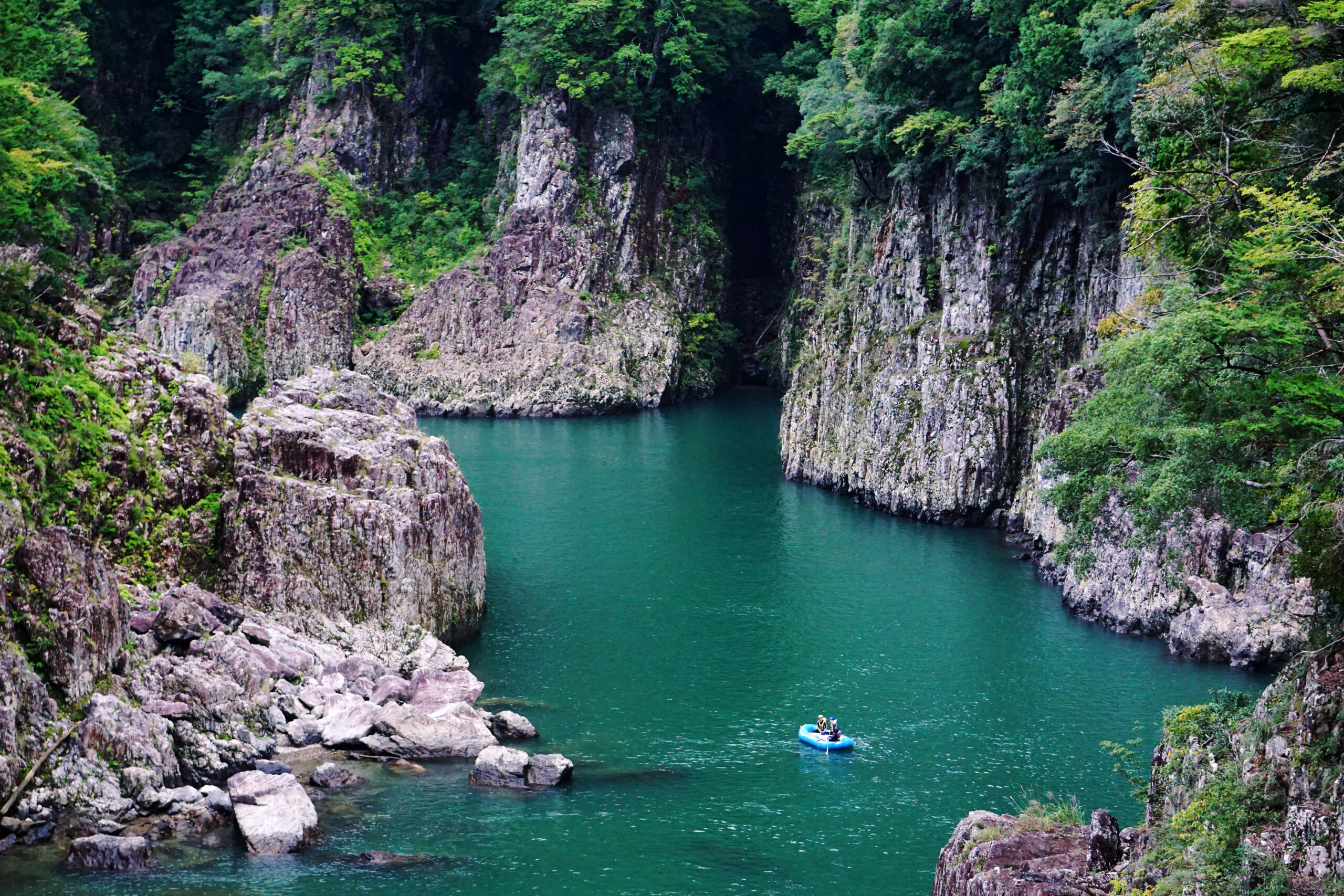
In short, Dorokyo (瀞峡) is a great gorge carved by the Kitayama River — a tributary of the Kumano River — that straddles the three-prefecture border of Wakayama, Nara, and Mie. Its downstream showpiece, Dorohatcho (瀞八丁), is a roughly 900-meter stretch where sheer cliffs rise straight from emerald-green water, designated a National Special Place of Scenic Beauty and Natural Monument. The water flows so gently through the deep canyon that it forms calm, clear pools — *toro* in Japanese — which is where the name comes from.
But first, the single most important thing to know: the water-jet sightseeing boat that was once synonymous with Dorokyo was officially discontinued in April 2025. Old fares and timetables still float around online, but it no longer runs. Today, the main way to experience Dorohatcho from the water is the “Dorokyo River-Boat Cruise” (kawabune), rowed by local boatmen.
This guide walks you through the cruise’s reservation, fares, and boarding point, the reality of access (you really need a car), the things to watch for if you’re traveling with children, a pet, or a wheelchair, and how to pair Dorokyo with Kumano Hongu Taisha and Tamaki Shrine — all laid out so you can clearly see “how exactly should I enjoy Dorokyo.”
What Makes This Spot Special
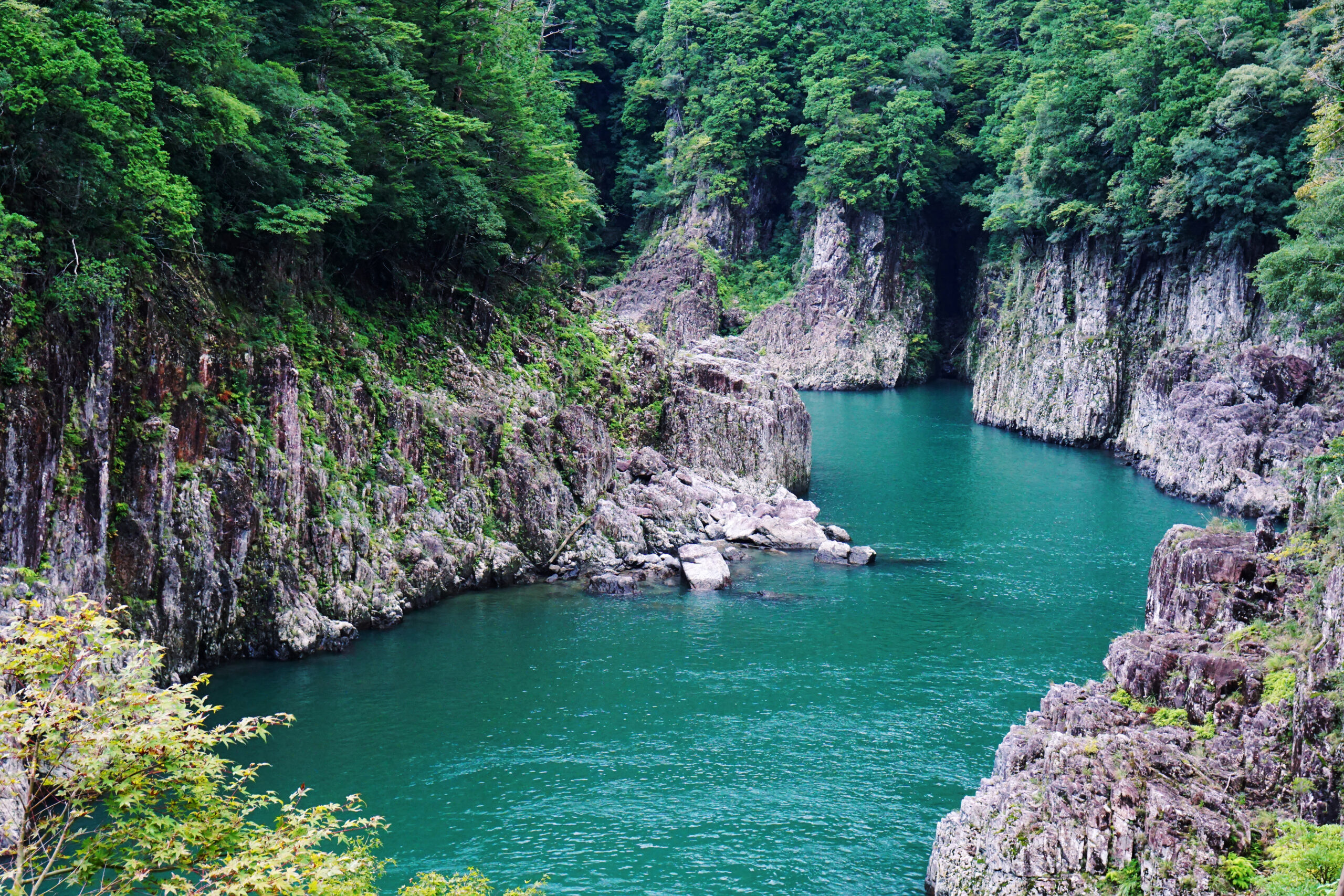
Cliffs polished by water and deep blue pools — Dorohatcho
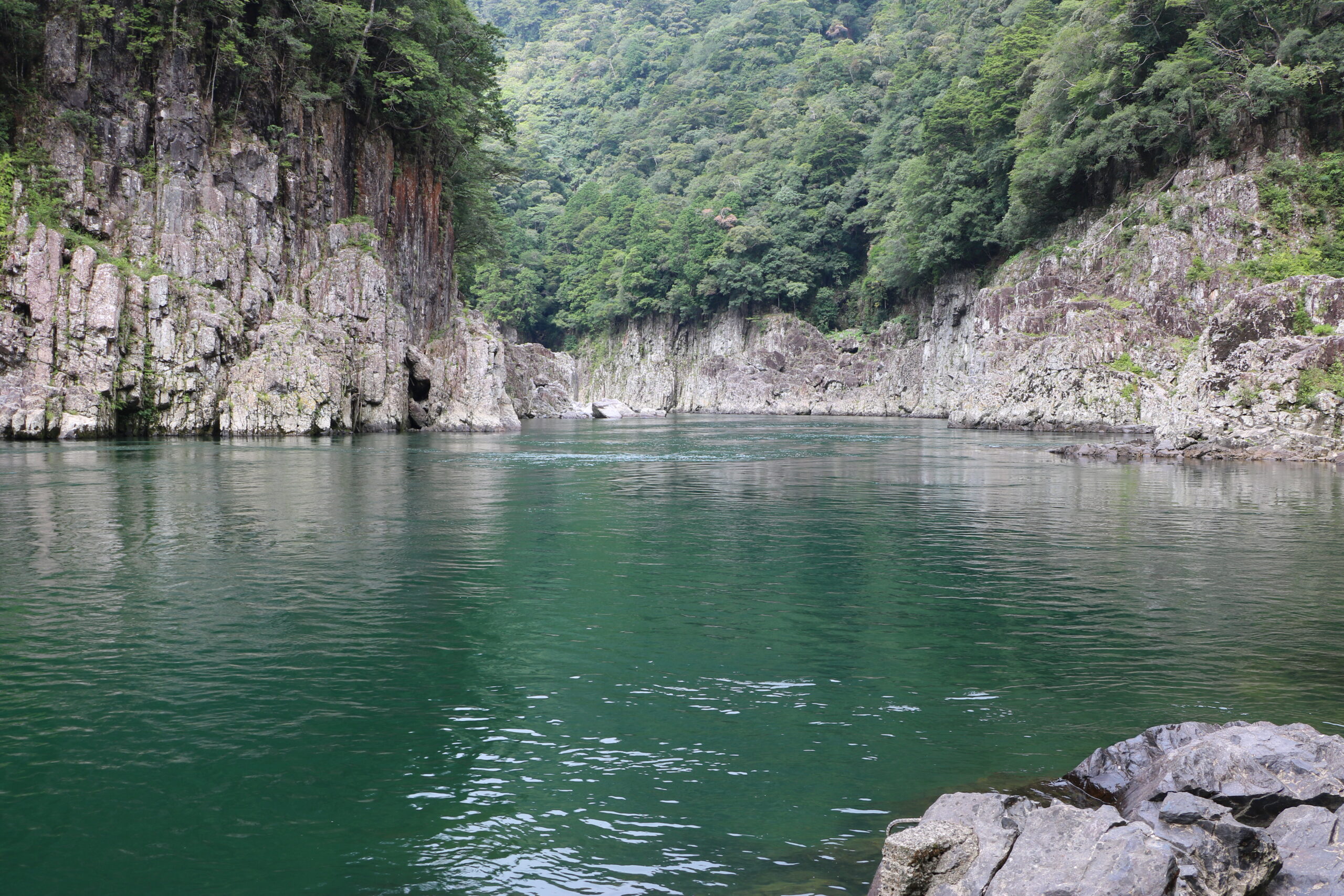
Dorokyo divides, from upstream down, into Okutoro, Kamitoro, and Shimotoro, and the heart of Shimotoro is Dorohatcho. The Kitayama River spent eons carving through bedrock hardened by ancient volcanic heat, leaving cliffs tens of meters high lined up like folding screens on both banks. Wakayama Prefecture’s description puts the valley width at around 100 m and the water depth near Dorohatcho at about 20 m.
Because the current is so gentle, the water is astonishingly still, and the deeper it gets, the more it turns a mesmerizing blue-green. Tourism descriptions often call it “water glowing emerald green” — and that color is the single biggest reason Dorokyo is impossible to forget once you’ve seen it.
A gallery of strange rocks on a three-prefecture border
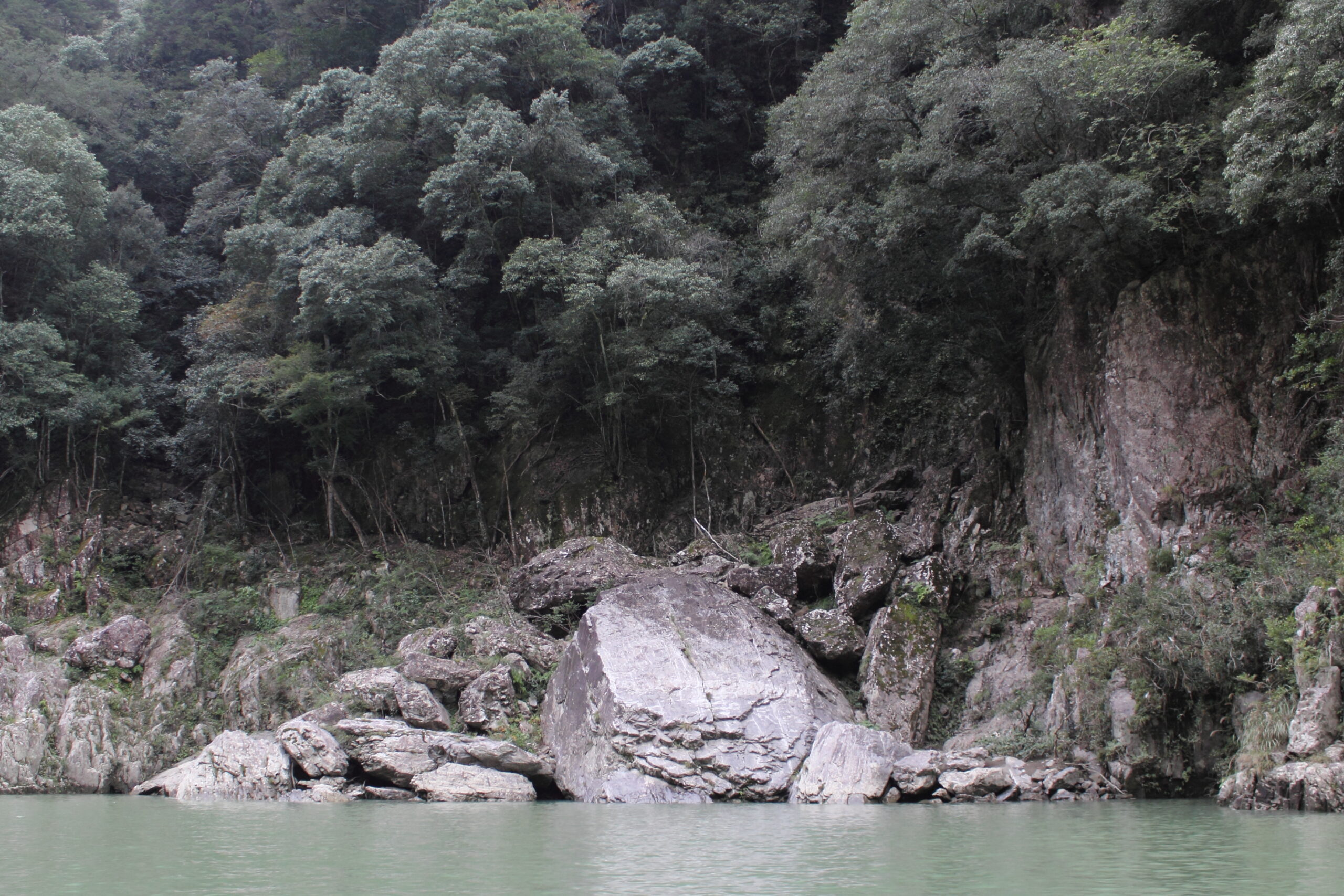
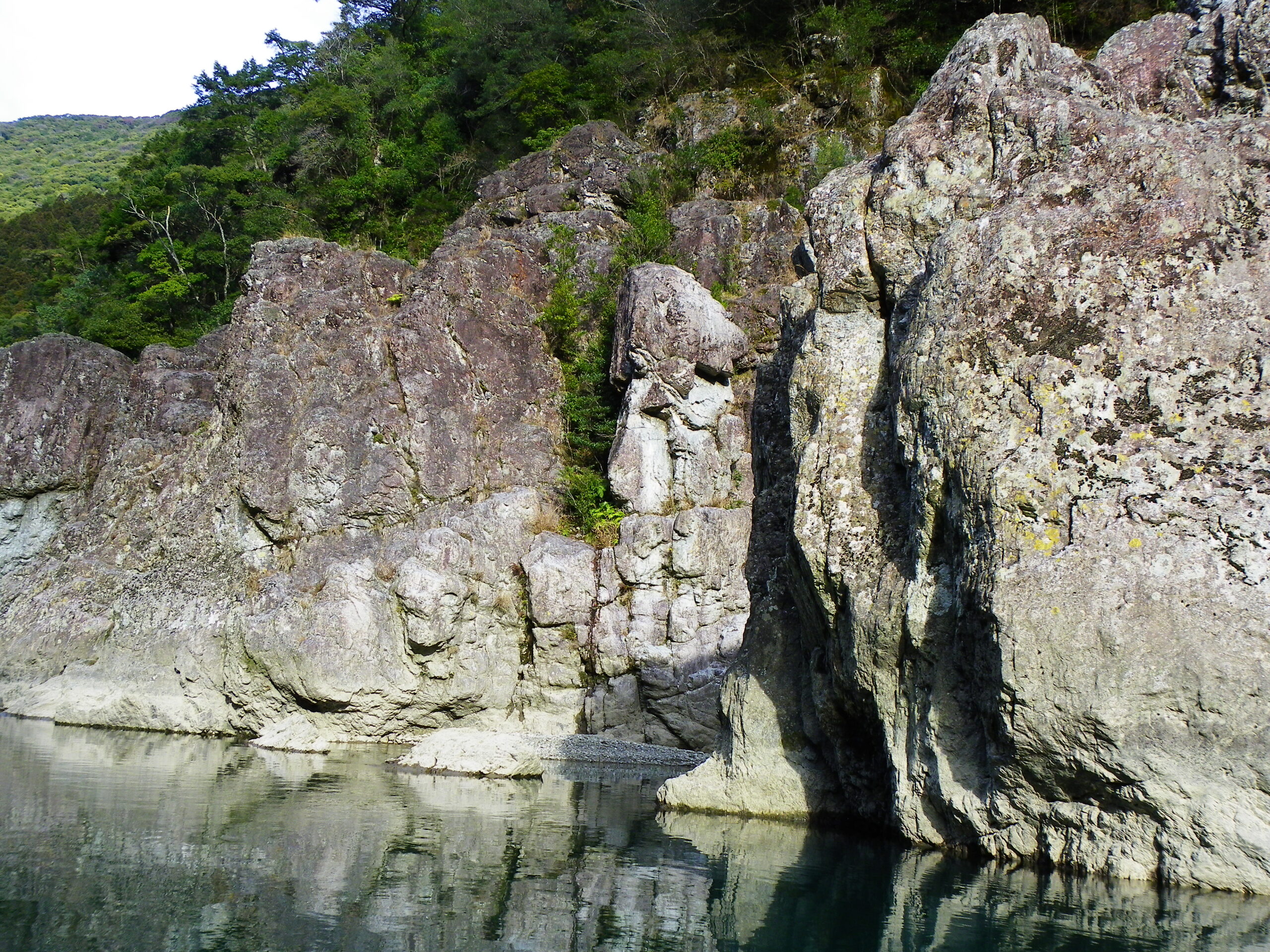
Dorokyo flows along the borders of three prefectures — Shingu City (Wakayama), Totsukawa Village (Nara), and Kumano City (Mie). Set deep within Yoshino-Kumano National Park, the riverbanks are dotted with oddly shaped boulders shaped over long ages: Kame-iwa (Turtle Rock), which looks like a crouching turtle, and the spire-like Matsutake-iwa (Pine-Mushroom Rock). Looking up at them from the boat feels like touring a gallery of natural sculpture.
A “river sanctuary” of Kumano — held within a sacred geography
The Kitayama and Kumano river systems into which Dorokyo flows are the very world of Kumano faith, centered on the Kumano Sanzan (Kumano Hongu Taisha, Kumano Hayatama Taisha, and Kumano Nachi Taisha). Kumano Hongu Taisha sits at the heart of the Kumano River, and high in the mountains on the Nara side stands Tamaki Shrine, known as an inner sanctuary of Kumano.
Dorokyo itself does not carry an officially proclaimed “specific benefit.” Even so, the pure water, the deep pools, the towering cliffs, and a setting ringed by Kumano’s sacred sites combine to make visitors feel a great natural power. Not a flashy energy, but rather surrendering to the quiet power of water — that is how Dorokyo is best savored.
Blessings and Experiences — “Purification” and “Stillness”
| Experience you can expect | Background |
|—————————|———–|
| Cleansing and resetting the mind | Enveloped by clear blue water and the silence of the cliffs |
| Release from stress | Quiet, near-soundless time in a deep mountain gorge |
| Awe and renewal | Touching the eternal time of water carving stone |
| A finale to a Kumano pilgrimage | A “water sanctuary” alongside the Kumano Sanzan and Tamaki Shrine |
Dorokyo’s power is said to suit people who want to pause and settle the mind, who want to face themselves quietly in nature. This is not the kind of place that energizes you with bustle. Rather, packing in no itinerary, simply gazing at the water’s color and the cliffs and breathing deep — that is how to receive the most from this gorge.
Access — How You Get There Depends on “Where You View Dorokyo From”
Dorokyo is vast, so access changes completely depending on which base you head for. Here are the two main ones.
(1) To ride the river-boat cruise — Tamakiguchi Satellite (car only)
The boarding point for the main water activity today, the “Dorokyo River-Boat Cruise,” is the Tamakiguchi Satellite.
| Item | Details |
|——|———|
| Address | 8-1 Tamakiguchi, Kumanogawa-cho, Shingu City, Wakayama |
| Public transport | None (no bus route — car or taxi required) |
| By car | About 25 min from Kumano Hongu Taisha / about 40 min from the Kumano Hayatama Taisha area |
| Parking & restrooms | Available |
The Shingu City Tourism Association also states plainly that “there is no public transport, so please come by car.” A rental car or taxi is the basic option.
(2) To enjoy the scenery and the shop — Dorokyo-Meguri-no-Sato Kumanogawa (former Shiko boarding point)
“Dorokyo-Meguri-no-Sato Kumanogawa” (the former Shiko boarding point), the hub of the jet-boat era, continues to operate as a restaurant-and-souvenir facility even after the boat service ended.
| Item | Details |
|——|———|
| Address | 272 Hitari, Kumanogawa-cho, Shingu City, Wakayama |
| Hours | 9:00–17:00 (open daily) |
| Public transport | About 40 min from JR Shingu Station on the Kumano Gobo Nankai Bus “Kawatake Line,” right at the “Shiko” bus stop |
| Parking | Free |
If you don’t have a car, the realistic option is to take the bus from Shingu Station to this “Shiko” stop and enjoy the atmosphere at the gorge’s gateway and the shop. Note, however, that the river-boat boarding point (Tamakiguchi) is some distance away, so riding the cruise requires separate transport.
Be careful with jet-boat information
To repeat: any guidance saying “take the jet boat from Shiko to Dorokyo” is outdated. The service ended on April 10, 2025. Old fares and timetables remaining on travel sites and personal blogs no longer apply. For current boarding, check the river-boat cruise.
How to Enjoy the Dorokyo River-Boat Cruise
Guided by boatmen born and raised locally, the cruise makes a roughly 40-minute round trip through the core of Dorohatcho. There are a few conditions and reservation points to know in advance.
| Item | Details |
|——|———|
| Fare | Adults ¥3,000 / children (age 4 to elementary school) ¥1,500 |
| Duration | About 40 min (round trip) |
| Departures | 9:00 / 10:00 / 11:00 / 13:00 / 14:00 / 15:00 |
| Operating season | March–November |
| Closed | Mondays (operates if a holiday; closed the next weekday instead) |
| Reservation | Reservation required (by 15:00 the day before; minimum 2 people) |
| Payment | Cash or PayPay on the day, at the boarding point |
| Booking & inquiries | Kawabune Center, TEL 0735-44-0987 |
Watch out for these:
- Children under 4 cannot board. Take care if traveling with very young children (see below)
- Pets cannot board
- Reservation required. Just showing up may mean you can’t ride. Book early for weekends, holidays, and the autumn-foliage season
- The last departure is 15:00, with check-in up to 20 minutes prior. Allow time for the mountain drive
- Rain generally doesn’t stop it (bring rain gear), but high water or river conditions can suspend service
Best Time and Hours to Visit
| Season | Highlights |
|——–|———–|
| Spring (late Mar–May) | Cherry blossoms and fresh greenery. The cruise season opens. Soft greens against blue water |
| Summer (Jun–Aug) | The water color is at its most vivid; the gorge is cool and the cruise feels wonderful |
| Autumn (mid–late Nov) | The surrounding mountains turn color. Combine with foliage along Route 168 and the Kitayama River; peak timing varies by year |
| Winter (Dec–Feb) | The cruise is out of season; no water experience. Scenery only, from the car |
If you want to enjoy it from the water, the premise is March–November. In winter the boats don’t run, so the classic “see that blue-green surface up close” experience isn’t possible. When planning, first check the operating season and Monday closures on the calendar.
Guide by Visitor Type — “How Should I Enjoy It?”
For photography
Dorokyo is a treasure trove for camera lovers.
1. The cliffs and blue pools of Dorohatcho: on cloudy or windless days the surface becomes a mirror reflecting the rock walls
2. Strange rocks: Kame-iwa, Matsutake-iwa and others are powerful shot from below from the boat
3. Light angle: the deep canyon is heavily shadowed even at midday. To bring out the water’s blue, aim for times when light falls more frontally
The boat rocks, so always loop your strap around your neck or wrist, and guard against drops and water spray.
For families with children
Most important: children under 4 cannot board the river-boat cruise. If you have a child aged 3 or under, you can’t take the boat, so switch to a plan that views the gorge from land. Children 4 and over can board at the child fare, but a life jacket is worn and there are sections where you walk on the riverbank, so bring shoes that are easy to walk in.
For visitors with pets
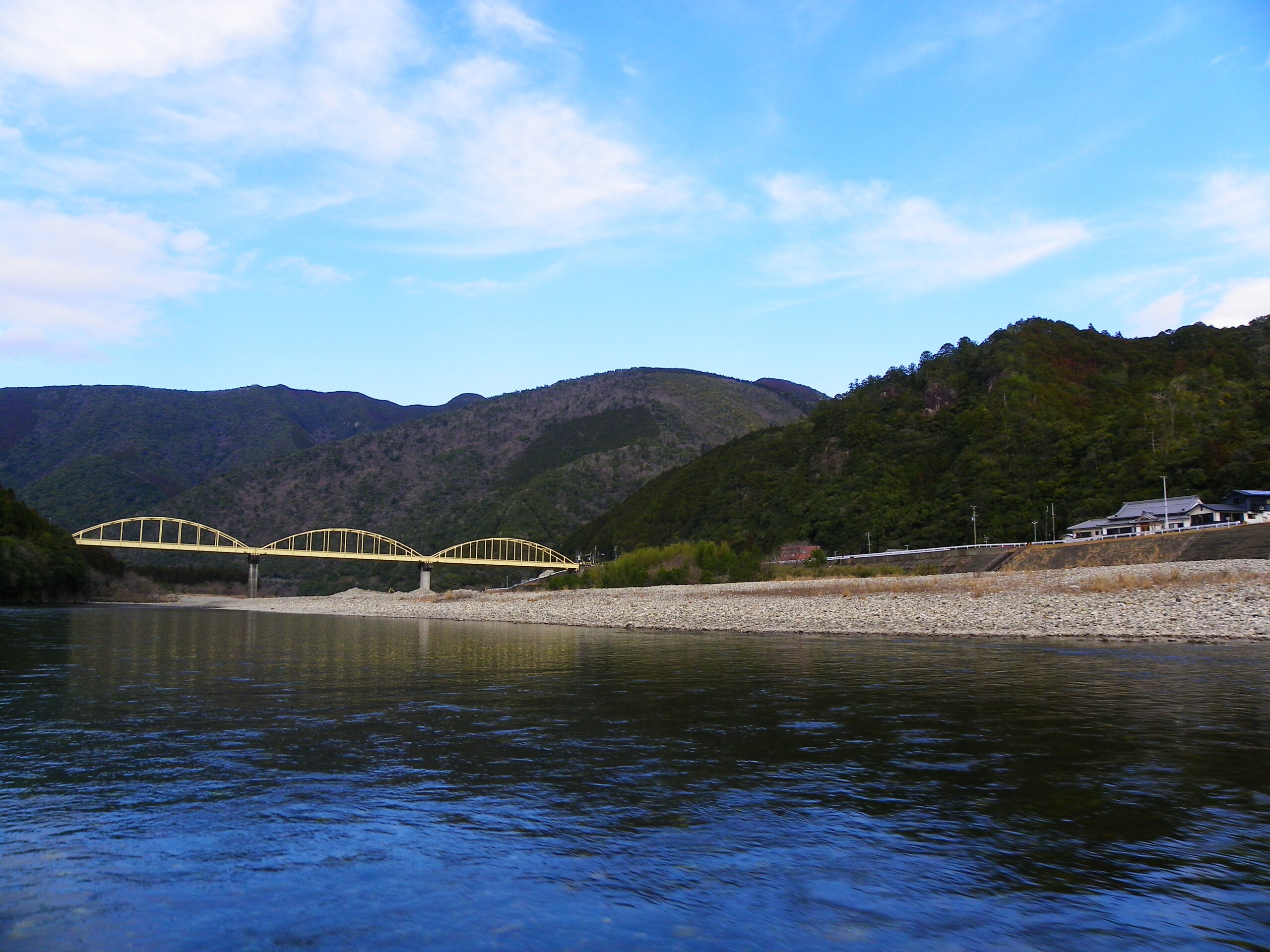
Pets cannot board the river-boat cruise. If you travel with a pet, give up on the boat and opt for a drive-style plan taking in the overlooks along the gorge, the area around Doro Bridge, and Dorokyo-Meguri-no-Sato Kumanogawa (the shop). In midsummer, never leave a pet in the car to board. Check in advance with your lodging or nearby facilities about pet-sitting.
For wheelchair users, strollers, or those unsure on their feet
To be honest, boarding the boat involves walking on the riverbank, and barrier-free accommodation is not officially stated. For wheelchair boarding and assistance, consult the Kawabune Center directly (0735-44-0987). Even if the boat isn’t feasible, you can still enjoy the gorge’s atmosphere from around Doro Bridge or from Dorokyo-Meguri-no-Sato Kumanogawa (which has parking and restrooms). If you don’t insist on “up close on the water,” a car-centered visit lets you savor Dorokyo just fine.
For those combining it with a Kumano pilgrimage
Dorokyo is just about 25 minutes by car from Kumano Hongu Taisha. Working Dorokyo into a Kumano Sanzan tour as a “water sanctuary” makes for a rich Kumano journey that brings together mountain, river, and shrine. Some visitors continue to Tamaki Shrine (an inner sanctuary of Kumano) on the Nara side, but it’s a mountain road, so check travel time and road conditions in advance.
Around the Area / Model Courses
River-Boat Cruise + Kumano Hongu, half-day model (by car, Mar–Nov)
“`
9:00 River-boat cruise at Tamakiguchi Satellite (reservation required)
9:40 Disembark, rest around Tamakiguchi
10:30 Drive to Kumano Hongu Taisha (about 25 min)
11:00 Worship at Kumano Hongu Taisha
12:30 Lunch and a soak around Kawayu Onsen / Yunomine Onsen
“`
Gorge drive + Mie side model (pet-friendly, wheelchair-friendly)
“`
10:00 Scenery and shop at Dorokyo-Meguri-no-Sato Kumanogawa (former Shiko)
11:00 Views of the Kitayama River around Doro Bridge
12:00 Drive toward the Mie side / Kumano City
13:30 Maruyama Senmaida rice terraces (Kiwa-cho, Kumano City)
“`
Nearby spots
- Kumano Hongu Taisha: the heart of Kumano faith. The top pairing with Dorokyo
- Kumano Hayatama Taisha / Shingu City: the coastal base, handy for rental cars and lodging
- Tamaki Shrine (Totsukawa, Nara): an inner sanctuary of Kumano; an ancient mountaintop shrine with giant trees (mind the mountain road)
- Maruyama Senmaida (Kumano City, Mie): one of Japan’s great rice-terrace landscapes, on a drive over to the Mie side
- Kawayu / Yunomine Onsen (Hongu): the hot springs of the Kumano pilgrimage; ideal for an overnight with Dorokyo and Hongu
- Kitayama Village raft-riding: a riverside activity on the same Kitayama River (a different experience from the Dorokyo cruise; reservation required)
Visitor Voices
Here are general tendencies seen in review sites and travelogues (individual impressions are the posters’ own).
For Dorokyo, comments praising the scenery and boat experience stand out: “the color of the water is unbelievably beautiful,” “overwhelmed by the cliffs and the silence,” “the boatman’s guiding was fun.” At the same time, there are no few notes of confusion about access and reservations: “surprised the jet boat had been discontinued,” “you can only reach the boarding point by car,” “went without knowing a reservation was needed and couldn’t ride.” (From reviews on Jalan, Google Maps, etc.)
On the whole, satisfaction with the scenery and stillness is very high, while “advance arrangements — reservations, operating season, arranging a car” — make or break the experience. That is the tendency the reviews reveal.
Notes and Safety Information
1. The jet boat is discontinued: ended April 10, 2025. Don’t trust old fares or timetables
2. The river boat requires a reservation: by 15:00 the day before; minimum 2 people. Walk-ins often can’t ride
3. Operating season and closures: March–November, closed Mondays. No water experience in winter
4. Under 4 cannot board; no pets: confirm your companions’ conditions in advance
5. No public transport to the boarding point (Tamakiguchi): car or taxi required. Allow margin for driving distance and the last departure
6. Be ready for the mountains: mobile signal is patchy in places. Save maps offline; fuel up and use restrooms early
7. Weather: rain generally doesn’t stop the boat, but high water or strong wind can. Check with the Kawabune Center the morning of
FAQ
Q. Can I still ride the jet boat at Dorokyo?
A. No. The Dorokyo sightseeing water-jet boat was discontinued on April 10, 2025. The water activity today is the “Dorokyo River-Boat Cruise” (departing from Tamakiguchi Satellite, reservation required).
Q. Can I ride the river boat without a reservation?
A. It’s fully reservation-based, requiring a booking by 15:00 the day before. Book early, especially for weekends, holidays, and the foliage season. The minimum is 2 people.
Q. What are the fare and duration?
A. Adults ¥3,000, children (age 4 to elementary school) ¥1,500, on a round-trip course of about 40 minutes. Children under 4 cannot board.
Q. Can I go without a car?
A. There is no public transport to the boat boarding point (Tamakiguchi); a car or taxi is required. The bus only reaches the former Shiko boarding point (Dorokyo-Meguri-no-Sato Kumanogawa) — about 40 minutes from Shingu Station on the “Kawatake Line,” getting off at “Shiko.”
Q. When is the best time to go?
A. The premise is the March–November cruise season. Summer for the most vivid water, spring for cherry blossoms and greenery, autumn (from mid-November) for the coloring mountains. In winter the boats don’t run.
Q. Can I enjoy it in the rain?
A. The river boat generally runs with rain gear, but high water or river conditions can suspend it. Checking with the Kawabune Center (0735-44-0987) the morning of is the surest way.
Q. Is it close to Kumano Hongu Taisha?
A. It’s about 25 minutes by car to the Tamakiguchi Satellite boarding point — an easy distance to work into a Kumano Sanzan tour as a “water sanctuary.”
Summary
Dorokyo is one of Wakayama’s finest natural power spots, where you quietly cleanse the mind, wrapped in clear blue water and towering cliffs.
Its heart is Dorohatcho, a National Special Place of Scenic Beauty carved by the Kitayama River along the three-prefecture border. Emerald-green water, folding-screen cliffs, strange rocks like Kame-iwa and Matsutake-iwa — not a flashy blessing, but quiet time spent settling yourself beside the water is this gorge’s greatest gift.
The key to enjoying it is just one thing: planning. The jet boat is gone, and the star is the reservation-only river-boat cruise (March–November, closed Mondays, no children under 4, boarding point reachable only by car). Get that right, and pairing it with Kumano Hongu Taisha and Tamaki Shrine makes an unforgettable Kumano journey of mountain, river, and shrine. The stillness of that blue water will surely stay with you long after.
—
We hope this guide helps with your visit to Dorokyo.
*The information in this article is current as of June 2026. Fares, operating season, departure times, closures, and reservation conditions for the river-boat cruise; bus schedules and fares; and the hours of each facility are subject to change. Please confirm the latest details before visiting with the Kawabune Center, the Shingu City Tourism Association, the Kumano Gobo Nankai Bus, and other official sources.*
Main sources:
Discover Your Compatibility with Dorokyo
Power spots have a “compatibility” unique to each person.
Visit the same place, and some feel it strongly while others feel little —
this comes from the combination of your innate energy and the nature of the spot.
Dorokyo’s power of “stillness” and “purification” is said to suit especially those who want to pause and settle the mind, and face themselves quietly in nature — but whether it truly fits you is determined by the personal energy derived from your date and time of birth.
あなたに最適なパワースポットを知りたい方へ