A 5-minute walk from Asakusa Station on the Tokyo Metro Ginza Line brings you to the iconic Kaminarimon gate — the entrance to Sensoji, Tokyo’s oldest temple. Founded in 628 AD, this temple dedicated to the Sacred Kannon (Avalokitesvara) has drawn pilgrims and travelers for nearly 1,400 years, welcoming approximately 30 million visitors annually.
From the bustling Nakamise shopping street to the solemn Main Hall, from the towering Five-Story Pagoda to the mystical nighttime illuminations, Sensoji seamlessly blends spiritual devotion with traditional downtown culture. Whether you’re seeking blessings, cultural immersion, or simply the best ningyo-yaki in Tokyo, this guide covers everything you need to know.
What Makes This Spot Special
Tokyo’s Oldest Temple — 1,400 Years of Prayer
Sensoji’s founding in 628 AD traces back to a miraculous event: fishermen brothers Hinokuma Hamanari and Takenari netted a golden statue of Kannon from the Sumida River. Local chieftain Hajino Nakatomo enshrined it, and so began the temple’s history. In 645, the priest Shokai Shonin built the Kannon-do hall. Later, the great monk Ennin (Jikaku Daishi) revitalized the temple in 857.
Throughout history, Sensoji received patronage from Japan’s most powerful figures — Minamoto no Yoritomo prayed here for military victory in 1180, and Tokugawa Ieyasu placed it under official protection from 1590 onward. Though the original Main Hall was destroyed in the Tokyo Air Raids of March 10, 1945, it was rebuilt in 1958 as a symbol of postwar recovery.
Architectural Highlights
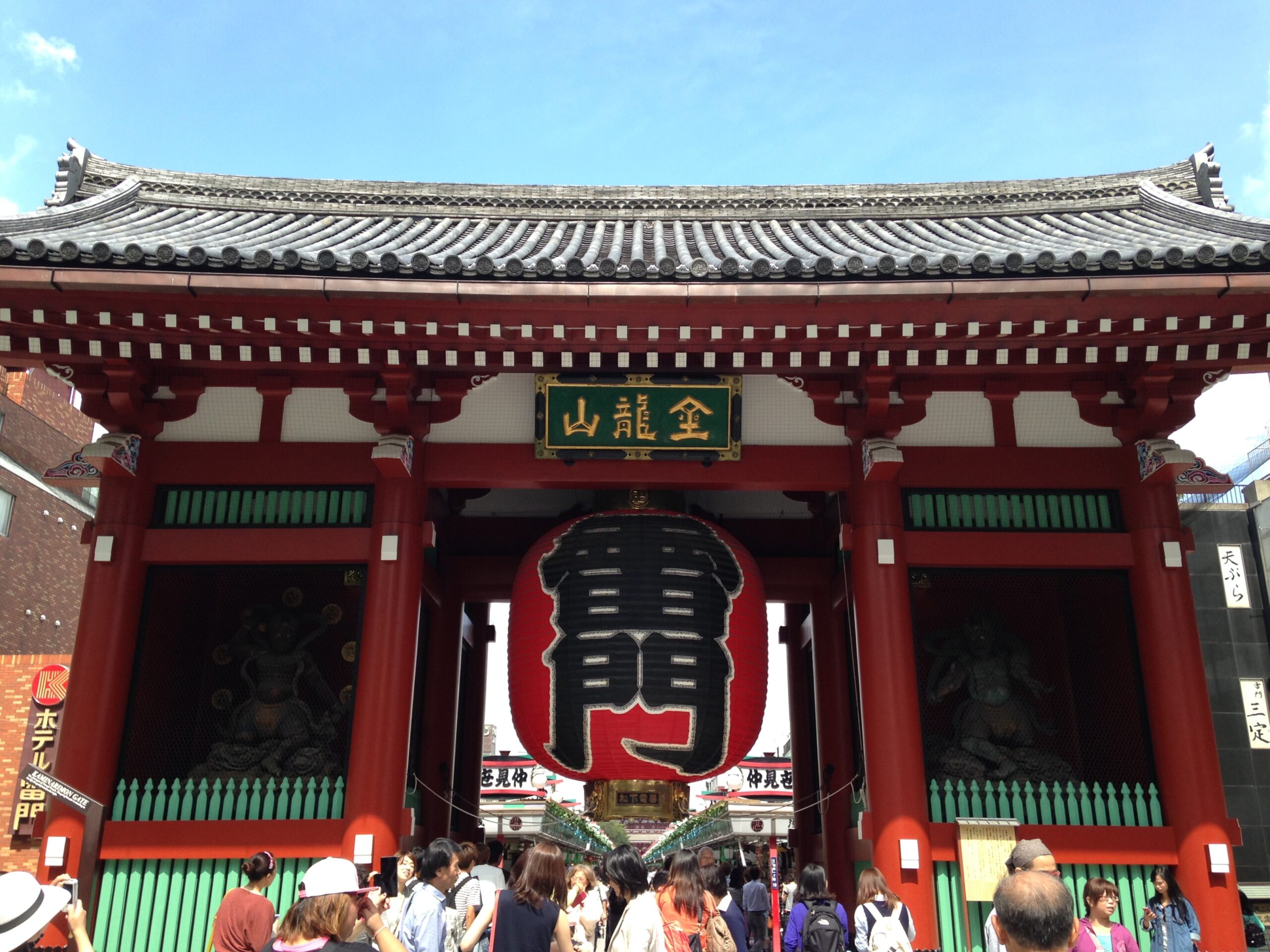
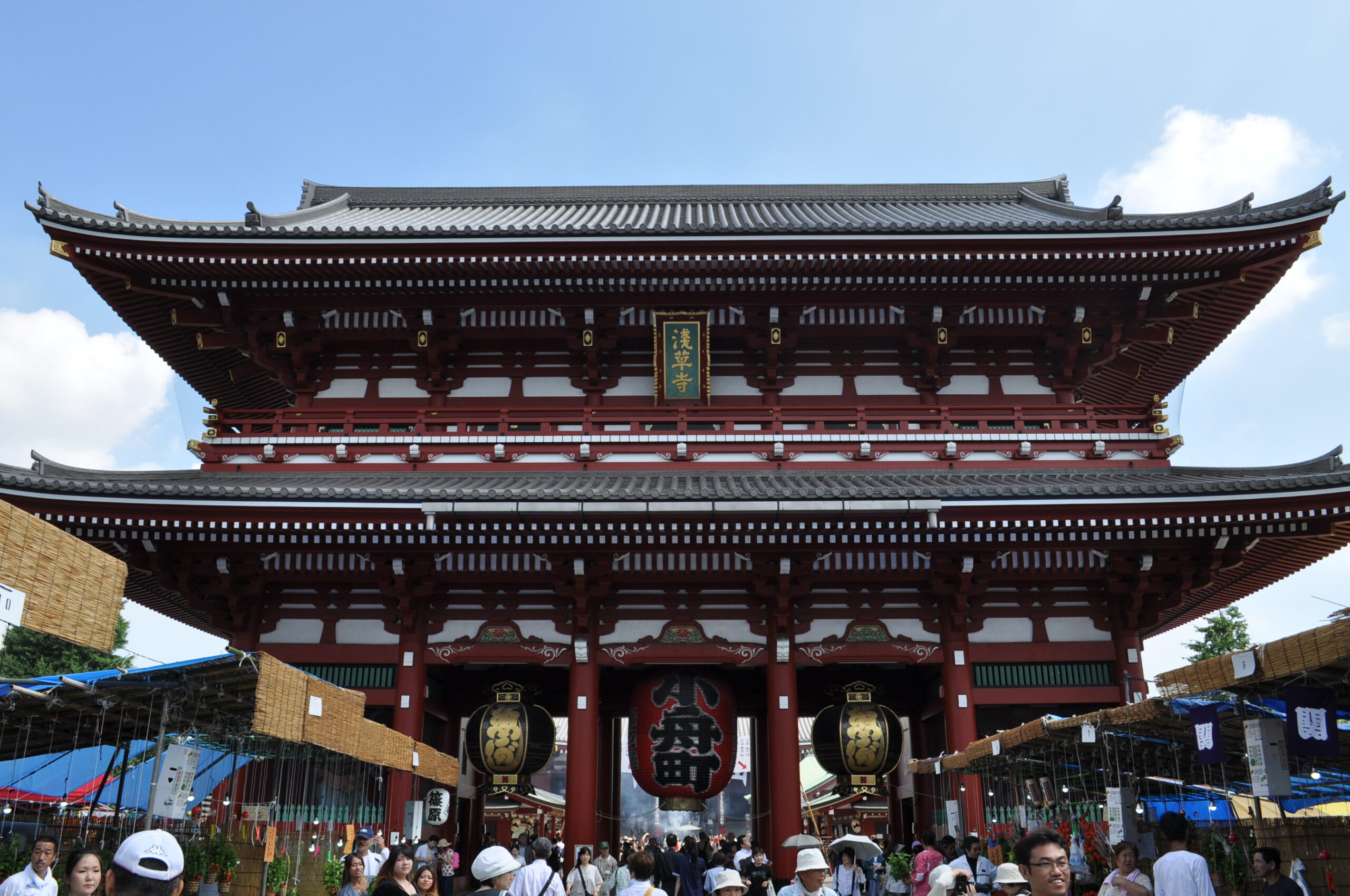
Kaminarimon (Thunder Gate): Officially named Furaijinmon (Wind-Thunder Gods Gate), this iconic gate features a massive red lantern measuring 3.9m tall, 3.3m wide, and weighing approximately 700kg. The current gate was rebuilt in 1960 through a donation by Panasonic founder Konosuke Matsushita. The Wind God (Fujin) and Thunder God (Raijin) guard either side.
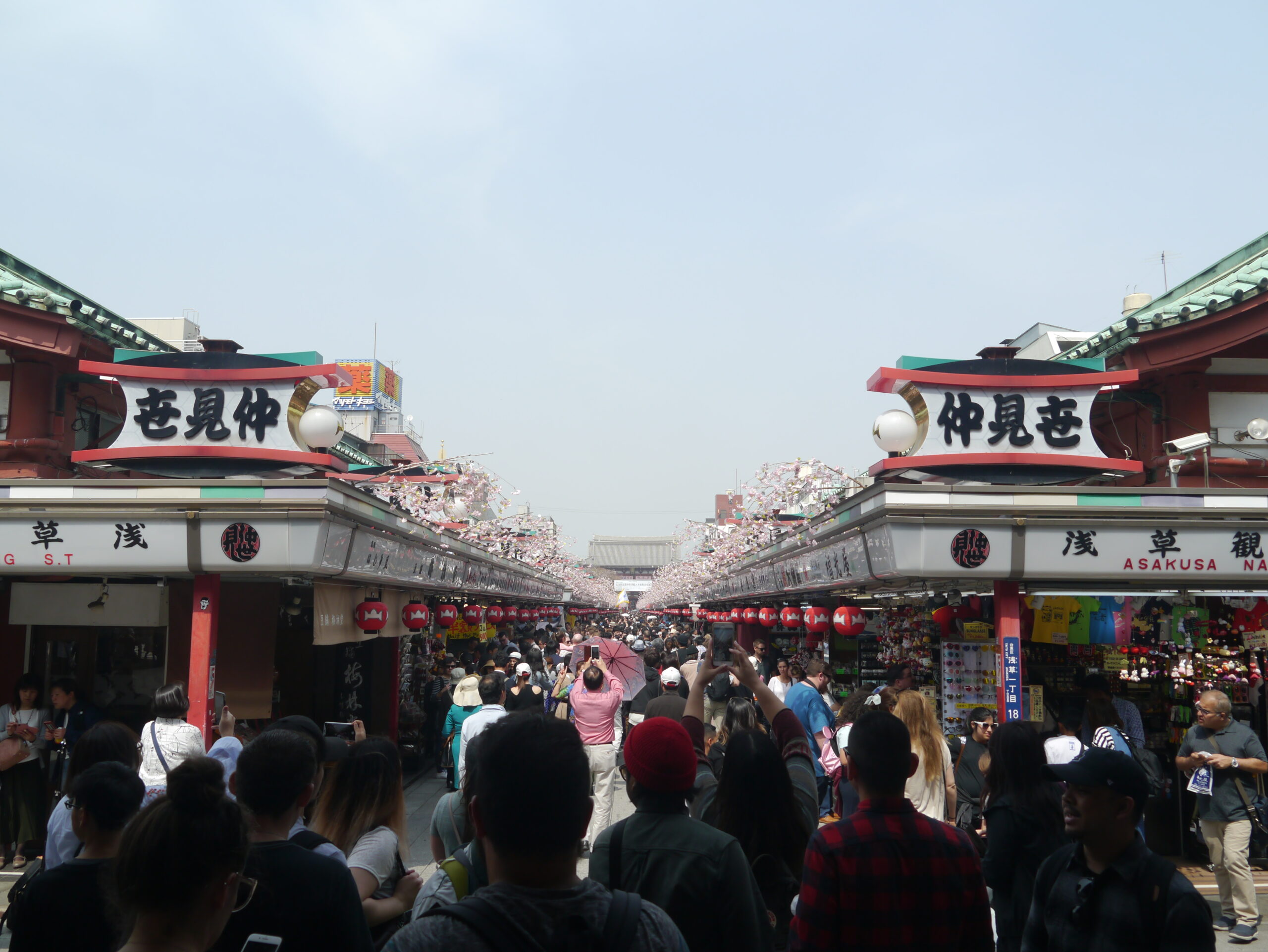
Nakamise-dori: Stretching approximately 250m from Kaminarimon to Hozomon, this is one of Japan’s oldest shopping streets with about 90 shops. Find traditional snacks like ningyo-yaki (doll-shaped cakes), kaminari-okoshi (thunder crackers), and hand-grilled senbei.
Hozomon (Treasure House Gate): This imposing two-story gate houses Nio guardian statues and stores sutras on its upper floor. On the back hangs a giant straw sandal (waraji) measuring 4.5m tall and weighing 500kg — legend says demons flee at the sight, fearing the giant who could wear such sandals.
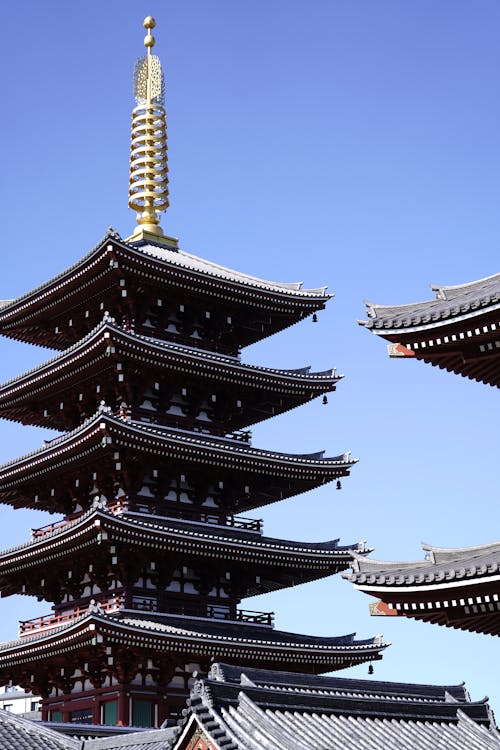
Five-Story Pagoda: Standing approximately 53m tall, the current pagoda was rebuilt in 1973. The top floor enshrines Buddhist relics (shari) brought from Sri Lanka.
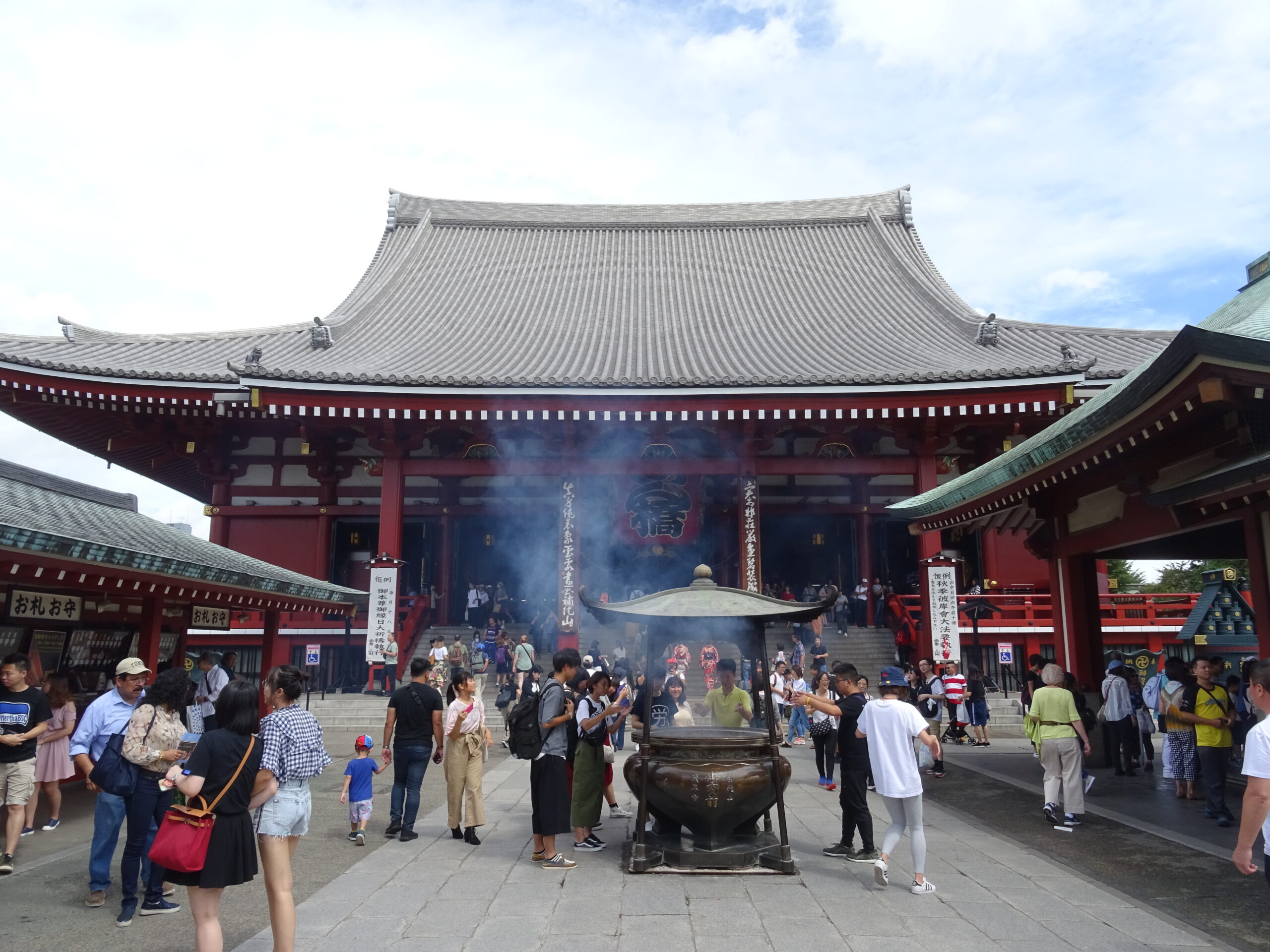
Main Hall (Hondo): The central hall enshrining the Sacred Kannon. Don’t miss the spectacular ceiling paintings — “Dragon” by Kawabata Ryushi and “Celestial Beings” by Domoto Insho.
Nighttime Illumination
From sunset until 11:00 PM, the Main Hall, Five-Story Pagoda, and Hozomon are beautifully illuminated. The atmosphere transforms completely from daytime bustle to ethereal tranquility — a must-see experience.
Spiritual Benefits
The Sacred Kannon (Avalokitesvara), Sensoji’s principal deity, is described as “the Buddha who removes suffering, hears prayers, and grants peace.” Visitors seek these blessings:
Protection from Evil & Good Fortune: The Kannon’s compassion offers comprehensive protection and improved luck. The Setsubun bean-throwing ceremony in February is especially popular for purification.
Fulfillment of Wishes: From exam success to career advancement, many visit during life transitions to pray for their aspirations.
Business Prosperity: As Asakusa has been a commercial hub since the Edo period, Sensoji has long been revered by merchants and business owners.
Family Safety & Good Health: Year-round, visitors pray for the well-being and health of their families.
Incense Smoke: The jokoro (incense burner) before the Main Hall produces smoke that visitors waft over their bodies. Tradition holds that directing the smoke toward an ailing body part promotes healing.
Best Time to Visit
Spring (March–May) ★★★★★
The best season. Cherry blossoms at nearby Sumida Park (late March to early April) paired with Sensoji create a classic Tokyo spring scene. The Sanja Matsuri in May — Asakusa’s largest festival — features approximately 100 neighborhood mikoshi (portable shrines) and 3 main shrine mikoshi parading through the streets.
Summer (June–August) ★★★★☆
The Hozuki-ichi (Ground Cherry Market) on July 9–10 is the highlight. Visiting on these days is said to earn the merit of 46,000 days of worship (approximately 126 years). The temple grounds fill with vendors selling decorative ground cherry plants. Visit early morning or evening to avoid summer heat.
Autumn (September–November) ★★★★☆
Pleasant weather makes this an ideal walking season. The Golden Dragon Dance in October is spectacular. The Tori-no-Ichi fair in November at nearby Otori Shrine is a beloved autumn tradition.
Winter (December–February) ★★★★☆
The Hagoita-Ichi (Battledore Market, December 17–19) showcases ornate decorative paddles — a quintessential year-end tradition. New Year’s hatsumode draws approximately 2.8 million visitors. The Setsubun ceremony in February features bean-throwing by celebrities.
Best Times of Day
Early Morning (6:00–7:00 AM): The grounds are nearly deserted. You can photograph the shutter art on Nakamise shops and enjoy serene silence.
Nighttime (Sunset–11:00 PM): The illuminated temple complex is breathtaking. Nakamise is closed, but the dramatic lighting and sparse crowds create an unforgettable atmosphere.
Weekday Mornings (9:00–11:00 AM): Nakamise is open and significantly less crowded than weekends.
Visitor Guide
Recommended Route
1. Pass through Kaminarimon with a bow. Notice the Wind and Thunder Gods
2. Stroll Nakamise-dori. Sample ningyo-yaki and kaminari-okoshi
3. Admire Hozomon and the Nio guardians. Check the giant straw sandal on the back
4. Waft incense smoke from the jokoro over your body
5. Pray at the Main Hall. Look up at the ceiling paintings
6. View the Five-Story Pagoda
7. Get your goshuin at Yogodo Hall (8:00 AM–4:30 PM)
Goshuin (Temple Stamps)
- Types: Sacred Kannon (main deity), Daikokuten (Asakusa Seven Lucky Gods)
- Location: Yogodo Hall, west side of the Main Hall
- Hours: 8:00 AM – 4:30 PM (special hours during New Year and Shiman-Rokusen-Nichi)
- Fee: ¥300 each (confirm current prices on-site)
What to Know
- The grounds are flat and easy to walk, but watch your step during crowded times
- Photography is prohibited inside the Main Hall; outdoor areas are fine
- Food can be purchased along Nakamise, but eating while walking on the temple approach is considered impolite — find a spot to stop and eat
- Sensoji’s omikuji (fortune slips) are famous for having a high rate of “kyo” (bad luck) — approximately 30%. Don’t worry: “kyo” means things can only improve from here
Basic Information
Access
- Address: 2-3-1 Asakusa, Taito-ku, Tokyo 111-0032
- Train: Tokyo Metro Ginza Line “Asakusa Station” Exit 1 (5-minute walk), Toei Asakusa Line “Asakusa Station” Exit A4 (5-minute walk), Tobu Skytree Line “Asakusa Station” (5-minute walk), Tsukuba Express “Asakusa Station” (5-minute walk)
- Bus: Toei Bus, Keisei Town Bus, and Taito-ku circular bus “Megurin” all serve the area
- By Car: From Shuto Expressway Route 6 (Mukojima Line), exit toward “Komagata.” No dedicated temple parking
- Parking: Use nearby paid parking lots (Taito-ku Kaminarimon Underground Parking is closed as of April 2026)
Hours & Fees
- Main Hall: April–September 6:00 AM–5:00 PM; October–March 6:30 AM–5:00 PM
- Admission: Free
- Illumination: Sunset – 11:00 PM
- Suggested Duration: 30 minutes for prayer only; 1.5–2 hours including Nakamise
- Official Website: https://www.senso-ji.jp/
- Phone: 03-3842-0181
Accessibility
- Elevator available on the left side of the Main Hall
- Temple grounds are flat and navigable by wheelchair and stroller
- Accessible restrooms: beside Hozomon (right side) and behind the Main Hall
Nearby Attractions & Dining
Nearby Spots
Hanayashiki (3-minute walk) — Japan’s oldest amusement park. Its retro charm makes it a hit with families and nostalgia seekers.
Tokyo Skytree (20-minute walk / 10-minute bus) — The 634m tower across the Sumida River. The view of Skytree from Asakusa is equally iconic.
Sumida Park (5-minute walk) — A riverside cherry blossom spot with Skytree views. Also the venue for the Sumida River Fireworks Festival in July.
Asakusa Culture Tourist Information Center (opposite Kaminarimon) — Designed by Kengo Kuma, this 8-story building features a free observation terrace on the top floor with panoramic views of Sensoji and Nakamise.
Food & Souvenirs
Nakamise Classics: Ningyo-yaki (Kimuraya Honten), kaminari-okoshi (Tokiwado), hand-grilled senbei, age-manju (fried buns), and kibi-dango (millet dumplings)
Asakusa Dining: Tempura (Daikokuya), sukiyaki (Imahan), yoshoku Western-style cuisine (Yoshikami), and monjayaki. Expect to spend ¥1,500–3,000 for lunch, ¥3,000–8,000 for dinner.
Souvenirs: Folding fans, traditional umbrellas, tenugui (hand towels), and Edo kiriko cut glass — available throughout Nakamise and surrounding shops.
Suggested Itineraries
Half-Day Course (About 3 hours)
10:00 AM Asakusa Station → 10:05 Kaminarimon & Nakamise (30 min) → 10:35 Main Hall & Pagoda (30 min) → 11:05 Goshuin at Yogodo (15 min) → 11:20 Nakamise food & souvenirs (40 min) → 12:00 Lunch in Asakusa
Full-Day Course (About 6 hours)
9:00 AM Asakusa Station → 9:05 Sensoji & Nakamise (90 min) → 10:35 Tourist Info Center observation deck (20 min) → 11:00 Hanayashiki or neighborhood stroll (60 min) → 12:00 Lunch (60 min) → 1:00 PM Sumida River walk → 1:20 Tokyo Skytree (120 min) → 3:20 PM Return
Visitor Reviews
“I went at 6 AM and had the entire grounds almost to myself. The ukiyo-e paintings on the Nakamise shutters were a wonderful surprise — a completely different Sensoji from the daytime crowds.” (Google Maps review)
“I drew ‘kyo’ (bad luck) on my omikuji, but a temple attendant told me: ‘Kyo means things can only get better from here.’ That perspective made my day.” (Google Maps review)
“The nighttime illumination is absolutely stunning. The Five-Story Pagoda and Main Hall glowing golden against the dark sky — it’s a completely different world from the bustling daytime atmosphere.” (Google Maps review)
FAQ
Q: Are Sensoji Temple and Asakusa Shrine the same place?
A: No, they are separate institutions. Sensoji is a Buddhist temple; Asakusa Shrine is a Shinto shrine located on Sensoji’s east side. The famous Sanja Matsuri is actually Asakusa Shrine’s festival.
Q: Is there an admission fee?
A: No — the temple grounds and worship are completely free. Goshuin stamps are ¥300 each.
Q: Is it true that omikuji fortune slips often show bad luck?
A: Yes — approximately 30% of Sensoji’s omikuji show “kyo” (bad luck), higher than most temples. However, the underlying message is “follow Kannon’s teachings and fortune will turn.” Tie an unfavorable fortune to the designated racks on the grounds.
Q: Are pets allowed?
A: There is no explicit pet policy on the official website. The grounds are open-air, but for temple hall access, contact the temple office (03-3842-0181) beforehand for guidance.
Q: Is the temple wheelchair accessible?
A: Yes. The grounds are flat, and an elevator is available on the left side of the Main Hall. Accessible restrooms are located near Hozomon and behind the Main Hall.
Summary
Sensoji, founded in 628 AD, is Tokyo’s oldest temple — a place where the monumental Kaminarimon lantern, the lively Nakamise shopping street, the majestic Main Hall, and the towering Five-Story Pagoda all converge within a compact, walkable precinct.
With blessings spanning protection, good fortune, wish fulfillment, and business prosperity, plus the beloved healing smoke of the jokoro incense burner, Sensoji offers spiritual experiences for all. Year-round festivals — Sanja Matsuri, Hozuki-ichi, Hagoita-Ichi — ensure there’s always something to celebrate.
Visit at dawn for peaceful solitude, during the day for Nakamise’s energy, or at night for ethereal illuminations. Just 5 minutes from Asakusa Station with free admission, Sensoji is an essential Tokyo experience that rewards every visit.
—
We hope this guide helps you plan a wonderful visit to Sensoji Temple.
*Information in this article is current as of April 2026. Please check the official website for the latest details before your visit.*
—
Discover Your Ideal Power Spot
Japan is home to countless spiritual places, each with unique energy. Want to find the power spot that resonates best with you personally? Try our free compatibility diagnosis — it takes just 3 minutes.
あなたに最適なパワースポットを知りたい方へ