A 15-minute walk from JR Hofu Station brings you to the stone steps of Japan’s very first Tenmangu shrine. Founded in 904 AD, Hofu Tenmangu was established to honor Sugawara no Michizane — the deified “God of Learning” — making it older than both Kitano Tenmangu in Kyoto (947) and Dazaifu Tenmangu in Fukuoka (919). As one of Japan’s Three Great Tenjin Shrines, it has welcomed students, scholars, and travelers for over 1,100 years.
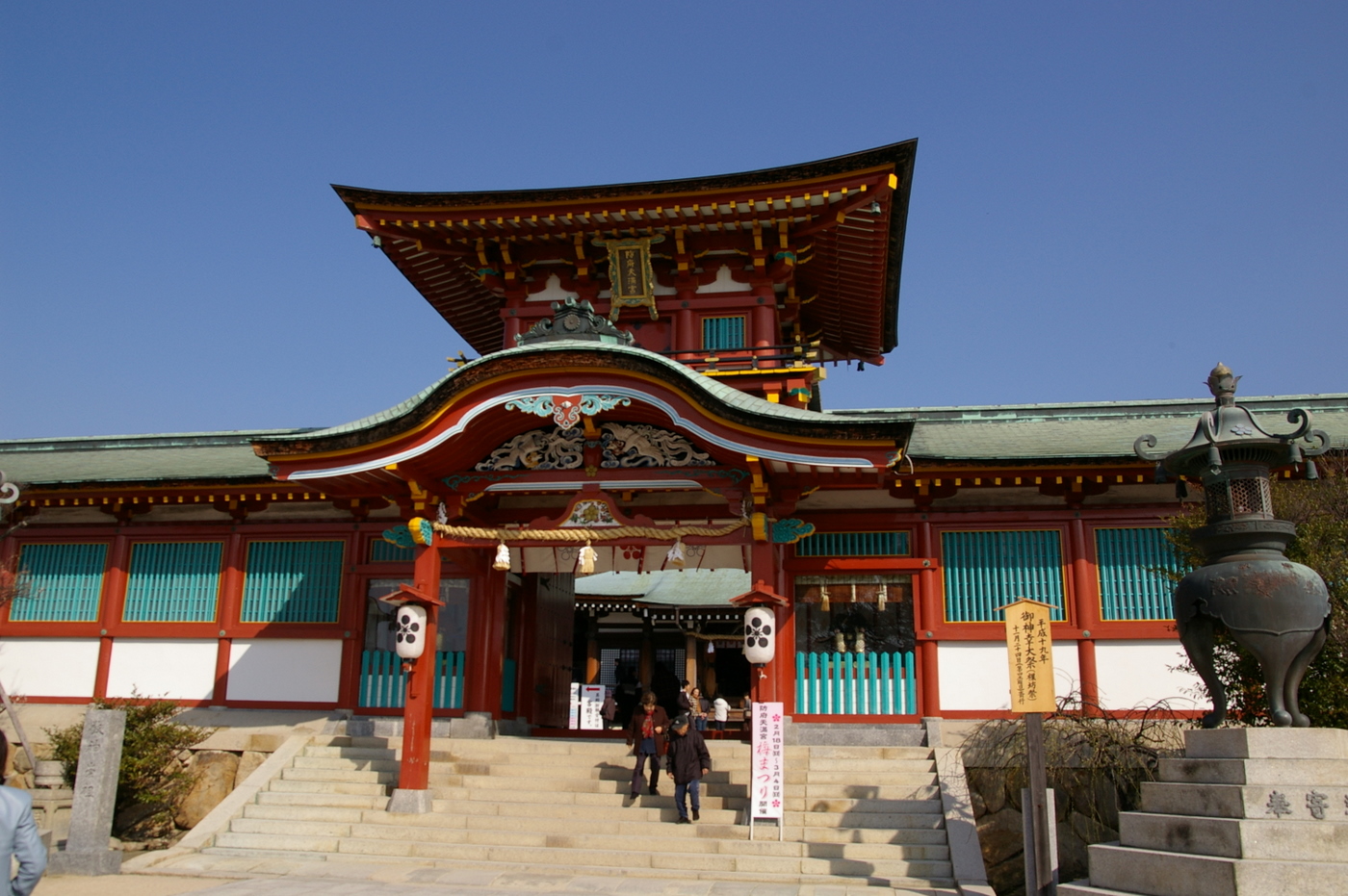
Beyond its academic prestige, Hofu Tenmangu enchants with its vermillion tower gate (a Registered Tangible Cultural Property), the panoramic Shunpuro pavilion overlooking the city, and approximately 1,100 plum trees that transform the grounds each February. From the lively Night Festival in November to the charming LOVE Shrine monument, this compact yet richly layered power spot offers far more than exam prayers alone.
What Makes This Spot Special
Japan’s Oldest Tenmangu — “Fuso Kanbyo Saisho”
Hofu Tenmangu was founded in 904 AD (Engi 4), just one year after Sugawara no Michizane passed away in Dazaifu. According to shrine tradition, when Michizane was exiled from Kyoto to Dazaifu in 901, he stopped at Katsuma-no-ura in Suo Province (present-day Hofu) and expressed his wish to stay in this land. On the day of his death in 903, miraculous light and auspicious clouds appeared over Hofu, and the following year a shrine was built at Matsuzaki.
The shrine proudly bears the title “Fuso Kanbyo Saisho” — meaning “the first shrine dedicated to Sugawara no Michizane in Japan.” This predates both Kitano Tenmangu (947) and the formal shrine buildings at Dazaifu Tenmangu (919).
Registered Cultural Properties
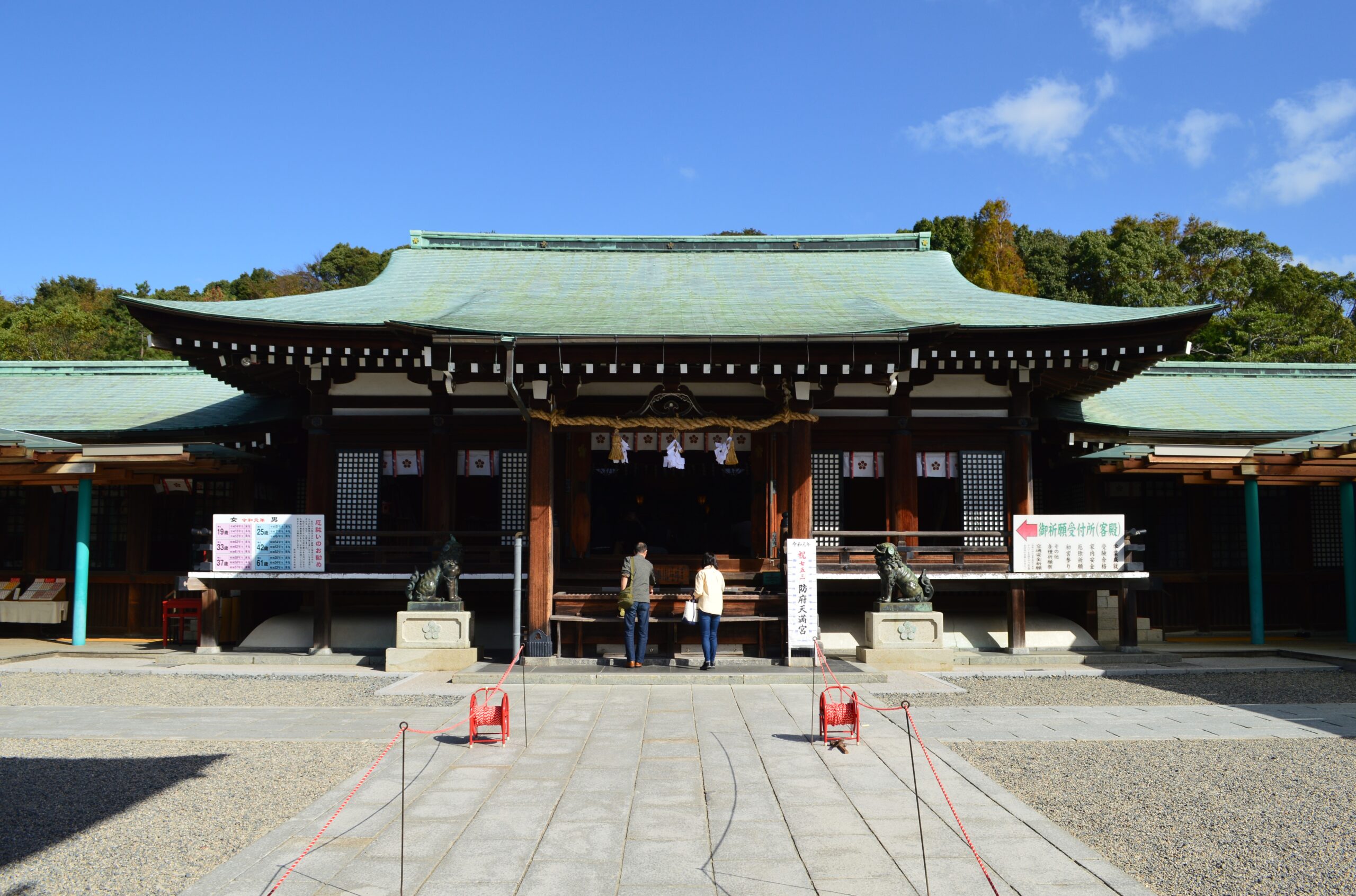
The shrine grounds contain several architectural treasures:
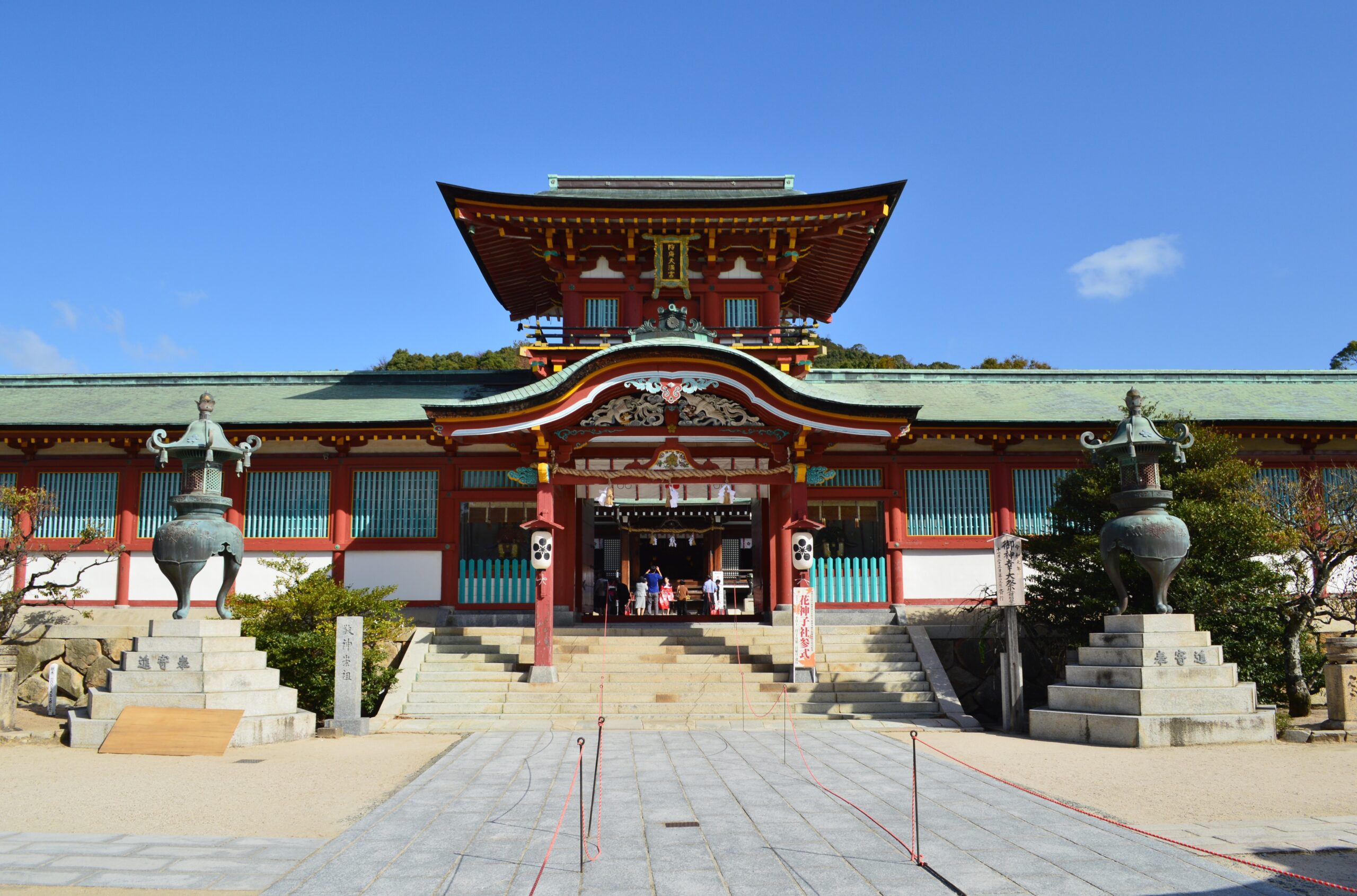
Tower Gate (Roumon): The striking vermillion two-story gate is a Registered Tangible Cultural Property. The contrast between the red lacquer and turquoise-green panels makes it one of the most photogenic shrine gates in western Japan. Bronze lanterns flanking the entrance add to its grandeur.
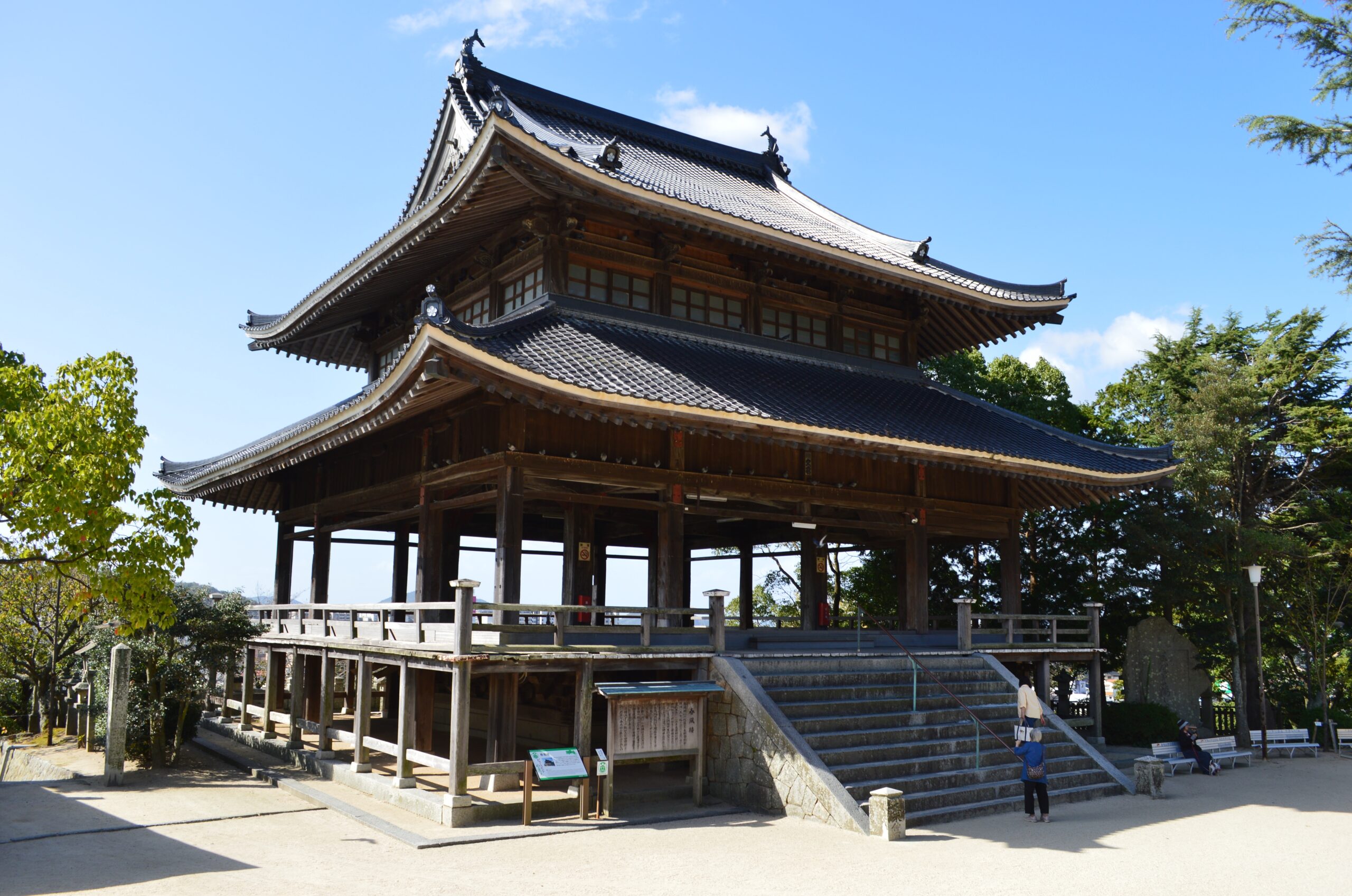
Shunpuro Pavilion: Also a Registered Tangible Cultural Property, this elevated pavilion offers sweeping views of Hofu city and the Seto Inland Sea. Originally planned as a five-story pagoda, it was redesigned as a two-story pavilion due to structural considerations — a fascinating architectural footnote.
Stone Torii: Built in 1629 (Kan’ei 6), this is one of the oldest dated torii gates in Yamaguchi Prefecture.
A Plum Paradise and Year-Round Festivals
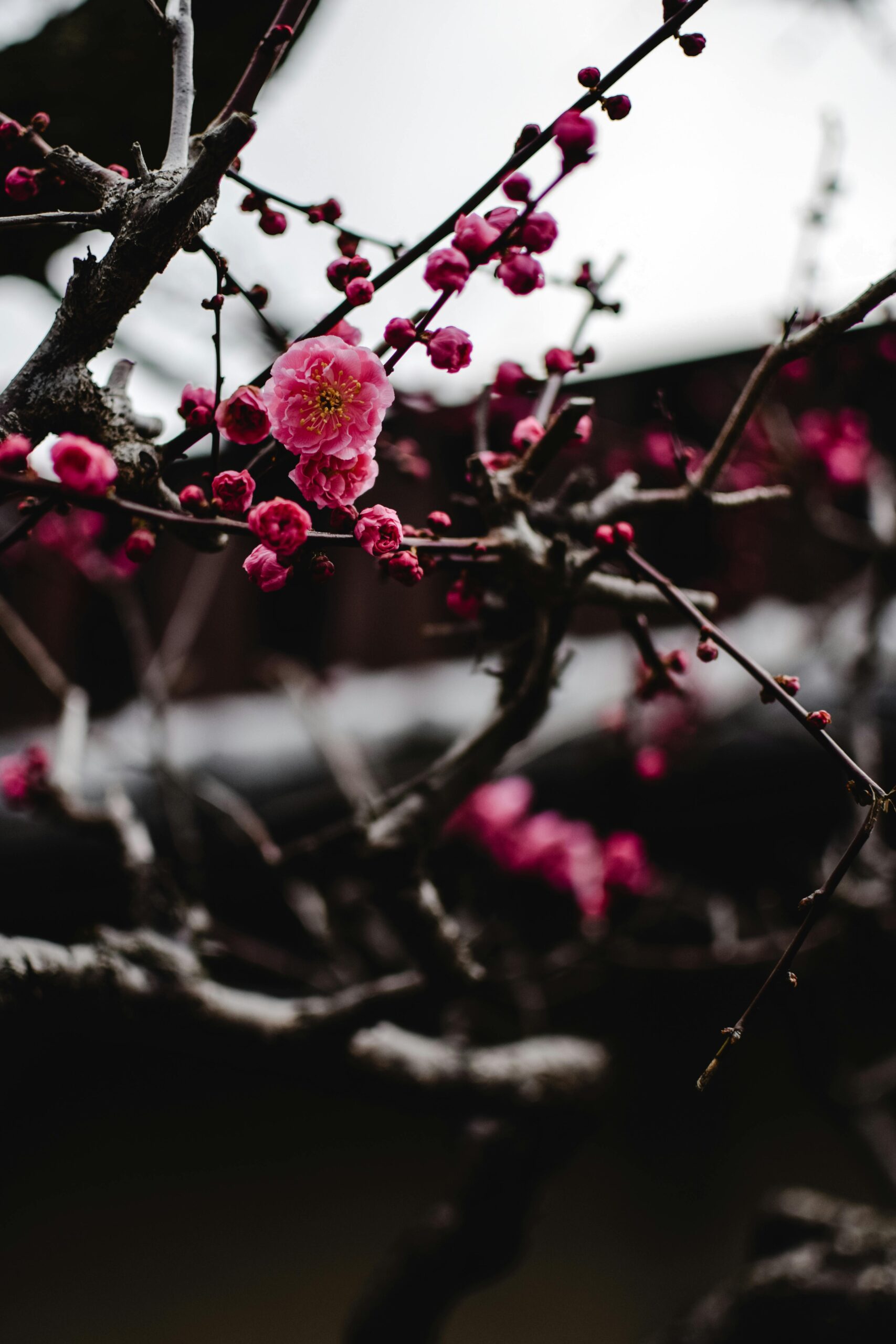
With approximately 1,100 plum trees of 16 varieties, the shrine is one of western Japan’s premier plum blossom destinations. The annual Plum Festival (mid-February to early March) fills the grounds with sweet fragrance — a fitting tribute to Michizane, who famously wrote: “When the east wind blows, send me your fragrance, plum blossoms.”
Throughout the year, the shrine hosts an impressive calendar of events: the Hana Kairo flower corridor in spring, the Gotanjinsai birthday festival and fireworks in summer, and the dramatic Goshinkosai (Hadakabo Festival) in late November, where approximately 5,000 men carry portable shrines through the streets.
Spiritual Benefits
As the shrine of Sugawara no Michizane — Japan’s most renowned scholar-turned-deity — Hofu Tenmangu offers a wide range of blessings:
Academic Success & Exam Prayers: The shrine’s primary draw. During exam season (January–March), students from across Japan come for合格祈願 (exam success prayers). Uniquely, Hofu Tenmangu offers free “passing headbands” (goukaku hachimaki) — a heartwarming tradition of encouragement.
Good Fortune & Protection: As one of the Three Great Tenjin Shrines, its prestige in warding off misfortune and providing directional protection is widely respected.
Love & Family Bonds: The LOVE Shrine monument, designed by renowned graphic designer Asaba Katsumi and dedicated in 2007, has become a popular spot for prayers of love, bonds, and family harmony. The “Kizuna-mamori” (bond charm) is a favorite souvenir.
Business Prosperity: Michizane is also venerated as a guardian of honesty and agriculture, making the shrine popular with business owners seeking prosperity.
Best Time to Visit
Spring (February–May) ★★★★★
The best season. The Plum Festival (mid-February to early March) showcases approximately 1,100 trees in bloom. Cherry blossoms follow in late March at Tenjinyama Park (about 450 trees). The Hana Kairo flower corridor (late April to early May) features the grand stone steps decorated with flowers and evening illuminations.
Summer (June–August) ★★★★☆
The Gotanjinsai festival (August 3-5) celebrates Michizane’s birthday with traditional ceremonies and a grand fireworks display on August 5 starting at 8:30 PM. Visit early morning or evening to avoid the heat.
Autumn (September–November) ★★★★☆
Beautiful autumn foliage season. The Goshinkosai (Hadakabo Festival) in late November is one of western Japan’s most dramatic festivals, with approximately 5,000 participants. The surrounding area gets very crowded during this event.
Winter (December–January) ★★★☆☆
New Year’s sees local crowds for hatsumode. January to February brings exam-season visitors for academic prayers. Weekdays offer a peaceful experience.
Best Times of Day
Early Morning (6:00–8:00 AM): The grounds are nearly empty. Perfect for photography of the tower gate and shrine buildings.
Morning (9:00 AM–Noon): Prayer reception opens at 8:30. Best time for goshuin with shorter waits.
Late Afternoon (4:00 PM–): Watch the sunset from Shunpuro pavilion as the city below glows in warm light.
Visitor Guide
Recommended Route
1. Climb the stone steps (about 58 steps). Turn around midway for city views
2. Pass through the tower gate with a bow. Admire the vermillion two-story structure
3. Purify your hands at the temizusha
4. Pray at the worship hall — two bows, two claps, one bow
5. Rub the sacred ox statue for wisdom (touch the head for intelligence)
6. Visit Shunpuro pavilion for panoramic views of the city and Seto Inland Sea
7. Find the LOVE Shrine monument for love and bond prayers
8. Get your goshuin and omamori at the shrine office (8:30 AM–4:30 PM)
Don’t Miss
- Multiple ox statues throughout the grounds — their surfaces are polished smooth by countless hands
- Look at the wooden framework under Shunpuro — remnants of the original five-story pagoda design
- The Historical Museum houses the “Matsuzaki Tenjin Engi Emaki” picture scroll (admission ¥800)
- During the Plum Festival, tripod photography for extended periods is discouraged
Goshuin (Shrine Stamps)
- Regular: ¥500
- Special Cut-Paper Goshuin: ¥2,000 (limited to 1,125 in 2026)
- Goshinkosai Special: ¥700 (November 28-29 only)
- Hours: 8:30 AM – 4:30 PM
- Original stamp books: Including an ANA collaboration design (¥3,000)
What to Wear & Know
- Wear comfortable walking shoes — the stone steps are fairly steep
- Pets are allowed on the grounds but must be carried inside the corridor. Service animals exempt
- Photography is generally permitted but be respectful during ceremonies
Basic Information
Access
- Address: 14-1 Matsuzaki-cho, Hofu City, Yamaguchi 747-0029
- Nearest Station: JR Sanyo Main Line “Hofu Station” — 15-minute walk
- Bus: From Hofu Station north exit (Tenjinguchi), Platform 2, “Amidaji” bus, get off at “Hofu Tenmangu” (about 5 minutes), then 3-minute walk
- By Car: About 10 minutes from Hofu-Higashi IC or Hofu-Nishi IC on the Sanyo Expressway
- Parking: Tenjinyama Park lot, approximately 500 spaces, free (large buses welcome)
Hours & Fees
- Gate Hours: 6:00 AM – 8:00 PM
- Prayer Reception: 8:30 AM – 4:30 PM
- Admission: Free (Historical Museum: ¥800 adults, free for high school students and younger)
- Tea Room Hosho-an: 9:30 AM – 4:00 PM, ¥800 (includes matcha and sweets)
- Suggested Duration: 30 minutes prayer only; about 1.5 hours including full grounds
- Official Website: https://www.hofutenmangu.com/
- Phone: 0835-23-7700
Nearby Attractions & Dining
Nearby Spots
Umeterasu — Hofu City Community Station (at the approach) — Tourist information, local products, bicycle rental, and café. The perfect starting point for exploring Hofu.
Suo Kokubunji Temple (15-minute walk) — An 8th-century temple founded by Emperor Shomu. The main hall houses remarkable Heian-period Buddhist statues — a must for art and history enthusiasts.
Mori Clan Garden & Museum (15 minutes by car) — The former residence and garden of the Choshu domain lords. The nationally designated scenic garden is beautiful in all seasons.
Local Cuisine
Koubai-den (on shrine grounds) — The shrine’s own restaurant and souvenir shop. Light meals featuring local ingredients, perfect for a post-prayer rest.
Hofu Fugu (throughout city) — Hofu boasts Japan’s largest catch of natural fugu (pufferfish). Winter-only but remarkably affordable compared to Tokyo prices. Budget: ¥3,000–5,000.
Sweet Home (inside Umeterasu) — A café serving sweets and drinks made with local ingredients.
Souvenirs
- Sakatare-iwa Okoshi: A crispy Hofu confection and local specialty
- Nama Uiro: Yamaguchi Prefecture’s signature mochi-like sweet
- Goukaku-mamori: The exam success charm — the quintessential Tenmangu souvenir
- Kizuna-mamori: Bond charm from the LOVE Shrine — popular for couples and families
Available at Umeterasu and Koubai-den on the shrine grounds.
Suggested Itineraries
Half-Day Course (About 3 hours)
10:00 AM Arrive at Hofu Station → 10:15 Walk to Hofu Tenmangu (15 min) → 10:30 Shrine visit, grounds, Shunpuro (60 min) → 11:30 Rest at Koubai-den (20 min) → 12:00 Lunch & souvenirs at Umeterasu (40 min) → 12:40 Return to station
Full-Day Course (About 5 hours)
9:30 AM Arrive at Hofu Station → 9:45 Hofu Tenmangu & Historical Museum (90 min) → 11:15 Lunch at Umeterasu (50 min) → 12:05 Suo Kokubunji Temple (40 min) → 12:45 Mori Clan Garden & Museum (90 min) → 2:15 PM Return to station
Visitor Reviews
Visitors to Hofu Tenmangu consistently highlight these experiences:
“The prestige of being Japan’s oldest Tenmangu is palpable. The vermillion tower gate against the blue sky is stunning. The view from Shunpuro pavilion was an unexpected highlight — you can see the entire city.” (Google Maps review)
“Visited before my university entrance exams. I was touched that they give out free passing headbands. I rubbed the ox statue’s head and ended up passing my first-choice school.” (Google Maps review)
“Came during the Plum Festival. About 1,100 plum trees perfuming the entire grounds made for a magical experience. The stone steps are a bit challenging, but absolutely worth the climb.” (Google Maps review)
FAQ
Q: How long does a visit take?
A: About 30 minutes for prayer only. Allow approximately 1.5 hours to explore the full grounds including Shunpuro pavilion.
Q: Is the shrine wheelchair accessible?
A: The main stone steps (58 steps) are not wheelchair-friendly, but a relatively flat route is available from the Tenjinyama Park parking lot side. Accessible restrooms are available at the shrine office and parking lot. Call ahead for detailed route guidance.
Q: Are pets allowed?
A: Yes, pets are welcome on the grounds. However, they must be carried (not walked on leash) inside the corridor area. Service animals are exempt from this rule.
Q: Can I get goshuin (shrine stamps)?
A: Yes. Regular stamps are ¥500, with seasonal limited editions available. Hours: 8:30 AM – 4:30 PM.
Q: Is parking available?
A: Yes — approximately 500 free spaces at the Tenjinyama Park lot. Usually ample, but fills up during the Plum Festival, New Year, and major festivals. Public transport recommended during busy periods.
Summary
Hofu Tenmangu stands as Japan’s oldest Tenmangu shrine, carrying 1,100 years of prayers to the God of Learning. Its vermillion tower gate, the panoramic Shunpuro pavilion, 1,100 plum trees, and the modern LOVE Shrine monument create a shrine experience that bridges ancient tradition and contemporary spirituality.
Beyond academic success, the shrine offers blessings for good fortune, love, family bonds, and business prosperity. With year-round festivals — from the fragrant Plum Festival to the dramatic Hadakabo Festival — there’s always a reason to visit. A major milestone approaches in spring 2027 with the 1,125th Memorial Grand Festival.
Just 15 minutes on foot from JR Hofu Station with 500 free parking spaces, Hofu Tenmangu is easily accessible and richly rewarding. Whether you’re seeking exam success or simply a deeply cultural experience in western Japan, this is a power spot that delivers.
—
We hope this guide helps you plan a wonderful visit to Hofu Tenmangu.
*Information in this article is current as of April 2026. Please check the official website for the latest details before your visit.*
—
Discover Your Ideal Power Spot
Japan is home to countless spiritual places, each with unique energy. Want to find the power spot that resonates best with you personally? Try our free compatibility diagnosis — it takes just 3 minutes.
あなたに最適なパワースポットを知りたい方へ