A 5-minute walk from the Hijiribashi Exit of JR Ochanomizu Station, down a gentle slope and through the grand hinoki-cypress Zuishinmon gate, you’ll find an atmosphere of quiet dignity that seems impossible just steps from Tokyo’s bustling office district. This is Kanda Shrine — officially Kanda Jinja, commonly known as Kanda Myojin — a power spot with approximately 1,300 years of history since its founding in 730 AD.
During the Edo period, the shrine served as “Edo Sochinju” (Guardian Shrine of All Edo), receiving deep reverence from the Tokugawa shogunate. Today it continues to protect an expansive parish spanning Kanda, Nihonbashi, Akihabara, Marunouchi, and even the Toyosu Fish Market. Enshrining three deities for business prosperity, matchmaking, and protection from evil, Kanda Myojin draws massive crowds during the first business days of January — a guardian deity for working professionals in every sense.
What Makes This Spot Special
Three Deities — Business, Love, and Protection in One Visit
Kanda Myojin enshrines three deities, making it possible to receive multifaceted spiritual blessings at a single shrine.
The first deity, Okuninushi-no-Mikoto (Daikoku-sama), is the god of matchmaking and marital harmony. The second, Sukunahikona-no-Mikoto (Ebisu-sama), is the god of business prosperity, medicine, and good fortune — drawing devotion from individual entrepreneurs to major corporations alike. The third, Taira no Masakado, is a guardian deity of protection from evil and victory. He is the one to turn to when facing life’s greatest challenges — career changes, starting a business, or critical business deals.
Tokugawa Ieyasu’s Shrine of Victory
In 1600, Tokugawa Ieyasu prayed for victory at Kanda Myojin before the decisive Battle of Sekigahara — and won. Afterward, the shrine was relocated to its current position guarding the kimon (northeastern “demon gate”) of Edo Castle, elevating its status as a protector of the shogunate’s prosperity. This history of “victory” remains an inspiring story for modern business professionals.
A Hall That Survived Earthquake and Air Raids
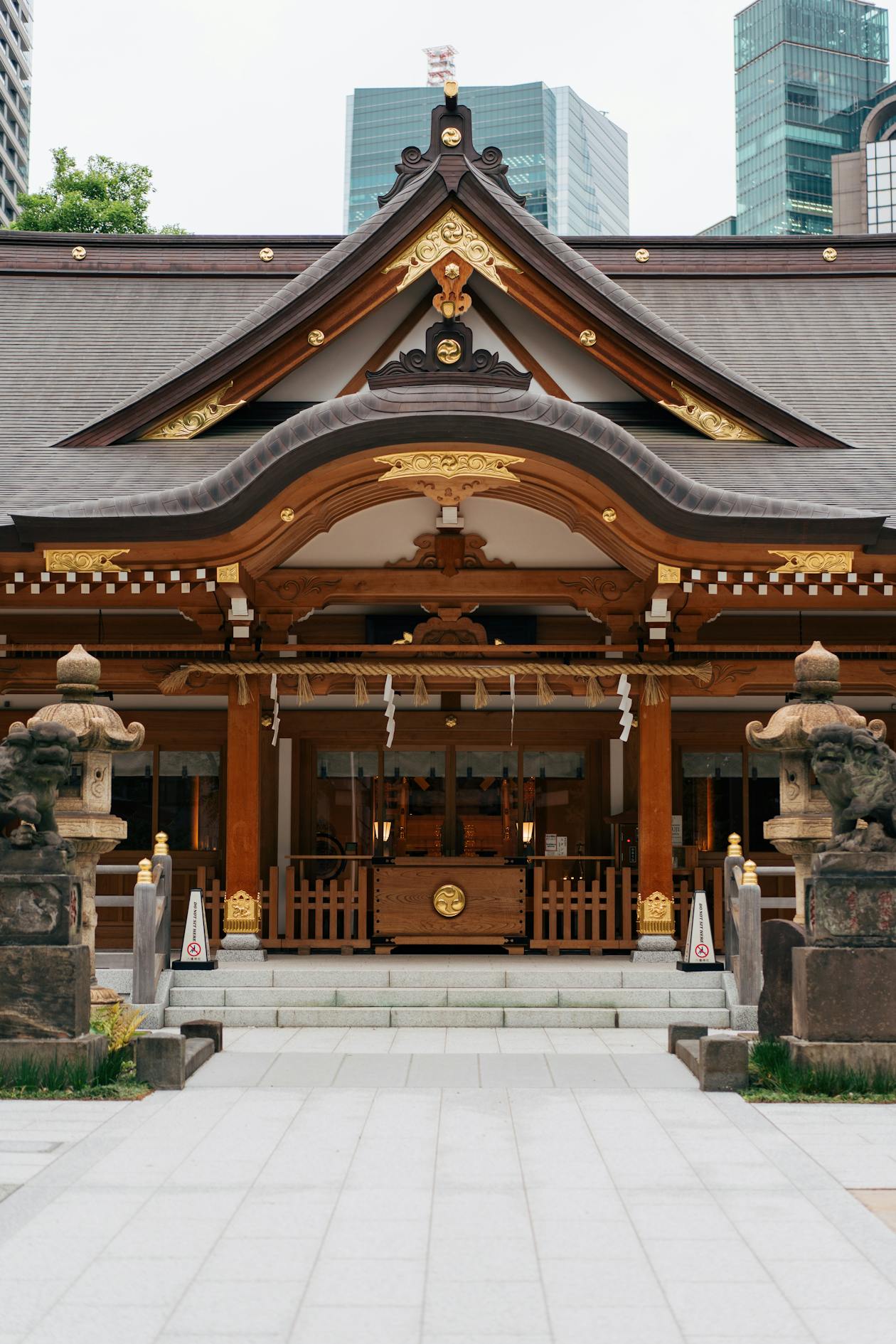
The original hall was destroyed in the Great Kanto Earthquake of 1923 but was rebuilt in 1934 using reinforced concrete with full vermillion lacquer finishing. This robust construction allowed it to survive the Tokyo Air Raids of 1945, making it a precious structure that preserves Tokyo’s living memory. Designated a National Registered Tangible Cultural Property, the hall is a masterpiece of gongen-zukuri architecture where tradition and modern engineering unite beautifully.
Spiritual Benefits
Business Prosperity — Blessing of Sukunahikona-no-Mikoto. During New Year, companies line up for corporate prayers. Around January 5th, the queue for formal prayers stretches impressively. Individual prayer fees start from JPY 10,000.
Matchmaking & Marital Harmony — Blessing of Okuninushi-no-Mikoto. This extends beyond romance to encompass all beneficial connections — business partners, colleagues, and family harmony.
Protection from Evil & Victory — Blessing of Taira no Masakado. Many visit before exams, career changes, business launches, or important negotiations.
IT Safety Protection — A distinctly modern charm unique to Kanda Myojin, whose parish includes Akihabara. Popular among IT companies and tech professionals, the shrine offers special amulets for the safety of computers and data.
Best Time to Visit
Spring (March–May) ★★★★★
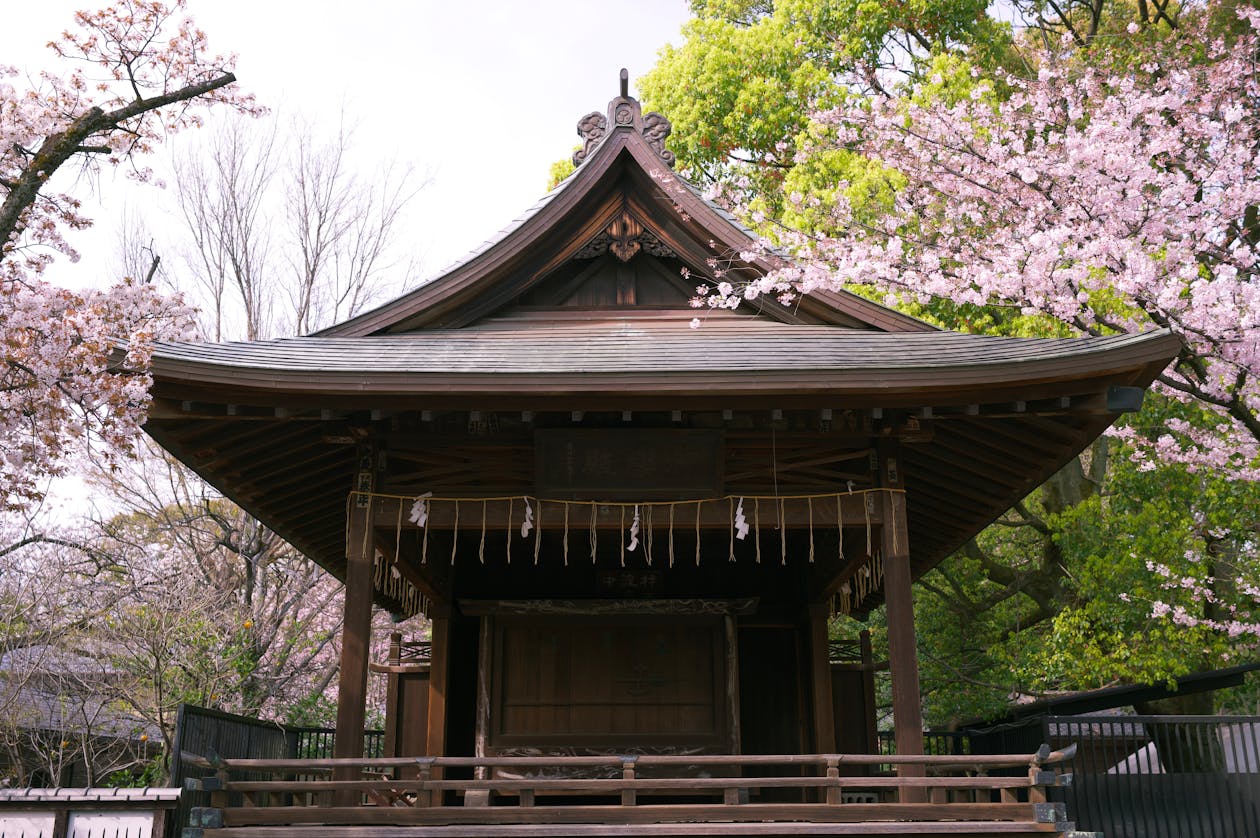
The best season. Plum blossoms (late February–early March) and cherry blossoms (late March–early April) grace the grounds, making it perfect for leisurely strolling and photography.
In May, the shrine’s grandest event — the Kanda Matsuri — takes place. Counted among Japan’s Three Greatest Festivals and Edo’s Three Greatest Festivals, the main festival occurs in odd-numbered years, filling the entire neighborhood with electrifying energy. The next major main festival is scheduled for May 2027. For those wanting to experience the mikoshi processions and attached festivals, the timing is ideal — though crowds are intense, so those seeking a quiet visit should avoid the festival period.
Summer (June–August) ★★★☆☆
The Tanabata Festival on July 7th and summer cooling events provide entertainment. The grounds take on a different atmosphere in the evening hours.
Autumn (September–November) ★★★★☆
Pleasant weather perfect for strolling. The Shichi-Go-San season (November) brings families in festive dress. The Niiname-sai (Autumn Grand Festival) on November 25th is also worth attending.
Winter (December–February) ★★★★☆
Famous as a hatsumode (New Year worship) destination. From New Year’s Day through the first business days (around January 10th), individual and corporate worshippers overlap, creating significant wait times during peak hours. The Daikoku Festival in mid-January is another winter highlight.
Best Time of Day
Weekday mornings (9:00–11:00 AM): The charm office and prayer reception open during this time, and crowds are relatively thin. You can explore the grounds’ highlights at a relaxed pace.
Evening: The grounds are open 24 hours, so you can quietly enjoy the illuminated Zuishinmon gate and main hall after dark.
Visitor’s Guide
Recommended Route (30 min–1.5 hours)
1. Zuishinmon Gate — Bow upon entering. Take time to admire the Four Guardian Beasts and “White Rabbit of Inaba” carvings on this all-hinoki-cypress gate
2. Daikoku-sama Statue — Pay respects at this imposing stone statue standing 6.6m tall and weighing approximately 30 tonnes
3. Main Hall — Perform the standard two bows, two claps, one bow worship. A magnificent gongen-zukuri structure and National Registered Tangible Cultural Property
4. Ebisu-sama Statue — A work by Miyata Ryohei, who also served as president of Tokyo University of the Arts
5. EDOCCO Cultural Exchange Hall — Rest, browse souvenirs, and enjoy the cafe
6. Museum — Learn about the history of the Kanda Matsuri (adults JPY 500, students JPY 300, 9:00 AM–4:00 PM)
Goshuin (Shrine Seal)
- Type: Standard goshuin
- Hours: Charm office (9:00 AM–3:45 PM)
- Fee: JPY 500 (pre-written)
- Limited editions: Occasionally available during festivals and special events
Practical Tips
- The grounds are relatively flat with ramp access to the worship hall. Wheelchair and stroller friendly, though there are slopes from the nearest stations — the route from Akihabara Station is comparatively easier
- Photography is welcome on the grounds; not permitted inside the main hall. Popular photo spots include the Zuishinmon gate, Daikoku-sama statue, and the main hall
- Pets may be allowed on the grounds depending on events and crowd conditions — confirm in advance. Not permitted inside the main hall
- Rainy days are no problem thanks to the Museum and EDOCCO cultural exchange hall, which offer indoor activities to complement your visit
Essential Information
Access
- Address: 2-16-2 Sotokanda, Chiyoda-ku, Tokyo
- JR Chuo/Sobu Line Ochanomizu Station (Hijiribashi Exit) — 5-minute walk
- JR Yamanote/Keihin-Tohoku Line Akihabara Station (Electric Town Exit) — 7-minute walk
- Tokyo Metro Marunouchi Line Ochanomizu Station — 5-minute walk
- Tokyo Metro Chiyoda Line Shin-Ochanomizu Station — 5-minute walk
- Tokyo Metro Ginza Line Suehirocho Station — 5-minute walk
Visiting Details
- Admission: Free (grounds open 24 hours)
- Charm office & prayer reception: 9:00 AM–3:45 PM
- Individual prayer: From JPY 10,000
- Corporate prayer: From JPY 30,000
- Museum: Adults JPY 500, Students JPY 300, Junior high school and under free (9:00 AM–4:00 PM, last entry 3:45 PM)
Parking
A small visitors’ parking area is available on the grounds. During busy periods, Akihabara UDX Parking (800 spaces, 24 hours) is convenient.
Area Guide
Dining & Rest Stops
Amanoya — A beloved traditional amazake (sweet rice drink) shop right outside the shrine’s torii gate. Operating since the Edo period, it serves warm amazake in winter and chilled versions in summer — the perfect post-worship refreshment.
EDOCCO CAFE MASUMASU — Located inside the cultural exchange hall on the shrine grounds. Since you can stop in immediately after worship, it’s especially convenient on days with poor weather.
Nearby Attractions
Akihabara Electric Town (7-minute walk) — From sacred shrine grounds straight into Tokyo’s vibrant electronics and pop culture district. After praying for IT safety, browsing the latest gadgets is a uniquely Kanda Myojin experience.
Yushima Seido (5-minute walk) — A Confucian temple and center of learning. A quiet atmosphere recommended for history enthusiasts.
Nikolai Cathedral (10-minute walk) — A magnificent Byzantine-style cathedral designated as an Important Cultural Property.
Suggested Half-Day Itinerary (approx. 3 hours)
JR Ochanomizu Station → Kanda Myojin worship (1 hour) → Amazake break at Amanoya (20 min) → Stroll through Yushima Seido (30 min) → Lunch and exploration in Akihabara (1 hour)
Visitor Reviews
Google Maps reviews frequently mention these impressions:
> “The atmosphere is remarkably dignified for being in central Tokyo. The air changes the moment you pass through the torii gate.”
> “It’s walking distance from Akihabara, yet has this incredible sense of sacred space.”
> “I rely on this shrine for business luck. I visit every year for the first business day of the New Year.”
(From Google Maps reviews)
Some visitors note that “New Year and the Kanda Matsuri get extremely crowded” and “the slope from Ochanomizu Station is steeper than expected,” so choosing your timing and wearing comfortable shoes is recommended.
Frequently Asked Questions
Q. How long does a visit take?
A. About 30 minutes for worship alone. Including the grounds, charm office, museum, and EDOCCO, plan for 1–1.5 hours.
Q. Is there parking?
A. A small visitors’ parking area exists but spaces are limited. Akihabara UDX Parking (800 spaces, 24 hours) is a convenient alternative.
Q. How long is the wait for goshuin?
A. Usually quick on weekdays. Expect longer waits during hatsumode, Kanda Matsuri, and summer festival periods. The standard goshuin is pre-written (JPY 500).
Summary
Kanda Myojin is a one-of-a-kind power spot where 1,300 years of history fuse with the living energy of modern Tokyo. From Tokugawa Ieyasu’s victorious prayer before the Battle of Sekigahara, to the main hall that withstood both the Great Kanto Earthquake and the Tokyo Air Raids, to its unique position as parish shrine of Akihabara — Tokyo’s tech and pop culture capital — this shrine concentrates an appeal found nowhere else.
An easily accessible urban power spot where you can pray for business prosperity, matchmaking, and protection all in one visit — consider taking a moment here to quietly reflect on your work and the path ahead.
—
Discover Your Ideal Power Spot
Beyond this spot, Japan is home to countless sacred places with unique spiritual energy. To find which power spot resonates most with you personally, try our free compatibility diagnosis (takes just 3 minutes).
-> Take the Free En-Profile Diagnosis
—
あなたに最適なパワースポットを知りたい方へ