Kashima Jingu in Ibaraki Prefecture is one of Japan’s oldest and most powerful shrines, with a legendary founding date of 660 BCE—predating most of Japan’s recorded history. Dedicated to Takemikazuchi-no-Okami, the god of martial arts, thunder, and swordsmanship, this shrine has served as the spiritual heart of Japan’s warrior traditions for over two millennia.
As one of the Togoku Sansha (Three Great Shrines of Eastern Japan), Kashima Jingu stands alongside Katori Jingu and Ikisu Shrine in a sacred triangle that has drawn pilgrims for centuries. The shrine sits within a 40-hectare sacred forest of ancient cedars and broadleaf trees—one of the largest shrine forests in the Kanto region—creating an atmosphere of profound stillness and power that visitors consistently describe as unlike anything else in eastern Japan.
The Japanese word “Kashima-dachi,” meaning to embark on a new journey or endeavor, originates directly from this shrine. In ancient times, those setting out on important journeys would first pray at Kashima Jingu for safe travels and success. This linguistic connection speaks to the shrine’s deep cultural significance: for centuries, the Japanese people have associated Kashima with the courage and determination needed to begin something new.
Whether you are seeking victory in competition, the resolve to start a new chapter in life, or simply wish to experience one of Japan’s most ancient and atmospheric sacred spaces, Kashima Jingu rewards every visitor with a sense of grounding, purpose, and connection to something far larger than everyday concerns.
Quick Facts
| Detail | Info |
|——–|——|
| Founded | 660 BCE (legendary) |
| Enshrined Deity | Takemikazuchi-no-Okami |
| Famous For | Victory, courage, new beginnings, earthquake protection |
| Hours | 24 hours (grounds); shrine office 8:30 AM–4:30 PM |
| Admission | Free (Treasure Hall: JPY300 adults) |
| Access | 10-min walk from JR Kashima-Jingu Station |
| Phone | 0299-82-1209 |
| Website | https://kashimajingu.jp/ |
Why Kashima Jingu Is Special
The Deity Who Pacified the Land
Takemikazuchi-no-Okami holds a central place in Japanese mythology. According to the Kojiki and Nihon Shoki, Japan’s oldest historical chronicles, the Sun Goddess Amaterasu dispatched Takemikazuchi to pacify the earthly realm before the descent of her grandson Ninigi-no-Mikoto. At the beach of Inasa in Izumo Province, Takemikazuchi confronted the ruling deity Okuninushi and his son Takeminakata in what amounts to Japan’s foundational myth of national unification.
This mythological role elevated Kashima Jingu to extraordinary status. The shrine received imperial patronage from Japan’s earliest periods and was designated a “Jingu”—a title reserved for shrines of the highest rank, shared with only a handful of others including Ise Jingu.
Head Shrine of All Kashima Shrines
Kashima Jingu serves as the head shrine (sohonsha) for all Kashima shrines throughout Japan. The network of branch shrines spread with the samurai class, who revered Takemikazuchi as the ultimate martial deity. This historical connection to the warrior elite gave Kashima its enduring association with victory, discipline, and martial prowess.
“Kashima-dachi” — Embedded in the Japanese Language
The phrase “Kashima-dachi” (literally “Kashima departure”) has become a standard Japanese expression meaning to set out on an important journey or new endeavor. The term dates back to the Nara period (710–794), when travelers heading east would stop at Kashima Jingu to pray for safe passage and success. Over centuries, this practice became so universally recognized that the shrine’s name became synonymous with beginning something new.
This is not mere historical trivia. Japanese people today still use this expression, and the shrine actively embraces this heritage. The “Kashima-dachi” charm is the shrine’s most popular amulet, purchased by students before exams, athletes before competitions, and entrepreneurs launching new ventures.
The Kashima Antlers Connection
Sports fans will recognize the Kashima name from the Kashima Antlers, one of J-League soccer’s most successful clubs. The team takes its name and deer logo from the shrine—sacred deer have been the messengers of Takemikazuchi since ancient times. According to legend, when the deity of Kashima was invited to Nara’s Kasuga Taisha shrine, he rode there on a white deer. This is why deer are considered sacred at both Kashima Jingu and Kasuga Taisha.
A 40-Hectare Sacred Forest
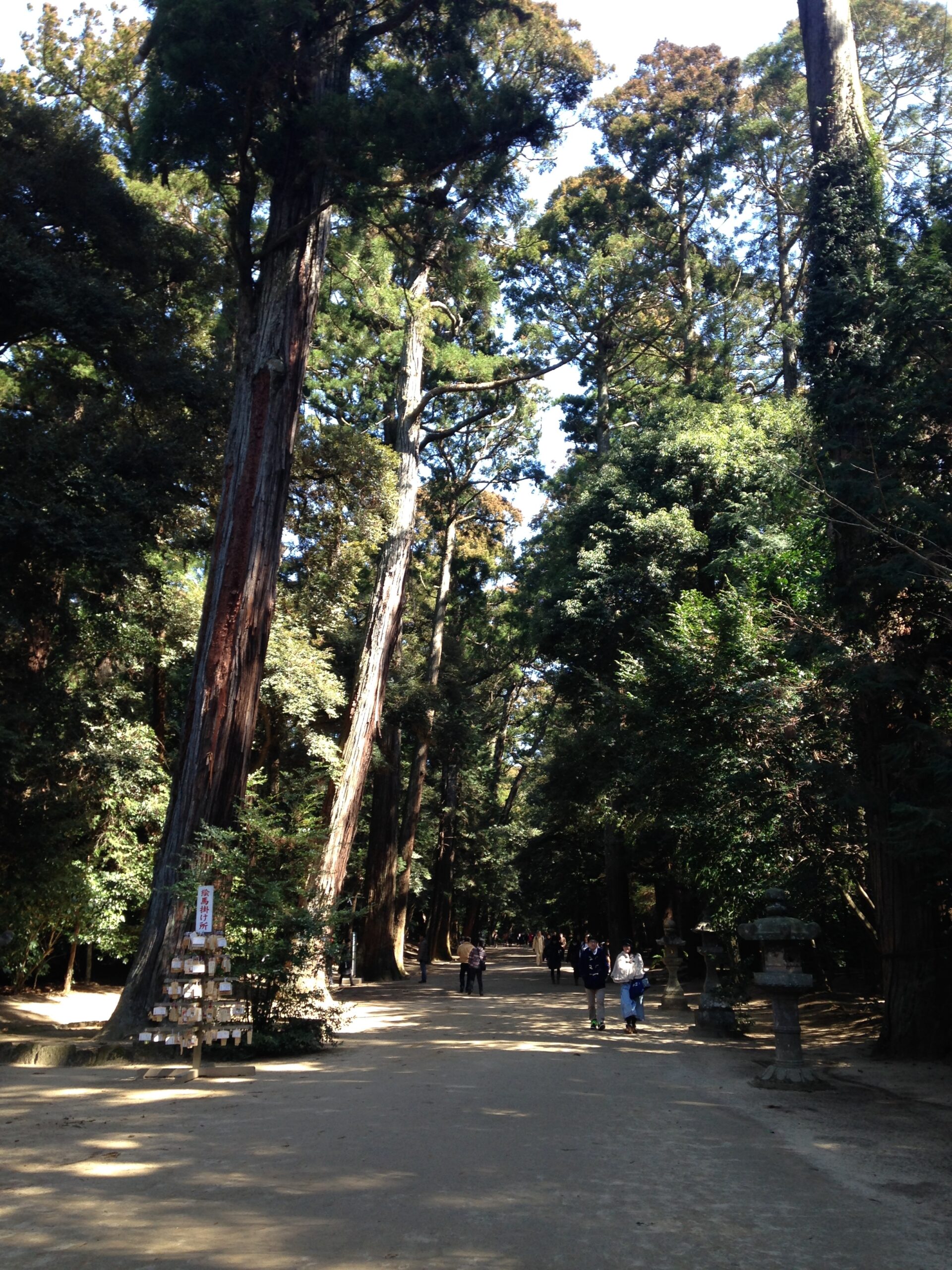
The shrine’s vast forest covers approximately 40 hectares and contains over 800 species of plants, including ancient Japanese cedars estimated at 500 to 1,000 years old. Designated a Prefectural Natural Monument, walking the Oku-sando (inner approach path) through these towering cedars feels like entering a natural cathedral—the canopy blocks most sunlight, the air temperature drops noticeably, and the silence is broken only by birdsong.
The Romon Gate: An Important Cultural Property
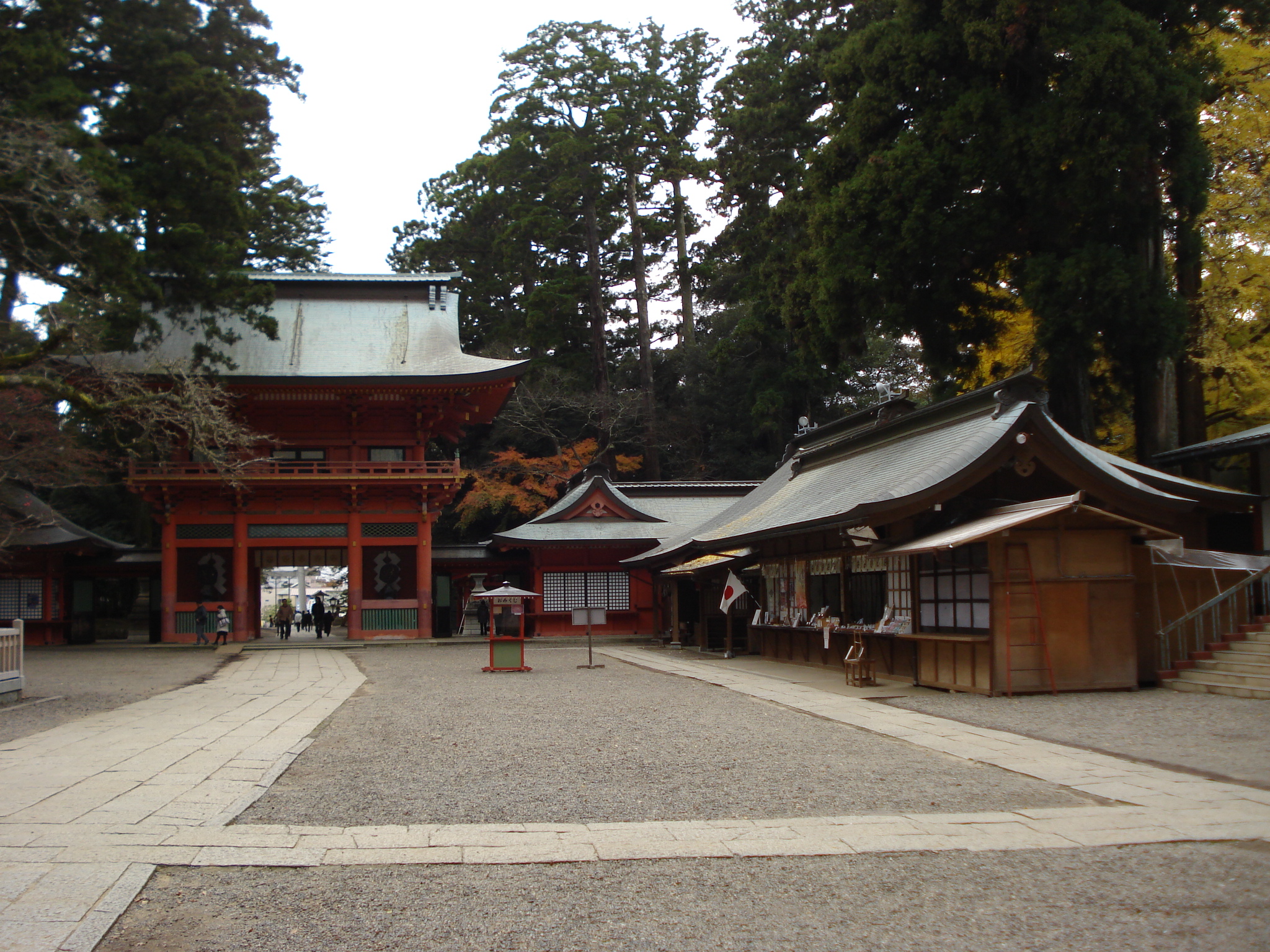
The striking two-story Romon Gate was donated by Tokugawa Yorifusa, the first lord of the Mito Domain, in 1634. Standing 13 meters tall with vivid vermillion paint and intricate carvings, it is designated an Important Cultural Property. Before the gate’s construction, the shrine entrance was far more modest—Yorifusa’s donation reflected the Tokugawa shogunate’s deep reverence for Kashima Jingu.
Spiritual Benefits
Victory and Success
Kashima Jingu’s primary blessing is katsu-un—fortune in victory. The shrine has been the go-to place for warriors, athletes, and anyone facing competitive challenges for well over a thousand years. Samurai would pray here before battle. Today, the shrine sees a steady stream of visitors seeking success in entrance exams, job interviews, business negotiations, sports competitions, and legal matters.
The connection to victory is not abstract. Kashima was historically the center of Kashima Shinto-ryu, one of Japan’s oldest martial arts schools, and the birthplace of many sword-fighting techniques that shaped Japanese bushido. The martial energy here is considered especially potent for those facing direct competition or confrontation.
Courage and Determination for New Beginnings
Drawing from the “Kashima-dachi” tradition, the shrine is particularly revered by those embarking on new ventures. Whether starting a business, relocating to a new city, entering a new school, or making a major life change, visitors come to Kashima Jingu seeking the resolve and courage to take that first step.
This benefit is especially meaningful for people at crossroads—those who know what they need to do but are struggling to find the will to act. The shrine’s atmosphere, steeped in millennia of warrior determination, is said to strengthen one’s inner resolve.
Protection from Earthquakes and Disasters
The legendary Kaname-ishi (Keystone) within the shrine grounds is believed to pin down the great catfish (Namazu) that causes earthquakes. This makes Kashima Jingu uniquely associated with disaster protection. While earthquake-related spiritual benefits are uncommon among Japanese shrines, Kashima’s connection to seismic protection has been part of Japanese folklore since at least the Edo period.
Career Advancement and Business Prosperity
Beyond competitive victory, Kashima Jingu is associated with steady career growth and business prosperity. The shrine’s blessings are considered especially effective for those in leadership positions or aspiring to them—fitting, given Takemikazuchi’s mythological role as the deity who took decisive action when others hesitated.
Harmonious Relationships
While not the shrine’s primary focus, Kashima Jingu also offers blessings for good relationships and marital harmony. The shrine’s emphasis on strength and determination extends to the strength needed to maintain and nurture important relationships. The Oku-no-Miya (Inner Shrine) area is particularly associated with these blessings.
Sacred Power Spots Within the Grounds
Kaname-ishi (Keystone)
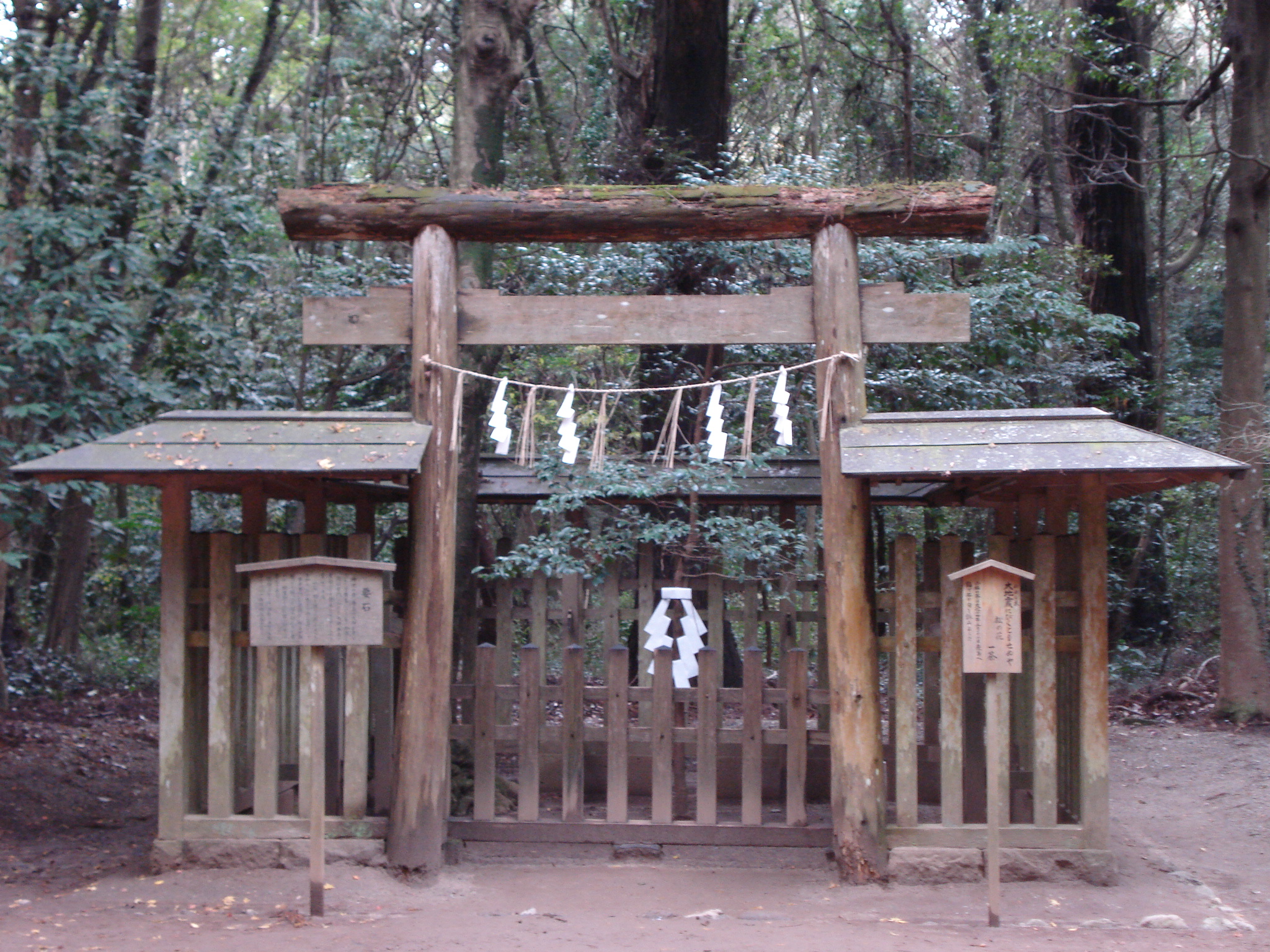
The Kaname-ishi is Kashima Jingu’s most mysterious and famous feature. This sacred stone, of which only a small portion is visible above the ground surface, is believed to be the capstone that pins down the enormous catfish (Namazu) deep underground whose thrashing causes earthquakes throughout Japan.
The stone’s legend gained extraordinary credibility during the Edo period when Tokugawa Mitsukuni, the powerful lord of the Mito Domain, attempted to excavate it. According to historical records, his workers dug for seven days and seven nights without ever reaching the base. The deeper they dug, the wider the stone appeared to extend. Mitsukuni abandoned the effort, concluding that the stone’s full extent was beyond human knowledge.
During the 2011 Great East Japan Earthquake, the Kashima area reportedly suffered relatively less structural damage compared to some neighboring regions—renewing public interest in the Kaname-ishi legend.
The stone is located along the Oku-sando path, in a quiet clearing surrounded by ancient trees. It appears unassuming—a weathered stone perhaps 20 centimeters in diameter protruding from the earth. But knowing its legend transforms the experience entirely.
Mitarashi Pond
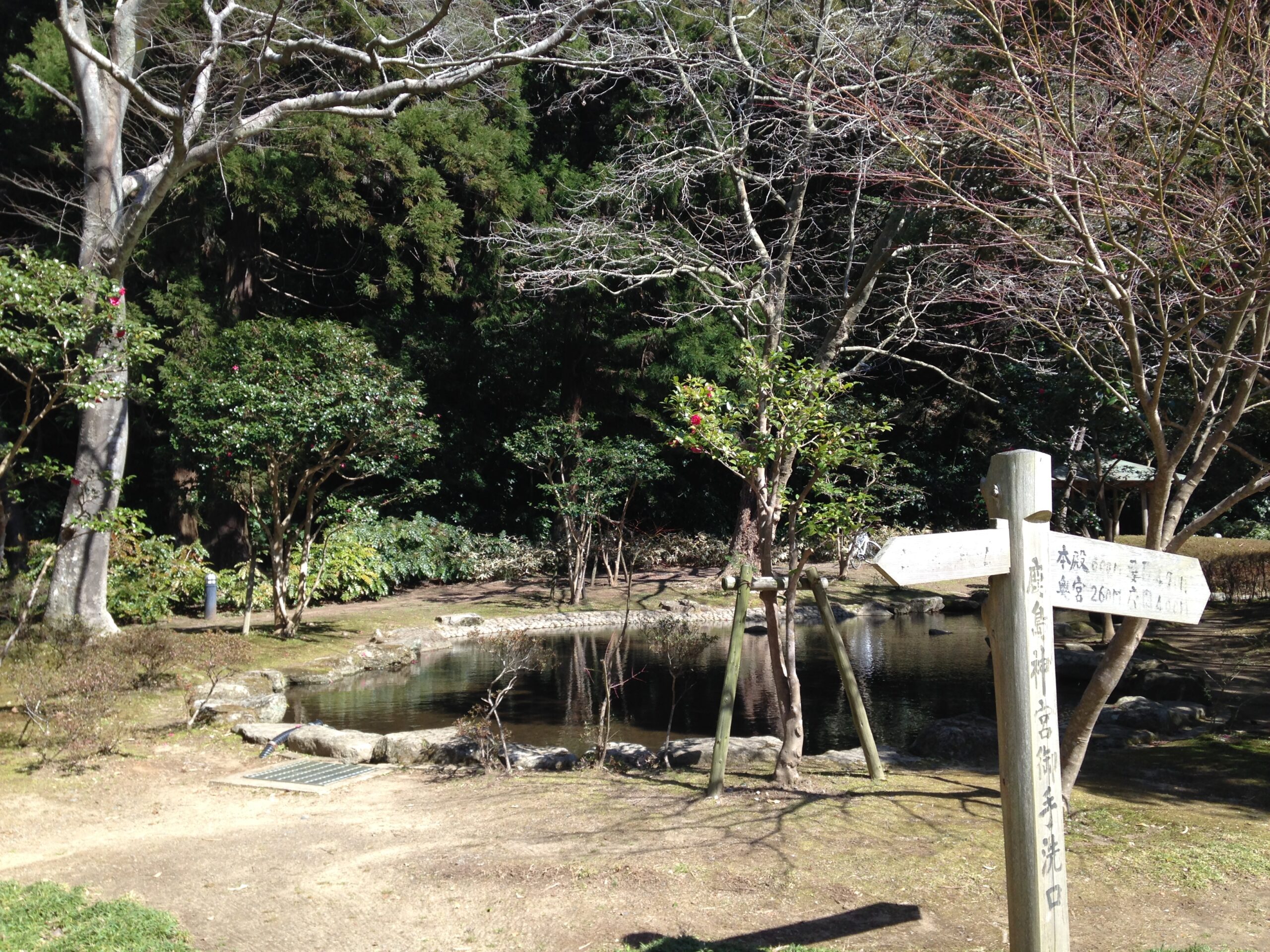
The Mitarashi Pond is one of Kashima Jingu’s Seven Wonders and a place of remarkable natural beauty. Fed by an underground spring that produces over 400,000 liters of fresh water per day, the pond has never dried up in recorded history—not during the worst droughts, not during the most extreme summers.
The pond’s most famous legend concerns its depth: it is said that the water reaches chest height regardless of whether an adult or a child enters—one of Kashima Jingu’s Seven Wonders, reflecting the pond’s spiritual significance as a place where ordinary rules bend in the presence of sacred power.
The water is extraordinarily clear. On sunny days, you can see the sandy bottom and the gentle welling of the spring with perfect clarity. The pond served historically as a place of ritual purification (misogi) before worship at the main shrine. The Yusui Chaya Ikkyu tea house adjacent to the pond serves matcha and amazake prepared with this spring water.
Oku-no-Miya (Inner Shrine)
Located approximately 300 meters along the forest path from the main hall, the Oku-no-Miya sits in the deepest part of the sacred forest. This small but deeply atmospheric shrine was originally the main hall of Kashima Jingu, donated by Tokugawa Ieyasu in 1605. When a new main hall was built, the original structure was moved to this secluded location.
The walk through the ancient cedar forest to reach it is itself a powerful experience—the path narrows, the trees grow taller, and the modern world falls completely away. Many visitors describe this as the most spiritually intense part of the grounds.
Deer Park
Near the main shrine buildings, a small deer park houses sacred deer—the traditional messengers of Takemikazuchi. The connection between Kashima’s deer and those at Nara’s Kasuga Taisha is one of Japan’s most enduring religious traditions. According to the Nihon Shoki, when the deity of Kashima was invited to protect the new capital at Nara in 768 CE, he traveled there riding a white deer. The deer at Kasuga Taisha are considered descendants of that journey.
The deer park at Kashima is modest compared to Nara’s free-roaming herds, but the deer here are gentle and approachable. Deer crackers are available for purchase.
Best Time to Visit
| Season | Highlights | Crowds | Tip |
|——–|———–|——–|—–|
| Spring (Mar–May) | Cherry blossoms, fresh greenery, mild weather | Moderate | Weekday mornings are ideal for peaceful worship |
| Summer (Jun–Aug) | Cool shade under ancient cedars, lush forest | Low | Best season for forest bathing; the canopy keeps temperatures comfortable |
| Autumn (Oct–Nov) | Spectacular fall foliage throughout the forest | Moderate | Peak colors arrive mid-November; Oku-sando is especially beautiful |
| Winter (Dec–Feb) | Hatsumode (New Year), crisp forest air | Very high Jan 1–3 | Visit January 4 or later to avoid the worst crowds |
Best Time of Day
Early morning, between 6:00 and 8:00 AM, is overwhelmingly the best time to visit Kashima Jingu. The shrine grounds are open 24 hours, and in the early morning you may have the cedar-lined paths nearly to yourself. Morning mist filtering through the ancient trees creates an atmosphere that is genuinely otherworldly. The shrine office and amulet counter open at 8:30 AM, so if you need goshuin or charms, plan to linger.
Hatsumode (New Year Visit)
Kashima Jingu draws approximately 700,000 visitors during the first three days of the New Year, making it one of Ibaraki Prefecture’s busiest hatsumode destinations. Lines for worship at the main hall can extend for hours on January 1. If you wish to visit during this period, arrive before dawn or opt for January 4 or 5 when crowds thin dramatically but the New Year atmosphere remains.
Festival Calendar
- January 1–3: Hatsumode (New Year worship)
- March 9: Matsuri-gashira-sai (Festival Head Ceremony)
- September 1–2: Kashima Jingu Grand Festival (held every 12 years for the imperial year; annual smaller festival)
- November 15: Shichi-Go-San (children’s blessings)
Visitor’s Guide — Recommended Route
The following route covers all major power spots and takes approximately 90 minutes to 2 hours at a comfortable pace.
| Stop | Time | Highlights |
|——|——|————|
| 1. O-torii (Grand Torii Gate) | 2 min | Begin your visit at the imposing stone torii |
| 2. Romon Gate | 3 min | Admire the 1634 Important Cultural Property |
| 3. Haiden (Prayer Hall) | 10 min | Main worship; “two bows, two claps, one bow” |
| 4. Oku-sando (Inner Path) | 10 min | Walk through the ancient cedar forest |
| 5. Kaname-ishi (Keystone) | 5 min | See the legendary earthquake-suppressing stone |
| 6. Mitarashi Pond | 10 min | Crystal-clear sacred spring and tea house |
| 7. Oku-no-Miya (Inner Shrine) | 5 min | Quiet prayer at the forest shrine |
| 8. Deer Park | 10 min | Visit the sacred deer, feed them crackers |
| 9. Return via outer path | 10 min | Complete the loop back to the entrance |
Quick visit (60 minutes): Focus on stops 1–5 and return.
Deep visit (2.5+ hours): Add the Treasure Hall (30 min, JPY300), spend more time at Mitarashi Pond with tea, and explore the secondary paths through the forest.
Goshuin (Shrine Stamp)
Kashima Jingu offers goshuin for JPY500 at the shrine office, available 8:30 AM–4:30 PM. The calligraphy features bold, powerful strokes befitting a warrior shrine. Limited-edition goshuin are occasionally available during major festivals.
Omamori (Charms)
- Kashima-dachi Charm (JPY800): The shrine’s signature charm for new beginnings and safe journeys—by far the most popular
- Victory Charm (JPY800): For competitions, exams, and business success
- Traffic Safety Charm (JPY800): Fitting, given the deity’s connection to travel
- Standard Protection Charm (JPY500): General blessings
Photography Tips
Photography is permitted throughout the shrine grounds. The most photogenic spots are:
- The Romon Gate with its vivid vermillion against the green forest
- The Oku-sando cedar avenue, especially in morning mist or with autumn colors
- Mitarashi Pond reflections on calm days
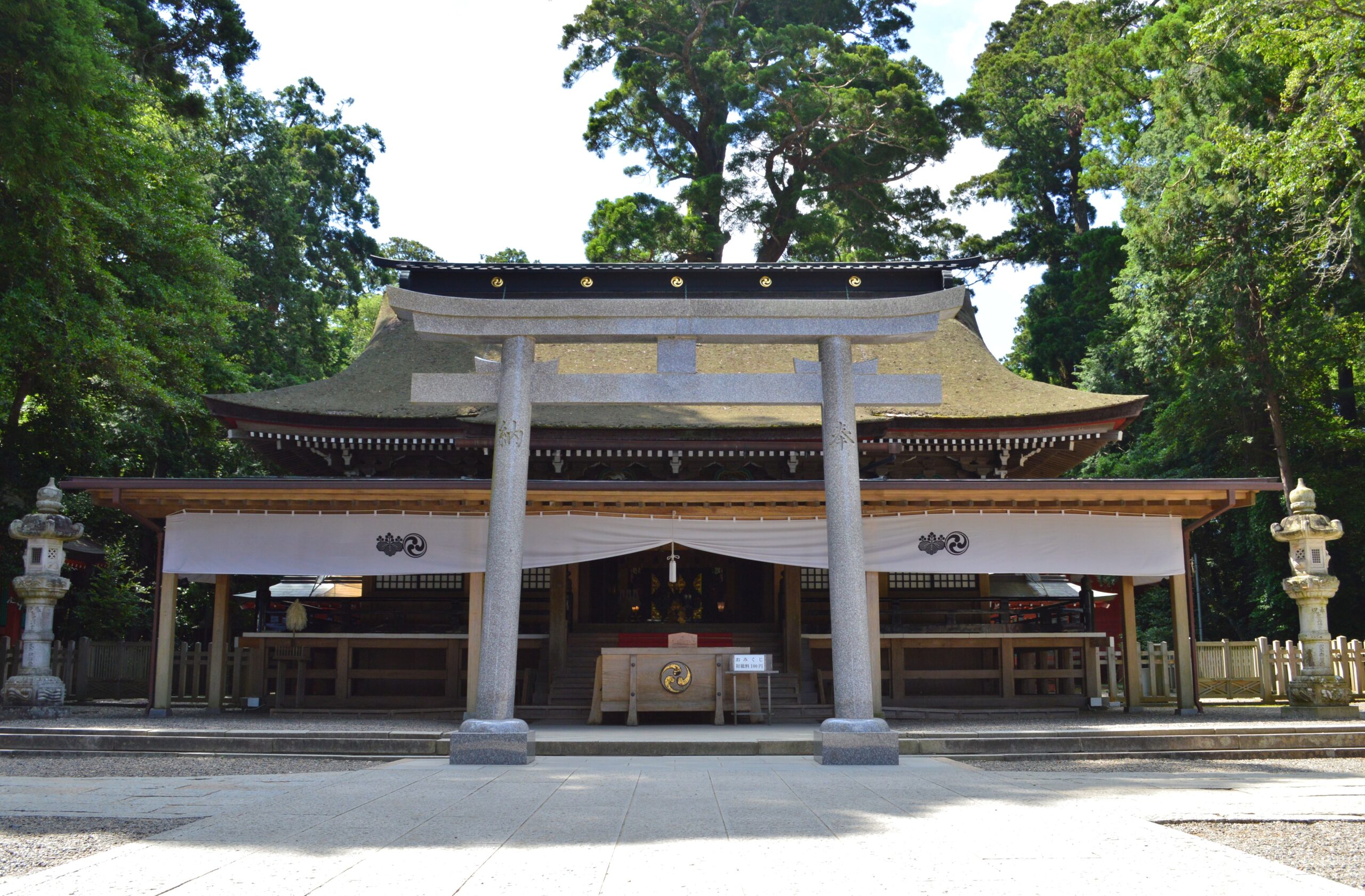
- The Haiden during early morning golden light
Respectful behavior is expected. Avoid using flash inside shrine buildings, and step aside from worship areas before taking photos.
How to Get There
Address: Kashima, Kashima City, Ibaraki Prefecture 314-0031
From Tokyo (Highway Bus — Recommended)
The highway bus is the easiest and most cost-effective way to reach Kashima Jingu from Tokyo.
- Departure: Tokyo Station Yaesu South Exit (expressway bus terminal)
- Arrival: “Kashima Jingu” bus stop (directly in front of the shrine approach)
- Duration: Approximately 2 hours
- Frequency: Buses depart every 15–20 minutes throughout the day
- Fare: Approximately JPY2,500–3,000 (one way)
- Operator: Kanto Railway / JR Bus Kanto (joint operation)
This is significantly more convenient than the train route, requiring no transfers.
From Tokyo (By Train)
The train route involves multiple transfers and takes considerably longer:
1. Tokyo Station — JR Sobu Line (Rapid) or JR Narita Line — Chiba Station (approximately 40 min)
2. Chiba Station — JR Narita Line — Sawara Station (approximately 75 min)
3. Sawara Station — JR Kashima Line — Kashima-Jingu Station (approximately 30 min)
Total: approximately 2.5–3 hours, depending on connections.
From Kashima-Jingu Station, the shrine is a 7–10 minute walk along a clearly signed path.
By Car from Tokyo
- Route: Shuto Expressway — Higashi-Kanto Expressway — Itako IC
- From Itako IC: Approximately 15 minutes to the shrine
- Total from central Tokyo: Approximately 1.5–2 hours (traffic dependent)
- Parking: Available near the shrine, JPY300 for standard vehicles. Multiple lots totaling several hundred spaces.
From Narita Airport
Kashima is relatively close to Narita Airport, making it a viable stop for travelers:
- By car: Approximately 40 minutes via Higashi-Kanto Expressway
- By bus: Direct buses from Narita to Kashima area, approximately 60 minutes
The Togoku Sansha Pilgrimage
Three Great Shrines of Eastern Japan
The Togoku Sansha (Eastern Japan Three Shrines) pilgrimage connects Kashima Jingu, Katori Jingu, and Ikisu Shrine in a sacred triangle spanning Ibaraki and Chiba Prefectures. Often called “Kanto’s answer to the Ise Pilgrimage,” this trio of ancient shrines has been a beloved pilgrimage route since the Edo period.
The three shrines share deep mythological connections. Kashima Jingu’s Takemikazuchi and Katori Jingu’s Futsunushi-no-Kami were divine partners sent by Amaterasu to pacify the land. Ikisu Shrine enshrines the deity who guided them on their mission.
The Three Shrines
Kashima Jingu (Kashima, Ibaraki)
- Deity: Takemikazuchi-no-Okami
- Character: Grand, martial, ancient forest
- Famous for: Victory, courage, Kaname-ishi
Katori Jingu (Katori, Chiba)
- Deity: Futsunushi-no-Kami
- Character: Elegant, refined, well-maintained grounds
- Famous for: Career success, decisive action
- Approximately 25 minutes from Kashima by car
Ikisu Shrine (Kamisu, Ibaraki)
- Deity: Kukurihime-no-Mikoto
- Character: Intimate, peaceful, along the Tone River
- Famous for: Maritime safety, guidance, new beginnings
- Approximately 15 minutes from Kashima by car
How to Complete the Pilgrimage
By Car (Recommended): The three shrines form a compact triangle, each 15–30 minutes apart. A complete pilgrimage takes about half a day including worship time.
Recommended Order: Kashima Jingu (start) — Ikisu Shrine (15 min drive) — Katori Jingu (25 min drive). This finishes near Sawara, where you can enjoy lunch and sightseeing.
Special Togoku Sansha Omamori: Receive a goshuin at each shrine to obtain the special Togoku Sansha Omamori—one of the most coveted amulets among shrine enthusiasts.
Sawara: “Little Edo of Hokuso”
After visiting Katori Jingu, a 10-minute drive takes you to Sawara, a beautifully preserved Edo-period merchant town along the Ono River. The canal-lined streets, historic warehouses, and traditional architecture have earned it the nickname “Little Edo of Hokuso” (northern Shimosa). Sawara offers excellent restaurants, sake breweries open for tastings, and a peaceful atmosphere perfect for ending your pilgrimage day.
Nearby Food and Dining
Yusui Chaya Ikkyu
Located beside Mitarashi Pond within the shrine grounds, this atmospheric tea house serves beverages prepared with the sacred spring water. Try the matcha set (JPY500) or the amazake (sweet fermented rice drink, JPY400), both made with the crystal-clear spring water. Open 9:00 AM–4:00 PM.
Catfish Cuisine (Namazu Ryori)
Given the shrine’s legendary connection to the giant catfish that causes earthquakes, it is fitting that catfish is the local culinary specialty. Several restaurants along the approach road (sando) and in the surrounding area serve namazu dishes—fried catfish, catfish tempura, and catfish soba are common preparations. The meat is mild, slightly sweet, and surprisingly delicate.
Sando Street Food and Restaurants
The approach road leading to the shrine features small shops and food stalls, particularly active on weekends and during festivals. Look for:
- Kashima senbei: Traditional rice crackers, some stamped with deer motifs
- Yakimochi: Grilled rice cakes, a simple but satisfying snack
- Local sake: Ibaraki Prefecture produces excellent sake; small tasting cups are available at several shops
For a Full Meal
If completing the Togoku Sansha pilgrimage, save your main meal for Sawara near Katori Jingu. The town offers unagi (freshwater eel) restaurants, soba shops, and cafes in restored Edo-period buildings—a far wider selection than what is available immediately around Kashima Jingu.
Visitor Reviews
Visitor experiences from major review platforms offer genuine insight into what to expect:
> “Visited at 6 AM on a weekday. The ancient cedar forest was incredibly peaceful with barely anyone around. The spiritual energy here is palpable.”
> — Google Maps review
> “The Togoku Sansha pilgrimage was the highlight of our Ibaraki trip. Kashima Jingu is the most impressive of the three with its vast forest and historical buildings.”
> — TripAdvisor review
> “Don’t skip the Mitarashi Pond—it’s tucked away but the crystal clear spring water is mesmerizing. The tea house nearby serves drinks made with the spring water.”
> — Google Maps review
Common themes across reviews include the overwhelming sense of age and spiritual gravity in the cedar forest, the surprising tranquility even on moderately busy days, and the rewarding feeling of discovering the Kaname-ishi and Mitarashi Pond tucked away along the forest paths. Many visitors note that Kashima Jingu rewards those who venture beyond the main hall—the deeper you go into the forest, the more powerful the experience becomes.
Practical Information for Different Visitors
Wheelchair and Stroller Access
The main approach from the parking area to the Romon Gate and Haiden is paved and relatively flat. However, the Oku-sando (inner forest path) leading to the Kaname-ishi and Mitarashi Pond includes unpaved sections with tree roots and gentle slopes that may be challenging for wheelchairs or strollers. The deer park area is accessible. Contact the shrine office (0299-82-1209) in advance for assistance or to ask about accessible alternatives.
Visiting with Pets
Pets are not permitted within the shrine grounds. Service animals are excepted. There are no dedicated pet-sitting facilities in the immediate area, so if traveling with animals, you will need to make arrangements in advance. Some visitors leave pets in their vehicles during cooler months, but this is not advisable during summer.
Rainy Days
The dense cedar canopy provides natural shelter from light rain, and the shrine grounds take on a mystical quality in the mist. The Oku-sando path can become slippery, so wear shoes with good traction. The Treasure Hall offers an indoor option. Mitarashi Pond in rain, with droplets breaking the surface of the clear water, is especially photogenic.
Families with Children
The deer park is the highlight for young children, who can feed the sacred deer crackers. The forest paths are excellent for exploration, though watch footing on uneven sections. The Kaname-ishi legend (giant catfish causing earthquakes, held down by a magical stone) captures children’s imagination. Allow extra time and bring water, especially in summer.
Frequently Asked Questions
How long should I plan for a visit?
A minimum of 90 minutes covers the main worship hall, Kaname-ishi, Mitarashi Pond, and deer park at a brisk pace. Two hours is more comfortable and recommended. If visiting the Treasure Hall or spending time at the tea house, plan for 2.5–3 hours.
Are pets allowed?
Pets are not permitted in the shrine grounds. Service animals are the exception. There are no pet-sitting facilities nearby, so plan accordingly.
Is there an English guide available?
Some signage within the shrine grounds is available in English. English pamphlets can be obtained at the shrine office. However, the depth of information in English is limited—researching the shrine’s history and legends before your visit will significantly enhance the experience.
Can I do the Togoku Sansha pilgrimage in one day?
Yes, and it is the most popular way to complete the pilgrimage. By car, all three shrines can be visited in approximately half a day (4–5 hours including worship time). Adding lunch in Sawara makes it a full and satisfying day trip from Tokyo.
Is the highway bus from Tokyo easy to use for non-Japanese speakers?
Yes. The Tokyo Station Yaesu South Exit bus terminal has English signage, and tickets can be purchased at the counter or from vending machines with English options. The bus requires no transfers and the “Kashima Jingu” stop is clearly identifiable.
What is the best season for photography?
Autumn (mid-November) for fall foliage along the Oku-sando, or any season in early morning when mist filters through the cedar canopy. Cherry blossom season (late March to early April) is beautiful but more crowded.
Can I combine Kashima Jingu with other Ibaraki attractions?
Yes. Kashima is relatively close to Oarai (famous for its oceanside torii gate), Hokota (melon farming area), and the Tsukuba area. By car, multiple Ibaraki attractions can be combined into a full day trip.
Summary
Kashima Jingu is far more than a historical landmark. It is a living spiritual institution that has anchored the courage and determination of the Japanese people for over 2,600 years. As the shrine of Takemikazuchi-no-Okami—the deity who pacified the land and embodies martial spirit—Kashima offers blessings for victory, new beginnings, and the inner strength to face whatever challenges lie ahead.
The shrine’s physical setting matches its spiritual weight. A 40-hectare forest of ancient cedars, the mysterious Kaname-ishi whose depths have never been measured, the crystalline Mitarashi Pond that has never run dry, and the atmospheric Oku-no-Miya deep in the forest all create an experience of profound calm and focus. Each of these power spots rewards visitors who take the time to explore beyond the main hall.
For practical purposes, Kashima Jingu is surprisingly accessible. The highway bus from Tokyo takes just two hours with no transfers, and the Togoku Sansha pilgrimage combining all three shrines makes for one of the most rewarding day trips in the Kanto region. Whether you come for spiritual blessings, historical depth, or simply the peace of walking through an ancient forest, Kashima Jingu delivers something rare: a genuine sense of stepping outside ordinary time into a space where centuries of faith have accumulated into something you can feel.
—
Discover Your Ideal Power Spot
Every person has a unique spiritual affinity with different power spots. Beyond Kashima Jingu, there may be other sacred places in Japan that resonate even more deeply with you. Try our free compatibility diagnosis to find your perfect power spot match (takes just 3 minutes).
-> Take the Free En-Profile Diagnosis
—
*Information in this article is current as of March 2026. Please verify details with the official website before your visit.*
あなたに最適なパワースポットを知りたい方へ