In the 1160s, a young exile named Minamoto no Yoritomo met a woman named Hojo Masako at a small mountain shrine overlooking the sea. They fell in love against her father’s wishes, married in secret, and together went on to establish the Kamakura Shogunate—Japan’s first warrior government. That shrine was Izusan Shrine in Atami, and it has been one of Japan’s most powerful matchmaking (en-musubi) shrines ever since.
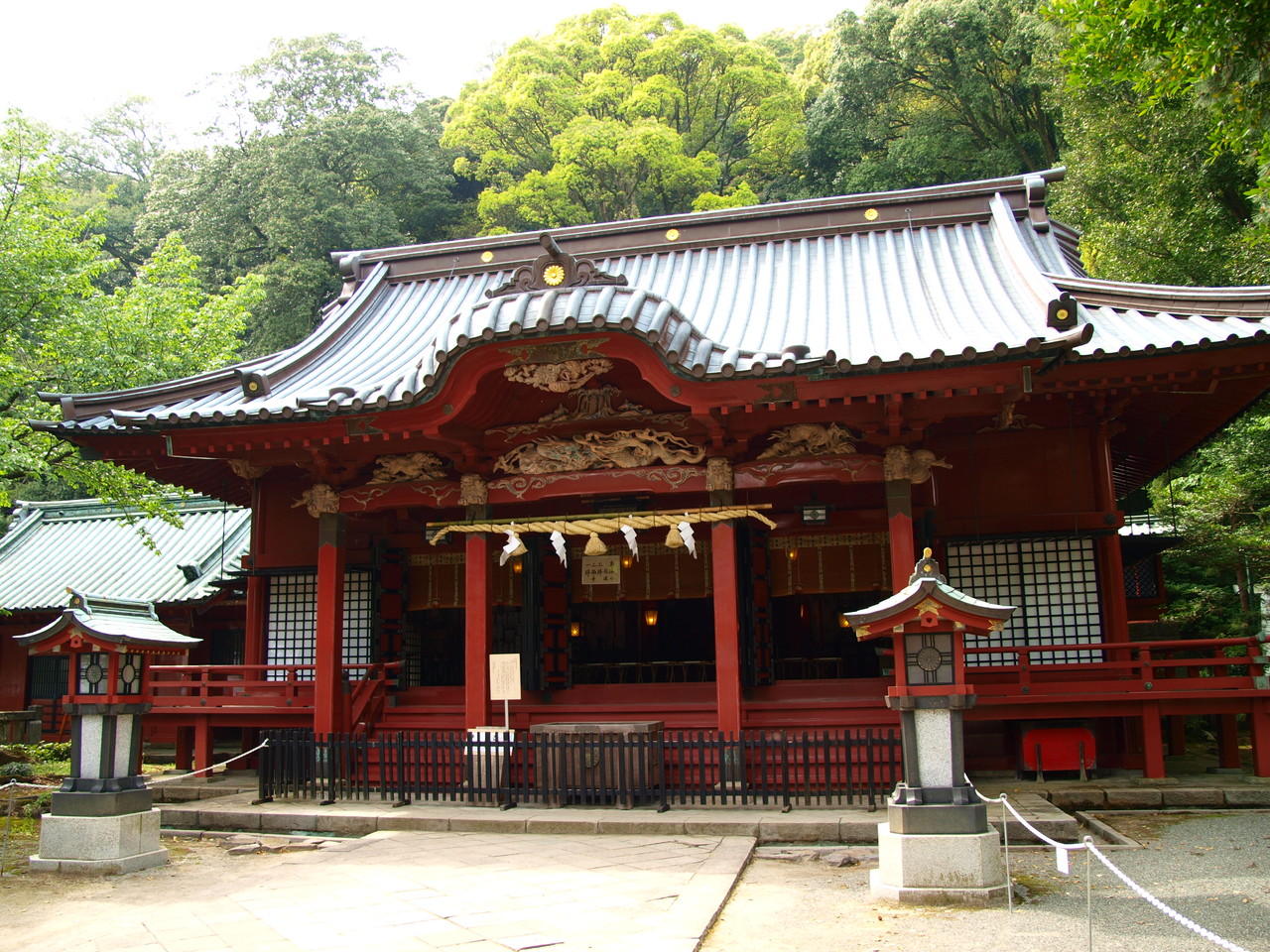
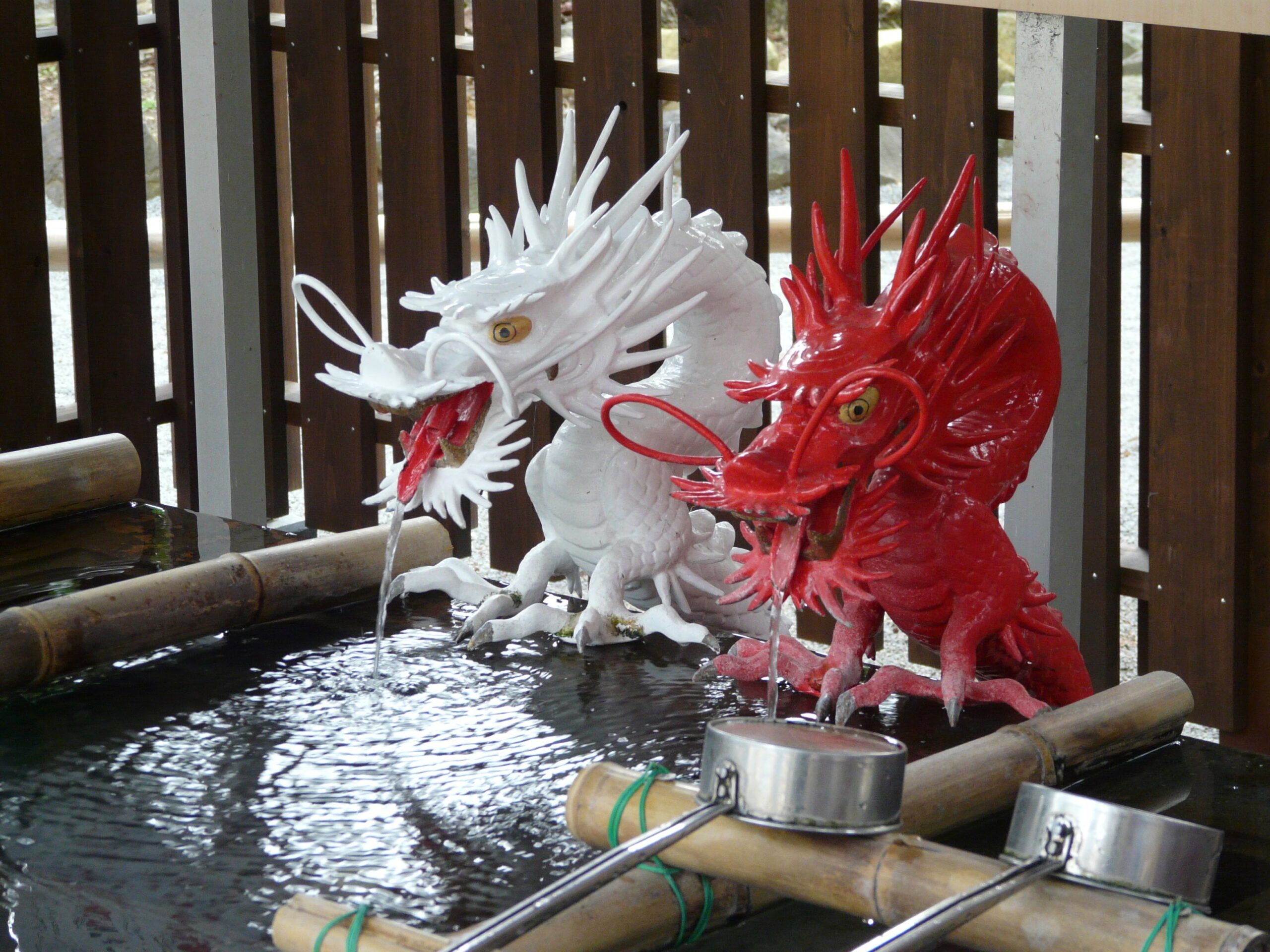
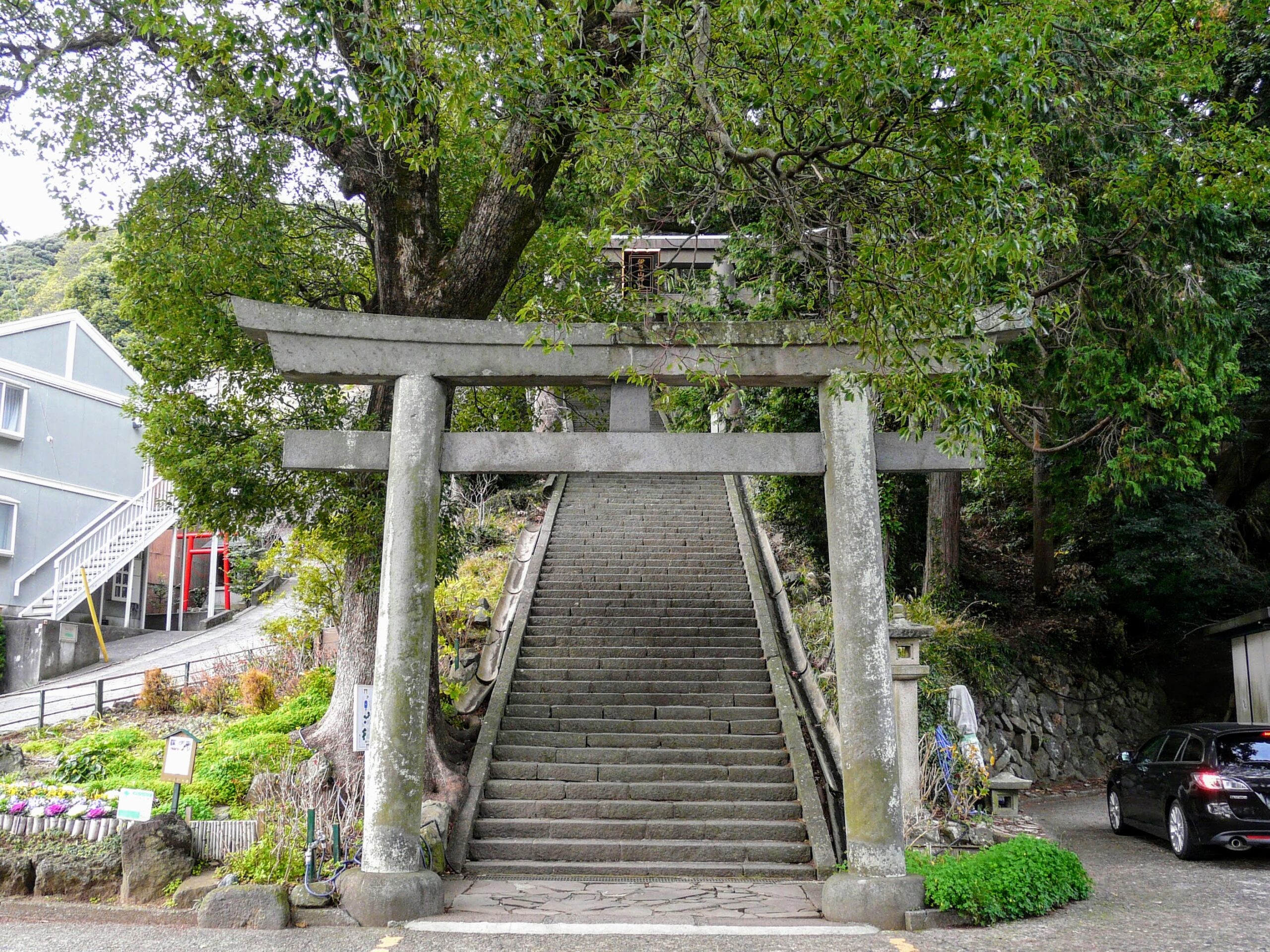
Izusan Shrine sits partway up a forested mountainside with views over Sagami Bay. From the coast, 837 stone steps climb through the trees to the main hall—a pilgrimage route that has drawn worshippers for over a thousand years. At the shrine, a pair of red and white dragon sculptures guard the purification fountain, symbolizing the union of fire and water that creates the hot springs Atami is famous for.
The shrine is also the origin of the name “Izu”—the entire Izu Peninsula takes its name from this single mountain, where hot water (yu-izu, “water springs forth”) has bubbled up since ancient times.
From Tokyo, Atami is just 50 minutes by bullet train. This makes Izusan Shrine one of the most accessible major power spots in Japan.
What Makes Izusan Shrine Special
The Love Story of Yoritomo and Masako
In 1160, after the Heiji Rebellion, the young warrior Minamoto no Yoritomo was exiled to Izu Province by the ruling Taira clan. During his exile, he met Hojo Masako, the daughter of a local clan leader. They fell in love and would meet secretly in the grounds of Izusan Shrine, despite her father’s opposition.
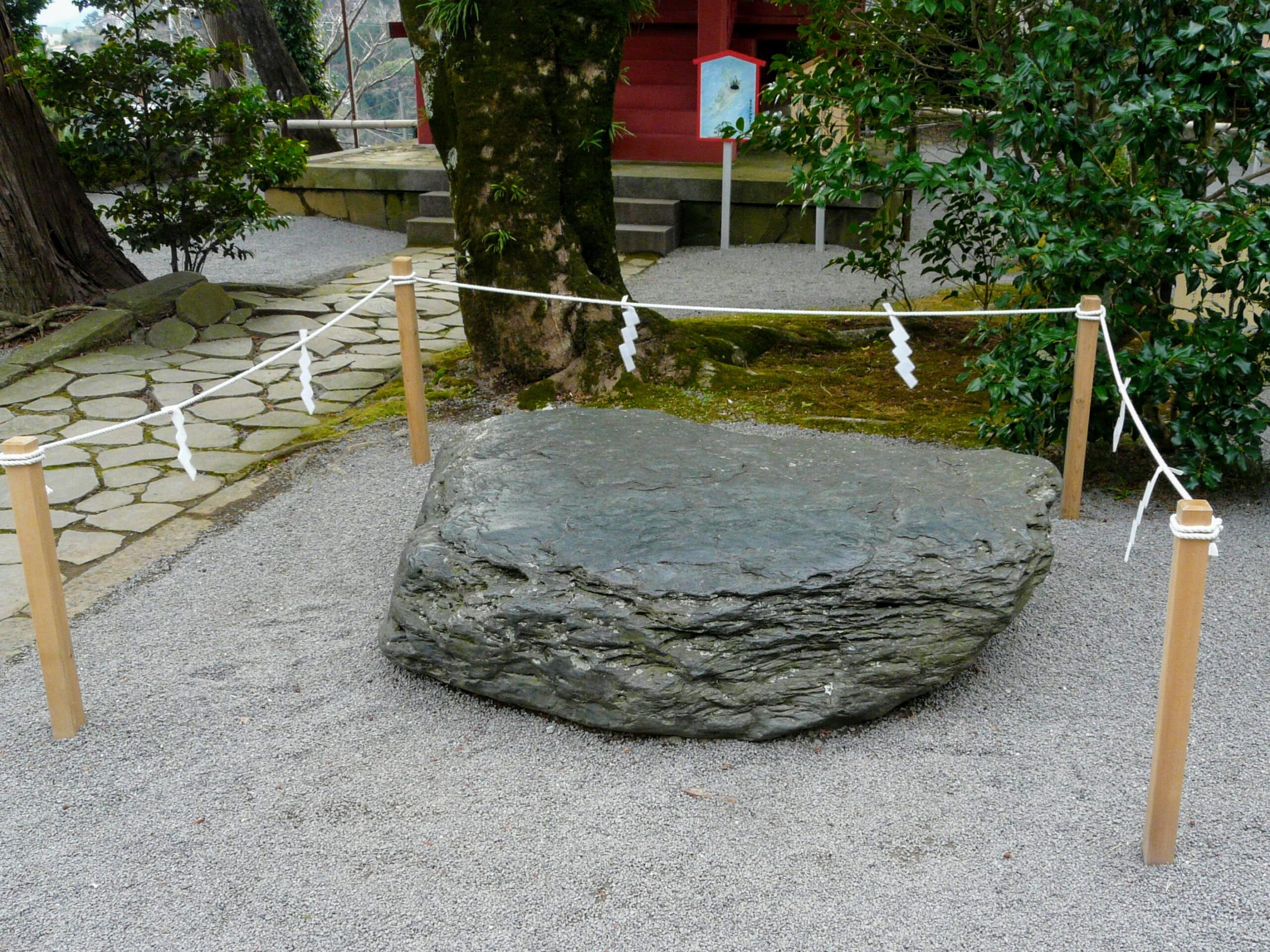
A stone called the “Koshikake-ishi” (sitting stone) in the shrine grounds is said to be where the couple sat together. Yoritomo eventually overthrew the Taira, established the Kamakura Shogunate in 1185, and became Japan’s first shogun. Masako became known as the “nun shogun” (ama-shogun) for her political influence after his death.
This is why Izusan Shrine is not just about romantic love. It is associated with bonds strong enough to survive adversity and change the course of history. Many visitors come not only for romance but for career connections, business partnerships, and the strength to overcome difficult circumstances.
The Red and White Twin Dragons
Izusan Shrine’s most iconic feature is the pair of dragon sculptures at the purification fountain (temizuya): one red, one white, intertwined and spouting water. They are the shrine’s sacred messengers (shinshi).
The red dragon represents fire. The white dragon represents water. Together, they symbolize the creation of hot springs—the fusion of volcanic heat and underground water that makes Atami one of Japan’s great onsen towns. The dragons also represent the union of opposites, making them a natural symbol of romantic partnership.
The “Sekihaku Niryu Mamori” (Red-White Twin Dragon charm) is exclusive to Izusan Shrine and is the most popular souvenir—a matchmaking amulet featuring both dragons.
837 Stone Steps
From the coast near the Hashiriyu hot spring cave, 837 stone steps climb through forest to the main shrine. In ancient times, this was a pilgrim’s path—a physical journey mirroring spiritual ascent.
Today, most visitors take a bus from Atami Station to a stop partway up the mountain, leaving about 170 steps to the main hall. From the bus stop, the walk takes about 10 minutes. The full 837 steps from the bottom take 40–60 minutes. Choose your route based on your fitness and schedule.
For those climbing the full stairway, the most efficient route is: Hashiriyu (bottom) → climb all 837 steps → visit the shrine → take the bus back down.
Origin of the Name “Izu”
The name “Izu” for the entire Izu Peninsula originates from this shrine. “Izu” derives from “yu-izu” (湯出), meaning “hot water springs forth”—a reference to the volcanic hot springs erupting from Mount Izusan. One mountain gave its name to an entire region.
Spiritual Blessings
- Matchmaking and romantic success: The Yoritomo-Masako connection makes this one of Japan’s strongest en-musubi shrines. Associated with bonds that overcome adversity
- Strong fortune (goun): The “Goun Mamori” (Strong Fortune charm) draws on Yoritomo’s story—from exile to shogun
- Hot spring protection: The twin dragons guard Atami’s onsen heritage
- Safe childbirth and family prosperity: Following the Yoritomo-Masako lineage
- Healing: The ancient Hashiriyu hot spring has been associated with curative powers for centuries
Best Time to Visit
By Season
Spring (March–May): 12–22°C. Fresh green along the stone steps. The plum blossom season (January–March) draws visitors to nearby Atami Baien garden—combine both in one trip. Weekday mornings are quietest.
Summer (June–August): 24–32°C. The stone steps are mostly shaded but the full climb is sweaty. Visit before 9:00 AM. Atami’s fireworks festivals (weekends in July–August) make for a great combined day: shrine in the morning, beach in the afternoon, fireworks at night.
Autumn (September–November): 14–24°C. The most comfortable season for the climb. Late November brings autumn colors along the stone stairway.
Winter (December–February): 4–12°C. Few visitors, peaceful atmosphere. January is busy with New Year’s worshippers. Atami’s mild coastal climate means winters are not harsh.
Best Times of Day
- 8:00–10:00 AM: Few visitors, quiet grounds for contemplation and photography
- 3:00–4:00 PM: Sunset light over Sagami Bay visible from the shrine grounds
- Avoid: Weekends 11:00 AM–2:00 PM (busiest period on the stone steps)
Visiting Guide
Route A: Bus + 170 Steps (1–1.5 hours)
1. Bus from Atami Station to “Izusan Jinja-mae” stop (7 minutes)
2. Climb approximately 170 stone steps (10 minutes)
3. Explore the shrine grounds (30 minutes)
4. Return by bus
Route B: Full 837 Steps (2–3 hours)
1. Bus or walk to Hashiriyu hot spring cave near the coast
2. Visit Hashiriyu (15 minutes)
3. Climb all 837 stone steps (40–60 minutes)
4. Explore the shrine grounds (30 minutes)
5. Take the bus back down
Key Spots in the Shrine Grounds
Main Hall (Haiden): The vermilion shrine building with elaborate dragon carvings. After praying at the front, walk around the sides to see the carved details up close.
Twin Dragon Fountain (Temizuya): Purify your hands here before praying. The red and white dragons are the shrine’s most photographed feature.
Hikari-ishi (Light Stone): A sacred stone enclosed by shimenawa rope beside the main hall. Believed to hold spiritual energy from Mount Izusan.
Koshikake-ishi (Sitting Stone): The stone where Yoritomo and Masako are said to have sat together. A popular spot for matchmaking prayers.
Charms and Souvenirs
| Item | Price | Description |
|——|——-|————-|
| Sekihaku Niryu Mamori (Twin Dragon charm) | 1,000 yen | Exclusive matchmaking amulet with red and white dragons |
| Goun Mamori (Strong Fortune charm) | 800 yen | Inspired by Yoritomo’s rise from exile to shogun |
| En-musubi Mamori (Matchmaking charm) | 800 yen | Pair versions available for couples |
| Goshuin (shrine stamp) | 500 yen | Features the twin dragon seal |
Hashiriyu Hot Spring Cave
At the base of the 837 steps, near the coast, lies Hashiriyu—one of Japan’s three oldest hot springs (alongside Dogo Onsen and Arima Onsen). Hot water at roughly 70°C gushes from inside a natural cave. Viewing is free.
Warning: The cave interior is extremely hot and steamy. Do not stay inside for extended periods. Keep visits brief.
How to Get There
Address: 708-1 Izusan, Atami City, Shizuoka Prefecture
By Train + Bus (Recommended)
- JR Atami Station → bus toward Izusan, approximately 7 minutes to “Izusan Jinja-mae” stop
- Buses run 2–3 times per hour. Check the last bus time before your visit
- 170 steps from bus stop to main hall (10 minutes)
- From Tokyo: Tokaido Shinkansen Kodama approximately 50 minutes, or local trains approximately 1 hour 40 minutes
- From Osaka/Kyoto: Tokaido Shinkansen to Atami (approximately 2.5 hours)
By Car
- From Tokyo: Odawara-Atsugi Road → Manazuru Road → Atami (approximately 2 hours)
- Free parking at the shrine (approximately 30 spaces). Fills up on weekends and holidays
Practical Information
| Detail | Information |
|——–|————-|
| Hours | Grounds open anytime; shrine office 9:00–16:30 |
| Closed | Open every day |
| Admission | Free |
| Time needed | 1–1.5 hours (bus) / 2–3 hours (full steps) |
| Phone | 0557-80-3164 |
| Official site | https://izusanjinjya.jp/ |
Nearby Attractions
Within Walking Distance
- Hashiriyu: At the base of the stone steps. One of Japan’s three oldest hot springs. Free to view the cave where 70°C water gushes from rock
- Izusan Onsen: Hot spring inns drawing water from the Hashiriyu source. Perfect post-climb soak
In Atami (10–15 minutes by car or bus)
- Kinomiya Shrine: Famous for its 2,000-year-old camphor tree—one of the largest in Japan. Another major Atami power spot. 20 minutes on foot from Atami Station
- Atami Baien (Plum Garden): Japan’s earliest-blooming plum blossoms (January–March). 10 minutes by car from Izusan Shrine
- Atami Sun Beach: Swimming in summer, fireworks July–August weekends. 15 minutes on foot from Atami Station
- MOA Museum of Art: Houses the National Treasure “Red and White Plum Blossoms” screen painting. Panoramic ocean views
Model Itinerary: Atami Power Spot Day Trip
| Time | Spot | Duration |
|——|——|———-|
| 9:00 | Hashiriyu hot spring cave (start at the bottom) | 15 min |
| 9:15 | Climb 837 stone steps to Izusan Shrine | 50 min |
| 10:15 | Izusan Shrine: pray, explore, buy charms | 40 min |
| 11:00 | Bus to Atami Station | 10 min |
| 11:30 | Lunch on Atami Ginza shopping street (seafood) | 1 hour |
| 13:00 | Kinomiya Shrine (giant camphor tree) | 40 min |
| 14:00 | MOA Museum of Art | 1.5 hours |
| 16:00 | Day-use onsen bath in Atami | 1 hour |
What Visitors Say
> “The 837 steps were tough but the sense of achievement at the top was incredible. The ocean view from the shrine grounds was the best reward.”
> — Google Maps review
> “The twin dragon fountain is even more impressive in person than in photos. The exclusive charms make great gifts—you can’t get them anywhere else.”
> — Google Maps review
> “If you take the bus, it’s only 170 steps to the top. Very manageable even if you’re not in great shape. Knowing the Yoritomo and Masako story made the visit much more meaningful.”
> — Google Maps review
Tips for Different Visitors
Photographers
Best shots: (1) The twin dragons close-up—morning light brings out the red and white contrast. (2) Looking up the stone steps as they vanish into the forest canopy. (3) The vermilion main hall framed by green foliage. (4) Sagami Bay panorama from the shrine grounds. 8:00–9:00 AM for the quietest conditions. The Hashiriyu cave interior is extremely steamy—bring lens cloth.
Families with Children
The bus route with 170 steps is fine for school-age children. The full 837 steps is best for children aged 10 and above. Some sections are steep—hold hands. Restrooms are available in the shrine grounds. The Hashiriyu cave is too hot for small children—observe from the entrance only.
Wheelchair Users and Strollers
If you can drive to the shrine parking lot at the top, the main shrine area is relatively flat. However, the stone stairway is the only pedestrian approach and is not accessible. Call ahead (0557-80-3164) to confirm parking availability and access conditions.
Goshuin Collectors
Standard goshuin (500 yen) available at the shrine office, featuring the distinctive twin dragon seal. Office hours: 9:00–16:30. During New Year’s and major festivals, pre-written goshuin may be provided instead of hand-written. Many visitors combine with Kinomiya Shrine for an Atami goshuin circuit.
Frequently Asked Questions
Do I have to climb all 837 steps?
No. Take the bus to “Izusan Jinja-mae” and only 170 steps remain. The full climb is for those who want the pilgrimage experience.
How do I get there from Atami Station?
Bus (7 minutes) to “Izusan Jinja-mae,” or taxi (5 minutes, around 1,000 yen). Walking is possible but involves steep hills (30 minutes).
How much time do I need?
1–1.5 hours with the bus. 2–3 hours including Hashiriyu and the full stairway. For a combined Atami trip with Kinomiya Shrine, budget half a day.
Should I visit Izusan Shrine or Kinomiya Shrine?
Both, ideally (see model itinerary). For matchmaking, choose Izusan. For the ancient tree experience, choose Kinomiya. They complement each other well.
Is it worth visiting from Tokyo as a day trip?
Absolutely. Atami is 50 minutes from Tokyo Station by Shinkansen. You can visit both Izusan Shrine and Kinomiya Shrine plus enjoy lunch and an onsen bath in a single day.
Nearby Power Spots
- Hakone Shrine — The “Hakone Gongen,” Izusan’s partner as one of Kanto’s two great shrine authorities (40 minutes by car)
- Kinomiya Shrine — Home to a 2,000-year-old camphor tree, Atami’s other major power spot (15 minutes by bus)
Summary
Izusan Shrine is where one of Japan’s greatest love stories began. When the exiled warrior Yoritomo met Masako at this mountain shrine overlooking the sea, they could not have known they would together build a shogunate. Eight centuries later, their story still draws people seeking bonds strong enough to change the course of a life.
The red and white dragons at the purification fountain embody the union of fire and water—the same forces that created Atami’s famous hot springs. The 837 stone steps offer a physical pilgrimage from the ancient Hashiriyu hot spring cave at sea level to the vermilion shrine hall in the mountain forest. And the view of Sagami Bay from the grounds reminds you that this shrine commands both mountain and ocean.
At just 50 minutes from Tokyo by bullet train, Izusan Shrine packs centuries of history, natural beauty, and spiritual power into a half-day trip. Whether you climb every step or ride the bus, this is a place where the past feels remarkably present.
—
Want to find the power spot that matches you best?
Japan has countless spiritual places, but what matters most is personal compatibility. Take our free 3-minute compatibility quiz to discover which power spot resonates with you.
-> Take the Free Compatibility Quiz
—
*Information in this article is current as of March 2026. Please check the official website for the latest details.*
あなたに最適なパワースポットを知りたい方へ