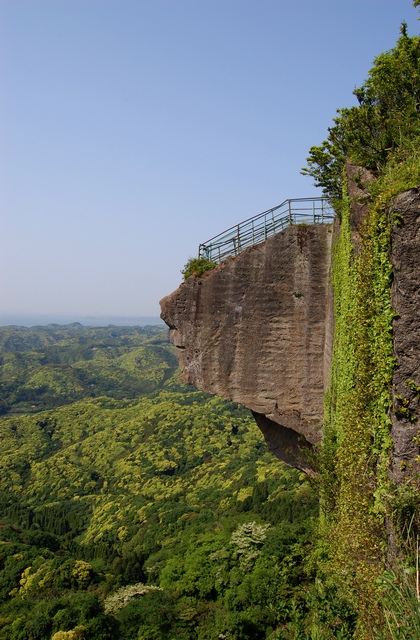
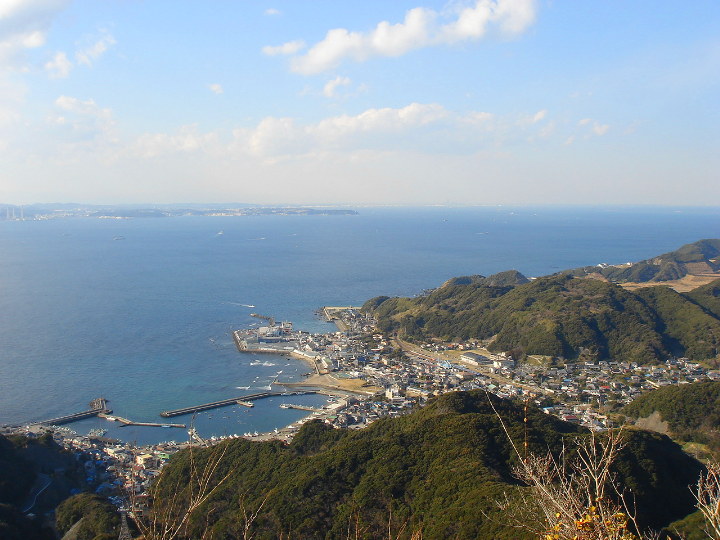
It is only 329 meters high. By any standard, Mount Nokogiri is a modest mountain. But modest is the last word you will use after standing on a rock ledge jutting over a vertical cliff, looking straight down at a forest canopy hundreds of meters below while Tokyo Bay stretches to the horizon.
This is Jigoku Nozoki—“Hell Peek”—and it is just the beginning. Mount Nokogiri packs an absurd density of extraordinary sights into a small area: Japan’s largest stone Buddha carved directly into a cliff face (31 meters tall), the geometric walls of a 350-year-old stone quarry that looks like something from a science fiction film, and 1,553 individual stone Buddhist statues scattered through the forest.
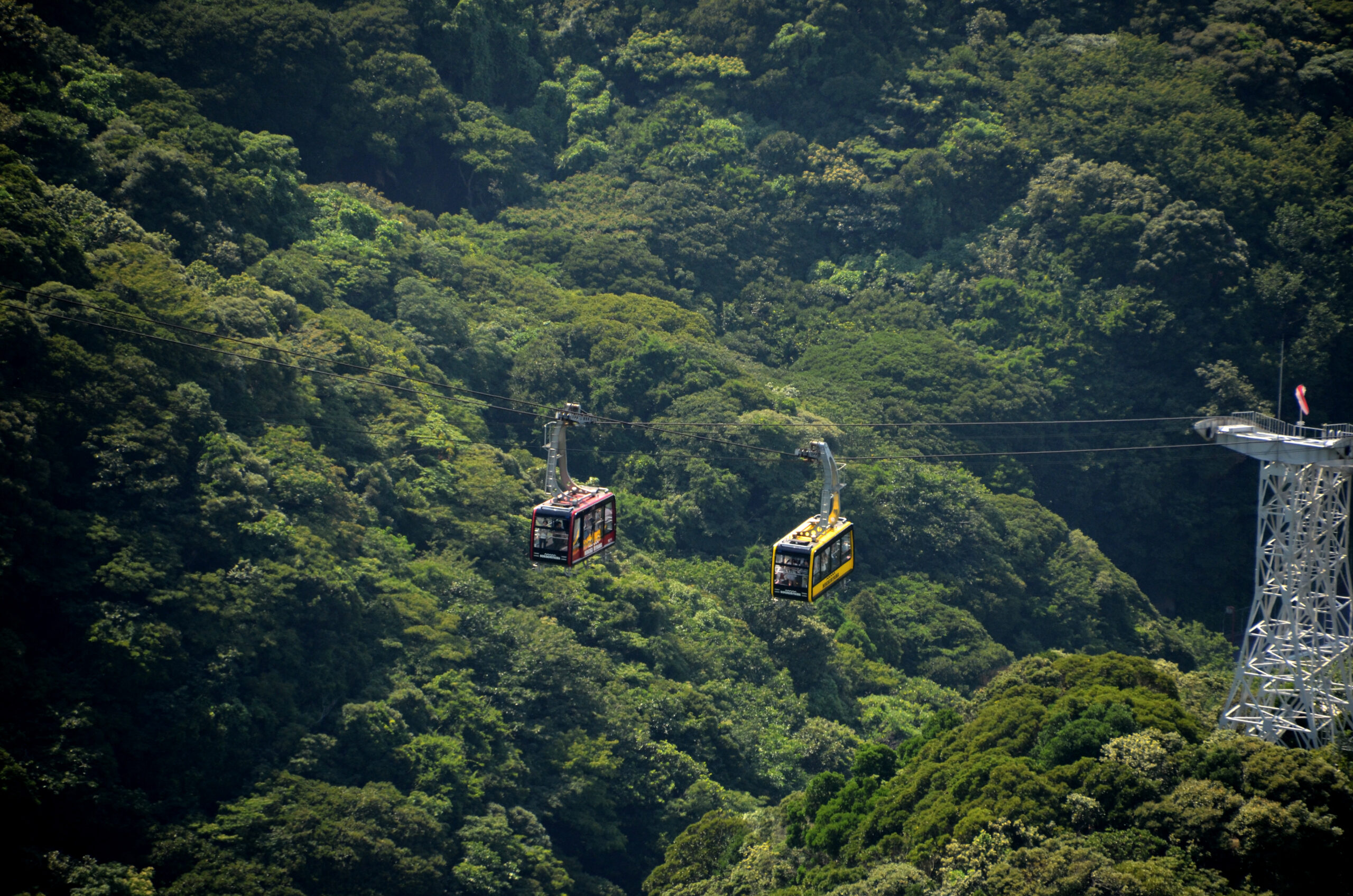
From Tokyo, it is 75 minutes by JR train to the base of the mountain, where a ropeway carries you to the summit in four minutes. A comfortable day trip that delivers experiences far beyond what the modest altitude suggests.
What Makes Mount Nokogiri Special
Jigoku Nozoki: The Cliff That Tests Your Nerve
The most famous spot on Mount Nokogiri is a flat rock ledge that projects outward from the edge of a vertical cliff. You walk to the end, grip the railing, and look down. The cliff drops away beneath your feet. Far below, the green canopy of the Boso hills stretches to the coast.
For those who fear heights, it is genuinely terrifying. For everyone, the view is extraordinary. On clear days, you can see Mount Fuji, the Miura Peninsula, and even Tokyo Skytree from this single vantage point.
The name means “peering into hell”—because looking straight down feels exactly like that.
Nihonji Temple’s Great Buddha: Japan’s Largest Stone Carving
The entire southern slope of Mount Nokogiri is the grounds of Nihonji Temple, and halfway down sits the Yakushi Nyorai (Medicine Buddha) at 31.05 meters tall. This is Japan’s largest cliff-carved Buddha—more than twice the height of the Great Buddha in Nara (14.7m) and nearly three times Kamakura’s (11.3m).
Originally carved from the rock face over three years beginning in 1783, the statue deteriorated from weathering and was restored between 1966 and 1969. Standing at the base and looking up at this colossal figure carved directly into the mountainside, what strikes you is not just the scale but the ambition of the people who decided to carve a 31-meter Buddha out of a cliff face 240 years ago.
The Quarry Walls: An Industrial Ruin Turned Wonderland
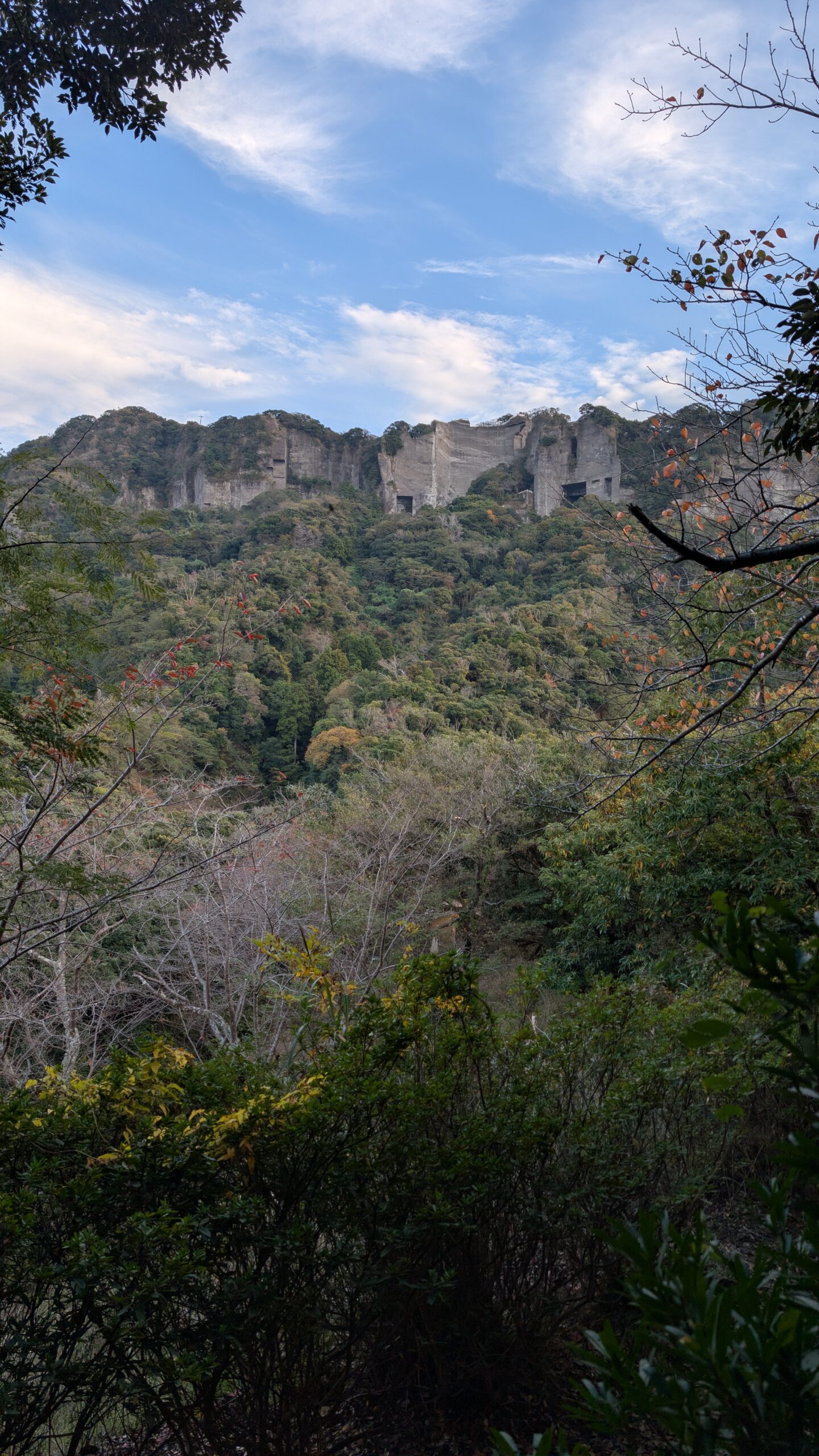
The mountain’s name—Nokogiri means “saw”—comes from the serrated appearance of its ridgeline. This is not natural erosion. For roughly 350 years, from the Edo period until 1982, quarry workers cut “Boshu-ishi” sandstone from this mountain to build Edo (Tokyo)’s foundations, walls, and buildings.
What they left behind is astonishing: vertical walls of cut stone rising tens of meters, forming geometric corridors and chambers that look like the interior of an ancient temple. The quarry ruins are unlike anything else in Japan—an industrial relic that has become a landscape of strange beauty.
Hyaku-shaku Kannon and the 1,553 Rakan
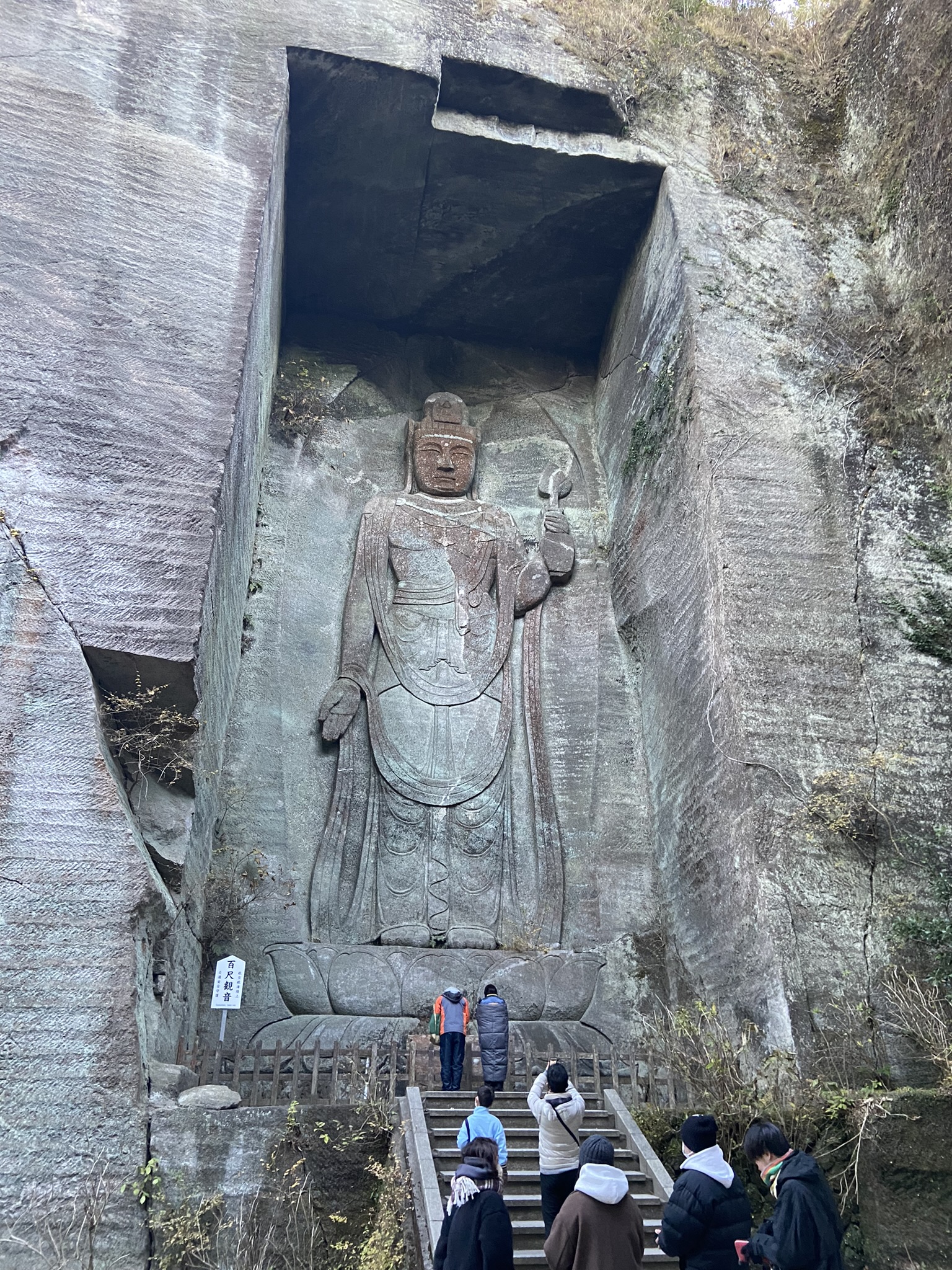
Inside the quarry ruins, a 30-meter Kannon (Goddess of Mercy) has been carved into the cliff face, completed in 1966 as a prayer for safe travel by sea, air, and land. The juxtaposition of this sacred carving within the industrial quarry creates an unusual atmosphere.
Throughout the Nihonji Temple grounds, 1,553 individual stone Rakan (Buddhist disciples) are scattered along the mountain paths. Each has a unique facial expression—some laughing, some contemplative, some fierce. Finding faces among the mossy stones adds a treasure-hunt element to the walk.
Spiritual Significance
- Healing and purification: The main deity, Yakushi Nyorai (Medicine Buddha), is associated with physical and spiritual healing
- Safe travel: The Hyaku-shaku Kannon guards travelers by sea, air, and land
- Courage and determination: The act of standing at Jigoku Nozoki and overcoming fear is itself a spiritual experience
- Renewal: Walking through the mountain temple grounds is a form of walking meditation
Mount Nokogiri is less about asking for specific blessings and more about confronting your own limits and finding something larger than yourself—whether in the vastness of the view or the scale of human devotion carved into stone.
Best Time to Visit
By Season
Spring (March–May): 15–22°C. Fresh green foliage contrasts beautifully with the grey quarry walls. Mid-April to early May is ideal. Golden Week is crowded—expect 30-minute waits for the ropeway.
Summer (June–August): 25–33°C. Heat is the main challenge. The mountain paths have some tree cover, but Jigoku Nozoki is fully exposed. Carry at least 1 liter of water. Start by 8:00 AM.
Autumn (September–November): 12–25°C. The best season overall. Late November to early December brings autumn colors against the quarry walls. Weekends during peak foliage are extremely crowded—visit on weekdays.
Winter (December–February): 5–12°C. Clear skies make this the best season for panoramic views—Mount Fuji is most visible in winter. Few visitors. Bring warm layers; the wind on exposed areas is strong.
Best Times of Day
- 9:00 AM (right at opening): Smallest crowds at Jigoku Nozoki. Best for photography
- Weekdays: A fraction of weekend crowds, especially during autumn foliage
- Avoid: Weekend 11:00 AM–2:00 PM during autumn (30+ minute waits at Jigoku Nozoki)
Visiting Guide
Routes by Fitness Level
Route A: Ropeway + Temple Walk (Beginners / Families) — 2–3 hours
1. Ropeway to summit station (4 minutes)
2. Summit observation deck (Tokyo Bay panorama)
3. Jigoku Nozoki (15 minutes)
4. Hyaku-shaku Kannon (10 minutes)
5. Walk down to Great Buddha plaza (20 minutes)
6. Nihonji Great Buddha (15 minutes)
7. Descend via Nihonji front approach
Route B: Shariki-michi Hiking Trail (Fit hikers) — 3–4 hours
1. Walk 10 minutes from JR Hamakanaya Station to trailhead
2. Climb the Shariki-michi (historic stone-carrying path), 40–50 minutes
3. Explore quarry ruins up close
4. Jigoku Nozoki and Hyaku-shaku Kannon
5. Great Buddha plaza → Nihonji Great Buddha
6. Descend via front approach → JR Hota Station
Route C: Full Circuit (All day explorers) — 4–5 hours
1. Climb via Shariki-michi
2. Explore quarry ruins thoroughly
3. Jigoku Nozoki and summit
4. Walk through the 1,553 Rakan statues
5. Nihonji Great Buddha
6. Ropeway down (or walk down via front approach)
Time at Each Spot
| Spot | Time Needed | Highlight |
|——|————-|———–|
| Jigoku Nozoki | 15–30 min (longer if queue) | Cliff-edge lookout, panoramic photos |
| Hyaku-shaku Kannon | 10 min | 30m Kannon carved inside quarry wall |
| 1,553 Rakan | 20–40 min | Stone Buddhist statues with unique faces |
| Nihonji Great Buddha | 15 min | Japan’s largest cliff-carved Buddha |
| Quarry ruins (via Shariki-michi) | 30–40 min | 350-year-old geometric stone walls |
| Summit observation deck | 10 min | Tokyo Bay panorama |
How to Get There
Address: Kyonan Town / Futtsu City, Chiba Prefecture (Nihonji Temple: Nokogiriyama, Kyonan Town)
By Train
- JR Uchibo Line “Hamakanaya Station”: 10-minute walk to ropeway base station
- From Tokyo: JR Sobu Line Rapid → Uchibo Line (approximately 75 minutes)
- From Chiba: JR Uchibo Line (approximately 60 minutes)
- JR “Hota Station”: Nearest to Nihonji Temple’s front approach. Convenient if descending via the temple route
By Car
- Tokyo Bay Aqua-Line → Futtsu-Tateyama Road “Kyonan-Tomiyama IC”: approximately 15 minutes from IC
- Approximately 90 minutes from central Tokyo
- Parking: Free at ropeway base station (approximately 200 spaces). Nihonji Temple also has paid parking
By Ferry
- Tokyo Bay Ferry: Kurihama Port (Kanagawa) → Kanaya Port (approximately 40 minutes). 8-minute walk from Kanaya Port to ropeway
- Convenient from the Miura Peninsula side. Discount combo tickets (ferry + ropeway) available
Practical Information
| Detail | Information |
|——–|————-|
| Nihonji Temple hours | 9:00–17:00 (last entry 16:00). May be shorter in winter |
| Nihonji admission | Adults 700 yen, children (ages 4–12) 400 yen |
| Ropeway | Round trip 950 yen (adults), one way 500 yen. 9:00–17:00 (shorter in winter) |
| Time needed | 2–5 hours depending on route |
| Phone | 0470-55-1103 (Nihonji) / 0439-69-2314 (Ropeway) |
| Official site | http://www.nihonji.jp/ |
Note: Nihonji Temple admission and ropeway fares are separate charges. If you take the ropeway up and walk down via the temple’s front approach, a one-way ropeway ticket is sufficient.
Nearby Attractions
Kanaya Area (Walking Distance)
- the Fish: Seafood restaurant and souvenir complex near Kanaya Port. Fresh sashimi bowls and local fish. Perfect post-hike lunch
- Kanaya Shokudo: Local fisherman’s restaurant famous for aji-furai (fried horse mackerel)
- Kanaya Seaside Park: Coastal park facing Tokyo Bay. Watch the ferries come and go while resting
Within 15–30 Minutes by Car
- Hota Elementary School (Michi-no-Eki): A closed elementary school converted into a roadside station. Classrooms turned into restaurants and shops. The “school lunch” menu is a popular attraction
- Tainouura: Watch specially designated natural monument sea bream from a sightseeing boat (approximately 25 minutes)
- Oyama Senmaida: Terraced rice paddies selected as one of Japan’s 100 best. The closest terraced fields to Tokyo
Model Itinerary: Mount Nokogiri + Kanaya Day Trip
| Time | Spot | Duration |
|——|——|———-|
| 9:00 | Ropeway to summit (arrive at opening for shortest wait) | 5 min |
| 9:10 | Jigoku Nozoki (enjoy it before the crowds) | 20 min |
| 9:40 | Hyaku-shaku Kannon and 1,553 Rakan | 30 min |
| 10:20 | Nihonji Great Buddha | 15 min |
| 10:45 | Walk down via front approach | 30 min |
| 11:30 | Seafood lunch at the Fish | 1 hour |
| 12:30 | Browse Kanaya port area, souvenirs | 30 min |
| 13:30 | Return (train or ferry) | – |
What Visitors Say
> “I had no idea Chiba had scenery like this. Jigoku Nozoki is way scarier in person than in photos. My legs were shaking, but the view was absolutely worth it.”
> — Google Maps review
> “Don’t be fooled by the ropeway—there are still a LOT of stairs inside the temple grounds. Wear proper shoes, not sandals. Bring water.”
> — Google Maps review
> “Went in winter. Almost no one there. Mount Fuji was crystal clear across the bay. The wind was brutal though—bring a windbreaker.”
> — Google Maps review
Tips for Different Visitors
Photographers
Jigoku Nozoki is best shot in the first hour after opening (9:00 AM) before crowds arrive. Wide-angle lens (16–24mm equivalent) is essential for the cliff-edge shot. The quarry ruins photograph well on overcast days when the soft light brings out the texture of the cut stone. For the Great Buddha, shoot from slightly below and to the side to capture both the scale and the rock face.
Families with Children
The ropeway route is manageable for children of elementary school age and above. The temple paths have steep stone stairs—hold hands with younger children. Strollers are not practical due to the stairs. The 1,553 Rakan statues make a fun “find a face that looks like you” game for kids. Bring water, snacks, and hats.
Wheelchair Users
The mountain paths and temple grounds involve many steep stone stairs and are not wheelchair accessible. The ropeway summit station area and its observation deck are accessible and offer good views. Call the ropeway office (0439-69-2314) in advance to confirm current accessibility.
Rainy Days
Not recommended in rain. The stone steps become very slippery when wet, and Jigoku Nozoki can be dangerous in wet conditions. If caught in light rain, limit your visit to the ropeway and Great Buddha area, wear shoes with good grip, and skip Jigoku Nozoki.
Goshuin Collectors
Nihonji Temple offers goshuin (500 yen) at the temple office near the Great Buddha plaza. Hours: 9:00–16:00. Features the distinctive Yakushi Nyorai seal. During busy periods, expect a 15–20 minute wait.
Frequently Asked Questions
Can I visit if I’m not very fit?
Yes. The ropeway takes you to the summit in 4 minutes. From there, Jigoku Nozoki is a 15-minute walk. However, the temple grounds involve steep stone stairs between areas. Allow 2–3 hours and take your time.
Can I hike up without the ropeway?
Yes. The Shariki-michi trail takes 40–50 minutes from the base. It passes through the quarry ruins and is the recommended hiking route.
Can I bring my dog?
Pets are not allowed inside Nihonji Temple grounds. The ropeway may allow small dogs in carriers (confirm in advance). The hiking trails allow dogs on leash.
Is it open in winter?
Yes. Both Nihonji Temple and the ropeway operate year-round (weather permitting). Winter hours may be shorter.
How much time do I need?
With the ropeway and visiting the main highlights: 2–3 hours. Hiking up via Shariki-michi and doing the full circuit: 4–5 hours.
Nearby Power Spots
- Kanda Myojin — Tokyo’s sacred shrine for career and business success (on the way back toward Tokyo)
- Naritasan Shinshoji — Chiba’s largest temple power spot (approximately 90 minutes by car)
Summary
Mount Nokogiri defies its modest 329-meter altitude at every turn. The Jigoku Nozoki cliff lookout delivers genuine vertigo followed by a panorama that stretches from Mount Fuji to Tokyo Skytree. The 31-meter Great Buddha carved into the mountainside speaks to centuries of devotion on an almost incomprehensible scale. And the quarry walls—geometric, vertical, otherworldly—are a reminder that human labor can create landscapes as striking as anything in nature.
At just 75 minutes from Tokyo with ropeway access, Mount Nokogiri is remarkably easy to reach for such a dramatic experience. Whether you take the ropeway for a gentle half-day visit or hike the quarry trail for the full adventure, you will leave wondering how a 329-meter mountain in Chiba managed to pack in so much.
Finish with fresh seafood at Kanaya port, and you have a day trip that feels like a much longer journey.
—
Want to find the power spot that matches you best?
Japan has countless spiritual places, but what matters most is personal compatibility. Take our free 3-minute compatibility quiz to discover which power spot resonates with you.
-> Take the Free Compatibility Quiz
—
*Information in this article is current as of March 2026. Please check the official website for the latest details.*
あなたに最適なパワースポットを知りたい方へ