“Is there a shrine near Yokohama Station where I can worship in peace?” “Where should I go for a safe-childbirth prayer?” “Is there a Suitengu in Yokohama too?” If that’s what brought you here, read on.
In short, Hiranuma Shrine (平沼神社) sits right in the heart of the city, within walking distance of Yokohama Station, yet it has long been loved by those praying for safe childbirth, fertility, and protection from water-related misfortune — a “Suitengu (水天宮),” a shrine of the water deity. Its formal name is Hiranuma Shrine, but locals know it as “Suitengu Hiranuma Jinja” or simply “Suitengu-sama.” The enshrined deities are Amenominakanushi-no-Okami, the god at the very center of the universe, and Emperor Antoku (Antoku Tenno). Together these two are revered as the “great deity of Suitengu.”
What makes this shrine special is its history of surviving disaster. In the Great Kanto Earthquake of 1923 and the Yokohama Air Raid of 1945, while the surrounding city was engulfed in flames and rubble, this one corner is said to have miraculously escaped the fire. The story endures to this day: a water deity that protected the town from fire.
Drawing on primary sources from the Kanagawa Prefecture Shrine Agency and Yokohama’s Nishi Ward, this guide covers everything you need before visiting — the blessings, how to receive a safe-childbirth prayer, access from Hiranumabashi Station, and a model course combining the shrine with Yokohama sightseeing.
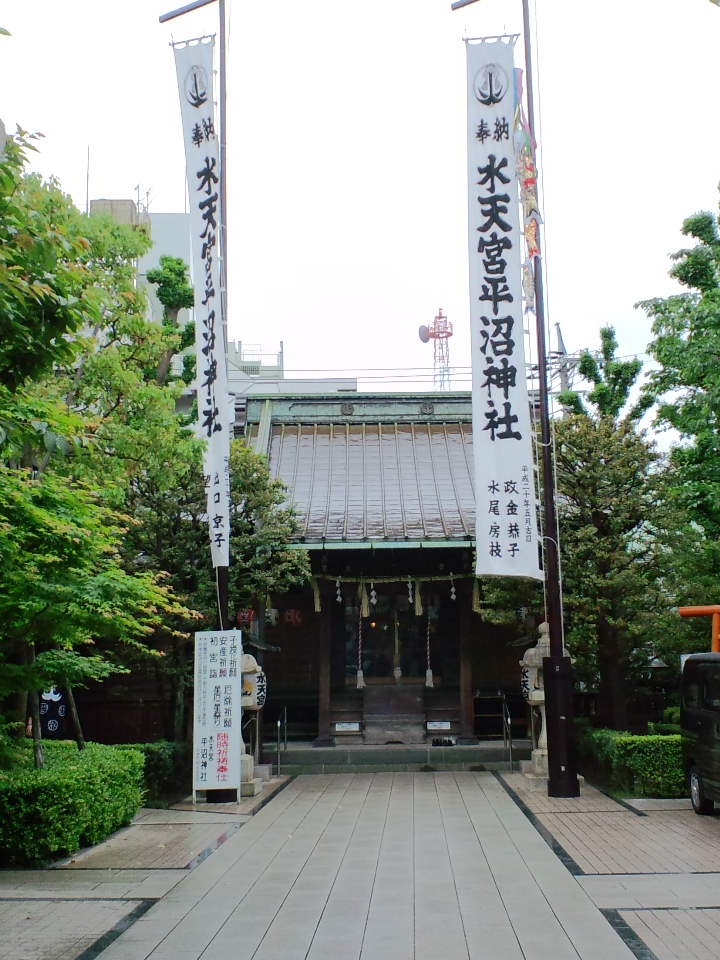
What Makes Hiranuma Shrine Special
From a Shrine Washed Ashore — the Birth of Yokohama’s Suitengu
Hiranuma Shrine’s history goes back to 1839 (Tenpo 10). In the late Edo period, this area was a salt field known as “Hiranuma Shinden” (new reclaimed land). Hiranuma Kyubei, who developed the land, is said to have enshrined a small shrine that had washed ashore in the inlet, making it the guardian deity of the new fields.
Inside that small shrine was an amulet from the Suitengu of Kurume in Kyushu — the head shrine famed nationwide as the deity of safe childbirth and water. From this, the Yokohama shrine too came to be called “Suitengu,” gathering the faith of local people as a deity of safe childbirth, fertility, and protection from water-related misfortune. It originally stood on the bank of the Katabira River near the old Hiranuma Bridge in Nishi-Hiranuma-cho, then moved to its present site in 1862. The worship hall was newly built in 1913, and the main hall was rebuilt in 1989 to mark the 150th anniversary of the shrine’s founding.
A Shrine of “Fire Protection” That Survived Two Great Disasters
No account of Hiranuma Shrine is complete without its survival of two great disasters.
One was the Great Kanto Earthquake of 1923. The other was the Yokohama Air Raid of May 29, 1945. On that day, when Yokohama’s cityscape was reduced to a sea of scorched earth, this corner of the shrine alone is said to have escaped the flames as fire raged on all sides. Nishi Ward’s own records also note that the immediate area survived amid the earthquake and the war.
From this story — a water deity turning back fire — Hiranuma Shrine came to be revered also as a shrine of fire protection and disaster prevention. The precinct includes Kamado Mihashira Shrine, dedicated to the deity of fire protection, so the Yokohama urban history of “water and fire” is concentrated in this small space.
Blessings — Centered on “Water”
Because the great deity of Suitengu governs water and the source of life, the blessings here radiate from water and everyday living.
| Blessing | Background |
|———-|————|
| Safe childbirth, fertility, first-shrine visits | The core faith as a “Suitengu” enshrining the Kurume head shrine |
| Protection from water misfortune, safety at sea and on voyages | A water deity; deeply tied to the port city of Yokohama |
| Fire protection, disaster prevention | The survival of the earthquake and air raid; the precinct’s Kamado Mihashira Shrine of fire protection |
| Good health, warding off misfortune | The “First Suitengu” hot-water ritual on January 5 |
| Prosperous business, bountiful harvests | The precinct’s Hiranuma Inari Shrine (Uka-no-Mitama) |
| Academic success, passing exams | The precinct’s Hiranuma Tenmangu |
Water flows, circulates, washes away stagnation, and nurtures new life. These deities are considered a good match for those who want to invite new flow, or who pray for new life in the family.
How to Receive a Safe-Childbirth Prayer or First-Shrine Visit
Hiranuma Shrine’s central blessing is the safe-childbirth prayer (anzan kigan). For anyone looking for a shrine for safe childbirth in the Yokohama area, it’s one of the first to come to mind.
- The “Day of the Dog” (inu-no-hi) safe-childbirth prayer: drawing on the dog’s easy births, it is a long-standing custom to pray for a safe delivery on the Day of the Dog in the fifth month of pregnancy. Hiranuma Shrine performs these prayers.
- Monthly festival on the 1st (tsukinami-sai): for the milestones of monthly visits
- First-shrine visit (omiyamairi) and Shichi-Go-San: Shichi-Go-San prayers are also offered, centered on November 15
However, the prayer reception hours, offering fees, and whether reservations are required are not officially stated. Days of the Dog can get crowded, so it’s wise to confirm with the shrine office (+81-45-321-8895) by phone before visiting. Since the visit comes when you’re far along in pregnancy, plan a comfortable schedule and route.
Access — Nearest is Hiranumabashi Station, Within Walking Distance of Yokohama Station
Hiranuma Shrine is right by Yokohama Station, and you can reach it on foot from several stations — the convenience of an urban shrine.
| From | Walking time |
|——|————–|
| Sotetsu Main Line Hiranumabashi Station | About 1–3 minutes (nearest) |
| Keikyu Main Line Tobe Station | About 5 minutes |
| Yokohama Municipal Subway Blue Line Takashimacho Station | About 9 minutes |
| Yokohama Station (East Exit) | About 12–14 minutes |
- Address: 2-8-20 Hiranuma, Nishi-ku, Yokohama, Kanagawa 220-0023
- Car / parking: there are reports of a few parking spaces in the precinct, but the number is limited and not officially confirmed. As this is a city center close to Yokohama Station, public transport is strongly recommended.
- Accessibility: the presence of steps, wheelchair routes, and a multipurpose toilet could not be confirmed in official sources. If you’re visiting while pregnant, with a stroller, or using a wheelchair, it’s reassuring to confirm with the shrine office in advance.
Best Time to Visit
As an urban shrine you can worship year-round, but timing your visit to the annual events deepens the experience.
| When | Highlight |
|——|———–|
| January 5 | First Suitengu; the hot-water (yutate) ritual praying for good health and warding off misfortune |
| May 5 | Tango Festival |
| June 30 | Nagoshi-no-Oharae (summer purification) |
| September 4–5 | Annual festival; sacred kagura dance is offered on the 5th |
| Around November 15 | Shichi-Go-San |
| December 31 | Oharae, burning of old amulets, Joya-sai |
As for time of day, a weekday morning, when the crowds around Yokohama Station have settled, is the prime window for a quiet visit. Many locals stop by on their way home from work, and the evening precinct holds a scene of prayer woven into daily life.
Guide by Visitor Type
For Those Who Want to Stop By After Work or in Spare Moments
A location 1–3 minutes on foot from Hiranumabashi Station, and within walking distance of Yokohama Station, is perfect for a quick “drop-in” visit. Step one pace away from the bustle in front of the station and a quiet, green-wrapped precinct opens up. Being compact, the worship itself takes only 5–10 minutes — a place to reset your mind between shopping or work in Yokohama.
For Photographers & City Walkers
It isn’t a grand scenic site, but the contrast of “a guardian forest against a backdrop of city buildings” makes for a shot true to this shrine. The worship hall, the torii, and precinct shrines such as Hiranuma Inari Shrine are your subjects. When using a tripod, take care not to block the path of worshippers.
For Goshuin Collectors
Regarding goshuin, the information is mixed, and it could not be officially confirmed whether they are currently issued (some visitors report a notice that they are not being offered). If a goshuin is your goal, be sure to check with the shrine office (+81-45-321-8895) before visiting. Nearby shrines such as Tobe Sugiyama Shrine can be combined into a Nishi Ward shrine-and-temple stroll.
Around the Shrine & a Model Course
The appeal of Hiranuma Shrine is that it connects on foot to Yokohama Station and Minato Mirai, the hub of Yokohama sightseeing. You can build a whole day around your visit.
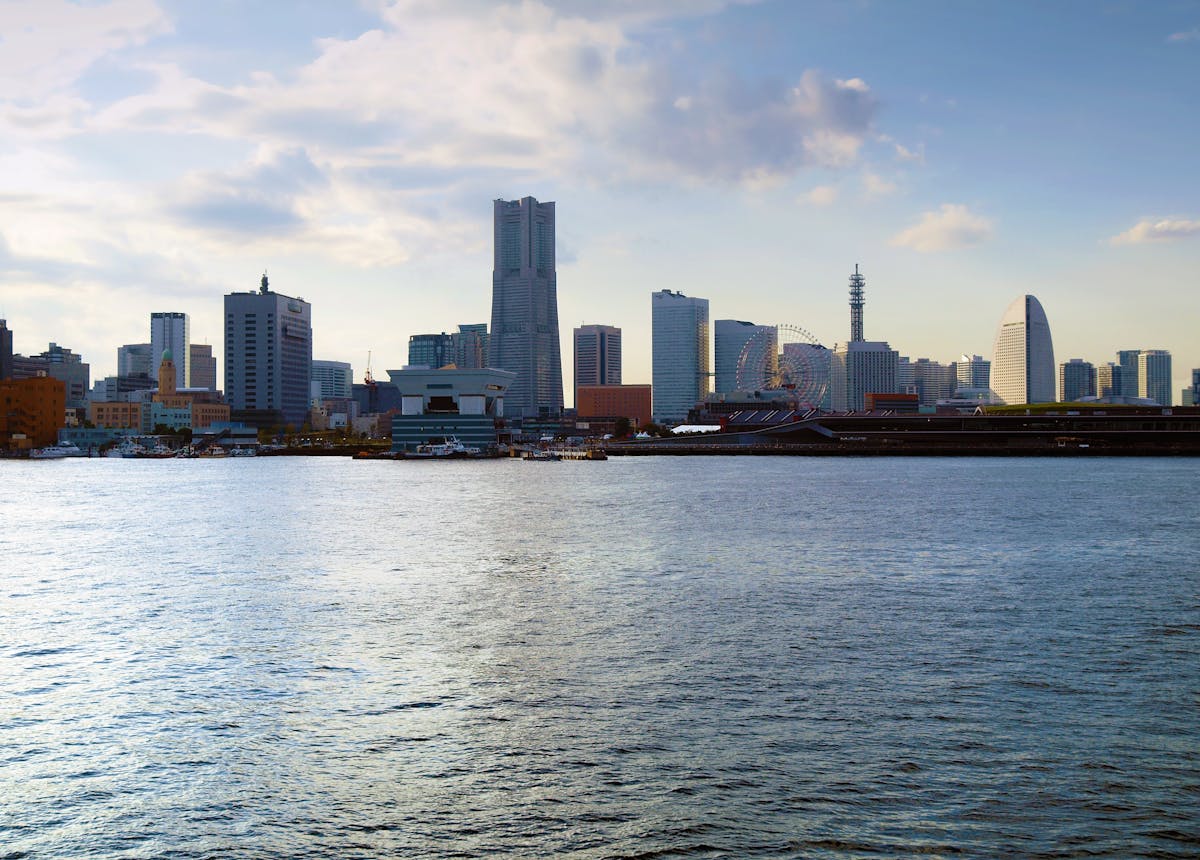
Half-Day Model Course (Yokohama Sightseeing)
“`
10:00 Arrive at Hiranumabashi Station; worship at Suitengu Hiranuma Shrine
10:30 Walk toward Takashimacho and on to Minato Mirai
11:00 Nippon Maru Memorial Park & Yokohama Port Museum
12:00 Lunch around the Landmark Tower
13:30 Stroll Minato Mirai’s shops and waterfront
“`
Course for Safe-Childbirth Prayers / Families
“`
Morning Arrive at Hiranumabashi Station (at a comfortable time); safe-childbirth prayer (confirm in advance for Days of the Dog)
↓
Rest and lunch at a shopping complex by the Yokohama Station East Exit
↓
Head home early, depending on your condition
“`
Nearby Spots
- Around Yokohama Station: shopping complexes such as Sogo and Yokohama Bay Quarter are concentrated here — no trouble finding meals or cafés
- Minato Mirai 21: the Landmark Tower, Nippon Maru Memorial Park, and the Cosmo Clock 21 Ferris wheel are all within walking distance
- Local eateries in Tobe and Hiranuma: to avoid the bustle of Yokohama Station, the calmer shops on the Hiranumabashi/Tobe side are a good option
- Tobe Sugiyama Shrine & Iseyama Kotai Jingu: for a Nishi Ward shrine-and-temple walk
Visitor Voices
A few impressions from worshippers, posted on shrine-visit sites (each reflects the individual poster’s personal opinion):
> “The precinct is compact, but there are many smaller shrines within it, all well kept — a pleasant place to worship.”
> — from a post on the shrine-visit site “Hotokami”
> “It’s close to my workplace, so I stop in to pray on my lunch break.”
> — from a post on the shrine-visit site “Omairi”
> “I did my child’s first-shrine visit here. It’s our local Suitengu-sama.”
> — from a post on the shrine-visit site “Omairi”
What worshippers most often share is a precinct calmer than you’d expect right by Yokohama Station, the ease of worshipping within the flow of work and daily life, and a local shrine to rely on at life’s milestones like the first New Year’s visit and first-shrine visits. More than a tourist attraction, it’s loved as a “guardian deity rooted in the town” — and that is the essence of this shrine.
Notes
1. Use public transport: parking is limited, and as a city center near Yokohama Station, public transport is the sure choice. The nearest station is Hiranumabashi.
2. Confirm goshuin and amulets: availability of goshuin is reported inconsistently. If that’s your aim, contact the shrine office in advance.
3. Confirm prayers in advance: reception hours, offering fees, and reservation requirements for safe-childbirth and other prayers are not officially stated. Confirm by phone (+81-45-321-8895).
4. Crowds and rain at the festival: the grand festival on September 4–5 is lively. Fittingly for a shrine tied to water, the festival is said to often see rain, so an umbrella is reassuring.
5. No accessibility information: steps and toilet facilities in the precinct are unconfirmed. Those who need accommodations should check in advance.
Frequently Asked Questions
Q. Are “Suitengu” and “Hiranuma Shrine” the same?
A. Yes, the same shrine. Its formal name is Hiranuma Shrine; because it enshrines a branch of the Kurume Suitengu, it’s also called “Suitengu” or “Suitengu Hiranuma Jinja.”
Q. Can I have a safe-childbirth prayer?
A. As a Suitengu, the faith centers on safe childbirth and fertility, and safe-childbirth prayers on the Day of the Dog and first-shrine visits are offered. Reception hours and fees are not officially stated, so confirming with the shrine office (+81-45-321-8895) in advance is the sure way.
Q. What’s the nearest station?
A. Sotetsu Main Line Hiranumabashi Station, about 1–3 minutes on foot, is nearest. It’s also about 5 minutes from Keikyu Tobe Station, and a 12–14 minute walk from the Yokohama Station East Exit.
Q. Is there parking?
A. There are reports of a few spaces, but the number is limited and not officially stated. As this is a city center near Yokohama Station, public transport is recommended.
Q. Can I get a goshuin?
A. The information is mixed, and it could not be officially confirmed whether they are currently issued. If a goshuin is your goal, please contact the shrine office before visiting.
Q. Why is it called a shrine of “fire protection”?
A. Because in two great disasters — the Great Kanto Earthquake and the Yokohama Air Raid — this corner of the shrine is said to have escaped the flames while the surroundings burned. The precinct also includes Kamado Mihashira Shrine, dedicated to the deity of fire protection.
Conclusion
Hiranuma Shrine (Suitengu Hiranuma Jinja) is “a Suitengu of safe childbirth and fire protection, within walking distance of Yokohama Station.”
Beginning from a small shrine washed ashore in the inlet, and surviving both the Great Kanto Earthquake and the Yokohama Air Raid, the water deity has quietly watched over the town and the lives of Yokohama’s people. Families praying for a safe birth, locals pressing their palms together on the way home from work, and travelers stopping by amid Yokohama sightseeing — all kinds of people come, each carrying their own prayer to this “guardian deity of the town.”
Because it connects on foot to Yokohama Station and Minato Mirai, why not weave a brief moment of prayer into a day of sightseeing or shopping?
—
We hope this guide helps you make the most of your visit to Hiranuma Shrine.
*Information is current as of June 2026. Goshuin and prayer arrangements, shrine-office reception hours, and parking availability are subject to change — please confirm with the shrine office (+81-45-321-8895) or official information before visiting.*
Key sources:
Discover Your Compatibility with Hiranuma Shrine
Power spots resonate differently with different people. Two visitors can stand in the same place and feel completely different things — a result of how your own innate energy meets the character of the spot.
The “water” power of Hiranuma Shrine is said to suit those who want to invite new flow, or who pray for new life in the family — but whether it truly matches you depends on the personal energy derived from your birth date and time.
あなたに最適なパワースポットを知りたい方へ