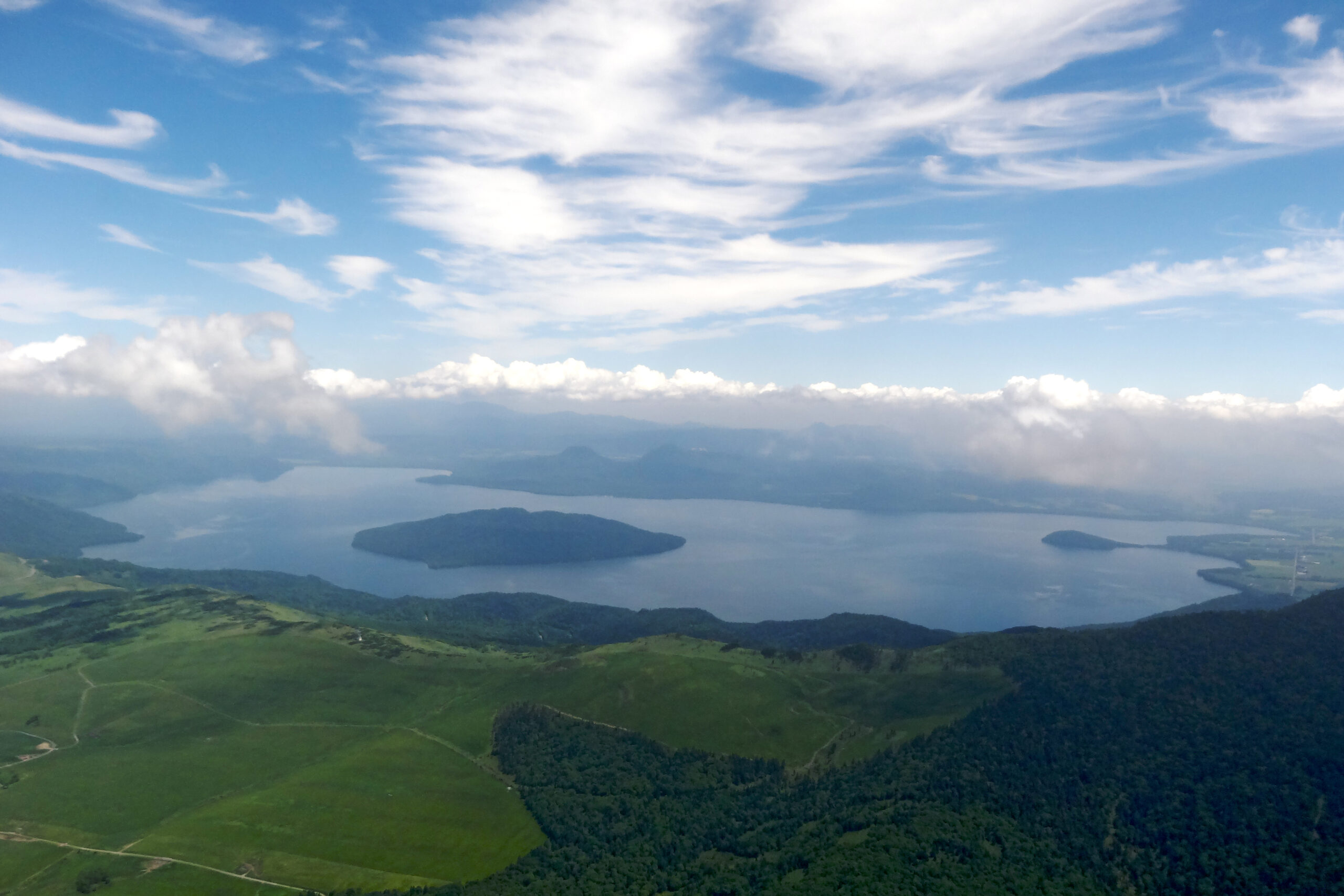
In eastern Hokkaido’s Teshikaga Town lies Japan’s largest caldera lake—Lake Kussharo. With a circumference of 57km, surface area of 79.7km², maximum depth of 125m, and elevation of 121m, the lake also holds Nakajima Island, the largest island within a freshwater lake in Japan (source: Mashuko Tourism Association).
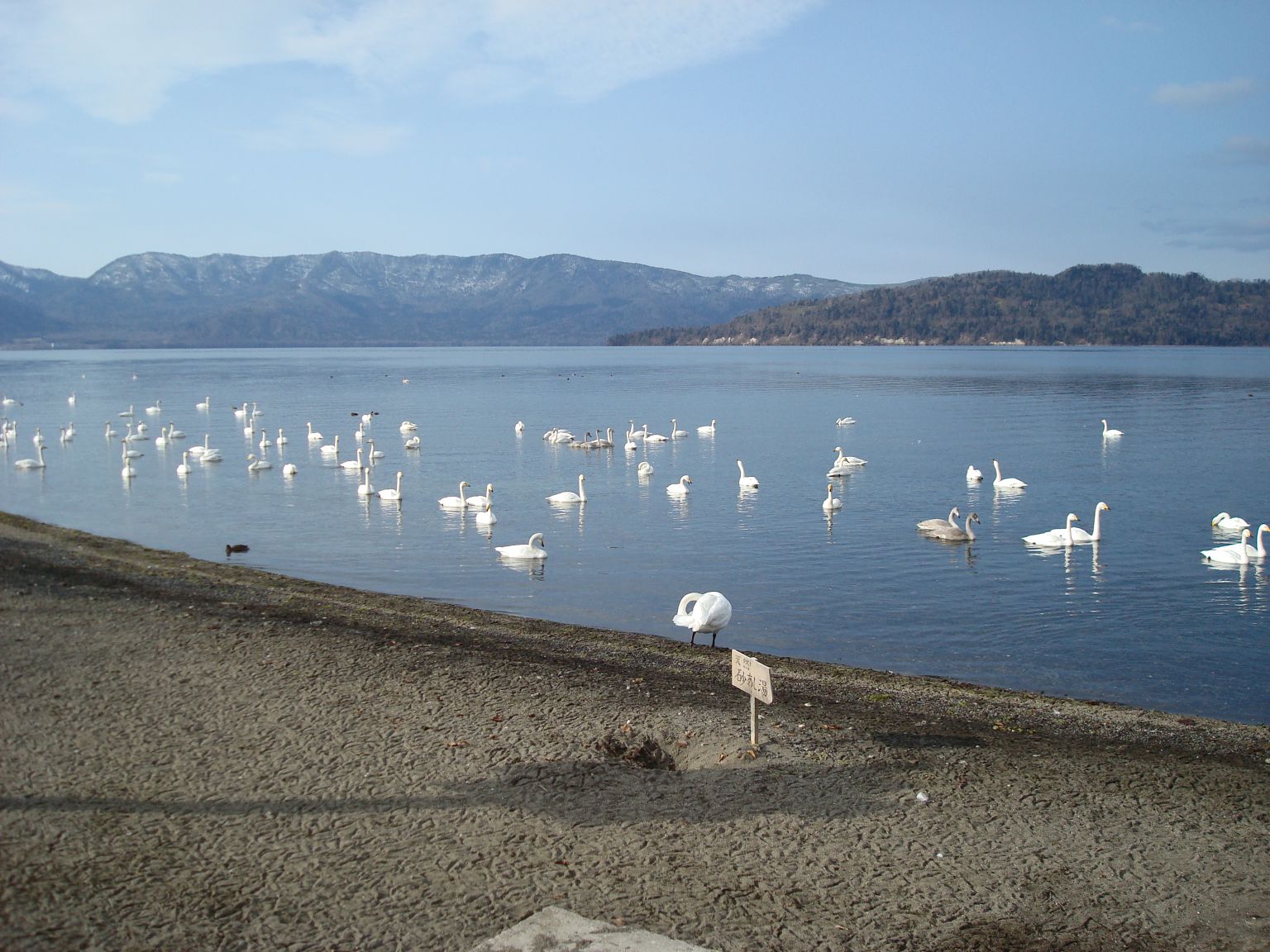
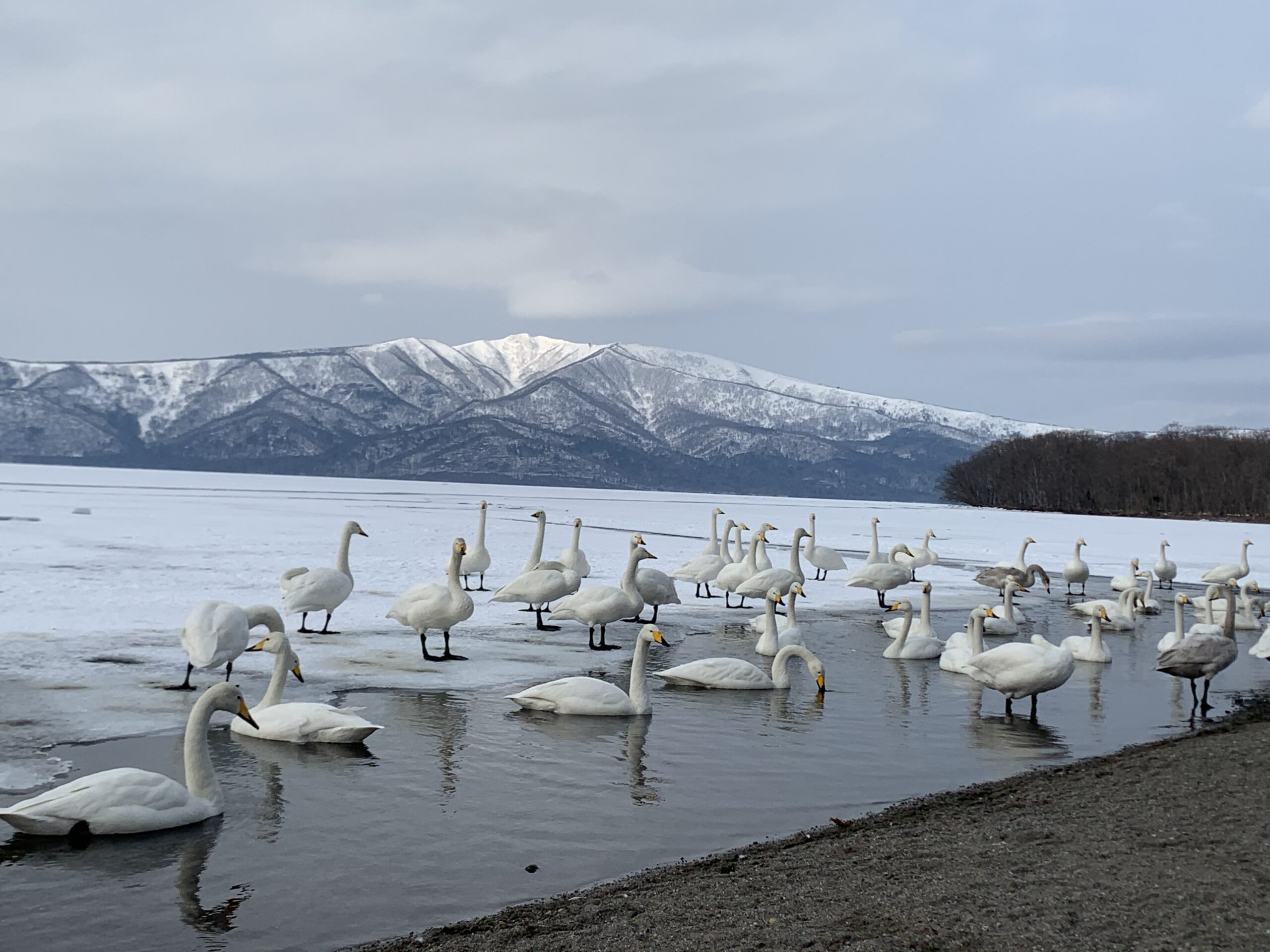
Among the three caldera lakes of Akan-Mashu National Park (Akan, Mashu, and Kussharo), Kussharo is where visitors can most directly “converse” with nature. Dig the sand on the lakeshore and a hot spring wells up; in winter, hundreds of Whooper swans arrive from Siberia; from this lake flows the first drop of the Kushiro River, one of Japan’s major waterways. The lake itself feels alive.
This guide gives you everything you need to plan a Lake Kussharo visit you won’t regret, based on first-source information from the Mashuko Tourism Association, Teshikaga Town, the Ministry of the Environment, the Ministry of Land/Infrastructure/Transport, and the Geological Survey of Japan. We cover the right way to enjoy the sand baths, when the swans actually arrive, the conditions for Bihoro Pass’s famous sea of clouds, the truth about the “Omiwatari” ice ridges, and cautions for the lakeside onsen circuit—everything to know before you go.
The Appeal of This Place
Japan’s Largest Caldera Lake and Its “Largest Island Within a Freshwater Lake”
Lake Kussharo formed when water filled the Kussharo Caldera. The Geological Survey of Japan’s volcano database describes the Kussharo Caldera as “one of the world’s largest,” with post-caldera volcanic activity continuing at Atosanupuri (Mount Iō) and Nakajima Island at the center of the lake.
Nakajima Island has a circumference of 12km and area of 5.7km²—the largest island within a freshwater lake in Japan (Mashuko Tourism Association). Hokkaido contains a lake, the lake contains an island, the island is itself a mountain—this nested scale is Kussharo’s defining feature.
| Item | Measurement |
|——|————-|
| Circumference | Approx. 57km |
| Surface area | Approx. 79.7km² |
| Maximum depth | Approx. 125m |
| Lake elevation | 121m |
| Nakajima Island circumference | Approx. 12km |
The Ainu Word “Kuccharo”—The Throat of the Lake
The lake’s name comes from the Ainu word “Kuccharo,” meaning “throat” or “outlet of a lake or marsh.” The Hokkaido Regional Development Bureau confirms that the Kushiro River’s main course flows out from the “Kuccharo” of Lake Kussharo.
The first drop of one of Japan’s major Class-A rivers, the Kushiro River (154km in length, drainage area 2,510km²), begins here. This identity as “the place where water flows out” is part of what makes Kussharo special.
Dig the Sand, Find a Hot Spring: “Sunayu”
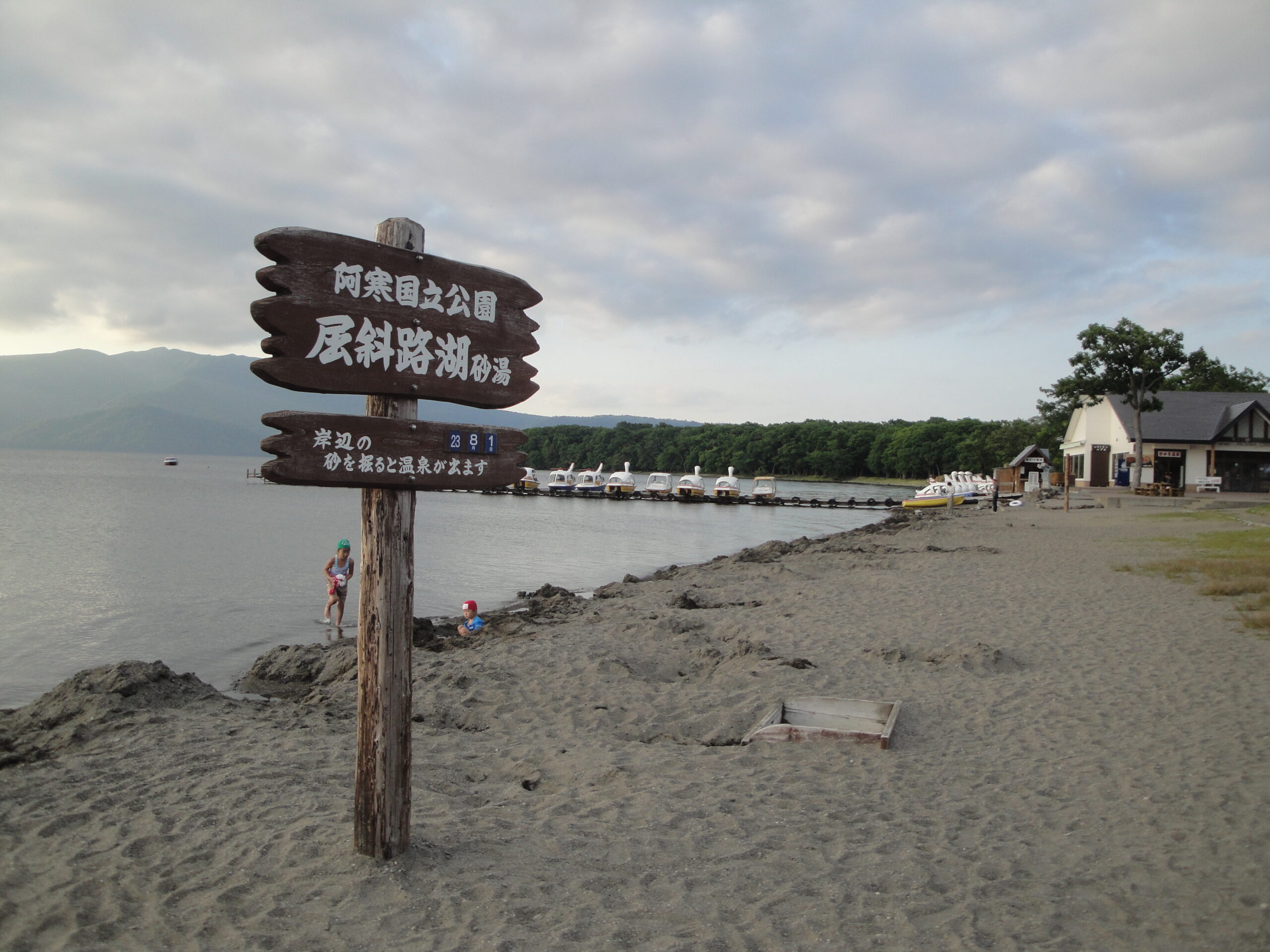
What sets Kussharo apart from the other caldera lakes is that the lakeshore itself is a hot spring zone. Sunayu (“sand hot spring”)—where you dig the sand on the shore to create your own foot bath or open-air bath—is Kussharo’s signature experience. Free, open 24 hours, no closing days (source: Mashuko Tourism Association).
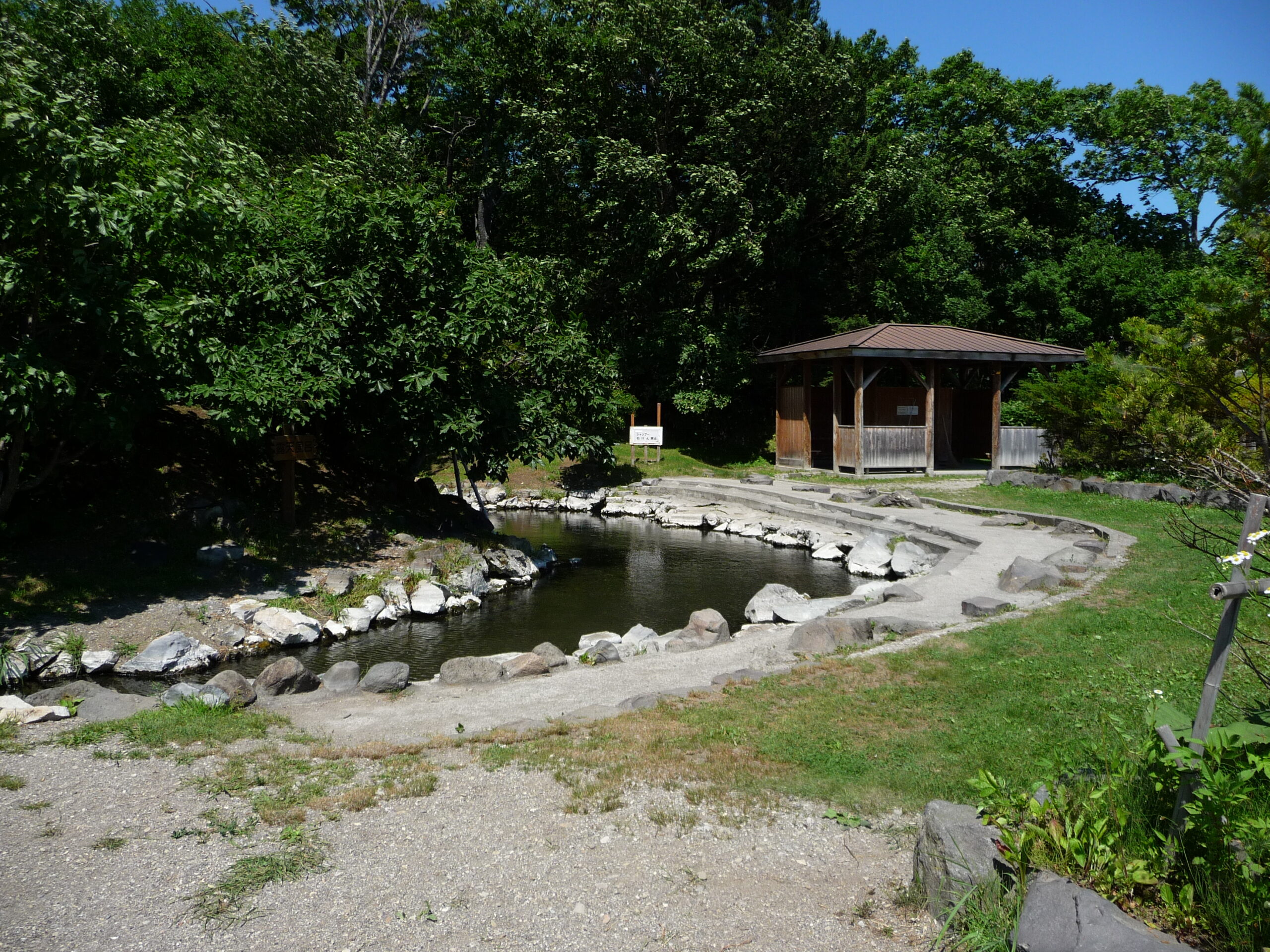
Beyond Sunayu, the lakeshore offers Kotan-no-Yu (free, 24 hours), Wakoto Onsen (free, 24-hour mixed bathing), and Ike-no-Yu—a density of natural hot springs that can’t be circuited in a single day.
Why Lake Kussharo Is Called a Power Spot
First-source records explicitly designating Kussharo as an Ainu sacred site are limited, but the lakeside settlement of Kussharo Kotan has long been an Ainu community (Mashuko Tourism Association).
What Lake Kussharo offers visitors is not a wish-granting power, but “a sense of flow and circulation.”
Purification at the Outlet of Water — Swans arriving from Siberia, hot springs welling from the lake bed, the Kushiro River that begins here—Kussharo is not a place “where things stop” but a starting point of flow. Standing here, where water is always moving and life is always circulating, can prompt a fresh look at the stagnation in your own life.
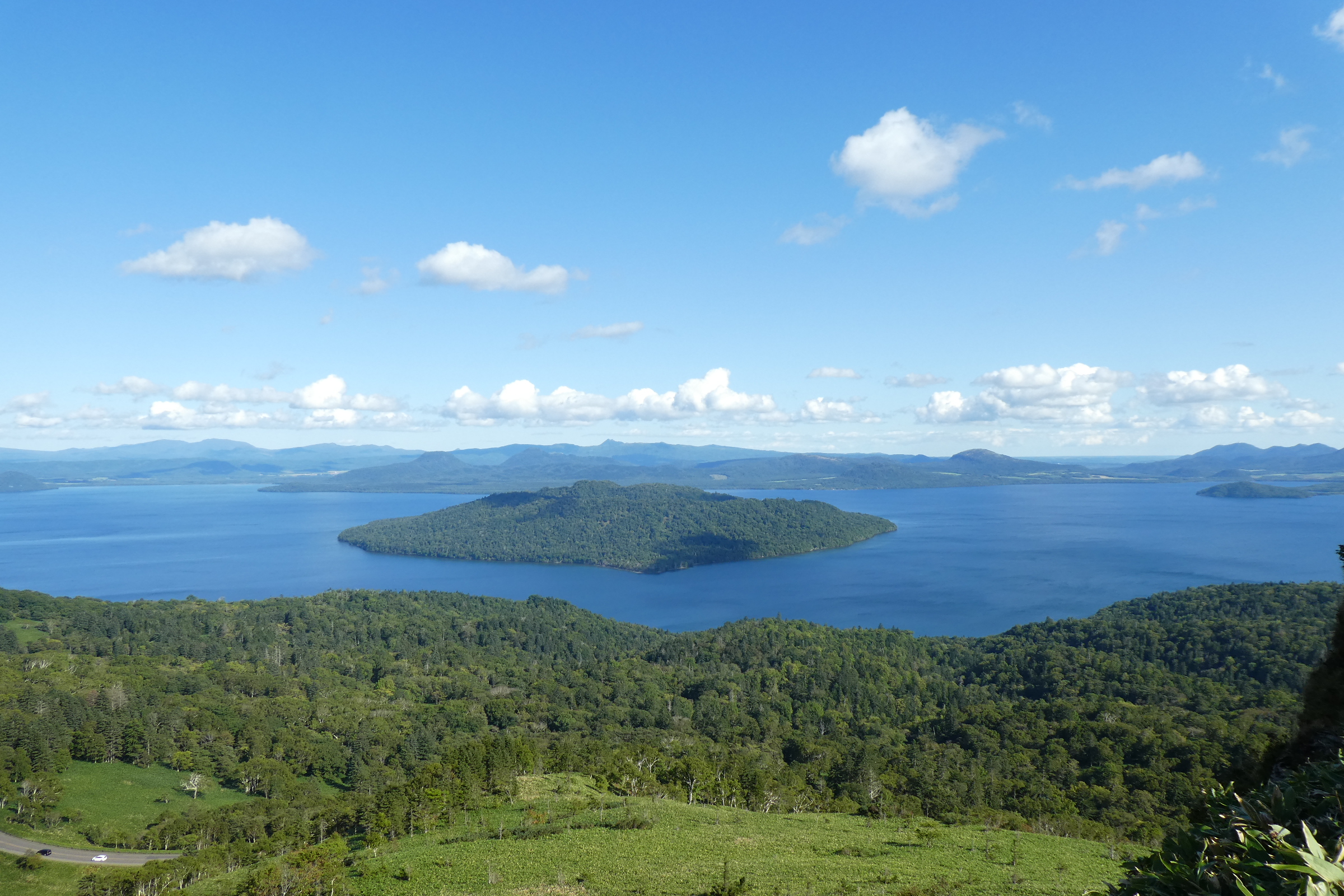
A Stillness That Comes from Sheer Scale — Japan’s largest caldera lake, holding an island within it, with a mountain on the island. Few places in the country let you feel this nested geological scale. Looking down at the lake from Bihoro Pass, you face a landscape that exceeds the human scale.
Nature as Infrastructure — Not a polished tourist destination, but a place where you dig sand for a hot spring, soak in a rock bath beside the lake, watch swans gather on the water. A place where nature itself is the medium of experience is rare even in Japan.
Best Times to Visit
Seasonal Highlights
| Season | Highlights | Cautions |
|——–|———–|———-|
| Spring (May–June) | Snowmelt, fresh greenery, swans returning north | Single-digit temperatures in mornings/evenings; passes are windy |
| Summer (July–August) | Sand baths, swimming, canoeing, camping peak season | Sunayu crowded at popular hours; bring insect repellent |
| Autumn (Late Sep – mid-Oct) | Foliage at Bihoro Pass, Tsubetsu Pass, and Mount Mokoto contrasted with the lake | Cold mornings/evenings; Tsubetsu Pass open only until late October |
| Winter (Dec–March) | Whooper swans wintering at Sunayu, lake icing, possible Omiwatari ice ridges | Road icing and blizzards; Tsubetsu Pass closed in winter |
Best Times of Day
- Early Morning (5–7 AM): The sea of clouds visible from Bihoro Pass is Kussharo’s signature scene—and it only appears at dawn on windless mornings (Mashuko Tourism Association).
- Daytime (10 AM – 3 PM): The best window for Sunayu, Kotan-no-Yu, and walking the Wakoto Peninsula trail.
- Evening to Night: Eastern Hokkaido has minimal light pollution, making it excellent for stargazing. But wildlife crossings and icy roads (in winter) make night travel risky—travel only with proper gear and minimal night driving.
Peak Autumn Foliage
The typical window is early to mid-October, though it can shift by 1-2 weeks year to year. The Tsubetsu Pass Observation Facility is scheduled to operate from June 1 through late October (Tsubetsu Town official). Mid-October is the prime week when peak foliage and Tsubetsu Pass operations overlap.
Important Note on “Omiwatari”
“Omiwatari“—the midwinter phenomenon of ice cracking and ridging on the frozen lake—is one of Kussharo’s winter signatures. But the phenomenon does not occur, or fully develop, every year. A March 2026 report from Kitami Institute of Technology states that the development of Kussharo’s Omiwatari “depends on future weather”—it should never be expected as a guaranteed sight. Visit with the mindset: “lucky if seen.”
Lakeside Onsen Guide
The lakeshore itself is a cluster of hot springs. Here is a practical guide.
Sunayu (Free / 24 hours)
The signature Kussharo experience—dig the sand to create your own bath. Free, open 24 hours, no closing days (Mashuko Tourism Association). The rest house “Retara-Chip” operates 8:00–17:00 (until 18:00 in July–August) year-round, with restrooms and a shop.
Critical safety note: Dig too deep and scalding water erupts—burn risk is real. Dig gradually, check the temperature by hand, and for children, an adult should always do the digging. Be cautious about touching deep sand bare-handed or walking barefoot.
Kotan-no-Yu (Free / 24 hours, Friday from 16:00 only)
A rustic open-air bath on the lakeshore south of Sunayu. Free, 24 hours. However, Fridays are limited to from 16:00 due to cleaning, and temperature management is only between 9:00–16:00 (Mashuko Tourism Association). Separate changing rooms exist, but the bath itself is essentially mixed bathing.
Wakoto Onsen (Free / 24 hours / Mixed)
A free mixed-bathing open-air onsen at the base of the Wakoto Peninsula. 24 hours, no closing days. For those seeking unpolished, raw nature (Mashuko Tourism Association).
Ike-no-Yu
A larger pond-like bath enclosing a natural spring. Operating status and maintenance vary—confirm with the Mashuko Tourism Association before visiting.
Overall mindset: Kussharo’s lakeside onsen are not “facilities”—they are nature, as is. Bring towels, water, and basic first aid, and visit understanding that mixed bathing and changing-room conditions are basic.
Main Observation Points
Bihoro Pass (525m elevation)
Centered on the roadside station “Gurutto Panorama Bihoro Pass.” Sweeping views of Lake Kussharo, Nakajima Island, Mount Iō, and (on clear days) the Shiretoko Range—the iconic vantage point for the lake (Mashuko Tourism Association, Bihoro Town official). Parking, rest areas, souvenirs, and a light snack corner are available. Open year-round and ideal for chasing the dawn sea of clouds.
Mount Mokoto Observation Park (430m elevation)
A roadside observation park along Prefectural Road 102. Cited by the Kawayu Eco-Museum Center as a check point for confirming full lake icing. Verify winter access via current road conditions.
Tsubetsu Pass Observation Facility (approx. 947m elevation)
The highest of the three viewpoints, famous as a sea-of-clouds spot. Scheduled to operate from June 1 through late October, closed in winter (Tsubetsu Town official). Confirm the 2026 operating dates close to your visit.
Basic Information & Access
Basic Information (as of May 2026)
| Item | Details |
|——|———|
| Address | Teshikaga-cho, Kawakami-gun, Hokkaido |
| Admission | The lake, Sunayu, Kotan-no-Yu, and Wakoto Onsen are all free |
| Main contact | Teshikaga Town Hall Tourism & Commerce Section: 015-482-2940 / Mashuko Tourism Association |
| Official site | masyuko.or.jp (Teshikaga Navi) |
Access (Car-Based by Default)
| From | Time |
|——|——|
| Memanbetsu Airport | About 1 hour by car (Hokkaido Airports) |
| Kushiro Airport / Nakashibetsu Airport | About 1 hour+ by car (Mashuko Tourism Association) |
| JR Mashu Station | About 20 minutes to Sunayu (RECAMP Sunayu official) |
| From Sapporo | A half-day drive (~5 hours via expressway+general road, confirm same-day) |
| Lake Akan Onsen | About 1 hour by car (tourist route estimate) |
| Lake Mashu | About 30 minutes by car (tourist route estimate) |
The Reality of Public Transportation
Visiting Lake Kussharo essentially requires a car. Akan Bus operates routes from the Mashu office, Mashu Station, the Kawayu Onsen area, and the Kussharo line, but services are infrequent and many are seasonal (Akan Bus official).
The Teshikaga Eco Passport (unlimited use of town routes and tourist shuttles) is seasonal—confirm 2026 availability with Teshikaga Town directly.
Practical options:
1. Rental car (most flexible)
2. Scheduled tourist bus (e.g., the winter-only “Kushiro-Shiretoko Go,” reservation required)
3. Taxi combinations from Mashu Station or Kawayu Onsen Station
Winter Road Cautions
Tsubetsu Pass is closed in winter. Bihoro Pass, the Mount Mokoto area, and National Route 243 may face blizzards, icing, and temporary closures. Confirming Hokkaido road information on the day of travel is essential.
Model Itineraries
Plan 1: Summer, 2 Days/1 Night (Full Kussharo)
| Day | Time | Activity |
|—–|——|———-|
| Day 1 | 11:00 | Arrive Memanbetsu Airport → rental car → head to Bihoro Pass |
| | 12:30 | Bihoro Pass Observation Deck + lunch at the roadside station |
| | 14:00 | Sunayu—dig the sand for your own foot bath |
| | 16:00 | Kotan-no-Yu—soak with a view of the lake |
| | 17:30 | Stay at Kawayu Onsen |
| Day 2 | 5:30 | Return to Bihoro Pass for the dawn sea of clouds |
| | 8:00 | Breakfast at lodging → walk the Wakoto Peninsula trail (30-40 min loop) |
| | 11:00 | Drive to Lake Mashu First Observatory (~30 min) |
| | 14:00 | Return to Memanbetsu Airport |
Plan 2: Winter, Day Trip (Swans & Possible Omiwatari)
| Time | Activity |
|——|———-|
| 9:00 | Arrive Kushiro Airport → rental car to Kawayu area |
| 11:00 | Whooper swan watching at Sunayu (hundreds wintering) |
| 12:30 | Lunch + onsen at Kawayu |
| 14:00 | Bihoro Pass for the iced lake panorama |
| 16:00 | Return to Kushiro Airport |
Visitor Voices
Real impressions from Tripadvisor:
> “At Sunayu, our kids loved digging the sand and finding hot water. Swan-shaped boats and a rest house round it out as a family-friendly stop.”
> — Tripadvisor “Lake Kussharo Sand Bath,” summary of a May 2024 review
Sunayu’s appeal lies in the active “dig it yourself” experience—rare among tourist destinations. Especially memorable with kids.
> “Visited in summer and there wasn’t a single swan. If swans are the goal, come in winter.”
> — Tripadvisor “Lake Kussharo Sand Bath,” September 2017 photo submission
Swan watching is strictly a December–March experience. Don’t make the trip in summer expecting to see them.
Visitor Segment Guides
For Photographers
The best spots are Bihoro Pass’s dawn sea of clouds, Sunayu’s Whooper swans (winter), the broad views from Mount Mokoto Observation Park, Wakoto Peninsula, and Tsubetsu Pass (June–October only).
About drone use: Inside Akan-Mashu National Park, use must follow Ministry of the Environment and individual land manager rules. Don’t fly without checking—confirm with the Akan-Mashu National Park Management Office (015-483-2335) before flying.
For Campers
RECAMP Sunayu (lakeside campground) operated April 25 – November 23 in 2025, with reception 9:00–17:00 and accessible restrooms. Confirm 2026 dates with the Mashuko Tourism Association.
RECAMP Wakoto has been closed since April 2025 for major facility renovation (Mashuko Tourism Association). Reopening dates are unconfirmed at the time of writing—always check before visiting.
For Families with Children
Digging sand and finding a hot spring at Sunayu is unbeatable as outdoor learning for kids. However, dig too deep and scalding water can erupt—an adult should always control the digging and check the temperature. Watch out for bare-footed walking too.
In winter, Sunayu also offers close-up Whooper swan watching, a rare wildlife experience. Do not feed the swans (national park rules).
For Wheelchair & Stroller Users
The Bihoro Pass roadside station has accessible parking, shops, and observation area. The Sunayu rest house offers restrooms and a shop with a relatively flat approach from the parking lot to the beach—but the sand itself is impassable for strollers.
RECAMP Wakoto has accessible/universal restrooms, but is currently closed. For the latest accessibility status, contact Teshikaga Town’s Tourism & Commerce Section directly (015-482-2940).
For Early Morning & Night Visitors
Bihoro Pass’s sea of clouds is a dawn (5–7 AM) phenomenon. It develops more readily on windless mornings with a significant temperature differential—but it’s never guaranteed. Stay nearby overnight and drive up at dawn is the practical approach.
Nights offer excellent stargazing, but ice on roads (winter), wildlife crossings (year-round), and lighting at parking areas all create safety considerations. Avoid solo night visits.
For Visitors Interested in Ainu Culture
The Kussharo Kotan Ainu Folk Museum is closed for major renovation from December 1, 2025 through approximately the end of March 2028 (Mashuko Tourism Association). To experience Ainu culture in this region, either wait for reopening or drive about an hour to Lake Akan Ainu Kotan (lakeside community at Lake Akan).
For Pet Owners
Whether pets are permitted on leash along the lakeshore or at Sunayu is not clearly documented in official sources. Contact Teshikaga Town’s Tourism & Commerce Section in advance (015-482-2940). National park rules require strict waste management, distance from wildlife, and no feeding.
Cautions & Safety Information
Burn Risk at Sunayu
Dig too deep at Sunayu and scalding water erupts. Dig gradually, check the temperature by hand, and only expand carefully. Children and barefoot visitors must take special care. Don’t dig deeply with bare hands; don’t walk barefoot for long periods.
Omiwatari May Not Occur
Don’t make the visit solely “to see Omiwatari.” Recent surveys confirm its development varies dramatically year to year (Kitami Institute of Technology, March 2026 report). And under no circumstances should you step onto the lake ice.
Brown Bears (Higuma)
The mountains and hills of the Kushiro River basin are brown bear habitat. When walking the Wakoto Peninsula nature trail or similar, make noise (bell, radio), avoid solo travel, store food properly, and check on-site postings—follow the basics strictly (Ministry of the Environment).
Winter Roads
Tsubetsu Pass closes in winter. Bihoro Pass, National Route 243, and surrounding roads may face blizzards, icing, and temporary closures. If renting a car in winter, always choose a vehicle equipped with studless tires and verify Hokkaido road information on the day of travel.
National Park Etiquette
Within Akan-Mashu National Park, dumping waste, picking plants, feeding wildlife, walking off marked trails, fires outside designated areas, and bringing in motor boats or snowmobiles are prohibited or restricted (Ministry of the Environment). Follow the rules to preserve this landscape for the future.
Mobile Phone Reception
Reception may be weak or absent at the lakeshore, passes, and peninsula areas. Bring Google Maps offline maps, paper maps, and sufficient battery.
Summary
Lake Kussharo is Japan’s largest caldera lake, holding the largest island within a freshwater lake in Japan—the symbolic landscape of Akan-Mashu National Park.
Dig the sand on the shore and a hot spring wells up; soak in a free rock bath beside the lake; watch hundreds of Whooper swans arrive from Siberia in winter; canoe your own course in summer. A place where nature itself serves as the infrastructure of experience is rare anywhere in Japan—and Kussharo may be unique among them.
Pairing Kussharo with Lake Akan and Lake Mashu—the “Eastern Hokkaido Three-Caldera-Lake Tour”—is a classic route worth building into any Hokkaido itinerary. For visitors who prefer “direct dialogue with nature” over polished destinations, the Kussharo experience stays with you.
If Lake Akan or Lake Mashu is already on your plan, make space for a half-day at Kussharo, touching the starting point of flow.
—
We hope this article helps you make the most of your visit to Lake Kussharo.
*Information in this article is current as of May 2026. Operating status of sand-bath and onsen facilities, Tsubetsu Pass opening dates, RECAMP Wakoto reopening, the Kussharo Kotan Ainu Folk Museum renovation period, winter road conditions, and Omiwatari occurrences all change frequently. Before visiting, please confirm the latest information with the Mashuko Tourism Association (masyuko.or.jp), Teshikaga Town’s Tourism & Commerce Section (015-482-2940), and the Akan-Mashu National Park Management Office (015-483-2335).*
あなたに最適なパワースポットを知りたい方へ