A three-minute walk from JR Hassamu-Chuo Station in Sapporo’s Nishi-ku ward, Hassamu Shrine (発寒神社, Hassamu-jinja) sits quietly in a residential neighborhood. According to the Hokkaido Shrine Office, the shrine was founded as an Inari shrine in 1856 (Ansei 3)—19 years before the 32 Tondenhei (military farmer-settler) households arrived in Hassamu in 1875 (Meiji 8). This places it among the oldest shrine lineages in Sapporo.
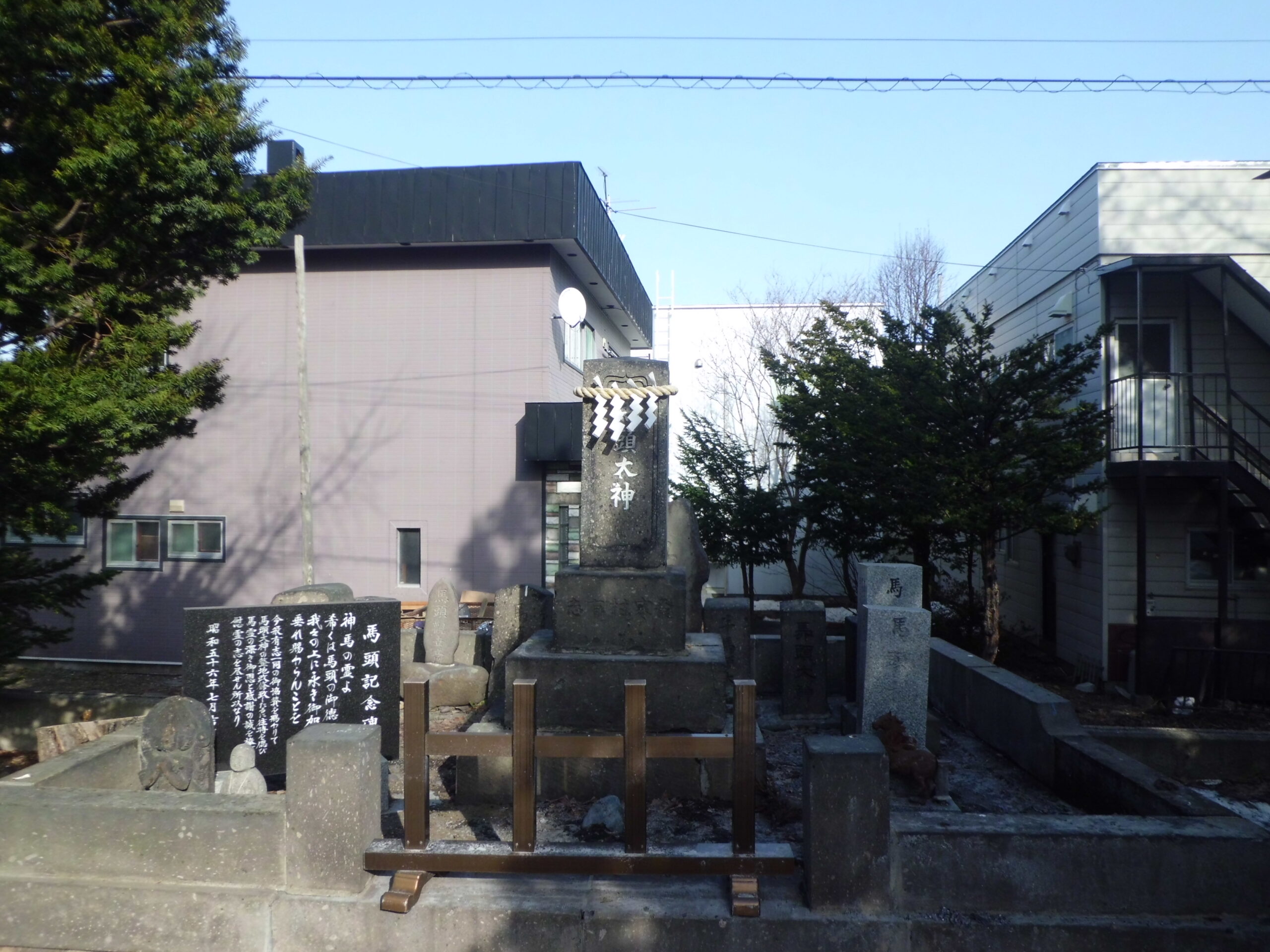
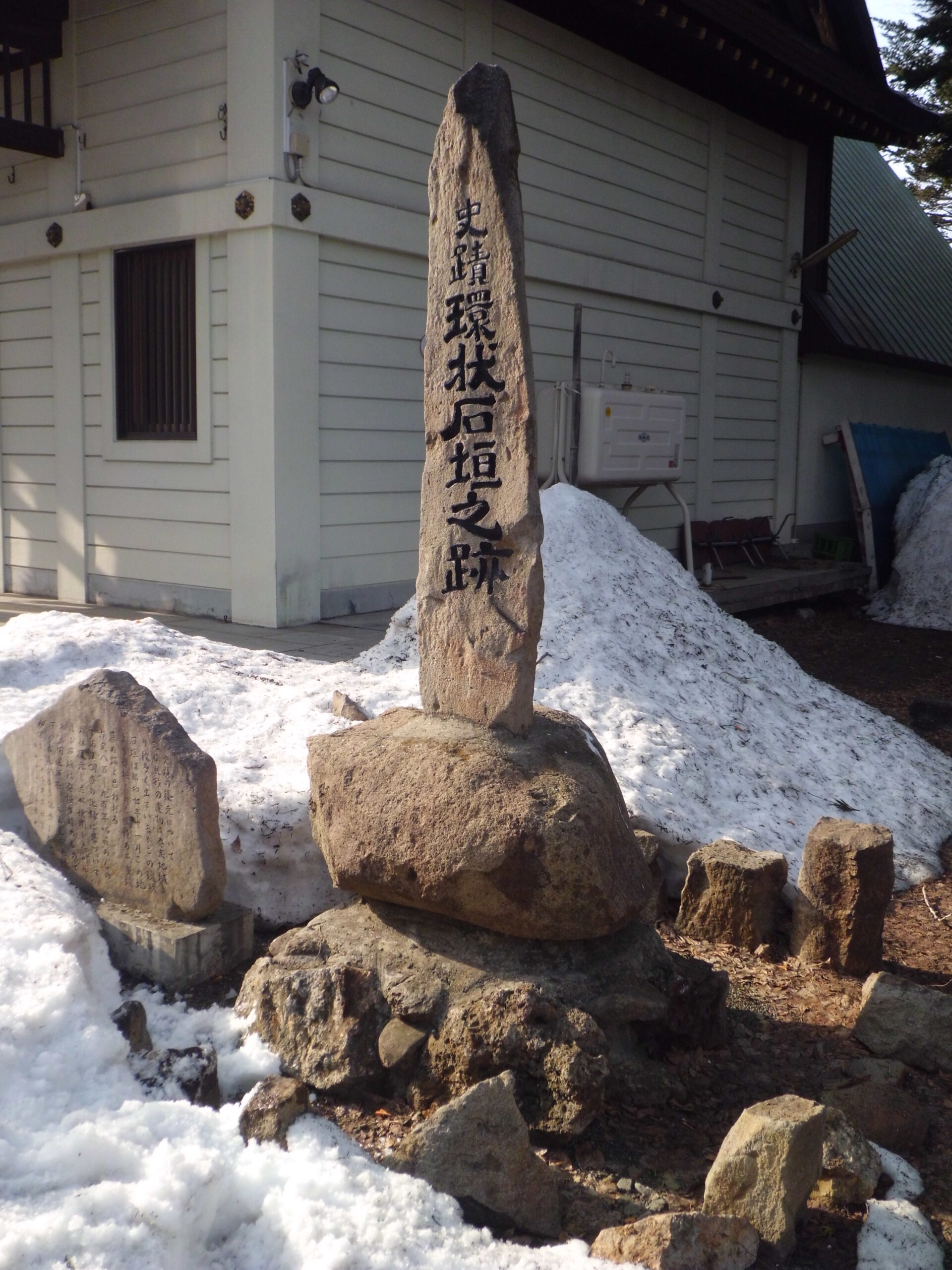
In 1898 (Meiji 31), the main hall was newly built at its current location. The shrine enshrines Toyouke-no-Okami and Uka-no-Mitama-no-Okami, and has served as the guardian shrine of the Hassamu district through Hokkaido’s pioneer era to the present. Inside the precincts, you can find a monument to the Horse Deity (Bato-Daijin) and a stone circle remnant—physical traces of pioneer-era faith.
This guide draws on first-source information from the Hokkaido Shrine Office and verified secondary sources. We cover the goshuin (received on-site, 9:00–17:00), spring and autumn festivals, the critical distinction between JR Hassamu Station and JR Hassamu-Chuo Station, and a half-day model itinerary combining the visit with Shiroi Koibito Park and AEON Mall Sapporo Hassamu.
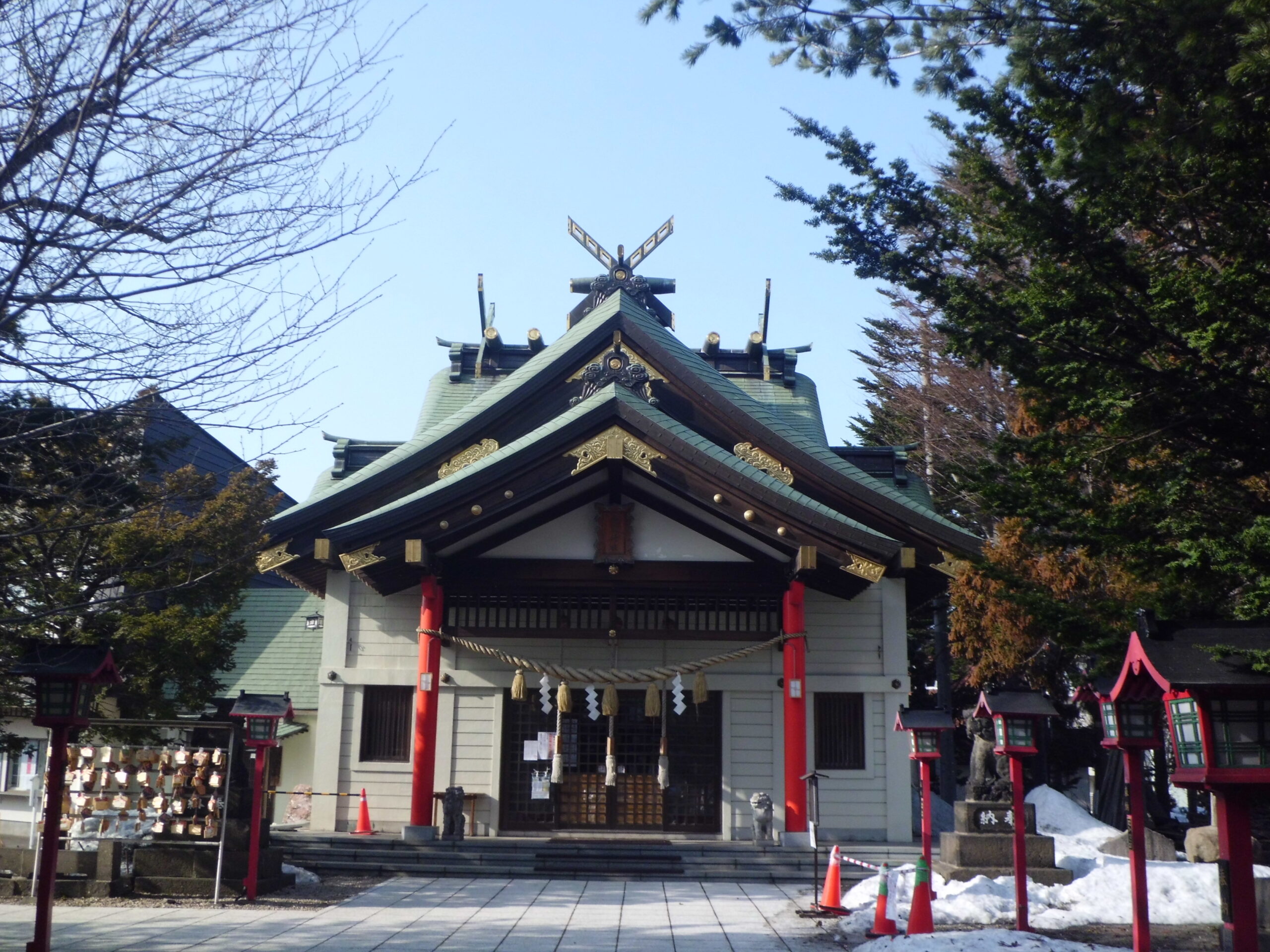
The Appeal of This Sacred Site
An Inari Shrine Lineage Predating the Tondenhei Settlement Era
Hassamu Shrine’s distinguishing feature is the antiquity of its founding. According to the Hokkaido Shrine Office, the shrine was enshrined as an Inari shrine in 1856 (Ansei 3)—late Edo period, only three years after Commodore Perry’s arrival, and before the establishment of Japan’s Meiji government.
While most shrines in Sapporo were founded alongside the Meiji-era Tondenhei settlements and pioneer-era construction, Hassamu Shrine has documented enshrinement going back 19 years before that settlement era, making it one of the few sites in Sapporo with such an early Edo-period lineage.
1875: Arrival of 32 Tondenhei Households and the Main Hall
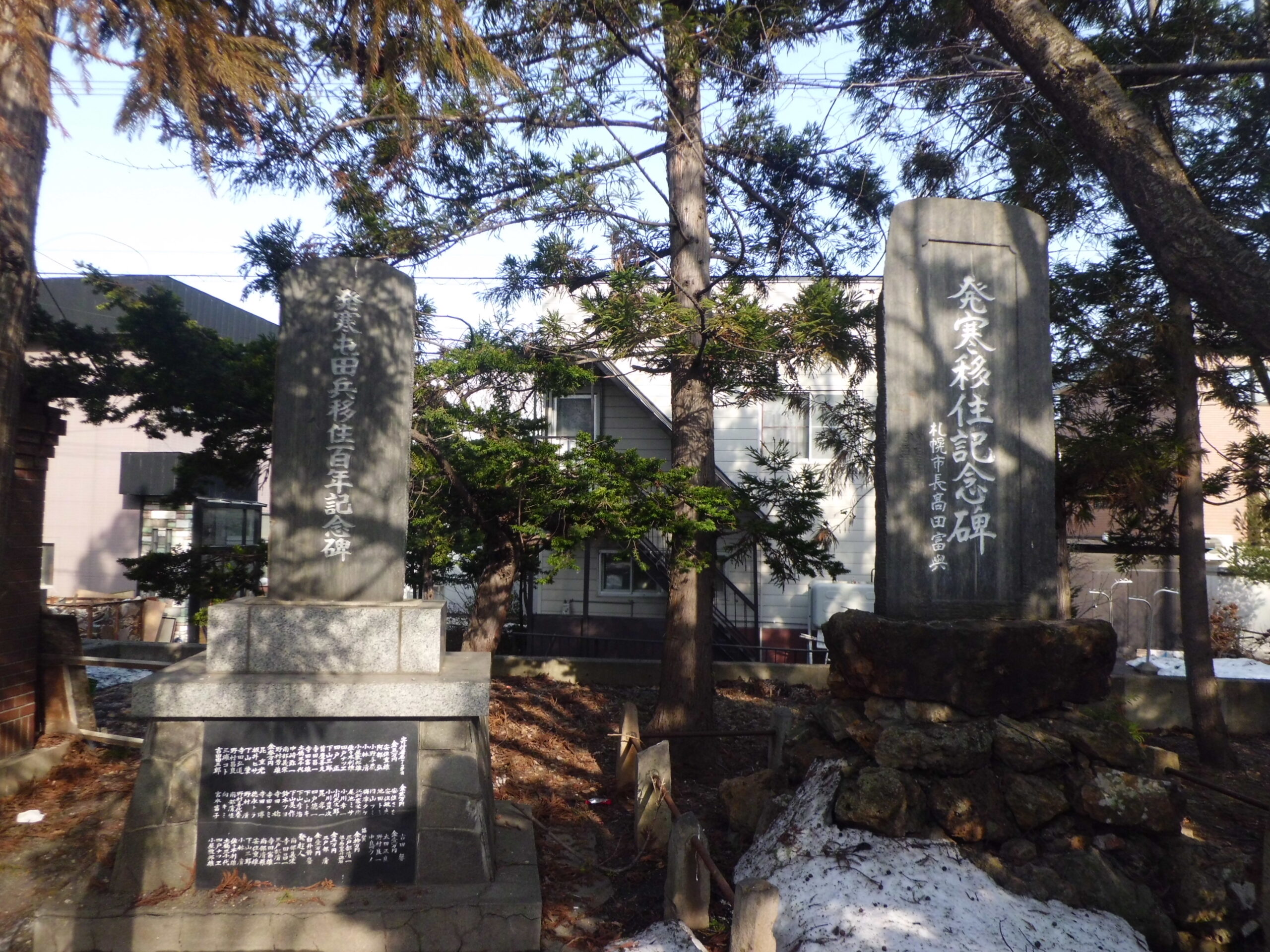
The Hokkaido Shrine Office’s record continues: in 1875 (Meiji 8), 32 Tondenhei households settled in Hassamu and built a main hall as a spiritual anchor. At the time, Hassamu spanned the area around what is now Miyanosawa Subway Station through Kotoni and Hachiken—a key Tondenhei military-farming village on Sapporo’s outskirts under the Hokkaido Development Commission.
The shrine’s main hall was later rebuilt at its current location (11-3 Hassamu, Nishi-ku) in 1898 (Meiji 31), classified as an ungraded shrine in 1932 (Showa 7), and became a religious corporation in 1953 (Showa 28), reaching its present organizational form.
Enshrined Deities—Toyouke-no-Okami and Uka-no-Mitama-no-Okami
| Deity | General Divine Virtues (Shinto tradition) |
|——-|——————————————-|
| Toyouke-no-Okami | Protection of food/clothing/shelter, abundant harvest, prosperity of industries |
| Uka-no-Mitama-no-Okami | Deity of rice and grains, business prosperity, agricultural protection |
These are general Shinto interpretations and are not specifically documented as Hassamu Shrine’s official blessings. The shrine’s founding as an Inari shrine and its association with grain/food deities aligns with Hassamu’s history as a pioneer agricultural settlement.
Important note for those searching for “anzan kigan” (safe childbirth prayers): A separate shrine in Nishi-ku—Nishino Shrine (1-3-1-1 Heiwa, Nishi-ku, Sapporo)—is the one widely known for safe childbirth prayers, not Hassamu Shrine. Please do not confuse them.
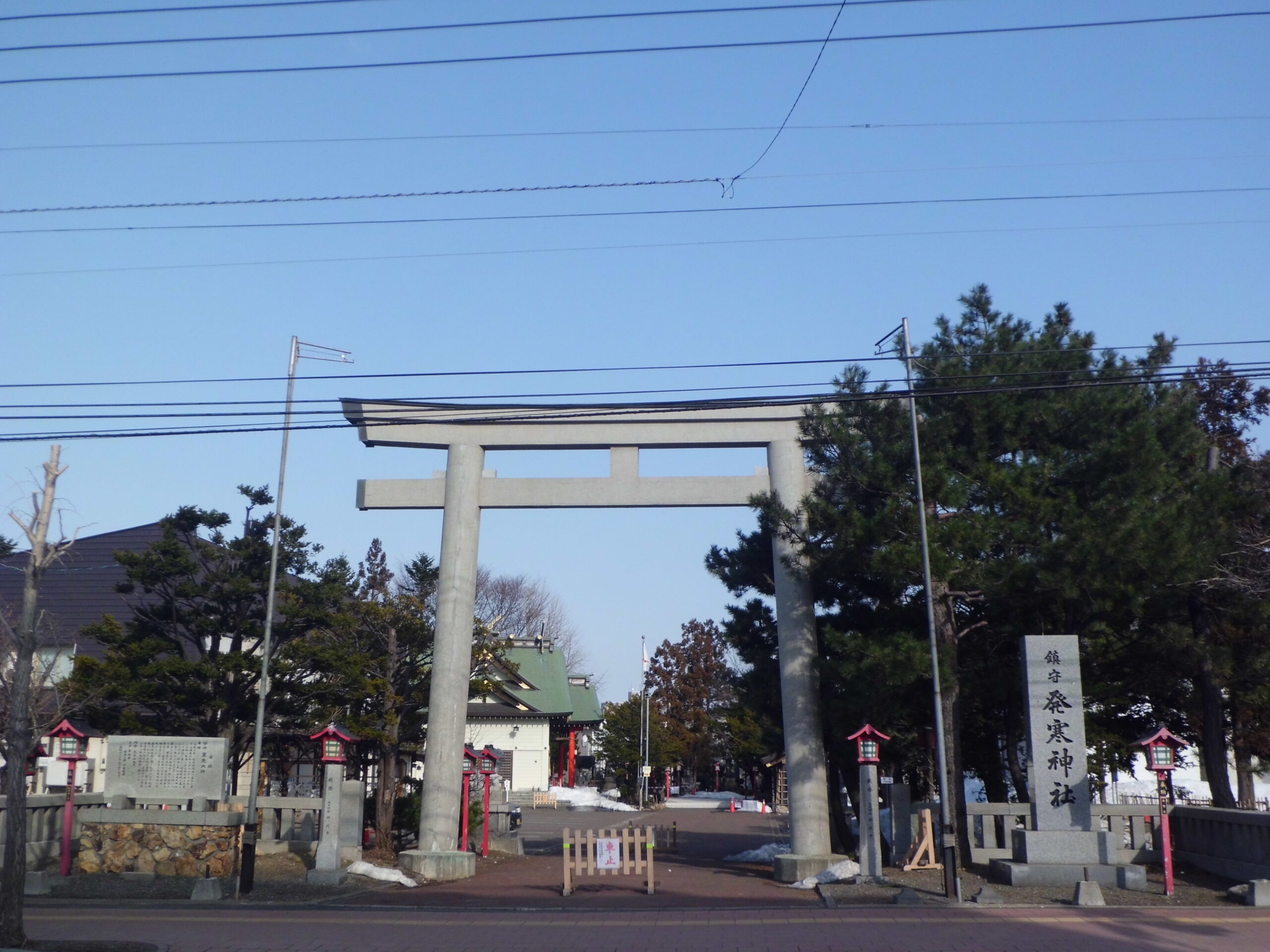
Why Hassamu Shrine Has Value as an Urban Local Guardian
Hassamu Shrine is not a famous shrine like Ise Jingu or Izumo Taisha. Yet it offers value that commercialized major shrines cannot.
1. One of the oldest documented shrine lineages in Sapporo — The 1856 Inari shrine enshrinement predates Sapporo’s Tondenhei settlement history. In a city where most shrines date to 1875 or later, Hassamu Shrine stands out as a place of prayer with documented late-Edo origins.
2. Pioneer-era monuments preserved in the precincts — The grounds hold a monument to the Horse Deity (Bato-Daijin), reflecting reverence for the horses that worked the pioneer fields, and a stone circle remnant of uncertain origin. Rather than a grand tourist shrine, this is a rare space where you can trace the accumulated devotion of a local community.
3. Three minutes’ walk from JR Hassamu-Chuo Station — Located in a residential neighborhood, the shrine fits naturally into a half-day Nishi-ku itinerary alongside Shiroi Koibito Park, AEON Mall Sapporo Hassamu, and Kotoni Shrine.
This guide does not assert blessings like “health,” “love,” or “wealth” as official information. What we confirm is: an Inari-lineage shrine founded in 1856, enshrining Toyouke-no-Okami and Uka-no-Mitama-no-Okami—a record-based description.
Best Times to Visit
Annual Events
| Date | Event | Details |
|——|——-|———|
| March 20 | Spring Grand Festival | Annual festival per Hokkaido Shrine Office |
| September 15 | Autumn Grand Festival | Largest festival of the year. In 2025, local media reported food stalls and offering ceremonies held September 14–15 |
Confirm 2026 schedules, food stall scale, and attendance policies before visiting.
Seasonal Atmosphere
| Season | Atmosphere | Cautions |
|——–|———–|———-|
| Spring (Apr–May) | Snowmelt, fresh greenery, Spring Festival (Mar 20) | Cold mornings/evenings; watch for melting snow underfoot |
| Summer (Jun–Aug) | Tree shade, mild temperatures | Insect repellent |
| Autumn (Sep–Oct) | Autumn Festival (Sep 15), foliage | Cold mornings/evenings |
| Winter (Dec–Mar) | Snow-covered torii, first-shrine-visit (hatsumode) | Caution for ice/snow |
Best Times of Day
Official visiting hours are not posted, but goshuin reception is 9:00–17:00 (per Hokkaido Shrine Office). For those wanting a goshuin, visit during these hours. Early mornings in the precincts tend to be quiet, with birdsong audible in the residential surroundings—a peaceful setting for slow worship.
Goshuin Information
Unlike some smaller shrines that delegate goshuin reception to a larger shrine, Hassamu Shrine handles goshuin reception on-site.
| Item | Detail |
|——|——–|
| Reception location | On-site at Hassamu Shrine |
| Hours | 9:00–17:00 (per Hokkaido Shrine Office) |
| Initial offering (shobu-ryo) | Not officially documented—confirm on visit |
| Phone | 011-661-3973 |
During the festival periods or New Year’s, reception hours and the format (handwritten vs. pre-printed) may vary. If traveling from outside the area specifically for the goshuin, call ahead to confirm stock and reception hours.
Basic Information & Access
Basic Information (as of May 2026)
| Item | Detail |
|——|——–|
| Official name | Hassamu Shrine (発寒神社, Hassamu-jinja) |
| Address | 11-3-1-33 Hassamu, Nishi-ku, Sapporo 063-0831, Hokkaido |
| Phone | 011-661-3973 |
| Enshrined deities | Toyouke-no-Okami, Uka-no-Mitama-no-Okami |
| Founded | 1856 (Ansei 3) |
| Current main hall | Built 1898 (Meiji 31) at current location |
| Spring Festival | March 20 |
| Autumn Festival | September 15 |
| Goshuin | 9:00–17:00 (on-site reception) |
| Parking | Secondary sources report 20 spaces (verify before visit; not officially documented) |
Access
Nearest Stations (Critical)
| Station | Walk | Line |
|———|——|——|
| JR Hassamu-Chuo Station | 3 minutes | JR Hakodate Main Line |
| JR Hassamu Station | (Different station; walk time undocumented) | JR Hakodate Main Line |
| Miyanosawa Subway Station | ~21 minutes (secondary source; verify) | Tozai Subway Line |
【Critical】Station Name Confusion: The Hokkaido Shrine Office lists “JR Hassamu-Chuo Station” as the nearest. On the same JR Hakodate Main Line, there is a separate “JR Hassamu Station” some distance from the shrine. When using navigation apps or transit search, be sure to select “Hassamu-Chuo” (not just “Hassamu”).
From the Subway
Secondary sources report a 21-minute walk from Miyanosawa Subway Station on the Tozai Line, but no official Hokkaido Shrine Office or shrine-published walk time has been confirmed. Visitors arriving by subway should consider a bus connection from Miyanosawa, or combine the visit with Miyanosawa-area attractions like Shiroi Koibito Park.
By Car
Enter the above address into your navigation. Parking availability, capacity, and fees are not officially documented; a secondary source mentions 20 spaces, but this requires verification. Roads around the shrine may be congested during festivals and New Year’s, so public transit (JR Hassamu-Chuo Station) is safer.
Nearby Attractions & Model Itinerary
Major Nearby Spots
| Spot | Detail | Access |
|——|——–|——–|
| AEON Mall Sapporo Hassamu | Large shopping mall. Specialty shops 9:00–21:00, restaurant floor 11:00–21:00 | 8-12-1 Hassamu, Nishi-ku, Sapporo; ~6 min walk from JR Hassamu Station south exit |
| Shiroi Koibito Park | Ishiya Confectionery’s famous chocolate factory and theme park. 10:00–18:00 (last paid entry 16:30) | ~7 min walk from Miyanosawa Subway Station |
| Kotoni Shrine | 1-7-1-30 Kotoni, Nishi-ku, Sapporo. Another option within Nishi-ku | Walking distance from JR Kotoni Station |
| Nishino Shrine | 1-3-1-1 Heiwa, Nishi-ku, Sapporo. The shrine widely known for safe childbirth prayers | Heiwa district, Nishi-ku |
Related Sapporo & Hokkaido Power Spots
- Hokkaido Jingu (Sapporo, Chuo-ku) — The principal shrine of Sapporo. Combining Hassamu Shrine with Hokkaido Jingu, Hokkaido’s pioneer-era principal shrine, gives a fuller picture of the region’s history.
- Toyotaki Shrine (Sapporo, Minami-ku) — A small local guardian shrine founded in 1908. Like Hassamu Shrine, it offers quiet worship away from commercialized tourism.
- Ryugu Shrine (Otaru) — About 30 minutes from Sapporo on the JR Hakodate Main Line. A guardian shrine of the historic port town of Otaru.
Half-Day Model Itinerary (Nishi-ku Tour)
| Time | Action |
|——|——–|
| 9:30 | Take JR Hakodate Main Line from Sapporo Station to Hassamu-Chuo Station (~15 min) |
| 9:50 | 3-min walk to Hassamu Shrine for worship and goshuin (30–45 min) |
| 10:45 | JR Hassamu-Chuo → Hassamu Station → walk to AEON Mall Sapporo Hassamu |
| 11:30 | Lunch and shopping at AEON Mall |
| 13:00 | Travel to Shiroi Koibito Park (via Miyanosawa Subway Station) |
| 13:30 | Tour Shiroi Koibito Park (chocolate factory, sweets-making experience) |
| 16:00 | Return to Sapporo by subway |
For those focused on goshuin and history, a Nishi-ku three-shrine tour in one morning (Hassamu Shrine → Kotoni Shrine → Nishino Shrine, using JR and bus connections) is another option.
Visitor Reviews
Hassamu Shrine has no official rating metric, but on the travel review site TripAdvisor it holds a rating of 3.2 / 5.0 (17 reviews, as of May 2026). The voices posted there suggest a small urban shrine where locals stop in casually, more than a tourist destination.
> “The precincts were well-maintained and clean.”
> — From a TripAdvisor review (April 2023, source)
> “It’s a small shrine, but tidy and easy to drop by for worship.”
> — From a TripAdvisor review (June 2017, source)
What these voices share is a sense of a well-kept neighborhood shrine that anyone can casually visit. The combination of historical depth—predating the Tondenhei era—and easy urban access (3 minutes from JR Hassamu-Chuo Station) comes through in these visitor experiences.
Note: Comprehensive review trends on Google Maps and X (formerly Twitter) were not surveyed at the time of writing. Check each service directly for the latest ratings and photo posts.
Visitor Segment Guide
For Photographers
Photo spots:
- Torii and main hall — A classic neighborhood-shrine composition. Changes character with the seasons—snow (winter), greenery (spring/summer), foliage (autumn)
- Bato-Daijin monument — A weathered stone monument to the Horse Deity; striking texture for close-up photography
- Stone monument cluster and stone circle remnant — A distinctly Hokkaido element; visual material for tracing Meiji-era faith history
Rules on tripods and commercial photography are not officially posted. Follow standard worship etiquette and avoid disrupting other visitors.
For Goshuin Collectors
Hassamu Shrine handles goshuin on-site (9:00–17:00)—unlike some shrines (e.g., Toyotaki) where collection is delegated elsewhere.
Initial offering, format (handwritten vs. pre-printed), and special festival-period reception are not officially documented. Travelers from outside the area should call ahead (011-661-3973) to confirm.
For Families with Children
A 3-minute walk from JR Hassamu-Chuo Station in a residential area, with AEON Mall Sapporo Hassamu and Shiroi Koibito Park nearby for family-friendly stops. Safety facilities and restrooms within the precincts are not officially documented, but as an urban-neighborhood guardian shrine, the worship environment is generally accessible.
For Early-Morning / Nighttime Visits
Visiting hours, precinct lighting, and management presence are not officially documented. The residential setting makes early morning peaceful, but goshuin reception starts at 9:00, and nighttime visits are not recommended. Stick to standard daytime hours.
For Wheelchair / Stroller Users
Path paving, steps, parking, restroom, and barrier-free facility information is not officially documented. Accessibility cannot be confirmed—please call the shrine (011-661-3973) before visiting. The urban setting may mean less physical strain than mountain-area shrines, if parking is available.
For International Visitors
Hassamu Shrine has no confirmed official English page or on-site English signage. The location is 20–30 minutes by subway/JR from central Sapporo and pairs well with a Shiroi Koibito Park visit for international travelers. If you need detailed on-site explanation, plan to bring a Japanese-speaking companion or a translation app.
Safety & Practical Notes
Station Name Confusion—The Critical Point
“JR Hassamu Station” and “JR Hassamu-Chuo Station” are different stations. The shrine’s nearest station is “Hassamu-Chuo” (3-minute walk). When you type “Hassamu” into a transit search app, both stations may appear—be sure to select “Hassamu-Chuo”.
Winter Snow and Ice
Sapporo’s winter brings serious snow from December onward. The precincts’ snow-clearing status is not officially documented, so wear winter boots with traction or spikes in winter. Watch for icy pavement in the early morning and evening, especially around festivals and New Year’s.
Festival and New Year’s Crowds
The New Year’s three days, the Spring Festival (March 20), and the Autumn Festival (September 15) bring many local visitors, and the precincts and nearby roads can be congested. Allow extra time if you want a goshuin.
Verify Parking and Other Official Details
Parking capacity and fees, full-time office hours, and goshuin offering amounts are not confirmed from the Hokkaido Shrine Office or shrine’s own publications. Secondary-source information may not be current—for definitive trip planning, call the shrine (011-661-3973) directly.
Summary
Hassamu Shrine is one of Sapporo’s oldest documented shrine lineages, founded as an Inari shrine in 1856 (Ansei 3)—19 years before the Tondenhei settlement era. Through the 1875 arrival of 32 Tondenhei households, the 1898 main hall reconstruction at the current site, and into the present, it has continuously enshrined Toyouke-no-Okami and Uka-no-Mitama-no-Okami.
With its 3-minute walk from JR Hassamu-Chuo Station, the pioneer-era faith expressed in the Bato-Daijin monument and stone monument cluster, and the half-day Nishi-ku itinerary that connects it to Shiroi Koibito Park, AEON Mall Sapporo Hassamu, and Kotoni Shrine—Hassamu Shrine offers value that doesn’t appear in tourist-guide headlines but is well worth a visit as a guardian shrine that lived through Sapporo’s urban pioneer history.
Remember: the nearest station is JR Hassamu-Chuo, not JR Hassamu; goshuin reception is on-site, 9:00–17:00; and prepare for winter underfoot. With these in mind, you’ll find a quiet, historic Inari-lineage shrine in the residential heart of Sapporo’s Nishi-ku—a memory of late-Edo prayer preserved in an unassuming urban neighborhood.
—
We hope this guide is helpful for your visit to Hassamu Shrine.
※Information in this article is current as of May 2026. Festival details, goshuin offering amounts, parking capacity and fees, office hours, JR train timetables, and operating hours for Shiroi Koibito Park and AEON Mall Sapporo Hassamu may change. Before visiting, please confirm the latest information directly with the Hokkaido Shrine Office, Hassamu Shrine (011-661-3973), JR Hokkaido, and each facility’s official website.
あなたに最適なパワースポットを知りたい方へ