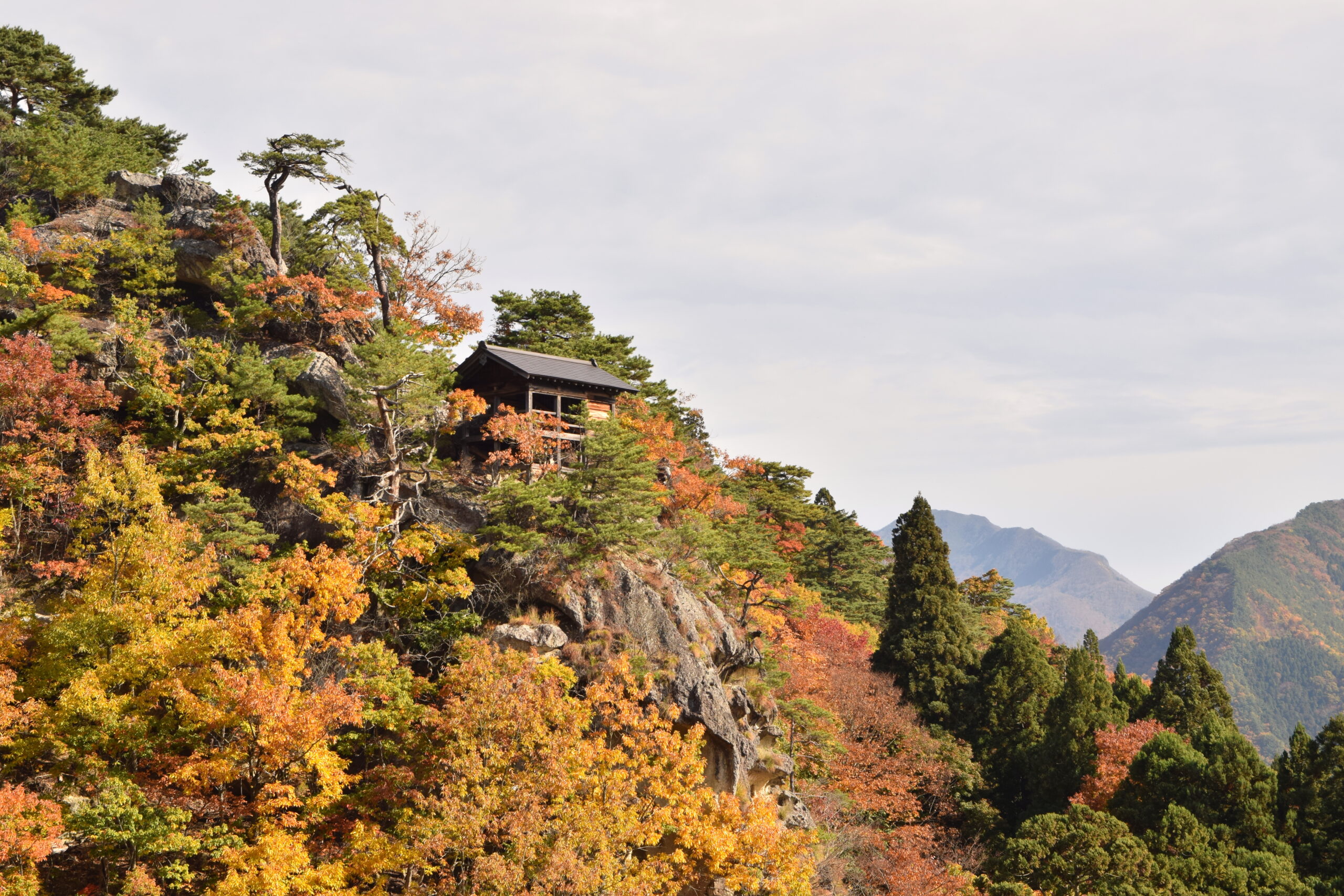
Risshakuji Temple, known as Yamadera, is one of Tohoku’s most spectacular spiritual destinations. Perched on a mountainside in Yamagata Prefecture, this 1,160-year-old Tendai Buddhist temple rewards those who climb its 1,015 stone steps with panoramic views and a profound sense of peace.
“Is climbing 1,015 steps really worth it?”
Absolutely. The view from Godaido Hall — a sweeping panorama of Yamagata’s rice paddies and mountains — is something no photograph can fully capture. With a 4.5/5 rating on Google (8,800+ reviews) and 4.4/5 on TripAdvisor (926 reviews), Yamadera consistently ranks among the most rewarding temple experiences in Japan.
This guide covers everything you need to plan the perfect visit.
—
What Makes Yamadera Special?
A Sacred Mountain with 1,160 Years of History
Risshakuji Temple (formally Hojusan Risshakuji) was founded in 860 by the Tendai monk Jikaku Daishi Ennin. The entire mountain serves as a place of spiritual practice — climbing the stone steps is considered a form of purification, with each step believed to cleanse the body and mind.
At its heart is the Eternal Flame in Konponchudo Hall, a sacred light brought from Enryakuji Temple on Mt. Hiei over 1,160 years ago and kept burning ever since.
Matsuo Basho’s Famous Haiku
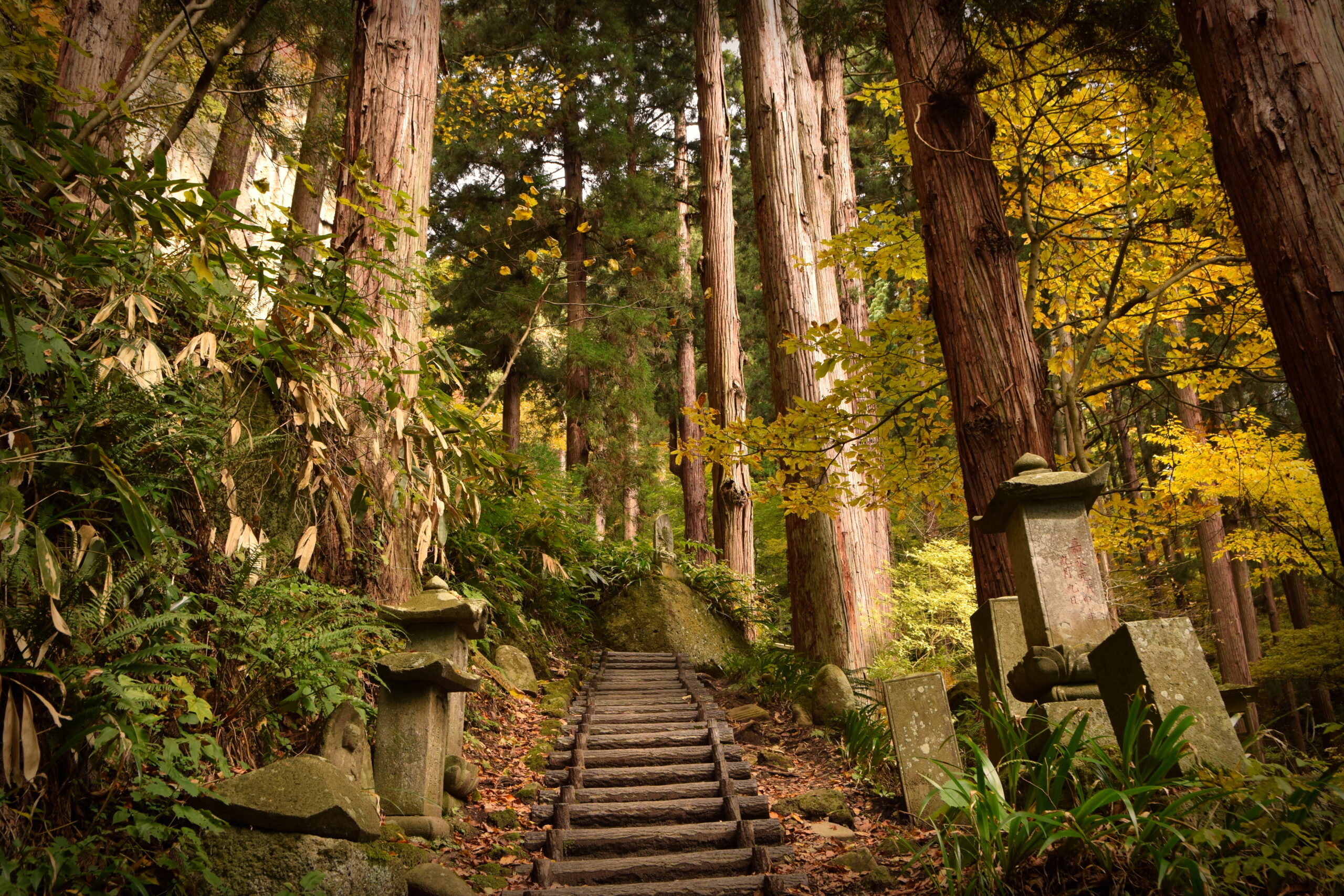
In the summer of 1689, the great haiku poet Matsuo Basho visited Yamadera during his journey documented in “Oku no Hosomichi” (The Narrow Road to the Deep North). Moved by the temple’s atmosphere, he composed one of the most famous haiku in Japanese literature:
> Such stillness — the cicadas’ cries sink into the rocks
Visit in summer to experience exactly what Basho felt: the paradoxical quiet of a mountain alive with the sound of cicadas.
—
Spiritual Benefits
Yamadera is known for several spiritual benefits:
Bad Luck Cleansing & New Beginnings — Okunoin, the innermost sanctuary at the top, is particularly revered for cutting bad ties and inviting positive change. Many visitors come during times of personal transition.
Health & Wellbeing — The principal deity is Yakushi Nyorai (the Medicine Buddha), making this a traditional destination for prayers of good health.
The Midahora Rock — Along the path, centuries of wind and rain have carved a rock face that some say reveals the image of a Buddha. According to local belief, those who can see it will be blessed with good fortune.
As with all spiritual places, the experience is deeply personal — what resonates for one visitor may differ for another. Trust what you feel.
—
Best Time to Visit
| Season | Period | Highlights | Crowds |
|——–|——–|————|——–|
| Fresh Green | May–Jun | Lush greenery along the path | Moderate |
| Summer | Jul–Aug | Cicadas and Basho’s world come alive | Moderate |
| Autumn | Late Oct–Early Nov | Entire mountain ablaze with color | Very High |
| Winter | Dec–Feb | Ethereal snow-covered temples | Low |
Autumn is the most popular season but also the most crowded. Arrive at opening time (8:00) for the best experience.
Winter is the hidden gem — fewer visitors and hauntingly beautiful snow-covered halls. However, the steps can be icy, so non-slip boots are essential. Note: restrooms above the main gate close in winter.
—
Complete Climbing Guide: Conquering the 1,015 Steps
Time Required
| Scenario | Duration | Notes |
|———-|———-|——-|
| Standard round trip | 1.5–2 hours | 30–40 min climb, same for descent |
| Including goshuin collection | 2.5–3 hours | Multiple stamp locations |
| With children | 2–2.5 hours | Extra rest stops needed |
| Winter visit | 2–2.5 hours | Snow adds ~30 min |
Key Stops Along the Way
Konponchudo Hall (Base)
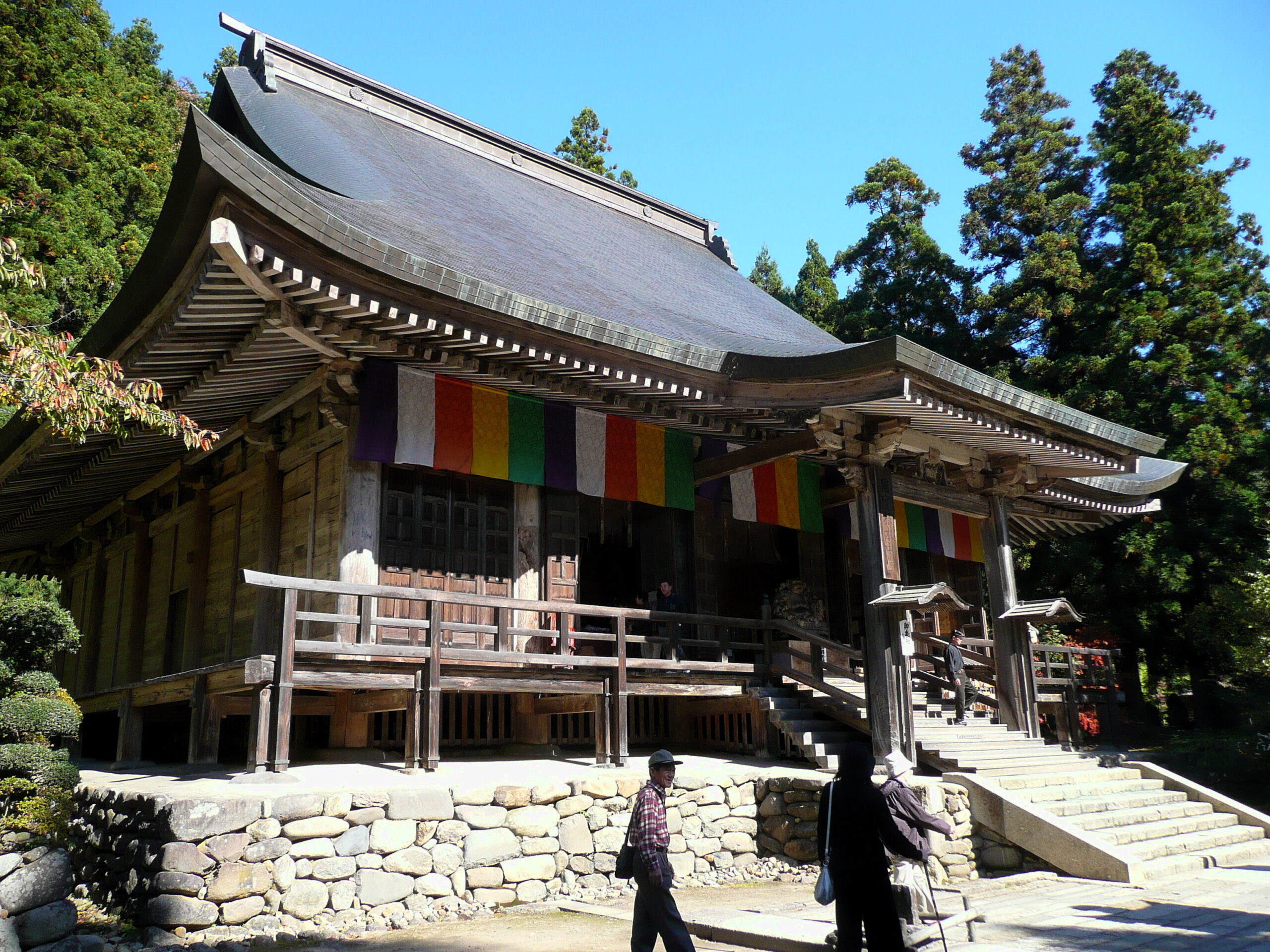
A National Important Cultural Property and one of Japan’s oldest beech wood structures. Home to the Eternal Flame. Even if you climb no further, this alone justifies a visit.
Midahora Rock (Mid-section)
The weathered rock face where visitors search for the Buddha’s image. Take your time here — it’s a contemplative spot.
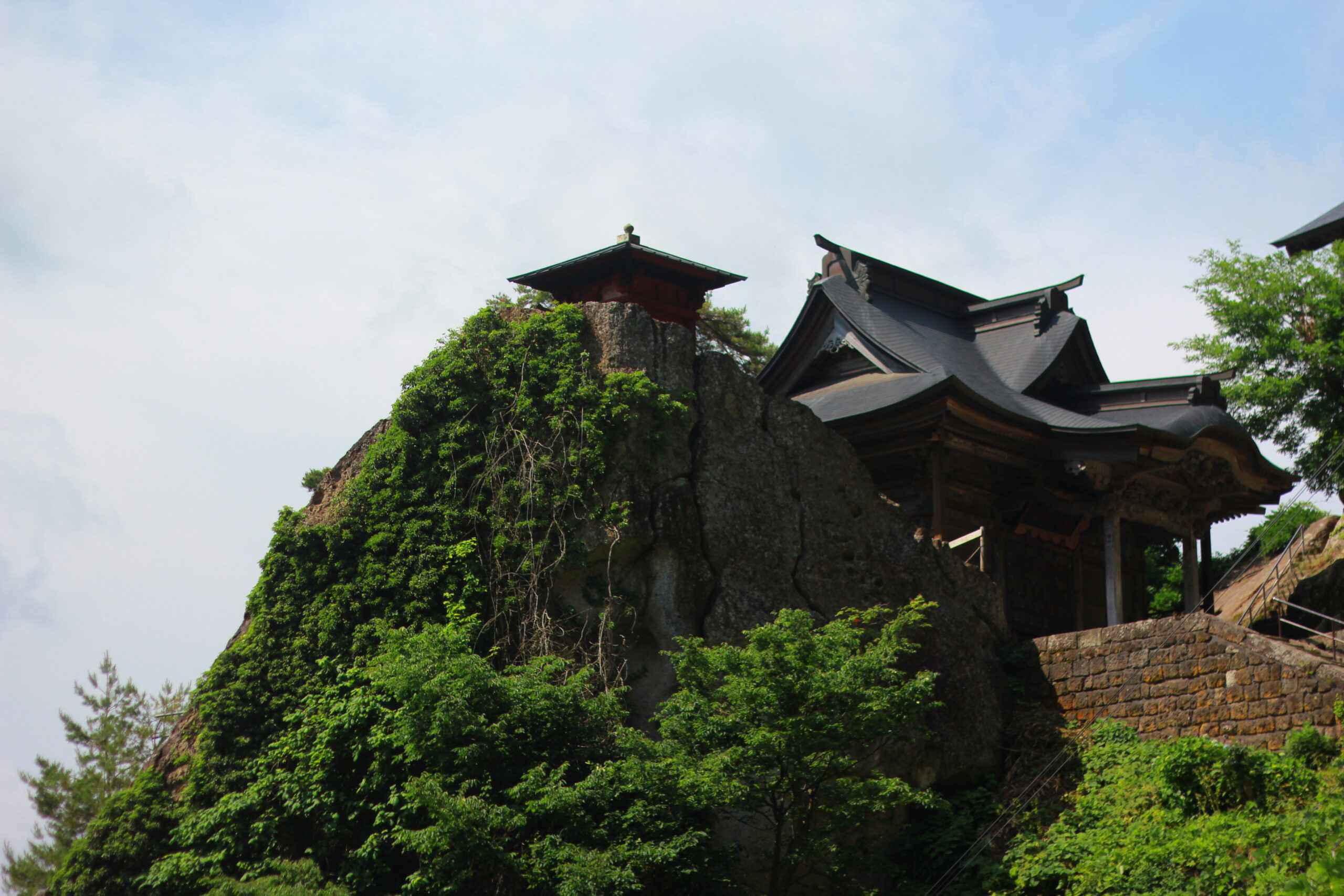
Kaizando & Nokyodo (Upper Section)
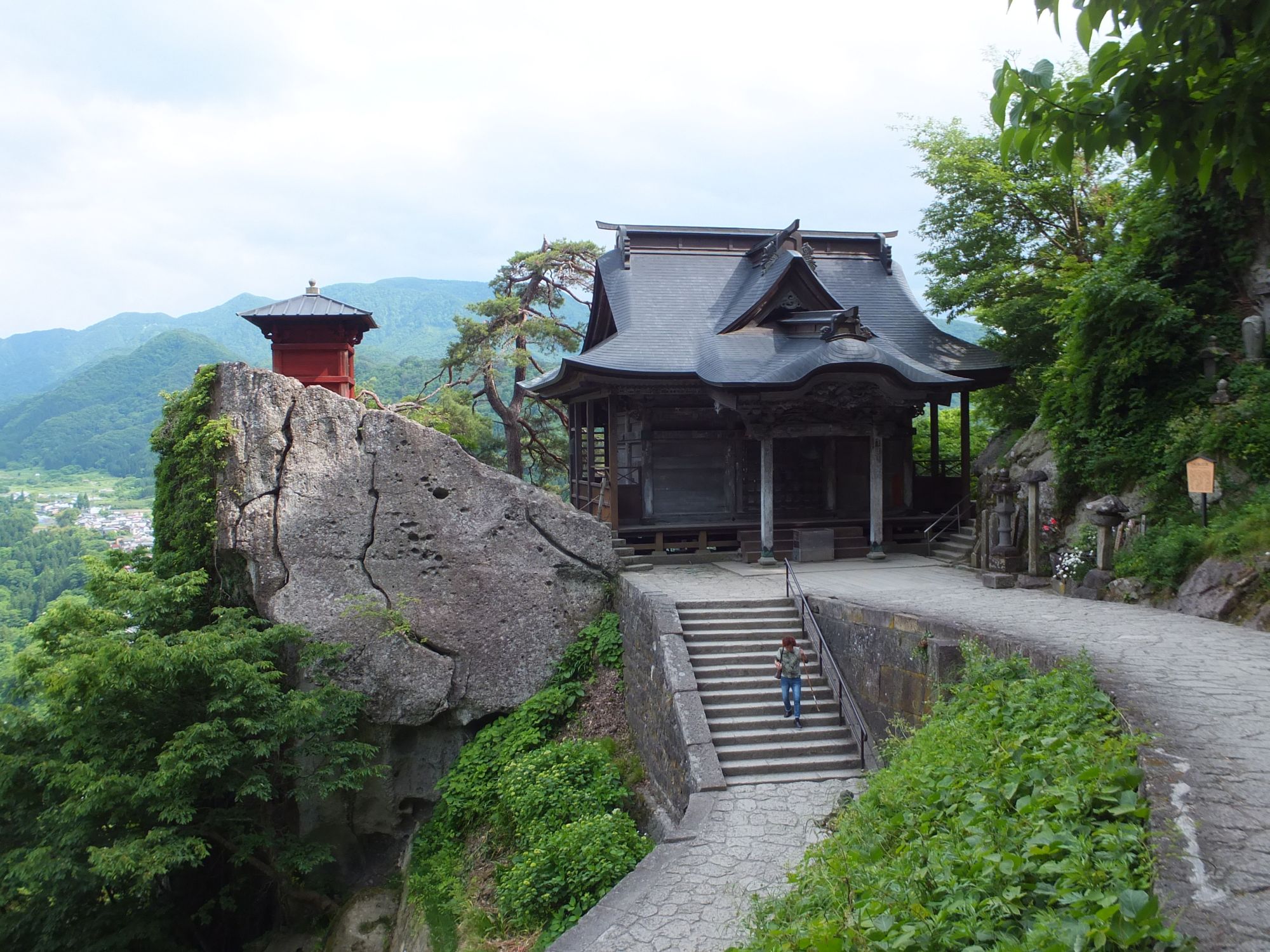
The Founder’s Hall and the oldest structure on the mountain. The small red Nokyodo perched on the cliff edge is Yamadera’s most iconic image.
Godaido Hall (The View)
The reward for your climb. This observation platform juts out from the cliff face, offering a sweeping panorama of the valley below. Worth every single step.
Okunoin (Summit)
The innermost sanctuary, known for spiritual purification. The Daibutsuden Hall houses a 5-meter golden Amida Buddha.
What to Wear & Bring
Essential: Comfortable sneakers or hiking shoes (no heels or sandals), water bottle, towel
Recommended: Walking stick (free rental at the entrance), hat (summer), camera
Winter must-haves: Non-slip boots, warm layers, gloves
—
Essential Information
| Detail | Info |
|——–|——|
| Official Name | Hojusan Risshakuji Temple |
| Sect | Tendai Buddhism |
| Address | 4456-1 Yamadera, Yamagata City, Yamagata 999-3301 |
| Phone | +81-23-695-2843 |
| Hours | Apr–Nov: 8:00–16:00 (gate closes 17:00) / Dec–Mar: 8:30–15:00 (gate closes 16:00) |
| Admission | Adults JPY 500 / Children (4+) JPY 200 |
| Extra Fees | Treasure Hall JPY 200, Konponchudo inner sanctum JPY 200 |
| Payment | Cash only |
| Closed | Open year-round (winter hours may change due to weather) |
| Parking | Private lots nearby, JPY 300–500/day |
—
Getting There
By Train (Recommended)
Take the JR Senzan Line to Yamadera Station. The temple entrance is a 7–10 minute walk from the station.
- From Yamagata Station: ~20 minutes
- From Sendai Station: ~50–60 minutes
The Senzan Line offers scenic mountain views, making the journey itself enjoyable.
By Car
From Yamagata-kita IC on the Yamagata Expressway, it’s about 15–20 minutes to Yamadera. Several private parking lots are available near the station area (JPY 300–500/day).
By Bus
Yamako Bus operates a route from Yamagata Station (Bus Stop No. 2) to Yamadera Station in about 40 minutes. Note: this service does not operate on weekends and holidays. Check the current schedule before planning.
—
Where to Eat Near Yamadera
Chikara Konnyaku (Power Konnyaku)
Yamadera’s signature snack — round balls of konnyaku simmered in soy sauce, served on a skewer with hot mustard. Traditionally eaten before the climb to “build strength.” Available at shops along the approach, including Endo (opens 8:30, 1 min from JR Yamadera Station).
Soba Noodles
Yamagata is famous for its soba. Excellent options near Yamadera:
- Mitoya: 3 min from station, opens 8:00. Known for ita-soba (board soba) and sansai soba
- Fumotoya Honten: Famous for geso-ten soba (squid tempura soba)
- Taki Fudo Nama Soba: Specialty is kanzarashi soba (cold-aged buckwheat)
- Enzo Yamadera: Juwari geso ita-soba (100% buckwheat)
Nearby Attractions
- Yamadera Basho Memorial Hall: Deeper insight into Basho’s connection to this place
- Hie Shrine: Adjacent to Risshakuji; offers its own goshuin
- Momijigawa Valley: Beautiful hiking, especially in autumn
Where to Stay
- Takasagoya Honkan: 5 min walk from station, from JPY 9,350/night with 2 meals
- Tendo Onsen (15 min by car): Full-service hot spring resort town
- Zao Onsen (40 min by car): One of Tohoku’s most famous hot spring areas
—
For Visitors with Mobility Concerns
The 1,015 steps may sound daunting, but there are options for everyone:
- Konponchudo only: The main hall at the base is easily accessible and offers a meaningful experience (Eternal Flame, beautiful architecture)
- Halfway to Midahora: A worthy spiritual experience without the full climb
- Walking sticks: Available free at the entrance
- Benches: Rest spots are placed along the route
- Wheelchair/stroller access: The mountain section is not barrier-free. The lower precincts near Konponchudo may be accessible, but contact the temple office to confirm
> “I wasn’t sure I could make it, but with the free walking stick and plenty of rest stops, I reached the top. The sense of achievement was incredible.”
> — Google Maps review
—
Visiting with Children
| Age | Feasibility | Tips |
|—–|————-|——|
| Elementary school+ | No problem | Make a game of counting steps |
| 5–6 years | Possible if energetic | Plan extra breaks, allow 2.5 hours |
| 2–3 years | Challenging | Expect to carry; watch footing carefully |
| Stroller | Not possible | All stone steps |
Bring: Extra water, snacks, towel for children.
—
Photography Guide
Top 3 Spots
1. Godaido Hall: The classic panoramic viewpoint over the valley
2. Kaizando & Nokyodo: The iconic red hall on the cliff — Yamadera’s most photographed scene
3. Stone Stairway: Cedar trees, stone lanterns, and dappled light
Tips
- Early morning (right at 8:00 opening) for fewest people and beautiful light
- Autumn foliage (late October) and fresh snow (January–February) are the most photogenic
- A wide-angle lens captures the full scale of Godaido’s view
—
Frequently Asked Questions
Q: Can I visit in the rain?
A: Yes, but the stone steps become slippery. Wear non-slip shoes and consider a rain jacket instead of an umbrella. On rainy days, the temple is quieter and the mist creates a mystical atmosphere. On particularly bad days, consider visiting only the lower area and the Basho Memorial Hall.
Q: Are pets allowed?
A: The official website doesn’t specify. Call ahead (+81-23-695-2843) to confirm. Given the 1,015 stone steps, bringing a pet would be practically challenging.
Q: How crowded does it get?
A: Peak autumn (late October–early November) and weekends/holidays are busiest. For a quieter experience, visit on a weekday morning or in winter.
Q: Is there a goshuin (temple stamp)?
A: Yes. Goshuin are available at Konponchudo and several sub-temples along the route. Expect to pay around JPY 300 each.
—
Summary
Yamadera is that rare place where physical effort and spiritual reward are perfectly intertwined. The 1,015 steps are not just a hike — they’re a journey from the everyday world into something more contemplative and beautiful.
Whether you’re drawn by Basho’s poetry, the autumn colors, the Eternal Flame, or simply the promise of one of Japan’s most breathtaking views, Yamadera delivers. And for those who can’t make the full climb, Konponchudo at the base offers its own quiet magic.
—
We hope this guide helps you plan a memorable visit to Yamadera.
*Information in this article is current as of April 2026. Please check the official website for the latest details before your visit.*
あなたに最適なパワースポットを知りたい方へ