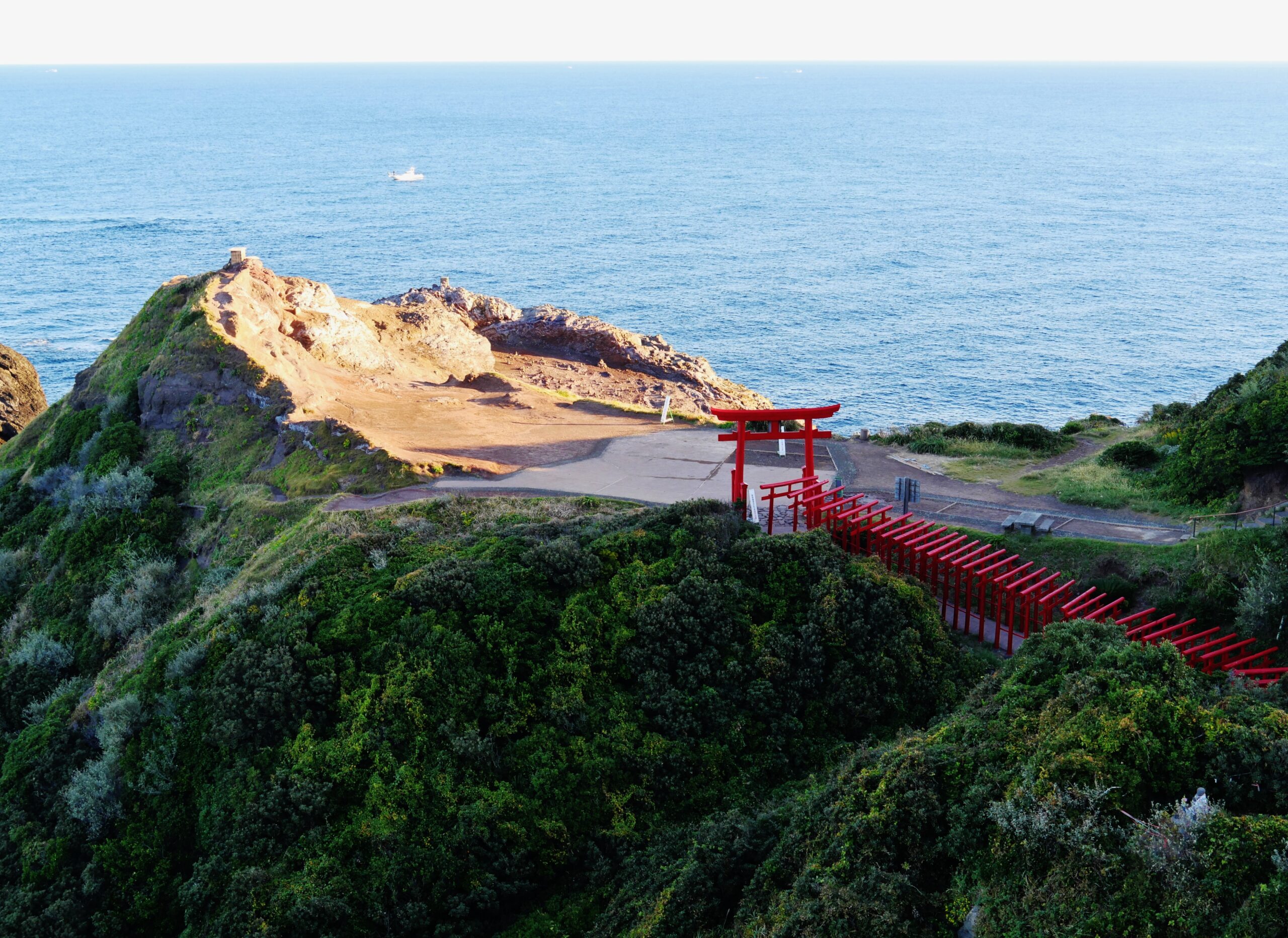
A tunnel of 123 red torii gates descends from a hilltop shrine, down a lush green hillside, and ends at the edge of a cliff where the Sea of Japan stretches to the horizon. This single scene — captured by CNN in their 2015 “Japan’s 31 Most Beautiful Places” list — transformed a quiet Inari shrine in rural Yamaguchi Prefecture into one of the most photographed places in the country.
Motonosumi Shrine (元乃隅神社) is not a centuries-old grand shrine or a UNESCO World Heritage Site. It was founded in 1955 after a white fox appeared in a fisherman’s dream and told him to build a shrine here. The 123 torii gates were added over a decade beginning in 1987. What makes this place extraordinary is the collision of colors: vermilion gates against deep blue ocean, emerald green hillsides, and the raw, rocky cliffs of the Sea of Japan coast. There is nothing else like it in Japan.
Reaching Motonosumi requires a car — the nearest train station is a 20-minute taxi ride away. But that remoteness is what makes the experience so rewarding. On a weekday morning, you may have the entire row of 123 torii gates entirely to yourself.
—
What Makes Motonosumi Shrine Special
123 Torii Gates Cascading to the Sea
The shrine’s signature feature is its tunnel of 123 vermilion torii gates stretching approximately 100 meters from the hilltop shrine grounds down to the cliff edge above the Sea of Japan. As you walk through the gates from top to bottom, the ocean gradually fills the frame formed by each successive gate until, at the bottom, you stand at the cliff’s edge with nothing between you and the open sea.
Unlike the famous thousand-gate tunnels of Fushimi Inari in Kyoto, which wind through a forested mountain, Motonosumi’s gates lead directly toward the open ocean. This is what makes the visual so distinctive — and why photographers from around the world travel to this remote corner of Yamaguchi.
Walk it both ways. The classic photograph is from the top, looking down through the gates toward the blue ocean. But from the bottom looking back up, the gates appear to climb the green hillside like a crimson staircase. Both directions offer completely different compositions.
The walk takes 5-10 minutes in each direction. The path includes stairs and some uneven sections. At the bottom, there are no railings near the cliff edge — be aware of your footing, especially on windy days.
The Impossible Offering Box Challenge
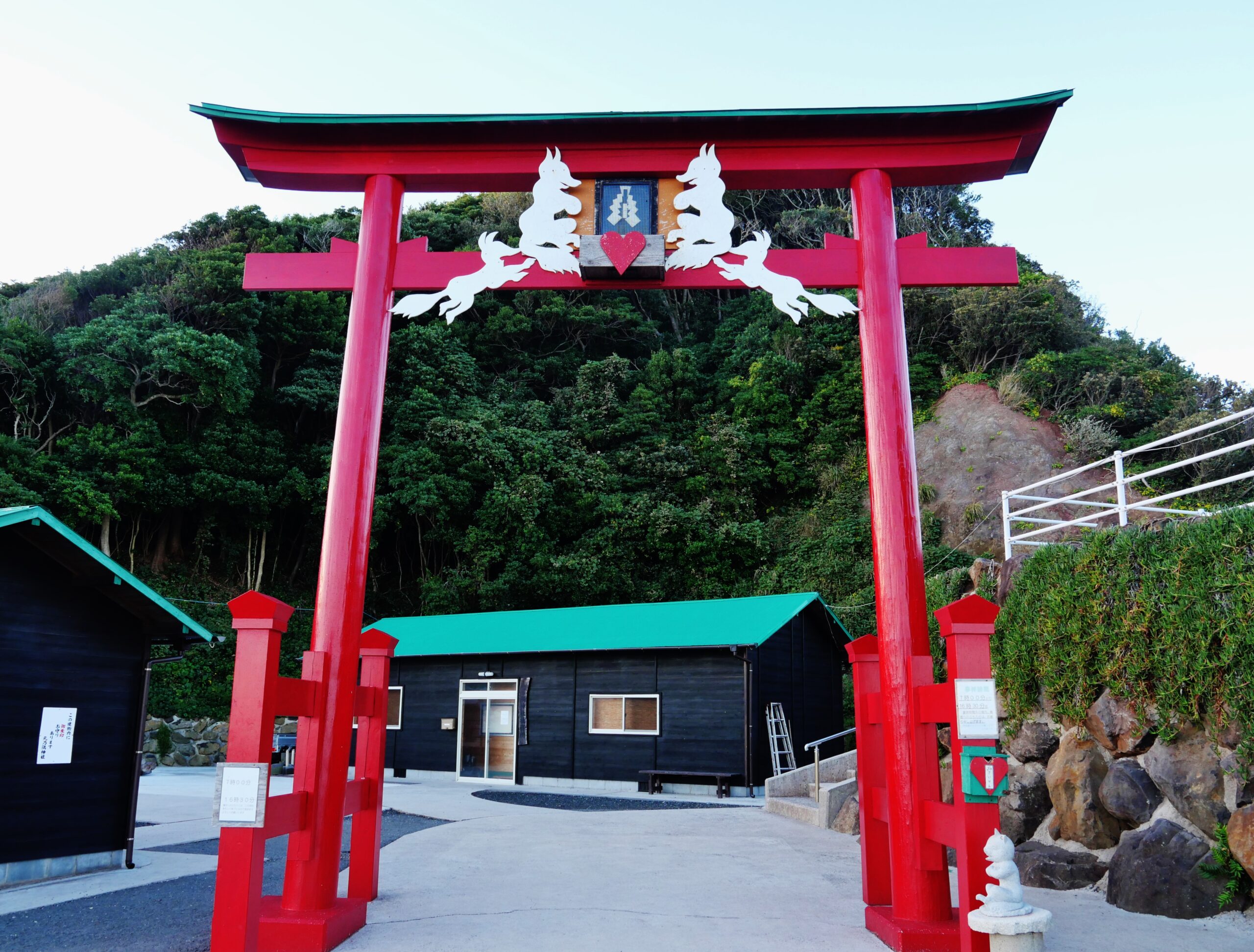
Here is something you will not find at any other shrine in Japan: the offering box (saisen-bako) is placed on top of the large torii gate near the shrine building, about 5 meters (16 feet) above the ground. Your task is to toss a coin up and into the box. If you succeed, your wish will come true.
In practice, most visitors need 10 to 20 attempts. Coins bounce off the crossbeam, get caught by coastal winds, or sail right over the top. It is genuinely difficult.
Tips for landing your coin:
- Use a 100-yen coin — 5-yen coins are too light and drift in the wind
- Stand directly underneath and throw straight up, not at an angle
- A gentle, controlled toss works better than a hard throw
- Visit on a calm day — wind is your biggest enemy
- When you finally succeed, expect applause and cheers from fellow visitors
This simple challenge creates a moment of shared joy among strangers that you will remember long after the visit.
Ryugu no Shiofuki (Dragon Palace Blowhole)
A 5-minute walk from the shrine leads to Ryugu no Shiofuki (龍宮の潮吹), a designated Natural Monument where waves compress through a narrow rock formation and blast seawater up to 30 meters (100 feet) into the air. The name translates to “Dragon Palace Water Spout” — according to legend, this is where a dragon ascends to the heavens.
The blowhole is most dramatic on days with strong north or northwest winds, particularly in winter (November-February). On calm summer days, it may not be active at all.
Viewing tips:
- An observation deck provides safe viewing at a distance
- On rough days, spray can reach the walking path — bring waterproof protection for cameras and electronics
- Winter storms produce the most spectacular eruptions, sometimes exceeding 20 meters
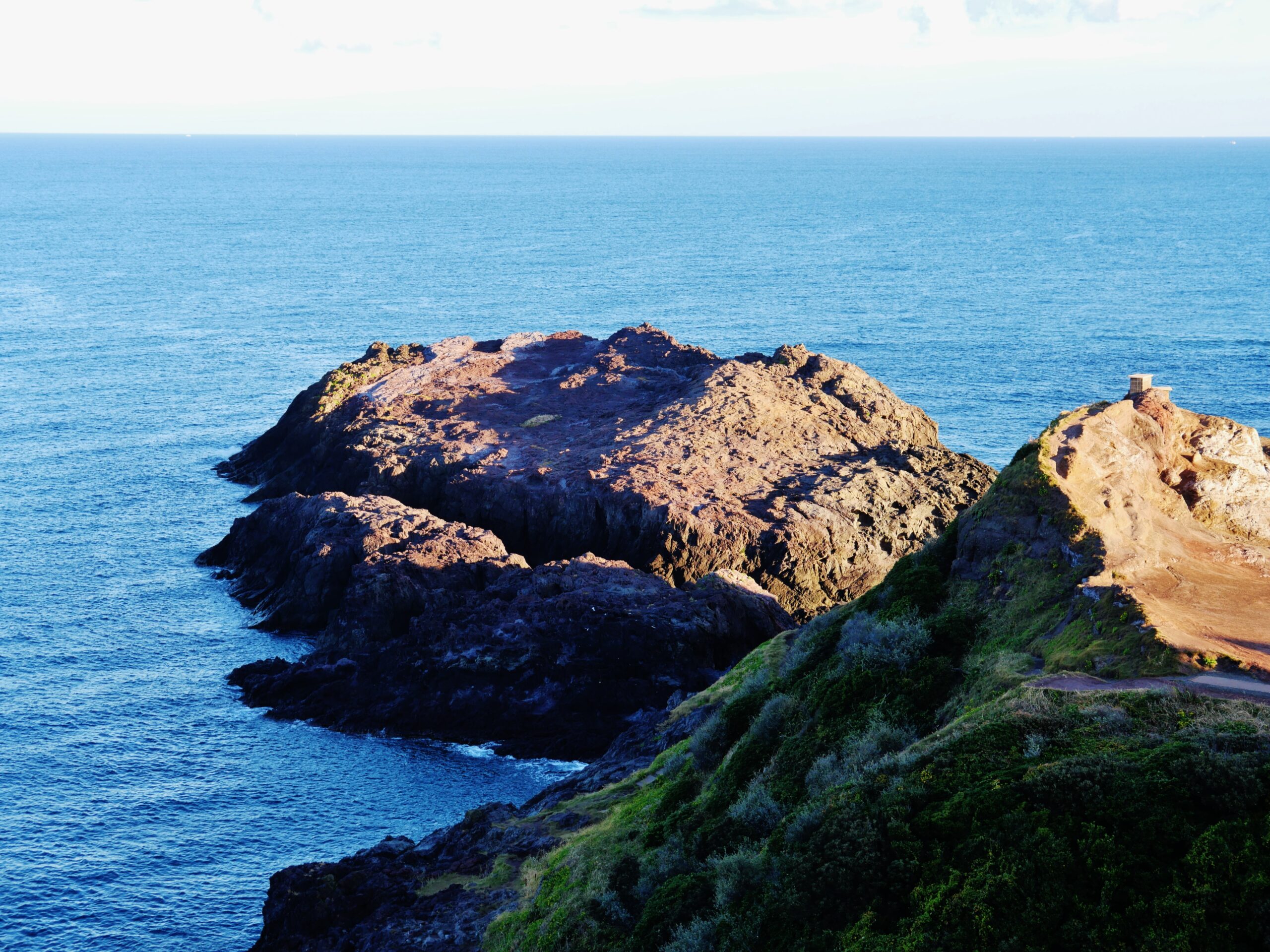
- Even when the blowhole is quiet, the rugged coastline itself is worth the walk
—
Spiritual Significance & Benefits
Origins: A White Fox’s Dream
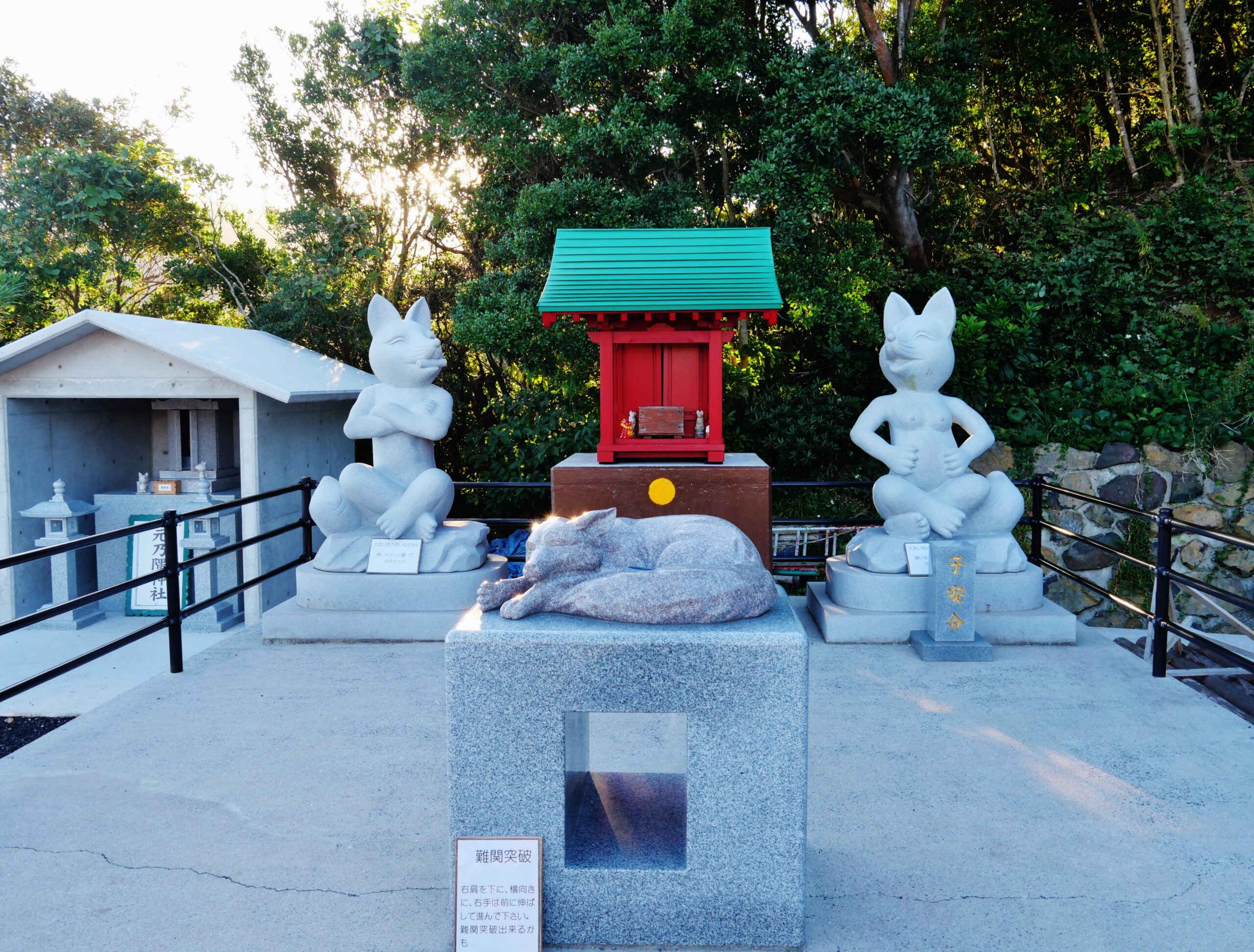
In 1955, a local fisherman in Nagato had a vivid dream in which a white fox appeared and instructed him to establish a shrine on this coastal land. Following the vision, the spirit was invited from Taikodani Inari Shrine in Tsuwano, Shimane Prefecture — one of Japan’s five great Inari shrines.
The original name was Motonosumi Inari Shrine (元乃隅稲成神社). Notably, the character for “Inari” was written as “稲成” rather than the standard “稲荷” — a rare variant shared only with the parent shrine in Tsuwano. The character “成” carries meanings of “achievement” and “fulfillment,” adding an extra layer of auspicious significance. In 2019, the name was shortened to its current form, Motonosumi Shrine. Some guidebooks and maps still use the old name — they refer to the same place.
Blessings & Benefits
As an Inari shrine with deep connections to the sea, Motonosumi offers an unusually wide range of blessings:
- Business prosperity — The core blessing of all Inari shrines
- Bountiful fishing catch — Reflecting the shrine’s fishing village origins
- Maritime safety — Natural for a shrine overlooking the Sea of Japan
- Good relationships (en-musubi) — Popular as a romantic matchmaking spot
- Fertility and healthy childbirth — Traditionally associated with fox deity worship
- Fortune and wealth — Especially if your coin lands in the offering box
- Academic success — General Inari blessing
- Traffic safety — General Inari blessing
- Wish fulfillment — The offering box challenge is the ultimate expression of this
Many visitors report that the combination of the dramatic natural setting — cliffs, crashing waves, salt air — and the vivid red of the torii gates creates a sense of being in a liminal space between the everyday world and something greater.
—
Best Time to Visit
By Season
| Season | Temp. Range | Highlights | Crowds |
|——–|————|————|——–|
| Spring (Mar-May) | 12-20C | Fresh green leaves contrast with red gates. Cherry blossoms in late March-early April. | Moderate. Golden Week (late Apr-early May) gets very crowded — arrive by 8:00 AM. |
| Summer (Jun-Aug) | 22-30C | Brightest blue skies and ocean — the best season for the iconic blue-and-red photograph. Almost no shade on the torii path. | High on weekends. Visit before 9:00 AM or after 4:00 PM to avoid heat. |
| Autumn (Sep-Nov) | 12-22C | Comfortable temperatures. Fewer tourists than summer. Golden sunset light through the torii gates. | Low-moderate. October-November is the most comfortable period overall. |
| Winter (Dec-Feb) | 3-10C | Fewest visitors. On clear days, the cold, crisp air makes ocean colors exceptionally vivid. Ryugu no Shiofuki blowhole at its most dramatic. | Very low. Overcast days are frequent on the Sea of Japan side. |
Best Times of Day
- 7:00-9:00 AM: The shrine is open from sunrise. Almost no other visitors — you can photograph the torii gates without a single person in the frame. Morning light illuminates the gates from behind when shooting from the bottom.
- 4:00-5:30 PM (Golden Hour): Warm sunset light paints the torii gates and sea in amber and gold tones. The single best time for photography, year-round. On clear days, the sun sets behind you (when looking at the sea), creating ideal front-lighting on the gates.
- Avoid 10:00 AM-2:00 PM: Peak crowds, especially on weekends and holidays. The parking lot can have queues during this window.
—
Visiting Guide
Walking the Torii Gates
The standard route begins at the top (near the shrine building and parking lot) and descends through the 123 gates toward the cliff edge. The walk takes 5-10 minutes one way. The path includes stone stairs and some uneven sections, so wear sturdy shoes.
At the bottom, you emerge at the cliff’s edge overlooking the Sea of Japan. Waves crash against the rocks below. There are no railings in some sections near the cliff — exercise caution, especially on windy days, and keep children close at all times.
Offering Box Challenge
The famous 5-meter-high offering box sits on top of the large torii gate near the shrine area. The reported success rate is roughly 1 in 10-20 attempts.
Strategy guide:
1. Choose a windless day — coastal gusts are your worst enemy
2. Use a 100-yen coin for optimal weight
3. Stand directly below the box and throw straight up
4. Gentle, controlled toss — hard throws bounce off
5. Budget 5-10 minutes and bring a pocketful of coins
How Long to Spend
| Visit Type | Time | What’s Included |
|————|——|—————–|
| Quick visit | 30-45 min | Walk torii gates both ways + offering box challenge + photos from top and bottom |
| Standard visit | 1-1.5 hours | Above + Ryugu no Shiofuki blowhole + shrine grounds exploration |
| Photography session | 2-3 hours | Multiple angles, waiting for ideal light, different perspectives at golden hour |
—
Essential Information
| Detail | Information |
|——–|————-|
| Official name | Motonosumi Shrine (元乃隅神社) |
| Address | 498 Yuyatsuo, Nagato City, Yamaguchi Prefecture |
| Hours | Sunrise to sunset (no lighting facilities — plan accordingly) |
| Closed | Open every day, year-round |
| Admission | Free |
| Parking | Multiple lots, approximately 300 yen per visit (~300 spaces total) |
| Time needed | 30 minutes to 1.5 hours |
| Restrooms | Available at the parking lot |
| Food/drink | Vending machines at parking lot. No restaurants on-site — bring snacks and water |
| Contact | 0837-26-0708 (Nagato City Tourist Information) |
| Website | https://nanavi.jp/sightseeing/motonosumiinarijinja/ |
Important notes:
- The shrine office is not permanently staffed. Omamori (charms) and goshuin (shrine stamps) availability varies by day — call ahead if these are important to you.
- There are almost no shops or restaurants within walking distance. Bring water and snacks, especially in summer.
- The parking lot can fill by 10:00 AM on Golden Week and summer weekends. Arrive by 8:00-8:30 AM on busy days.
—
How to Get There
By Car (Recommended — Essentially Required)
A rental car is the most practical and recommended way to reach Motonosumi Shrine. The shrine sits on a coastal road with no regular bus service.
| Starting Point | Route | Drive Time |
|—————|——-|————|
| Mine IC (Chugoku Expressway) | National routes to Nagato coast | ~60 minutes |
| Misumi IC (San’in Expressway) | Coastal route to Nagato | ~40 minutes |
| Shimonoseki | Coastal route via San’in Expressway | ~90 minutes |
| Hagi | Route 191 along the coast | ~60 minutes |
| Shin-Yamaguchi Station (shinkansen) | Expressway + national routes | ~90 minutes |
Rental car pickup locations: Shin-Yamaguchi Station (most shinkansen connections), Shimonoseki Station, Hagi Station, or Yamaguchi Ube Airport. Major rental companies (Toyota, Nippon, Times) operate at all these locations.
Parking: Three lots with approximately 300 spaces total. 300 yen per visit. On Golden Week and summer weekends, lots can fill by 10:00 AM. Arrive by 8:00-8:30 AM on peak days to guarantee a spot. Weekdays are rarely an issue.
By Public Transport (Limited Options)
- JR San’in Line to Nagato-Furuichi Station, then taxi approximately 20 minutes (3,000-4,000 yen one way)
- JR San’in Line to Hitomaru Station, then taxi approximately 15 minutes (2,500-3,500 yen one way)
- Nagato City Tourist Loop Bus: Operates seasonally on limited schedules. Check with Nagato City Tourism Association (0837-26-0708) before relying on this.
- There is no regular bus service to the shrine. Without a car, you are dependent on taxis.
Getting to the Yamaguchi/Nagato Area
From Tokyo: Fly to Yamaguchi Ube Airport (ANA, ~90 min) or take the Tokaido-San’yo Shinkansen to Shin-Yamaguchi Station (~4.5 hours), then rent a car.
From Osaka/Kyoto: San’yo Shinkansen to Shin-Yamaguchi Station (~2 hours from Shin-Osaka), then rent a car.
From Fukuoka/Hakata: San’yo Shinkansen to Shin-Yamaguchi (~35 min) or drive via expressway (~3 hours to Motonosumi directly).
From Hiroshima: San’yo Shinkansen to Shin-Yamaguchi (~35 min) or drive (~3 hours).
—
Nearby Attractions
Motonosumi Shrine is best experienced as part of a scenic driving day along Yamaguchi Prefecture’s stunning Sea of Japan coastline. These three destinations combine naturally with the shrine.
Tsunoshima Bridge (30 min by car)
A 1,780-meter bridge stretching over water so clear it shifts between emerald, turquoise, and cobalt blue. Famous from Japanese car commercials and tourism posters, Tsunoshima Bridge rivals Motonosumi as Yamaguchi’s most photogenic spot. On the island side, there is a small beach, a lighthouse with ocean views, and several seafood restaurants.
Omijima Island (20 min by car)
A rugged island connected to the mainland by bridge, known for its sea cliffs, blue caves (accessible by tour boat), and the Omijima Whale Museum. The coastline is designated a National Park.
Senjojiki Plateau (10 min by car)
A plateau at 333 meters elevation with panoramic views over the Sea of Japan. On clear days, you can see the horizon curving. A campsite operates in summer, and the sunset views from this elevation are among the best in the prefecture.
Higashiushirobata Rice Terraces (15 min by car)
Terraced rice paddies cascading down hillsides toward the Sea of Japan. In May-June, the flooded paddies reflect the sky at dusk while squid fishing boats illuminate the horizon with their lights — an otherworldly scene.
Yumoto Onsen (30 min by car)
A historic hot spring town in Nagato with 600 years of history. Accommodations range from the luxury Hoshino Resort “KAI Nagato” to affordable public bathhouses. After a morning at the shrine and an afternoon driving the coast, soaking in an onsen is the perfect way to end the day.
Model Day Trip: Nagato-Tsunoshima Scenic Drive
| Time | Spot | Duration |
|——|——|———-|
| 8:00 | Arrive at Motonosumi Shrine (quiet morning for photography) | 1.5 hours |
| 9:30 | Senjojiki Plateau (panoramic Sea of Japan views) | 30 min |
| 10:30 | Tsunoshima Bridge (drive across + explore island + lighthouse) | 1.5 hours |
| 12:30 | Seafood lunch on Tsunoshima or in Nagato | 1 hour |
| 14:00 | Omijima Island (sea cliffs, blue cave boat tour) | 1.5 hours |
| 16:00 | Higashiushirobata Rice Terraces (seasonal, May-June) | 30 min |
| 17:00 | Yumoto Onsen (hot spring bath to end the day) | 1-2 hours |
This itinerary covers the best of Yamaguchi’s Sea of Japan coastline in a single day and works well as a self-drive loop.
—
Tips for Different Visitors
Photographers
This is one of the most photogenic locations in Japan. Key angles and timing:
1. From the top looking down (the classic shot) — Morning front-light (8:00-10:00 AM) illuminates the red gates against the blue sea. Use a wide-angle lens to capture the full sweep of gates toward the ocean.
2. From the bottom looking up — Afternoon and golden hour create dramatic backlight and silhouettes of the gate outlines.
3. Inside the torii tunnel — Frame the ocean through the gate openings. A telephoto lens (70-200mm) compresses the gates beautifully.
4. The grand torii with fox decorations — The entrance area with white fox sculptures makes a compelling frame.
5. Ryugu no Shiofuki — On a rough day, capturing the water blast requires a fast shutter speed (1/1000s or faster) and waterproof protection.
Best time for empty shots: 7:00-8:00 AM on weekdays. By 10:00 AM on any day, other visitors will be in your frame.
Tripods: Allowed on the paths. Drones: Check current regulations — restrictions may apply near the shrine and cliff areas.
Families with Children
The torii gate walk is manageable for children who can handle stairs. The offering box challenge is a hit with kids of all ages — budget extra coins. However, the cliff edge at the bottom of the torii path has no barriers in some sections. Hold hands at all times near the edge.
Restrooms are at the parking lot. Vending machines are available, but there are no restaurants nearby — pack a lunch, snacks, and plenty of water, especially in summer when there is no shade on the path.
Wheelchair Users and Strollers
The path from the parking lot to the shrine area at the top of the hill is paved and accessible. From here, there is a viewpoint overlooking the torii gates and ocean that does not require descending the stairs. However, the torii tunnel itself has stairs and steep slopes and is not wheelchair-accessible or stroller-friendly. The path to Ryugu no Shiofuki is also steep and uneven.
Rainy Days
The torii gates can be walked in rain, and foggy days create an atmospheric, moody quality as the gates fade into mist — compelling for photography. However:
- The stone stairs become slippery — wear shoes with good grip
- The cliff area is more dangerous in wet and windy conditions
- Ryugu no Shiofuki may be more active, but spray + rain makes camera protection essential
Rainy-day alternative: If conditions are too rough, head to Yumoto Onsen (30 min by car) for a hot spring bath, or visit the Omijima Whale Museum.
Pet Owners
Small and medium-sized dogs on leashes are generally tolerated on the outdoor paths and through the torii gates. There are no formal pet restriction signs posted. However, keep dogs leashed at all times near the cliff edges, and clean up after them. The shrine building area and any enclosed spaces should be avoided with pets. Confirm current policies by calling 0837-26-0708 before visiting.
—
Visitor Reviews
> “Even more stunning than the photos. We came at 7:30 AM on a Tuesday and had the entire torii tunnel to ourselves for 20 minutes. The silence, the red gates, the blue sea — it felt like stepping into a painting.”
> — Google Maps review
> “Took me about 15 tries to get a coin into the offering box. My wife got it on her third attempt and hasn’t let me forget it. When the coin finally went in, everyone nearby cheered. A wonderfully silly and memorable moment.”
> — Google Maps review
> “Hard to reach without a car, but pairing it with Tsunoshima Bridge made the best day trip of our entire Kyushu/Yamaguchi road trip. Two completely different kinds of beautiful in one day.”
> — Google Maps review
—
Frequently Asked Questions
Q. Can I visit Motonosumi Shrine without a car?
A. It is technically possible but impractical. From JR Nagato-Furuichi Station, it is a 20-minute taxi ride (3,000-4,000 yen one way). There is no regular bus service. Rental cars are available at Shin-Yamaguchi Station, Shimonoseki Station, and other regional hubs. A rental car also lets you combine the shrine with Tsunoshima Bridge and other coastal attractions. A seasonal tourist loop bus sometimes operates — check with Nagato City Tourism Association (0837-26-0708) before your trip.
Q. Does the parking lot fill up?
A. On Golden Week and summer weekends, the lots can fill by 10:00 AM. Arriving by 8:00-8:30 AM guarantees a space. On weekdays and outside peak season, parking is rarely an issue. The fee is 300 yen per visit.
Q. How much time do I need?
A. A quick visit (torii gates + offering box + photos) takes 30-45 minutes. Adding Ryugu no Shiofuki extends it to 1-1.5 hours. Serious photographers should budget 2-3 hours.
Q. Can I get a goshuin (shrine stamp)?
A. The shrine office is not permanently staffed, so goshuin availability depends on the day. If collecting shrine stamps is important to you, call Nagato City Tourist Information (0837-26-0708) in advance to check.
Q. Is there food available near the shrine?
A. Only vending machines at the parking lot. The nearest restaurants are in Nagato city center, about 20 minutes by car. Bring water, snacks, and ideally a packed lunch.
Q. Is Motonosumi Shrine worth the detour?
A. If you are anywhere in western Honshu or northern Kyushu and have a car, yes. The combination of the 123 torii gates, the Sea of Japan cliffs, the offering box challenge, and the blowhole creates an experience unlike any other shrine in Japan. Pair it with Tsunoshima Bridge for a world-class scenic driving day.
Q. Is this the same as “Motonosumi Inari Shrine”?
A. Yes. The name was shortened in 2019 from Motonosumi Inari Shrine (元乃隅稲成神社) to Motonosumi Shrine (元乃隅神社). Some maps, guidebooks, and GPS systems still use the old name.
—
Summary
Motonosumi Shrine offers something found nowhere else in Japan: 123 red torii gates descending a lush green hillside toward the dramatic cliffs of the Sea of Japan. Named one of CNN’s 31 most beautiful places in Japan, the actual sight surpasses any photograph.
Walk through the vermilion tunnel from the hilltop to the cliff’s edge and watch the blue ocean grow larger through each successive gate. Turn around and see the gates climbing the hillside like a crimson staircase. Try your luck at the “hardest offering box in Japan” — perched 5 meters above your head. Feel the spray from Ryugu no Shiofuki as seawater blasts 30 meters into the sky. Then drive 30 minutes to Tsunoshima Bridge for another breathtaking view — a complete day of Yamaguchi Prefecture’s finest scenery.
Yes, getting here requires a car and some effort. But that remoteness is exactly what makes the moment you arrive so rewarding. Standing at the bottom of those 123 gates with the Sea of Japan crashing below and not another soul in sight — that is one of the most unforgettable scenes you will encounter anywhere in Japan.
—
*Information in this article is current as of April 2026. Please check the official website or contact Nagato City Tourist Information for the latest details before your visit.*
—
Want to discover which power spots are best for you?
Different people have different “compatibility” with different power spots. The same shrine can feel profoundly different depending on who visits. If you want to find the spiritual place that resonates most with you, try our free 3-minute compatibility diagnosis.
あなたに最適なパワースポットを知りたい方へ