Three shrines on three different islands, stretching 60 kilometers into the open sea—Munakata Taisha is unlike any other shrine in Japan. The main shrine sits on the Fukuoka mainland. The second sits on Oshima, a small island reached by a 25-minute ferry. The third sits on Okinoshima, a forbidden island where no ordinary person is allowed to set foot.
Together, these three shrines form a single sacred complex that has been the center of maritime worship for over 1,600 years. In 2017, UNESCO inscribed it as a World Cultural Heritage Site under the name “Sacred Island of Okinoshima and Associated Sites in the Munakata Region.” The reason: an unbroken chain of ritual worship stretching from the 4th century to the present day, supported by roughly 80,000 excavated artifacts—all designated as National Treasures of Japan.
Munakata Taisha is also the head shrine of approximately 6,000 Munakata and Itsukushima shrines throughout Japan, including the famous Itsukushima Shrine in Miyajima. If you have visited Miyajima’s floating torii gate, you have already encountered the Munakata goddesses. This is where they originate.
From central Fukuoka, the mainland shrine (Hetsu-gu) is about 50 minutes by car or 40 minutes by train and bus from Hakata Station—easily doable as a day trip.
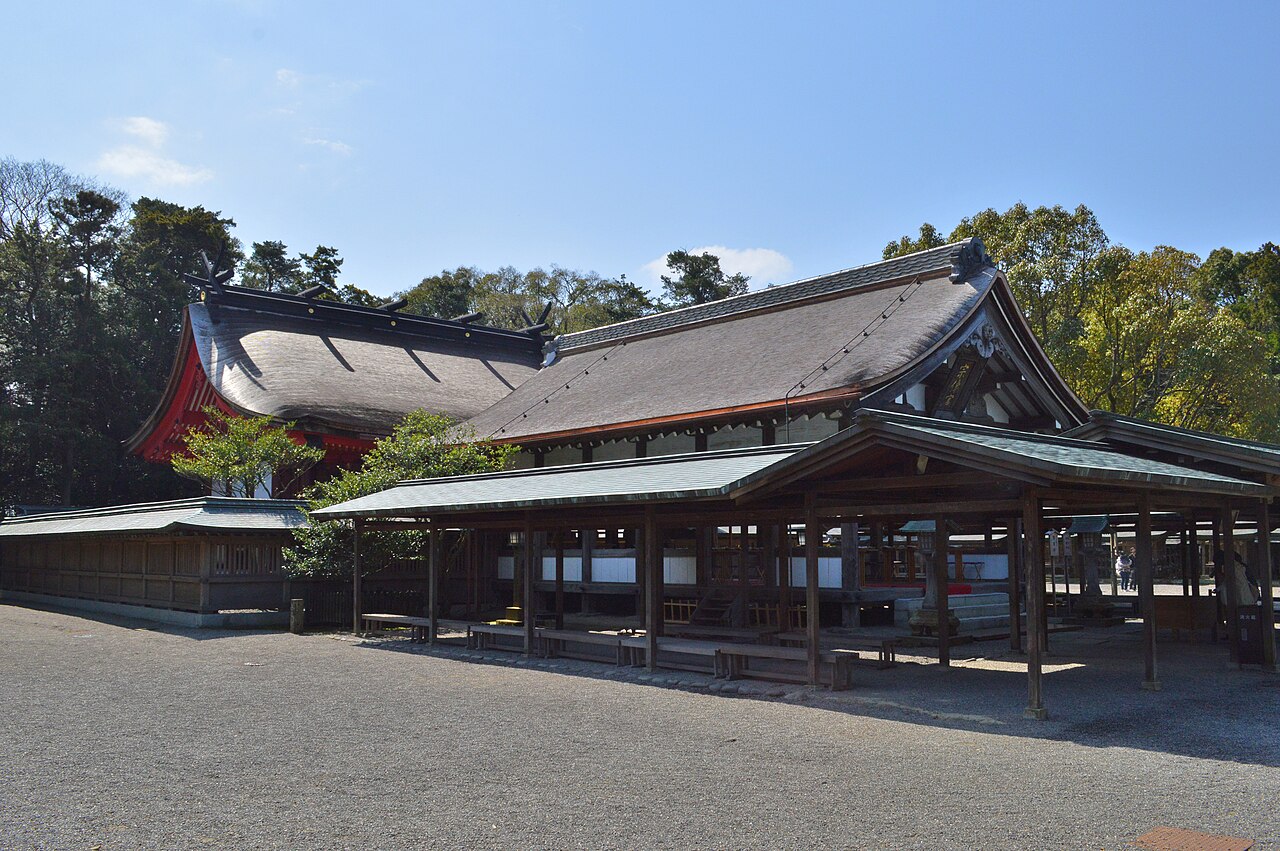
What Makes Munakata Taisha Special
Three Shrines, Three Islands, Three Goddesses
The defining feature of Munakata Taisha is its three-shrine structure spanning the sea:
| Shrine | Location | Deity | Access |
|——–|———-|——-|——–|
| Hetsu-gu | Mainland (Munakata City) | Ichikishimahime-no-kami | Bus from JR Togo Station (12 min) |
| Nakatsu-gu | Oshima Island | Tagitsuhime-no-kami | Ferry from Konominato Port (25 min) |
| Okitsu-gu | Okinoshima Island | Tagorihime-no-kami | Closed to the public |
These three goddesses—collectively called the Munakata Sanjoshin—are daughters of Amaterasu, the supreme deity of Shinto. The Nihon Shoki (720 AD) records them as “Michinoushi-no-Muchi,” meaning “the supreme deities who govern the road.” That “road” is the ancient maritime route connecting Japan to the Korean Peninsula and mainland China.
Okinoshima: The Forbidden Island
Okinoshima lies roughly 60 kilometers offshore in the Genkai Sea, a tiny island just 4 kilometers in circumference. It has been considered the dwelling place of a goddess for as long as records exist, and strict taboos have kept it off-limits to ordinary people for centuries.
The rules of Okinoshima:
- Women are prohibited entirely (a religious taboo maintained to this day)
- Men may land only once per year, during the grand festival on May 27, and only 200 are selected by lottery
- All who land must first purify themselves by entering the sea (misogi)
- Nothing seen or heard on the island may be spoken of to outsiders (“Oiwazu-sama”)
- Not a single twig, stone, or blade of grass may be removed from the island
Between the 4th and 9th centuries, the Japanese state conducted elaborate rituals on Okinoshima to pray for safe passage across the Genkai Sea to the Asian mainland. The offerings left behind—bronze mirrors, gold rings, glass vessels, iron weapons, miniature looms, and more—were never disturbed. Approximately 80,000 artifacts have been excavated, and every single one has been designated a National Treasure of Japan. The sheer scale and preservation of these finds earned Okinoshima the nickname “Shoso-in of the Sea” (after the famous treasure house in Nara).
You cannot visit Okinoshima, but you can see the treasures. They are displayed in the Shinpo-kan Museum at Hetsu-gu on the mainland.
Takamiya Sacred Site: The Most Powerful Spot in the Complex
A 10-minute walk uphill through the forest behind Hetsu-gu’s main hall brings you to Takamiya Saijo—the spot where the three Munakata goddesses are said to have descended from heaven.
There is no building here. No shrine hall, no roof. Just a stone altar in a clearing surrounded by ancient trees. This is what Shinto worship looked like before shrine architecture existed—a direct connection between the natural world and the divine. The atmosphere is noticeably different from the rest of the complex: quieter, heavier, and older. If you visit only one spot at Munakata Taisha beyond the main hall, make it this one.
UNESCO World Heritage Status
In 2017, UNESCO inscribed the following as a World Cultural Heritage Site:
- Okinoshima (Okitsu-gu) and its three associated reefs
- Oshima Island (Nakatsu-gu and the Okitsu-gu worship-from-afar site)
- Hetsu-gu main shrine
- Shimbaru-Nuyama burial mounds (tombs of the Munakata clan)
What earned the inscription was not just the artifacts or the architecture, but the continuity: 1,600 years of unbroken worship at the same place, to the same deities, for the same purpose. This kind of spiritual continuity is rare anywhere in the world, and UNESCO recognized it as evidence of humanity’s deep need to connect with the sacred.
Spiritual Benefits
Munakata Taisha is the deity of “michi” (roads/paths), and its blessings extend to all forms of travel and life journeys:
- Traffic Safety (Kotsu Anzen): One of the most famous traffic safety shrines in Japan. Many visitors come specifically for car blessings. The annual Miare Festival (October 1) features a maritime parade of roughly 100 fishing boats.
- Safety at Sea: The core blessing since antiquity. Fishermen, sailors, and anyone traveling by water seek protection here.
- Business Success: As the deity who “opens roads,” Munakata Taisha is associated with opening paths to business prosperity.
- Romantic Connections (En-musubi): Nakatsu-gu on Oshima Island is considered one of the birthplaces of the Tanabata (Star Festival) legend. A stream called “Amanogawa” (Milky Way) flows through the shrine grounds, with the Orihime (Weaver) and Hikoboshi (Cowherd) sub-shrines on opposite banks.
- National Peace: The shrine’s ancient role as protector of the nation continues in its prayers for peace and stability.
Best Time to Visit
By Season
Spring (March–May): Temperatures of 15–22C (59–72F). Fresh green foliage in the shrine grounds. Calm seas for the Oshima ferry. Avoid Golden Week (late April–early May) for crowds; weekdays are best.
Summer (June–August): Temperatures of 25–33C (77–91F). Oshima offers beach swimming but the mainland shrine is humid. Late July’s Munakata Taisha Summer Festival is worth attending. Visit the shrine early morning (8:00–9:00 AM) to avoid heat.
Autumn (September–November): The best season overall. Temperatures of 15–25C (59–77F). The Miare Festival on October 1 is the year’s grandest event—roughly 100 fishing boats escort the divine palanquin from Oshima to the mainland in a spectacular maritime procession. Fall colors peak mid-to-late November.
Winter (December–February): Temperatures of 5–10C (41–50F). Cold winds from the Genkai Sea. Few visitors—ideal for quiet contemplation. New Year (January 1–3) draws approximately 500,000 worshippers for hatsumode.
Best Times of Day
- 8:00–9:00 AM: Fewest visitors. The Takamiya Sacred Site is at its most serene in morning light.
- Morning: The ideal sequence is Shinpo-kan Museum (opens 9:00) then main hall then Takamiya.
- For Oshima: Take a morning ferry to allow 3–4 hours for the island. Return in the afternoon.
Visitor’s Guide
Hetsu-gu (Mainland) Worship Route
Duration: 1–2 hours (including Shinpo-kan Museum)
1. Torii Gate & Approach: From the parking area, pass through the torii and walk the tree-lined path.
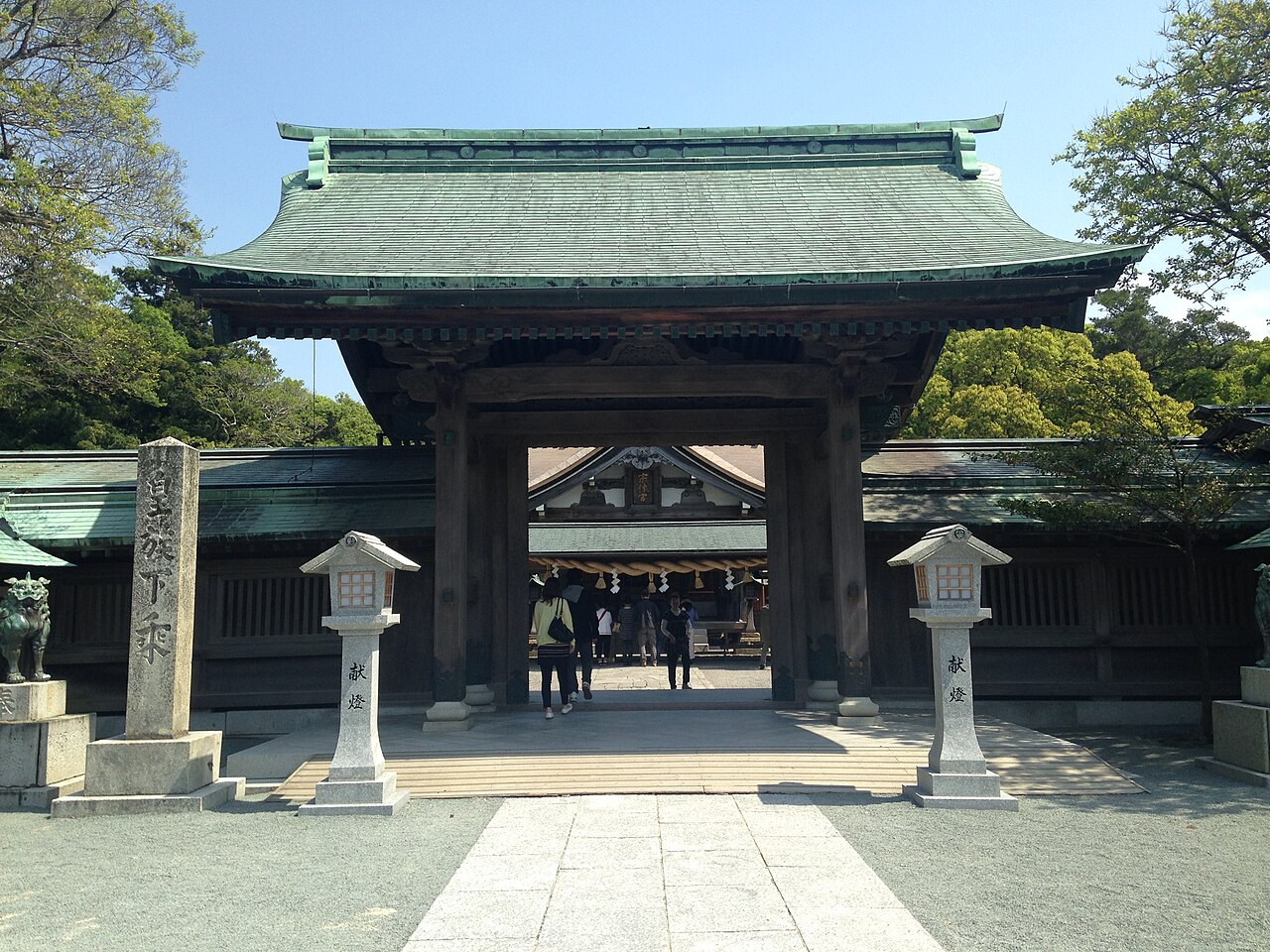
2. Shimmon Gate: The main gate leading to the worship area. Stone lanterns line the approach.
3. Worship Hall & Main Hall: Standard Shinto worship—bow twice, clap twice, pray, bow once. The main hall dates to 1578 and is a designated Important Cultural Property.
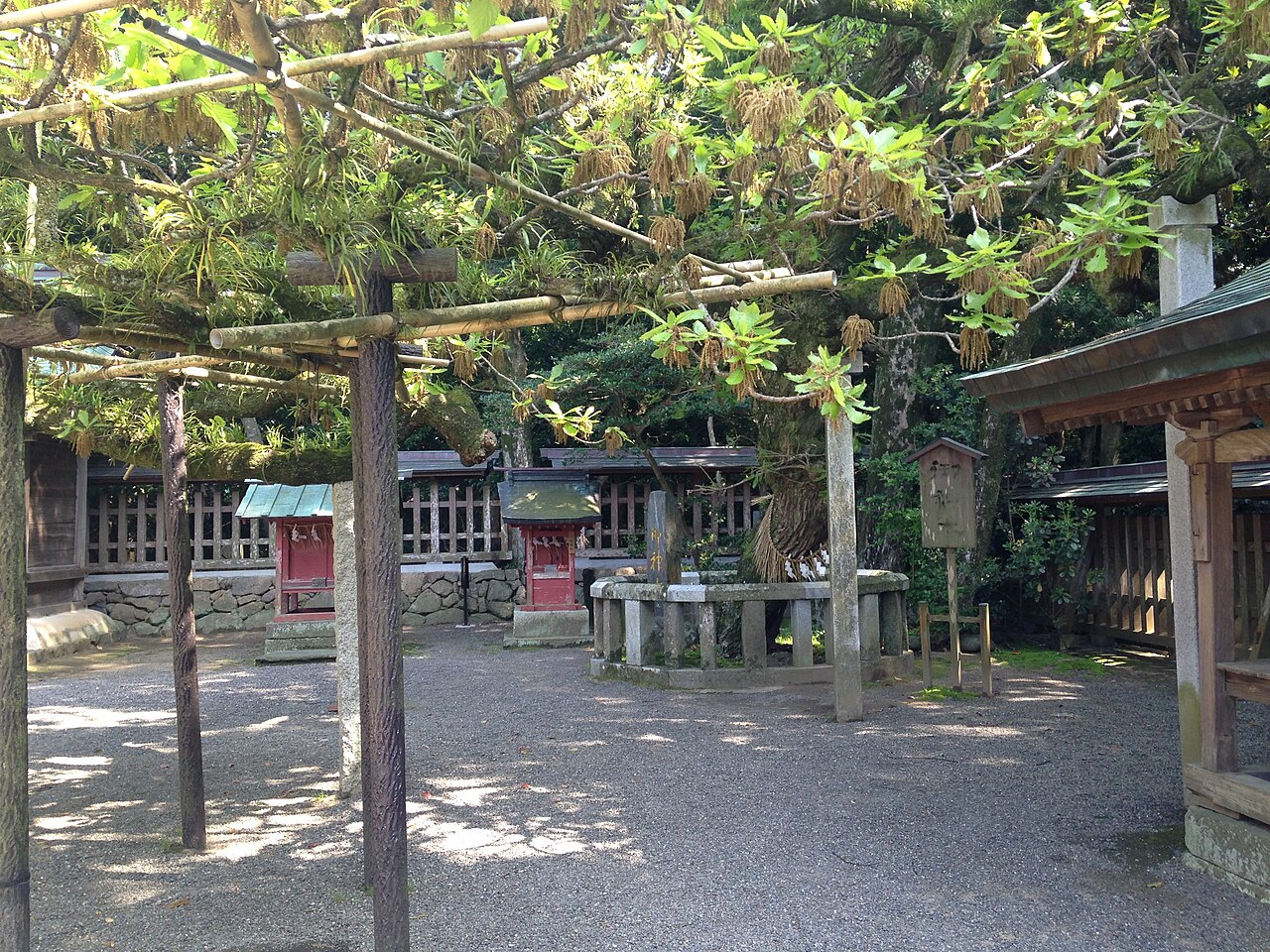
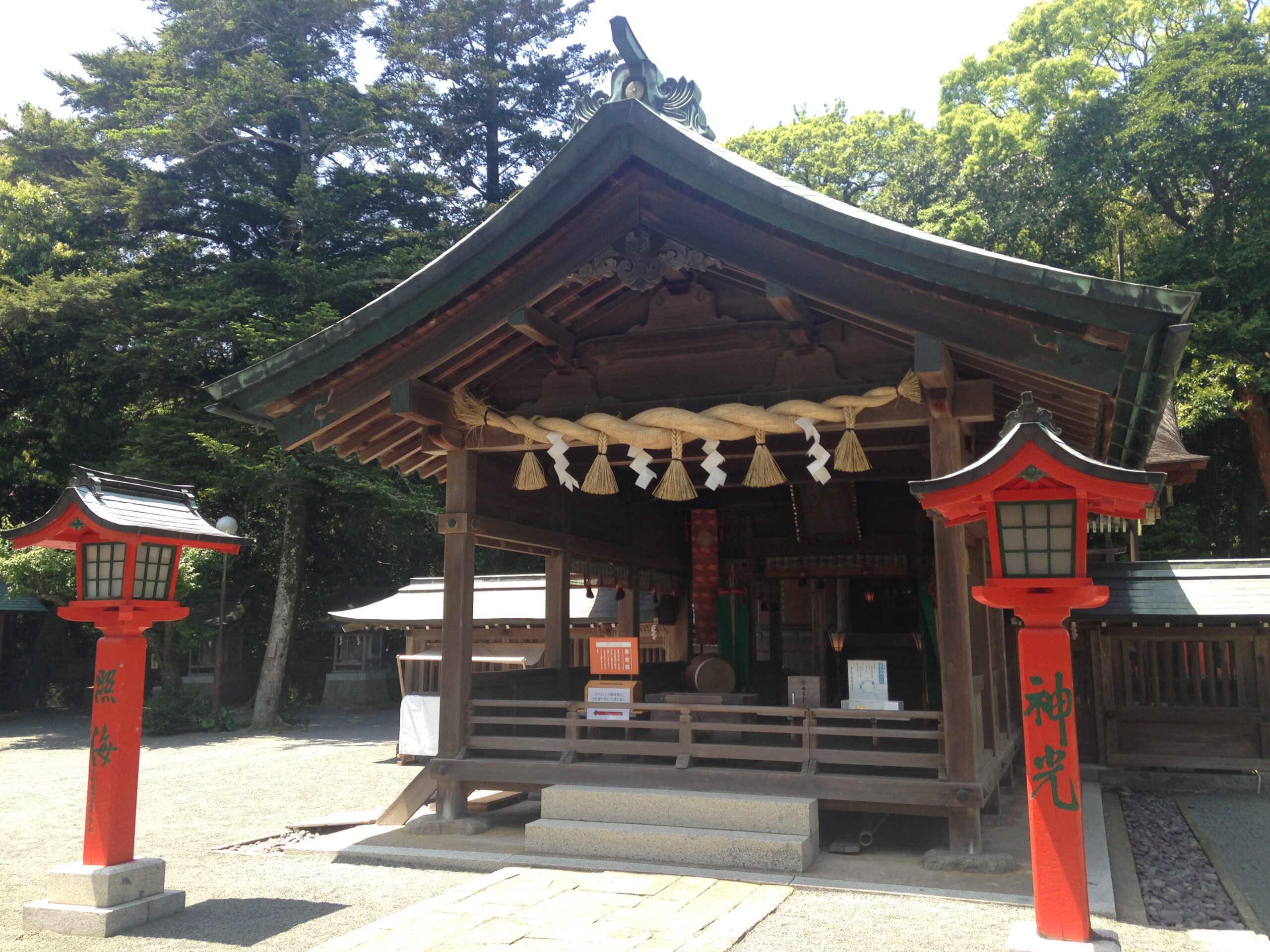
4. Daini-gu & Daisan-gu (Second & Third Shrines): Located behind the main hall to the right. Built from timber granted by Ise Grand Shrine. These enshrine the spirits of Okitsu-gu and Nakatsu-gu, allowing worshippers to pay respects to all three shrines without leaving the mainland.
5. Takamiya Sacred Site: A 10-minute forest walk uphill from the main hall. The most spiritually powerful spot in the complex.
6. Shinpo-kan Museum: Houses approximately 80,000 National Treasures from Okinoshima. Admission JPY800 (as of 2026).
Visiting Oshima Island (Nakatsu-gu)
Duration: Half-day (including ferry)
| Detail | Information |
|——–|————|
| Ferry | Munakata City ferry “Oshima.” Approximately 7 departures daily (varies by season) |
| Fare | JPY580 one way (as of 2026) |
| Duration | Approximately 25 minutes |
| To Nakatsu-gu | 10-minute walk from Oshima Port |
| To Okitsu-gu worship site | Bus or rental bicycle, approximately 15 minutes from port |
Oshima highlights:
- Okitsu-gu Yohai-sho (Worship-from-afar site): Built facing Okinoshima, 60 km away. On clear days, you may see the island with the naked eye.
- “Amanogawa” stream at Nakatsu-gu: The Tanabata legend site, with Orihime and Hikoboshi shrines on opposite banks of the stream.
- Oshima Lighthouse: Panoramic views of the Genkai Sea from the island’s northern tip.
- Rental bicycles: Available at Oshima Port (approximately JPY500/day). The island circuit is about 12 km, taking 1.5–2 hours by bike.
Goshuin (Shrine Seal)
Available at both Hetsu-gu and Nakatsu-gu. Hetsu-gu’s features the calligraphy “Munakata Taisha”; Nakatsu-gu’s reads “Nakatsu-gu.” JPY300–500 each.
Popular Charms and Amulets
- Traffic Safety Charm (Kotsu Anzen Mamori): The most popular item. Available as a traditional charm bag or a car sticker (from JPY800).
- Maritime Safety Charm (Kaijo Anzen): For fishermen, divers, and sailors (JPY800).
- Matchmaking Charm (En-musubi): Nakatsu-gu exclusive, with Tanabata-inspired design (JPY800).
Practical Information
Access
Address: 2331 Tajima, Munakata City, Fukuoka Prefecture (Hetsu-gu)
By Train + Bus:
- JR Kagoshima Main Line to Togo Station then Nishitetsu Bus to “Munakata Taisha-mae” (12 minutes, JPY290)
- Hakata Station to Togo Station: approximately 30 minutes by rapid train (JPY570)
- Kokura Station to Togo Station: approximately 40 minutes by rapid train
By Car:
- From Kyushu Expressway Wakamiya IC: approximately 20 minutes
- From central Fukuoka: approximately 50 minutes
- Free parking: approximately 700 spaces across three lots. Overflow parking with shuttle buses during New Year.
To Oshima (Nakatsu-gu):
- Konominato Port: approximately 10 minutes by car from Hetsu-gu
- Free parking at Konominato Port (approximately 200 spaces)
- Ferry: approximately 7 daily departures, 25 minutes, JPY580 one way
Visiting Details
| Item | Details |
|——|———|
| Hours | Shrine grounds open year-round. Administrative office 6:00 AM–5:00 PM. Shinpo-kan Museum 9:00 AM–4:30 PM (last entry 4:00 PM). |
| Closed | Open year-round (Shinpo-kan has occasional closures; check ahead for year-end/New Year) |
| Admission | Shrine grounds free. Shinpo-kan Museum: Adult JPY800, High school/University JPY500, Elementary/Junior high JPY400 |
| Duration | Hetsu-gu only: 1–2 hours. Including Oshima: half-day to full day |
| Phone | 0940-62-1311 |
| Website | https://munakata-taisha.or.jp/ |
Surroundings and Nearby Attractions
Munakata Area
- Chinkoku-ji Temple: The Buddhist temple historically paired with Munakata Taisha (5 minutes by car from Hetsu-gu). Founded by Kukai (Kobo Daishi). Famous for cherry blossoms and azaleas in spring.
- Umi-no-Michi Munakata-kan: Free museum adjacent to Hetsu-gu explaining Munakata’s history and the World Heritage designation. Includes video presentations about Okinoshima.
- Michi-no-Eki Munakata: A roadside station with fresh seafood from the Genkai Sea (10 minutes by car). Kaisen-don (sashimi rice bowls) and sushi are popular. Go before noon on weekends—popular items sell out fast.
Further Afield
- Dazaifu Tenmangu: Shrine of the god of learning, Sugawara no Michizane (40 minutes by car). Combined with Munakata Taisha, this makes a complete Fukuoka power spot pilgrimage.
- Miyajidake Shrine: Famous for the “Path of Light”—a phenomenon where the setting sun illuminates the approach road in a straight line (15 minutes by car). Visible for about one week each in February and October.
What Visitors Say
> “The Takamiya Sacred Site is extraordinary. No building, just trees and an altar. You can feel something ancient and powerful there. It is the highlight of Munakata Taisha for me.”
> — Google Maps review
> “If you only visit Hetsu-gu on the mainland, you miss the point. Take the ferry to Oshima. Seeing the ocean between the shrines makes you understand the scale of this faith.”
> — Google Maps review
> “The Shinpo-kan Museum blew my mind. Gold rings, bronze mirrors, glass beads—all from a tiny island 60 km out to sea. These were offerings for safe passage to China 1,500 years ago. The scale of devotion is humbling.”
> — Google Maps review
Practical Tips for Different Visitors
For Photographers
Best shots: (1) Shimmon gate framing the worship hall (morning light). (2) Forest light filtering through trees at Takamiya Sacred Site (morning). (3) Genkai Sea panorama from Okitsu-gu worship-from-afar site on Oshima (clear weather). (4) The Miare Festival maritime parade on October 1. Tripods permitted outside festival events.
For Families with Children
Hetsu-gu takes about 1 hour and is manageable for children. The Shinpo-kan Museum brings history alive—80,000 National Treasures give context to ancient Japan. The ferry to Oshima is exciting for kids, and rental bicycles make the island an adventure. Pack snacks—food options on Oshima are limited.
Wheelchair and Stroller Access
The path from the parking area to the worship hall at Hetsu-gu is relatively flat and wheelchair-accessible. The Takamiya Sacred Site, however, involves an uphill forest trail with steps and is not accessible. The Shinpo-kan Museum has barrier-free access. Oshima’s ferry accommodates wheelchairs, but the island’s roads are hilly.
Rainy Day Visits
The mainland shrine visit is brief enough to manage in light rain. Focus on the Shinpo-kan Museum (indoor, 1–2 hours of exhibits) and Umi-no-Michi Munakata-kan (indoor, free). Skip the Oshima ferry in rough weather—it may be cancelled, and the island lacks sheltered attractions.
For Goshuin Collectors
Two distinct goshuin are available: Hetsu-gu (administrative office, 9:00 AM–5:00 PM) and Nakatsu-gu on Oshima (limited hours—check before visiting). Collecting both in one day requires an early start and good ferry timing.
Frequently Asked Questions
Can I visit Okinoshima?
No. Okinoshima is permanently closed to the general public. Once per year (May 27), 200 men are selected by lottery to land for a grand festival. Women are not permitted under any circumstances. The island’s National Treasures are displayed at the Shinpo-kan Museum at Hetsu-gu, and Okinoshima can be viewed from the worship-from-afar site on Oshima.
Is Hetsu-gu enough, or should I go to Oshima?
Hetsu-gu alone provides a complete shrine visit (1–2 hours). However, the essence of Munakata Taisha lies in its three-shrine, three-island structure. If you have a half day, taking the ferry to Oshima adds the maritime dimension that makes this shrine unique. Strongly recommended.
Is parking a problem?
Normally no—there are about 700 free spaces. During New Year (approximately 500,000 visitors over three days), surrounding roads are congested and shuttle buses operate from overflow lots. The Miare Festival period (early October) also sees moderate crowding.
Can I combine Munakata Taisha with Dazaifu Tenmangu in one day?
Yes. Munakata Taisha (morning) then Dazaifu Tenmangu (afternoon) is efficient—about 40 minutes apart by car. However, if you plan to visit Oshima, Munakata Taisha alone will fill the day.
What is the Miare Festival?
Held annually on October 1. Roughly 100 fishing boats escort the divine palanquin across the sea from Oshima to the mainland in a spectacular maritime procession. Preliminary rituals begin the evening of September 30 at Nakatsu-gu on Oshima. This is the single most dramatic event in the shrine’s calendar.
Nearby Power Spots
- Dazaifu Tenmangu — Shrine of learning and culture, Fukuoka’s most visited shrine (40 min by car)
- Miyajidake Shrine — Famous for the “Path of Light” sunset phenomenon (15 min by car)
Summary
Munakata Taisha stands alone among Japanese shrines: three sacred sites on three separate islands, spanning 60 kilometers of open sea, connected by 1,600 years of unbroken worship. The mainland Hetsu-gu offers the thatched-roof main hall, the primordial Takamiya Sacred Site, and a museum housing 80,000 National Treasures. Oshima’s Nakatsu-gu adds the maritime dimension—a ferry ride that physically places you between the human world and the realm of the gods. And Okinoshima, invisible beyond the horizon, remains the forbidden island that anchors the entire faith.
UNESCO recognized this continuity as a World Heritage Site in 2017, and rightly so: there are very few places on Earth where the same deities have been worshipped in the same way, at the same place, for over sixteen centuries. As the head shrine of 6,000 Munakata and Itsukushima shrines across Japan—including the famous floating torii at Miyajima—Munakata Taisha is the source.
Whether you come for traffic safety blessings, the ancient power of the Takamiya site, or the sheer wonder of an island so sacred that no one may speak of what lies there, Munakata Taisha delivers an experience that reaches deeper into Japan’s spiritual past than almost any other shrine can offer.
—
Want to discover the power spot that’s right for you?
Beyond this location, Japan is home to countless power spots. To find the one most suited to you, try our free compatibility assessment (takes just 3 minutes).
-> Take the Free En Profile Assessment
—
*Information in this article is current as of March 2026. Please verify the latest details via the official website before visiting.*
あなたに最適なパワースポットを知りたい方へ