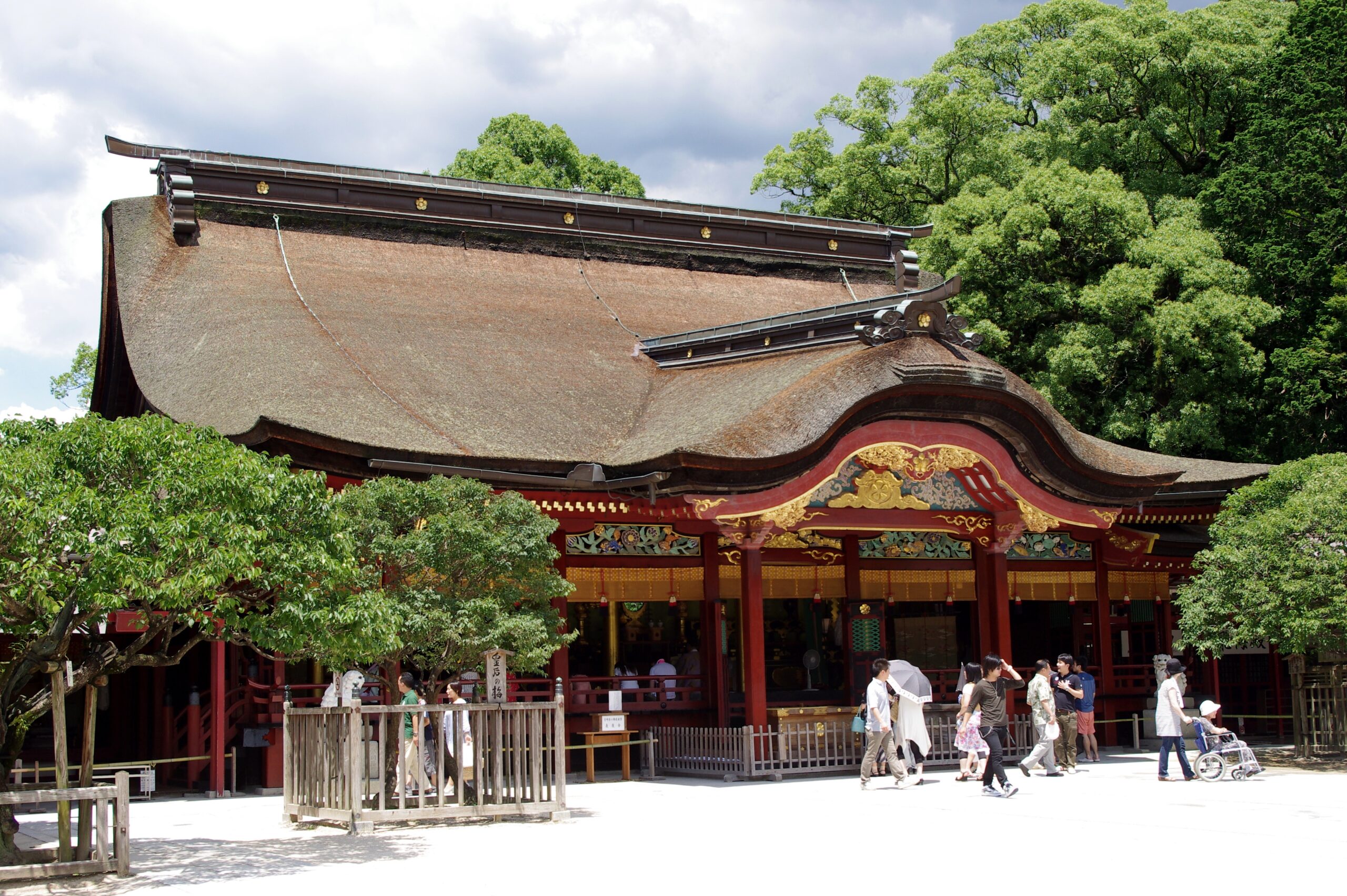
Every year, millions of students, parents, and travelers make the pilgrimage to Dazaifu Tenmangu in Fukuoka Prefecture—Japan’s most important shrine for academic success and the arts. If you are visiting Fukuoka and wondering whether this shrine is worth the 30-minute train ride from Hakata, the answer is an emphatic yes. Dazaifu Tenmangu offers far more than prayers for exam success: 1,100 years of literary heritage, architectural beauty, and living spiritual tradition converge in one of Kyushu’s most atmospheric settings.
As the head shrine of approximately 12,000 Tenjin shrines across Japan, Dazaifu Tenmangu enshrines Sugawara no Michizane—the Heian-era scholar, poet, and statesman whose story of brilliance, political betrayal, and divine transformation has captivated Japan for over a millennium. Whether you are a student seeking exam blessings, a history enthusiast, or a traveler looking for the best half-day excursion from Fukuoka, this guide covers everything you need.
Quick Facts
| Detail | Info |
|——–|——|
| Enshrined Deity | Sugawara no Michizane (Tenjin-sama) |
| Founded | 905 AD (Engi 5) |
| Famous For | Academic success, wisdom, arts, plum blossoms |
| Hours | 6:00 AM–7:00 PM (extended hours in summer, shorter in winter) |
| Admission | Free (Treasure Hall: JPY500 adults, JPY200 children) |
| Access | 5-min walk from Nishitetsu Dazaifu Station |
| Annual Visitors | Approximately 10 million |
| Website | https://www.dazaifutenmangu.or.jp/ |
What Makes Dazaifu Tenmangu Special
The Tragic Genius: Sugawara no Michizane’s Story
To understand why Dazaifu Tenmangu moves so many visitors, you need to know the story of the man enshrined here. Sugawara no Michizane (845–903) was one of the most brilliant minds of the Heian period—a scholar who passed the imperial examinations at an extraordinarily young age, a gifted poet in both Japanese and Chinese, and a statesman who rose to the rank of Minister of the Right, the second-highest position in the imperial court.
His talent bred jealousy. The powerful Fujiwara clan orchestrated false charges of treason, and in 901, Michizane was stripped of his rank and exiled to Dazaifu in distant Kyushu. He spent his final two years in poverty and isolation, writing poems of longing for the capital and his beloved plum trees, before dying in 903 at the age of 59. According to legend, the ox cart carrying his body refused to move at a certain spot—the attendants took this as a divine sign, and that location became the site of Dazaifu Tenmangu.
After his death, calamities struck Kyoto: lightning killed Fujiwara courtiers, plagues swept the capital, and Emperor Daigo’s sons died in succession. The terrified court posthumously restored Michizane’s titles and ultimately deified him as Tenjin—the god of heaven. Over the centuries, Tenjin’s association shifted from feared thunder deity to the beloved patron of learning and scholarship.
This arc—from supreme talent to unjust exile to divine redemption—gives Dazaifu Tenmangu an emotional depth that purely architectural or natural power spots cannot match.
The Flying Plum Tree (Tobiume)
Before his exile from Kyoto, Michizane composed a famous poem to his beloved plum tree:
*”When the east wind blows, send your fragrance to me, plum blossoms. Though your master is gone, do not forget the spring.”*
According to legend, the plum tree uprooted itself and flew overnight from Kyoto to Dazaifu—over 600 kilometers—to be by Michizane’s side. This tree, known as the Tobiume (Flying Plum), still stands to the right of the Honden. Estimated to be over 1,000 years old, it consistently blooms first among all 6,000 plum trees on the grounds each year, typically in late January. Standing before this ancient, gnarled tree and knowing its story creates a connection that transcends the centuries.
Architecture: The Honden and Its 2023 Renovation
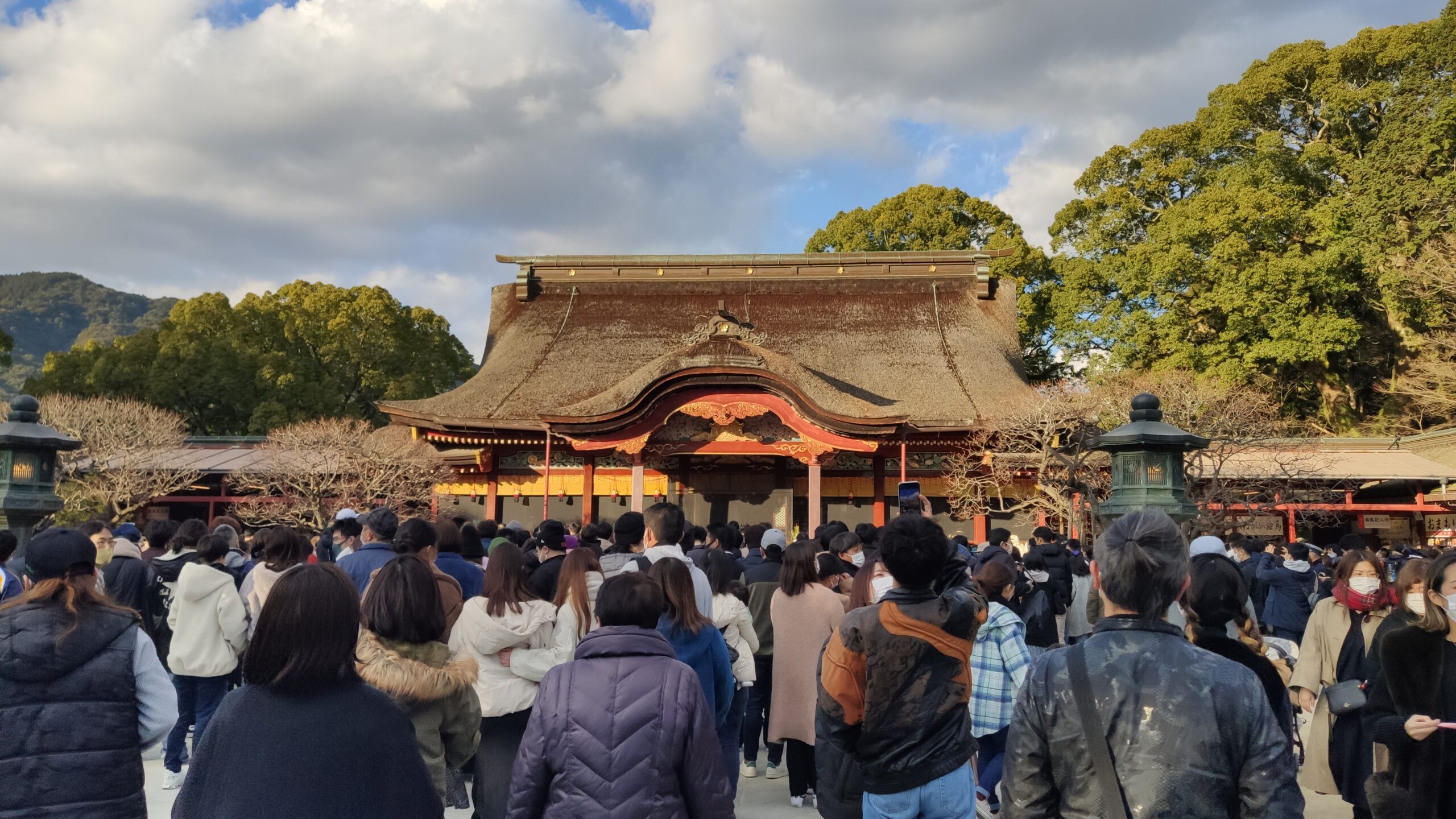
The current Honden was built in 1591 in the Momoyama architectural style and is designated an Important Cultural Property. Its massive thatched roof of cypress bark sweeps dramatically over ornate carvings and vivid vermillion, gold, and green paintwork—one of the finest examples of Momoyama-era shrine architecture in Japan.
In 2023, the shrine completed a major renovation of the Honden—the first comprehensive restoration in approximately 124 years. Visiting now, you see the building at its finest in over a century: the thatched roof in pristine condition, the carvings sharp and detailed, the colors vivid against the surrounding greenery.
The Romon Gate
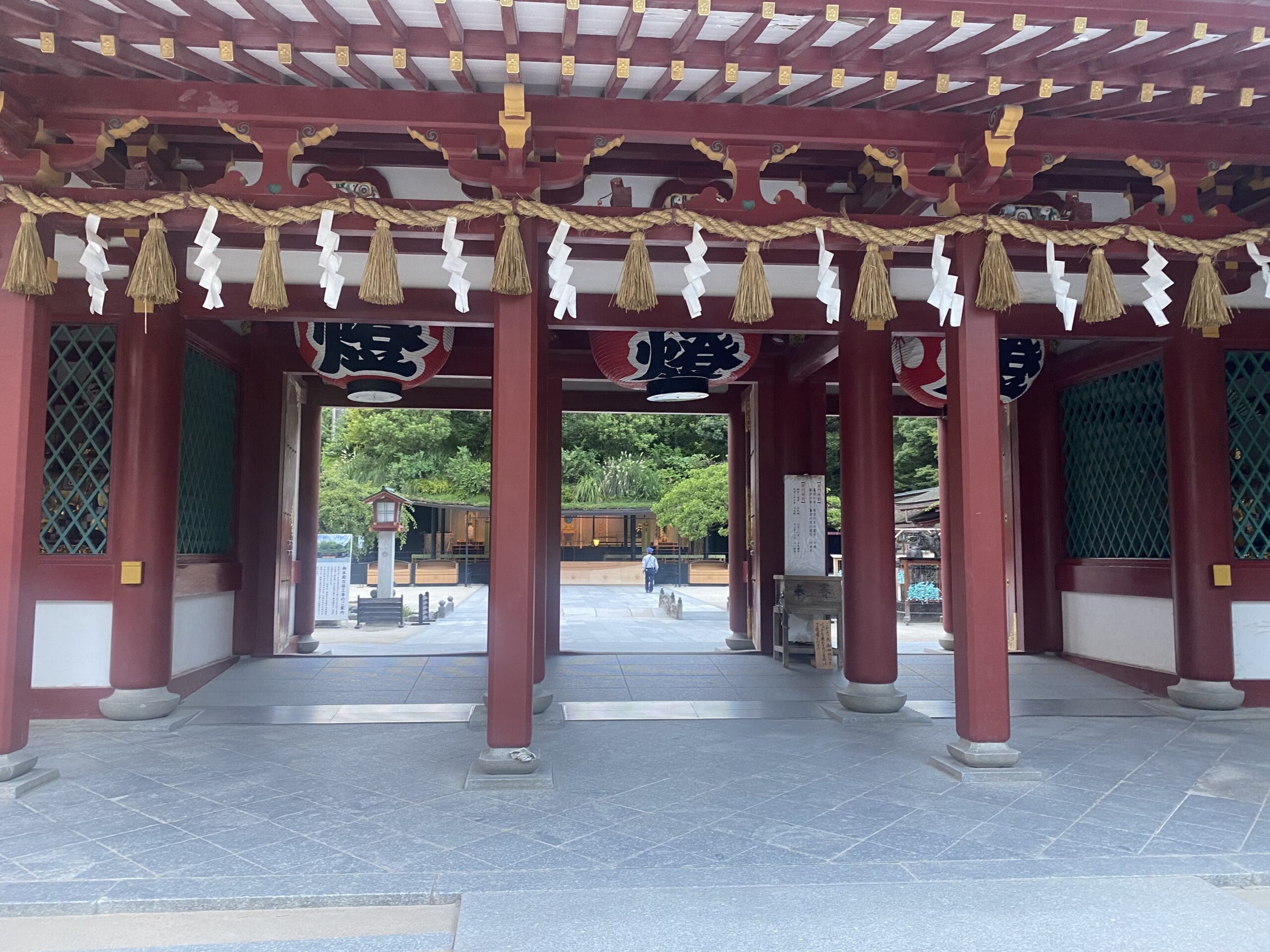
The two-story vermillion Romon Gate marks the formal entrance to the inner shrine precinct. Adorned with shimenawa sacred ropes and large lanterns, it frames your first view of the Honden beyond and serves as the visual signature of Dazaifu Tenmangu that appears in countless photographs and tourism materials.
Taiko-bashi Bridges and Shinji-ike Pond
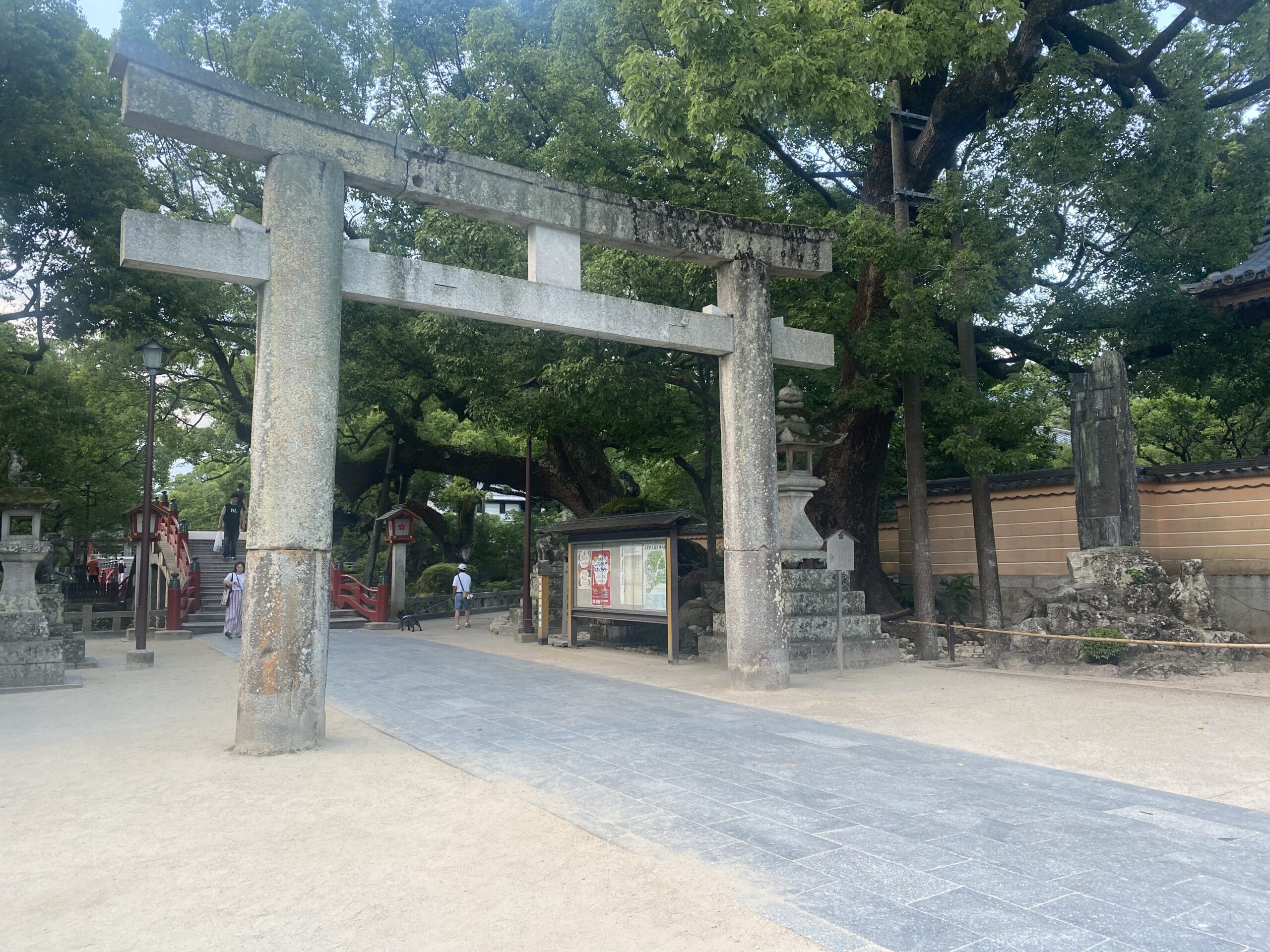
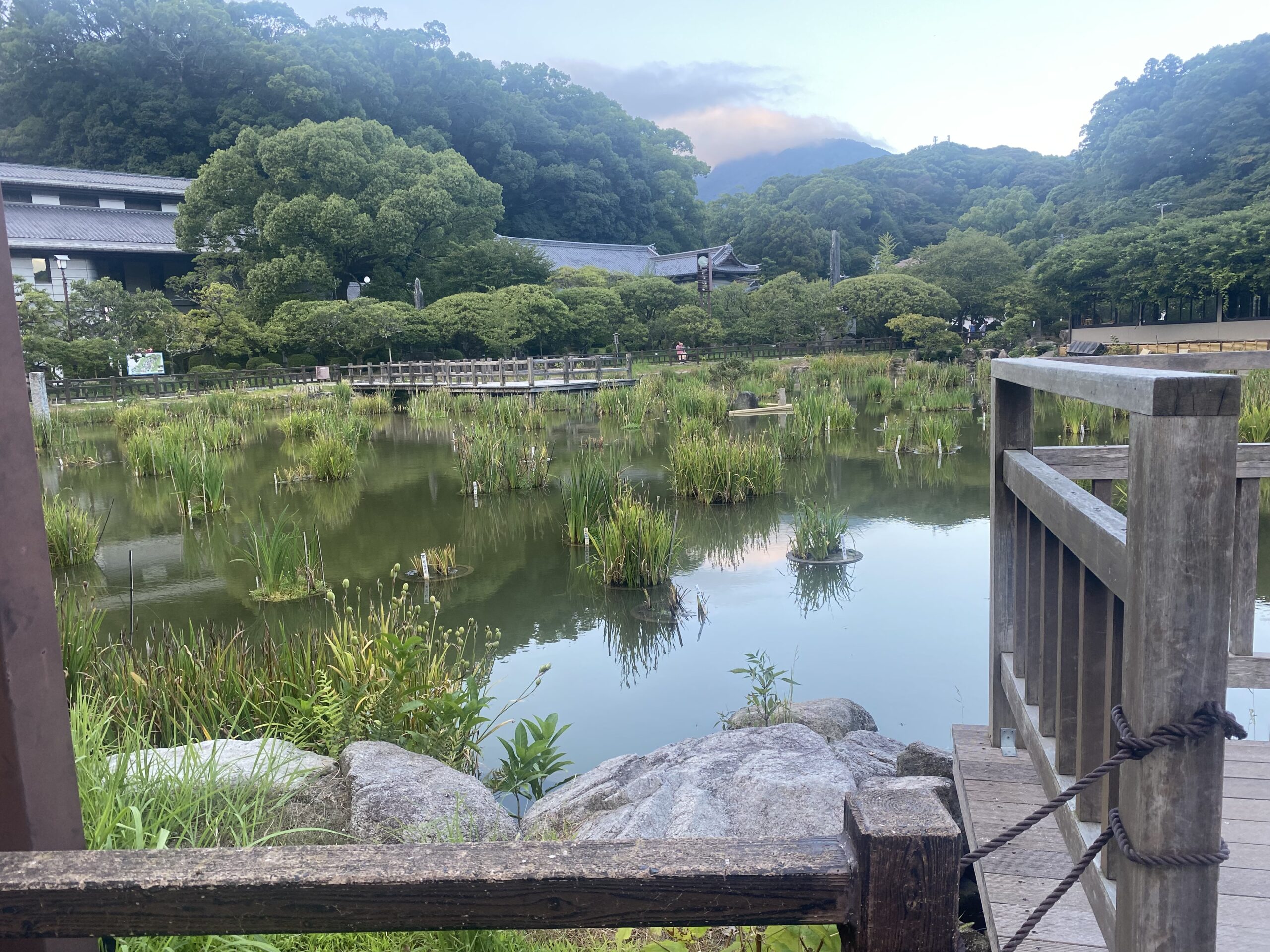
Before reaching the Honden, visitors cross three arched bridges over Shinji-ike, a heart-shaped pond. These bridges represent the past, present, and future—local tradition holds that you should cross them without looking back, symbolizing forward movement in your life. Each season transforms the pond: plum blossoms and wisteria in spring, irises in summer, colored leaf reflections in autumn.
Spiritual Benefits
Academic Success and Passing Exams
Dazaifu Tenmangu’s primary spiritual benefit is gakumon no kami—divine support for learning, scholarship, and academic achievement. As the head shrine of all Tenjin shrines in Japan, it is considered the most powerful place to pray for examination success.
Every January and February, the shrine is packed with students and families praying for success in university and high school entrance exams, professional licensing exams, and job placement tests. Tens of thousands of ema (wooden prayer boards) covered in handwritten wishes are hung during peak exam season alone. International visitors should know that students from across Asia—particularly South Korea, Taiwan, and China—visit in large numbers, and the shrine offers prayer boards and charms labeled in English, Chinese, and Korean.
Wisdom and the Sacred Bull Statues (Nade-ushi)
Beyond exam-passing, Tenjin is associated with the cultivation of wisdom itself—Michizane was a poet, calligrapher, and deep thinker. Throughout the grounds, you will encounter bronze and stone statues of reclining bulls (nade-ushi). According to legend, the ox drawing Michizane’s funeral cart refused to move at the present shrine site. Rubbing the head of these statues is believed to increase wisdom; rubbing the body part corresponding to your own ailment is believed to bring healing. The bull nearest the Honden has a head polished to a golden sheen from millions of hopeful hands.
Good Fortune and Protection
Dazaifu Tenmangu also offers blessings for general good fortune (kaiun), safe travel, and protection from misfortune. Michizane’s transformation from a wrongly persecuted mortal to a benevolent deity gives the shrine particular resonance for those seeking vindication or a fresh start.
Best Time to Visit
Plum Blossom Season (Late January–Early March)
This is Dazaifu Tenmangu at its most spectacular. The grounds contain approximately 6,000 plum trees of 200 varieties, and when they bloom, the entire precinct becomes a fragrant sea of white and pink blossoms. Peak bloom typically falls in mid-to-late February, though the Flying Plum Tree blooms first in late January. The Plum Blossom Festival brings special events and extended hours. Tip: Weekday mornings before 10 AM offer the best combination of flowers and manageable crowds.
Exam Season (January–February)
For the most spiritually intense atmosphere, visit during exam season when collective hope and determination are palpable. Expect very large crowds on weekends. Hatsumode (New Year’s first visit) in early January is the busiest period.
Autumn and Summer
Autumn (November–early December) brings beautiful foliage from camphor and maple trees with lighter crowds. Summer (June–August) offers iris blooms and lush greenery, though humidity is high—visit early morning or late afternoon.
Avoiding Crowds
- Early morning (6:00–8:00 AM): The shrine opens early and few visitors arrive before 9 AM
- Weekdays: Significantly less crowded than weekends year-round
- Avoid: January 1–3 (Hatsumode), weekends in January–February (exam season), Golden Week (late April–early May)
Visitor’s Guide: How to Worship
Proper Worship Procedure
1. Purify at the temizuya: Rinse left hand, right hand, then mouth (pour water into your palm—do not drink from the ladle). Tilt the ladle to rinse the handle.
2. Offer a coin: Toss a coin into the offering box (5-yen coins are traditional—“go-en” sounds like “good connection” in Japanese).
3. Bow twice, clap twice, bow once: Bow deeply twice, clap twice to alert the deity, pray silently, then bow once more.
4. Rub the bull statue’s head: Touch the nade-ushi for wisdom on your way out.
Charms, Amulets, and Goshuin
The most popular amulets include the Gakugyou Jouju (academic achievement, JPY1,000), Goukaku (exam success, JPY1,000), and En-musubi (relationship luck, JPY1,000). Blessed pencils and pens are particularly popular practical gifts for students. Ema wooden prayer boards (JPY500) come in plum blossom and sacred bull designs.
Goshuin (calligraphic seal stamps) are available for JPY500, with a special limited-edition version during plum blossom season. Arrive before 4:00 PM for goshuin.
Practical Information
Getting There from Hakata/Fukuoka
By Train (Recommended—30 minutes)
1. Fukuoka City Subway: Hakata Station to Tenjin Station (5 min, JPY260)
2. Walk to Nishitetsu Fukuoka (Tenjin) Station (underground connection, 3 min)
3. Nishitetsu Tenjin Omuta Line to Futsukaichi Station (15 min, JPY420)
4. Transfer to Nishitetsu Dazaifu Line to Dazaifu Station (5 min, included)
Total: About 30 minutes, JPY680. Tip: Ask about the “Dazaifu Sanpo Kippu” combination ticket (round-trip fare + umegae mochi) at the Nishitetsu counter.
From Fukuoka Airport: Subway to Tenjin (11 min, JPY260), then follow above. Total: ~45 minutes.
By Car: Kyushu Expressway to Dazaifu IC, about 30 minutes. Parking: JPY500/day at lots near the shrine.
Hours and Fees
| Season | Opening | Closing |
|——–|———|———|
| Spring/Autumn | 6:00 AM | 7:00 PM |
| Summer (June–August) | 6:00 AM | 7:30 PM |
| Winter (December–February) | 6:30 AM | 6:30 PM |
Admission to the shrine grounds is free. The Treasure Hall (Kanko Rekishi-kan) charges JPY500 for adults, JPY200 for children, and houses important artifacts including Michizane’s personal belongings and historical documents.
Time Required
- Quick visit (main worship only): 45 minutes–1 hour
- Standard visit (worship + Omotesando + bull statues): 1.5–2 hours
- Full experience (including Kyushu National Museum, Komyozenji Temple): 3–4 hours
The Starbucks You Have Never Seen
Before reaching the shrine, you will pass what may be the most architecturally striking Starbucks in the world. Designed by Kengo Kuma—the architect behind the Japan National Stadium for the Tokyo Olympics—the Dazaifu branch uses over 2,000 interlocking wooden sticks in a dramatic lattice structure with no right angles. The wooden beams create a flowing tunnel effect that has made this store a destination in its own right, featured in architectural publications worldwide.
Photography tip: The interior is most photogenic from the entrance looking inward with morning sidelight (before 10 AM). The exterior is best captured from across the Omotesando to show the full facade.
Omotesando: Food, Shopping, and Culture
The 400-meter Omotesando (approach road) from Dazaifu Station to the shrine is a destination in itself, lined with shops, restaurants, and cultural attractions.
Umegae Mochi: The Shrine’s Signature Sweet
You cannot visit without trying umegae mochi—a grilled rice cake filled with sweet red bean paste and stamped with a plum blossom design. The tradition dates back over 1,000 years: legend has it that an old woman offered these to comfort Michizane during his exile. Kasanoya, operating since 1922, is the most famous purveyor (JPY130 each, grilled to order). Several other shops along the Omotesando sell their own versions—sampling from multiple shops is a popular pastime.
Other Food and Shopping
- Plum-flavored soft serve: Refreshing in warmer months, available at several shops
- Mentaiko rice balls: Fukuoka’s signature spicy cod roe in portable onigiri form
- Matcha sets: Multiple tea houses offer traditional matcha with seasonal wagashi sweets
- Hakata ramen: A few shops serve Fukuoka’s famous tonkotsu ramen
For souvenirs, look for Tenjin-sama calligraphy brushes, plum blossom tenugui hand towels, and boxed umegae mochi.
Kyushu National Museum (5-minute walk)
Connected to the shrine grounds by a moving walkway through the forest, the Kyushu National Museum is one of Japan’s four national museums. Its permanent exhibition traces Japanese cultural history through the lens of Asian exchange—fitting for Kyushu’s role as Japan’s gateway to continental Asia. The curvilinear glass building contrasts dramatically with the traditional shrine architecture. Allow 1–2 hours. Admission: JPY700 adults, free for children under 18. Closed Mondays.
Komyozenji Temple (2-minute walk)
This small Zen temple adjacent to the shrine contains one of the most beautiful moss and rock gardens in Kyushu. The front garden represents the kanji character for “light” (hikari), while the rear garden evokes meditative calm through carefully placed rocks and raked gravel. Autumn, when maples above the moss garden turn crimson, is extraordinary. Admission: JPY500; allow 15–20 minutes.
Visitor Reviews
What actual visitors say about their experience at Dazaifu Tenmangu:
> “Got there early on a weekday morning and had the shrine almost to ourselves. The plum blossoms were in full bloom, and the atmosphere was magical. Don’t skip the Komyozenji Temple next door—the rock garden alone is worth the trip.”
> — Google Maps review
> “We came specifically for the Kengo Kuma Starbucks and ended up spending three hours exploring the shrine, eating umegae mochi, and visiting the museum. Way more to do here than we expected.”
> — Google Maps review
> “Visited during exam season in February. The energy was incredible—thousands of students all praying for success. Bought an academic success charm for my daughter back home. The ema boards covered in handwritten wishes were really moving.”
> — Google Maps review
Many visitors who planned a quick stop end up spending half a day, surprised by the depth and variety of attractions.
Tips for Different Visitors
Photography Enthusiasts
- Best light: Early morning (6:00–8:00 AM) for soft light on the Honden and bridges
- Plum blossoms: Mid-February for peak bloom; use the arched bridges as foreground elements
- Shinji-ike reflections: Dawn offers mirror-like water surface conditions
- Rainy days: The thatched roof and stone lanterns are especially atmospheric when wet
Tripods are permitted but be considerate of other visitors near the Honden.
Families with Students
The complete exam-blessing ritual: purchase a gakugyou jouju charm, write wishes on an ema board, rub the sacred bull’s head for wisdom, pray at the Honden, and pick up blessed pencils or pens as practical exam aids. Many Japanese families make this a special trip—treat it as a meaningful experience rather than rushing through.
Rainy Day Visitors
Rain enhances the atmosphere rather than diminishing it. The thatched roof, stone paths, and moss-covered lanterns look their most evocative when wet. The Omotesando shops are covered, and the Kyushu National Museum provides a substantial indoor option.
Accessibility
The main approach from Dazaifu Station is paved and mostly flat. The Taiko-bashi bridges are steep but a flat bypass path is available. The Omotesando and Kyushu National Museum are fully accessible with elevators and barrier-free facilities.
Frequently Asked Questions
How long should I plan for a visit to Dazaifu Tenmangu?
A minimum of 1.5 hours for the shrine and Omotesando. If adding the Kyushu National Museum and Komyozenji Temple, plan for 3–4 hours. Many visitors find a full half-day here rewarding.
Is Dazaifu Tenmangu only for students?
Not at all. The shrine’s history, architecture, gardens, and surrounding attractions appeal to all visitors regardless of academic interests.
Can I visit as a day trip from Fukuoka?
Yes—it is one of the most popular half-day trips. The train takes 30 minutes from Tenjin, and you can easily combine the shrine with lunch on the Omotesando and a museum visit.
Are there English explanations?
Some signage and an English pamphlet are available, but reading about Michizane’s story beforehand significantly enhances the experience.
What is the best souvenir?
Umegae mochi from Kasanoya (boxed versions travel well), academic success amulets, blessed pencils, and plum blossom tenugui hand towels.
Summary
Dazaifu Tenmangu is one of those rare places where spiritual significance, historical depth, architectural beauty, and practical visitor appeal all converge. The story of Sugawara no Michizane—his brilliance, his unjust exile, and his elevation to the patron deity of learning—gives the shrine an emotional weight that transcends typical sightseeing. Standing before the freshly restored Honden, crossing the symbolic three bridges, and touching the polished head of the sacred bull connects you to a tradition that has sustained Japanese scholars for over eleven centuries.
At just 30 minutes from central Fukuoka, with the Kengo Kuma Starbucks, the umegae mochi on the Omotesando, the Kyushu National Museum, and 6,000 plum trees in bloom during season, Dazaifu Tenmangu is one of the most accessible and rewarding half-day trips in all of Kyushu.
—
Discover Your Spiritual Compatibility
Every person has a unique affinity with different sacred places. Beyond Dazaifu Tenmangu, there may be other power spots across Japan that resonate even more deeply with your personal energy. Try our free compatibility diagnosis to discover your ideal spiritual match (takes just 3 minutes).
-> Take the Free En-Profile Diagnosis
—
*Information in this article is current as of March 2026. Please verify hours, fees, and access details with the official Dazaifu Tenmangu website before your visit.*
あなたに最適なパワースポットを知りたい方へ