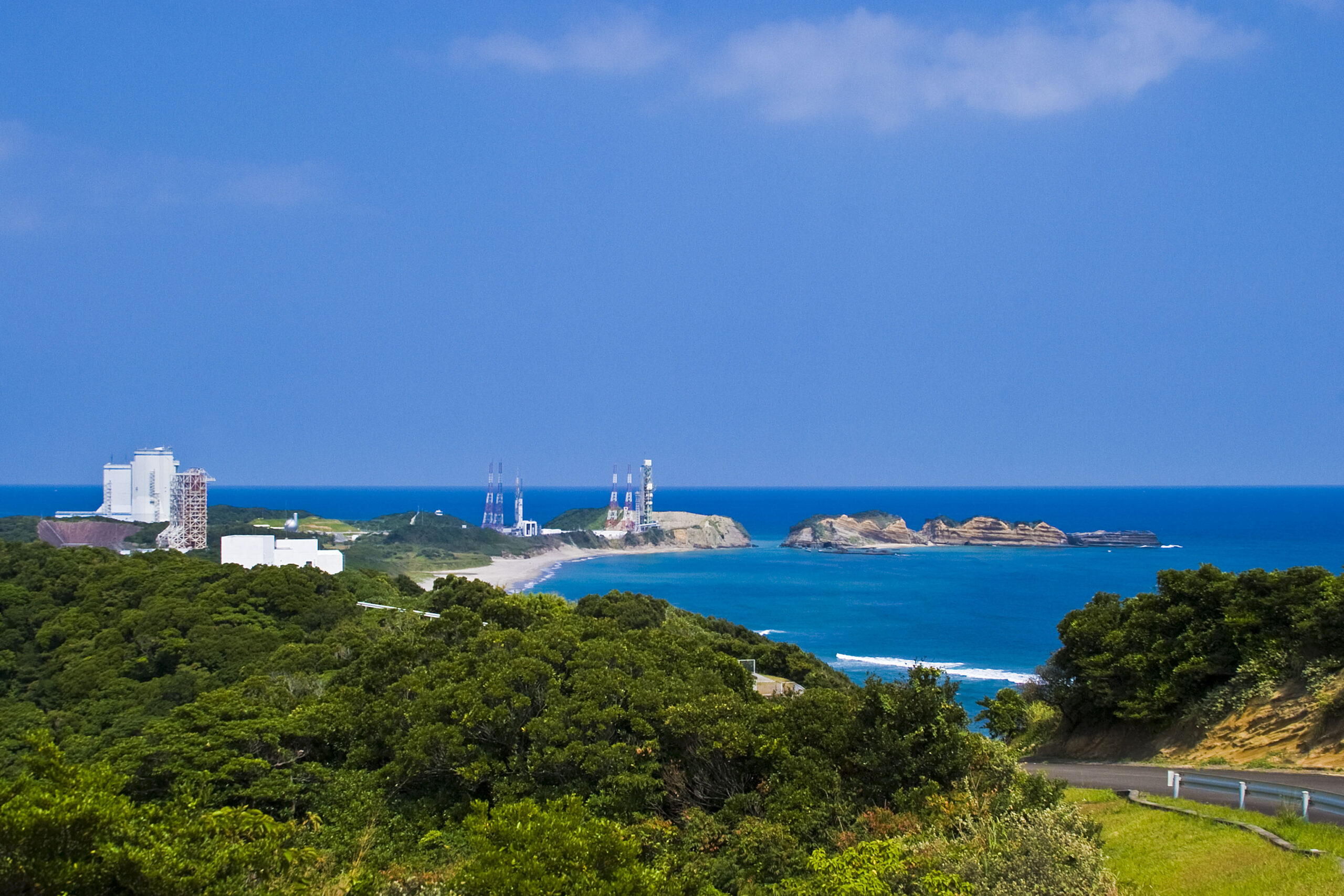
A rocket launch pad framed by turquoise ocean and subtropical forest. White sand beaches curving beneath satellite tracking towers. Waves breaking against cliffs just meters from where Japan’s most powerful rockets leave the Earth.
Tanegashima Space Center (TNSC) in Kagoshima Prefecture is Japan’s largest and most important rocket launch facility — and it has been called “the most beautiful rocket launch site in the world.” Operated by JAXA (Japan Aerospace Exploration Agency), the center stretches across 9.7 million square meters of Tanegashima Island’s southeastern coast, where launch pads, radar stations, and mission control buildings sit among dense green hills that slope directly into the Pacific Ocean.
What makes this place extraordinary is the juxtaposition. Most spaceports exist in deserts or flat, featureless terrain. Tanegashima’s launch pads look out over coral reefs and sea turtles. The sound of rocket engines at ignition mixes with the sound of surf. It is a place where humanity’s most advanced technology meets untouched subtropical nature — and both are accessible to the public.
—
What Makes Tanegashima Space Center Special
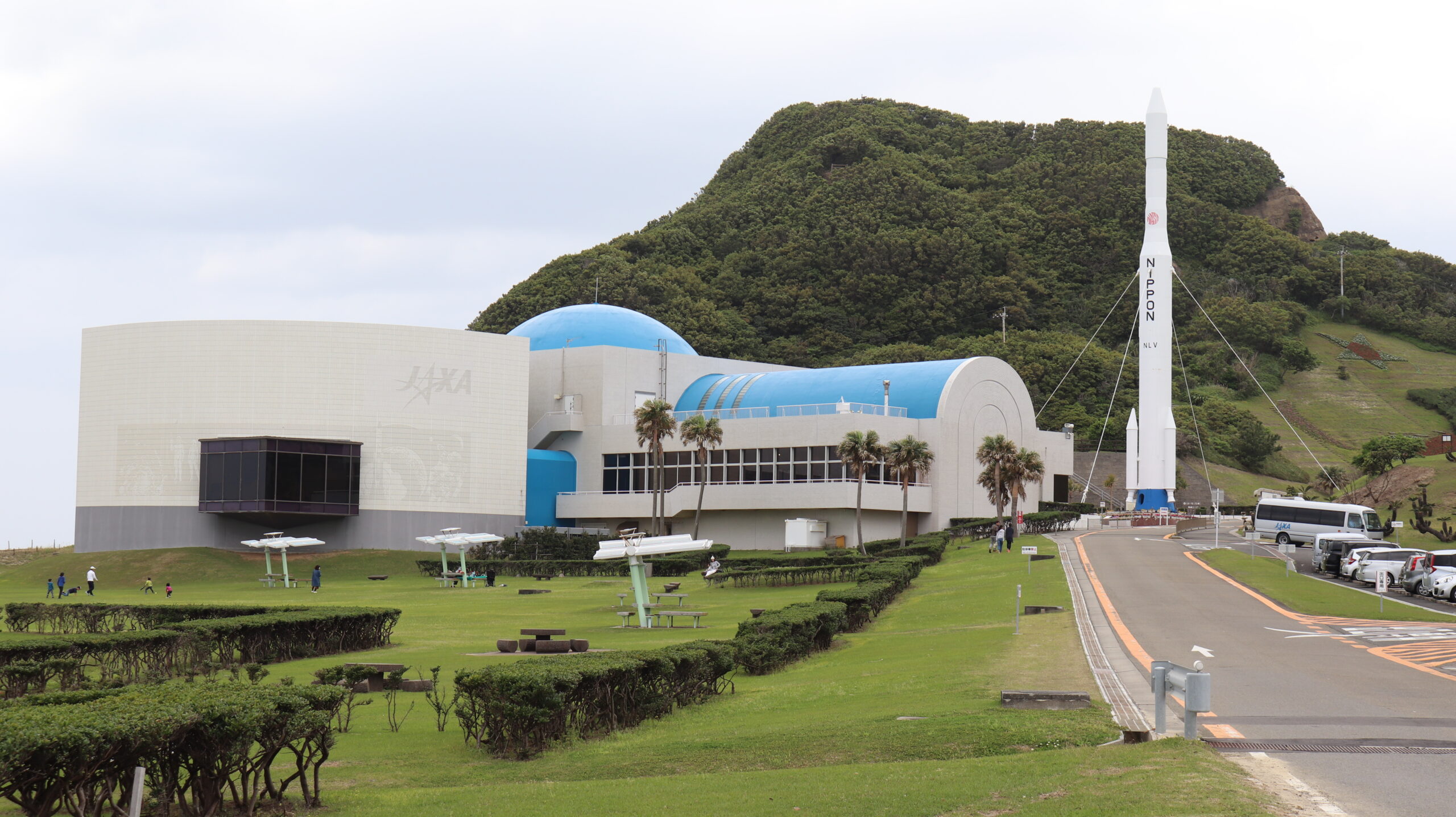
Space Science & Technology Museum (Free Admission)
The Space Science & Technology Museum is TNSC’s public face, and it is completely free. Located at the entrance to the center, the museum offers hands-on exhibits covering Japan’s entire space program — from the early pencil rockets of the 1950s to the latest H3 launch vehicle.
Highlights include:
- Full-scale rocket engine displays — see the LE-7A engine that powers the H-IIA up close
- Satellite models — life-size replicas of communications and Earth observation satellites
- Interactive mission control simulator — experience a launch countdown from the controller’s perspective
- ISS (International Space Station) section — learn about Japanese astronauts’ missions aboard Kibo, Japan’s ISS module
- Theater — a large-screen film about JAXA’s missions and the history of Japanese space exploration
The museum is well-designed for both adults and children. Exhibits have English explanations, and the hands-on elements keep younger visitors engaged while parents explore the technical displays.
Hours: 9:30 — 17:00 (last entry 16:30)
Closed: Mondays (or Tuesday if Monday is a holiday), year-end/New Year period, and during launch operations
Admission: Free
Watching a Rocket Launch
Witnessing a rocket launch from Tanegashima is one of the most unforgettable experiences available in Japan. The ground shakes. A column of white exhaust billows from the launch pad. And then the rocket rises — slowly at first, then accelerating into the sky until it disappears into the upper atmosphere. The entire sequence takes about two minutes, but the impression lasts a lifetime.
What you need to know:
- Launch schedule: JAXA typically conducts 6–8 launches per year. Schedules are announced on JAXA’s website several weeks in advance, but exact dates can shift due to weather or technical issues
- Exclusion zone: A 3km radius around the launch pad is strictly closed during launch operations. The Space Museum also closes on launch days
- Accommodation: Hotels on Tanegashima fill up weeks or months before confirmed launch dates. Book as early as possible — once a launch window is announced, availability drops rapidly
- Weather delays: Launches are frequently postponed by 1–3 days. Plan flexible travel dates if seeing a launch is your primary goal
Best viewing spots:
| Spot | Distance from Pad | Capacity | Notes |
|——|——————-|———-|——-|
| Hase Observation Park | ~3.5 km | ~500 | Most popular. Elevated position with clear sightlines. Arrive very early. |
| Eminoe Observation Park | ~3 km | ~300 | Close and unobstructed. Fills up quickly. |
| Uchugaoka Park | ~8 km | ~1,000 | Further away but large capacity. Good for families. |
| Nagaya Beach / roadsides | Varies | Unlimited | Locals watch from beaches and hillsides all over southern Tanegashima. |
Pro tip: Even 8 km away, you will feel the vibration in your chest. Bring binoculars for the best visual experience, and earplugs for children. The sound reaches viewing spots several seconds after you see the exhaust — the delay is part of the spectacle.
Guided Facility Bus Tour (Free, Reservation Required)
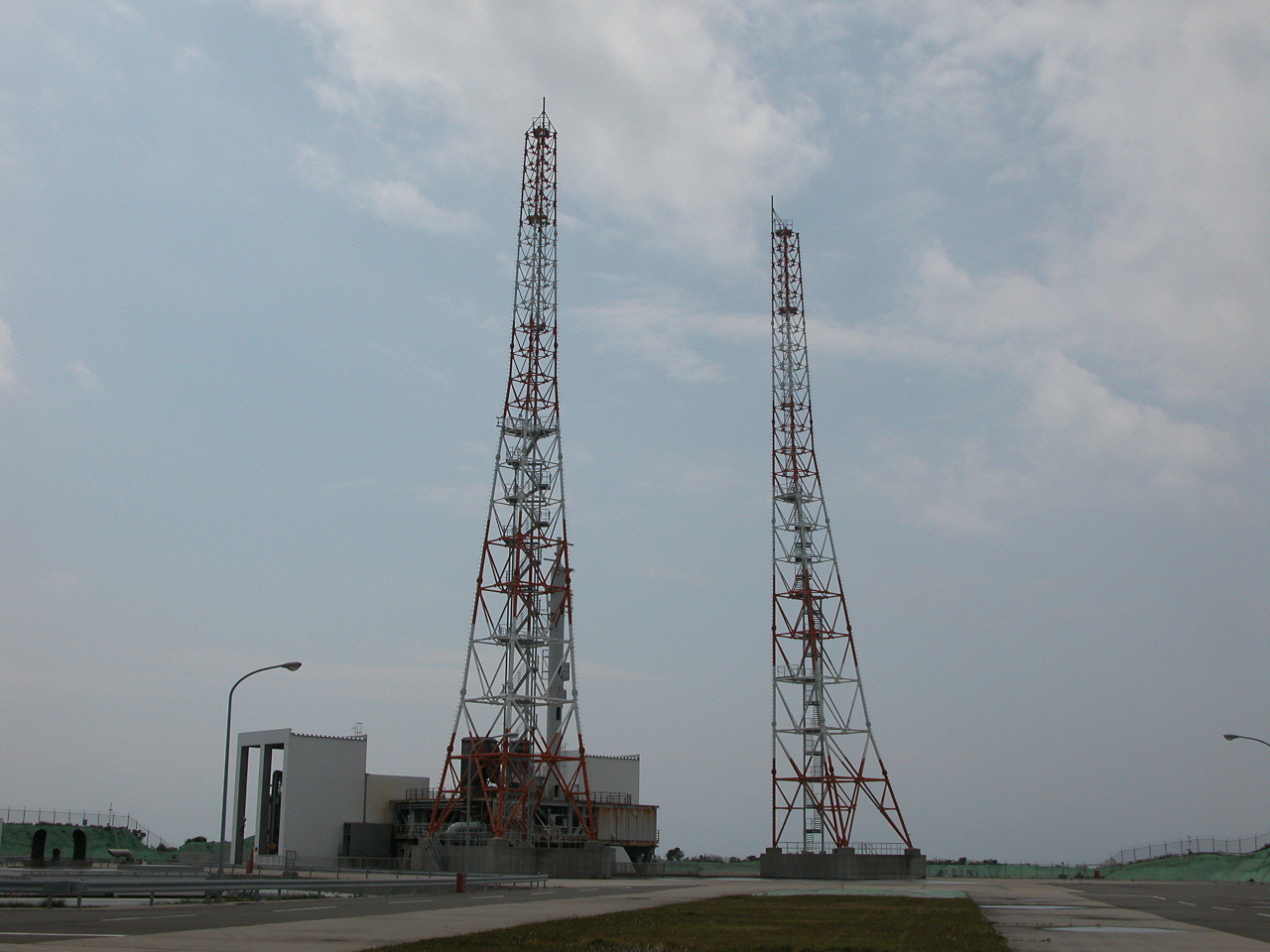
JAXA offers free guided bus tours of the space center grounds. The tour takes approximately 75 minutes and visits areas not accessible to individual visitors, including views of the Yoshinobu Launch Complex (where H-IIA and H3 rockets launch) and the Vehicle Assembly Building.
- Reservation: Required in advance via the TNSC website or by phone
- Frequency: Multiple tours daily (typically 11:00 and 14:00)
- Language: Japanese (English audio guides may be available — confirm when booking)
- Note: Tours are canceled during launch preparation periods and bad weather
This is highly recommended. Seeing the launch towers from ground level, with the ocean behind them, makes the scale of Japan’s space program visceral in a way no museum exhibit can match.
—
Spiritual Significance: Where Science Meets Nature
Tanegashima Space Center is not a shrine or temple. It has no centuries-old rituals or sacred trees. Yet many visitors describe an unexpected emotional impact from this place — one that goes beyond the thrill of technology.
A place for new beginnings and ambitious goals. Every rocket that leaves this pad carries years of work, risk, and human aspiration. Standing where those journeys begin — seeing the scorch marks on the launch pad, the enormity of the assembly buildings, the precision of the tracking antennas — creates a tangible sense of what it means to commit fully to an ambitious goal. Visitors frequently describe leaving with renewed determination toward their own challenges.
The harmony of science and nature. There is something deeply moving about a space center that coexists with coral reefs, sea turtles, and subtropical forest. JAXA maintains the surrounding ecosystem carefully — the beaches within the center grounds remain nesting sites for loggerhead sea turtles. This coexistence feels like a statement: that humanity’s reach for the stars does not require abandoning the natural world.
The scale of the universe, made real. Museums can tell you that space is vast. But standing at a launch pad, looking at the trajectory a rocket will follow from this patch of Earth into orbit 400 km above, makes that abstraction concrete. Many visitors — especially those who witness a launch — describe a shift in perspective that stays with them long after they leave.
—
Best Time to Visit
For Rocket Launches
Japan’s launch windows are concentrated in two main periods:
- January — March: Winter launches. Clear skies are more common, but Tanegashima can be windy and cool (10–15C)
- September — November: Autumn launches. Pleasant weather and comfortable temperatures
Check the JAXA launch schedule page regularly. Launch dates are typically confirmed 2–4 weeks in advance.
For General Visits (No Launch)
| Season | Weather | Notes |
|——–|———|——-|
| Spring (Mar–May) | Mild, 18–24C | Comfortable. Fewer tourists. Green landscapes. |
| Summer (Jun–Aug) | Hot and humid, 27–32C | Typhoon season (Aug–Sep). Beaches are swimmable. |
| Autumn (Sep–Nov) | Warm, 20–26C | Best overall. Clear skies, comfortable temperatures. |
| Winter (Dec–Feb) | Cool, 10–16C | Quietest period. Some facilities may have reduced hours. |
Time of day: Arrive when the museum opens at 9:30. The bus tour often departs at 11:00 — starting early gives you time to explore the museum before joining the tour.
—
Visitor Guide
For Space and Science Enthusiasts
- Request the bus tour in advance — this is the highlight. The guide explains the technical infrastructure in detail
- The museum’s rocket engine displays show the evolution of Japanese propulsion technology from the 1960s to today
- Ask museum staff about upcoming launches — they often have information not yet published online
- The gift shop sells JAXA mission patches, scale model rockets, and astronaut-branded snacks (space curry, freeze-dried ice cream)
For Families with Children
- The museum’s interactive exhibits are designed for children aged 5 and up. The launch countdown simulator is particularly popular
- Guided bus tours are fine for children, but the 75-minute duration may be long for very young kids
- Beaches within and near the center are beautiful but typically unsupervised — watch children closely
- Pack lunch: dining options within the center are limited. The museum has vending machines but no full restaurant
For Photographers
- The Osaki Range panorama (visible from the approach road and observation areas) is the iconic shot — launch facilities against ocean and green hills
- Morning light (before 10:00) gives the best conditions for the eastward-facing coastline
- During launches, the viewing parks fill up early. Arrive 3–4 hours before scheduled launch time to secure a good position
- Tripods are allowed at observation parks
Rainy Day Plan
The Space Museum is entirely indoors and provides 1–2 hours of engaging content even without the bus tour. If rain is heavy, the bus tour may be canceled — call ahead to confirm. The museum theater runs films throughout the day regardless of weather.
—
Essential Information
| Item | Details |
|——|———|
| Official Name | Tanegashima Space Center (TNSC) / 種子島宇宙センター |
| Operator | JAXA (Japan Aerospace Exploration Agency) |
| Address | Kukinaga, Minamitane Town, Kumage District, Kagoshima Prefecture |
| Museum Hours | 9:30 — 17:00 (last entry 16:30) |
| Closed | Mondays (Tues if Mon is holiday), year-end/New Year, launch days |
| Museum Admission | Free |
| Bus Tour | Free (reservation required) |
| Parking | Free (multiple lots) |
| Phone | 0997-26-9244 (Space Museum) |
| Website | JAXA Tanegashima |
—
How to Get There
Tanegashima is a remote island south of Kyushu. Getting there requires a flight or ferry from Kagoshima.
Step 1: Reach Kagoshima
From Tokyo:
- Flight: Haneda/Narita to Kagoshima Airport (~2 hours). Multiple daily flights on JAL and ANA
From Osaka:
- Flight: Itami/Kansai to Kagoshima Airport (~1 hour 15 min)
- Shinkansen: Shin-Osaka to Kagoshima-Chuo Station (~3 hours 45 min on Mizuho/Sakura)
From Fukuoka:
- Shinkansen: Hakata to Kagoshima-Chuo (~1 hour 15 min)
- Flight: Fukuoka to Kagoshima (~50 min)
Step 2: Kagoshima to Tanegashima
| Route | Duration | Frequency | Cost (approx.) | Notes |
|——-|———-|———–|—————–|——-|
| Flight: Kagoshima Airport to Tanegashima Airport | ~30 min | 3–4/day | 12,000–18,000 yen | Fastest option. JAC (Japan Air Commuter) |
| Jetfoil (high-speed ferry): Kagoshima Port to Nishinoomote Port | ~1h 35min | 2–3/day | ~8,000 yen | Popular. Book in advance during launch periods |
| Ferry: Kagoshima Port to Nishinoomote Port | ~3h 30min | 1/day | ~4,000 yen | Cheapest. Overnight departures available |
Important: During launch periods, all transport to Tanegashima fills up quickly. Book flights and ferries as soon as launch dates are announced.
Step 3: Tanegashima Airport/Port to Space Center
The Space Center is located on the southeastern coast of Tanegashima, about 50 minutes by car from Nishinoomote Port and 30 minutes from Tanegashima Airport.
- Rental car (recommended): Available at the airport and Nishinoomote Port. Tanegashima has limited public transport, and a car gives you flexibility to explore the island’s other attractions
- Bus: Limited local buses run from Nishinoomote. Check schedules in advance — frequency is low
- Taxi: Available but expensive for the distance (~6,000–8,000 yen one way from the port)
—
Nearby Attractions
Tanegashima is more than its space center. If you have a full day or are staying overnight (recommended), consider these spots:
Chikura Cavern (千座の岩屋)
A sea-eroded cave on the southeast coast, accessible only at low tide. The cave is large enough for dozens of people to sit inside — hence the name “chikura” (thousand seats). The turquoise water and sculpted rock formations make it one of Tanegashima’s most photogenic spots. 15 minutes by car from TNSC.
Kadokura Misaki (門倉岬)
The southernmost point of Tanegashima and the legendary landing site of the first Portuguese to reach Japan in 1543, introducing firearms that changed Japanese history. A monument and observation deck offer panoramic ocean views. 25 minutes from TNSC.
Tanegashima Development Center (Teppou Museum / 鉄砲館)
A museum in Nishinoomote dedicated to the history of firearms in Japan, starting from the 1543 Portuguese arrival. An interesting complement to the Space Center — from the first foreign technology to arrive on this island to the latest rockets leaving it. 50 minutes from TNSC.
Surfing Beaches
Tanegashima is one of Japan’s premier surfing destinations. The island’s east coast faces consistent Pacific swells, and water temperatures are warmer than mainland Japan year-round. Various beaches, 10–30 minutes from TNSC.
—
Visitor Reviews
Visitors consistently highlight the unexpected beauty of the location and the quality of the free facilities.
> “I’ve visited Kennedy Space Center and Baikonur, but Tanegashima is something else entirely. The launch pad overlooking that incredible coastline — it really is the most beautiful spaceport in the world. And the museum is free, which is amazing.”
> — Google Maps review
> “We brought our two kids (ages 7 and 10) and they were completely absorbed by the museum exhibits. The launch countdown simulator was the highlight. The bus tour was excellent — our guide was very knowledgeable and passionate. Hard to believe all of this is free.”
> — Google Maps review
> “Came for a rocket launch and it was delayed three times. Finally saw the H3 lift off on day four. The wait was frustrating, but the launch itself was the single most impressive thing I’ve ever witnessed. The sound, the light, the ground shaking — nothing prepares you for it. Plan extra days.”
> — Google Maps review
—
Frequently Asked Questions
Q. Do I need to understand Japanese to enjoy the visit?
A. The museum has English signage for most major exhibits, and the theater film has English subtitles. The bus tour is conducted in Japanese, but English audio guides may be available — confirm when making your reservation. Even without perfect English support, the visual and hands-on nature of the exhibits makes the experience worthwhile for non-Japanese speakers.
Q. Can I visit during a launch?
A. The Space Museum and center grounds close during launch operations (typically 1–2 days). You can watch the launch from designated observation parks outside the exclusion zone. If your trip coincides with a launch, plan to visit the museum on a different day.
Q. How many days should I spend on Tanegashima?
A. For the Space Center alone, one full day is enough (museum + bus tour). To also explore the island’s beaches, caves, and historical sites, plan 2–3 days. If visiting for a launch, plan at least 3–4 days to account for potential delays.
Q. Is the Space Center accessible for wheelchairs?
A. The Space Science & Technology Museum is barrier-free with ramps and elevators. The bus tour vehicle may not be wheelchair accessible — contact TNSC in advance to arrange accommodations. Observation parks have paved areas but may have uneven terrain.
Q. Are pets allowed?
A. Pets are not permitted inside the museum. Service animals are welcome. If traveling with a pet, Tanegashima has pet-friendly accommodation options — ask your hotel about nearby beaches where leashed pets are welcome.
Q. What should I bring?
A. Sunscreen and a hat (the island is subtropical with strong UV), water, binoculars (especially for launches), comfortable walking shoes, and a light jacket for air-conditioned museum interiors. For launches, bring ear protection for children.
—
Summary
Tanegashima Space Center is unlike any other destination in Japan — or, arguably, the world.
It is a place where cutting-edge rocket technology shares a coastline with sea turtle nesting beaches. Where the sound of a countdown echoes across subtropical forest. Where a free museum and free guided tours make Japan’s space program accessible to anyone who makes the journey to this remote island.
For space enthusiasts, witnessing an H3 rocket launch from one of the observation parks is a bucket-list experience — the kind of event that redefines your sense of what humans can achieve. For families, the museum offers a full day of hands-on learning that sparks genuine curiosity. And for anyone simply looking for a destination unlike anywhere else, the combination of space-age facilities, pristine beaches, and island tranquility delivers something no other place can replicate.
Getting to Tanegashima takes effort. It is an island, reachable only by flight or ferry. But that remoteness is part of what makes it special — and what makes the contrast between the quiet natural beauty and the world-class spaceport so striking.
—
*Information in this article is current as of April 2026. Launch schedules, museum hours, and transport availability may change — please check the JAXA website and local transport operators for the latest details before your visit.*
—
Want to discover the power spot that suits you best?
Did you know that different people have different “compatibility” with different power spots? The same location can feel completely different depending on who visits.
If you’d like to find the power spot that resonates most with you, try our free compatibility diagnosis — it takes just 3 minutes.
あなたに最適なパワースポットを知りたい方へ