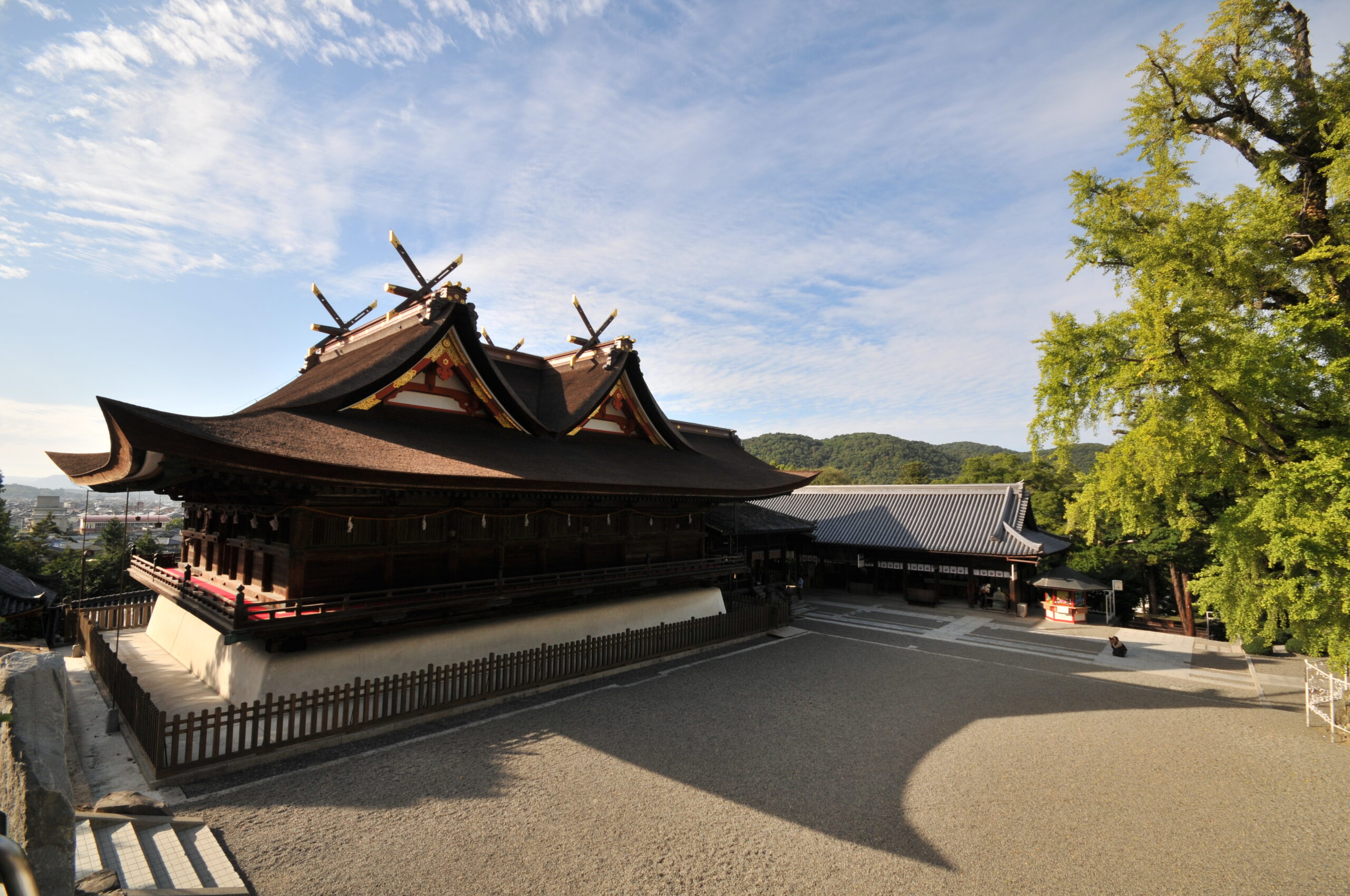
Have you ever wondered if the story of Momotaro — Japan’s beloved Peach Boy — was based on a real place?
It was. Kibitsu Shrine in Okayama City is the living origin of Japan’s most famous folk tale. Here, the legendary hero Kibitsuhiko-no-Mikoto defeated the demon Ura, a battle that became the template for the Momotaro story. But Kibitsu Shrine offers far more than legend: a National Treasure main hall built in a style found nowhere else in Japan, a breathtaking 360-meter covered corridor, and an ancient cauldron divination ritual you can experience yourself.
This guide covers everything you need for an unforgettable visit — from access and best times to visit, to photography tips and a model day-trip itinerary along the historic Kibi Road.
—
What Makes Kibitsu Shrine Special
The Real Story Behind Momotaro
The shrine’s deity, Kibitsuhiko-no-Mikoto, was a prince dispatched as one of four imperial generals during the reign of Emperor Sujin. His mission: subdue Ura, a fearsome figure who had built a fortress called Kinojo (Demon’s Castle) and terrorized the Kibi region.
Kibitsuhiko’s victory over Ura became the basis for the Momotaro legend — Kibitsuhiko is Momotaro, and Ura is the demon. In 2018, this connection was officially recognized when “The Birthplace of the Momotaro Legend, Okayama” was designated as a Japan Heritage site.
Japan’s Only “Hiyoku Irimoya-zukuri” Architecture
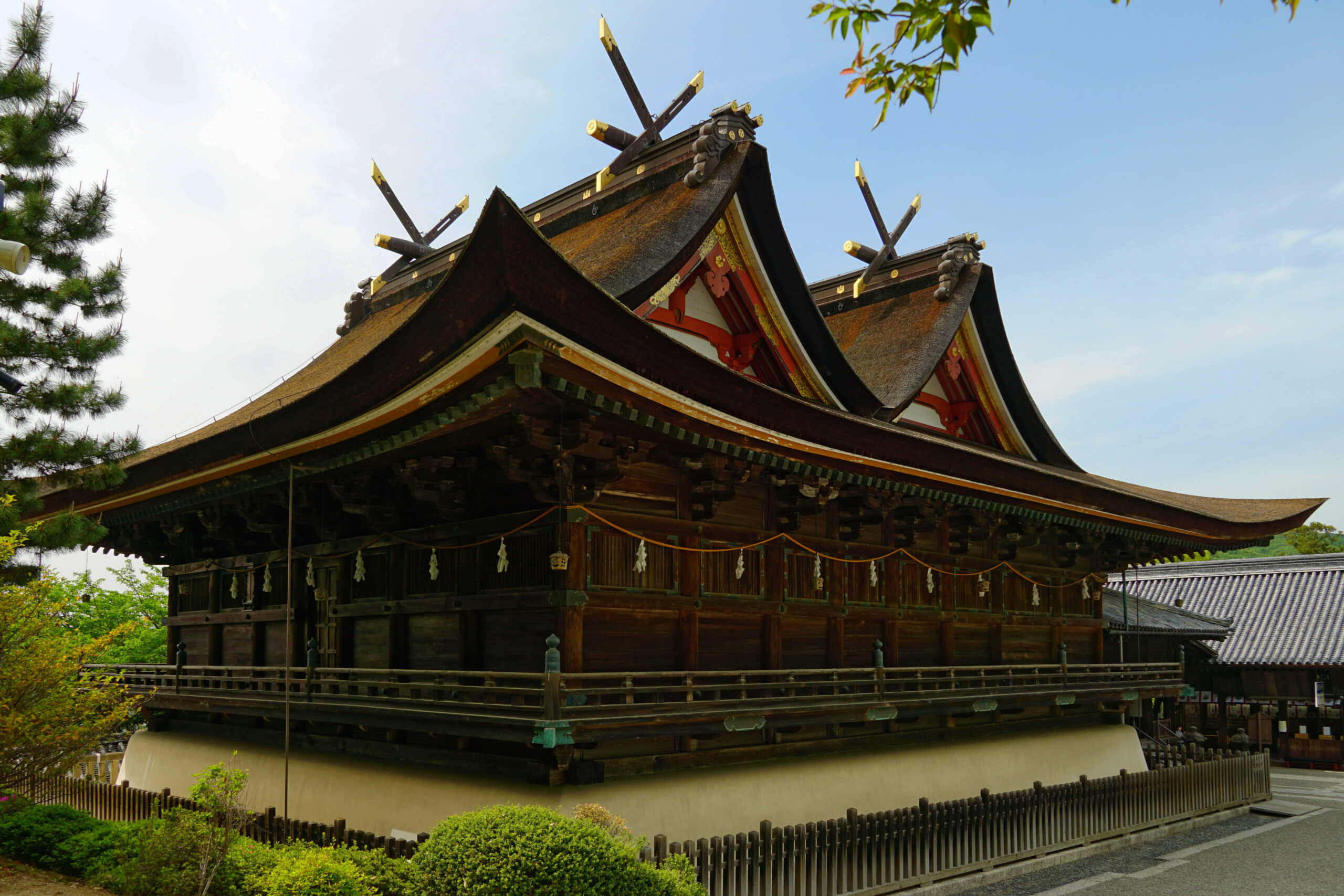
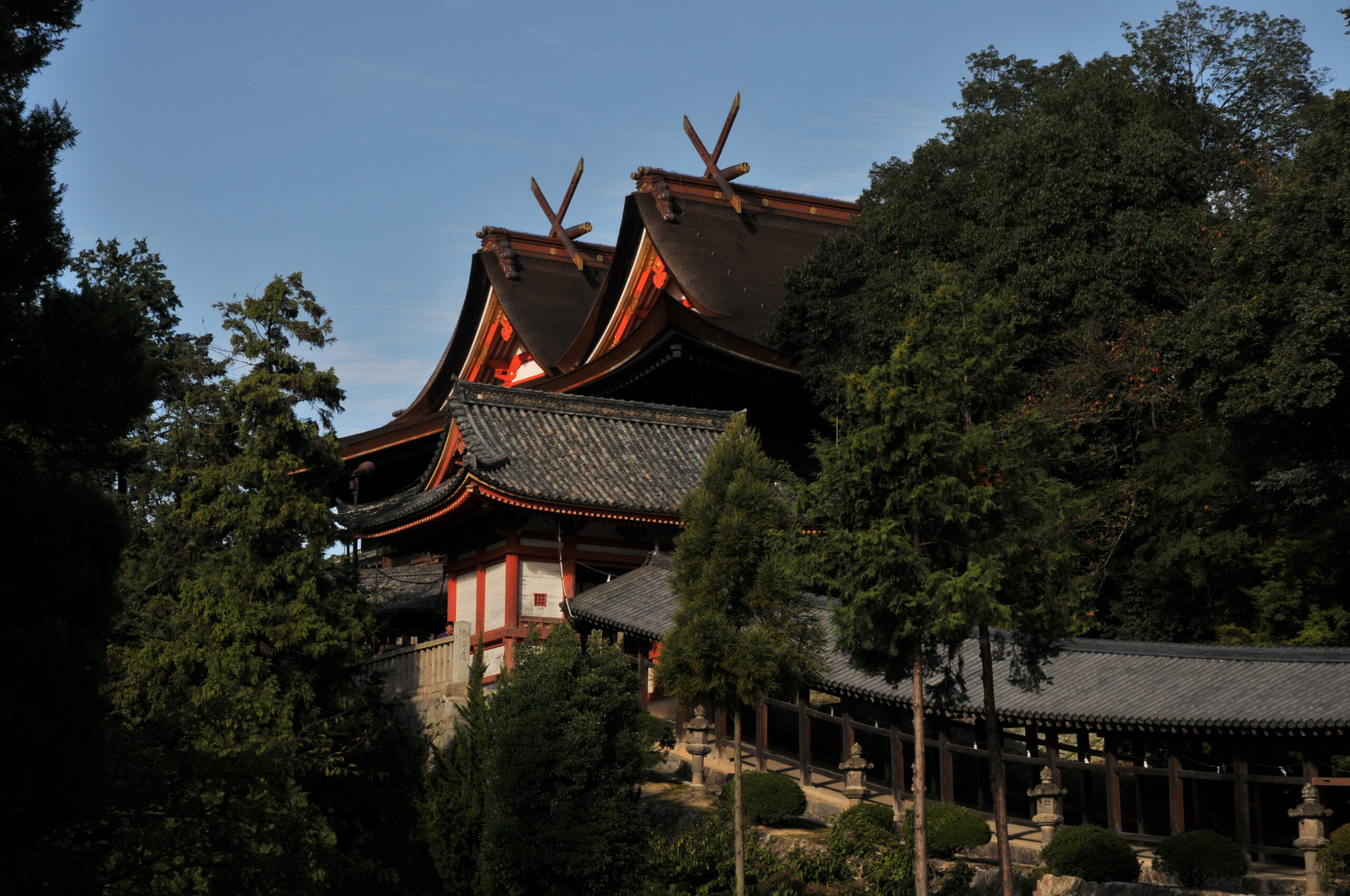
The main hall and worship hall are designated National Treasures. Their architectural style, Hiyoku Irimoya-zukuri (also called “Kibitsu-zukuri”), features two irimoya-style roofs placed front to back — a design that exists nowhere else in Japan.
Rebuilt in 1425 under the orders of Ashikaga Yoshimitsu (the third Muromachi shogun), construction took approximately 30 years. The building celebrated its 600th anniversary in 2025, with special commemorative events and limited-edition goshuin still being offered.
The 360-Meter Covered Corridor
The long covered corridor stretching approximately 360 meters from the main hall to Hongu-sha sub-shrine is one of Kibitsu Shrine’s most iconic features. Following the natural contours of the landscape, it curves gently through the grounds — a walk that feels like passing through time itself.
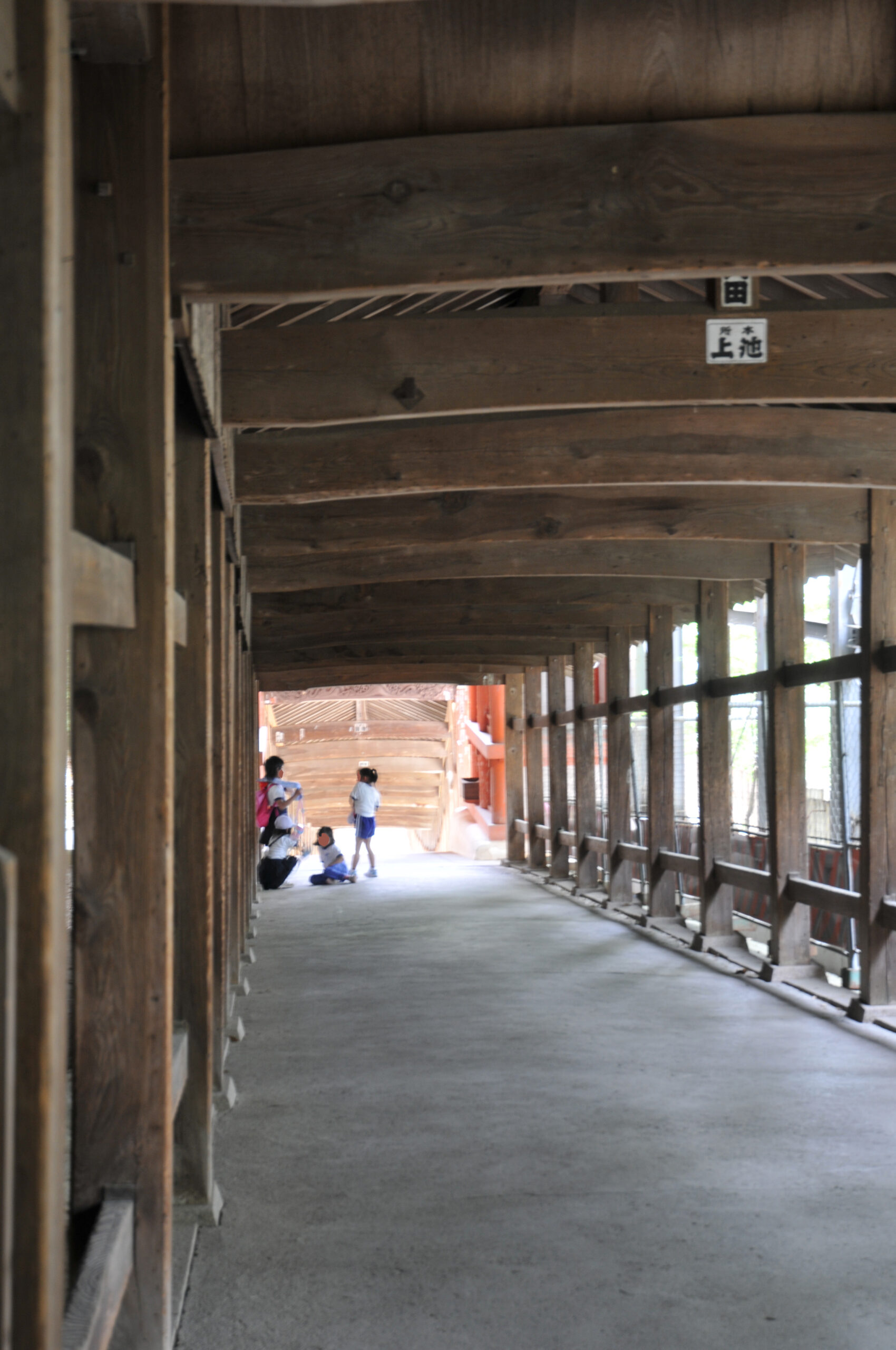
Rebuilt in 1579 and designated a Prefectural Important Cultural Property, the corridor has benches along the way where you can sit and absorb the tranquil atmosphere. Best of all, the roof means you can enjoy this walk even on rainy days.
The Narukama Divination Ritual
The Narukama Shinji (Cauldron Divination) is a mystical experience available only at Kibitsu Shrine. Inside the Okama-den (Cauldron Hall, an Important Cultural Property), a shrine priestess called an “Azome” lights a fire under a large cauldron and places a steamer on top. The sound the cauldron makes reveals your fortune — a loud, resonant sound means good luck.
Legend says Ura’s head was buried beneath this hall and continued to moan for 13 years, giving rise to this ritual. The ceremony is also featured in Ueda Akinari’s famous 18th-century novel *Tales of Moonlight and Rain*.
Practical details: No reservation needed. Available daily 9:00–13:45 (closed Fridays and select dates). Fee: from 3,000 yen. Duration: approximately 20 minutes.
—
Spiritual Benefits
As a deity of both martial prowess and wisdom, Kibitsuhiko-no-Mikoto offers a wide range of blessings:
- Victory and success — inspired by the demon-slaying legend
- Protection from evil and misfortune
- Academic achievement — at the Ichido-sha sub-shrine
- Good relationships and marriage — fertility and safe childbirth blessings also popular
- Business prosperity
Goshuin (Temple Stamps)
| Type | Fee | Notes |
|——|—–|——-|
| Standard goshuin (“Sanbi Ichinomiya”) | 300 yen | Classic design |
| Okama-den goshuin | 300 yen | Narukama ritual themed |
| 600th Anniversary special edition | 1,000 yen | Double-page size, limited period |
Hours: 9:00–16:00 at the main hall office.
Popular Omamori (Charms)
The peach-shaped charms are a must-buy — directly inspired by the Momotaro legend. The disaster-protection peach charm (700 yen) and the Arita-ware peach pocket charm with omikuji are unique to Kibitsu Shrine.
—
Best Times to Visit
| Season | Highlight | Peak Period |
|——–|———–|————-|
| Spring | Cherry blossoms in the grounds | Late March – early April |
| Summer | 1,500 hydrangeas blanketing the hillside | Mid-June – early July |
| Autumn | Golden ginkgo leaves contrasting with the corridor | Mid-November – early December |
| Winter | Quiet, crisp atmosphere; New Year’s events | January |
Top recommendation: mid to late June. The hydrangea garden along the path to Iwayama-gū sub-shrine is spectacular, and the covered corridor lets you enjoy the visit regardless of rain.
Avoiding Crowds
- Weekday early mornings are best — the shrine opens at 5:00 AM
- For Narukama, aim for the 9:00 session
- Avoid January 1–3 (extremely crowded for hatsumode)
- Hydrangea and autumn foliage peaks are busier on weekends
—
Visitor’s Guide
Recommended Route (1–1.5 hours; 2 hours with Narukama)
1. Pine-lined approach (450m) — a grand avenue of mature pine trees from the station
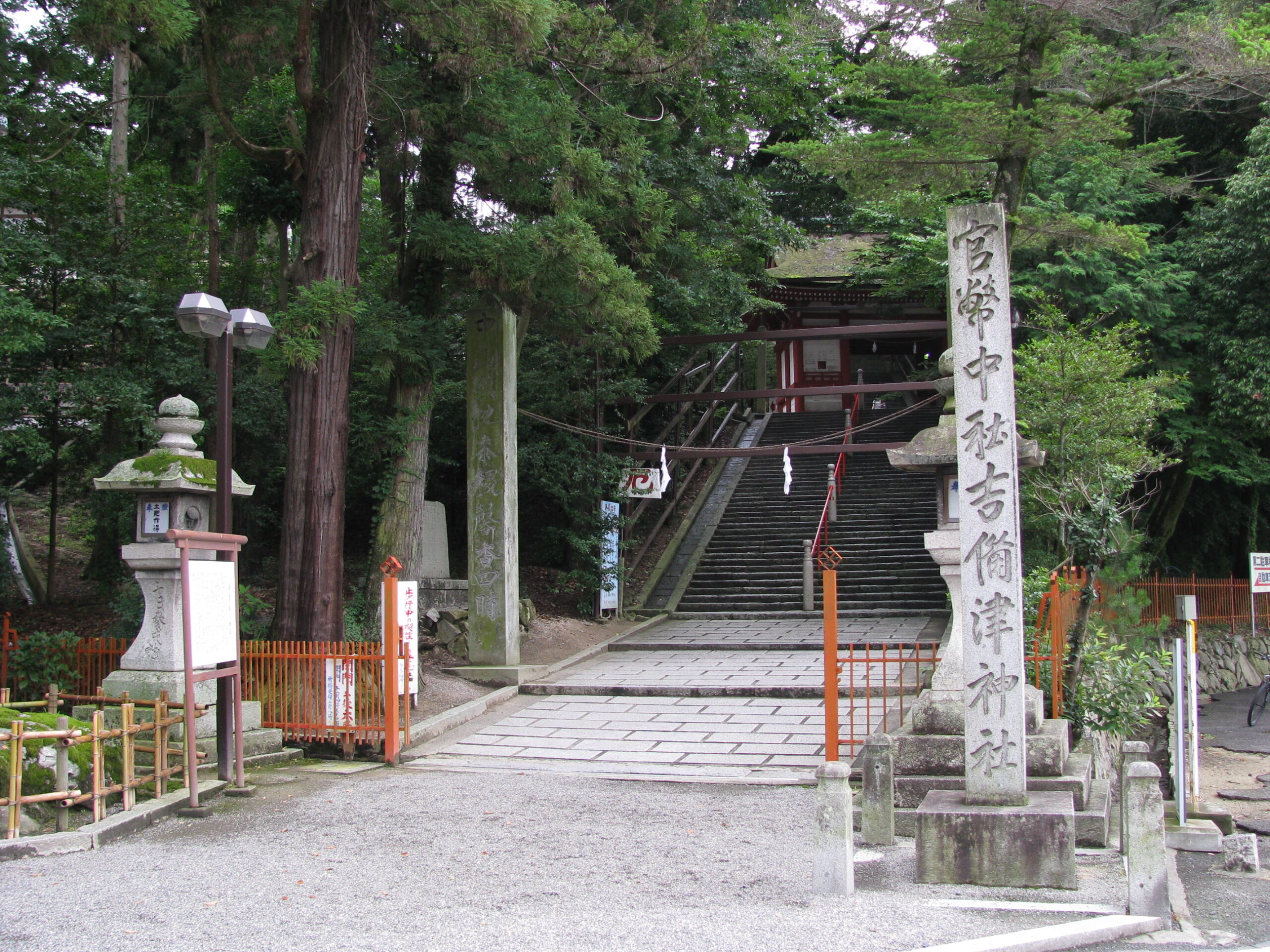
2. Stone steps and Kita-zuijinmon Gate — rebuilt in 1542, Important Cultural Property
3. Main Hall worship (National Treasure) — admire the Hiyoku Irimoya-zukuri up close
4. Walk the 360m corridor — take your time; benches available midway
5. Hydrangea garden and Iwayama-gū (seasonal)
6. Narukama divination at Okama-den — 9:00–13:45, about 20 min
7. Yaoki-iwa (Arrow-Placing Rock) — where legend says Kibitsuhiko placed his arrows
8. Ichido-sha — sub-shrine for academic success
Photography Tips
| Spot | Best Time | Tip |
|——|———–|—–|
| Main hall front | Morning (front-lit) | Include both chigi (roof ornaments) |
| Corridor interior | Afternoon (light streaming in) | Use vanishing-point composition |
| Stone steps approach | Early morning | Fewer people, atmospheric mist |
| Hydrangea garden | Overcast days | Colors appear more vivid |
Note: Photography is prohibited during the Narukama ritual.
—
Essential Information
| Detail | Information |
|——–|————-|
| Official name | Kibitsu-jinja (吉備津神社) |
| Address | 931 Kibitsu, Kita-ku, Okayama-shi, Okayama 701-1341 |
| Phone | 086-287-4111 |
| Hours | 5:00 AM – 6:00 PM |
| Office hours | 9:00 AM – 4:00 PM |
| Admission | Free |
| Narukama ritual | 9:00–13:45 (closed Fridays), from 3,000 yen |
| Parking | ~450 spaces, free (500 yen/day Dec 31 – Jan 5) |
| Website | kibitujinja.com |
Getting There
By train (recommended):
JR Okayama Station → JR Kibi Line (Momotaro Line) → Kibitsu Station (15–20 min, 210 yen) → 10-minute walk
By car:
Sanyo Expressway Okayama IC → 20 minutes / Okayama Expressway Okayama-Soja IC → 15 minutes
Accessibility
Wheelchair users should skip the stone steps at the main entrance and drive directly to the upper parking lot (accessible spaces available). The paved path to the main hall is mostly accessible, though there are some steps (~5cm) — an attendant is recommended. The full corridor is difficult for wheelchairs due to natural terrain. Call ahead for assistance: 086-287-4111.
Strollers can use the bypass road but may encounter some uneven surfaces. A baby carrier is recommended as backup.
Pet Policy
Pets are not permitted in the shrine grounds. Service dogs are allowed. If traveling with a pet by car, consider taking turns with your companion to visit the shrine. Pet hotels are available in central Okayama city.
—
Nearby Attractions & Day Trip Ideas
Kibitsuhiko Shrine — The “Other” Ichinomiya
Just a 30-minute walk (or 5-minute drive) from Kibitsu Shrine sits Kibitsuhiko Shrine, the ichinomiya (highest-ranked shrine) of neighboring Bitchū Province. Having two ichinomiya on the same mountain is extraordinarily rare in Japan. Visiting both gives you a deeper understanding of the ancient Kibi kingdom’s spiritual landscape.
Model Itineraries
Half-day (3–4 hours):
1. JR Okayama → Kibitsu Station (15 min)
2. Kibitsu Shrine + Narukama ritual (1–1.5 hrs)
3. Walk to Kibitsuhiko Shrine (30 min)
4. Kibitsuhiko Shrine (30 min)
5. JR Bizen-Ichinomiya Station → Okayama
Full day — Momotaro Legend Trail:
Kibitsuhiko Shrine → Kibitsu Shrine → Rent a Kibi-Chari bicycle → Cycle the Kibi Road (selected as one of Japan’s 100 Best Roads) → Tsukuriyama Kofun (Japan’s 4th-largest ancient burial mound) → Bitchū Kokubunji Temple (five-story pagoda) → Kinojo Castle ruins (the “Demon’s Castle,” ~30 min by car)
Where to Eat
| Restaurant | Specialty | Location |
|———–|———–|———-|
| Momotaro Restaurant | “Momotaro Udon” with pheasant meatballs and kibi-dango | In front of Kibitsu Shrine parking |
| Kibi no Okage Chaya | Traditional dango and mochi sets | Near Kibitsuhiko Shrine |
| Hakolibi Café | Lunch pancake sets in a renovated farmhouse | Near Kibitsuhiko Shrine |
Don’t leave without trying kibi-dango — the millet dumplings from the Momotaro story. Eating them at the birthplace of the legend makes them taste even better.
—
Visitor Reviews
Here’s what travelers are saying:
> “Walking through the 360-meter corridor was genuinely moving. When you experience the full length, you feel the depth of devotion people had centuries ago.”
> — Google Maps review
> “The Narukama ritual was unlike anything I’ve experienced at other shrines. The sound of the cauldron echoing through the silent hall gave me chills. A must-do in Okayama.”
> — Google Maps review
Many visitors highlight the corridor’s grandeur and the mystical Narukama experience. Some note that “the stone steps can be tiring,” so wear comfortable walking shoes. As with all power spots, people report feeling different energies — visiting in person is the best way to discover your own connection.
—
FAQ
Q: How long should I plan for a visit?
A: About 1 hour for a standard visit. Add 30–40 minutes if you want to experience the Narukama divination.
Q: Do I need to book the Narukama ritual in advance?
A: No reservation needed. Simply arrive at the Okama-den between 9:00 and 13:45 (closed Fridays). Fee: from 3,000 yen.
Q: What’s the difference between Kibitsu Shrine and Kibitsuhiko Shrine?
A: They are separate shrines on the same mountain. Kibitsu Shrine is the ichinomiya of Bitchū Province; Kibitsuhiko Shrine is the ichinomiya of Bizen Province. Both enshrine Kibitsuhiko-no-Mikoto and are about 30 minutes apart on foot.
Q: Is there an English pamphlet available?
A: Yes, multilingual pamphlets and signage are available. The shrine also has an English website.
—
Summary
Kibitsu Shrine is a power spot like no other — the birthplace of the Momotaro legend, home to the only Hiyoku Irimoya-zukuri architecture in Japan, and the site of an ancient cauldron divination that visitors can still experience today.
Whether you come for the National Treasure architecture, the Instagram-worthy corridor, the mystical Narukama ritual, or simply to walk in the footsteps of Japan’s most famous folk hero, Kibitsu Shrine delivers an experience that stays with you long after you leave.
Power spots affect everyone differently. Visit Kibitsu Shrine and discover what this 1,400-year-old sanctuary means for you.
—
We hope this guide helps you plan your visit to Kibitsu Shrine.
*Information in this article is current as of April 2026. Please check the official website for the latest details before your visit.*
—
Want to discover which power spots match your personal energy? Try our free compatibility diagnosis — it only takes 3 minutes.
あなたに最適なパワースポットを知りたい方へ