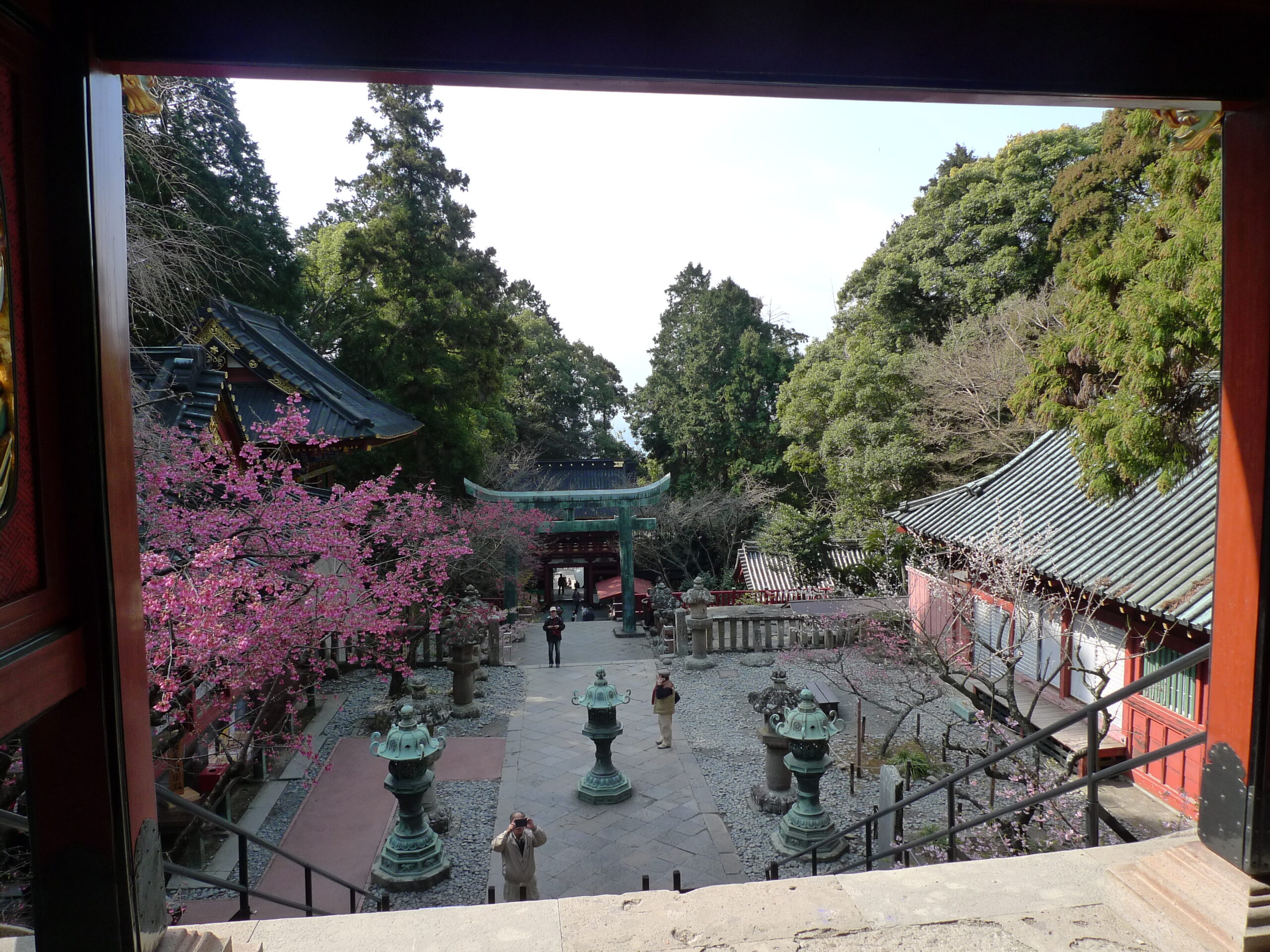
Before Nikko Toshogu became famous worldwide, there was Kunozan Toshogu — the very first shrine dedicated to Tokugawa Ieyasu, the warlord who unified Japan and established the Tokugawa shogunate. Perched atop Mount Kuno at 216 meters above sea level in Shizuoka City, this National Treasure features extraordinarily colorful carvings and decorations that served as the prototype for Nikko’s more famous shrine.
Reaching the shrine involves either climbing 1,159 stone steps from the coast or taking a short ropeway from Nihondaira plateau — both routes rewarding visitors with sweeping views of Suruga Bay and the Pacific Ocean. Known for blessings of career advancement, victory, and longevity, Kunozan Toshogu offers a uniquely intimate encounter with one of Japan’s most significant historical figures.
—
What Makes Kunozan Toshogu Special
National Treasure Architecture — The Original Toshogu
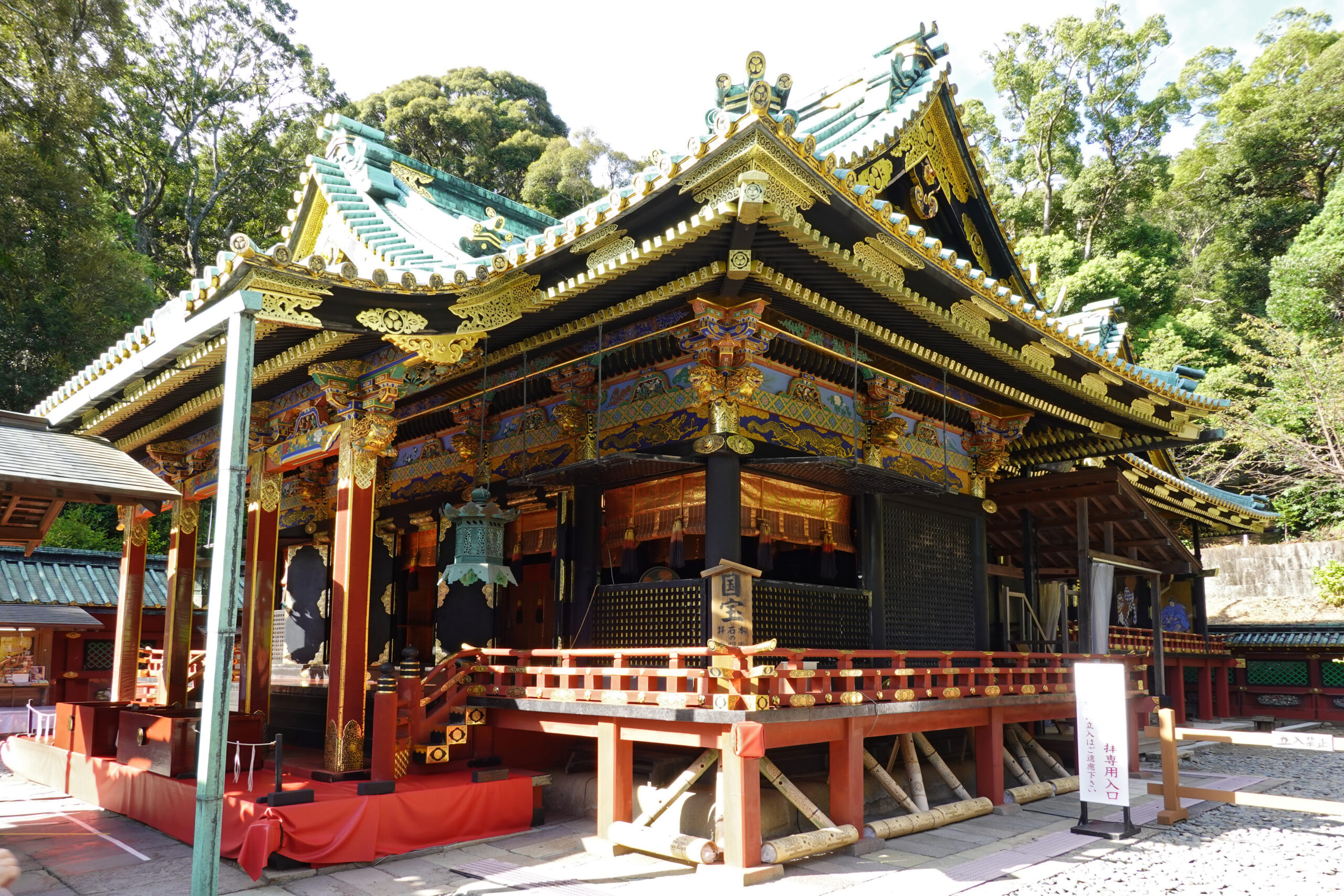
Designated a National Treasure in 2010, the honden (main hall), ishi-no-ma (stone corridor), and haiden (worship hall) showcase the finest craftsmanship of the Azuchi-Momoyama period. Black lacquer, gold leaf, and polychrome carvings create a visual spectacle that many visitors find even more impressive than Nikko — primarily because Kunozan’s smaller scale allows you to admire the details up close.
Nikko Toshogu was actually modeled after Kunozan, making this the “original” Toshogu. While Nikko offers grandeur, Kunozan offers intimacy and authenticity.
The 1,159 Stone Steps
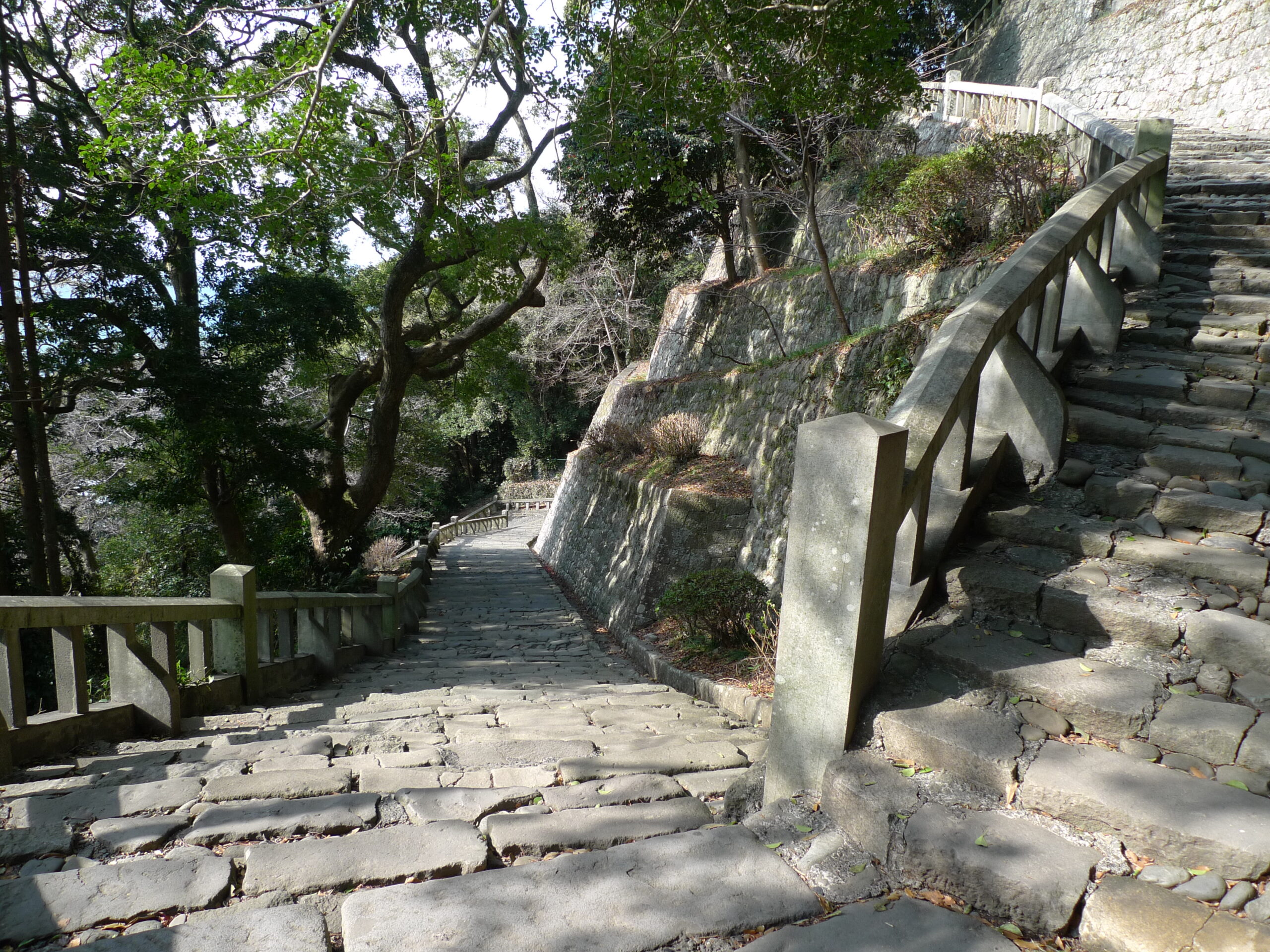
Two routes lead to Kunozan Toshogu: the front approach with 1,159 stone steps rising from the coast, or a five-minute ropeway ride from Nihondaira. The stone steps demand stamina, but the panoramic views of Suruga Bay that unfold as you climb are spectacular — visitors often say these views alone explain why Ieyasu chose this mountain as his final resting place.
Tokugawa Ieyasu’s Mausoleum
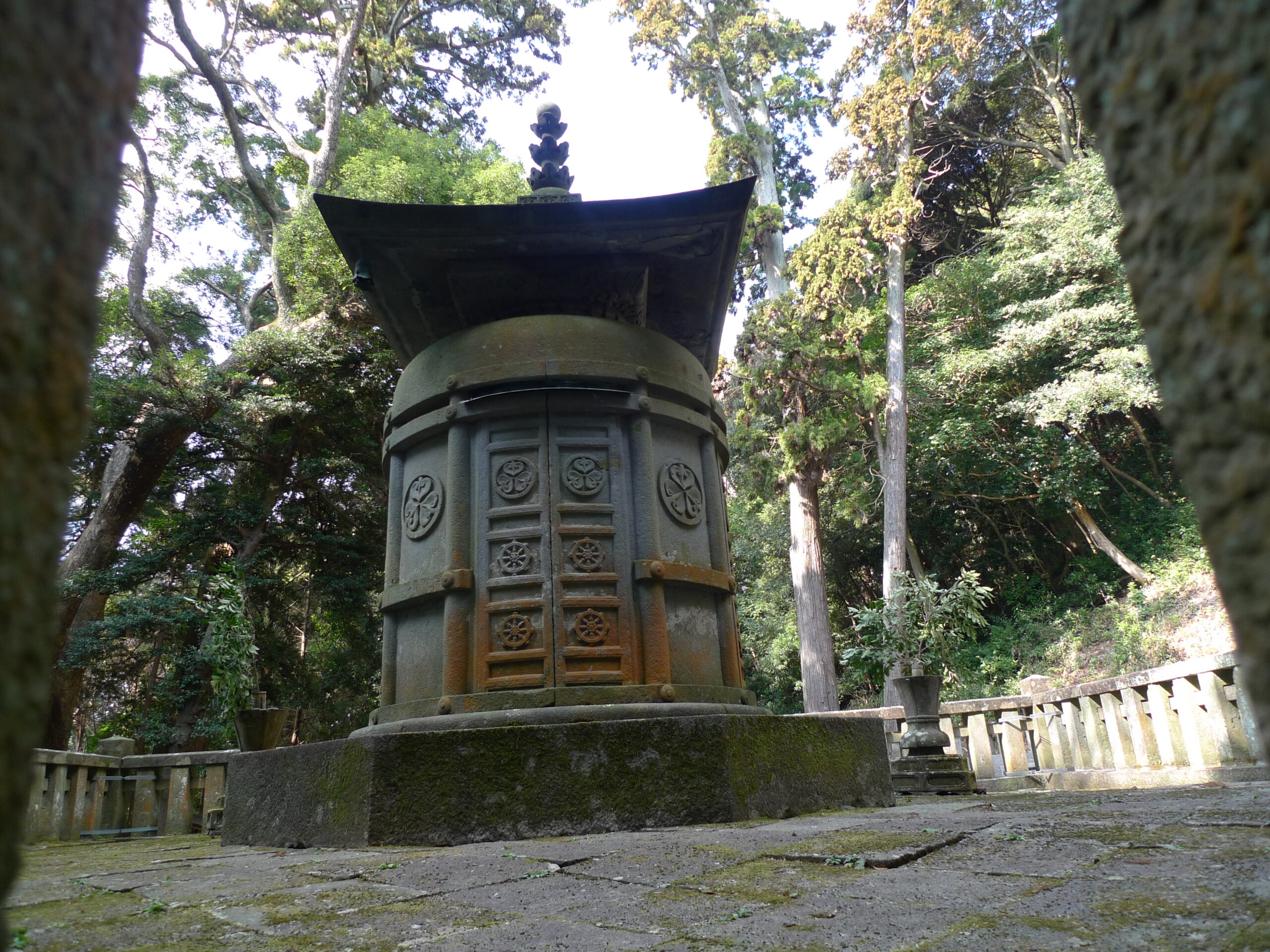
Behind the main hall, at the highest point of Mount Kuno, stands Ieyasu’s mausoleum (shinbyo). The deliberately simple bronze tower contrasts with the ornate shrine below — built according to Ieyasu’s own wishes, it faces west toward Kyoto and Osaka, the former seats of imperial and rival power.
Surrounded by ancient cedar trees in profound silence, this is where many visitors sense the strongest spiritual presence. Standing before the tomb of the man who shaped 260 years of Japanese peace creates a powerful, contemplative moment.
—
Spiritual Benefits
Career Advancement: Ieyasu rose from ruling a small province to unifying all of Japan — his shrine is deeply associated with professional success and ambition.
Victory & Success: Having survived and won countless battles, Ieyasu embodies perseverance and strategic victory. Popular with students before exams and athletes before competitions.
Health & Longevity: Ieyasu lived to 75 — remarkably long for his era — and was known for his careful attention to health and diet.
Academic Achievement: Ieyasu’s strategic brilliance and lifelong learning inspire students, especially during exam season (January–March).
Popular Charms & Souvenirs
| Item | Price | Description |
|——|——-|————-|
| Career Advancement charm | 800 yen | The shrine’s most popular charm |
| Victory charm | 800 yen | Gold-colored charm for competitive success |
| Goshuin (shrine seal) | 500 yen | Features “Tosho Daigongen” calligraphy |
| Ieyasu’s hand print | 500 yen | Life-size replica of Ieyasu’s actual hand print |
| Longevity charm | 800 yen | Inspired by Ieyasu’s long and healthy life |
—
Best Time to Visit
Seasonal Highlights
Spring (March–May): The most beautiful season. Cherry blossoms (late March to early April) combined with the colorful shrine buildings create stunning scenery. Strawberry picking along the Kuno coast is an added bonus.
Summer (June–August): Lush greenery contrasts beautifully with the polychrome architecture. However, the stone steps are brutal in summer heat — the ropeway is strongly recommended. Early morning visits are cooler.
Autumn (September–November): Fall foliage peaks mid-November to early December. Red and golden leaves frame the ornate buildings. Fewer crowds than spring make for a more comfortable visit.
Winter (December–February): Shizuoka’s mild climate makes winter visits pleasant. The fewest visitors means you can contemplate the mausoleum in true solitude. January brings New Year crowds.
Best Times of Day
| Time | Crowd Level | Best For |
|——|————-|———-|
| 9:00–10:00 | Quiet | Photography, peaceful worship |
| 10:00–13:00 | Busy | Museum visit, full exploration |
| 13:00–15:00 | Moderate | Combining with Nihondaira sightseeing |
| 15:00–17:00 | Thinning out | Afternoon golden light for photos |
Tip: Arrive at opening (9:00) on weekdays. If taking the stone steps, start at 7:00 to enjoy the grounds before the shrine office opens.
—
Visiting Guide
Two Access Routes
Route 1: The 1,159 Stone Steps (Front Approach)
Starting from the parking area at the base of Mount Kuno, the climb takes 30–50 minutes. The steps are moderately steep with handrails throughout. The ocean views during the ascent are magnificent.
Route 2: Nihondaira Ropeway
A five-minute ride from Nihondaira plateau summit. Round trip: 1,250 yen. Ideal for visitors with limited mobility or time. The Nihondaira observation deck is worth visiting too.
Pro tip: Take the ropeway up, then walk down the stone steps — you save energy for sightseeing while still experiencing both routes.
Walking Route (Allow 90–120 minutes)
1. Enter through the romon gate (5 min)
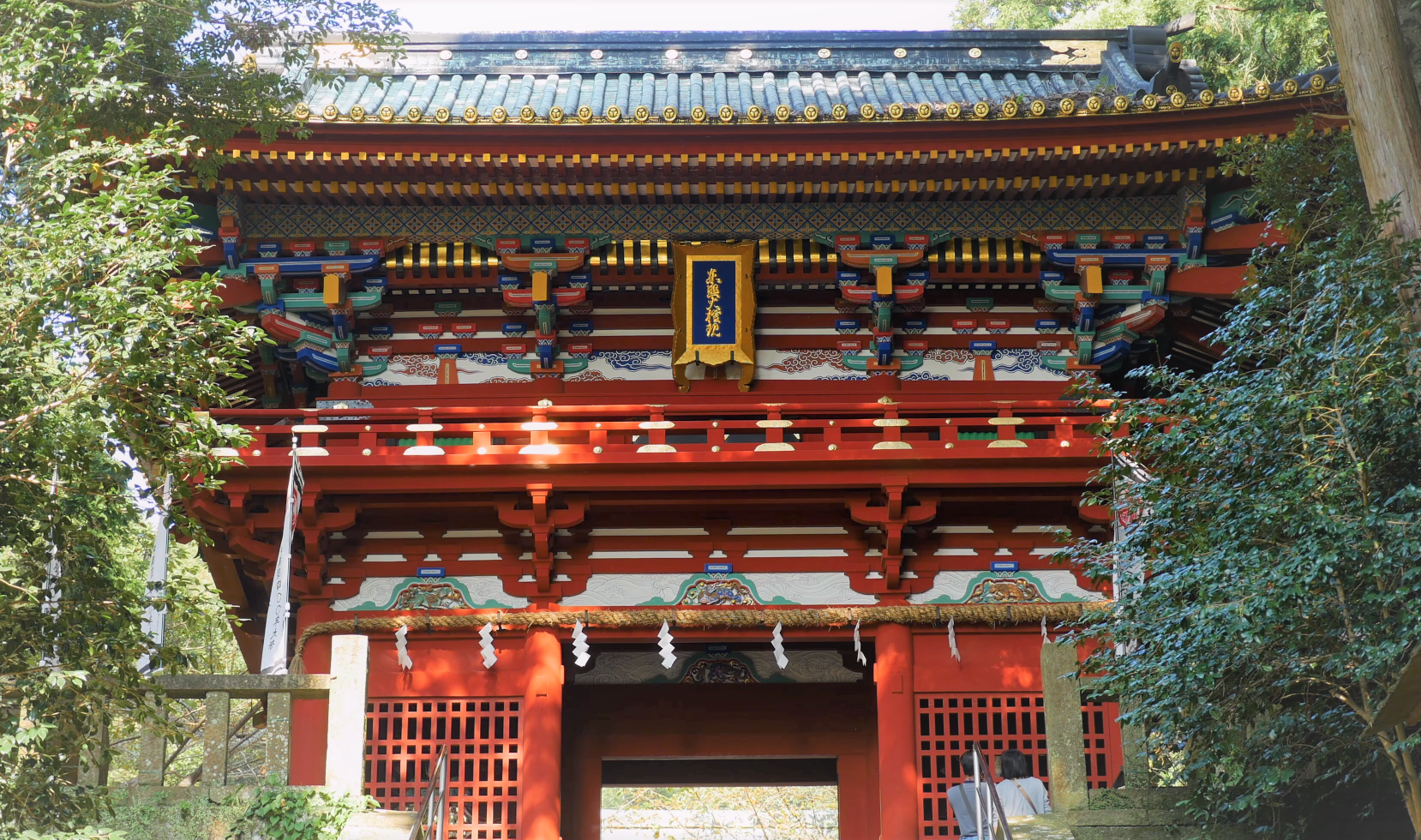
This two-story gate bearing the “Tosho Daigongen” plaque is an Important Cultural Property.
2. Worship at the main hall (15 min)
Admire the National Treasure buildings up close. The polychrome carvings and gold leaf decorations of the gongen-zukuri architecture are extraordinary.
3. Visit the mausoleum (15 min)
Climb the steps behind the main hall to Ieyasu’s bronze tower — the most sacred spot on the mountain.
4. Kunozan Toshogu Museum (30 min)
Houses approximately 2,000 artifacts including Ieyasu’s personal belongings. The highlight is a Western clock gifted by the King of Spain — designated a National Treasure. Admission: 400 yen.
5. Explore the grounds (15 min)
Visit Hie Shrine and enjoy the Suruga Bay viewpoints scattered throughout the grounds.
What to Wear and Bring
| Essential | Why |
|———–|—–|
| Sturdy walking shoes | 1,159 stone steps on the front approach |
| Water | No vending machines along the stone steps |
| Towel | You will sweat, especially in summer |
—
Practical Information
| Detail | Information |
|——–|————-|
| Official name | Kunozan Toshogu |
| Address | 390 Negoya, Suruga-ku, Shizuoka City, Shizuoka |
| Phone | 054-237-2438 |
| Hours | 9:00–17:00 (Oct–Mar: until 16:00) |
| Closed | Never |
| Admission | Adults 500 yen, Children 200 yen (combined museum ticket: 800 yen) |
| Parking | Stone step base: 500 yen / Nihondaira: free |
| Website | toshogu.or.jp |
Getting There
By car (Nihondaira route — recommended): About 30 minutes from Tomei Expressway Shizuoka IC to Nihondaira summit. Free parking available. Then take the ropeway (5 min).
By car (stone step route): Park at the Kuno base lot (500 yen) along Route 150. Then climb 1,159 steps (about 40 min).
By bus: From JR Shizuoka Station, take the “Nihondaira Ropeway” bus (about 50 min, around 600 yen). Service runs 1–2 times per hour.
Visiting with Pets
Pets are not allowed in the shrine grounds or on the ropeway (small animals in carriers may be accepted — inquire first). Nihondaira summit park is pet-friendly for walking. If traveling with a pet, consider alternating visits with a companion, or arrange a pet hotel in Shizuoka city in advance, as there are no pet care facilities near the shrine.
Wheelchair & Stroller Access
The stone step route is not wheelchair or stroller accessible. The Nihondaira ropeway accommodates wheelchairs (advance notice required). Within the grounds, there are many steps, but the worship hall area is accessible with assistance. The mausoleum requires climbing steep stairs and is not wheelchair accessible.
—
Nearby Attractions & Dining
Where to Eat
| Location | Specialty | Price Range |
|———-|———–|————-|
| Kuno Coast Strawberry Road | Strawberry picking (Dec–May) | 1,500–2,000 yen |
| Nihondaira Hotel | Lunch buffet with Suruga Bay views | 3,000–5,000 yen |
| Shizuoka city | Shizuoka oden (black hanpen) | 500–1,000 yen |
| Shimizu Port area | Tuna and seafood rice bowls | 1,500–2,500 yen |
Kuno Coast strawberry picking (December–May) is a beloved local tradition. The strawberry farms line the road near the stone step entrance, making it easy to combine with your shrine visit.
Nearby Sightseeing
| Spot | Distance | Highlights |
|——|———-|————|
| Nihondaira | 5 min by ropeway | Panoramic views of Mt. Fuji and Suruga Bay |
| Miho no Matsubara | 20 min by car | UNESCO World Heritage pine grove with Fuji views |
| Sunpu Castle Park | 25 min by car | Ieyasu’s residential castle ruins, ongoing excavation |
| Shizuoka Sengen Shrine | 30 min by car | 26 Important Cultural Property buildings |
Suggested Day Trip: Ieyasu Heritage Tour
1. 9:00 Nihondaira observation deck — Mt. Fuji panorama
2. 9:30 Ropeway to Kunozan Toshogu
3. 9:35 Shrine visit and museum (90 min)
4. 11:05 Descend via stone steps (30 min)
5. 11:45 Strawberry picking on Kuno Coast (Dec–May) or lunch
6. 13:00 Miho no Matsubara walk (60 min)
7. 14:30 Sunpu Castle Park and Ieyasu statue (45 min)
8. 15:30 Shizuoka oden at a local favorite
—
Visitor Reviews
What visitors say about Kunozan Toshogu:
> “The 1,159 steps were tough, but the ocean views kept me going. The shrine buildings at the top are every bit as beautiful as Nikko — and you can get much closer to the carvings. The sense of achievement from climbing makes the experience special.”
> — Google Maps review
> “The ropeway is convenient, but try the stone steps if you can. The museum’s collection of Ieyasu’s personal items, especially the Spanish clock, is fascinating. The mausoleum’s quiet atmosphere is something you won’t find anywhere else.”
> — Google Maps review
Visitors consistently highlight the “surprisingly stunning architecture” and “sense of achievement from the stone steps.” Common advice: the steps are demanding, especially in summer — use the ropeway if you have any concerns about fitness.
—
Summary
Kunozan Toshogu is the original shrine dedicated to Tokugawa Ieyasu — built before Nikko and serving as its architectural inspiration.
The National Treasure buildings with their extraordinary polychrome carvings, the rewarding climb of 1,159 stone steps with Pacific panoramas, and the profound stillness of Ieyasu’s mountain-top mausoleum combine to create an experience that is both visually spectacular and deeply contemplative.
Whether you’re seeking career success and victory blessings, exploring Tokugawa history, chasing stunning views, or combining your visit with coastal strawberry picking, Kunozan Toshogu is an essential Shizuoka destination.
—
We hope this guide helps you plan your visit to Kunozan Toshogu.
*Information in this article is current as of April 2026. Please check the official website for the latest details before your visit.*
—
Discover Your Ideal Power Spot
Did you know that power spots have different compatibility with different people? The same place can feel completely different depending on who visits.
To find the power spots best suited to you, try our free compatibility diagnosis (takes just 3 minutes).
あなたに最適なパワースポットを知りたい方へ