In Japanese mythology, the sun goddess Amaterasu sent her grandson Ninigi-no-Mikoto down from heaven to rule the earthly realm. He descended onto Mount Takachiho in the Kirishima volcanic range, carrying the three sacred treasures. That divine descent—*tensonkorin*—is the founding myth of Japan itself.
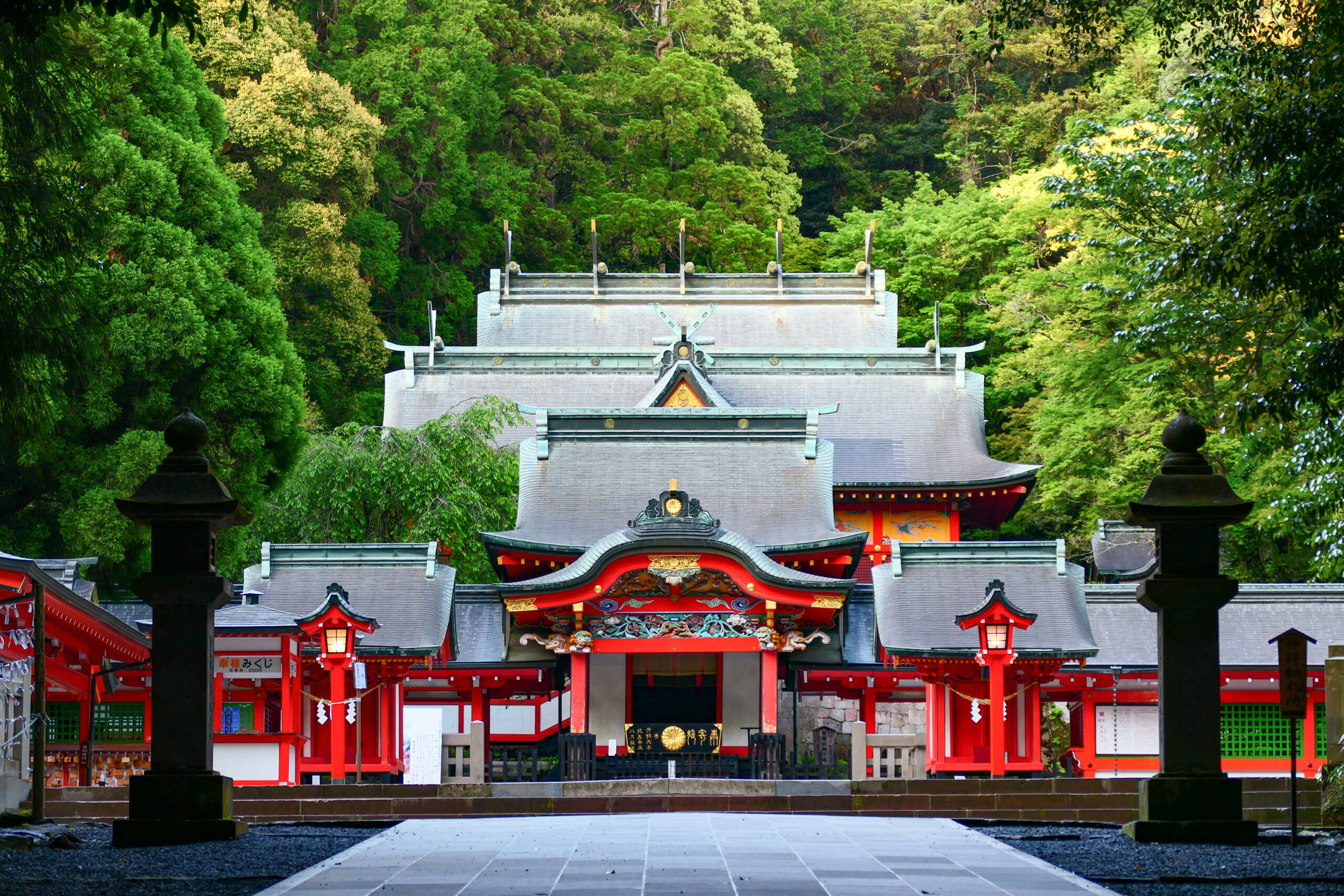
Kirishima Jingu is the shrine built at the foot of that mountain to enshrine Ninigi-no-Mikoto. For over 1,400 years, it has stood amid forests of ancient cedar, rebuilt repeatedly after volcanic eruptions destroyed earlier versions. The current buildings, dating to 1715, were designated a National Treasure in 2022—the first such designation for a Shinto structure in Kagoshima.
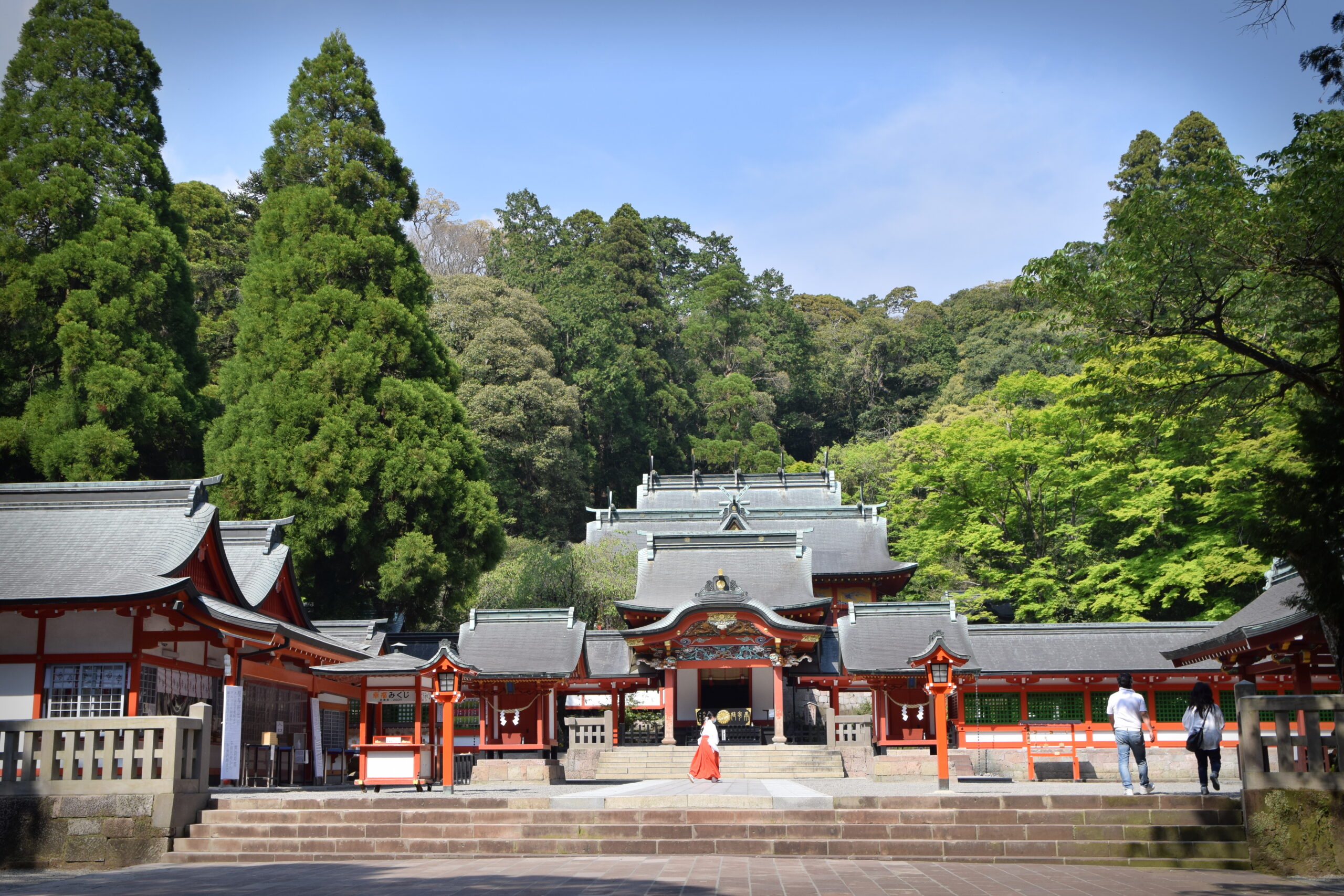
The shrine’s vermilion halls are covered in polychrome carvings of dragons, phoenixes, and mythical creatures, elaborate enough to earn the nickname “Nikko of the West.” And unlike Nikko, Kirishima Jingu sits just 30 minutes from Kagoshima Airport, with one of southern Kyushu’s best hot spring towns minutes away.
—
History and Significance
The Heavenly Descent
According to the *Kojiki* and *Nihon Shoki* (Japan’s oldest historical records), Amaterasu—the sun goddess and supreme deity of the Shinto pantheon—commanded her grandson Ninigi-no-Mikoto to descend from Takamagahara (the heavenly realm) and govern the land below. He landed on the peak of Mount Takachiho in the Kirishima range, carrying the mirror, sword, and jewel that became Japan’s Imperial Regalia.
Kirishima Jingu was founded in the 6th century to honor Ninigi-no-Mikoto at his landing site. The original shrine stood between Mount Takachiho and the Ohachi crater, but repeated eruptions forced it to relocate several times. In 1715, the feudal lord Shimazu Yoshitaka of the Satsuma domain funded the construction of the present buildings at their current, safer location.
A National Treasure Since 2022
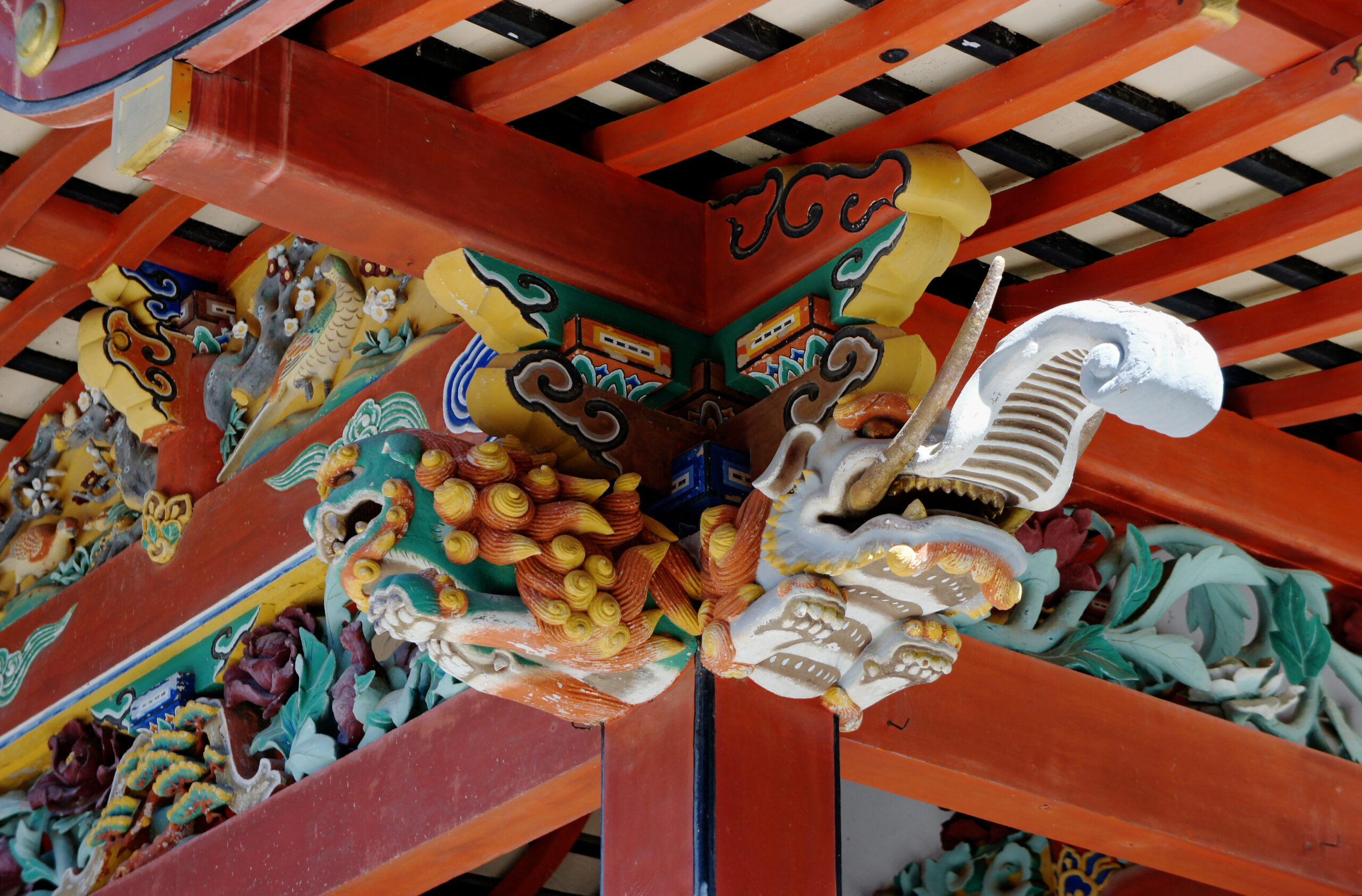
In February 2022, the main hall (*honden*), offering hall (*heiden*), and worship hall (*haiden*) were jointly designated a National Treasure. The carvings are remarkably well-preserved, their colors still brilliant after three centuries. The level of sculptural detail—rivaling Nikko Toshogu in the north—makes this one of the finest examples of early 18th-century shrine architecture in Japan.
Visitors can see the worship hall up close and glimpse the main hall’s roof and upper carvings from the prayer position.
—
Blessings
| Blessing | Context |
|———-|———|
| General fortune & protection | The enshrined deity founded the nation—a powerful symbol for new beginnings and life transitions |
| Romantic relationships | Based on the love story of Ninigi-no-Mikoto and Konohanasakuya-hime. A sacred tree in the grounds is a couple’s power spot |
| Business success | The heavenly descent is interpreted as the ultimate successful venture. Popular with entrepreneurs |
| Safe childbirth | Konohanasakuya-hime gave birth in a burning fire, a symbol of strength in delivery |
| Family harmony | Widely visited by families seeking household protection |
—
What to See
The Approach
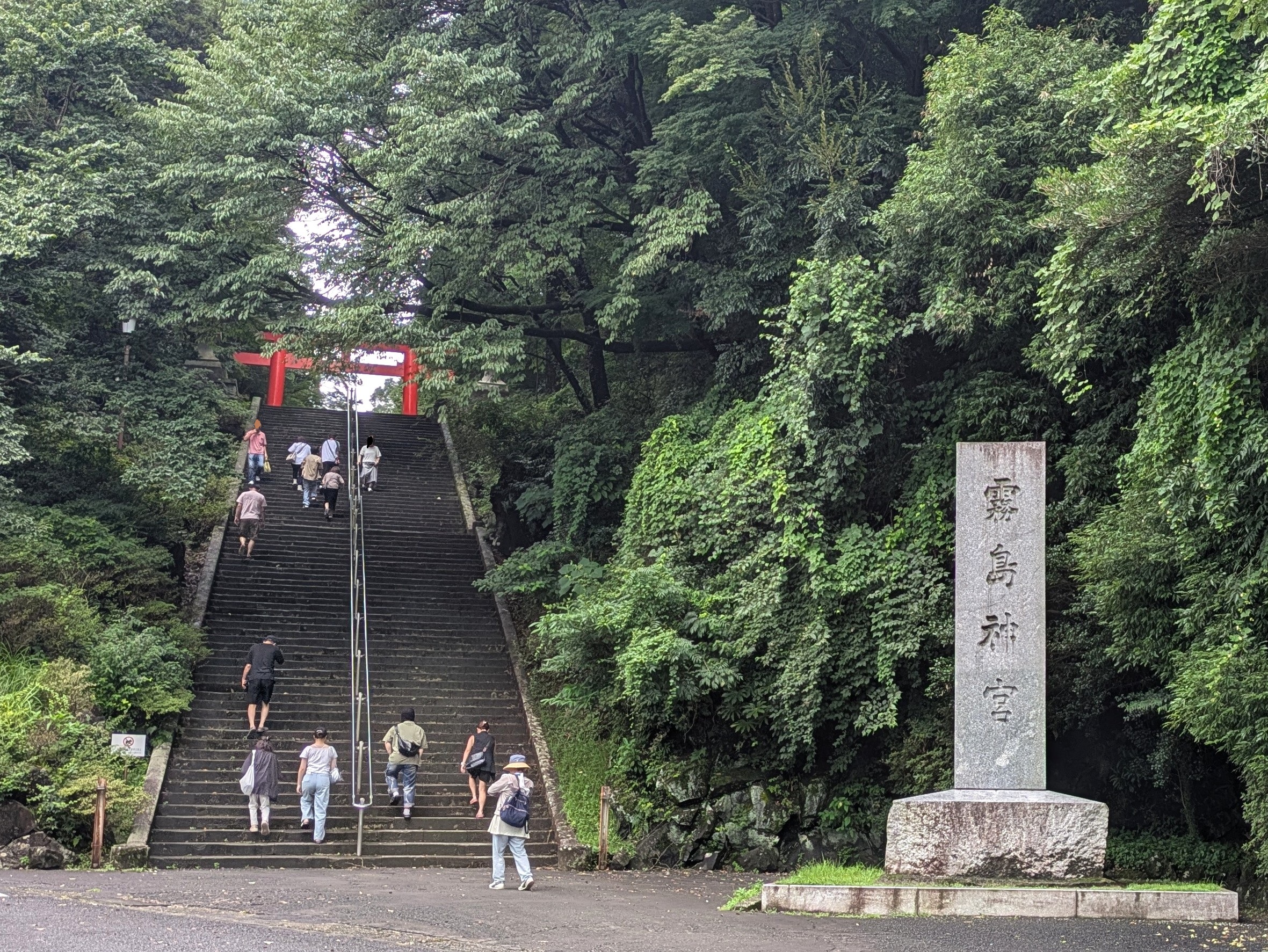
The approach passes through groves of centuries-old cedar trees. The air is noticeably cooler and quieter under the canopy. Stone steps rise gradually—nothing strenuous, but the sense of ascending into a sacred space is palpable.
The Great Torii and Main Precinct
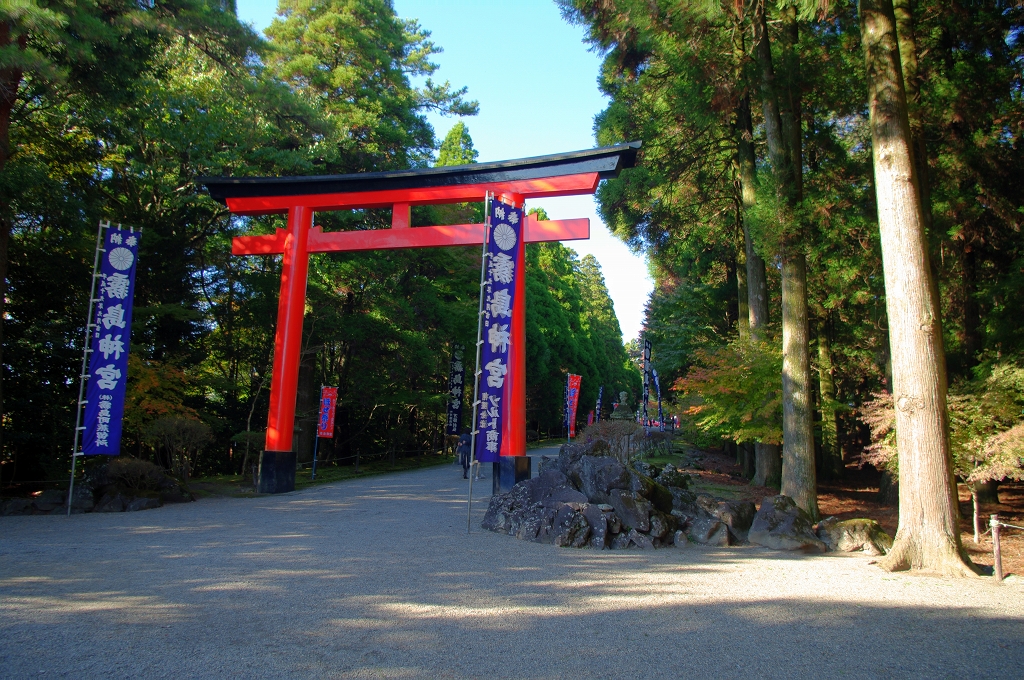
The vermilion torii stands approximately 23 meters tall, one of the largest in Kyushu. Beyond it, the shrine precinct opens up: the worship hall with its ornate facade, flanked by subsidiary buildings in matching vermilion.
The Sacred Tree — 800-Year-Old Cedar
To the left of the worship hall stands a cedar estimated at 800 years old, with a trunk circumference of about 7.2 meters. A parasitic tree grows from its trunk, giving the appearance of two trees intertwined—which is why it has become a symbol of romantic union and is one of the shrine’s most popular power spots.
Kumen-mamori — The Nine-Faced Charm
Kirishima Jingu’s signature amulet comes in nine colors, each representing a different blessing:
| Color | Blessing |
|——-|———-|
| Red | Family safety |
| Blue | Career success |
| Yellow | Financial fortune |
| White | General luck |
| Black | Protection from misfortune |
| Green | Health |
| Purple | Academic achievement |
| Gold | Victory in competition |
| Silver | Romantic connection |
Collecting all nine is a popular goal among visitors.
—
When to Visit
Seasonal Guide
| Season | Period | Highlights | Rating |
|——–|——–|———–|——–|
| Cherry blossoms | Late Mar — early Apr | Somei Yoshino trees line the approach | ★★★★ |
| Fresh green | May — Jun | Deep green forest intensifies the vermilion contrast | ★★★★ |
| Summer | Jul — Aug | Cooler than the lowlands (500 m elevation) | ★★★ |
| Autumn colors | Mid-Nov — early Dec | Maples and ginkgo throughout the precinct | ★★★★★ |
| New Year | Jan 1–3 | Hatsumode. Third most visited shrine in Kyushu | ★★★ |
Best Time of Day
- Early morning (7:00–9:00) — Almost no visitors. The forest air is at its freshest.
- Mid-morning (9:00–11:00) — Dappled sunlight through the cedars. Best for photography.
- Late afternoon (around 16:00) — Western light makes the vermilion glow.
Autumn weekends: Parking lots fill by mid-morning in November. Arrive before 9:00 AM.
—
Visiting Guide
How to Visit
1. Park or arrive by bus → walk to the approach (5 minutes)
2. Walk up the cedar-lined path and stone steps
3. Purify at the *temizuya* (water pavilion)
4. Pass through the great torii
5. Pray at the worship hall (two bows, two claps, one bow)
6. Visit the sacred cedar tree
7. Receive *goshuin* (calligraphic seal) and charms at the office
8. Enjoy the mountain view from the lookout point
Time needed: 30–40 minutes for prayer only. About 60 minutes to see everything.
Goshuin (Shrine Seal)
- Fee: 500 yen
- Hours: 8:00–17:00
- Varieties: Standard seal plus seasonal limited editions (autumn, etc.)
- Original seal book: Available for about 1,500 yen
—
Getting There
From Kagoshima Airport
- By car: About 30–40 minutes
- By bus: Direct buses to Kirishima Onsen area, then local bus or taxi (total about 40 minutes)
From Kagoshima-Chuo Station
1. JR Nippo Main Line to Kirishima Jingu Station — about 50 minutes (30 minutes by limited express)
2. Kagoshima Kotsu bus from the station — about 15 minutes, get off at “Kirishima Jingu”
– Fare: about 260 yen
– Buses run 1–2 times per hour. Check the schedule in advance.
By Car
- Kyushu Expressway, Mizobe-Kagoshima Airport IC → about 40 minutes
- From Miyazaki: Higashi-Kyushu Expressway, Sueyoshi-Takarabe IC → about 50 minutes
Parking
| Lot | Capacity | Fee |
|—–|———-|—–|
| First parking lot | ~500 cars | Free |
| Second parking lot | ~200 cars | Free |
Essential Information
| | Details |
|——|——|
| Hours | Grounds open freely (office: 8:00–17:00) |
| Closed | Never |
| Admission | Free |
| Address | 2608-5 Kirishima Taguchi, Kirishima City, Kagoshima |
| Phone | 0995-57-0001 |
| Website | kirishimajingu.or.jp |
—
Kirishima Onsen — Hot Springs After Your Visit
Kirishima Onsen village is about 15 minutes by car from the shrine. Combining a shrine visit with a hot spring soak is the classic Kirishima experience.
Recommended Day-Use Baths
| Facility | What makes it special | Fee | Distance |
|———-|———————-|—–|———-|
| Kirishima Onsen Market foot bath | Free foot bath next to tourist information | Free | 15 min by car |
| Ryokojin Sanso | Outdoor baths surrounded by natural forest; stunning views | Day-use available | 15 min by car |
| Sakura Sakura Onsen | Natural mud bath—cover yourself in volcanic mud | 800 yen | 15 min by car |
Nearby Attractions
| Spot | Travel time | Highlights |
|——|————|———–|
| Mount Takachiho hiking | 20 min by car to trailhead | The mountain of the heavenly descent. The Ama-no-Sakahoko (heavenly reversed spear) stands at the summit |
| Takachiho Farm | 10 min by car | Free admission. Cow milking, horse riding, soft-serve ice cream |
| Kirishima Art Forest | 30 min by car | Outdoor contemporary art museum in a highland meadow |
| Maruo Falls | 10 min by car | A waterfall fed by hot spring water—steam rises from the cascade |
| Sakamoto Ryoma honeymoon site | 15 min by car | Japan’s most famous samurai took Japan’s first honeymoon here in 1866 |
Day Trip Itinerary
| Time | Activity |
|——|———-|
| 9:00 | Arrive at Kirishima Jingu. Walk the cedar approach and pray |
| 10:00 | Sacred tree, goshuin, and nine-faced charms |
| 10:30 | Drive to Takachiho Farm for soft-serve and animals |
| 12:00 | Lunch at Kirishima Onsen Market (try the steam-cooked dishes) |
| 13:00 | Sakura Sakura Onsen for a mud bath |
| 15:00 | Visit Maruo Falls |
| 16:00 | Head to Kagoshima Airport (30 minutes) |
—
Frequently Asked Questions
Is the shrine suitable for children?
Yes. The precinct is spacious and mostly flat. The approach has stone steps, so a baby carrier is better than a stroller. The open courtyard in front of the worship hall is easy for small children to walk.
Are pets allowed?
No, pets are not permitted in the shrine grounds. Takachiho Farm (10 minutes by car) allows pets in some areas, making it a good pairing for travelers with dogs.
Is wheelchair access available?
Yes. A ramp near the shrine office provides wheelchair access to the worship hall area, bypassing the stone steps. Call ahead (0995-57-0001) for assistance.
What about rainy days?
Kirishima means “island of mist”—fog and rain are common here. On misty days, the shrine takes on an ethereal quality that many visitors prefer to sunshine. The approach is paved, so footing is not a concern.
How crowded is the New Year visit?
Extremely. An estimated 300,000–400,000 people visit from January 1–3. Parking can take hours. Visit after January 4, or arrive before 6:00 AM on New Year’s Day.
—
Summary
Kirishima Jingu stands where Japanese mythology begins—the mountain where a god descended from heaven to found a nation. The shrine’s National Treasure buildings, covered in centuries-old polychrome carvings, justify their reputation as the “Nikko of the West.” But Kirishima Jingu has something Nikko does not: a volcanic highland setting, one of Kyushu’s finest hot spring towns minutes away, and an airport just half an hour’s drive.
For career transitions, romantic wishes, or simply a desire to stand where Japan’s origin story is set, Kirishima Jingu delivers. Pair it with a mud bath, a farm visit, and a waterfall powered by hot springs, and you have a day trip that covers mythology, art, nature, and relaxation in a single itinerary.
—
*Information in this article is current as of April 2026. Please check the Kirishima Jingu official website for the latest updates before your visit.*
あなたに最適なパワースポットを知りたい方へ