Thirty lakes, each a different color, formed by a single volcanic eruption 138 years ago.
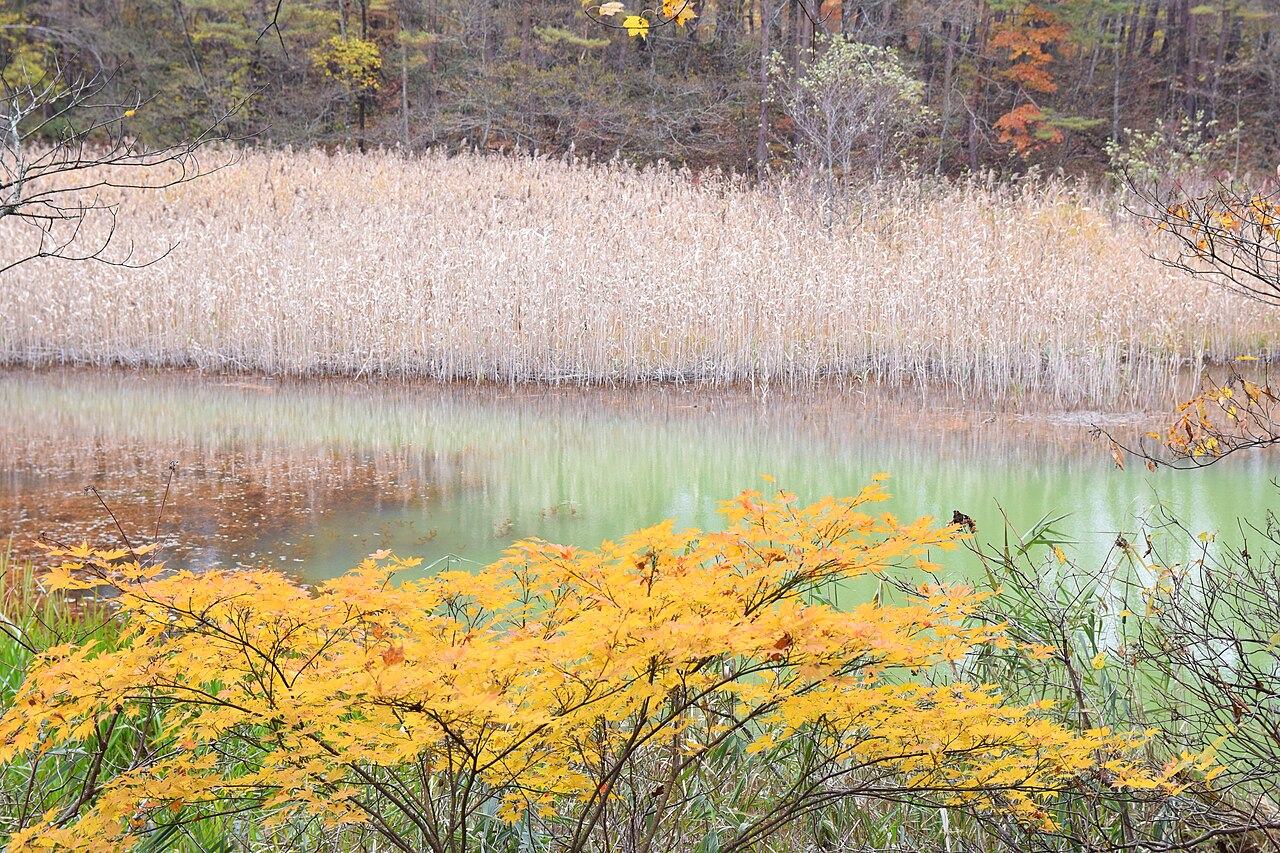
Emerald green. Cobalt blue. Turquoise. Rust red. Pale azure. The lakes of Goshikinuma sit only meters apart, yet each one reflects a completely different hue. The same water flows from Mount Bandai, but dissolved volcanic minerals—aluminosilicates, iron oxides, sulfur compounds—scatter light differently in each basin. The colors shift with the angle of the sun, the season, the weather. No two visits produce the same palette.
The Goshikinuma Nature Trail is a flat, 3.6-kilometer path connecting the most beautiful of these lakes. It takes 70 to 90 minutes to walk, requires no hiking experience, and is free. That combination of accessibility and otherworldly beauty is what makes Goshikinuma one of the most visited natural sites in Fukushima Prefecture—and one of the most underrated in all of Japan.
—
How Goshikinuma Was Born
The 1888 Eruption of Mount Bandai
On July 15, 1888, the north face of Mount Bandai collapsed in a massive phreatic eruption. The avalanche of rock and debris dammed rivers and created hundreds of lakes. Goshikinuma—literally “five-colored lakes”—is the most visually striking cluster among them.
The colors come from volcanic minerals dissolved in the water. Allophane (an aluminosilicate), limonite (iron ore), and sulfur scatter light at different wavelengths depending on their concentration and the depth of each lake. Even the same lake looks different in morning light versus afternoon, in summer versus autumn.
A Place of Purification and Renewal
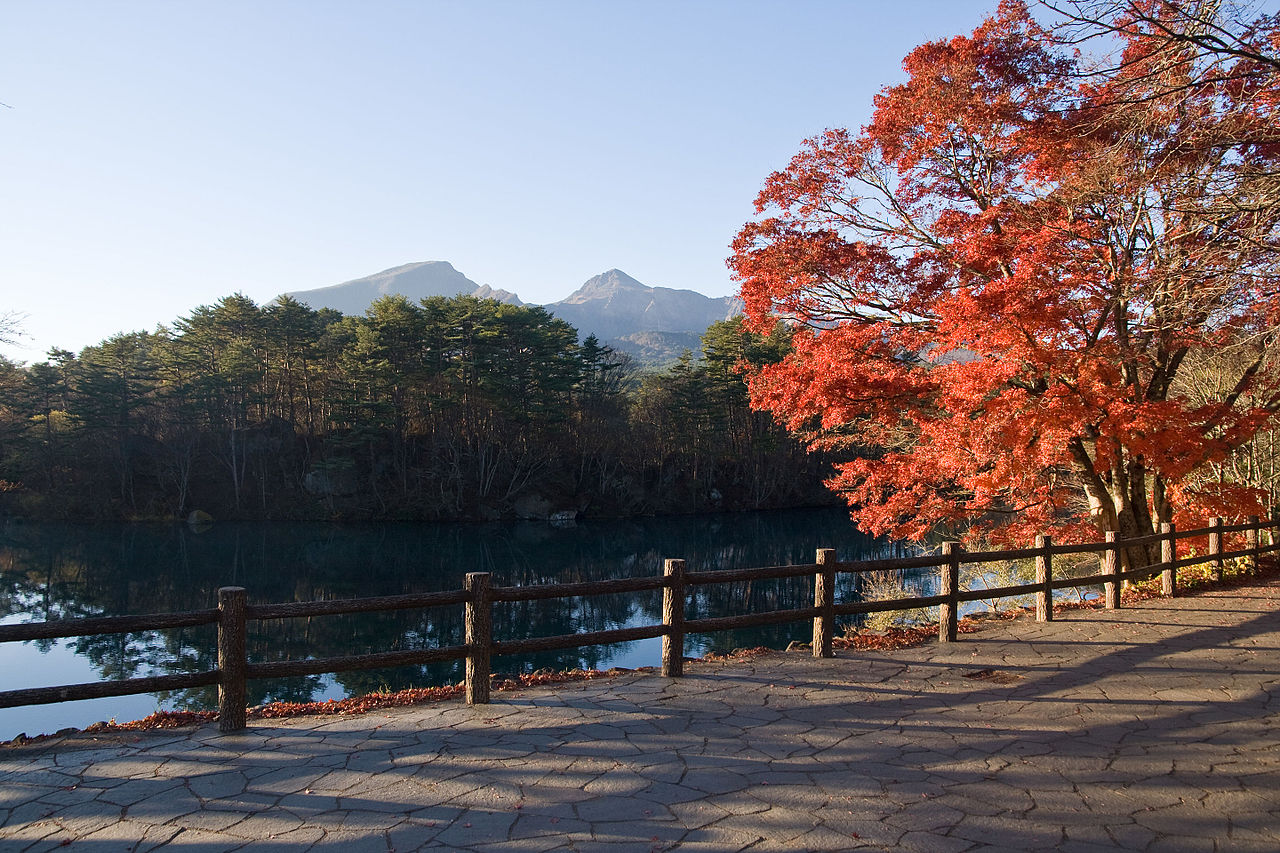
Mount Bandai has been revered as a sacred mountain—“the guardian deity of Aizu”—for centuries. The lakes at its base are said to gather the mountain’s spiritual energy, making Goshikinuma a natural power spot associated with purification and emotional renewal.
Two lakes carry particular significance. Bishamon-numa is named after Bishamonten, the deity of warriors and wealth. Benten-numa honors Benzaiten, the goddess of arts, learning, and fortune. Visitors often report feeling lighter and calmer after walking through the forested trail beside these lakes—an effect consistent with the documented benefits of forest bathing (shinrin-yoku) and negative ions from water.
—
Lake-by-Lake Guide
The trail runs roughly east to west. Here is what you will see if you start from the Bishamon-numa (east) entrance.
Bishamon-numa — The Largest Lake
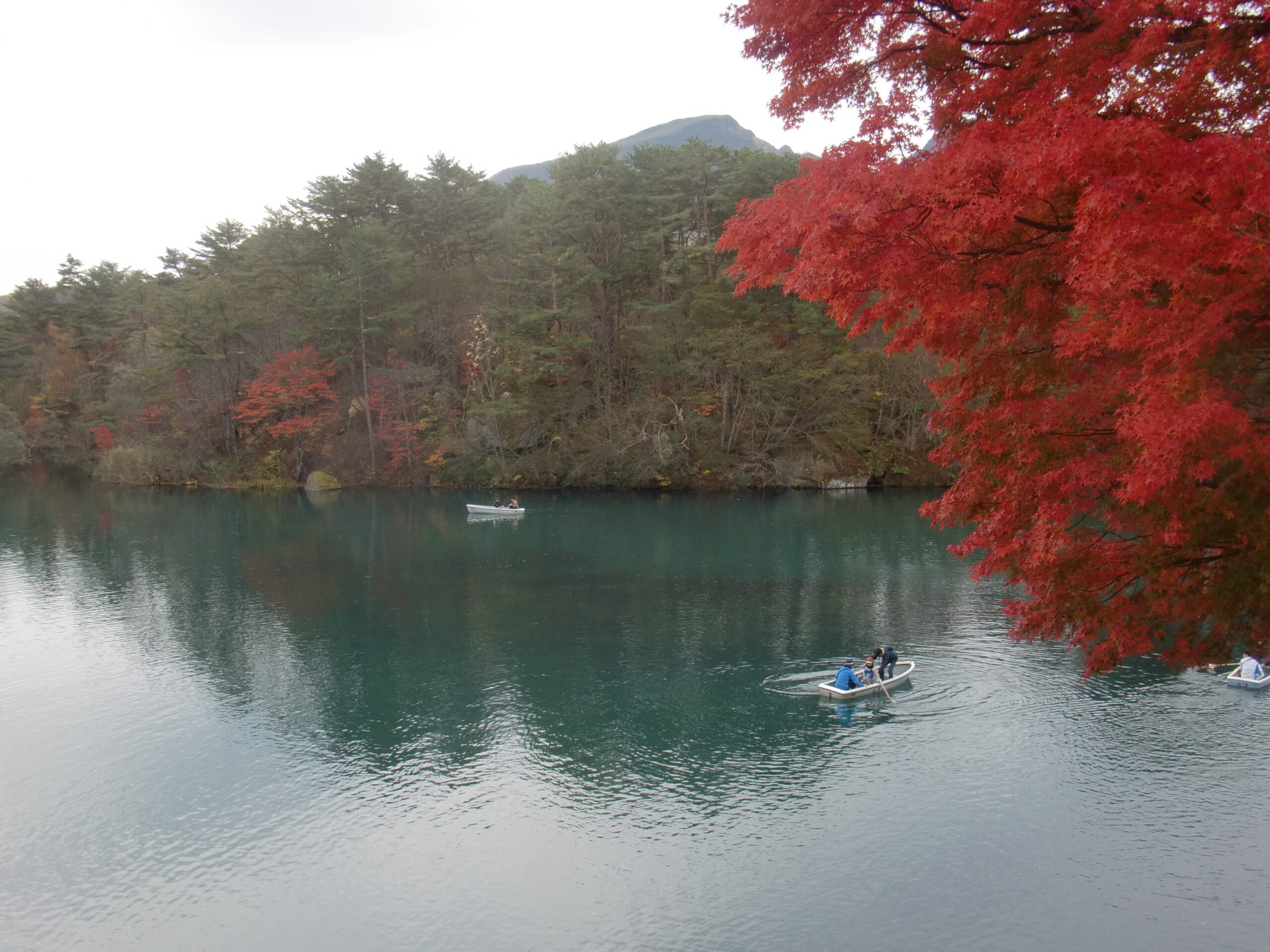
The biggest and most popular of the Goshikinuma lakes. Its emerald-green surface reflects Mount Bandai on clear days.
Look for the heart-shaped koi. Bishamon-numa is home to colorful carp, and among them lives a koi with a red heart mark on its belly. Legend says spotting it brings happiness. Rent a rowboat (700 yen for 30 minutes, April through early November) to search from the water.
Aka-numa — The Red Lake
The vegetation around this lake turns rust-red where iron oxide deposits from the water cling to roots and grass. The effect is striking and completely different from any other lake on the trail.
Midoro-numa — Three Colors in One Lake
This single lake displays red, green, and blue simultaneously. Variations in depth, aquatic plants, and mineral concentration create distinct color zones within the same body of water. It is the best place to understand why these lakes look so different from each other.
Benten-numa — The Second Largest
A luminous lapis-blue surface. Once home to a small shrine dedicated to Benzaiten, this lake is associated with blessings for arts, learning, and financial fortune. A viewing platform here offers a panoramic view of Mount Bandai’s eruption wall.
Ruri-numa — The Photography Spot
Named for its lapis lazuli color, Ruri-numa is the lake where photographers set up their tripods. On calm mornings, Mount Bandai reflects perfectly in the blue-purple water.
Ao-numa — The Most Vivid Blue
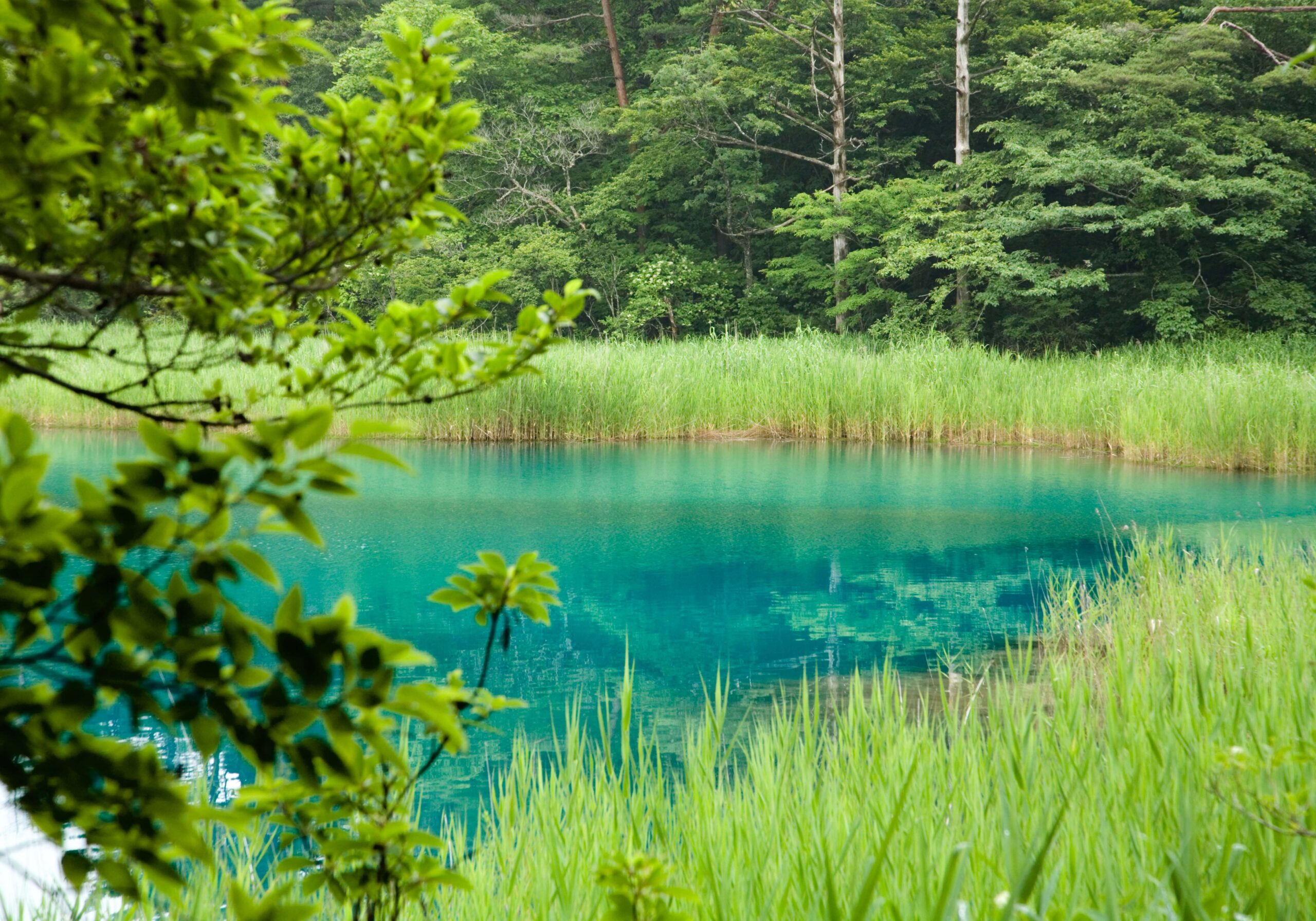
Though small, Ao-numa has the most intensely colored water in all of Goshikinuma—a turquoise-emerald so vivid it looks artificial. Many visitors consider this the highlight of the entire trail, especially when framed by fresh spring greenery.
Yanagi-numa — The Autumn Star
Located at the western entrance near the Urabandai Souvenir Shop. In mid-to-late October, the maples surrounding this lake turn brilliant red, making it the top autumn foliage spot in the Goshikinuma chain.
—
When to Visit
Seasonal Guide
| Season | Period | Highlights | Rating |
|——–|——–|———–|——–|
| Fresh green | Mid-May — Jun | Vivid green forest against blue lakes | ★★★★ |
| Summer | Jul — Aug | Cool highland escape (800 m elevation) | ★★★ |
| Autumn colors | Mid — late Oct | Red, gold, and green compete with the lake colors | ★★★★★ |
| Winter | Dec — Mar | Snowshoe tours through a silent, white world | ★★★ |
Best Time of Day
- Early morning (7:00–9:00) — Fewest visitors. Morning mist over the lakes.
- Mid-morning (9:00–11:00) — Sunlight hits the water, making colors most vivid.
- Late afternoon (15:00–17:00) — Warm light transforms the water to amber tones.
Autumn weekend warning: In October, parking lots fill by 9:00 AM on weekends and holidays. Visit on a weekday or arrive early.
—
Trail Guide
Goshikinuma Nature Trail Facts
- Distance: 3.6 km (one way)
- Time: 70–90 minutes (one way)
- Elevation change: Almost flat (about 800 m above sea level)
- Difficulty: Beginner-friendly. Sneakers are fine in dry weather; hiking shoes recommended after rain.
- Restrooms: Only at the two trailheads (none along the trail)
Recommended Direction: East to West
1. Start at Goshikinuma Entrance (east side, near the bus stop)
2. Bishamon-numa — the largest lake builds anticipation
3. Aka-numa → Midoro-numa → Benten-numa — each lake a different color
4. Ruri-numa → Ao-numa — the visual crescendo
5. Finish at Yanagi-numa (west side, Urabandai Souvenir Shop)
6. Take a bus back to the starting point (about 10 minutes, 350 yen)
Driving tip: If you came by car, park at one end, take the bus to the other, and walk back to your car. This way you finish at your vehicle.
What to Wear and Bring
| Season | Footwear | Essentials |
|——–|———-|———–|
| Spring–Autumn | Hiking shoes or sturdy sneakers, long sleeves | Water, insect repellent, rain jacket |
| Winter | Snow boots | Snowshoes (rental available at Visitor Center) |
Note: Heels and sandals are not suitable. The trail has muddy sections, especially after rain.
—
Getting There
From Tokyo
1. Tokyo → Koriyama — Tohoku Shinkansen, about 80 minutes
2. Koriyama → Inawashiro — JR Ban’etsu West Line, about 40 minutes
3. Inawashiro Station → Goshikinuma — Bandai Toto Bus toward Bandai Kogen, about 30 minutes
– Get off at “Goshikinuma-iriguchi” (east entrance, Bishamon-numa side)
– Or “Urabandai Kogen-eki” (west entrance, Yanagi-numa side)
– Fare: 790–910 yen one way
– Buses run every 1–2 hours. Check the timetable before you go.
By Car
- Banetsu Expressway, Inawashiro-Bandai Kogen IC → about 20 minutes (17 km)
- Set your car navigation to “Urabandai Visitor Center” or “Goshikinuma-iriguchi Kanko Plaza”
Parking (All Free)
| Parking lot | Capacity | Location |
|————|———-|———-|
| Urabandai Visitor Center | 80 cars | East entrance (Bishamon-numa side) |
| Goshikinuma-iriguchi Kanko Plaza | 92 cars | Near east entrance |
| Urabandai Souvenir Shop | 70 cars | West entrance (Yanagi-numa side) |
Essential Information
| | Details |
|——|——|
| Admission | Free (year-round) |
| Trail hours | Sunrise to sunset (no lighting) |
| Closed | Never (heavy snow may make trail impassable in winter without snowshoes) |
| Rowboats | Bishamon-numa, 700 yen / 30 min (late Apr — early Nov) |
| Official website | Urabandai Tourism Association |
—
Winter at Goshikinuma — A Different World
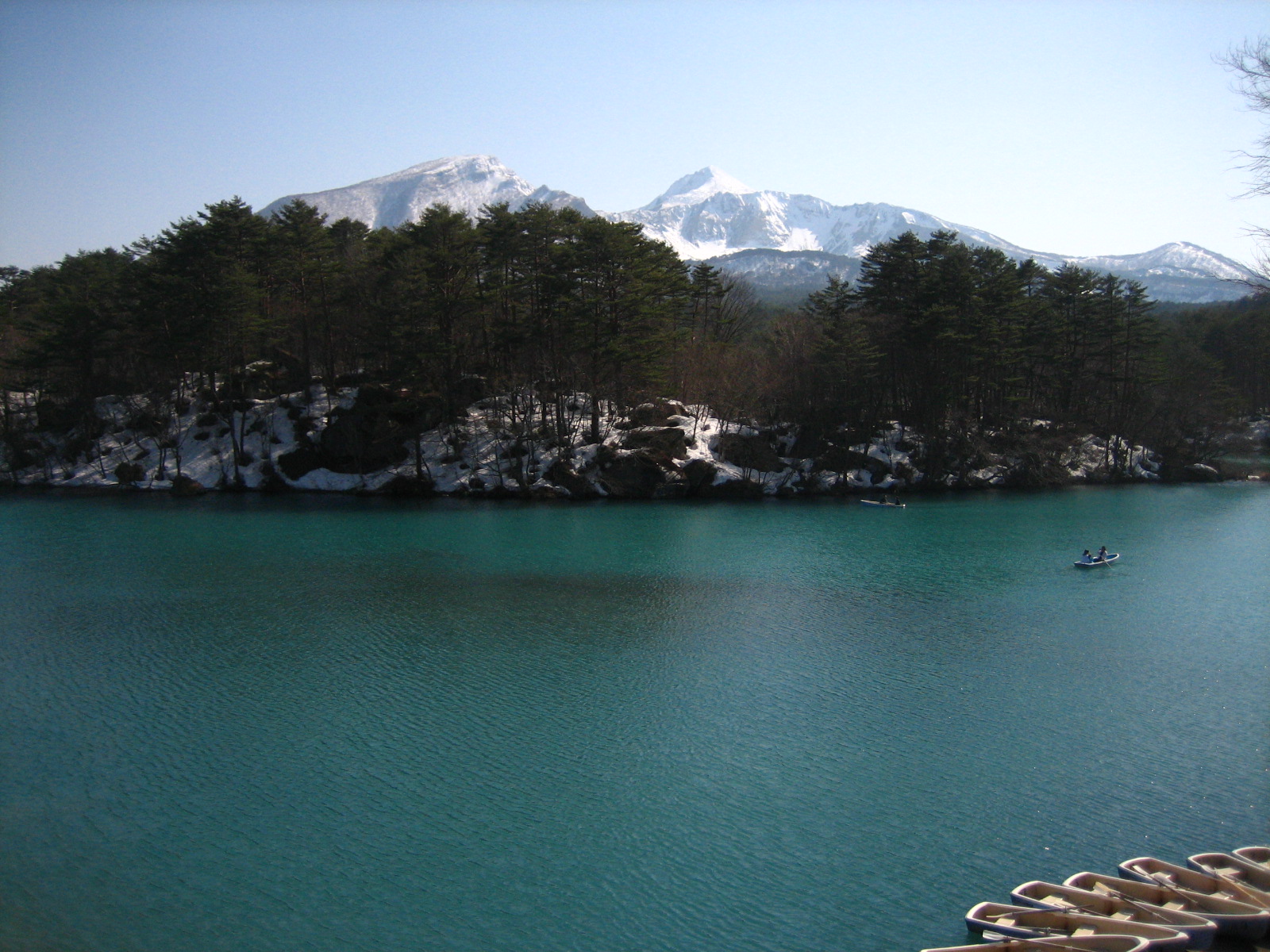
In winter, the trail lies under deep snow—but the lakes do not freeze completely, and their emerald surfaces glow against the white landscape. Snowshoe tours make this accessible even to beginners.
The Urabandai Visitor Center offers snowshoe rentals (around 1,000 yen per day) and guided tours (about 2 hours, reservation required). The silence of the snow-covered forest, broken only by the crunch of your snowshoes, is a winter experience unique to Goshikinuma.
Photography Tips
| Location | Best time | Subject |
|———-|———–|———|
| Bishamon-numa | Early morning | Mist and Mount Bandai reflection |
| Ao-numa | Around 10:00 AM | Most vivid water color |
| Ruri-numa | Afternoon | Warm light on the water surface |
| Yanagi-numa | Mid–late October | Autumn foliage reflected in the lake |
—
Around Goshikinuma — Food and Day Trip Ideas
Food
- Aizu Yamashio Ramen — Ramen seasoned with “mountain salt” made from the hot spring water of Oshio-Urabandai Onsen. Try “Mendokoro Reiban” near the west entrance.
- Urabandai Souvenir Shop — Goshikinuma soft-serve ice cream, local soba noodles, and wild mountain vegetable dishes.
- Dai-ichi Gold House Meguro — A long-established local restaurant known for yamashio ramen and sauce katsudon (pork cutlet over rice with sauce).
Nearby Attractions
| Spot | Travel time | Highlights |
|——|————|———–|
| Mount Bandai hiking | 20 min by car | One of Japan’s 100 Famous Mountains. Lake Inawashiro panorama from the summit |
| Lake Hibara | 10 min by car | Canoeing, fishing, sightseeing boats. Urabandai’s largest lake |
| Lake Hibara Cycling Road | 10 min by car | A 30 km loop around the lake |
| Nakase-numa Trail | 5 min by car | A quieter, less crowded alternative to Goshikinuma |
| Morohashi Museum of Modern Art | 5 min by car | One of the world’s largest collections of Salvador Dalí |
Day Trip Itinerary
| Time | Activity |
|——|———-|
| 8:30 | Arrive at Goshikinuma-iriguchi Kanko Plaza, park your car |
| 8:45 | Take bus to Urabandai Kogen-eki (10 minutes) |
| 9:00 | Start trail from Yanagi-numa (west → east) |
| 10:30 | Reach Bishamon-numa. Rent a rowboat, search for the heart-shaped koi |
| 11:30 | Return to parking lot |
| 12:00 | Lunch at Mendokoro Reiban — Aizu yamashio ramen |
| 13:30 | Canoeing or sightseeing boat on Lake Hibara |
| 15:30 | Soak at Urabandai Onsen |
| 17:00 | Head home |
—
Frequently Asked Questions
Can children walk the trail?
Yes. The trail is nearly flat and manageable for elementary school children and older. For toddlers, a baby carrier (backpack style) works well. Strollers are not recommended due to muddy patches.
Is the trail enjoyable in the rain?
Surprisingly, yes. Raindrops create ripples across the colored water, and mist drifting through the forest adds an ethereal atmosphere. Waterproof shoes and a rain jacket are essential.
Are pets allowed?
Yes, on a leash. Dogs are not permitted in the water. Please clean up after your pet.
Are there bears?
Urabandai is within the habitat range of the Asian black bear. Sightings have been reported on the trail. Carry a bear bell. The Urabandai Visitor Center posts current sighting information.
Is the trail wheelchair accessible?
The full trail is not barrier-free, but the viewing area near the Bishamon-numa entrance is paved and accessible by wheelchair, offering views of the emerald lake and Mount Bandai.
How long does the trail take?
About 70 to 90 minutes one way. Allow 2 hours if you stop for photos. If you only want to see Bishamon-numa, it is a 30-minute round trip from the east entrance.
—
Summary
Goshikinuma is a masterpiece of geology and light. Thirty lakes, each a different color, born from a catastrophic eruption and sustained by invisible minerals. A flat, 90-minute trail through silent forest connects them.
You do not need hiking boots. You do not need a guide. You just need a bus or a car to reach Urabandai, and then you walk.
In autumn, the volcanic blues and greens compete with red maples. In winter, emerald water glows against white snow. In early summer, the fresh forest canopy intensifies every shade. No two visits yield the same colors, because the minerals, the light, and the season are never quite the same.
That is the promise of Goshikinuma: a landscape that reinvents itself every time you look.
—
*Information in this article is current as of April 2026. Please check the Urabandai Tourism Association website for the latest updates before your visit.*
あなたに最適なパワースポットを知りたい方へ