Find Your Guide
| If you are… | Read this guide |
|—————|—————–|
| Onmyoji/FGO/anime fan | Onmyoji Fan Pilgrimage Guide |
| Interested in history & blessings | Continue reading below |
—
Seimei Shrine in Kyoto’s Kamigyo ward is dedicated to Abe no Seimei (921–1005), the most powerful onmyoji (yin-yang master) of the Heian period. Founded in 1007 by order of Emperor Ichijo on the site of Seimei’s former residence, the shrine attracts approximately 500,000 visitors annually seeking protection from evil and misfortune.
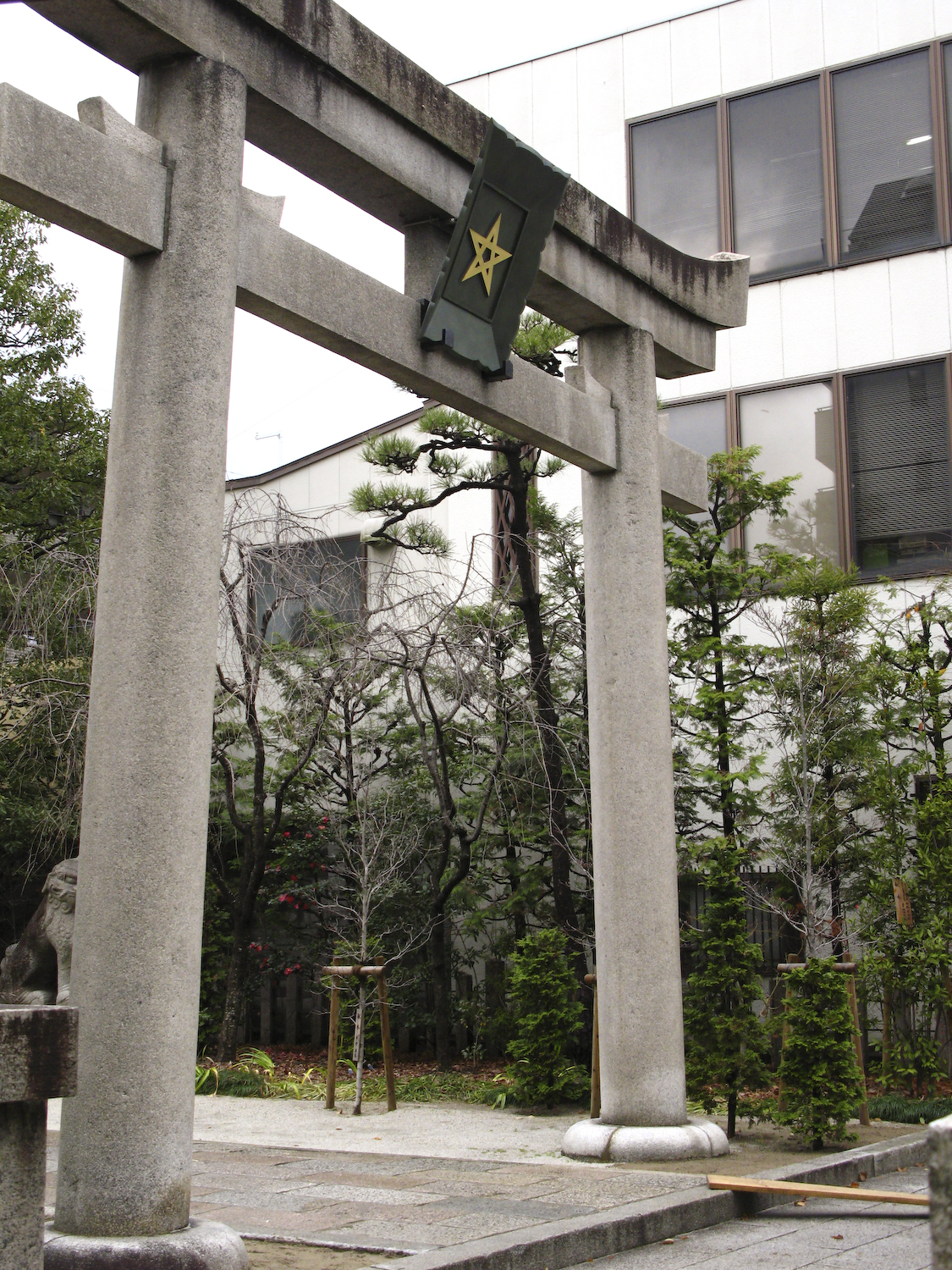
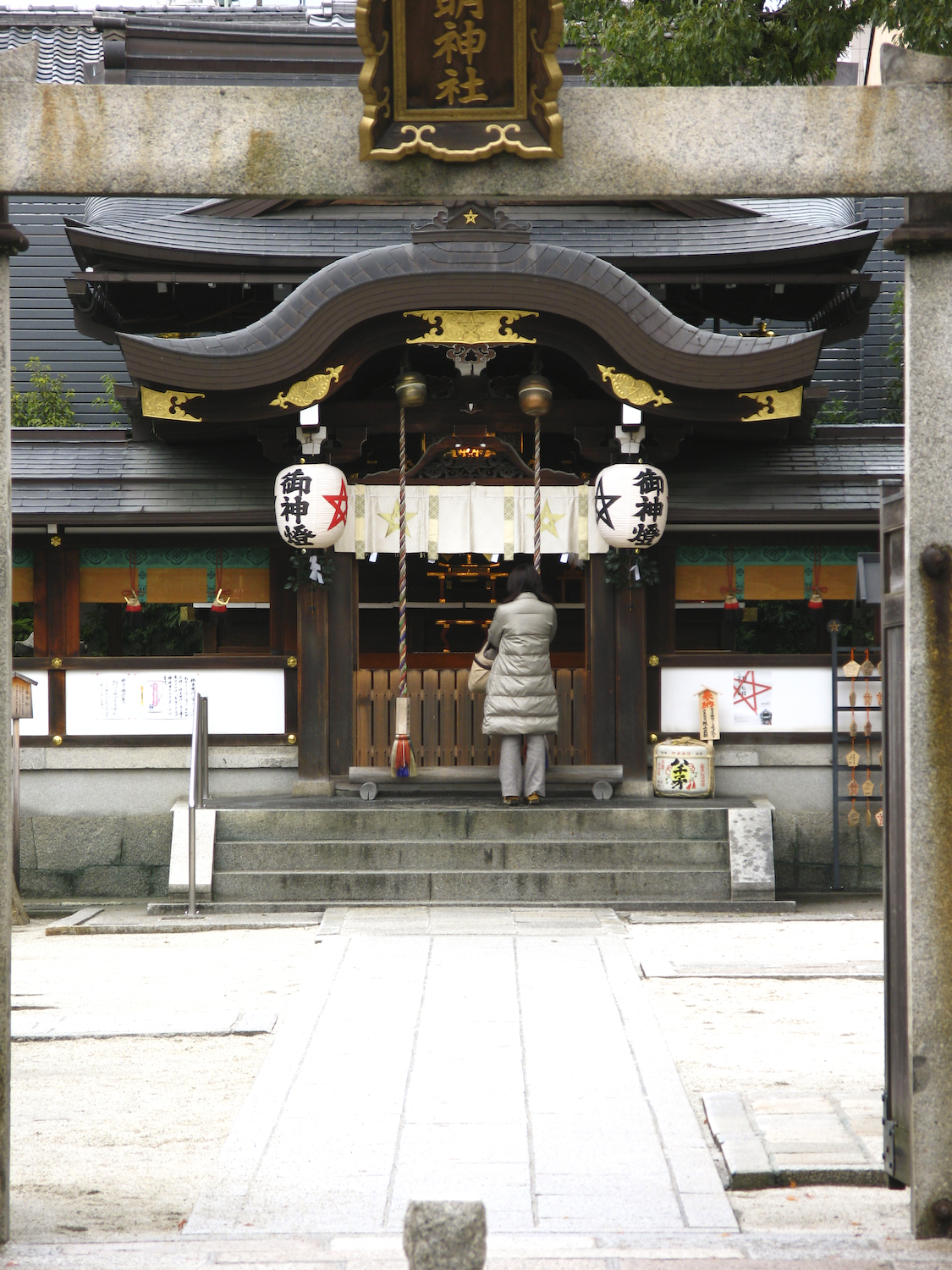
What makes Seimei Shrine instantly recognizable: the five-pointed star (Seimei Kikyo pentagram) appears on the torii gate, lanterns, amulets, and throughout the compact grounds. The shrine is small—you can visit in 30–60 minutes—but packed with unique features found nowhere else: the pentagram-shaped Seimei Well, the yakuyoke (evil-warding) peach statue, shikigami stone figures, and a reconstruction of the legendary Ichijo Modori Bridge.
The shrine is a 12-minute walk from Imadegawa Station and easy to combine with Kyoto Imperial Palace. Admission is free.
Who Was Abe no Seimei?
Abe no Seimei served as an onmyoji in the imperial court’s Onmyoryo (Bureau of Yin and Yang) during the mid-Heian period. He was an expert in astronomy, calendar science, and divination who served multiple emperors over his long career.
His legendary feats include:
- Predicting Emperor Kazan’s abdication through astronomical divination
- Dispelling epidemics through prayer rituals
- Healing Emperor Ichijo’s illness when court physicians had failed
- Commanding shikigami (spirit servants) that he reportedly hid beneath Ichijo Modori Bridge
After Seimei’s death in 1005 at age 85, Emperor Ichijo ordered the construction of a shrine on the site of his residence, establishing what became Seimei Shrine.
The shrine declined during the Onin War (1467–1477) but was restored in the Edo period. The 2001 film “Onmyoji” and Seimei’s appearances in manga, anime, and games (including Fate/Grand Order) brought a new wave of younger visitors.
Key Highlights: What to See
The Pentagram Torii Gate
The shrine’s torii features the Seimei Kikyo—a five-pointed star that serves as the emblem of onmyodo protection. This pentagram symbol appears throughout the grounds and is the shrine’s most photographed feature.
Seimei Well (Seimei-no-Ido)
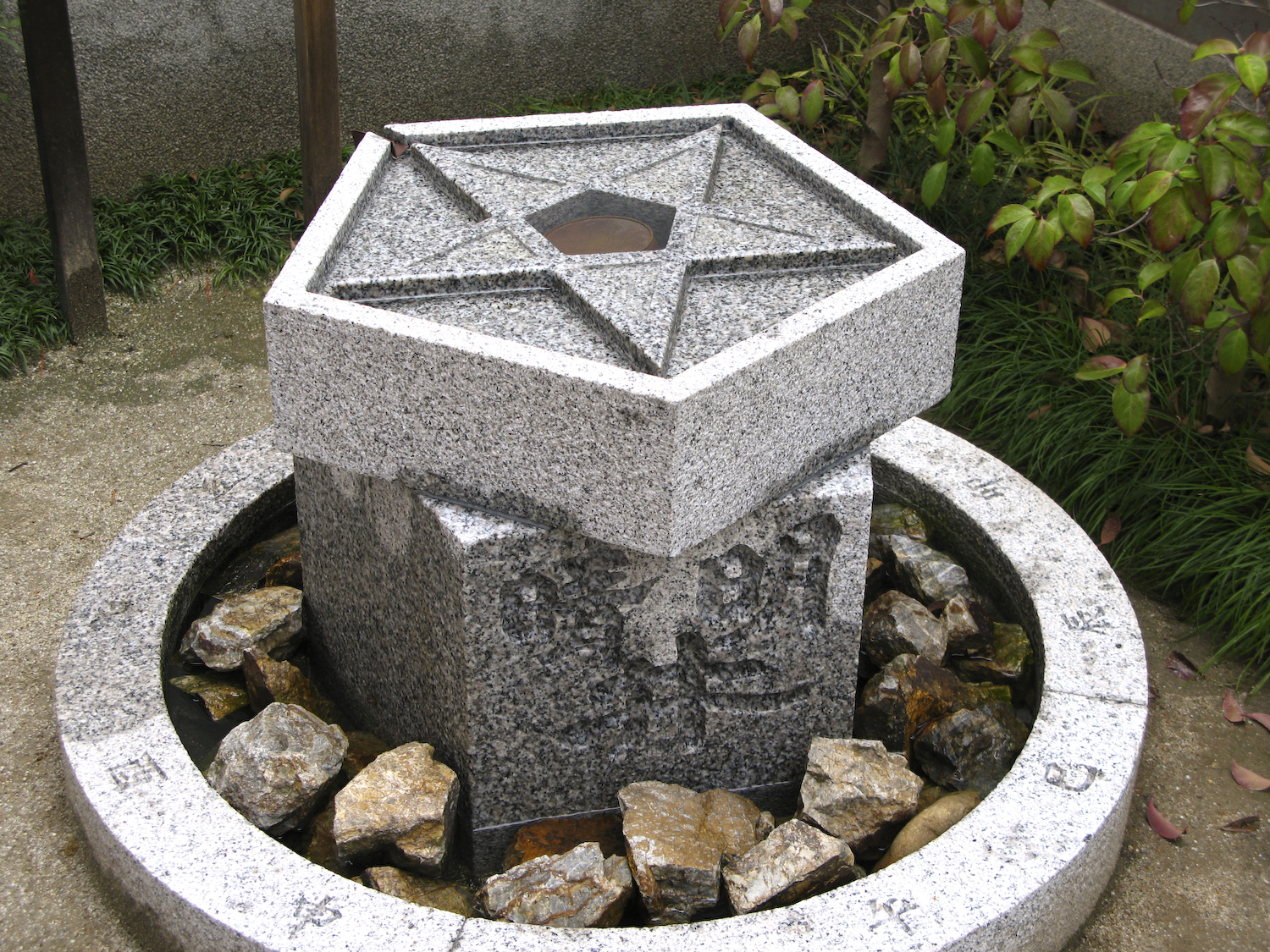
A pentagram-shaped stone well said to have been created by Seimei’s spiritual powers. The water outlet faces that year’s lucky direction (eho) and is rotated annually at Risshun (around February 4). The well water is drinkable—many visitors bring bottles to take water home.
Yakuyoke Peach Statue
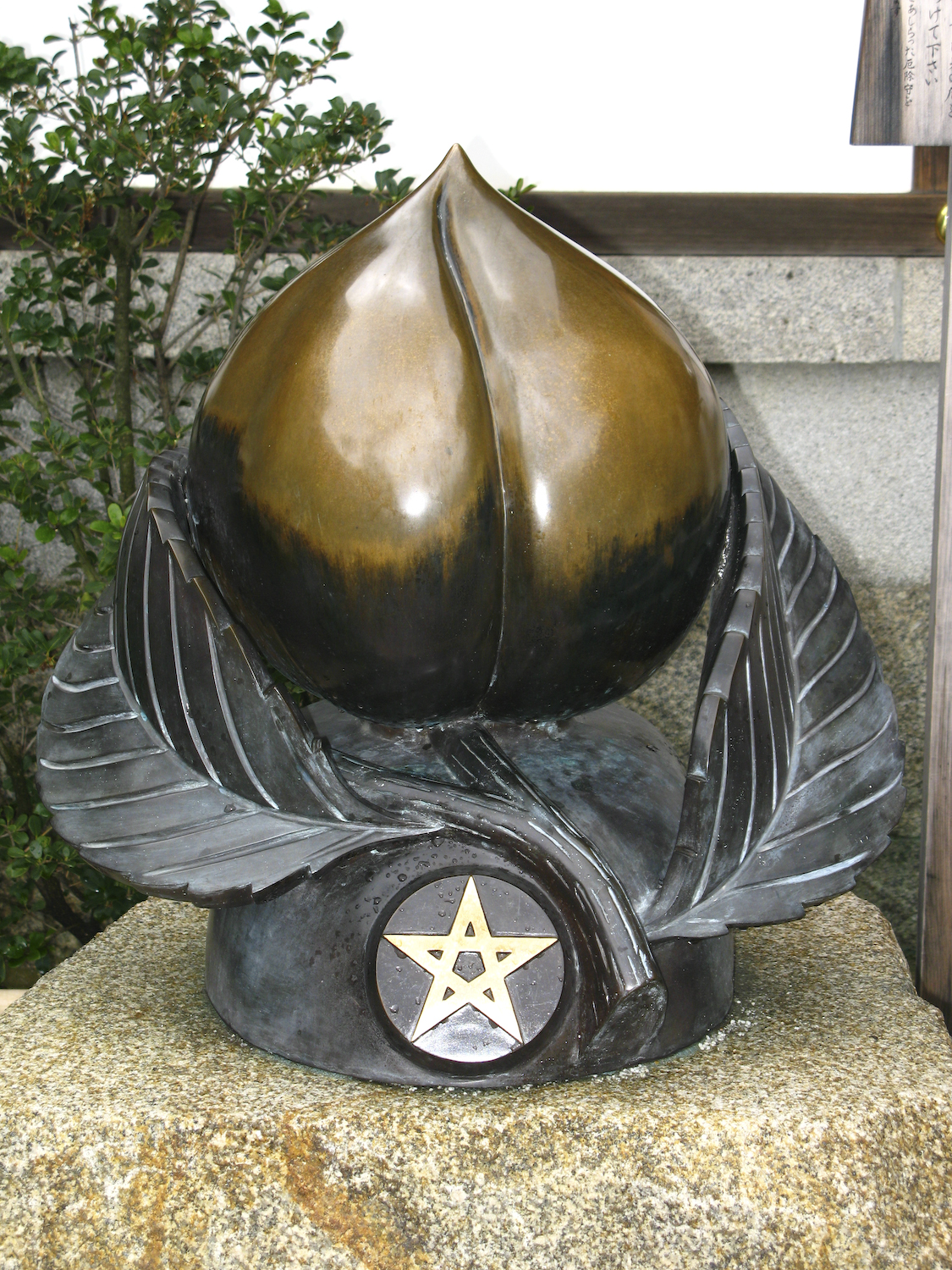
A bronze peach statue that visitors rub to remove misfortune. Peaches have been considered to have protective powers against evil since ancient Chinese tradition. This is one of the shrine’s most popular spots—expect a short line during busy times.
Shikigami Stone Statues
Stone figures representing the spirit servants Seimei is said to have commanded. According to legend, Seimei hid his shikigami beneath Ichijo Modori Bridge because his wife found them frightening.
Ichijo Modori Bridge (Reconstruction)
A small reconstruction of the famous bridge within the grounds. The actual Ichijo Modori Bridge is located approximately 100m south of the shrine—the bridge is legendary as a place where “the dead return to life.”
Spiritual Benefits
Protection from Evil and Misfortune (Mayoke/Yakuyoke): The shrine’s primary blessing, drawing on Seimei’s legendary power to defeat demons and dispel evil spirits.
Direction Protection (Kata-yoke): Unique to Seimei Shrine—blessings to ward off directional disasters when moving house or traveling. This reflects Seimei’s expertise in directional divination.
Healing from Illness: The Seimei Well water has long been associated with healing properties.
Breaking Bad Ties (Enkiri): The shrine is known for helping visitors cut off harmful relationships and attract positive ones.
Academic Success: Following Seimei’s example as a scholar of astronomy and calendar science, students visit for exam blessings.
What Visitors Commonly Report
Many visitors describe a noticeable “shift in atmosphere” upon entering the grounds—a sense of the air becoming lighter or more still. The compact size of the shrine concentrates this feeling. Visitors who come during times of personal difficulty frequently report feeling relieved or unburdened after worship and rubbing the yakuyoke peach.
The shrine’s popularity with younger visitors (drawn by anime and games) gives it a distinctly different energy from traditional Kyoto temples—it’s both sacred and culturally alive.
(Based on visitor reviews from Google Maps and TripAdvisor)
How to Visit: Recommended Route (30–60 minutes)
1. Pass through the pentagram torii – Look up to see the Seimei Kikyo
2. View shikigami statues – Spirit servant figures near the entrance
3. Ichijo Modori Bridge – The small reconstruction within the grounds
4. Purify at temizuya
5. Worship at main hall – Two bows, two claps, one bow. Silently state your wish for protection
6. Seimei Well – Draw water (drinkable) and photograph the pentagram shape
7. Rub the yakuyoke peach – Touch the bronze statue to remove misfortune
8. Sacred tree – Approximately 300 years old, touch its roots for blessings
9. Amulet office – Goshuin and pentagram goods
Quick visit (30 min): Steps 1, 5, 6, 7, 9.
Thorough visit (60 min): All steps plus the Treasure display and shopping for amulets.
Goshuin and Amulets
Goshuin (Shrine Seal): JPY500. Limited goshuin available during the Seimei Festival (around autumn equinox, JPY800). Hours: 9:00 AM–5:30 PM.
Original Goshuin Book: JPY2,000 – featuring the five-pointed star design. Popular collector’s item.
Popular Amulets:
| Amulet | Price | Purpose |
|——–|——-|———|
| Mayoke Mamori | JPY1,000 | Evil-warding (most popular, features pentagram) |
| Yakuyoke Mamori | JPY800 | For unlucky years |
| Gakugyo Mamori | JPY800 | Academic success |
| Enkiri Mamori | JPY800 | Breaking bad relationships |
Best Times to Visit
Best season: Autumn—the Seimei Festival (around the autumn equinox in September) is the year’s greatest ritual, with mikoshi processions and kagura performances. Autumn foliage peaks mid-to-late November.
Special dates:
- Risshun (around Feb 4): The Seimei Well direction is rotated. Water drawn on this day is considered especially powerful.
- June 30: Nagoshi no Oharae—walk through a chinowa grass ring to purify the past half-year’s misfortune.
- Seimei Festival (late Sep): The year’s main event.
Best time of day: 9:00–10:00 AM for quiet worship. Afternoon (2:00–4:00 PM) brings tour groups and lines at the yakuyoke peach. Late afternoon (4:00–5:30 PM) clears out.
Avoid: Golden Week, New Year’s first three days (approximately 30,000 visitors).
Practical Information for Different Visitors
Photography
Photography is permitted throughout the grounds except inside the main hall. Best subjects: the pentagram torii gate, Seimei Well (from above to capture the star shape), and the yakuyoke peach statue. The grounds are small, so a wide-angle lens or phone camera works well.
Wheelchair Access
The grounds have few steps and are mostly barrier-free. The compact layout means minimal walking distance. The main worship area is accessible.
Visiting with Children
The shrine’s pentagram motifs and shikigami statues capture children’s imagination. The yakuyoke peach rubbing is interactive and engaging. Visit duration is short enough (30 min) for young children’s attention spans.
Rainy Days
The compact grounds have some covered areas. The amulet office and main hall are sheltered. A rainy-day visit can actually be atmospheric—fewer crowds and the wet stone enhances the mystical feeling.
For Anime/Game Fans
If you’re visiting as a fan of Onmyoji, Fate/Grand Order, or other Abe no Seimei media, see our dedicated Onmyoji Fan Pilgrimage Guide for collaboration goods, photo spots, and pilgrimage tips.
Access and Getting There
Address: 806 Seimei-cho, Kamigyo-ku, Kyoto City, Kyoto Prefecture
By Train + Bus
- Kyoto Municipal Subway Karasuma Line “Imadegawa Station”: 12-minute walk (Exit 2, head west)
- Kyoto City Bus “Ichijo Modoribashi/Seimei Jinja-mae”: Immediately adjacent
- From JR Kyoto Station: City Bus Route 9, approximately 20 minutes to Ichijo Modoribashi stop
By Car
- From Meishin Expressway Kyoto Minami IC: Approximately 30 minutes
- No shrine parking. Use nearby coin parking (JPY300–400/hour)
From Major Stations
| Origin | Route | Time |
|——–|——-|——|
| JR Kyoto Station | Bus Route 9 to Ichijo Modoribashi | ~20 min |
| Imadegawa Station | Walk west | 12 min |
| Kyoto Imperial Palace | Walk northwest | 15 min |
Visiting Details
| Item | Details |
|——|———|
| Hours | 9:00 AM–5:30 PM (last entry 5:00 PM) |
| Closed | Open year-round |
| Admission | Free |
| Visit Duration | 30 minutes–1 hour |
| Phone | 075-441-6460 |
| Website | https://www.seimeijinja.jp/ |
Where to Eat Nearby
Demachi Futaba (15-min walk)
- Kyoto’s famous wagashi shop. Mamemochi JPY200, Kuri-mochi JPY280
- Hours: 8:30 AM–5:30 PM, closed Tuesdays and 4th Wednesdays
- Expect a line at this popular institution
Toraya Karyo Kyoto Ichijo (5-min walk)
- Cafe of the renowned wagashi brand. Seasonal wagashi set JPY1,400
- Hours: 10:00 AM–6:00 PM
Sarasa Nishijin (12-min walk)
- Cafe renovated from a public bathhouse—unique Kyoto atmosphere
- Daily lunch JPY1,100, homemade cake JPY500
- Hours: 11:30 AM–10:00 PM, closed Wednesdays
Model Itineraries
Half Day: Seimei Shrine + Imperial Palace (4 hours)
10:00 AM – Seimei Shrine worship (40 min)
10:50 AM – Walk to Kyoto Imperial Palace
11:00 AM – Imperial Palace grounds stroll (60 min, free)
12:15 PM – Demachi Futaba for mamemochi
12:30 PM – Lunch along Kamo River
2:00 PM – Shimogamo Shrine
Full Day: Northern Kyoto Shrines & Temples (7 hours)
9:30 AM – Seimei Shrine (40 min)
10:30 AM – Bus to Kitano Tenmangu (10 min)
10:50 AM – Kitano Tenmangu—god of learning (50 min)
12:00 PM – Lunch in Kamishichiken geisha district
1:30 PM – Kinkaku-ji / Golden Pavilion (60 min)
3:00 PM – Ryoan-ji rock garden (45 min)
4:30 PM – Ninna-ji Temple
5:30 PM – Randen train toward central Kyoto
Frequently Asked Questions
How long does a visit take?
30 minutes for a standard visit. With goshuin waiting time, amulet shopping, and photography, allow 1 hour.
Can you drink the Seimei Well water?
Yes, the well water is drinkable. Many visitors bring bottles to take water home. The water is said to be especially powerful when drawn on Risshun (around February 4).
Is the shrine related to the Onmyoji movie/anime/games?
Yes—Abe no Seimei is the historical figure behind many fictional portrayals. We have a dedicated Onmyoji Fan Pilgrimage Guide for fans.
Do I need reservations?
No reservations needed for regular worship. Advance booking is recommended for formal prayer services (kito).
Is it wheelchair accessible?
Yes, the grounds have few steps and are mostly barrier-free. The compact size means minimal walking.
What are the unique amulets?
The Mayoke (evil-warding) charm with pentagram design (JPY1,000) is the most popular. The original goshuin book (JPY2,000) with pentagram cover is a collector’s favorite.
Can I combine this with nearby attractions?
Absolutely. Kyoto Imperial Palace is a 15-minute walk. Kitano Tenmangu is 10 minutes by bus. Nijo Castle is 15 minutes by bus.
What’s the best souvenir?
Pentagram-themed items are unique to Seimei Shrine: the Mayoke charm, goshuin book, and five-pointed star straps. For food souvenirs, pick up mamemochi from nearby Demachi Futaba.
Summary
Seimei Shrine packs remarkable character into a compact Kyoto space. Dedicated to Japan’s most legendary onmyoji, every corner features the distinctive pentagram motif that makes it unlike any other shrine in the country. The Seimei Well with its rotating direction, the yakuyoke peach that visitors rub for protection, and the shikigami statues bring Heian-era mysticism into direct, touchable contact.
For those seeking protection from evil, help during difficult times, or simply a fascinating side trip from Kyoto’s more famous temples, Seimei Shrine delivers a unique experience in under an hour. Its free admission, central location near the Imperial Palace, and deep connections to Japanese pop culture through anime and games make it accessible to every type of visitor.
—
Want to discover the power spot that’s right for you?
Beyond this location, Japan is home to countless power spots. To find the one most suited to you, try our free compatibility assessment (takes just 3 minutes).
-> Take the Free En Profile Assessment
—
*Information in this article is current as of March 2026. Please verify the latest details via the official website before visiting.*
あなたに最適なパワースポットを知りたい方へ