Quick Facts for Fans
| Info | Details |
|---|---|
| Who is enshrined | Abe no Seimei (921-1005) – the legendary onmyoji |
| Why fans visit | The home of Abe no Seimei, hero of the Onmyoji films, novels, games & anime |
| Best photo spots | Shikigami statues, Pentagram torii, Seimei Well |
| Time needed | 45-60 minutes |
| Admission | Free |
| Hours | 9:00 AM – 5:00 PM (amulet office until 4:30 PM) |
Why Onmyoji Fans Visit This Shrine
If you’ve watched the Onmyoji movies, read the Onmyoji novels, or enjoyed the Onmyoji mobile game, Seimei Shrine is a natural pilgrimage stop. If you play Fate/Grand Order, see the FGO section below for what is (and isn’t) connected. This is the actual site where the legendary Abe no Seimei lived over 1,000 years ago.
Skating connection: Figure skater Yuzuru Hanyu won the men’s singles gold medal at the 2018 Pyeongchang Olympics, and his free skate, “Seimei,” used music from the Onmyoji films. He is reported to have visited the shrine and dedicated a votive tablet (ema) in June 2017, before the Games.
In This Guide
- Media Connections – Movies, games, anime appearances
- 5 Must-See Spots for Fans – Photo locations & their significance
- Fan-Favorite Merchandise – Pentagram goods & omamori
- Related Pilgrimage Sites – Ichijo Modori Bridge & more
- Photo Guide – Best angles & Instagram tips
- Access – How to get there
Abe no Seimei in Popular Culture
Movies & TV Dramas
Onmyoji (2001) & Onmyoji II (2003)
- Directed by Yojiro Takita
- Starred Mansai Nomura as Abe no Seimei
- The films brought Seimei wide attention in Japan
TV Drama “Onmyoji” (2001, NHK)
- Aired on NHK from April to June 2001
- Brought Seimei to a broader audience
Recent Adaptations
- Netflix’s anime series “Onmyoji” (2023) – An adaptation of Baku Yumemakura’s novels, introducing Seimei to global audiences
Video Games
Fate/Grand Order (FGO) – for FGO players
- Abe no Seimei is referenced in the game’s story, but as far as we could confirm (sources checked up to August 2024) he had not appeared in person as a playable Servant. Check the game’s current roster before you visit.
- The shrine itself has no tie-in with the game: it states that it has no business partnerships with any company or organization.
- What you will find here is the real-life Seimei behind the legend: his pentagram crest, the shikigami statues and the well.
Onmyoji (NetEase, 2016)
- Mobile RPG featuring Abe no Seimei as the main character (released in China in 2016 and in Japan in 2017)
- NetEase says the game has been downloaded more than 200 million times worldwide
Other Appearances
- Nioh 2 (as a character in its Heian-kyo downloadable expansion)
Manga & Light Novels
- Onmyoji by Baku Yumemakura (original novel series, 1986-)
- Multiple manga adaptations
- Inspired countless works featuring onmyoji characters
5 Must-See Spots for Fans
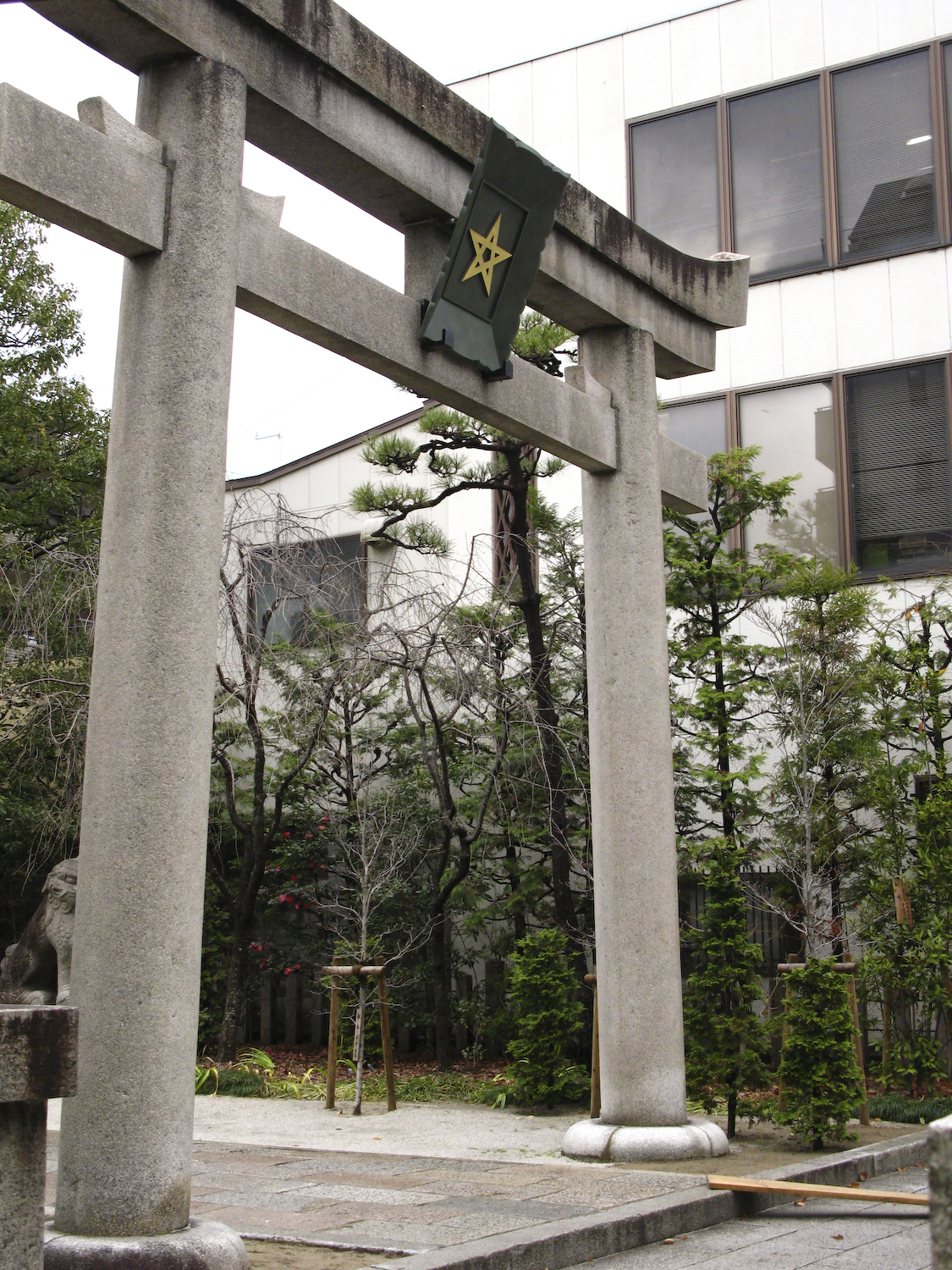
1. Pentagram Torii Gate (五芒星鳥居)
Why it matters: The five-pointed star (Seimei Kikyo) is Seimei’s signature symbol, used for protection against evil in onmyodo. You’ll recognize it from many Onmyoji adaptations.
Photo tip: Stand directly under the torii and shoot upward to capture the pentagram against the sky.
2. Shikigami Stone Statues (式神石像)
Why it matters: Shikigami are spirit servants controlled by onmyoji. According to legend, Seimei hid his shikigami under Ichijo Modori Bridge to avoid frightening his wife.
Photo tip: Best photos are taken from a low angle. The statues stand beside the recreated old Ichijo Modori Bridge in the grounds.
In media: Shikigami appear in many Onmyoji adaptations.
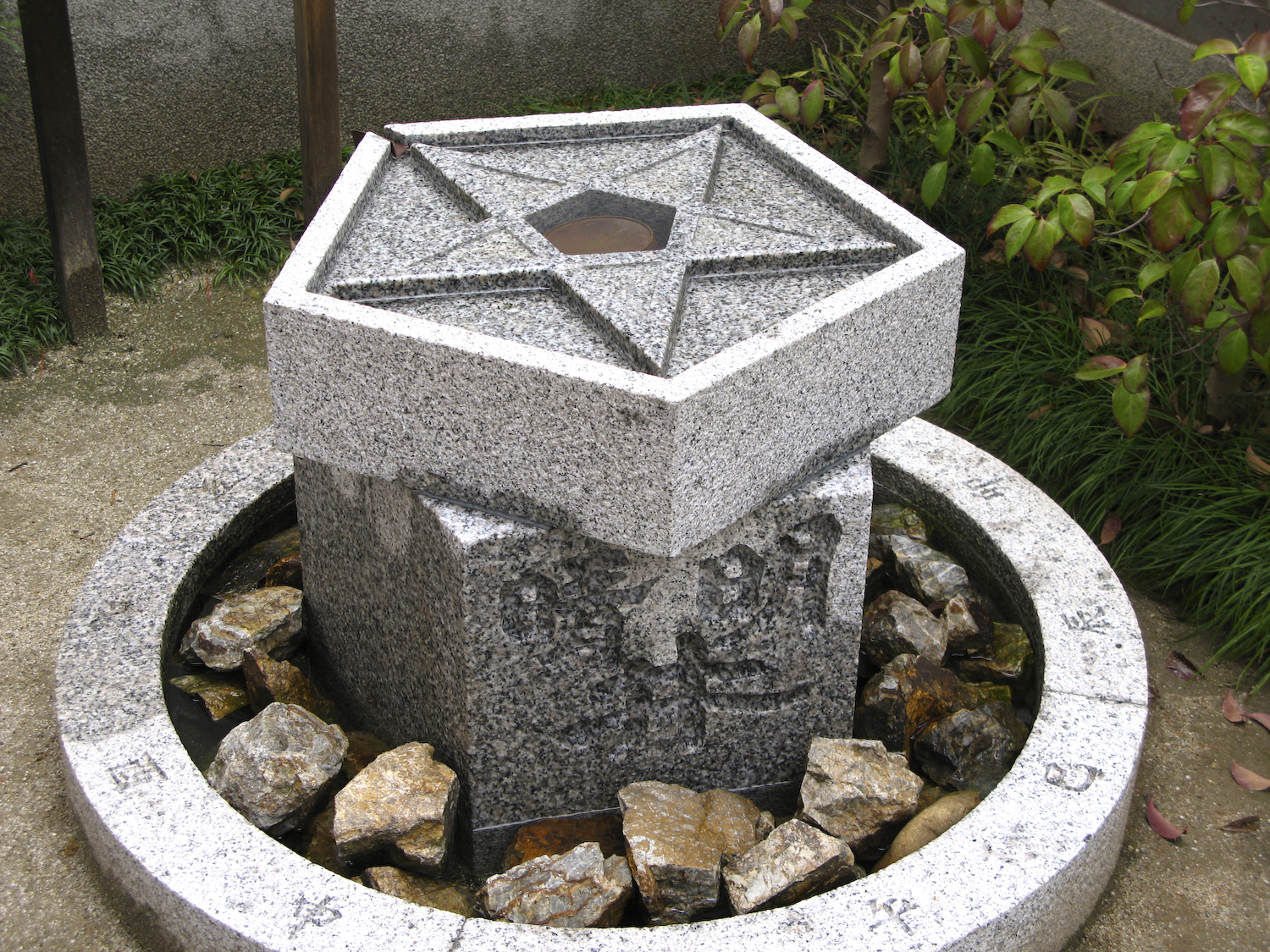
3. Seimei Well (晴明井)
Why it matters: Legend says Seimei created this well using his spiritual powers. The water was believed to cure illness.
Unique feature: The well’s water outlet direction changes every year at Risshun (start of spring) to face that year’s lucky direction (eho).
Photo tip: The star pattern carved into the well makes an excellent close-up shot.
4. Yakuyoke Peach Statue (厄除桃)
Why it matters: In Chinese and Japanese mythology, peaches ward off evil spirits. Rubbing this statue is said to remove misfortune.
What the shrine suggests: Stroke your misfortune onto the peach and leave feeling refreshed. Fans may like to think of their favorite Onmyoji character while doing so.
Photo tip: Shoot the star on the base from a low angle, and wait for other visitors to step out of the frame.
5. Sacred Camphor Tree (御神木)
Why it matters: The shrine’s sacred tree is a camphor tree estimated to be 300 years old. The shrine invites visitors to place both hands on the trunk and feel the tree’s strength.
Note: Be gentle with the tree.
Fan-Favorite Merchandise
Omamori (Amulets)
| Item | Price | Fan Appeal |
|---|---|---|
| Yakuyoke Mamori (for unlucky years) | ¥1,400 | Peach design |
| Mizukagami Mamori (concentration) | ¥1,700 | Inspired by the Seimei Well |
| Goshuin Book (gold-thread Seimei Kikyo) | ¥3,500 | The shrine’s seal is printed on the first page |
Prices are from the shrine’s official list (some were revised on 1 July 2026).
Goshuin (Shrine Stamp)
- Available at the amulet office, which closes at 4:30 PM; the fee is not listed on the official site, so check the notice at the office
- The shrine prohibits reselling goshuin and amulets
Other Goods
- The shrine’s Kikyo-an shop sells commemorative items and souvenirs, all officially approved by the shrine
- The shrine says it has no business ties with any company or organization, so items sold elsewhere as “blessed by Seimei Shrine” have nothing to do with it
- Seasonal amulets: the sakura amulet (spring), the kikyo (bellflower) amulet (June to September) and the momiji (maple) amulet (mid-November to mid-December)
Tip: Seasonal amulets are offered only for a limited time, and some end when stock runs out, so ask at the amulet office.
Related Pilgrimage Sites in Kyoto
Ichijo Modori Bridge (一条戻橋)
Distance: 100m south of the shrine
Legend: Seimei’s shikigami are said to have been sealed under this bridge because his wife feared them. The name means “return,” so wedding and funeral processions still avoid crossing it.
Current bridge: The bridge was rebuilt in 1995. Inside the shrine grounds, the railing posts of the old bridge have been moved to recreate it.
Kyoto Imperial Palace (京都御所)
Distance: 15-minute walk
Connection: Seimei served the imperial court as an onmyoji. The present palace buildings date from a much later era, so this is not the Heian court itself, but it is the closest imperial landmark to the shrine.
Tip: Free admission, no reservation needed. Closed Mondays (the next day if Monday is a holiday), over New Year and on event days.
Kitano Tenmangu Shrine (北野天満宮)
Distance: By city bus from Horikawa-Imadegawa (Routes 51, 102 or 203); there is no direct bus from the shrine’s own stop
Connection: Dedicated to Sugawara no Michizane (845–903), a Heian-period scholar and courtier who died shortly before Seimei was born, venerated as the god of learning.
Nijo Castle (二条城)
Distance: Direct city bus (Route 9) from the shrine’s own stop
Connection: A different era of Kyoto history (built centuries after Seimei), but reachable by direct bus and easy to add to your day.
Photo Guide for Fans
Photo Spots
- Under the Pentagram Torii – The iconic shot
- With Shikigami Statues – Low angle, dramatic lighting
- Seimei Well Close-up – Star pattern detail
- Yakuyoke Peach – A good close-up of the star on the base
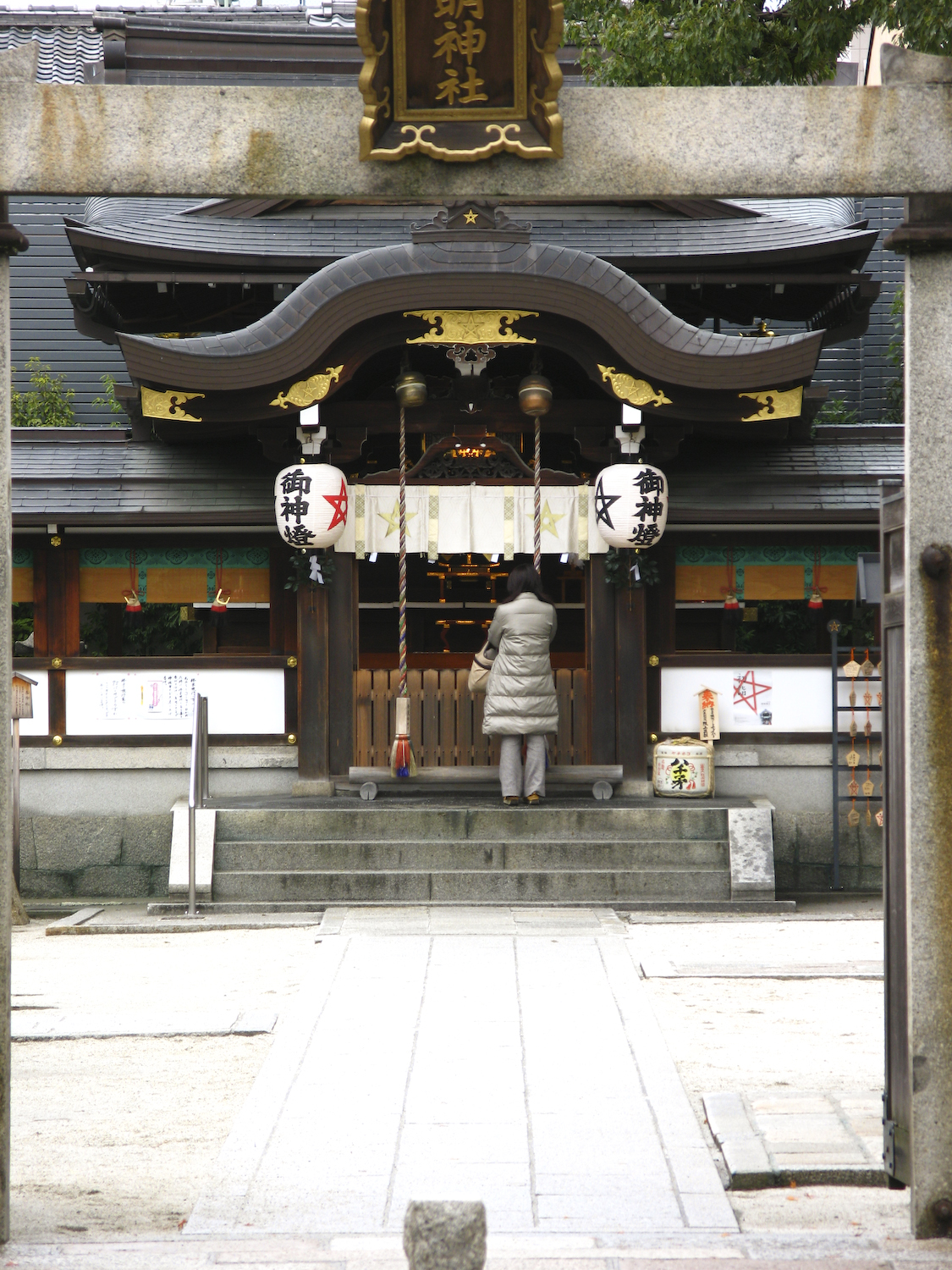
- The Approach to the Shrine – Establishing shot
Best Times for Photography
The grounds are open 9:00 AM to 5:00 PM and the amulet office closes at 4:30 PM, so plan your photo stops and purchases within those hours.
Photography Rules
- Prohibited without permission: commercial or paid photography, drone flights, and shooting for stock-photo sales (per the shrine’s rules)
- Also not allowed: behavior that disturbs other worshippers
- Tip: Keep other worshippers out of your frame and don’t block the path to the hall
Seimei Festival (晴明祭)
When: The autumn equinox day each year (23 September in 2026)
What happens:
- Eve festival at 7:00 PM the night before, with yudate kagura (a hot-water purification dance) and a lantern procession of about 100 local children
- Main ritual at 10:00 AM, which the shrine calls its most important of the year, with stalls in the grounds
- Mikoshi (portable shrine) procession in the afternoon, leaving at 1:00 PM and returning at 6:00 PM
For fans: This is the most atmospheric time to visit. The festival celebrates Seimei’s legacy with traditional rituals.
Sample Itinerary: Onmyoji Fan Day Trip
Half-Day Pilgrimage (4 hours)
| Time | Activity |
|---|---|
| 10:00 | Arrive at Seimei Shrine |
| 10:00-10:45 | Worship, photos at all 5 spots |
| 10:45-11:00 | Purchase merchandise |
| 11:00-11:15 | Walk to Ichijo Modori Bridge |
| 11:15-11:30 | Photos at the legendary bridge |
| 11:30-11:45 | Walk to Kyoto Imperial Palace (about 15 min) |
| 11:45-12:45 | Explore palace grounds |
| 13:00 | Lunch at nearby café |
Full-Day “Heian Kyoto” Course (7 hours)
| Time | Activity |
|---|---|
| 9:30 | Seimei Shrine (45 min) |
| 10:30 | Bus to Kitano Tenmangu (from Horikawa-Imadegawa) |
| 10:50 | Kitano Tenmangu worship (50 min) |
| 12:00 | Lunch in Kamishichiken geisha district |
| 13:30 | Kinkaku-ji Temple (1 hour) |
| 15:00 | Ryoan-ji Temple (45 min) |
| 16:30 | Return via Randen train |
Access Information
From Kyoto Station
By Bus (Recommended)
- Take City Bus Route 9 from Kyoto Station (check the departure board at the bus terminal for the stop)
- Get off at “Ichijo Modoribashi, Seimei Jinja-mae”
- Journey time: depends on traffic (the shrine’s website gives about 20 minutes only for a taxi from Kyoto Station)
- Fare: ¥230 (the standard city bus fare as of 2024; check on the day)
From Karasuma Line Subway
- Exit at Imadegawa Station
- Walk west along Imadegawa-dori, then south on Horikawa-dori, about 12 minutes
Address
806 Seimei-cho, Kamigyo-ku, Kyoto
Visiting Hours
- 9:00 AM – 5:00 PM (amulet office until 4:30 PM)
- Open year-round
Tips for International Fans
1. English support: The shrine’s website is offered in Chinese, but we found no English page, so a translation app helps.
2. Goshuin etiquette: Bow when receiving. It’s a religious item, not just a souvenir.
3. Proper behavior: This is an active shrine. Be respectful even while taking fan photos.
4. Combine visits: Kyoto has many temples and shrines. Make a full day of it.
5. Hours: The grounds close at 5:00 PM and the amulet office at 4:30 PM, so arrive with time to spare.
Related Guides
- Seimei Shrine Complete Guide – Full history, blessings, and practical info
- Kyoto Power Spots – Other spiritual sites in Kyoto
Information current as of October 2026 (hours, amulet and goshuin prices, annual events and photography rules were checked against the official website in October 2026). Please verify latest details on the official website before visiting.
This article is part of our Japan Power Spots series, helping international visitors explore Japan’s sacred places.