Quick Answer: How Hard Is the Hike?
| Factor | Details |
|---|---|
| Distance | 4 km round trip |
| Elevation gain | 233 meters (764 feet) |
| Total stairs | ~1,000+ steps |
| Time needed | 2-3 hours round trip |
| Difficulty | Moderate (lots of stairs) |
| Fitness required | Average – can walk 5km comfortably |
In simple terms: If you can climb 50 flights of stairs with breaks, you can do this hike.
Trail Overview
“`
START: Main Hall (0m elevation)
↓ 15 min
Senbon Torii → Okusha (50m)
↓ 20 min
Kumataka-sha Pond (100m)
↓ 15 min
Sannotsuji / Yotsuji Intersection (150m) ← REST STOP
↓ 20 min
Ni-no-mine (Second Peak, 200m)
↓ 10 min
SUMMIT: Ichi-no-mine (First Peak, 233m)
↓ Same route or loop back
START: Main Hall
“`
Note: “First Peak” (Ichi-no-mine) is the summit. “Second Peak” (Ni-no-mine) is lower. Japanese naming counts from the top.
Section-by-Section Guide
Section 1: Main Hall → Okusha
Distance: 500m | Time: 15-20 min | Difficulty: Easy
| What to expect | Details |
|---|---|
| Path type | Paved, flat to gentle slope |
| Highlights | Senbon Torii (Thousand Gates) |
| Crowds | Heavy until Okusha |
| Facilities | Restrooms at start, vending machines |
At Okusha: Try the Omokaru-ishi stones. This is where most tourists turn back.
Section 2: Okusha → Kumataka-sha
Distance: 600m | Time: 15-20 min | Difficulty: Easy-Moderate
| What to expect | Details |
|---|---|
| Path type | Stone steps, some steep sections |
| Highlights | Quieter, more torii gates |
| Crowds | Moderate (many turn back at Okusha) |
| Facilities | None |
At Kumataka-sha: A mystical pond shrine. Good rest spot and photo opportunity.
Section 3: Kumataka-sha → Yotsuji
Distance: 700m | Time: 15-20 min | Difficulty: Moderate
| What to expect | Details |
|---|---|
| Path type | Continuous stairs, some steep |
| Highlights | Views begin to open up |
| Crowds | Light |
| Facilities | TEAHOUSES at Yotsuji |
At Yotsuji: Major rest point with:
- Teahouses (udon, drinks, snacks)
- Benches with city views
- Restrooms nearby
- Decision point: summit or turn back
Section 4: Yotsuji → Summit
Distance: 800m | Time: 25-30 min | Difficulty: Moderate-Hard
| What to expect | Details |
|---|---|
| Path type | Steepest section, many stairs |
| Highlights | Ni-no-mine, Ichi-no-mine shrines |
| Crowds | Very light |
| Facilities | Small shrines, no shops |
At Summit (Ichi-no-mine): Small shrine, sense of accomplishment. Views partially blocked by trees.
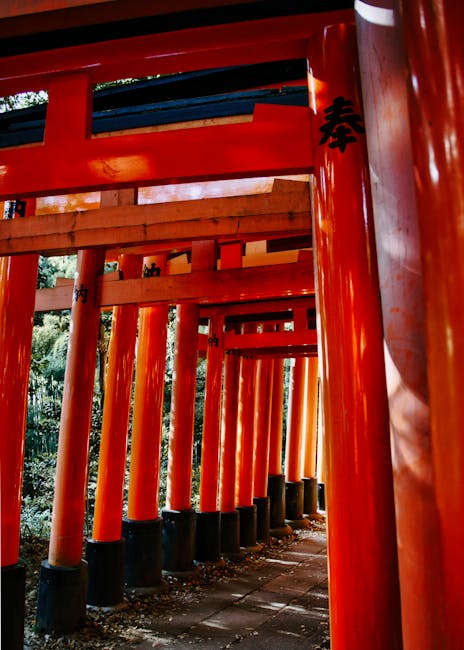
The iconic torii tunnel stretches endlessly up the mountainside, creating a breathtaking corridor of vermillion gates
Facilities Map
Restroom Locations
| Location | Type | Notes |
|---|---|---|
| Main hall area | Modern, clean | Before starting hike |
| Near Yotsuji | Basic | Only mountain restroom |
Important: There are only 2 restroom areas on the entire trail. Use the one at the start!
Vending Machine Locations
| Location | Available |
|---|---|
| Main hall area | Yes – many |
| Near Okusha | Yes |
| Yotsuji | Yes (limited) |
| Beyond Yotsuji | None |
Food & Rest Stops
| Location | What’s Available | Price Range |
|---|---|---|
| Yotsuji teahouses | Udon, mochi, drinks, snacks | ¥300-800 |
| Sannotsuji area | Small snack shop | ¥200-500 |
Pro tip: The teahouse at Yotsuji with the best view is on your right when ascending. Udon (¥500) and amazake (sweet sake, ¥300) are popular.
Route Options
Option A: Okusha & Back (Easy)
Time: 45-60 min | For: Casual visitors, limited time
“`
Main Hall → Senbon Torii → Okusha → Return
“`
- See the famous gates
- Try Omokaru-ishi stones
- Avoid all steep climbing
Option B: Yotsuji & Back (Recommended)
Time: 90-120 min | For: Most visitors
“`
Main Hall → Okusha → Yotsuji → Return same way
“`
- Best views at Yotsuji
- Teahouse rest stop
- Skip the steepest section
- Best effort-to-reward ratio
Option C: Full Summit (Complete Experience)
Time: 2-3 hours | For: Fit hikers, completionists
“`
Main Hall → Okusha → Yotsuji → Summit → Return
“`
- Full pilgrimage experience
- Sense of accomplishment
- Visit all mountain shrines
Option D: Loop Route (Advanced)
Time: 2.5-3 hours | For: Those wanting variety
“`
Main Hall → Okusha → Yotsuji → Summit →
→ Descend via western path → Return to main area
“`
- Different scenery on descent
- Less crowded western path
- Slightly longer
What to Bring
Essential
| Item | Why |
|---|---|
| Water (500ml minimum) | Limited vending machines up top |
| Comfortable shoes | 1,000+ stairs – sneakers minimum |
| Small towel | You will sweat |
| Cash | Teahouses are cash only |
Recommended
| Item | Why |
|---|---|
| Light snack | Energy for the climb |
| Rain jacket | Weather changes fast |
| Small backpack | Keep hands free for stairs |
| Hiking poles | Optional, helpful for knees |
Seasonal Extras
| Season | Bring |
|---|---|
| Summer | Hat, sunscreen, extra water, cooling towel |
| Winter | Warm layers, gloves |
| Rainy season | Umbrella, waterproof bag |
Difficulty Comparison
How does Fushimi Inari compare to other hikes?
| Hike | Difficulty | Comparison |
|---|---|---|
| Fushimi Inari summit | Moderate | Lots of stairs, well-maintained |
| Kiyomizu-dera walk | Easy | Much shorter, mostly flat |
| Arashiyama bamboo | Easy | Flat, no climbing |
| Mt. Takao (Tokyo) | Moderate | Similar difficulty, longer |
| Mt. Fuji | Very Hard | Not comparable |
Fushimi Inari is: Harder than temple visits, easier than real mountain hikes.
Tips for Different Fitness Levels
For Beginners / Less Fit
1. Start early – cooler, less crowded
2. Pace yourself – no rush, take breaks every 10-15 min
3. Target Yotsuji – turn back there (best views anyway)
4. Bring extra water – dehydration makes it harder
5. Use the teahouse – rest, refuel, then decide if continuing
For Families with Kids
| Age | Recommendation |
|---|---|
| Under 5 | Okusha max (carry if needed) |
| 5-10 | Yotsuji possible with encouragement |
| 10+ | Summit possible if active |
Tip: Make it a game – count the fox statues or torii gates!
For Seniors / Knee Problems
1. Consider Yotsuji only – steepest section is after
2. Bring hiking poles – reduce knee strain
3. Descend carefully – downhill is harder on knees
4. Take the gentler western descent if knees are sore
Best Times to Hike
| Time | Pros | Cons |
|---|---|---|
| 6:00-8:00 AM | Cooler, calmer than later in the day, beautiful light | Very early wake-up |
| 8:00-10:00 AM | Good light, moderate crowds | Starting to warm up |
| 10:00 AM-3:00 PM | Teahouses fully open | Hot, crowded, tiring |
| 3:00-5:00 PM | Cooling down, thinning crowds | Less time before dark |
| 5:00-7:00 PM | Cooler, late light | Start down before dark — the mountain paths have few lights |
Best: Early morning (6-8 AM), or late afternoon if you’ll be back down before dark
Frequently Asked Questions
Q: Can I do the hike in flip-flops/sandals?
Strongly not recommended. The 1,000+ stairs are uneven stone. You need closed-toe shoes with grip.
Q: Is there shade on the trail?
Yes, most of the trail is forested. But still bring sun protection for open sections.
Q: Can I turn back anytime?
Yes! It’s a simple out-and-back trail. Turn around whenever you want.
Q: How do I know if I’m going the right way?
Follow the torii gates. They guide you the entire way. Signs at major intersections.
Q: Is it safe to hike alone?
Yes, during daytime. Paths are well-marked and you’ll see other hikers. Not recommended at night.
Q: Are there animals on the mountain?
You may see cats (many live at the shrine), occasionally wild boar signs (very rare encounters).
Related Guides
- Fushimi Inari Complete Guide – Full shrine information
- Fushimi Inari from Osaka – Day trip planning
- Fushimi Inari Photography Guide – Best spots & times
- Fushimi Inari Night Visit Guide – After-dark experience
Last updated: September 2026 (crowd and daylight notes; other details as of January 2026)
Trail conditions may vary by season. After heavy rain, some sections may be slippery. The shrine is open 24 hours but hiking after dark is not recommended.