Quick Answer: Is It Safe to Visit at Night?
Yes, but with limits.
| Area | Safe at Night? | Lighting |
|---|---|---|
| Main grounds to Senbon Torii | Yes | Well-lit |
| Senbon Torii to Okusha | Yes | Partially lit |
| Beyond Okusha (mountain) | Not recommended | Dark, steep |
Key rule: Stay in the lower areas. Don’t go beyond the Okusha worship hall after dark — the mountain paths have few lights, and you may meet wild animals such as wild boars.
What to Expect at Night
Lighting Situation
The light you see at night comes from:
- Permanent lanterns along paths
- Security lighting near main buildings
- Ambient light from the city below
| Area | Lighting Level |
|---|---|
| Main hall area | Bright |
| Romon Gate | Bright |
| Senbon Torii entrance | Moderate |
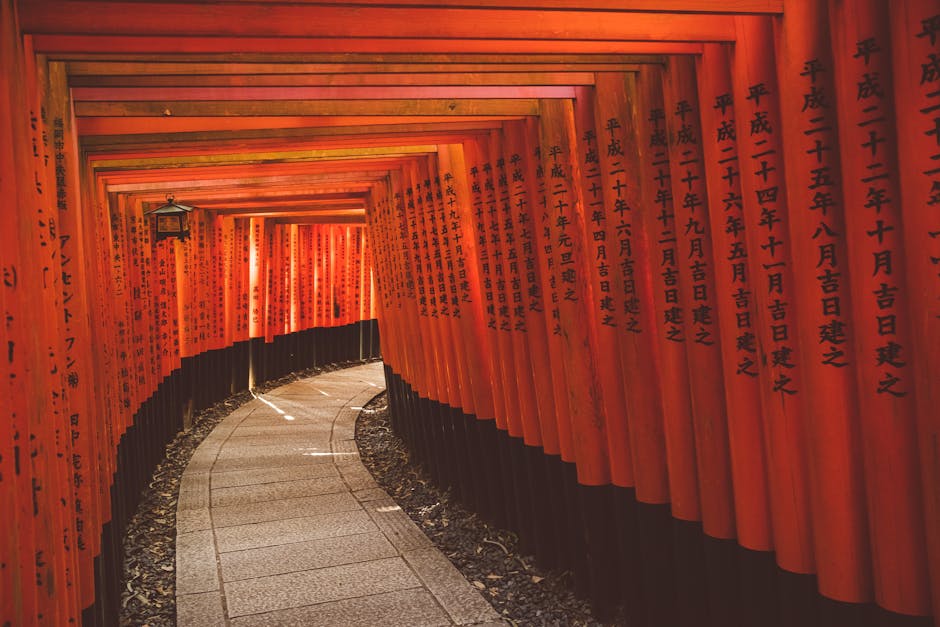
| Inside Senbon Torii tunnel | Dim to moderate |
| Okusha area | Dim |
| Mountain paths | Very dark to none |
Atmosphere
Night visits offer something completely different from daytime:
- Mysterious, almost eerie ambiance
- Not necessarily empty – the Senbon Torii can still be busy with visitors after dark
- Sounds amplified – rustling leaves, distant city
- Temperature drop – noticeably cooler
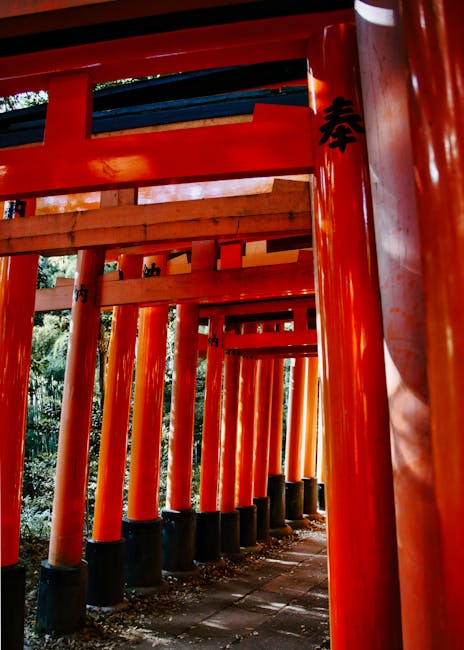
At night, the torii tunnel transforms into a mystical corridor where shadows dance between the vermillion gates
Best Times for Night Visits
| Time | Experience | Recommended For |
|---|---|---|
| 6:00-8:00 PM | Transition hour | First-timers, couples |
| 8:00-10:00 PM | Full darkness; the lanterns stand out | Photographers |
| 10:00 PM-12:00 AM | Late; check your last train | Visitors staying nearby |
Recommended: 8:00-10:00 PM
Why this window:
- Dark enough for night atmosphere
- Some other visitors (safety in numbers)
- Last trains haven’t left yet
Safety Information
Safe Zones at Night
SAFE (maintained paths; lanterns, but dim inside the Senbon Torii tunnels and at Okusha):
├── JR Inari Station
├── Romon Gate
├── Main Hall
├── Senbon Torii (both tunnels)
└── Okusha worship hall

NOT RECOMMENDED (dark, steep, isolated):
├── Paths beyond Okusha
├── Mountain paths to Yotsuji
├── Summit trail
└── Any path without lighting
General Safety Tips
1. Go with someone – solo night visits can feel unsettling
2. Tell someone your plans – share your location
3. Stick to lit paths – don’t explore unknown routes
4. Trust your instincts – if it feels wrong, turn back
5. Keep phone charged – for flashlight and emergency
Emergency Information
| Need | Contact |
|---|---|
| Police | 110 |
| Ambulance | 119 |
| Nearest koban (police box) | In front of JR Inari Station |
| Shrine office | 075-641-7331 (daytime only) |
Cell signal: Works throughout lower areas. May be weak on mountain.
What to Bring
Essential
| Item | Why |
|---|---|
| Flashlight/headlamp | Path visibility, safety |
| Fully charged phone | Backup light, maps, emergency |
| Cash | Vending machines, late-night taxis |
| Comfortable shoes | Uneven paths, stairs |
Recommended
| Item | Why |
|---|---|
| Warm layer | Temperature drops at night |
| Small bag | Keep hands free |
| Portable charger | Extended phone use |
| Water | Vending machines may be far |
For Photographers
| Item | Why |
|---|---|
| Tripod | Long exposure shots |
| Fast lens (f/1.8-2.8) | Low light performance |
| Remote shutter | Reduce camera shake |
Night Visit Walking Route
90-Minute Night Route (Recommended)
| Time | Location | What to See |
|---|---|---|
| 0:00 | JR Inari Station | Begin journey |
| 0:05 | Romon Gate | Illuminated entrance |
| 0:10 | Main Hall | Night prayer (optional) |
| 0:15 | Senbon Torii entrance | Highlight – gates with lantern glow |
| 0:30 | Inside the tunnel | Walk slowly, absorb atmosphere |
| 0:45 | The Fork | Two tunnels diverging |
| 0:55 | Okusha | Fox statues, Omokaru-ishi stones |
| 1:05 | Turn back point | Don’t go further at night |
| 1:20 | Return through Senbon Torii | Different perspective |
| 1:30 | Exit via shopping street | Most shops closed, but atmospheric |
Going Beyond Okusha at Night?
We don’t recommend it: the mountain paths have few lights, and you may meet wild animals such as wild boars. At night, stay around the main hall and the Senbon Torii, and save Kumataka-sha and the Yotsuji view of Kyoto for a daytime visit.
Night Photography Tips
Camera Settings
| Setting | Recommendation |
|---|---|
| Mode | Manual |
| ISO | 1600-6400 (as needed) |
| Aperture | f/2.8-4 |
| Shutter | 1/30 sec or faster handheld; slower only on a tripod in open spots |
| White Balance | Tungsten (3200K) or Auto |
Best Night Shots
1. Senbon Torii with lanterns – handheld at a high ISO (no tripod inside the tunnels; see below)
2. Silhouettes in gates – backlit by distant light
3. Fox statues – by lantern light; step aside so you don’t block the path
Tripod Spots
The shrine prohibits blocking other worshippers by taking photos on narrow paths, so don’t set up a tripod inside the Senbon Torii tunnels or at their entrance. Use one only in open spots where no one needs to pass.
| Location | Why Good |
|---|---|
| Main hall area | Wide shots, no obstacles |
Practical Information
Getting There at Night
Last trains TO Inari (weekdays, checked September 2026):
- From Kyoto: ~11:45 PM
- From Osaka: ~11:00 PM (via Kyoto transfer)
Last trains FROM Inari (weekdays, checked September 2026):
- To Kyoto: ~12:04 AM
- To Osaka: ~11:34 PM (change at Kyoto)
After last train (taxi fares are 20% higher from 10 PM to 5 AM; this estimate includes that):
- Taxi to Kyoto Station: ~¥1,500-2,000
Food & Facilities
| Need | Availability at Night |
|---|---|
| Restrooms | Available 24/7 near main hall |
| Vending machines | Yes, multiple locations |
| Restaurants | Most close by 7-8 PM |
| Convenience stores | 7-Eleven near station (24h) |
Weather Considerations
| Weather | Night Visit? |
|---|---|
| Clear | Best conditions |
| Cloudy | Good – moody atmosphere |
| Light rain | Possible – bring umbrella |
| Heavy rain | Skip – paths become slippery |
| Fog | Excellent – mysterious photos |
Who Should (and Shouldn’t) Visit at Night
Great For:
- Photographers after lantern-lit shots
- Couples seeking romantic atmosphere
- Repeat visitors who’ve seen it by day
- Those seeking spiritual/meditative experience
Not Recommended For:
- First-time Japan visitors (see it by day first)
- Families with young children
- Those uncomfortable in dark/quiet places
- Solo female travelers (unless comfortable)
- Anyone without proper footwear
Frequently Asked Questions
Q: Is Fushimi Inari scary at night?
It can feel eerie, especially alone. The foxes, shadows, and silence create an atmosphere some find unsettling. Go with someone if you’re nervous.
Q: Are there other people at night?
Don’t count on having the paths to yourself — the Senbon Torii can still be busy with visitors after dark.
Q: Do I need a flashlight even in lit areas?
Yes. Even “lit” areas have dark spots. A small flashlight helps with stairs and uneven paths.
Q: Can I do the full mountain climb at night?
No. The shrine is open 24 hours, but don’t climb the mountain at night, alone or in a group. The paths are steep, dark, and isolated. Risk of falls or getting lost.
Q: Best night to visit?
Any night works. Festivals and special events can bring more people, so check the shrine’s website for events before you go.
Related Guides
- Fushimi Inari Complete Guide – Full shrine information
- Fushimi Inari from Osaka – Day trip planning
- Fushimi Inari Photography Guide – Best spots & times
- Fushimi Inari Hiking Guide – Mountain trail details
Last updated: September 2026 (night-safety, tripod and crowd notes; last trains and the taxi fare to Kyoto Station checked September 2026; other details as of January 2026)
Train schedules may vary. Confirm last train times on JR West website or Google Maps before your visit.