Usa Jingu in Oita Prefecture is the head shrine of approximately 44,000 Hachiman shrines throughout Japan. Founded in 725 CE, it holds nearly 1,300 years of history and ranks as the second most important imperial ancestral shrine after Ise Jingu. The shrine welcomes approximately 1.5 million worshippers annually.
What makes Usa Jingu immediately distinctive: worship here follows a “two bows, four claps, one bow” ritual instead of the standard two claps. The National Treasure main halls are built in the oldest surviving example of “Hachiman-zukuri” architecture. And visiting only the Upper Shrine is traditionally considered “half a visit”—you need both the Upper and Lower Shrines for a complete pilgrimage.
The three principal deities—Hachiman Okami (Emperor Ojin), Himeokami, and Empress Jingu—provide blessings spanning victory, matchmaking, safe childbirth, and protection from misfortune.
Why Usa Jingu Matters: The Origin of Hachiman Worship
From Regional Deity to National Protector
Hachiman Okami first appeared in the land of Usa in 571 CE. When the Great Buddha at Todai-ji Temple was under construction in the Nara period, a divine oracle from Usa declared support for the project—elevating Hachiman from a regional deity to a national protector. In 749 CE, Hachiman was enshrined at Todai-ji, marking the beginning of nationwide Hachiman worship.
The “Usa Hachiman Oracle Incident” during the Heian period drew the shrine into imperial political struggles, placing it at turning points of Japanese history. From the Kamakura period onward, warrior clans led by Minamoto no Yoritomo revered Hachiman as the god of military fortune, spreading worship to every corner of Japan.
Today, Hachiman shrines are the second most numerous shrine lineage in Japan after Inari shrines—and Usa Jingu is where it all began.
National Treasure Architecture: Hachiman-zukuri
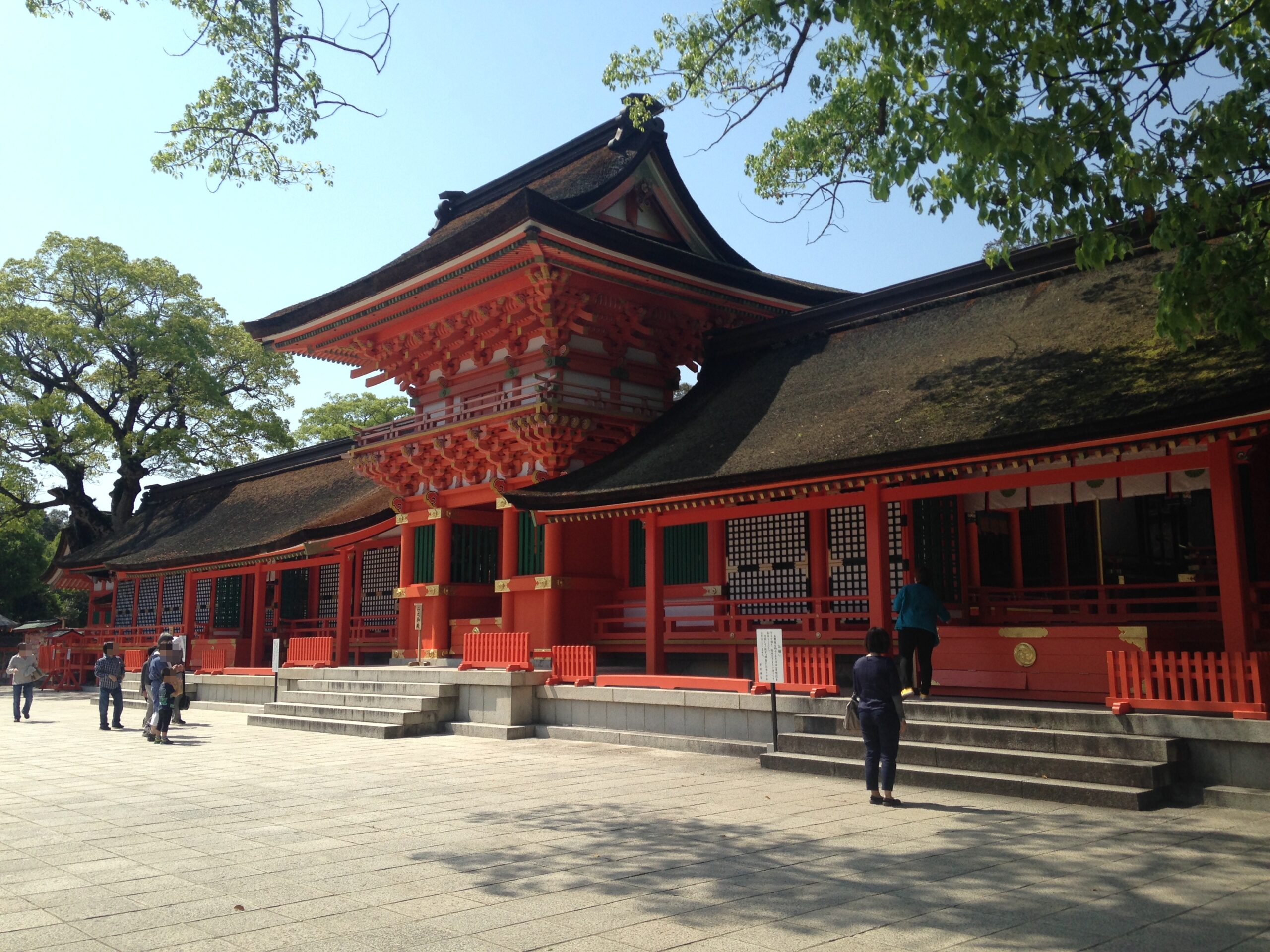
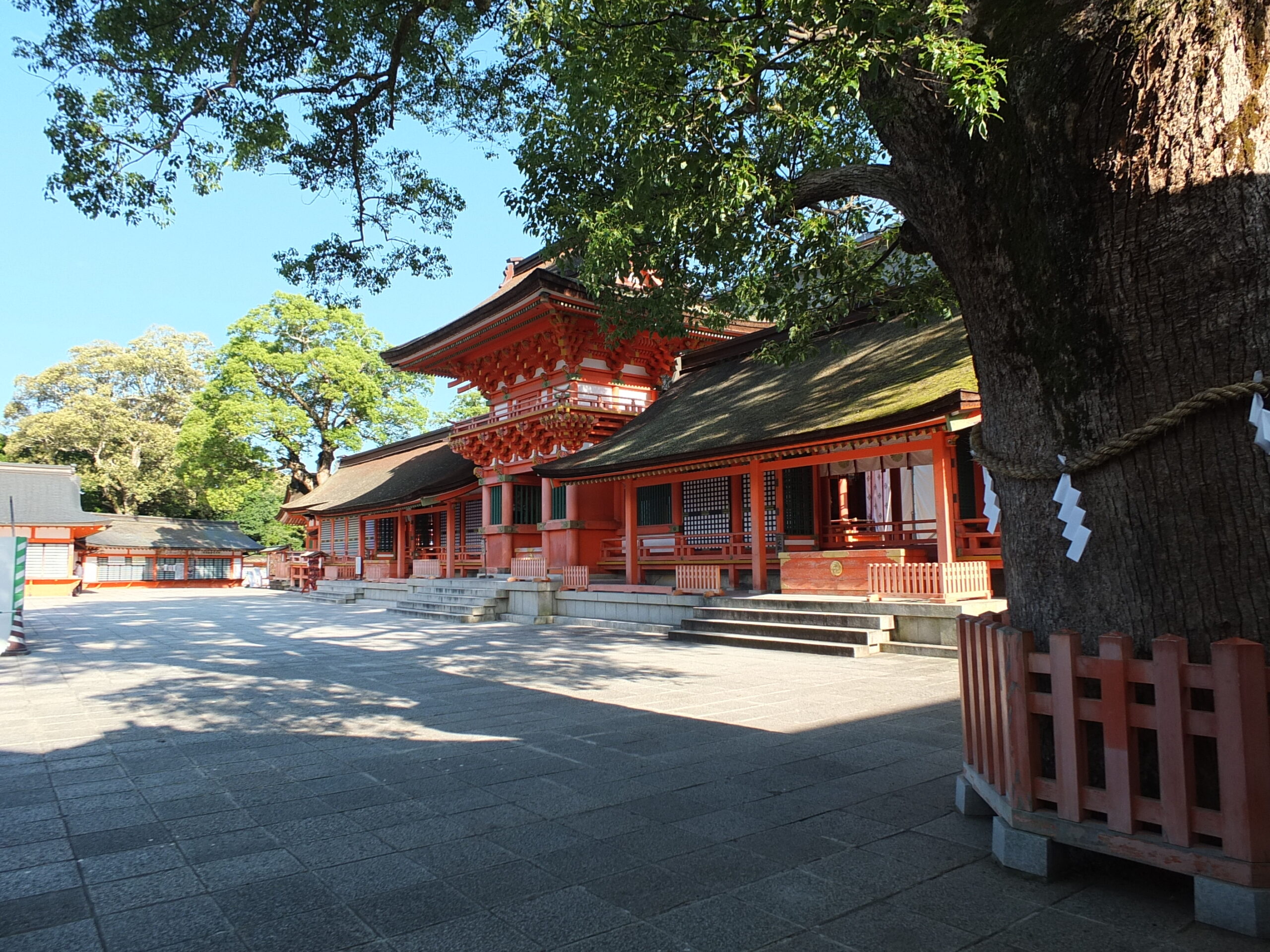
The main halls are built in the distinctive “Hachiman-zukuri” style—connecting front and rear halls with an “ai-no-ma” (connecting room). This is the oldest and largest surviving example of this architectural style, designated a National Treasure. The vermillion pillars, white walls, and cypress bark roofs create an immediately recognizable appearance.
Three halls stand in a row: Ichi-no-Goden (Hachiman Okami), Ni-no-Goden (Himeokami), and San-no-Goden (Empress Jingu). Himeokami in the second hall is considered the original tutelary deity of Usa—a mysterious figure whose true identity remains debated among scholars.
Spiritual Benefits
Victory and Career Success
Hachiman Okami, as the god of military fortune, offers blessings for competitive endeavors—examinations, sports, business negotiations, and career advancement.
Matchmaking and Safe Childbirth
Himeokami and Empress Jingu serve as guardian deities for women. The “Meoto Ishi” (Husband and Wife Stones) within the grounds is particularly popular for those seeking romantic connections or marital harmony.
The Negake Jizo: One Wish Per Lifetime
Within the grounds stands the “Negake Jizo” (Wish-Making Jizo), said to grant one sincere wish per lifetime. This is one of Usa Jingu’s most popular features—visitors recommend making your wish specific and heartfelt.
What Visitors Commonly Experience
Many visitors to Usa Jingu report a sense of gravity and solemnity that distinguishes it from smaller shrines. The scale of the grounds, the ancient camphor trees (approximately 150, including one estimated at 800 years old), and the weight of 1,300 years of history create an atmosphere that visitors frequently describe as “overwhelming” and “deeply calming.”
The area before the main hall of the Upper Shrine is considered where spiritual energy is most concentrated. The four-clap worship ritual, shared only with Izumo Taisha, adds to the sense of visiting somewhere truly special.
(Based on visitor reviews from Google Maps and TripAdvisor)
How to Worship at Usa Jingu (The Correct Way)
The Four-Clap Ritual
Usa Jingu’s worship etiquette differs from most Japanese shrines:
1. Approach: Bow before passing through the torii gate. Walk along the sides of the approach (the center is for the deity).
2. Temizuya (Purification Fountain): Rinse left hand, right hand, mouth (from cupped left palm), then tilt ladle to rinse handle.
3. At the Main Hall: Quietly place your offering, then perform two bows, four claps, one bow (nihai-shihakushu-ichihai). The four claps distinguish Usa Jingu from the standard two-clap ritual and reflect the shrine’s elevated status.
The standard “two bows, two claps, one bow” is also accepted if you forget, but following the four-clap tradition is recommended.
Upper Shrine and Lower Shrine: Visit Both
Usa Jingu has two worship areas:
- Upper Shrine (Jogu): The main worship area with the National Treasure halls
- Lower Shrine (Gegu): Enshrines the same three deities in a quieter setting
The traditional saying goes: “To visit only the Upper Shrine is but half a visit.” The Lower Shrine offers a distinctly different atmosphere—quieter and more intimate—and many visitors say they preferred it.
Recommended Route (90 minutes)
| Stop | Time | Highlights |
|——|——|————|
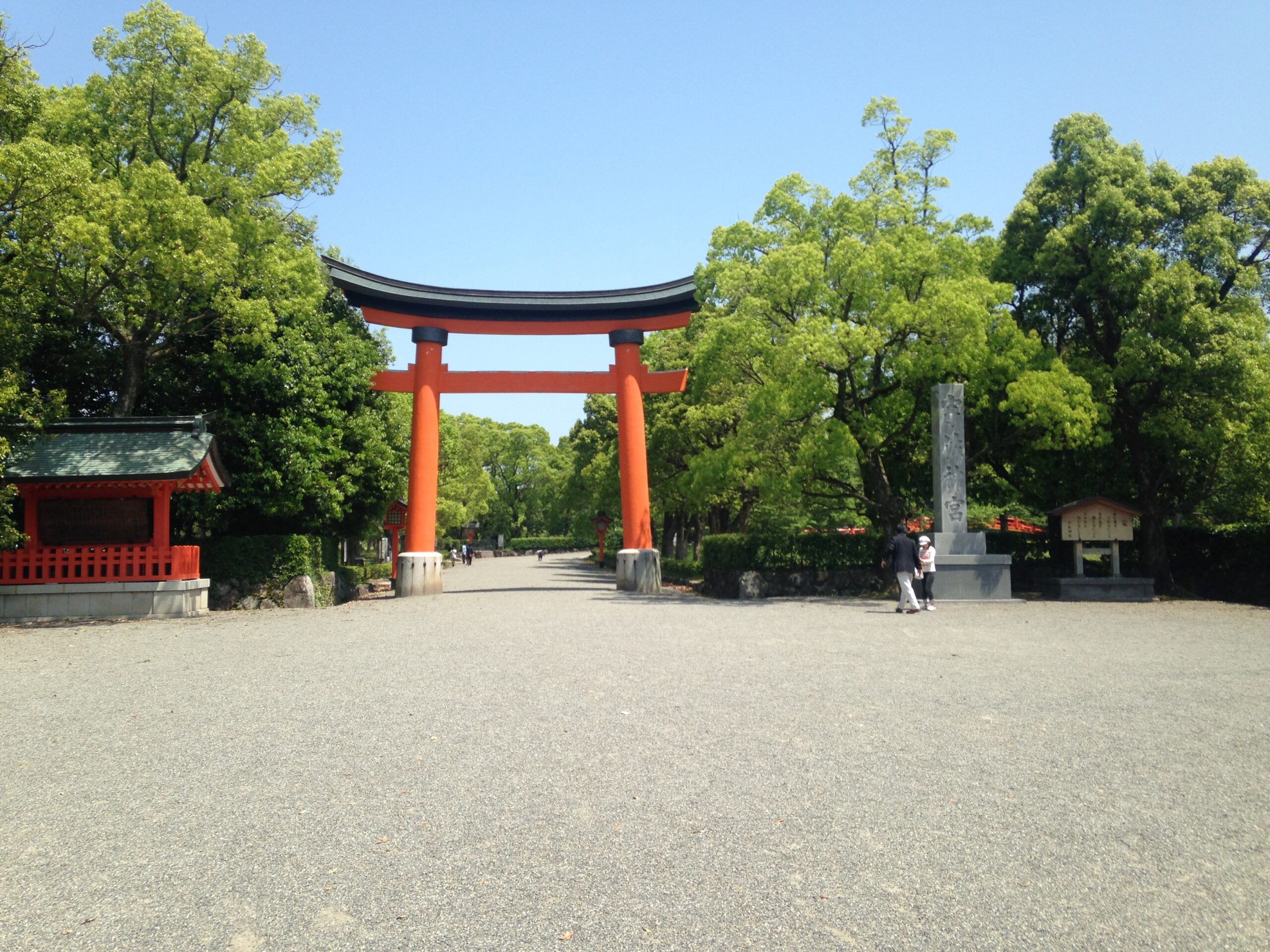
| Main Approach & Great Torii | 5 min | Begin at the vermillion torii |
| Sacred Bridge & Temizuya | 5 min | Purification |
| Nishi-Daimon Gate | 5 min | National Treasure tower gate |
| Upper Shrine Main Halls | 15 min | Worship at First, Second, Third Halls (four claps) |
| Negake Jizo | 10 min | Make your once-in-a-lifetime wish |
| Wakamiya Shrine | 5 min | Important auxiliary shrine |
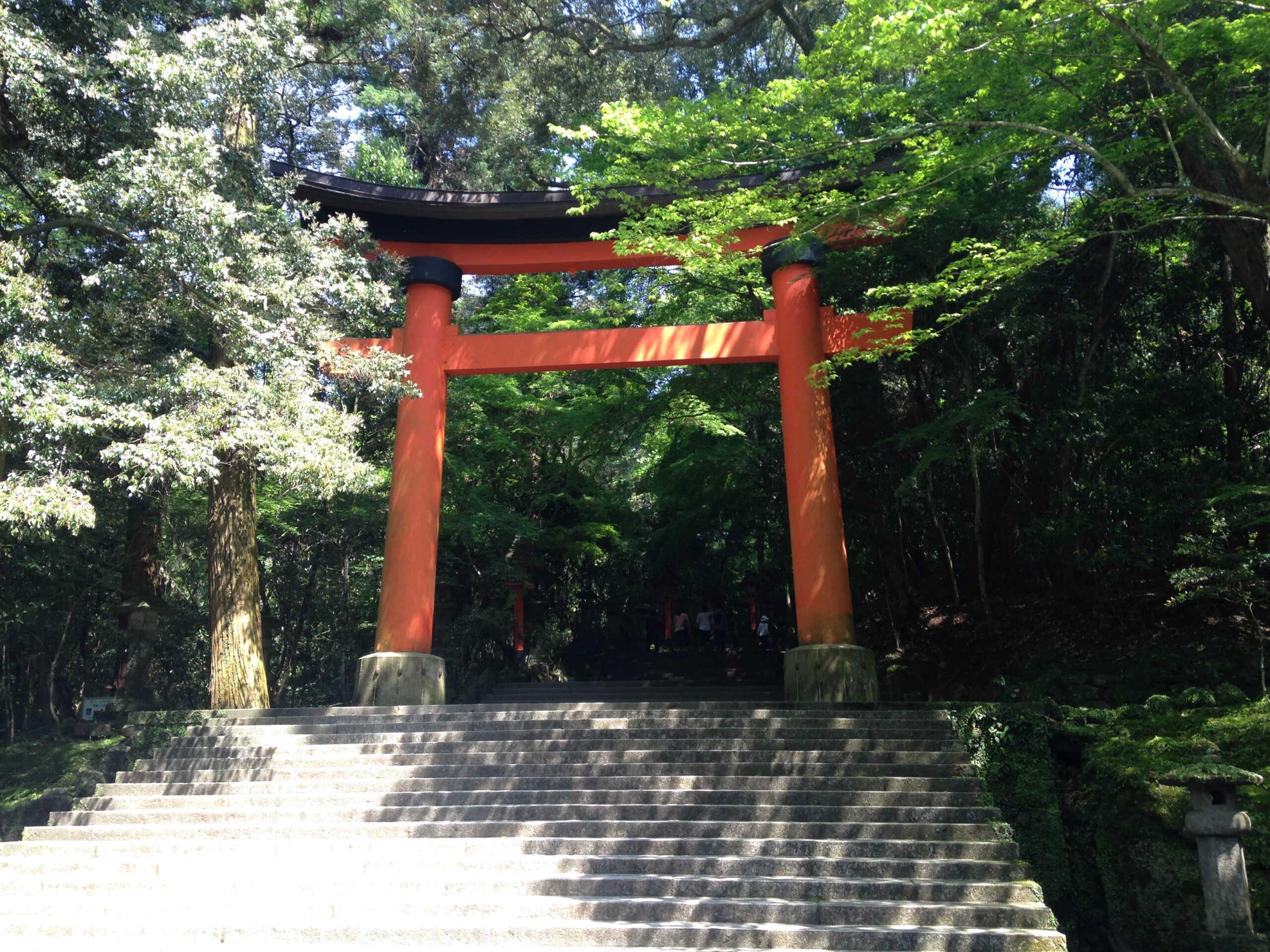
| Walk to Lower Shrine | 10 min | Verdant approach through the forest |
| Lower Shrine Main Halls | 10 min | Complete your pilgrimage |
| Meoto Ishi (Husband & Wife Stones) | 5 min | Matchmaking power spot |
| Amulet Office | 10 min | Goshuin and charms |
Quick visit (60 minutes): Skip Wakamiya Shrine and reduce time at the amulet office.
Deep visit (2+ hours): Add the Treasure Hall (30 min, JPY300) and Oyama-Sando forest path.
Goshuin and Amulets
Goshuin (Shrine Seal): JPY500 each. Separate seals are available for the Upper Shrine and Lower Shrine. Hours: 9:00 AM–4:00 PM.
Popular Amulets:
- Victory Charm (JPY800): For all competitive situations
- Matchmaking Charm (JPY800): For romantic connections
- Hachiman Charm (JPY1,000): Comprehensive protection
- Safe Childbirth Charm (JPY800): Blessings of Empress Jingu
Best Times to Visit
By Season
Spring (March–May): Best overall season. Approximately 500 cherry trees bloom in early April, creating stunning contrast with the vermillion architecture. Comfortable temperatures (15–22C / 59–72F). Early mornings are quieter.
Autumn (September–November): Equally recommended. Autumn foliage from October to November around the Upper Shrine is spectacular. The Chushu-sai festival in October features traditional kagura performances. Temperatures 15–20C / 59–68F.
Summer (June–August): Hot (above 30C / 86F), but the 150+ camphor trees provide generous shade. The Nagoshi-sai festival (late July–early August) features the chi-no-wa kuguri purification ring.
Winter (December–February): Fewest visitors—ideal for peaceful worship. Temperatures 5–12C (41–54F), warm clothing needed. Avoid the first three days of January (approximately 400,000 visitors). Mid-January onward is quiet.
Best Times of Day
- 6:00–8:00 AM: Fewest visitors. The shrine buildings in morning mist are exceptional.
- 9:00–11:00 AM: Amulet office open. Still relatively quiet.
- 4:00–5:00 PM: Western light makes the vermillion buildings glow golden—best for photography.
Practical Information for Different Visitors
Photography
Photography is permitted throughout the grounds. Best spots: the first torii with stone marker, the Chokushimon Gate, and the Upper Shrine halls. The late afternoon golden light on the vermillion buildings produces the best results. Tripods are generally fine on the approach but should be avoided in crowded worship areas.
Wheelchair and Stroller Access
The main approach from the parking lot to the Upper Shrine is paved and mostly flat. However, the path between Upper and Lower Shrines includes some uneven sections and gentle slopes. The Upper Shrine worship area is accessible. Contact the shrine office (0978-37-0001) in advance for assistance.
Visiting with Pets
Pets are not permitted in the main shrine precincts. The surrounding parkland and approach before the first torii are pet-friendly. There are no pet-sitting facilities nearby, so plan accordingly if traveling with animals.
Rainy Days
The grounds are beautiful in rain, with the vermillion buildings reflecting on wet surfaces. The camphor canopy provides some natural shelter. Bring non-slip shoes, as stone paths become slippery. The Treasure Hall offers an indoor option (30 min, JPY300).
Access and Getting There
Address: 2859 Minami-Usa, Usa City, Oita Prefecture
By Train + Bus
- From JR Nippo Main Line Usa Station: Bus approximately 10 minutes, get off at “Usa Hachiman” (runs several times per hour)
- From JR Nippo Main Line Yanagigaura Station: Taxi approximately 10 minutes
By Car
- 15 minutes from Usa IC (Higashi-Kyushu Expressway)
- 50 minutes from Beppu City
- 60 minutes from Oita City
- Parking: JPY400 for standard vehicles, approximately 800 spaces
From Major Cities
| Origin | Route | Time | Cost (approx.) |
|——–|——-|——|—————–|
| Fukuoka | Shinkansen to Kokura + JR Nippo Line to Usa | ~2.5 hours | JPY5,500 |
| Beppu | JR Nippo Line to Usa + Bus | ~1 hour | JPY1,200 |
| Oita City | JR Nippo Line to Usa + Bus | ~1.5 hours | JPY1,800 |
Visiting Details
| Item | Details |
|——|———|
| Hours | 6:00 AM–9:00 PM (Apr–Sep) / 6:00 AM–7:00 PM (Oct–Mar) |
| Amulet Office | 9:00 AM–4:00 PM |
| Closed | Open year-round |
| Admission | Free (Treasure Hall: JPY300 adults) |
| Visit Duration | 60–90 minutes (recommended) |
| Phone | 0978-37-0001 |
| Website | https://www.usajinguu.com/ |
Where to Eat: Usa Karaage
Usa City is the birthplace of Japanese karaage (fried chicken). After worship, the Nakamise street near the shrine offers excellent options:
Karaage Taiko (Nakamise area)
- One of the original Usa karaage shops
- Boneless karaage: JPY280/100g
- Hours: 10:00 AM–6:00 PM, closed Tuesdays
Karaage Murakami (Nakamise area)
- Known for their secret sauce
- Chicken wing karaage: 5 pieces JPY500
- Hours: 10:00 AM–5:00 PM, closed Wednesdays
Sabo Miya-no-Mori (within shrine grounds)
- Rest spot for tea and sweets
- Matcha Set JPY600, Dango JPY400
- Hours: 9:00 AM–4:30 PM, open daily
Model Itineraries
Half-Day (4 hours)
9:00 AM – Arrive at Usa Jingu, begin worship at Upper Shrine
10:00 AM – Negake Jizo + Lower Shrine
11:00 AM – Usa karaage lunch on Nakamise Street
12:00 PM – Souvenir shopping, depart by 1:00 PM
Full Day with Area Exploration (8 hours)
9:00 AM – Usa Jingu worship (Upper + Lower Shrine)
11:00 AM – Lunch on Nakamise Street
12:30 PM – Drive to Showa-no-Machi (20 min)—a retro 1950s shopping district with bonnet buses
3:00 PM – Drive to Fuki-ji Temple on Kunisaki Peninsula (40 min)—one of Japan’s oldest wooden structures
5:00 PM – Depart
Frequently Asked Questions
How long does a visit to Usa Jingu take?
Plan 60–90 minutes for a standard visit covering both Upper and Lower Shrines. Add 30 minutes for the Treasure Hall. A relaxed visit with lunch on Nakamise Street takes about 3 hours total.
Why do you clap four times instead of two?
The “two bows, four claps, one bow” ritual reflects Usa Jingu’s elevated status as the head of all Hachiman shrines. Only Usa Jingu and Izumo Taisha maintain this tradition. The standard two-clap version is also accepted.
Do I need to visit both the Upper and Lower Shrines?
Traditionally, yes. The saying “to visit only the Upper Shrine is but half a visit” emphasizes visiting both. They enshrine the same three deities but have distinctly different atmospheres.
What are the main spiritual benefits (go-riyaku)?
Victory and career success (from Hachiman Okami), matchmaking and safe childbirth (from Himeokami and Empress Jingu), and general protection from misfortune. The Negake Jizo is famous for granting one wish per lifetime.
Is there an English information guide available?
Basic English signage is available at the main worship areas. An English pamphlet is sometimes available at the shrine office. For a deeper understanding, we recommend researching before your visit.
Is the shrine wheelchair accessible?
The main approach and Upper Shrine worship area are paved and mostly accessible. The path to the Lower Shrine has some uneven sections. Call 0978-37-0001 in advance for assistance arrangements.
What should I buy as a souvenir?
Usa Ame (auspicious candy), the Victory Charm (popular for competitions), Usa Jingu Sacred Sake, and frozen Usa karaage to enjoy at home.
Can I combine Usa Jingu with Beppu hot springs?
Yes, Beppu is 50 minutes by car. A common itinerary is morning worship at Usa Jingu, lunch at Nakamise, then afternoon hot springs in Beppu.
Nearby Power Spots
- [Yutoku Inari Shrine](https://k005.net/en/powerspot/yutoku-inari-jinja-en/)
- [Ishizuchi Shrine](https://k005.net/en/powerspot/ishizuchi-jinja-en/)
- [Itsukushima Shrine](https://k005.net/en/powerspot/itsukushima-jinja-en/)
- [Izumo Taisha](https://k005.net/en/powerspot/izumo-taisha-2/)
- [Kotohira-gu](https://k005.net/en/powerspot/kotohira-gu-2/)
Summary
Usa Jingu is the origin point of Japan’s Hachiman worship tradition and the head of approximately 44,000 Hachiman shrines nationwide. The National Treasure main halls, the distinctive four-clap worship ritual, and the sacred camphor forest create an experience unlike any other Japanese shrine.
For those facing major life decisions or competitive challenges, Hachiman Okami’s blessings for victory have drawn worshippers for nearly 1,300 years. The Negake Jizo’s once-in-a-lifetime wish and the Meoto Ishi matchmaking stones add spiritual depth. Combined with Usa City’s karaage culture and easy access to the Kunisaki Peninsula, this is one of Kyushu’s most rewarding day trips.
—
Want to discover the power spot that’s right for you?
Beyond this location, Japan is home to countless power spots. To find the one most suited to you, try our free compatibility assessment (takes just 3 minutes).
-> [Take the Free En Profile Assessment](https://enguide.info)
—
*Information in this article is current as of March 2026. Please verify the latest details via the official website before visiting.*
あなたに最適なパワースポットを知りたい方へ