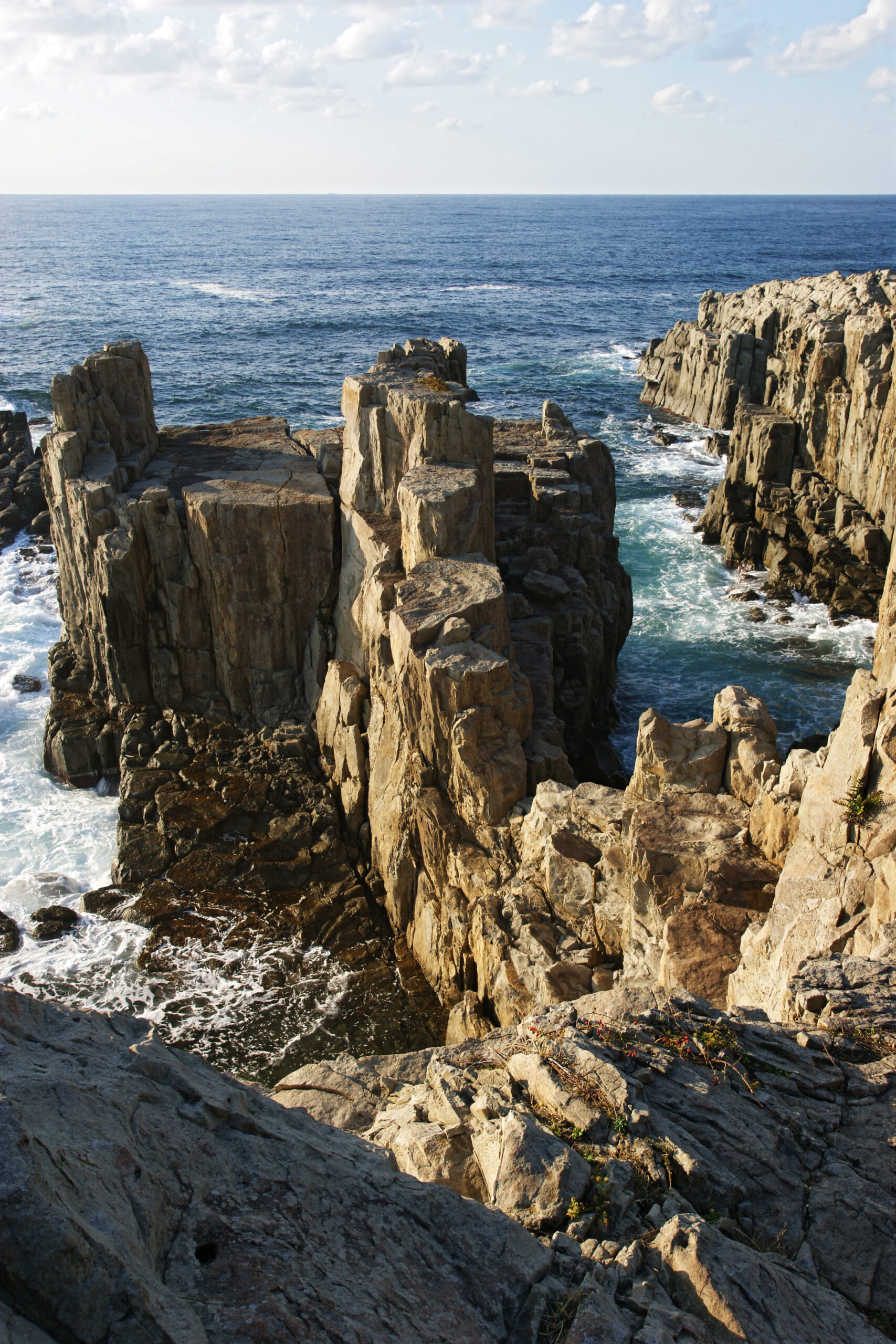
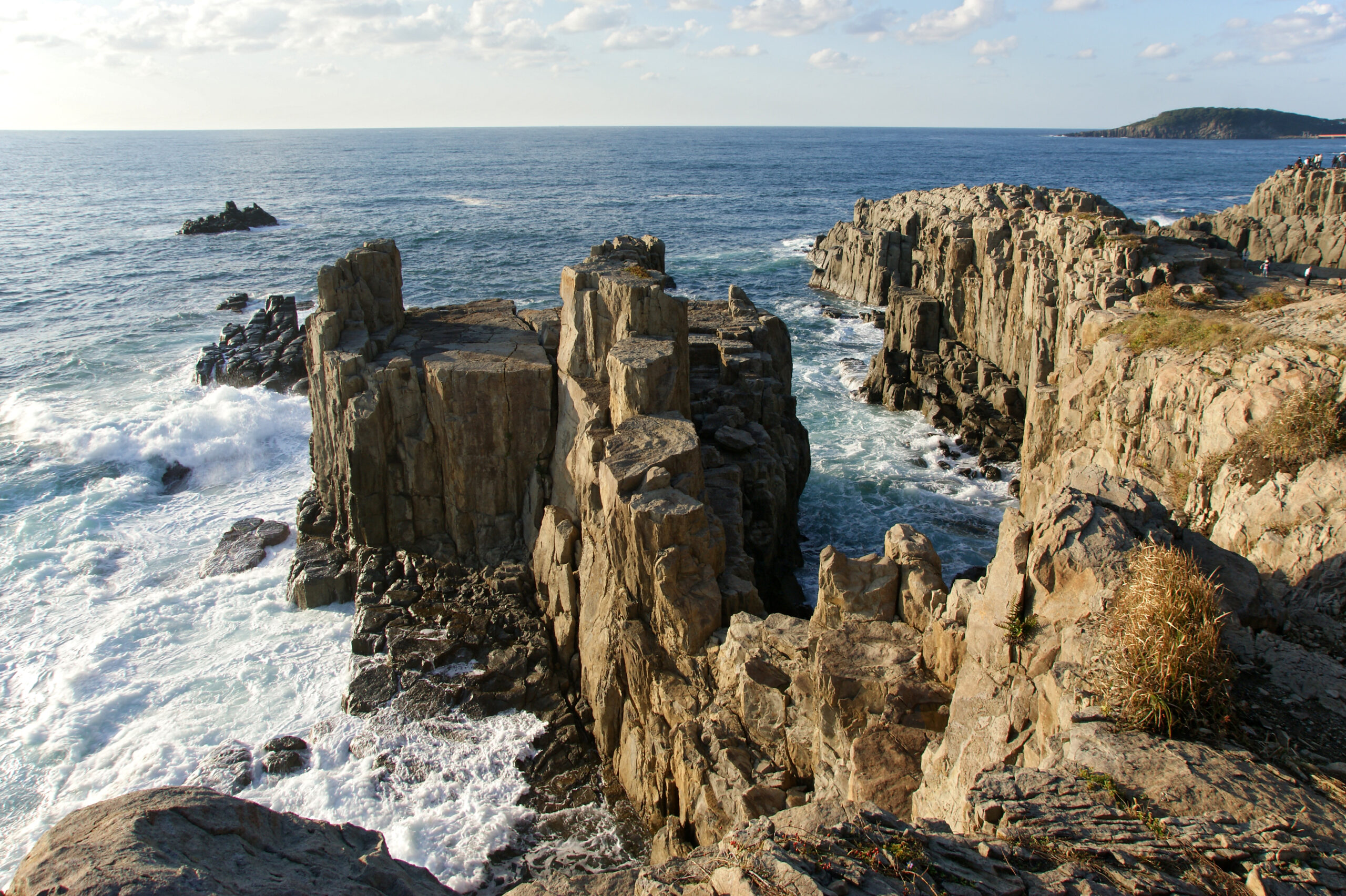
Tojinbo’s columnar joint sea cliffs exist at this scale in only three places on earth — here in Fukui, at Mount Kumgang in Korea, and along Norway’s coast. Formed by volcanic activity 13 million years ago, these pyroxene andesite columns rise 25 meters above the Sea of Japan and stretch for a full kilometer along the coast.
What makes Tojinbo different from other cliff formations is that visitors can walk right to the edge — no railings, no barriers between you and the raw geological force. Combined with a sightseeing boat that takes you below the cliffs and the sacred island of Oshima just offshore, Tojinbo delivers one of Japan’s most visceral natural experiences.
| Quick Facts | |
|—|—|
| Location | Mikuni-cho, Sakai City, Fukui Prefecture |
| Formation | Pyroxene andesite columnar joints |
| Age | ~13 million years |
| Cliff Height | Up to 25 meters |
| Coastline Length | ~1 kilometer |
| Designation | National Natural Monument & Place of Scenic Beauty |
| Annual Visitors | ~1.5 million |
| Admission | Free (tower & boat extra) |
| Best For | Geology, sunset photography, Shimanami-style coastal scenery |
The Cliff Walk: What to Expect
The main cliff promenade runs about 10 minutes from the parking lot to the tip called “Oike” (Big Pool). Here’s what makes Tojinbo’s cliff walk unique:
No railings. Unlike most scenic cliffs in Japan, Tojinbo lets you approach the edge freely. This creates an unfiltered experience but demands careful attention — wear flat shoes, stay back from wet edges, and keep firm control of children.
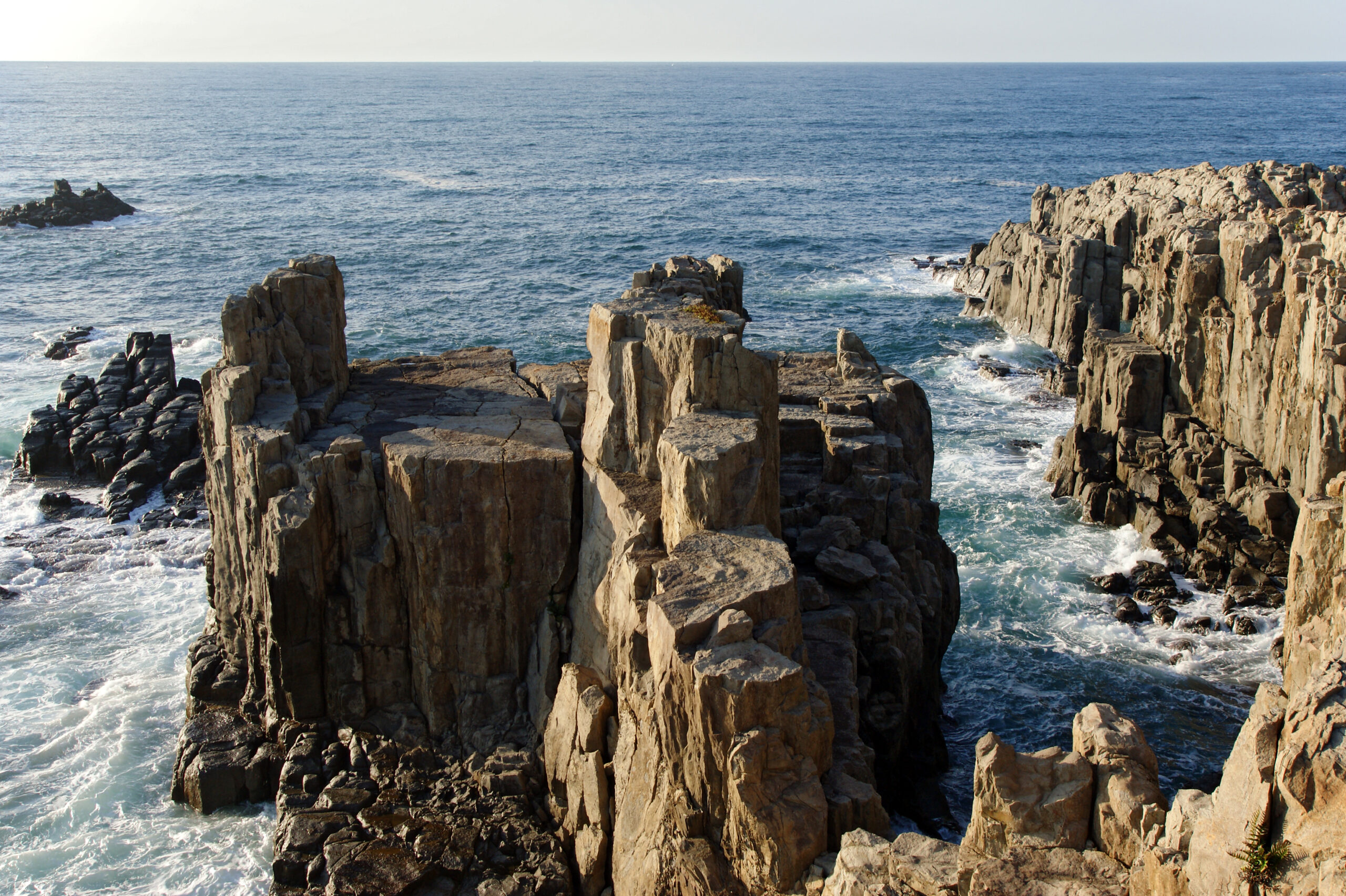
Polygonal columns. The rocks form pentagonal and hexagonal pillars, like oversized honeycomb. When magma cooled and contracted 13 million years ago, it fractured into these geometric shapes. You can see the cross-sections clearly from the cliff top.
Sea spray. Depending on conditions, waves crash against the base and send spray upward. Winter brings the most dramatic wave action, sometimes creating “wave flowers” (nami no hana) — sea foam that floats through the air.
Key Viewing Points
| Point | What You’ll See | Notes |
|—|—|—|
| Oike (Big Pool) | Main cliff face, direct Sea of Japan view | Most dramatic, most exposed |
| Lion Rock (Shishi Iwa) | Rock formation resembling a lion | Best from boat |
| Candle Rock (Rosoku Iwa) | Tall narrow column | Best from boat |
| Tojinbo Tower | 360° panorama from 100m above sea level | ¥500, can see Hakusan range on clear days |
> “We were awed by the surreal look of the cliffs with their gigantic columnar joints. Walking up and down the cliffs, whipped around by wind and salty water from the waves — we thoroughly enjoyed the experience.”
> — *Visitor review, retireediary.wordpress.com*
Sightseeing Boat: See the Cliffs from Below
The 30-minute boat tour is the single best addition to a Tojinbo visit. From sea level, the 25-meter columns tower above you in a way the cliff-top view simply cannot replicate.
| Detail | Info |
|—|—|
| Duration | ~30 minutes |
| Price | ¥1,500 adults / ¥750 children |
| Hours | 9:00 AM – 4:00 PM (last departure) |
| Runs | April – October daily; Nov–Mar limited/weather-dependent |
| Reservations | Not needed, board on arrival |
| Cancellation | High waves = cancelled (common in winter) |
What you’ll see from the boat:
- Lion Rock and Candle Rock up close
- The full height of the columnar joints from base to top
- Sea caves carved into the cliff base
- Oshima Island from the water
> “Looking up at the columnar jointed cliffs from the boat is quite impressive. When the ship moves between the sheer cliffs, you experience a completely different sensation from viewing them above.”
> — *Compiled from visitor reviews on travel platforms*
Tip: The boat departs from the base of the cliffs. To reach the boarding area, you descend a steep staircase. The climb back up is strenuous — plan accordingly if you have mobility concerns.
Oshima Island: The Sacred Island Offshore
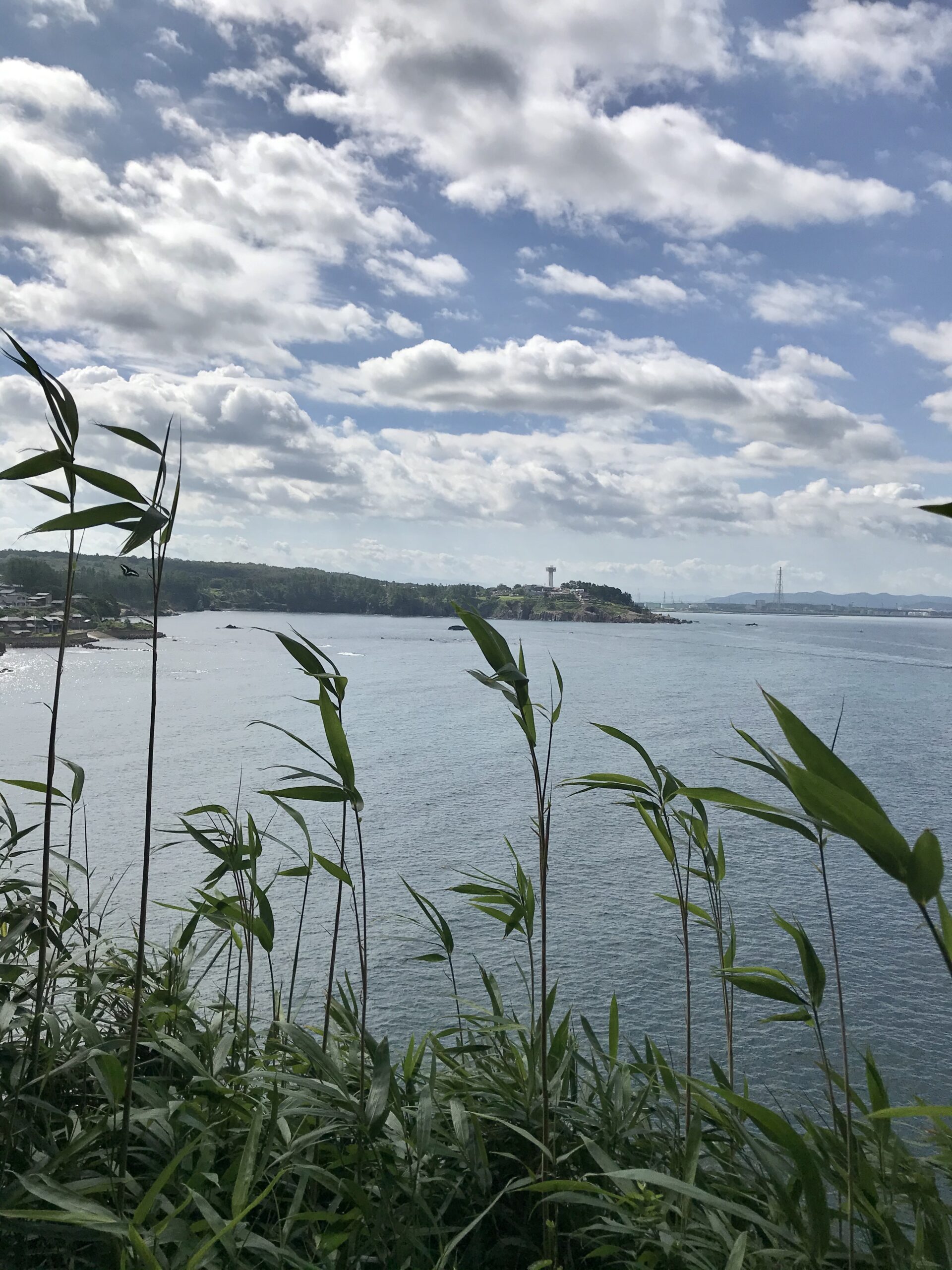
About 1 kilometer offshore, connected by a 224-meter vermillion bridge, Oshima Island adds a spiritual dimension to Tojinbo.
- Ominato Shrine is enshrined on the island, offering blessings for safe voyages and relationships
- A walking circuit around the island takes about 30 minutes
- The island provides a different perspective of the Tojinbo cliffs across the water
- Quieter than the main cliff area — many visitors skip it, making it a peaceful retreat
Best Times to Visit
By Season
| Season | Weather | Highlights | Boat Status | Rating |
|—|—|—|—|—|
| Spring (Apr–May) | 15–22°C, mild | Cherry blossoms nearby, calm seas | Running | ★★★★☆ |
| Summer (Jun–Aug) | 25–33°C, humid | Best boat season, sunset cruises | Daily | ★★★★★ |
| Autumn (Sep–Nov) | 12–22°C, crisp | Clearest air, Noto Peninsula views, best sunsets | Running | ★★★★★ |
| Winter (Dec–Mar) | 2–8°C, harsh | Most dramatic waves, “wave flowers,” Echizen crab | Often cancelled | ★★★☆☆ |
Sunset Times (Key Attraction)
Tojinbo faces west over the Sea of Japan — one of Japan’s premier sunset locations.
| Month | Approximate Sunset | Notes |
|—|—|—|
| January | 4:55 PM | Winter waves + low sun = dramatic |
| April | 6:25 PM | Pleasant temperatures |
| July | 7:15 PM | Latest sunset, summer evenings |
| October | 5:25 PM | Clearest skies, most photogenic |
Best sunset position: The Oike cliff tip, or Tojinbo Tower for a wider panorama.
Best Times of Day
- 6:00–8:00 AM: Empty cliffs, ideal for photography
- 8:30–10:00 AM: Boat tours start, beat the crowds
- 1:00–4:00 PM: Peak crowds, shopping street most lively
- 4:00 PM – sunset: The main event — sunset over the Sea of Japan
Practical Information
Access
Address: Anjima, Mikuni-cho, Sakai City, Fukui Prefecture
| Method | Route | Time |
|—|—|—|
| Car (from Kanazu IC) | Hokuriku Expressway → Route 305 | 25 min |
| Car (from Fukui City) | Route 8 → Route 305 | 40 min |
| Bus (from Awara Onsen Sta.) | Keifuku Bus → “Tojinbo” stop | 30 min |
| Bus (from Mikuni Minato Sta.) | Keifuku Bus → “Tojinbo” stop | 10 min |
| Train (from Fukui Sta.) | Echizen Railway → Mikuni Minato Sta. | 50 min |
Parking: ~500 spaces, ¥500 per car. Arrives early on GW and Obon.
Hours & Fees
| Facility | Hours | Fee |
|—|—|—|
| Cliff walk | 24 hours (no lighting at night) | Free |
| Tojinbo Tower | 9:00 AM – 5:00 PM | ¥500 |
| Sightseeing Boat | 9:00 AM – 4:00 PM | ¥1,500 adult / ¥750 child |
| Oshima Island | Dawn to dusk | Free (bridge access) |
- Closed: Never (individual facilities may close in severe weather)
- Duration: 1 hour (cliff walk only) / 3–4 hours (boat + Oshima + lunch)
- Contact: Mikuni Tourism Association 0776-82-5515
- Website: https://www.mikuni.org/
Where to Eat
Yamani Suisan (Tojinbo Shopping Street)
- Fresh local seafood: Kaisendon ¥1,800, Grilled Squid ¥500
- Hours: 8:00 AM – 5:00 PM
Tojinbo Umi no Ie (Shopping Street)
- Famous for sweet shrimp from Mikuni Port: Amaebi Kakiage Don ¥1,400
- Hours: 9:00 AM – 4:00 PM
Bolga Rice Restaurant Rakuda (15 min drive)
- Fukui’s signature “Bolga Rice” (omurice + tonkatsu): ¥1,100
- Hours: 11:00 AM – 2:30 PM
Senzoku Soba (10 min drive)
- Fukui specialty Echizen Oroshi Soba: ¥900
- Hours: 11:00 AM – 3:00 PM
Seasonal Specialty: Echizen Crab (Nov–Mar)
Fukui’s Echizen Crab (越前がに) is one of Japan’s premium crab brands. Winter visitors to Tojinbo can combine cliff viewing with crab dining — many ryokan in nearby Awara Onsen offer crab course meals (typically ¥15,000–¥30,000).
Nearby Attractions
| Place | Distance | Highlights |
|—|—|—|
| Oshima Island | 5-min walk | Ominato Shrine, island walk, cliff views from across water |
| Awara Onsen | 15 min drive | Hot spring town, day bathing, ryokan, crab dining |
| Echizen Matsushima | 5 min drive | Gentler coastal scenery, aquarium (family-friendly) |
| Maruoka Castle | 25 min drive | One of Japan’s 12 remaining original castle towers |
| Eiheiji Temple | 40 min drive | Zen training temple, deeply atmospheric |
Model Itineraries
Half-Day Course (~3 hours)
| Time | Activity |
|—|—|
| 10:00 AM | Arrive, cliff walk to Oike (45 min) |
| 10:45 AM | Tojinbo Tower panorama (30 min) |
| 11:15 AM | Sightseeing boat (30 min) |
| 12:00 PM | Seafood lunch at shopping street |
Full-Day Course with Awara Onsen (~7 hours)
| Time | Activity |
|—|—|
| 9:30 AM | Cliff walk |
| 10:30 AM | Sightseeing boat |
| 11:15 AM | Oshima Island walk (45 min) |
| 12:30 PM | Lunch at shopping street |
| 2:00 PM | Echizen Matsushima Aquarium (family option) or Maruoka Castle |
| 4:00 PM | Day bathing at Awara Onsen |
| 5:30 PM | Return for sunset at Tojinbo (seasonal) |
Safety & Accessibility
Safety (important):
- No railings at most cliff edges. Stay well back from wet or mossy sections.
- Wind can be sudden and strong, especially in winter. Secure hats, phones, and cameras.
- Never approach the edge in the dark — there is no lighting.
- Keep firm hold of children at all times near the cliffs.
Wheelchair / Mobility: The paved path from the parking lot reaches the shopping street area, but the cliff-top trail is uneven rock. The Tower has an elevator. The boat requires descending and ascending steep stairs.
Rainy days: The shopping street and tower are covered options. Cliff walking becomes slippery and dangerous — not recommended. Boats may be cancelled.
With children: The cliffs require constant supervision due to no railings. Combine with Echizen Matsushima Aquarium (5 min drive) for a family-friendly balance.
Pets: Allowed on the cliff walk (outdoor area). Keep leashed and away from edges. Not permitted on the sightseeing boat.
Photography: Early morning or sunset provides the best light. The cliff-top walk and the boat tour offer completely different perspectives — do both if possible.
Frequently Asked Questions
Is Tojinbo safe to visit?
Yes, millions visit safely each year. The key is respecting the edges — wear flat shoes, don’t approach wet or mossy rock, and keep children close. The lack of railings is part of the experience but demands awareness.
Do sightseeing boats require reservations?
No, board on arrival. However, boats cancel frequently in winter due to high waves. Check conditions before planning around the boat.
What’s the best time for sunset photos?
Autumn (October–November) offers the clearest skies and most photogenic sunsets. Arrive 30 minutes before sunset to secure a spot at Oike.
Can I combine Tojinbo with Awara Onsen?
Yes — they’re only 15 minutes apart. Visit the cliffs in the morning/afternoon, then soak at an onsen in the evening. Many ryokan offer day-use bathing (¥500–¥1,500).
Is there anything to do in winter?
Winter is actually spectacular for wave watching — “wave flowers” and enormous swells hit the cliffs. However, the boat rarely operates and the cold is severe. Compensate with Echizen crab dining at Awara Onsen.
Nearby Power Spots
- [Eiheiji Temple](https://k005.net/en/powerspot/eiheiji-en/) — Zen training temple in the mountains
- [Kinkengu Shrine](https://k005.net/en/powerspot/kinkengu-en/) — Gold-themed shrine in Tsuruga
- [Shirayama Hime Shrine](https://k005.net/en/powerspot/shirayamahime-jinja-en/) — Head shrine of 3,000 Hakusan shrines
- [Atsuta Shrine](https://k005.net/en/powerspot/atsuta-jingu-en/) — One of Japan’s most important shrines
Summary
Tojinbo stands as one of only three places on earth where columnar joints exist at this scale — and it’s the only one where you can walk freely along the cliff edge, take a boat through the formations, and visit a sacred island just offshore, all in a single visit.
The combination of raw geological power, dramatic Sea of Japan scenery, and practical additions like the Tojinbo Tower and nearby Awara Onsen make this far more than a quick photo stop. Whether you come for the summer boat tours, autumn sunsets, or winter wave flowers, Tojinbo offers one of Japan’s most powerful encounters with natural forces.
—
Want to discover the power spot that’s right for you?
Your connection to sacred places depends on your personal energy profile. To find which natural sites align best with your spiritual nature, try our free compatibility assessment (takes just 3 minutes).
→ [Take the Free En Profile Assessment](https://enguide.info)
—
*Information current as of March 2026. Verify latest hours and conditions via the [Mikuni Tourism Association](https://www.mikuni.org/) before visiting.*
あなたに最適なパワースポットを知りたい方へ