2,446 Stone Steps Lead to the Sacred Mountain of Shugendo
Haguro-san, located in Tsuruoka City, Yamagata Prefecture, is one of Japan’s most revered sacred mountains. Together with Mount Gassan and Mount Yudono, it forms the “Dewa Sanzan” (Three Mountains of Dewa), a pilgrimage site that has drawn devotees for over 1,400 years. The Dewa Shrine atop Haguro-san, commonly called “Haguro-san Shrine,” enshrines all three mountain deities in one location, welcoming pilgrims throughout the year.
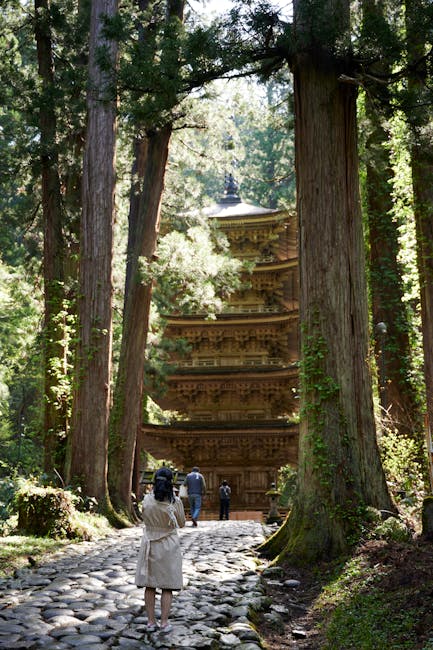
The approach from Zuishinmon Gate to the summit features an extraordinary 2,446 stone steps. Constructed over 13 years during the Edo period, this path winds through an avenue of ancient cedar trees aged 300 to 600 years. Designated as a Special Natural Monument, these approximately 580 towering cedars form a majestic tunnel, guiding visitors toward the sacred realm above.
Climbing each step brings you closer to this 1,400-year-old center of Shugendo mountain asceticism. Sunlight filters through the forest canopy, your footsteps echo on ancient stones, birdsong drifts from the trees—each step transforms from ordinary journey to sacred pilgrimage. Upon reaching the summit, the panoramic view of the Shonai Plain and Sea of Japan, combined with the overwhelming spiritual presence of Sanjin Gosaiden Hall, moves countless visitors to profound emotion.
Highlights and Attractions
Center of Dewa Sanzan Faith
Haguro-san was founded in 593 CE by Prince Hachiko, son of Emperor Sushun. Fleeing political upheaval, the prince arrived in this region and, led by a three-legged crow, discovered Haguro-san.
The three mountains symbolize “present life” (Haguro-san), “past life” (Gassan), and “future life” (Yudono). Pilgrimaging to all three is believed to achieve spiritual rebirth. Haguro-san, as the “mountain for praying for happiness in this life,” serves as the most accessible entry point to Dewa Sanzan worship.
As a sacred site of Shugendo, Haguro-san continues to host yamabushi (mountain ascetic) training today. From late August to early September, the “Aki no Mine-iri” intensive training brings practitioners from across Japan for rigorous spiritual discipline.
The Mystical Beauty of the National Treasure Five-Story Pagoda
One of Haguro-san’s greatest treasures is the National Treasure Five-Story Pagoda. Approximately 10 minutes up the stone steps from Zuishinmon Gate, this pagoda emerges suddenly from the cedar forest—the oldest tower structure in the Tohoku region.
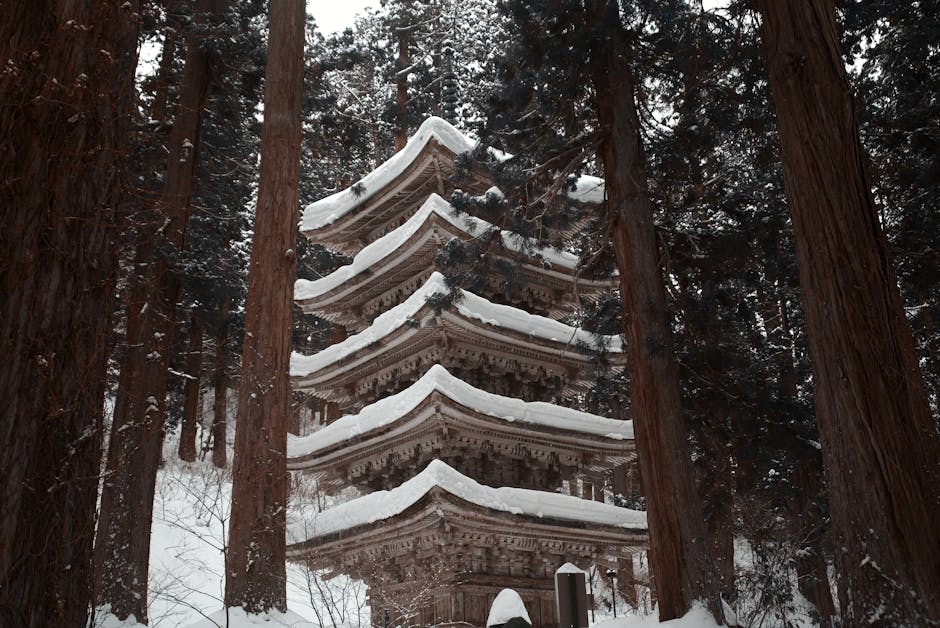
Traditionally attributed to Taira no Masakado, the current structure was rebuilt approximately 600 years ago during the Muromachi period. Standing 29 meters tall with a three-bay, five-story design and cypress bark roof, its unadorned wooden construction exudes quiet dignity. The simple, unpainted beauty harmonizes perfectly with the surrounding cedars, as if the pagoda has become one with the forest.
Early morning or evening, when mist envelops the pagoda, creates particularly mystical scenes that draw photographers year-round. Each season brings new beauty: cherry blossoms in spring, deep green in summer, autumn colors, and winter snow.
The 2,446 Stone Steps
Haguro-san’s stone stairway stretches approximately 1.7 kilometers with 2,446 steps—among Japan’s longest pilgrimage approaches. These steps were constructed between 1648 and 1661 under the direction of Priest Tenyu.
Carved into the stones are 33 small relief sculptures including sake cups, crabs, and gourds. Legend holds that finding all 33 grants a wish. The sake cup carving is particularly difficult to spot, and finding it supposedly ensures you’ll never lack for sake throughout your life.
Several notable sites mark the path: Suga Falls crossing the Harai River, the Ninozaka Tea House rest stop, and the “Jiji-sugi” (Grandfather Cedar)—a giant tree over 1,000 years old with a trunk circumference of about 8 meters and height of 43 meters, standing as Haguro-san’s iconic symbol.
The Majesty of Sanjin Gosaiden
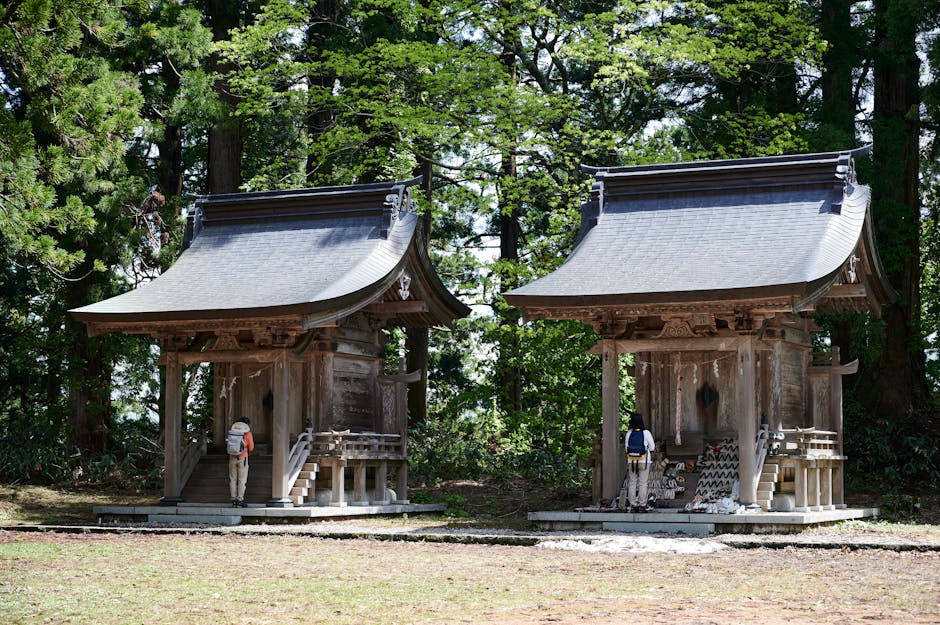
Sanjin Gosaiden Hall at the summit enshrines all three deities of Dewa Sanzan (Gassan, Haguro-san, and Yudono). Its massive thatched roof—28 meters high and 26 meters across—makes it one of Japan’s largest thatched-roof structures.
The current hall, rebuilt in 1818, is designated an Important Cultural Property. Because heavy winter snow makes Gassan and Yudono inaccessible, this combined hall allows pilgrims to worship all three mountains year-round.
Within the precinct lies “Kagami-ike” (Mirror Pond), where bronze mirrors have been offered since ancient times. Over 500 mirrors have been discovered, with many displayed at the Dewa Sanzan Historical Museum.
Spiritual Benefits and Blessings
Good Fortune, Career Success, and Competitive Edge
Haguro-san is known for “gense-riyaku” (benefits in this life), particularly fortune in business, career advancement, and success in competition. Completing all 2,446 steps is said to forge mental and physical strength, developing strong willpower and decision-making ability.
Business professionals, students facing exams, and athletes before important competitions all visit seeking blessings. “The sense of accomplishment from climbing gave me confidence at work” and “I visited before my exam and passed brilliantly” are common testimonials.
Purification and Protection
As a Shugendo sacred site, Haguro-san possesses powerful purifying energy. Many feel that climbing step by step cleanses body and spirit, washing away everyday stress and worries.
The mountain is particularly recommended during life transitions or when seeking a fresh start. “My mind felt completely reset” and “I can move forward with renewed energy” are frequently shared experiences.
Family Safety and Abundant Harvests
Dewa Sanzan has long been worshipped as a deity of agriculture, offering blessings for family safety and bountiful harvests. Farmers throughout the Shonai region have prayed here for good crops for generations.
Visitor Testimonials
*”Honestly, the 2,446 steps were tough, but the sense of accomplishment at the top was incredible. Standing before Sanjin Gosaiden, I nearly cried.”* (Man in 40s, Tokyo)
*”The Five-Story Pagoda took my breath away. Its quiet presence within the forest is truly mystical—photos can’t capture its impact.”* (Woman in 30s, Miyagi)
*”I nearly gave up partway through, but encouraging fellow pilgrims helped me continue. An unforgettable experience.”* (Man in 20s, Kanagawa)
Best Times to Visit
Spring (April-May) ★★★★☆
From mid-April through early May, Haguro-san welcomes fresh green season. Winter snow melts away as trees begin budding, filling the entire mountain with vital energy.
Cherry blossoms near the Five-Story Pagoda peak in late April, creating stunning contrast between pink blossoms and ancient architecture. Wild cherry trees also bloom along the stone steps.
Temperatures range from 10-18°C (50-64°F)—ideal for climbing. Mornings and evenings remain cool, so bring a jacket. Golden Week sees crowds, but early morning (7-8 AM) remains relatively peaceful.
Summer (June-August) ★★★☆☆
June’s rainy season brings fewer visitors, allowing quiet worship. Rain-dampened cedars are particularly beautiful, though wet steps require careful footing.
July and August temperatures reach 25-30°C (77-86°F), but cedar shade keeps the path cool—popular as a summer retreat. However, climbing generates considerable perspiration; bring at least one liter of water.
Late August through early September offers the rare opportunity to observe yamabushi training during “Aki no Mine-iri.”
Autumn (September-November) ★★★★★
Autumn is Haguro-san’s most beautiful season. From mid-October through early November, autumn colors peak, creating breathtaking contrast between evergreen cedars and red-gold maple leaves.
The Five-Story Pagoda surrounded by autumn foliage is spectacular, drawing photographers from across Japan. Morning mist adds dreamlike beauty to the colorful scene.
Comfortable temperatures of 10-20°C (50-68°F) make this ideal climbing weather. Weekends during peak foliage are crowded; weekdays and early mornings offer more peaceful visits.
Winter (December-March) ★★☆☆☆
Winter snow closes the stone steps. Access to the summit is only possible via the Haguro-san Toll Road. However, snow-covered Sanjin Gosaiden creates ethereal scenes with unique winter beauty.
From December 31 to January 1, the “Shoreisai” festival—designated an Important Intangible Folk Cultural Property—features yamabushi performing a magnificent fire ceremony from New Year’s Eve through dawn.
Temperatures range from -5°C to 5°C (23-41°F); serious cold-weather gear is essential. Snow tires or chains are required for mountain access.
Best Time Slots
Early Morning (6-8 AM): Experience the most sacred atmosphere. Few visitors allow communion with forest silence. Morning mist creates especially mystical scenes.
Late Morning (8-11 AM): Before tour buses arrive. Time to climb leisurely, enjoying points of interest along the way.
Afternoon (12-3 PM): Peak crowding with group tours.
Late Afternoon (3-5 PM): Western sun through cedar groves creates magical golden light.
Visiting Guide
Conquering the Stone Steps
Tips for completing all 2,446 steps:
Estimated Times:
- Ascent: 60-90 minutes
- Descent: 40-60 minutes
- Round trip with rest: 3-4 hours
Pacing Strategy:
- First 500 steps: Relatively gentle—warm-up pace
- First slope (500-1,000): Gradient increases
- Second slope (1,000-1,700): Most challenging section
- Third slope (1,700-2,446): Relatively gentle to summit
Ninozaka Tea House Break:
At approximately step 1,000, definitely stop at Ninozaka Tea House. Their famous “Chikara-mochi” rice cakes (350 yen) provide perfect energy replenishment. Available in kinako (roasted soybean powder) or matcha varieties. Hours: 9 AM – 3:30 PM; closed in winter.
Worship Etiquette
At Zuishinmon Gate:
1. Bow once before the gate
2. Walk along the edge, not center (the deity’s path)
3. Pass through to begin your pilgrimage
At Sanjin Gosaiden:
1. Purify hands and mouth at the temizuya basin
2. Offer coins at the worship hall
3. Ring the bell
4. Two bows, two claps, one bow
5. Pray sincerely
Goshuin (Shrine Stamps): Available at Sanjin Gosaiden office. Dewa Sanzan offers three varieties, 500 yen each. Stamp books also sold (from 1,500 yen).
Attire and Equipment
Essential:
- Comfortable sneakers or hiking shoes (required)
- Easy-to-move clothing
- Hat (summer)
- Warm layers (spring/autumn/winter)
Recommended Items:
- Water (1+ liters recommended)
- Towel
- Walking stick (free rental at Zuishinmon)
- Light snacks
- Rain gear
Avoid:
- Sandals or heels
- Leather shoes
- Skirts
Essential Information
Access
Address: 7 Toge, Haguro-machi, Tsuruoka City, Yamagata 997-0211
By Train/Bus:
- Shonai Kotsu bus from JR Tsuruoka Station bound for “Haguro-san-cho,” about 50 minutes to “Zuishinmon” (900 yen one-way)
- 4-5 buses daily; check schedules in advance
By Car:
- From Yamagata Expressway “Tsuruoka IC”: about 20 minutes
- From Nihonkai Tohoku Expressway “Shonai Asahi IC”: about 30 minutes
- Zuishinmon Parking: Free, approximately 40 cars
Direct Summit Access:
- Haguro-san Toll Road (400 yen for regular vehicles) to summit parking
- Summit Parking: Free, approximately 200 cars
- Winter (approximately November-April): Stone steps closed; toll road only
Basic Information
Worship Hours: Open 24 hours (office: 8:30 AM – 4:30 PM)
Admission: Free
Time Required:
- Stone steps round trip: 3-4 hours
- Summit only by car: 1-2 hours
Official Website: https://dewasanzan.jp/
Contact: Dewa Sanzan Shrine TEL 0235-62-2355
Area Information
Nearby Attractions
Dewa Sanzan Historical Museum (Summit, 1-minute walk):
Adjacent to Sanjin Gosaiden. Displays bronze mirrors from Kagami-ike and historical materials about Dewa Sanzan. Admission 500 yen; 9 AM – 4:30 PM.
Ideha Cultural Memorial Hall (Near Zuishinmon, 5-minute walk):
Learn about Dewa Sanzan culture and Shugendo. Yamabushi costume experiences available (reservation required). Admission 400 yen.
Gyokusenji Temple (15 minutes by car):
Soto Zen temple with nationally designated scenic garden. Famous for candelabra primrose, peaking mid-May. Admission 500 yen.
Mount Gassan (30 minutes by car + hiking):
One of Dewa Sanzan. Open for worship July 1 through mid-September. Accessible by car to eighth station.
Recommended Restaurants and Cafes
Ninozaka Tea House (On stone steps, around step 1,000):
The only tea house on the approach. Famous “Chikara-mochi” rice cakes (350 yen) are a pilgrimage staple. Dango and amazake also available. Hours: 9 AM – 3:30 PM; closed in winter.
Haguro-san Sanrojo Saikan (Summit):
Enjoy shojin ryori (Buddhist vegetarian cuisine) at this temple lodging dining hall. Seasonal mountain vegetables (reservation required, from 2,200 yen). Experience Shugendo atmosphere while dining.
Ideha Cultural Memorial Hall Rest Area (Near Zuishinmon):
Perfect post-pilgrimage rest. Yamagata’s famous “dashi” topped udon (800 yen) and local mountain vegetable dishes.
Soba-dokoro Daibonji (10 minutes by car):
Renowned handmade soba shop. 100% buckwheat soba using Shonai-grown flour (1,100 yen) is exceptional. Hours: 11 AM – 3 PM; closed Thursdays.
Italian Trattoria Al Che-cciano (20 minutes by car):
Authentic Italian using Shonai ingredients. Reservations required at this popular restaurant. Lunch course from 3,800 yen. Nationally famous chef.
Souvenirs and Local Products
Haguro-san Cedar Chopsticks: Made from Haguro-san cedar. Popular as talismans for good health.
Omamori and Ofuda: Available at Sanjin Gosaiden. Fortune and protection charms are popular.
Shonai-fu (Wheat Gluten): Regional specialty. For miso soup and simmered dishes.
Dadacha-mame Products: Tsuruoka’s famous edamame. Beans, sweets, ice cream, and more.
Accommodations
Haguro-san Sanrojo Saikan (Summit, 1-minute walk):
Temple lodging near Sanjin Gosaiden. Experience shojin ryori and early morning worship. From 8,800 yen with two meals. Reserve through Dewa Sanzan Shrine.
Kyukamura Haguro (15 minutes by car):
Highland resort hotel overlooking Shonai Plain. Hot spring baths. From 12,000 yen with two meals.
Yunohama Onsen (30 minutes by car):
Seaside hot spring resort on the Sea of Japan. Famous for sunsets. Multiple hot spring inns. From 10,000 yen with two meals.
Atsumi Onsen (40 minutes by car):
Hot spring town with over 1,000 years of history. Quiet environment ideal for relaxation. From 12,000 yen with two meals.
Model Itineraries
Half-Day Course (4-5 hours):
8:00 AM – Arrive Zuishinmon, begin stone steps
9:30 AM – Rest at Ninozaka Tea House (15 min)
10:15 AM – Arrive summit, worship at Sanjin Gosaiden
10:45 AM – Visit Dewa Sanzan Historical Museum (30 min)
11:15 AM – Lunch at summit or begin descent
12:30 PM – Return to Zuishinmon
Full-Day Course (8 hours):
7:30 AM – Arrive Zuishinmon
7:45 AM – Preview at Ideha Cultural Memorial Hall (30 min)
8:15 AM – Begin stone steps (including Five-Story Pagoda photos)
10:00 AM – Rest at Ninozaka Tea House
10:45 AM – Arrive summit, worship at Sanjin Gosaiden
11:15 AM – Shojin ryori lunch at Saikan (reservation required)
12:30 PM – Visit Dewa Sanzan Historical Museum
1:15 PM – Begin descent (or retrieve car via toll road)
3:00 PM – Return to Zuishinmon
3:30 PM – Enjoy soba at Soba-dokoro Daibonji
4:30 PM – Day bath at Yunohama Onsen
Visitor Reviews and Experiences
“A Pilgrimage of Discovery”
Woman in 30s, Saitama
*”I visited with my parents in their 60s. My father’s bad knee meant he drove to the summit while I tackled the steps. I nearly gave up several times, but the emotion upon reaching the top defies words.”*
“The Misty Pagoda Never Gets Old”
Man in 40s, Niigata
*”As a photographer, I’ve visited many times, but the Five-Story Pagoda in morning mist moves me every time. Every season, every weather condition brings completely different expressions—I can’t stop coming back.”*
“Autumn Colors Were Breathtaking”
Woman in 40s, Chiba
*”Visited during autumn foliage season. The contrast of green cedars and colorful leaves was truly beautiful. The Chikara-mochi at Ninozaka Tea House gave me energy to complete the climb.”*
“Witnessing Living Tradition”
Man in 50s, Tokyo
*”I had the rare opportunity to observe yamabushi training. Feeling the power of 1,400+ years of continuous faith was like having my soul cleansed.”*
Frequently Asked Questions
Q: Can I reach the summit without climbing the steps?
A: Yes, the Haguro-san Toll Road (400 yen) takes you directly to the summit parking lot. However, the Five-Story Pagoda is located along the stone step path and cannot be visited by car.
Q: How long does the stone stairway take?
A: Allow 60-90 minutes ascending, 40-60 minutes descending. Including rest stops, plan for 3-4 hours round trip.
Q: Can I visit in winter?
A: From December through approximately March, snow closes the stone steps. Only the toll road provides summit access, though it may also close in heavy snow. Check conditions before visiting.
Q: Are goshuin (shrine stamps) available?
A: Yes, the Sanjin Gosaiden office offers Dewa Sanzan stamps (500 yen each). You can also receive Mount Gassan and Mount Yudono stamps here.
Q: Can I bring pets?
A: Pets are allowed on the stone approach and grounds (leash required), but please be considerate of other worshippers. The lengthy climb is also demanding for animals—monitor their condition carefully.
Nearby Power Spots
- [Mt. Chokai](https://k005.net/en/powerspot/chokaisan-en/)
- [Chusonji Konjikido](https://k005.net/en/powerspot/chusonji-konjikido-en/)
- [Matsushima](https://k005.net/en/powerspot/matsushima-en/)
- [Motsuji Temple](https://k005.net/en/powerspot/motsuji-en/)
- [Osaki Hachimangu](https://k005.net/en/powerspot/osaki-hachimangu-en/)
Summary
Haguro-san stands as one of Japan’s most spiritually powerful sacred mountains—a 1,400-year-old center of Shugendo where climbing each of 2,446 ancient stone steps becomes a transformative pilgrimage. The National Treasure Five-Story Pagoda rising from primeval cedar forest, the overwhelming presence of Sanjin Gosaiden Hall, and the sense of accomplishment upon reaching the summit create an unforgettable spiritual experience.
Whether you seek renewed energy, wish to mark a life transition, or simply want to connect with one of Japan’s most authentic religious traditions, Haguro-san offers a journey that transforms body and spirit alike. The physical challenge of the climb mirrors the inner transformation—and the view from the top, overlooking the Shonai Plain to the Sea of Japan, provides perspective that extends far beyond the horizon.
We hope this guide helps you plan your own pilgrimage to sacred Haguro-san.
*Information in this article is current as of November 2025. Please verify details on the official website before your visit.*
あなたに最適なパワースポットを知りたい方へ