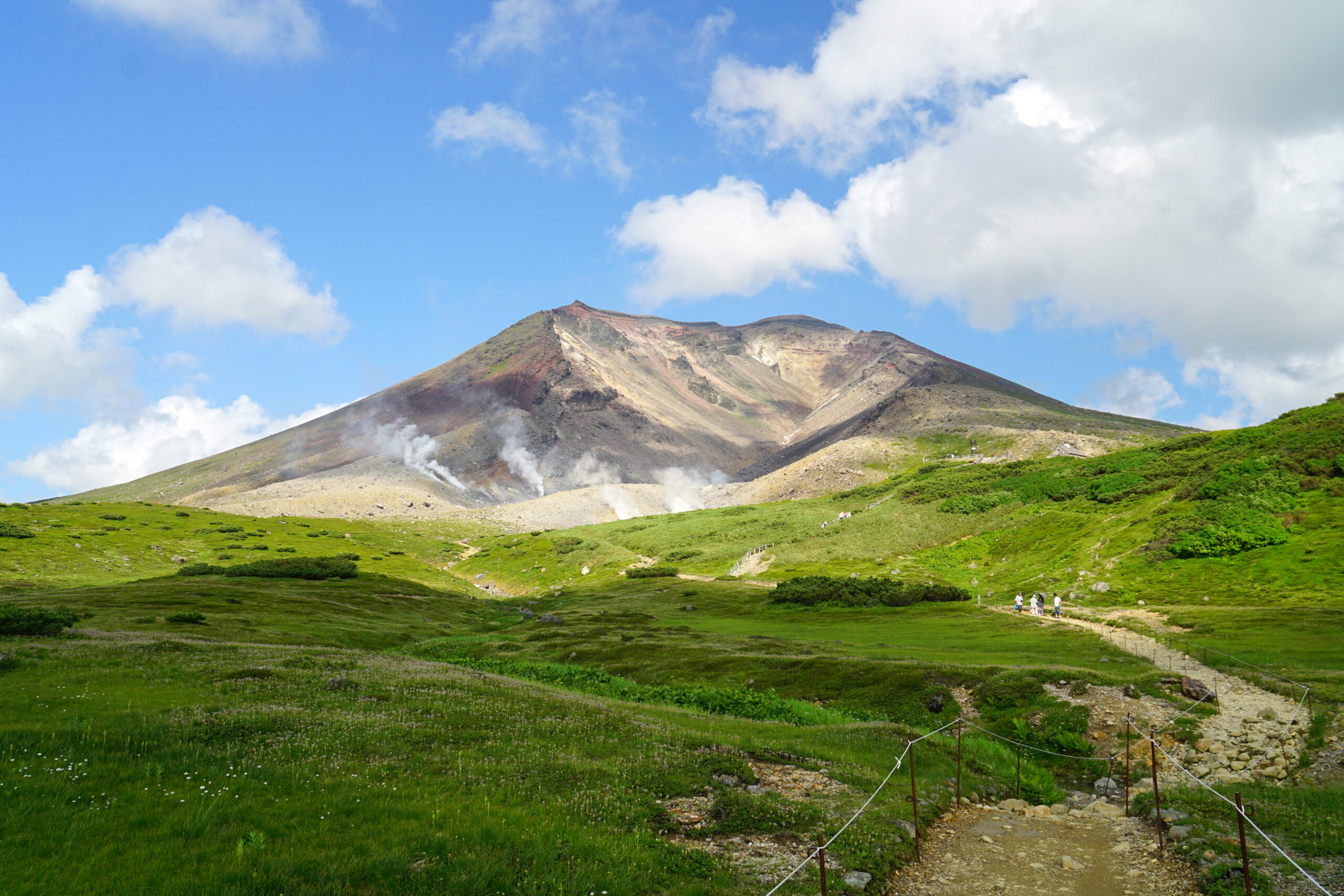
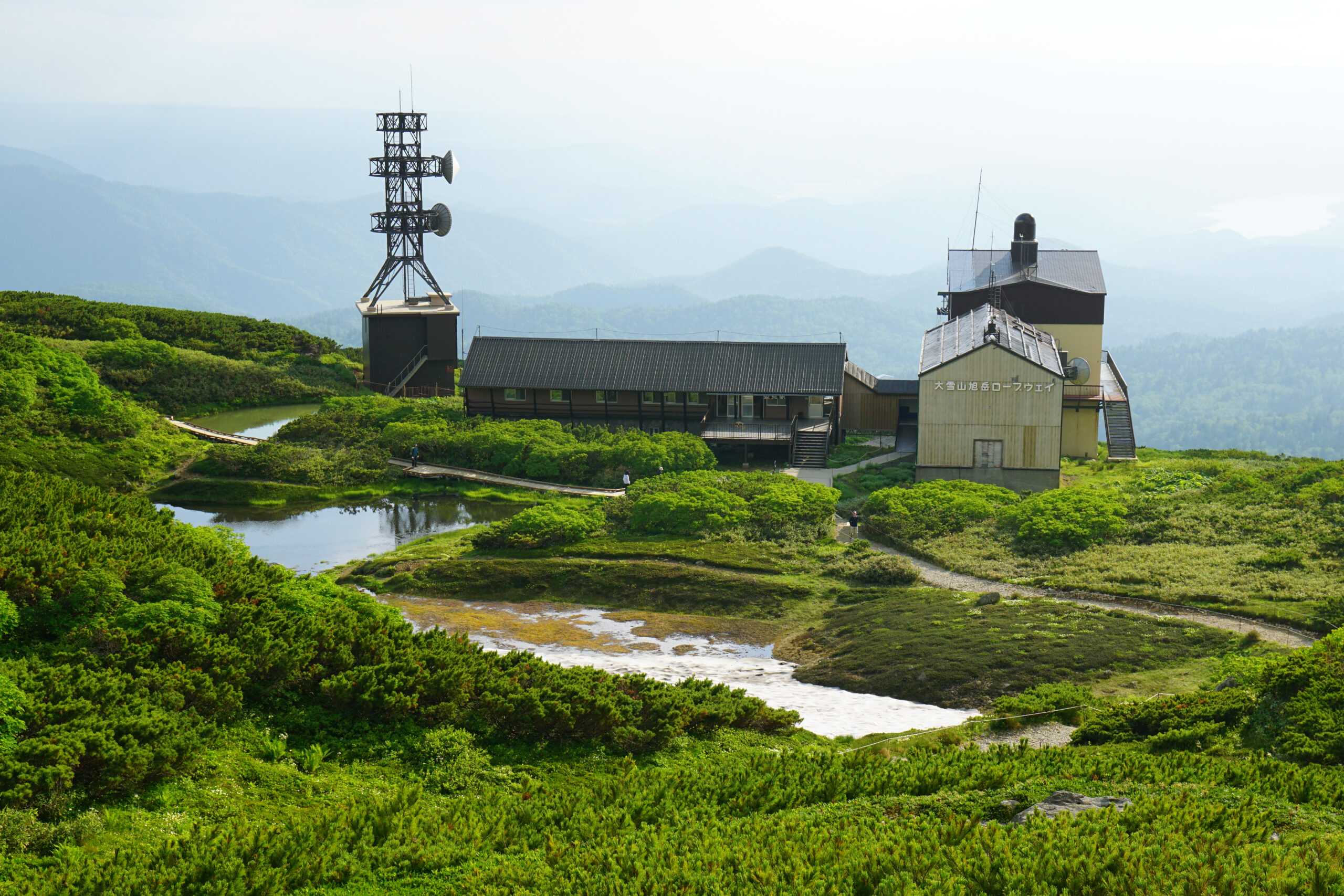
When the doors of the Asahidake Ropeway open at Sugatami Station, you step out at 1,600 meters into a world few places on Earth can match: Hokkaido’s highest peak (2,291m) towering above, steam rising from active fumaroles, and alpine ponds reflecting the volcano’s silhouette. This is Kamuy Mintar—what the Ainu called the “playground of the gods.”
This guide collects the practical information you need to actually plan a trip that works: ropeway schedules and fares, bus timetables down to the minute, peak autumn-color dates, hot-spring options, and the volcanic safety status. All sourced from official Japanese authorities.
What Makes This Spot Special
At 2,291 meters, Asahidake is Hokkaido’s highest mountain, confirmed by the Ministry of the Environment, Higashikawa Tourist Association, and the Daisetsuzan National Park Council. The Japan Meteorological Agency classifies it as part of the Daisetsuzan volcanic group—Asahidake is the youngest stratovolcano that erupted on the southwest side of the Ohachidaira caldera, and the largest volcanic body in the entire group.
Remarkably, despite being a serious mountain, the Asahidake Ropeway lifts visitors to 1,600m in just 10 minutes—putting an authentic alpine environment within reach of travelers without mountaineering gear.
Asahidake sits at the heart of Daisetsuzan National Park, which covers roughly 230,000 hectares—larger than Tokyo, and the largest national park in Japan. The Ministry of the Environment describes the park as “a mountain group with Asahidake, Hokkaido’s highest peak, as its main summit.” Volcanoes, virgin forest, lakes, wetlands, and alpine flora here create an environment comparable to mainland Japan’s 3,000m-class peaks—at a more accessible elevation.
The Ministry of the Environment uses “Kamuy Mintar—Playground of the Gods” as the park’s official catchphrase. According to Japan Heritage’s “Kamikawa Ainu Living with Kamuy,” the Ainu people regarded Daisetsuzan as both a treasure house of food bestowed by gods and the dwelling place of demon spirits that brought natural disasters—an object of both reverence and fear.
The spiritual character of Asahidake is grounded in this layered cultural tradition rather than in vague “wishes come true” claims. It is a place shaped by generations of human awe before active geology.
What You Can Experience Here
Renewed humility before nature — The steam from fumaroles, the weather that shifts within an hour, the bear-inhabited forests. Asahidake is nature you cannot control. For visitors caught in urban routines, that recalibration is real.
A turning point under an open sky — Standing at 1,600m on the rim of a high-altitude wonderland gives you a literal change of perspective. Visitors planning a career change, recovery, or relocation often describe Asahidake as the clearest place to think.
Complete sensory reset — The thin, sharp air, the faint sulfur in the wind, and the rare coexistence of snow, green, and red foliage—Asahidake re-tunes senses dulled by city life.
Best Times to Visit
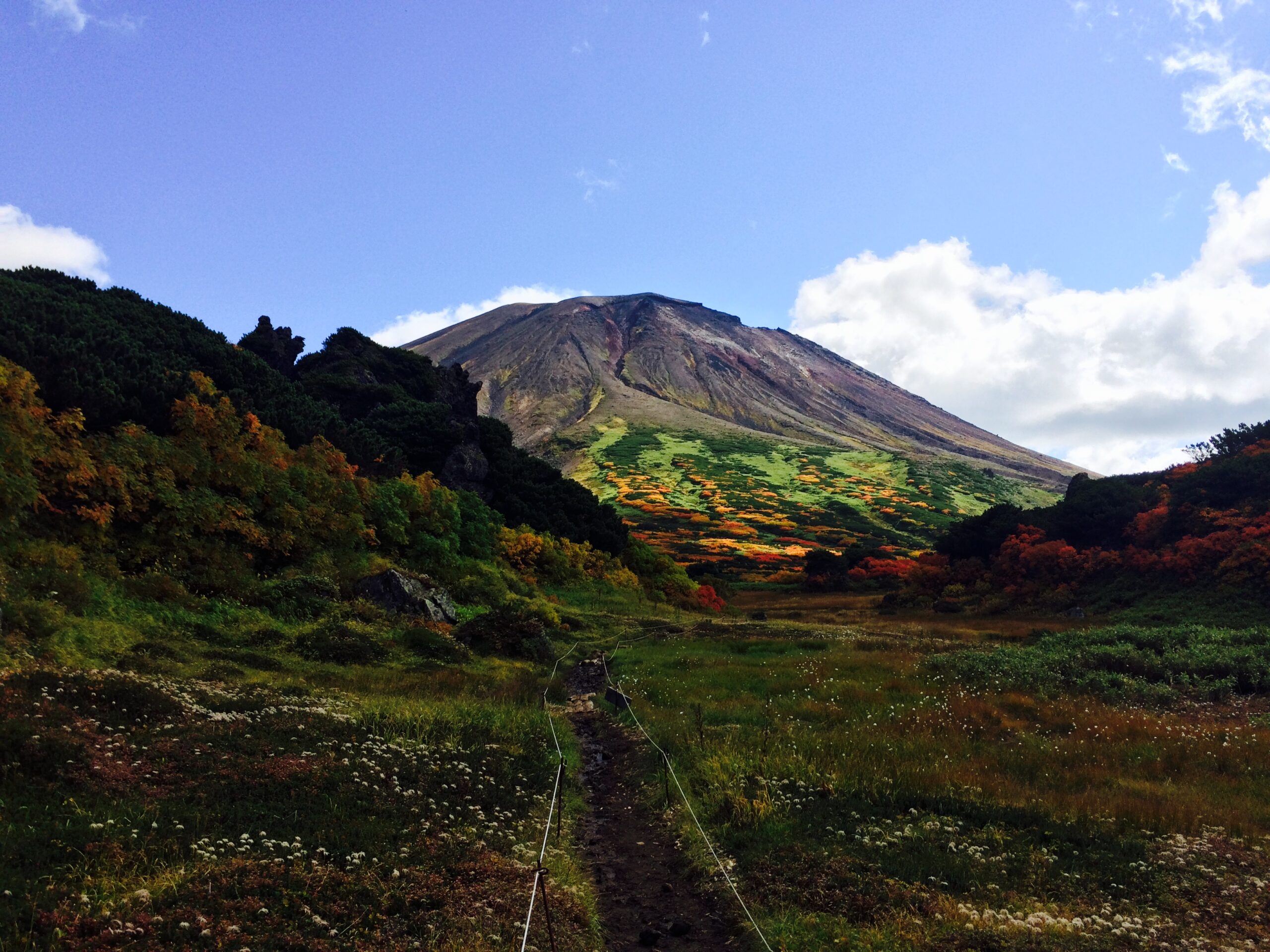
Asahidake is renowned as the place where Japan’s autumn colors arrive first. Because Sugatami Station sits at 1,600m, colors begin in early September and peak from mid- to late September.
Recent peaks documented by official ropeway posts:
- 2024: Sugatami and Susoai-daira around September 19–23
- 2025: Sugatami to mid-ropeway around September 26–27
Foliage species: rowan (red), mountain avens grass colors (red/orange), bearberry, dwarf birch (yellow), against the dark green of creeping pine. When conditions align, you can see “three-tiered foliage”—snow on the summit, red and yellow at mid-elevation, and green at the base.
Plants you’d normally have to climb to 2,500m on Honshu—Aleutian rhododendron, mountain avens, Asian pasqueflower—bloom within steps of Sugatami Station. Peak: mid-July to early August.
A quiet transition season. Snowfields persist near the upper trails while alpine plants bloom below. Trails are muddy and patchy; waterproof gear is essential.
Ideal escape from the heat. While Sapporo hits 30°C, Sugatami sits at around 15°C. Beware of afternoon thunderstorms and sudden fog.
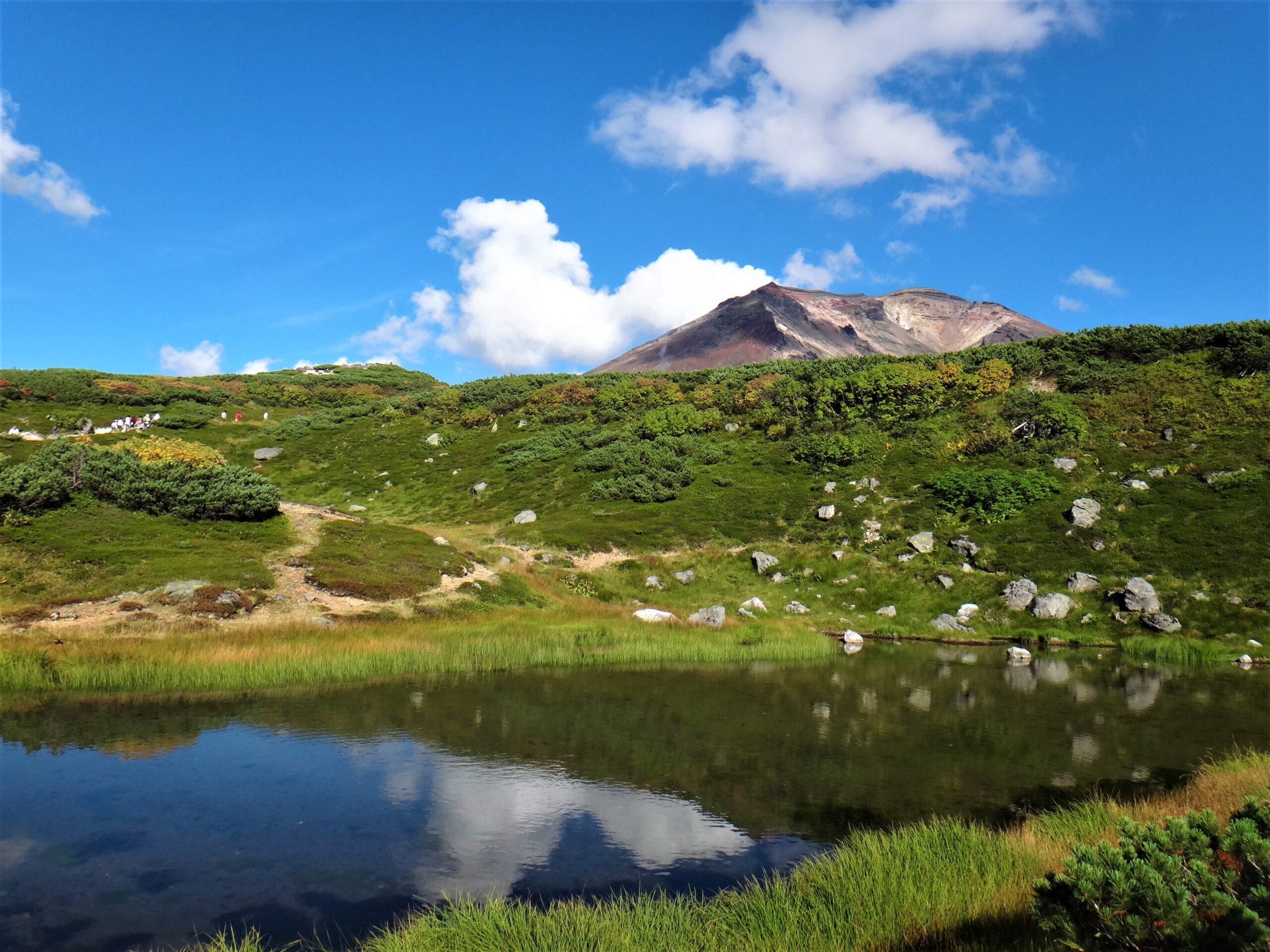
- Early morning (first ropeway–10am): Calm air gives the best chance of an upside-down Asahidake reflection on Sugatami Pond.
- Late afternoon: Softer light flatters foliage, but you must catch the last descending ropeway—missing it is treated as a mountain emergency.
How to Visit
A 1.7-km self-guided trail that captures Asahidake’s full character in a single loop.
1. Sugatami Station (1,600m); rent rubber boots if trails are wet
2. First viewpoint—Asahidake and Susoai-daira
3. Meoto-ike (Couple’s Ponds): crater lakes with mountain reflections
4. Mangetsu-numa (Full Moon Pond)
5. Jigokudani fumarole viewpoint: feel the active volcano (stay behind barriers)
6. Sugatami Pond: classic upside-down Asahidake shot (calm mornings only)
7. Return to Sugatami Station
Standard times from the Daisetsuzan National Park Council: 2 hours 50 min up, 2 hours 5 min down. Difficulty grade 3.
The path crosses sand, gravel, and rocky scree—it’s a real mountain, not a stroll. Required: hiking boots, rain gear, insulation, gloves, food, headlamp, map/GPS, portable toilet. Do not treat the summit as an extension of the sightseeing loop. Snow can already cover the upper trail by early October.
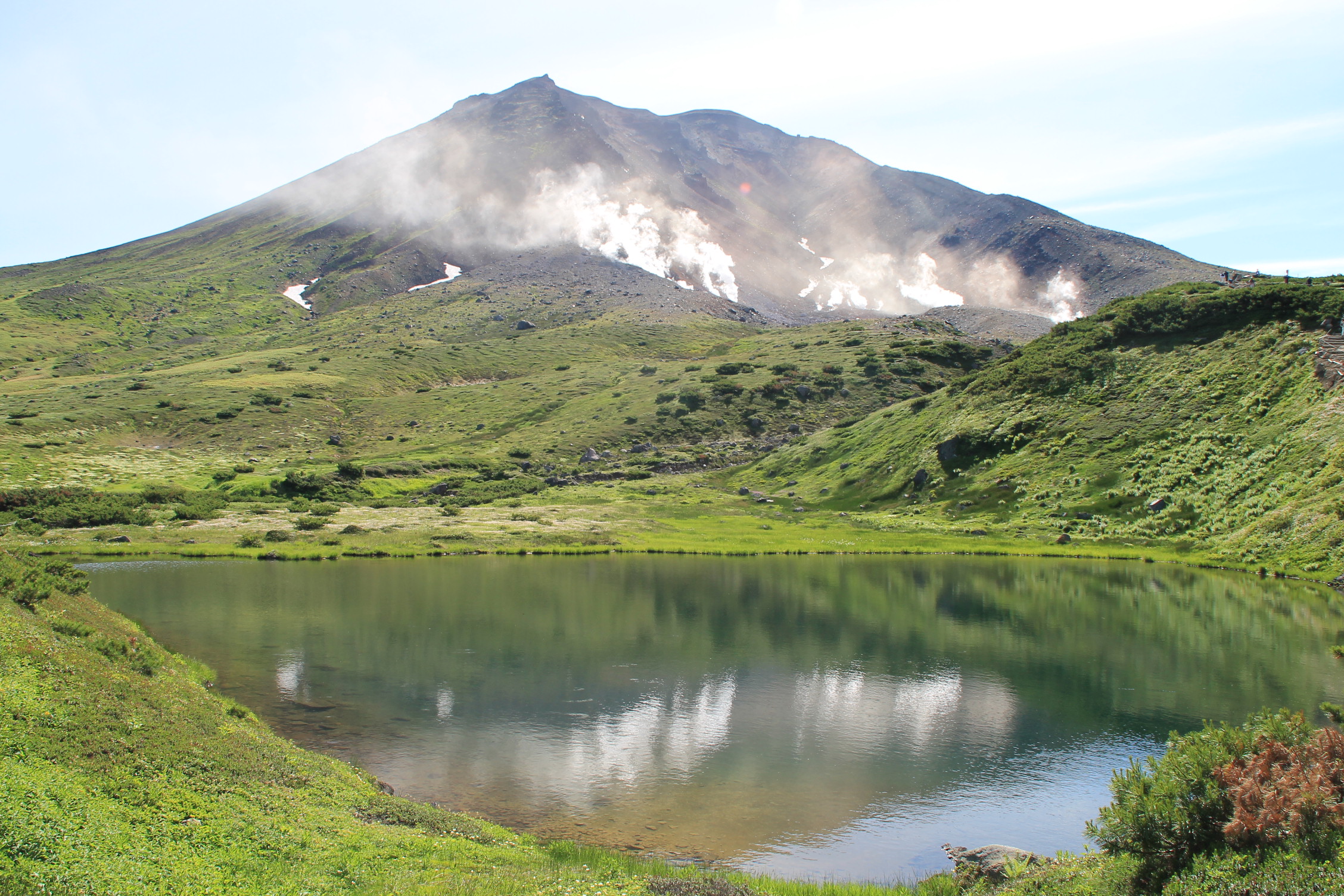
- Volcanic alert: Level 1 (“Be aware this is an active volcano”) as of May 13, 2026. Check JMA’s “Volcanic Activity Status (Daisetsuzan)” before any visit
- Rapid weather changes: Sugatami’s 1,600m climate is comparable to Honshu’s 3,000m peaks—sunny to dense fog and freezing winds within an hour
- Bear country: Brown bears (higuma) inhabit the entire Daisetsuzan range. Check current sightings; carry bells; never leave food or trash
- No pets: The ropeway prohibits pets (service dogs excepted). National park ecology and bear safety both argue against bringing them
- Last ropeway down: Missing it triggers a mountain emergency response. Watch the clock
Essential Information
| Item | Details |
|——|———|
| Name | Mount Asahidake (旭岳) |
| Location | Asahidake Onsen, Higashikawa, Hokkaido |
| Elevation | 2,291m (Hokkaido’s highest peak) |
| National Park | Daisetsuzan (≈230,000 ha) |
| Volcanic Alert Level | 1 (as of 2026-05-13) |
| Ropeway Fare | Adult round-trip ¥3,500 (Jun 1–Oct 31) / ¥2,800 (Nov 1–May 31) |
| Ropeway Interval | Every 15 min (summer) / 20 min (winter) |
| Sugatami Trail Open | June to mid-October |
| Hiking Season | Late June to end of September |
| Parking | ¥500 for cars (free Nov–May), 150 spaces |
Official sources:
- Asahidake Ropeway: https://asahidake.hokkaido.jp/ja/
- Asahidake Visitor Center: https://www.asahidake-vc-2291.jp/
- Daisetsuzan National Park (MOE): https://www.env.go.jp/nature/nationalparks/list/daisetsuzan/
Access (Public Transport)
Asahikawa Denkikidou Bus No. 66 “Ideyu-go” — Only 4 round trips per day, so missing one means waiting 2 hours.
| Departure | JR Asahikawa Sta. | Asahikawa Airport | Asahidake Arr. |
|———–|——————-|——————-|—————-|
| Bus 1 | 7:15 | 8:00 | 9:03 |
| Bus 2 | 9:15 | 10:00 | 11:03 |
| Bus 3 | 12:15 | 13:00 | 14:03 |
| Bus 4 | 14:15 | 15:00 | 16:03 |
Fare: Asahikawa Sta. → Asahidake ¥1,800 / Asahikawa Airport → Asahidake ¥1,270 (one-way, adult). Schedule revised October 1, 2025.
By car: ~60 min from Asahikawa Airport, ~70 min from JR Asahikawa Station, ~2 hr 30 min from Sounkyo Onsen. Winter requires studless tires; chains may be needed.
Around the Area
A small hot-spring cluster sits at the ropeway’s lower station.
Yumoto Yukomanso — Day-use bath “Kamigami no Yu” open 12:00–18:00 (closes 19:00). Adult ¥1,200, child ¥600. Multiple natural springs, classed primarily as sulfate hot springs.
Hotel Bearmonte — Day-use 12:30–19:00 (last entry 18:00). Adult ¥1,140 (bathing tax included), child ¥570. Sulfate spring, clear and colorless.
Hotel Deer Valley — Does not offer day-use bathing; refers visitors to sister property Bearmonte.
Home to Asahiyama Zoo (Hokkaido’s most popular, famous for behavioral-display exhibits), the rich Asahikawa Ramen scene, and Kamikawa Shrine. A natural overnight stop before or after Asahidake.
From Asahidake, Biei is ~40 minutes by car, Furano ~90 minutes. The Blue Pond, Shirogane Onsen, Shikisai-no-Oka flower hill, and summer lavender fields combine beautifully with Asahidake for a “highlights of Hokkaido” itinerary.
About 2.5 hours by car, Sounkyo Onsen and the Kurodake Ropeway let you experience the Daisetsuzan range from the opposite side. Daisetsu Mori-no-Garden in Kamikawa Town contrasts neatly with the wild Asahidake landscape.
2 Days (Autumn Color Focus):
- Day 1: Arrive Asahikawa Airport → stay at Asahidake Onsen
- Day 2: First-bus ropeway → Sugatami loop (calm morning = mirror reflections) → Bearmonte day-use bath → Airport
3 Days (Photography Focus):
- Day 1: Asahikawa city (Asahiyama Zoo + ramen)
- Day 2: Ropeway → Sugatami loop + summit hike → Asahidake Onsen
- Day 3: Biei (Blue Pond) → Furano → Airport
Visitor Voices & Common Impressions
Based on general trends in Google Maps reviews and hiking logs:
What people love:
- “Ten minutes by ropeway and you’re in another world. Alpine plants you’d hike all day for on Honshu are right there.”
- “Fumaroles steaming on one side, a still pond on the other—I’ve never seen volcano and alpine flora coexist like this.”
- “Mid-September with snow on the summit, red foliage at mid-elevation, and reflections on the pond—the best view I’ve ever seen.”
What requires preparation:
- “Fog rolled in by noon and we couldn’t see anything.”
- “Full parking and 30-min ropeway queues on autumn weekends.”
- “Came in light clothes. August at 1,600m is cold.”
- “Only one bus every two hours—the transfer planning was tough.”
Overall, weather and gear are what separate a great visit from a disappointing one.
Frequently Asked Questions
A. Yes. The ropeway lifts you to 1,600m, and the Sugatami Pond loop (1.7 km, ~1 hour) delivers most of what Asahidake offers. The summit hike requires serious gear and experience—don’t push beyond your skill level. A. The ropeway does not allow pets (service dogs are permitted). Both the park’s ecology and bear-safety considerations argue against bringing pets. Consider a pet hotel in Asahikawa. A. The Sugatami Pond loop includes stairs, rocky sections, and unpaved trail—not realistic for wheelchair use. The viewing area near Sugatami Station may be possible; contact the ropeway in advance. For the “Ideyu-go” bus, ask Asahikawa Denkikidou Kyoei Office about accessible vehicles. A. Fog often hides the views, so consider switching to hot-spring hopping at Asahidake Onsen or indoor activities in Asahikawa/Biei. That said, autumn colors look richer after rain—worth waiting if the afternoon is forecast to clear. A. As of May 13, 2026, the alert level is 1 (“Be aware this is an active volcano”). Normal tourism and the Sugatami loop are open. Stay behind barriers near fumaroles, leave if sulfur smells suddenly intensify, and check JMA’s “Volcanic Activity Status (Daisetsuzan)” before your visit.
Conclusion
Mount Asahidake is one of the rare places where you can reach Hokkaido’s highest summit and stand in a true alpine environment without serious mountaineering gear. Sugatami Pond, the fumaroles, the grass-color foliage, the snow patches—a Japan-unique combination of active volcano and high-mountain flora, all within an hour’s walk.
What you feel at this place the Ainu called Kamuy Mintar—the playground of the gods—is not supernatural wish-fulfillment but a pure, unmediated reverence for nature that still moves and breathes. And that often leaves visitors quietly clearer about what matters in their own lives.
Whether you visit for the peak autumn colors of mid- to late September, the alpine wildflowers of high summer, the snow-and-green transition in early June, or the rime-iced winter—Asahidake will show you a different face each time. Bring the right gear, the time, and a forgiving weather forecast, and this can be the most memorable day of your trip to Japan.
—
We hope this guide helps you plan a meaningful visit to Mount Asahidake.
Information is current as of May 2026. Ropeway times, fares, bus schedules, and volcanic alert status change. Always check official sources before traveling.
—
Want to know which power spots match you best?
Across Japan, there are countless power spots—but the right one for you depends on your personal energy profile. Take our free 3-minute compatibility test to find out.
📚 You May Also Like
Explore more sacred places and power spots across Japan in our Japan Power Spots series.
🌏 This article is part of our Japan Power Spots series for international visitors.
Planning your trip to Japan? Bookmark this page for your spiritual journey!