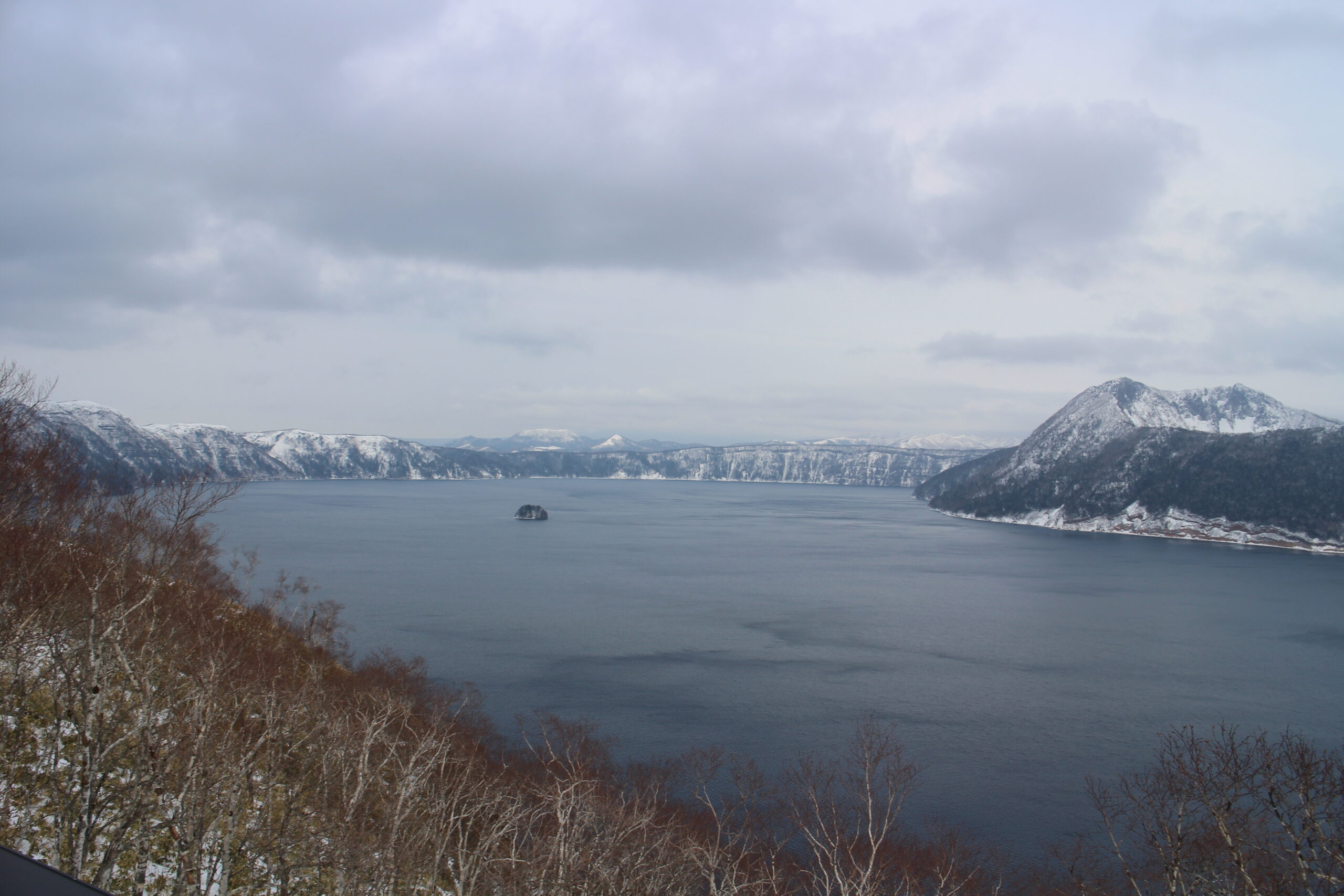
In 1931, scientists measured the water clarity of Lake Mashu (摩周湖, Mashū-ko) at 41.6 meters — at the time the highest recorded water transparency in the world.
How can a lake be so clear? Because Lake Mashu has no rivers flowing in and no rivers flowing out. Its waters are sustained entirely by rainfall and snowmelt, with no sediment-bearing currents to muddy them. The result is a caldera lake that the Ainu people called Kamuy-to — the Lake of the Gods.
Today, Lake Mashu sits within Akan-Mashu National Park in eastern Hokkaido. It draws photographers, romantics, and travelers who have heard the song “Misty Lake Mashu” — and the legend that those who manage to see its surface free of fog will have their wishes granted.
This guide tells you exactly when to visit, which of the three viewpoints to choose, what to expect when fog rolls in, and how to plan a complete trip around the surrounding lake-and-volcano region of eastern Hokkaido.
—
What Makes Lake Mashu Extraordinary
Lake Mashu is a caldera lake formed by a massive volcanic eruption about 7,000 years ago. The collapse of the volcanic chamber left a deep bowl that filled with water over time, eventually forming an isolated body of water with no surface inlet or outlet.
| Detail | Value |
|——–|——-|
| Surface area | ~19.6 km² |
| Perimeter | ~20 km |
| Maximum depth | 212 m |
| Surface elevation | ~351 m |
| Formed | ~7,000 years ago |
The famous 1931 measurement of 41.6 m clarity is no longer matched in modern readings — water clarity has varied significantly over the decades, ranging from a low of around 14 m (2005) to highs around 32 m in recent years. But Lake Mashu remains among the clearest lakes in the world and in Japan.
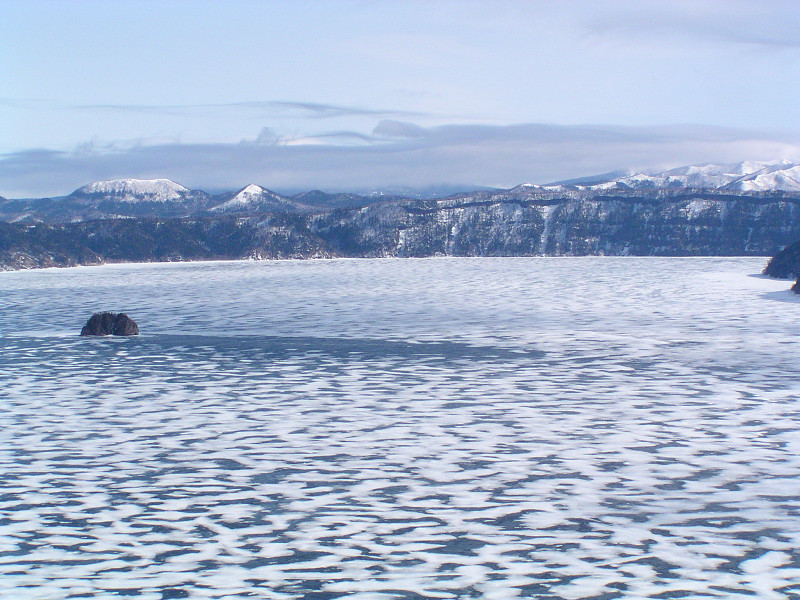
The lake is a designated Special Protection Zone of the national park, which means no one is allowed to descend to the shore. Every view comes from observation platforms looking down from the rim of the caldera — preserving the lake in its primeval state.
The Ainu people, indigenous inhabitants of Hokkaido, called this lake Kamuy-to (神の湖, “Lake of the Gods”) or Kintan Kamuy To (the god’s lake in the mountains). The mountain rising on the eastern shore is Kamuy-nupuri (神の山, “Mountain of the Gods”). The small islet near the lake’s center is Kamuishu (the goddess-grandmother).
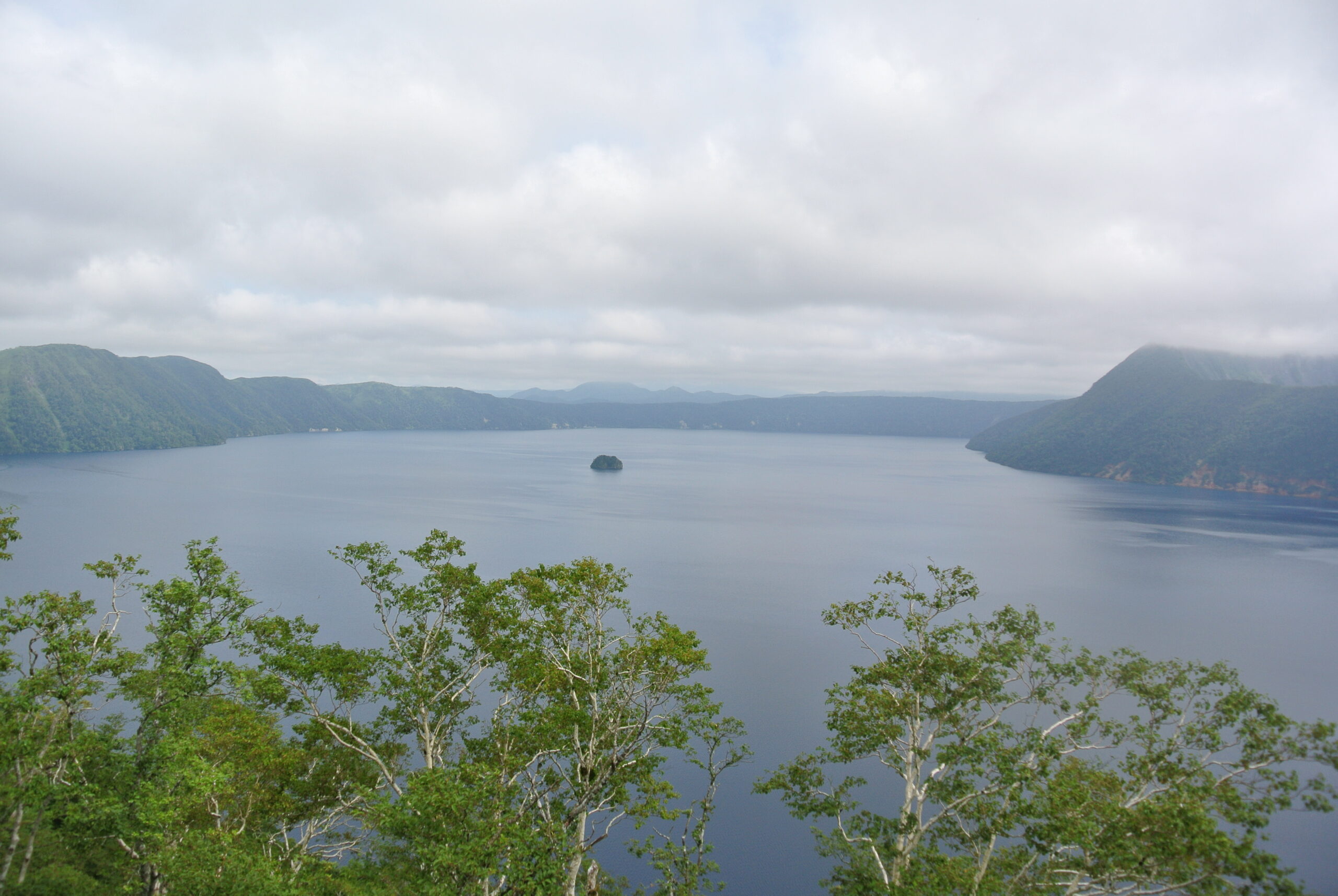
Ainu legend tells that Kamuishu was once an old woman who wandered to the lake searching for her lost grandchild. Exhausted by grief, she lay down at the lake’s center and was transformed into the small island that gazes mournfully across the water. To this day, looking at Kamuishu evokes a quiet sadness — and a respect for the lake as a sacred place.
The name “Mashu” itself has uncertain origins; researchers note multiple theories without consensus.
In 1966, Japanese singer Fuse Akira recorded the famous ballad “Kiri no Mashū-ko” (“Misty Lake Mashu”), turning the lake’s frequent summer fog into a national symbol of romantic mystery.
Two tourist superstitions emerged from this fame:
1. Couples who visit during fog will delay their marriage or break up
2. Visitors who see the lake clearly will have their wishes granted
Neither has a formal source — these are pure folklore. But the legends have shaped how people experience the lake. A foggy visit isn’t ruined: it’s part of the lake’s character, and many find the white wall of fog over the rim just as moving as a clear blue surface.
—
The Three Viewpoints: Which to Choose
Lake Mashu has three main observation platforms, each offering a different view and atmosphere.
| Detail | Information |
|——–|——|
| Location | Southwest rim, Teshikaga town side |
| Access | 15 min by car from JR Mashu Station |
| Parking | Paid May 1 – Oct 31 (¥500 for cars, joint ticket with Mt. Iozan parking). Free Nov 1 – Apr 30 |
| Facility | Mashu-ko Kamui Terrace — shop, indoor lounge, rooftop terrace, restrooms, viewing deck |
| Hours | Kamui Terrace 8:30-17:00 (irregular closures). The platform itself is open 24 hours |
The most accessible and most visited platform — over 1 million people per year. From here you get the iconic view of Kamuishu Island and Mt. Kamuinupuri framed together. Tour buses arrive throughout the day, so summer afternoons are crowded.
Located along Route 52 on the western caldera rim, slightly higher than Viewpoint 1. Parking for 15 cars (free). No restrooms or shop — just a viewing deck.
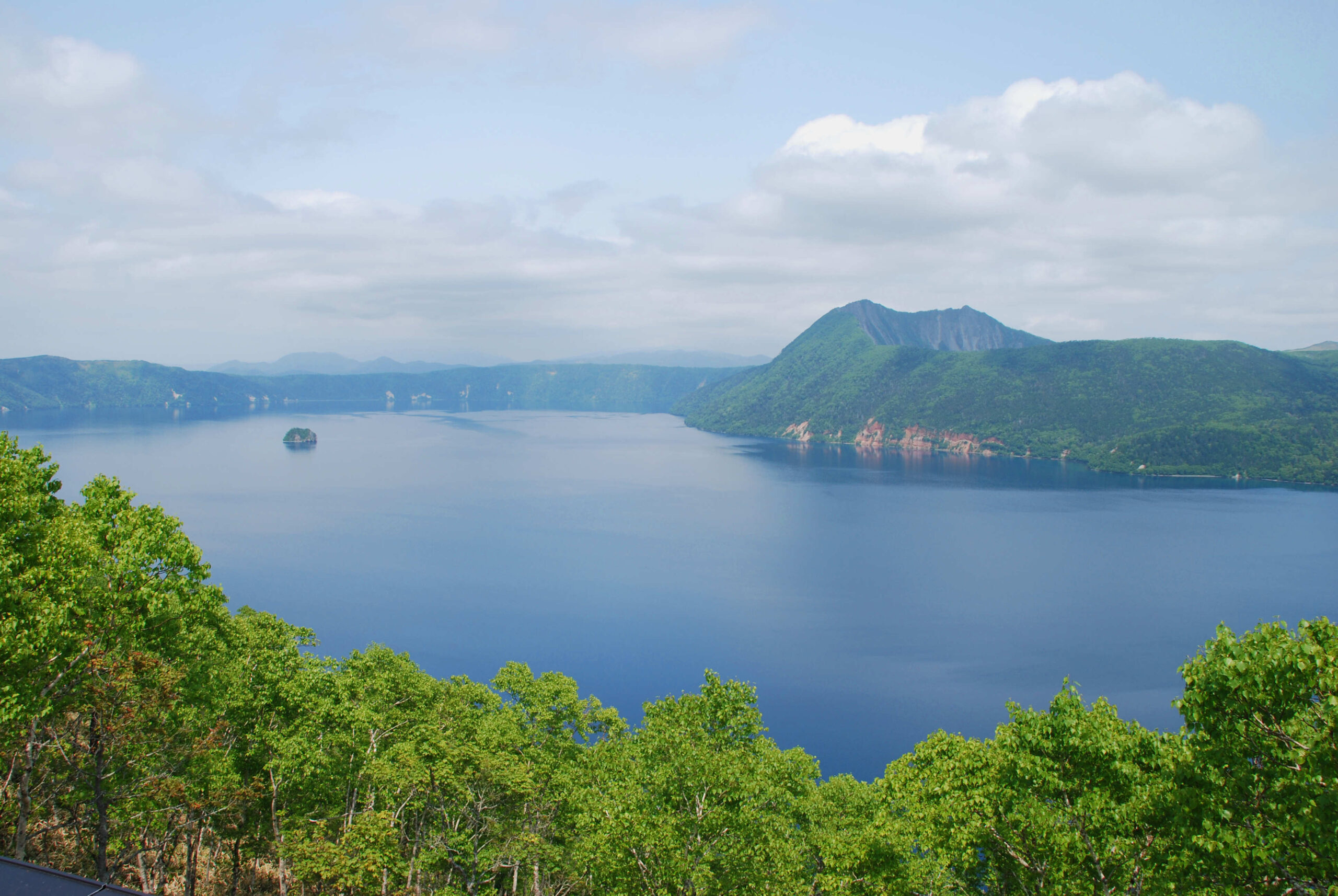
The distinctive feature: from this platform you can see both Lake Mashu and Lake Kutcharo at the same time — a rare chance to take in two enormous caldera lakes in one place. Early mornings between June and October can produce dramatic cloud seas (unkai) over the calderas. Quieter than Viewpoint 1, popular with photographers. Closed late November through early April.
The platform on the opposite side of the lake, reached from Kiyosato Town or Nakashibetsu.
| Detail | Information |
|——–|——|
| Access | 30 min by car from JR Kiyosatocho Station; ~1 hour from Nakashibetsu Airport |
| Parking | ~30 cars, free |
| Open season | Early May – late November (winter road closure) |
Reportedly less affected by fog than the Teshikaga side (though this varies with weather). Crowds are minimal, and Kaminokoike (the Child of God Pond) is just 10 minutes away by car — a famous blue spring pond fed by Mashu’s underground water. Ideal for travelers who want quiet contemplation away from tour groups.
—
What Power Spot Visitors Seek
Lake Mashu’s identity as a sacred site goes back to Ainu spirituality, and modern visitors describe their experiences in similar terms:
- Purification — the closed-system water, with no flowing inlets, suggests the cleansing of one’s own inner clutter
- Inner stillness — encircled by 360 degrees of caldera wall, the lake teaches a particular quality of silence
- Wish fulfillment — the folk belief that seeing a clear Mashu means your wish will come true (treat lightly, but enjoy the ritual)
- Romantic significance (with caution) — the “couples who see fog will break up” legend is just folklore. Don’t let weather ruin your day
The real spiritual offering of Lake Mashu isn’t the legends. It’s the experience of standing on a viewpoint where the lake stretches below you, untouched by any human footprint, in absolute silence broken only by wind.
—
Best Time to Visit: Fog vs. Clear
| Month | Clarity Probability | Fog Risk | Notes |
|——-|——————–|———-|—– |
| May | ★★★ | Medium | Remaining snow, fresh greenery, fewer tourists |
| June | ★ | High | Peak “Misty Mashu” season |
| July | ★★ | High | Fog continues |
| August | ★★★ | Medium | Increasingly clear days |
| September | ★★★★ | Low | Water clarity often at its highest |
| October | ★★★★★ | Low | Autumn colors, clear sky, fewer crowds |
| November | ★★★ | Low | End of autumn, cold |
| December – February | ★★ | Low | Possible surface freeze, rime ice scenery |
| March – April | ★★ | Medium | Snow-melt period |
For a clear view, late September through mid-October is the most reliable window. For the misty, mythic atmosphere, target June or July at dawn.
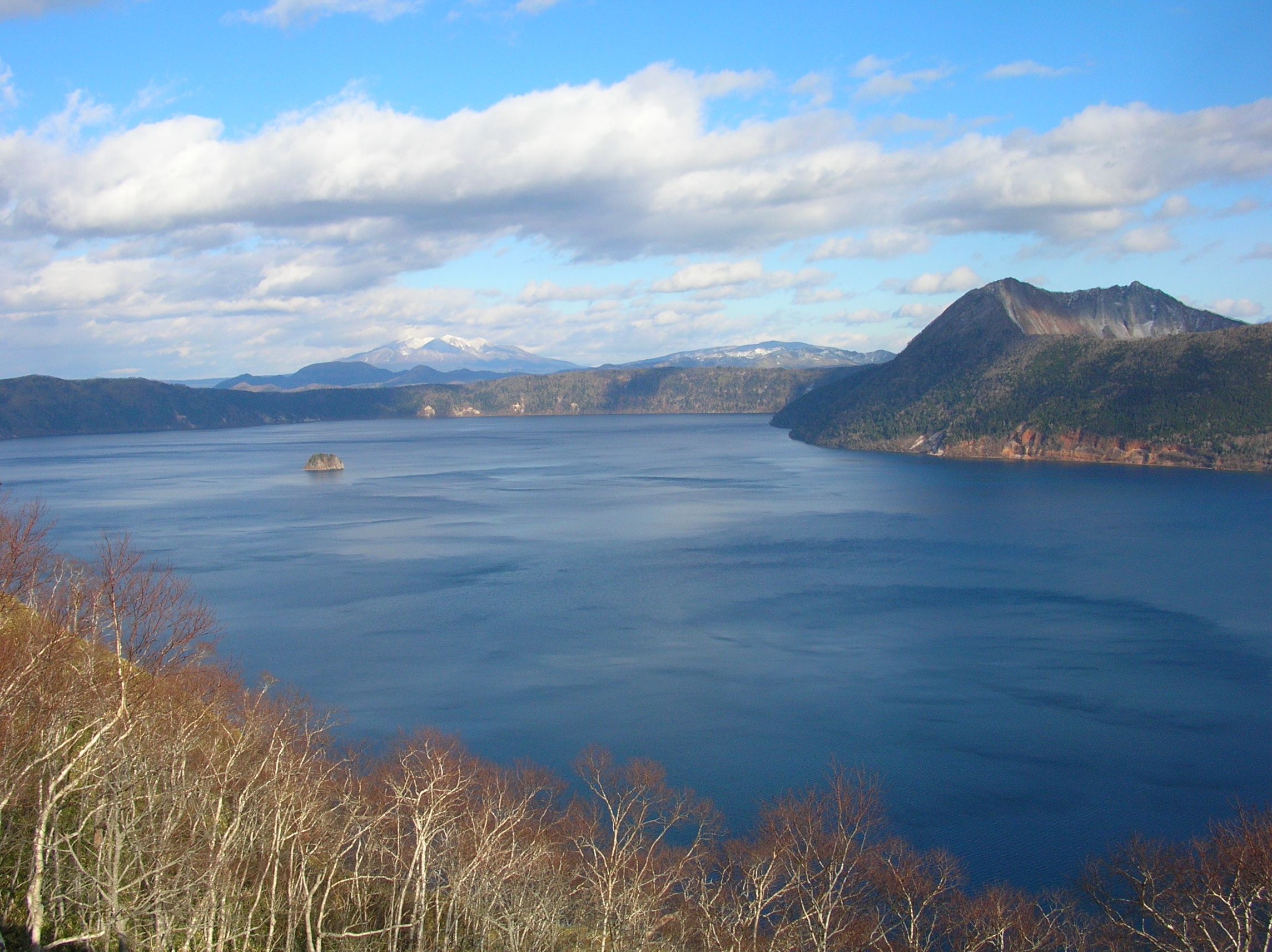
- Early morning (5:00-8:00): Fog often forms, but tends to lift later in the morning
- Midday (12:00-14:00): Most crowded; parking can fill
- Late afternoon (after 16:00): Tour buses depart, quiet returns
- Night: On clear nights, Viewpoint 1 is a renowned stargazing destination — minimal light pollution, with the Milky Way clearly visible
—
How to Get There
The nearest stations are JR Mashu Station and Kawayuonsen Station on the JR Senmou Main Line.
| From | Route | Time |
|——|——-|——|
| JR Kushiro Station | Senmou Line local train → Mashu Station | ~1 hr 40 min |
| Sapporo | Express train → Kushiro → Senmou Line | ~6-7 hours |
| Mashu Station | Eco passport bus → Viewpoint 1 | ~25 min (summer only) |
Important: Public bus service is extremely limited and stops in winter. Renting a car is effectively required for a flexible visit.
| From | Time |
|——|——|
| Kushiro Airport | ~2 hours |
| Memanbetsu Airport | ~1 hr 30 min |
| Sapporo | ~5 hours |
| Akanko Onsen | ~1 hour |
The caldera-rim road serving Viewpoints 1 and 3 (along Route 52) has winter closure periods (typically late November to mid-April, varies by year). The road to Ura-Mashu is also winter-closed. Check road conditions on the Hokkaido road information site or with Teshikaga Tourism before traveling between November and April.
- Viewpoint 1: Paid May 1 – Oct 31 (¥500), free Nov 1 – Apr 30
- Viewpoint 3: Free, ~15 cars, closed late Nov – early Apr
- Ura-Mashu: Free, ~30 cars, closed in winter
—
Nearby Attractions and a Suggested Itinerary
| Spot | From Lake Mashu | Highlights |
|——|—————-|———–|
| Lake Kutcharo | 15 min by car | Japan’s largest caldera lake. Lakeside hot-spring sands at Sunayu |
| Kawayu Onsen | 15 min by car | Strong acidic sulfur hot springs; retro spa town |
| Kaminokoike (Child of God Pond) | 30 min by car (via Ura-Mashu) | Tiny blue spring pond fed by Mashu’s underground water |
| Mt. Iozan (Atosanupuri) | 20 min by car | Active volcano with fuming sulfur vents you can walk near |
| Lake Akan | 1 hour by car | Famous for marimo algae balls and onsen town |
| Michi-no-Eki Mashu Onsen | 5 min walk from Mashu Station | Free foot bath, local produce |
“`
Day 1:
10:00 Pick up rental car at Kushiro Airport
12:00 Lunch at Lake Akan (marimo museum, Ainu Kotan village)
14:30 Lake Mashu Viewpoint 1
15:30 Viewpoint 3 (with Lake Kutcharo backdrop)
16:30 Check in at Kawayu Onsen
18:00 Dinner and hot-spring bathing
Day 2:
8:00 Early-morning Lake Mashu (re-check for clear weather)
9:30 Kaminokoike via Ura-Mashu
11:30 Lunch and souvenirs at Michi-no-Eki Mashu Onsen
13:00 Drive toward Kushiro Wetlands
17:00 Return to Kushiro Airport
“`
Teshikaga is known for Mashu soba — buckwheat noodles that benefit from the region’s dramatic temperature swings. Try shops near Mashu Station or in the town center. For dinner, Kawayu Onsen has traditional ryokan meals featuring Hokkaido fish and venison.
—
Visitor Reactions
> “Late September at Viewpoint 1. Cloudless sky and the lake was an unbelievable shade of blue. Photos cannot capture it.”
> — Visitor review (paraphrased, Google Maps)
> “Went in June and saw nothing but fog. But standing in front of a wall of white, with wind from the lake hitting my face, was its own unforgettable experience.”
> — Visitor review (paraphrased)
> “Ura-Mashu is the recommendation. Far fewer people than Viewpoint 1, and you can pair it with Kaminokoike.”
> — Visitor review (paraphrased)
The split between “saw it clearly” and “saw nothing but fog” defines the Lake Mashu experience. Most experienced visitors don’t see fog as failure — they describe it as another side of the lake’s true face.
—
Frequently Asked Questions
Q: Can I go down to the lakeshore?
💡 A: No. Lake Mashu’s shore is a Special Protection Zone of the national park and entirely off-limits. All viewing is from the three rim platforms.
Q: What if it’s foggy when I visit — is there a refund?
💡 A: There is no refund system. Entry to Viewpoint 1 itself is free; only parking is paid in summer. Local tradition treats foggy Mashu as part of the experience, not a failure.
Q: Can I visit in winter?
💡 A: Viewpoint 1 may be accessible during parts of winter, but the caldera-rim road (Route 52) serving Viewpoints 1 and 3 and the road to Ura-Mashu have closure periods (typically late November to mid-April). Conditions vary by year — check road information ahead of time. Many travelers combine a winter Mashu attempt with the SL Winter Wetlands Train, drift ice (Abashiri), or onsen at Kawayu.
Q: Can I bring my pet?
💡 A: Pets are allowed on leash at platforms and parking areas, but generally not inside facility buildings like Kamui Terrace. Plan to take turns or wait outside.
Q: Is the site wheelchair / stroller accessible?
💡 A: Viewpoint 1 is well-equipped with barrier-free paths from parking to the viewing deck. Viewpoints 3 and Ura-Mashu involve some stairs or uneven ground.
Q: Are there restrooms and food?
💡 A: Yes at Viewpoint 1 (Kamui Terrace has shop and light food like curry, ramen, and the famous Mashu soft-serve). Viewpoint 3 and Ura-Mashu have restrooms but no food. Eat in Mashu town, Kawayu Onsen, or Akan Onsen.
Q: How long should I plan?
💡 A: 30 minutes to 1 hour for just Viewpoint 1. Half day to full day for all three viewpoints plus Kaminokoike and Kutcharo.
—
Final Thoughts
Lake Mashu is a closed caldera lake — no rivers in, no rivers out — and that singular geological fact is the source of its world-class clarity and its sacred reputation.
Whether the lake reveals itself to you in clear blue or hides behind summer fog, both faces are authentic. The Ainu who first named it Kamuy-to understood this: the lake’s presence does not depend on whether you can see across it.
The best window for a clear view is mid-September through mid-October — autumn colors, dry air, fewer crowds. But the famous “Misty Mashu” of June and July is no consolation prize. It’s the side of the lake that Japan’s most beloved ballad about this place celebrates.
A car is effectively essential. Pair a Mashu visit with Lake Kutcharo, Kawayu Onsen, Kaminokoike, and Lake Akan, and you have one of the finest 2-3 day natural circuits in Japan.
—
We hope this guide helps you plan an unforgettable visit to Lake Mashu.
Information current as of May 2026. Please verify hours, fees, and road conditions on official sources before your trip.
—
Want to discover the power spot that’s right for you?
Beyond Lake Mashu, Japan is home to many sacred power spots. To find out which one best matches your personal profile, try our free compatibility diagnosis (3 minutes).
📚 You May Also Like
Explore more sacred places and power spots across Japan in our Japan Power Spots series.
🌏 This article is part of our Japan Power Spots series for international visitors.
Planning your trip to Japan? Bookmark this page for your spiritual journey!