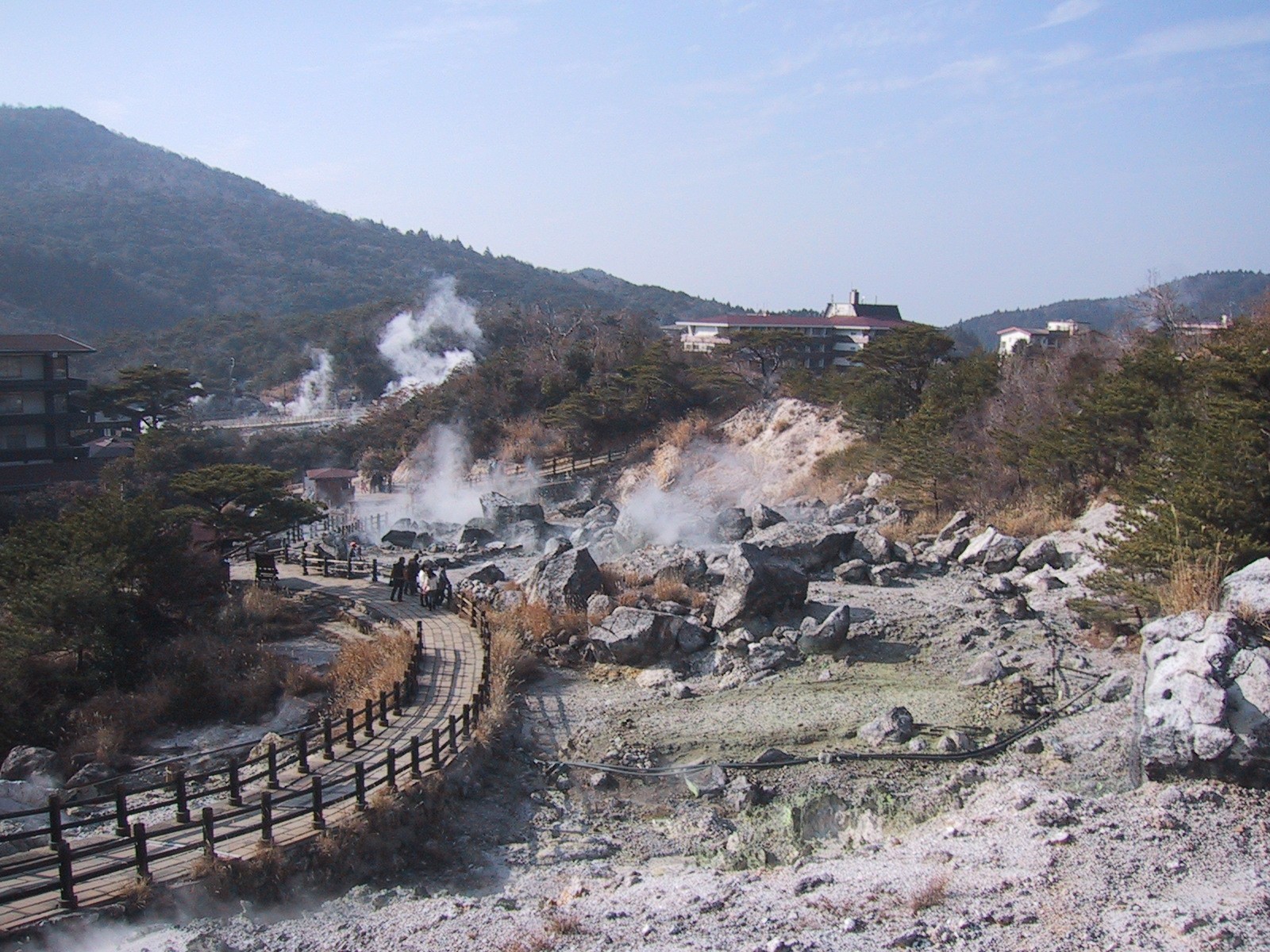
“The ground hissed beneath my feet. Steam erupted from cracks in the earth. The air smelled of sulfur. I was standing in Hell — and it was magnificent.”
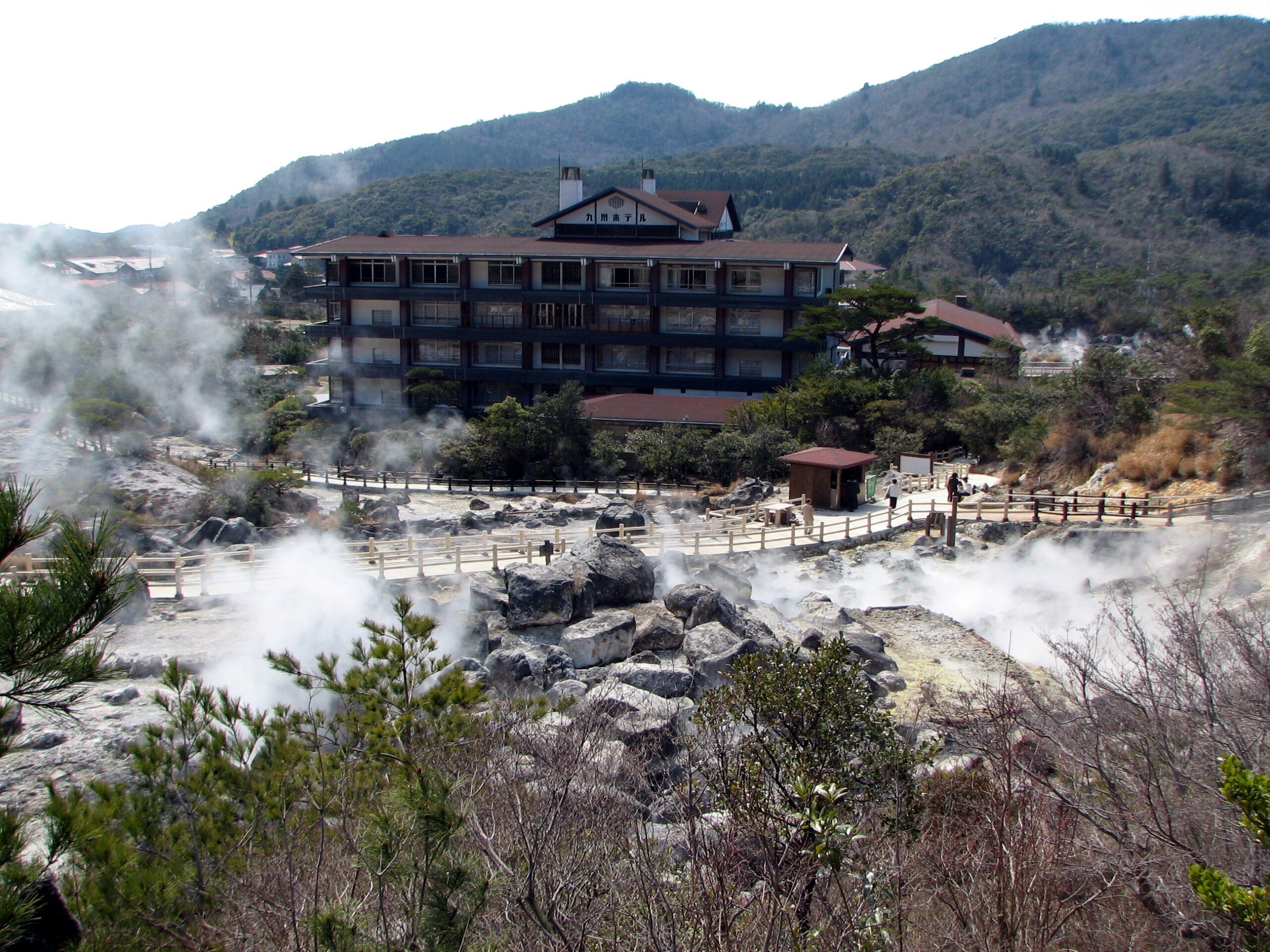
Welcome to Unzen Jigoku, one of Japan’s most dramatic geothermal landscapes. Located at 700 meters elevation in Nagasaki Prefecture’s Unzen Onsen district, this volcanic wonderland features over 30 individual “hells” (jigoku) — furiously steaming vents, bubbling mud pools, and sulfur-encrusted rocks that paint a scene straight out of Dante’s Inferno.
The best part? It’s completely free to visit, 24 hours a day. Whether you come at dawn to watch morning mist mingle with volcanic steam, or at midday to sample eggs boiled in geothermal vents, Unzen Jigoku delivers an unforgettable encounter with the raw power of the Earth.
With hot spring water temperatures reaching 60-90 degrees Celsius and hydrogen sulfide rising from dozens of fumaroles, this is a place where you can literally feel the planet breathing beneath your feet.
—
What Makes Unzen Jigoku Special
Over 30 Hells in One Walkable Area
Unlike Beppu’s famous “Hell Tour” where each hell is a separately ticketed attraction, Unzen Jigoku concentrates 30+ volcanic hells along a single boardwalk that you can walk in under an hour. Each hell has its own character:
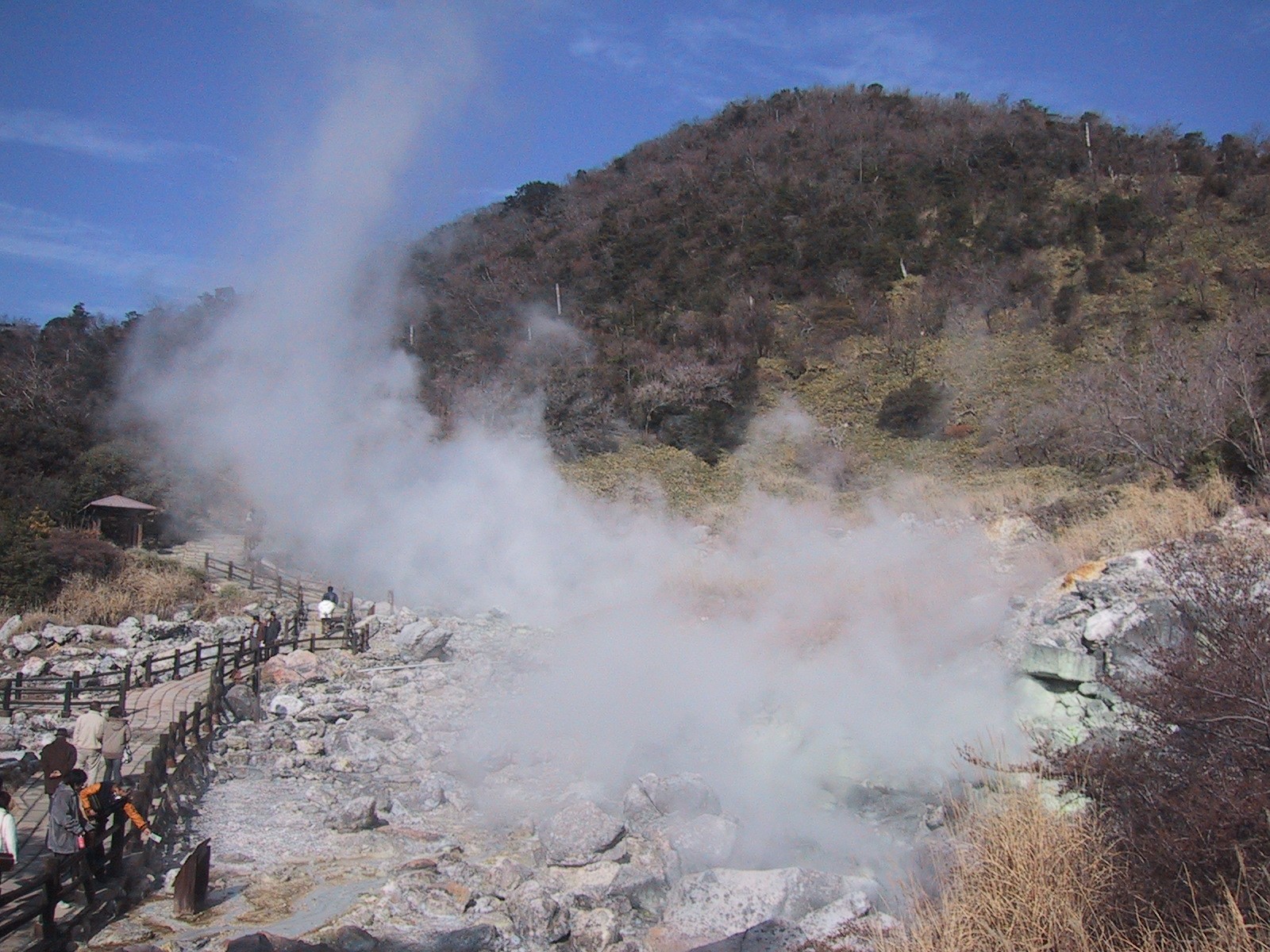
- Daikyoukan Jigoku (Great Wailing Hell): The largest fumarole — a thundering vent that shoots steam skyward with a roar you can feel in your chest
- Oito Jigoku: Named after a tragic love story from the Meiji era, this hell features eerie bubbling mud
- Seishichi Jigoku: The companion hell to Oito, named after her ill-fated lover
- Suzume Jigoku (Sparrow Hell): The steam here escapes with a chirping sound resembling birdsong
- Jaken Jigoku: One of the most vigorously active vents, blasting steam with impressive force
A Full Sensory Experience
Unzen Jigoku engages all five senses in ways that few places on Earth can match:
- See: White columns of steam rising against blue sky, yellow sulfur crystals coating rocks
- Hear: The deep rumbling of underground activity, the “chirping” of Suzume Jigoku
- Smell: The unmistakable sulfur scent — pungent but strangely invigorating
- Touch: At the ashi-mushi (foot steaming) stations, you can rest on benches and feel geothermal heat rising directly from the ground beneath your feet
- Taste: Hot spring eggs (onsen tamago) steamed in volcanic vents — a simple, delicious snack with a subtle sulfur aroma (2 eggs for 200 yen, 5 for 400 yen)
The foot steaming experience is uniquely Unzen. Sit on a bench along the boardwalk, remove your shoes, and hold your feet over the steam rising from the earth. It’s like feeling the planet’s pulse — warm, steady, and deeply grounding.
The Dark History: Christian Martyrdom
Unzen Jigoku carries a profound historical weight. During the Edo period’s persecution of Christianity (1627-1631), the Tokugawa Shogunate used the boiling hot springs as a tool of execution. Dozens of Christian converts were thrown into the scalding waters and forced to recant their faith.
A Christian Martyrdom Monument stands along the boardwalk, bearing a cross and commemorating those who died for their beliefs. In 2018, the “Hidden Christian Sites in the Nagasaki Region” were inscribed as a UNESCO World Heritage Site, drawing renewed attention to this painful chapter of Japanese history.
For many visitors, encountering this memorial amid the hellish landscape transforms the experience from sightseeing into something far more contemplative.
—
Spiritual Significance & Benefits
Purification and Renewal
Among Japan’s power spots, Unzen Jigoku is considered especially potent for spiritual purification. The combination of high-temperature steam, hydrogen sulfide, and sulfuric acid hot springs has been believed since ancient times to drive away negative energy and impurities.
The sulfur springs (source temperatures 60-90 degrees Celsius) have documented antibacterial properties, and the waters have been used for centuries to treat skin conditions, chronic fatigue, and stress-related ailments.
Resilience and Transformation
Mount Unzen famously erupted in 1990-1995, causing devastating pyroclastic flows that claimed 43 lives. Yet the mountain has since recovered remarkably, with new vegetation gradually reclaiming the scarred landscape.
This cycle of destruction and rebirth makes Unzen a powerful symbol for anyone going through major life transitions. The earth here is constantly changing — new fumaroles appear, old ones shift — reminding visitors that change is not something to fear but a natural force that creates new possibilities.
Hot Spring Healing
Unzen’s waters are classified as sulfur springs, iron-containing springs, and acidic springs (hydrogen sulfide type). Traditional benefits include:
- Chronic skin conditions and eczema
- Joint pain and muscle soreness
- Poor circulation and cold sensitivity
- Chronic fatigue and stress relief
- Respiratory conditions (steam inhalation)
—
Best Time to Visit
| Season | Period | Rating | Highlights |
|——–|——–|——–|———–|
| Spring | March – May | ★★★★☆ | Miyama Kirishima azaleas (May), fresh green contrasting with white steam |
| Summer | June – August | ★★★☆☆ | Cool mountain retreat (700m elevation), though geothermal areas feel warm |
| Autumn | September – November | ★★★★★ | Stunning autumn foliage + steam (late Oct – mid Nov), Nita Pass leaf viewing |
| Winter | December – February | ★★★★☆ | Steam at its most dramatic, frost flowers on trees, hot springs feel divine |
Best Times of Day
- Early morning (6:00-8:00): Morning mist blends with volcanic steam for an otherworldly atmosphere. Very few visitors. Best for photography
- Midday (10:00-15:00): Best for the full experience — onsen tamago, foot steaming, and all facilities open
- Late afternoon (16:00-18:00): Golden hour light turns the steam columns into amber pillars
- Night: During illumination events (check locally), the steam glows against the dark sky
The ultimate timing: Early morning in late October, when autumn colors frame the rising steam against a crisp blue sky.
—
Walking Guide: How to Explore Unzen Jigoku
Time Estimates
| Route | Duration | Best For |
|——-|———-|———-|
| Quick loop | ~30 min | Limited time, mobility concerns |
| Standard route | ~1 hour | First-time visitors |
| Full experience | ~2 hours | Photography, foot steaming, onsen tamago, and thorough exploration |
Recommended Route (Standard, ~1 Hour)
Step 1: Unzen Oyama Information Center (5 min)
Start at the information center near the entrance to pick up a free map. The small exhibition about volcanic activity and local history is worth a quick look — understanding the geology makes the walk far more interesting.
Step 2: Seishichi & Oito Jigoku Area (15 min)
The boardwalk opens onto these companion hells, named after a tragic Meiji-era love story. Watch the mud bubble and steam rise from the ground.
Step 3: Daikyoukan Jigoku — The Main Event (10 min)
The largest and most dramatic fumarole. The thundering steam eruption is truly awe-inspiring. Stand upwind to avoid getting blasted, and protect your camera lens from moisture.
Step 4: Foot Steaming (Ashi-mushi) Break (10 min)
Find one of the bench stations along the boardwalk, slip off your shoes, and let the Earth’s warmth soak into your feet. This is deeply relaxing and completely free.
Step 5: Onsen Tamago at Jigoku Kobo (10 min)
Cap off your walk with volcanic eggs at the Unzen Jigoku Kobo shop. These eggs, steamed in geothermal vents, have a delicate sulfur taste that’s surprisingly addictive (2 for 200 yen, 5 for 400 yen).
Step 6: Suzume & Jaken Jigoku (10 min)
If time allows, continue to the quieter eastern section. Listen for the “chirping” steam of Suzume Jigoku and feel the powerful blasts from Jaken Jigoku.
Important Safety Tips
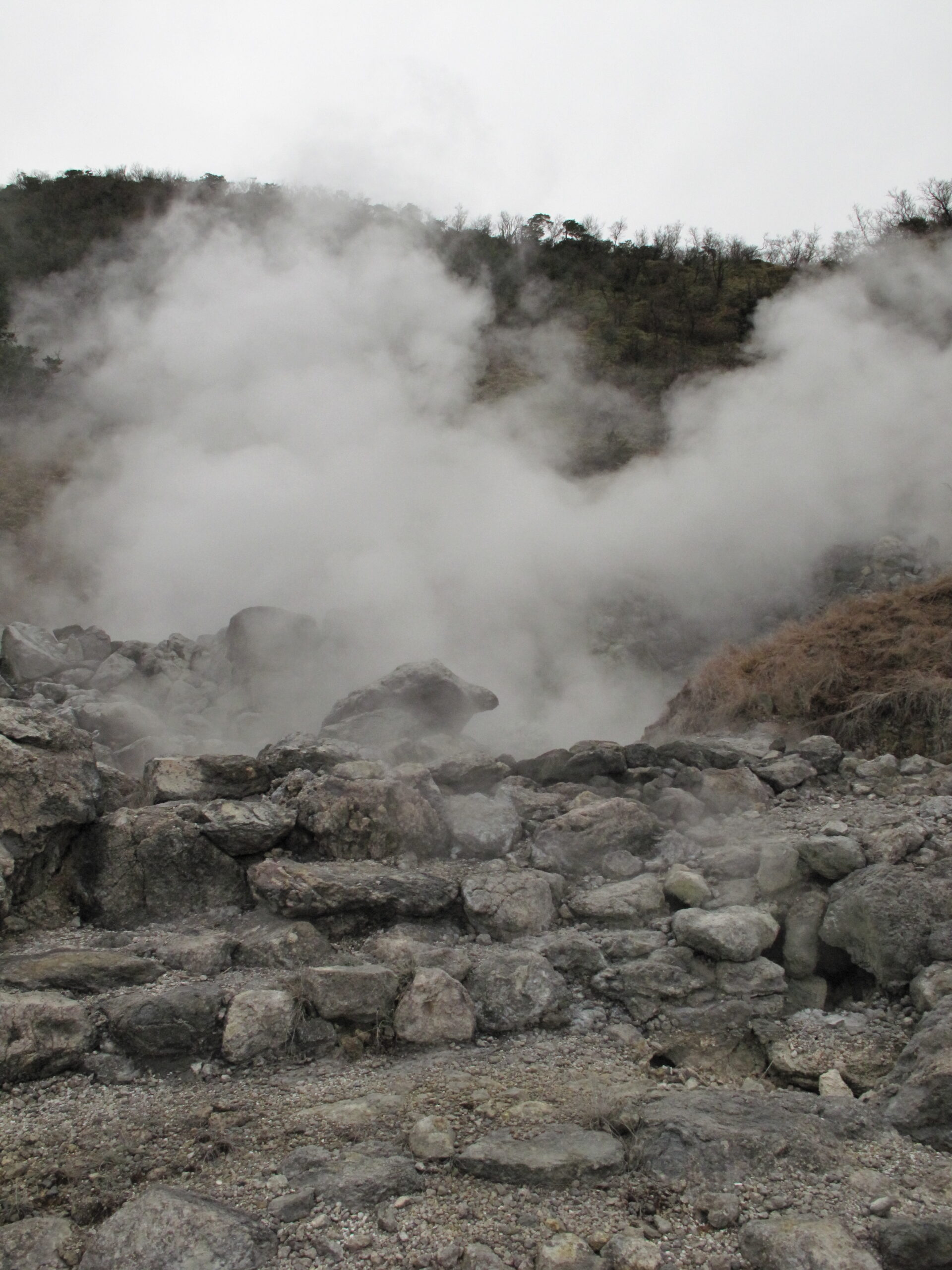
- Stay on the boardwalk: Ground temperatures can be extremely high in unmarked areas — serious burns are possible
- Sulfur gas: Visitors with asthma or respiratory conditions should be cautious, especially when wind shifts
- Metal jewelry: Sulfur gas can tarnish silver and other metals — consider removing jewelry before your walk
- Pets: Dogs are allowed on leashes on the boardwalk, but be mindful of hot ground and sulfur gas. Carry small dogs
- Wheelchair/stroller access: Main boardwalk sections are accessible, but some areas have stairs and steep slopes. An assistant is recommended
—
Essential Information
| Detail | Information |
|——–|————|
| Official name | Unzen Jigoku (雲仙地獄) |
| Address | 320 Unzen, Obama-cho, Unzen City, Nagasaki Prefecture |
| Admission | Free |
| Hours | 24 hours (shops and foot steaming: daytime only) |
| Duration | 1-2 hours |
| Parking | ~200 spaces nearby (500 yen standard, 300 yen at Lot 4) |
| Restrooms | Available along the boardwalk (barrier-free options) |
| Official site | Unzen Tourism Association |
—
How to Get There
By Car
- From Nagasaki: Nagasaki Expressway to Isahaya IC, then Route 57 → Route 251 → Route 389 (~1 hour 20 min from IC)
- From Fukuoka: Nagasaki Expressway to Isahaya IC (~1.5 hours), then ~1 hour 20 min to Unzen (total ~3 hours)
- From Kumamoto: Ferry from Kumamoto Port to Shimabara Gaiko Port (~30 min), then drive ~40 min to Unzen
Parking tip: Lot 4 (300 yen) is cheaper than the main lots and only a 5-minute walk to the hells. It tends to have spaces even during busy periods.
By Public Transport
- From JR Isahaya Station: Shimabara Railway Bus bound for “Unzen,” approximately 1 hour 20 minutes. Get off at “Unzen” bus stop, 5-minute walk to Jigoku
- From JR Nagasaki Station: Take JR to Isahaya Station (~25 min), then transfer to the Shimabara Railway Bus
- From Shimabara Port: Shimabara Railway Bus, approximately 50 minutes
Important: Bus service is limited to about 10 departures per day. Always check the return bus schedule before visiting to avoid being stranded.
—
Nearby Attractions
Unzen Onsen Town (Walking Distance)
The hot spring district surrounding Unzen Jigoku offers several bathing options:
- Unzen Kojigoku Onsenkan: A public bathhouse with milky-white sulfur water, different from the main Jigoku springs. Adults 460 yen. Skin-softening effect is remarkable
- Public baths “Shin-yu” and “Furu-yu”: Traditional communal baths used by locals. Just 100 yen for adults — one of Japan’s best bath bargains
- Unzen Vidro Museum: A glass art museum. Perfect for rainy days
Nita Pass (15 min by car)
The best viewpoint on the Shimabara Peninsula. The ropeway to Mt. Myoken summit (1,300 yen round trip, 3 min ride) offers panoramic views of Unzen’s volcanic peaks, the Ariake Sea, and Tachibana Bay. Spectacular during Miyama Kirishima azalea season (May) and autumn foliage (October-November).
Obama Onsen (15 min by car)
A seaside hot spring town facing Tachibana Bay, famous for Japan’s longest free foot bath — the “Hot Foot 105” stretches 105 meters along the waterfront. Soak your feet while gazing at the ocean sunset.
- Obama Champon: The local specialty noodle dish. Every restaurant has its own recipe — try a few for comparison
- Mushi-gama (Steam cooking): Use volcanic steam to cook seafood and vegetables. You can even bring your own ingredients
Shimabara Castle & Samurai District (40 min by car)
The castle town on the eastern side of the peninsula features a reconstructed castle with excellent views and beautifully preserved samurai residences. Known as the “Town Where Koi Swim” for the colorful carp in its spring-fed waterways.
—
Visitor Reviews
> “The scale is much bigger than I expected. The roaring steam and the heat rising from the ground are genuinely awe-inspiring. And the onsen tamago were delicious. Can’t believe it’s free!”
> — Google Maps review
> “I visited at sunrise. The morning fog mixing with volcanic steam created an absolutely ethereal atmosphere. Almost no other visitors. If you love photography, early morning is a must.”
> — Google Maps review
> “Standing at the Christian Martyrdom Monument really changed my perspective. Learning what happened here transforms this from a tourist attraction into something deeply moving. I recommend reading about the history before you visit.”
> — Google Maps review
—
Frequently Asked Questions
Q1. Can I visit Unzen Jigoku in the rain?
Absolutely. Rain actually increases the volume of steam, making the landscape even more dramatic. The boardwalks are well-maintained but can become slippery when wet — wear shoes with good grip. A rain jacket is more practical than an umbrella, as it keeps your hands free for photos and the boardwalk railings.
Q2. Is Unzen Jigoku safe for children?
Yes, with supervision. The boardwalks have railings, but the steam vents are extremely hot. Keep young children close and never let them reach through or over the barriers. Many families visit — kids are fascinated by the bubbling mud and the “Earth is alive!” factor makes it a fantastic natural science lesson. Strollers can navigate the main route.
Q3. How does Unzen Jigoku compare to Beppu’s Hell Tour?
Unzen offers a raw, natural experience while Beppu’s hells are individually curated tourist attractions. At Beppu, each hell is a separate facility with an admission fee. At Unzen, 30+ hells are concentrated along a free, open-air boardwalk where you walk through an active geothermal field. If you want a wilder, more immersive volcanic encounter, choose Unzen. If you prefer structured, colorful attractions (like the blue “Sea Hell” or red “Blood Pond Hell”), choose Beppu.
Q4. What’s the best spot for photography?
Daikyoukan Jigoku (Great Wailing Hell) with its massive steam column against the sky is the signature shot. For the most dramatic lighting, visit at sunrise or golden hour. The elevated section of the boardwalk offers a panoramic view of the entire geothermal field — perfect for wide-angle shots. Pro tip: Bring a lens cloth. Steam will coat your lens repeatedly, and sulfur deposits can be hard to remove if left too long.
—
Summary
Unzen Jigoku is one of Japan’s most accessible and dramatic encounters with volcanic power — free, open 24 hours, and engaging all five senses. Walk through 30+ steaming hells, feel the Earth’s heat through foot-steaming benches, taste eggs cooked in volcanic vents, and stand before a monument to religious martyrdom that reminds us of the complex layers of history beneath every landscape.
After your walk, the Unzen Onsen district is literally steps away. Drive 15 minutes to Obama Onsen for a 105-meter seaside foot bath. Or take the ropeway at Nita Pass for sweeping volcanic panoramas. The entire Shimabara Peninsula pulses with geothermal energy — Unzen Jigoku is simply where that energy breaks through to the surface in the most spectacular fashion.
Whether you’re seeking spiritual renewal, geological wonder, or simply one of the most unique free attractions in Japan, Unzen Jigoku delivers.
—
Want to discover which power spots are best for you?
Japan has hundreds of spiritual power spots, each with different energies. To find the ones that match your personal profile, try our free compatibility diagnosis (takes just 3 minutes).
あなたに最適なパワースポットを知りたい方へ