# Tamura Shrine: Kagawa’s Most Sacred Power Spot with a Dragon God, 100 Charms & Sunday Udon | Complete Guide
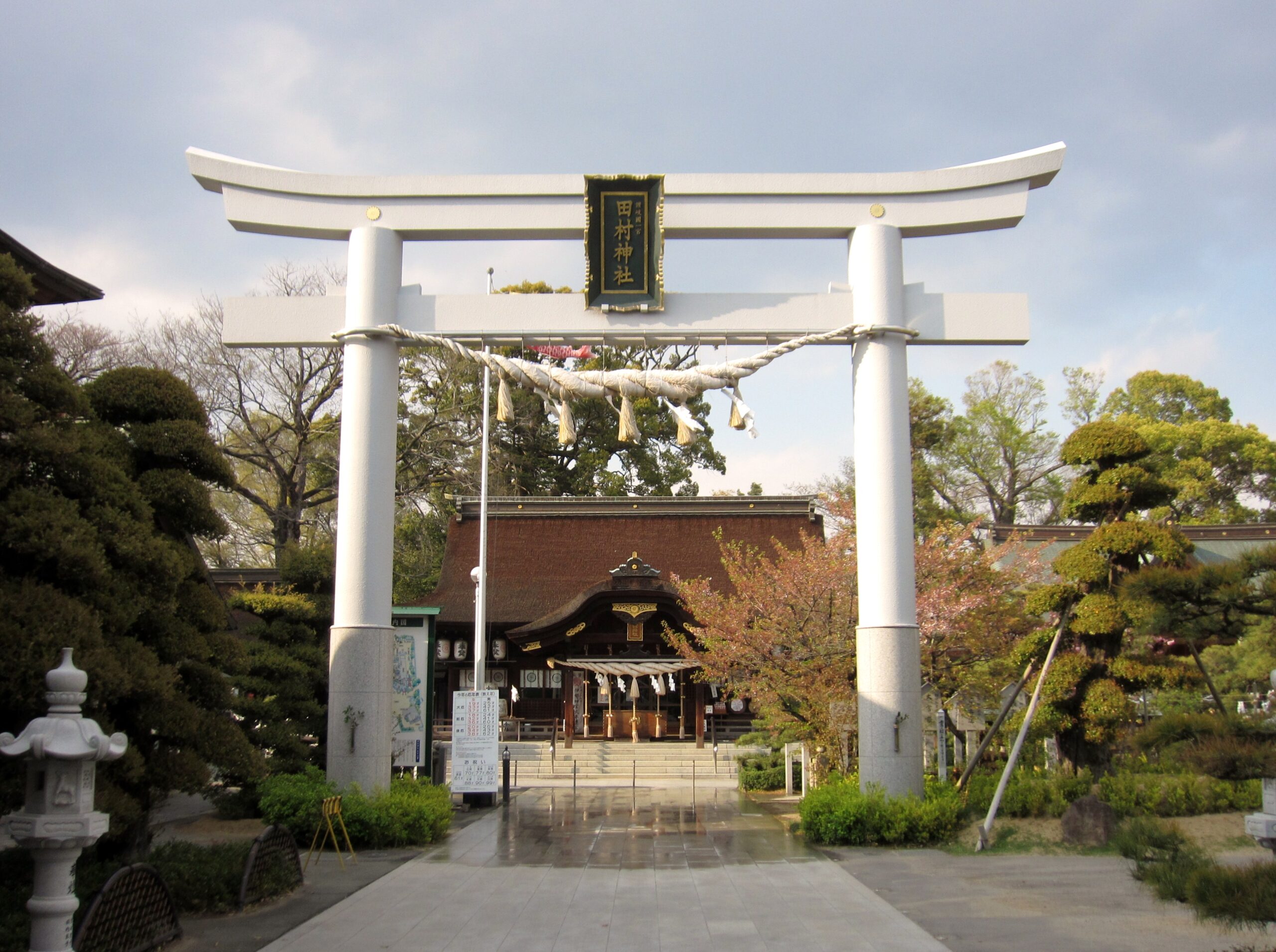
What if a dragon lived beneath a shrine — in a pool so sacred that no one has ever been allowed to look inside?
That’s the legend of **Tamura Shrine** in Takamatsu, Kagawa Prefecture. Founded in 709 AD, this is the **ichinomiya** (highest-ranked shrine) of the former Sanuki Province, built directly over a mysterious deep pool called “Sadamizu” where a dragon god is said to dwell. With over 1,300 years of history, an astonishing variety of sub-shrines earning it the nickname “Department Store of the Gods,” and a Sunday morning market serving **udon noodles for just 200 yen**, Tamura Shrine is unlike any power spot in Japan.
—
## What Makes Tamura Shrine Special
### The Forbidden Deep Pool — Where a Dragon Sleeps
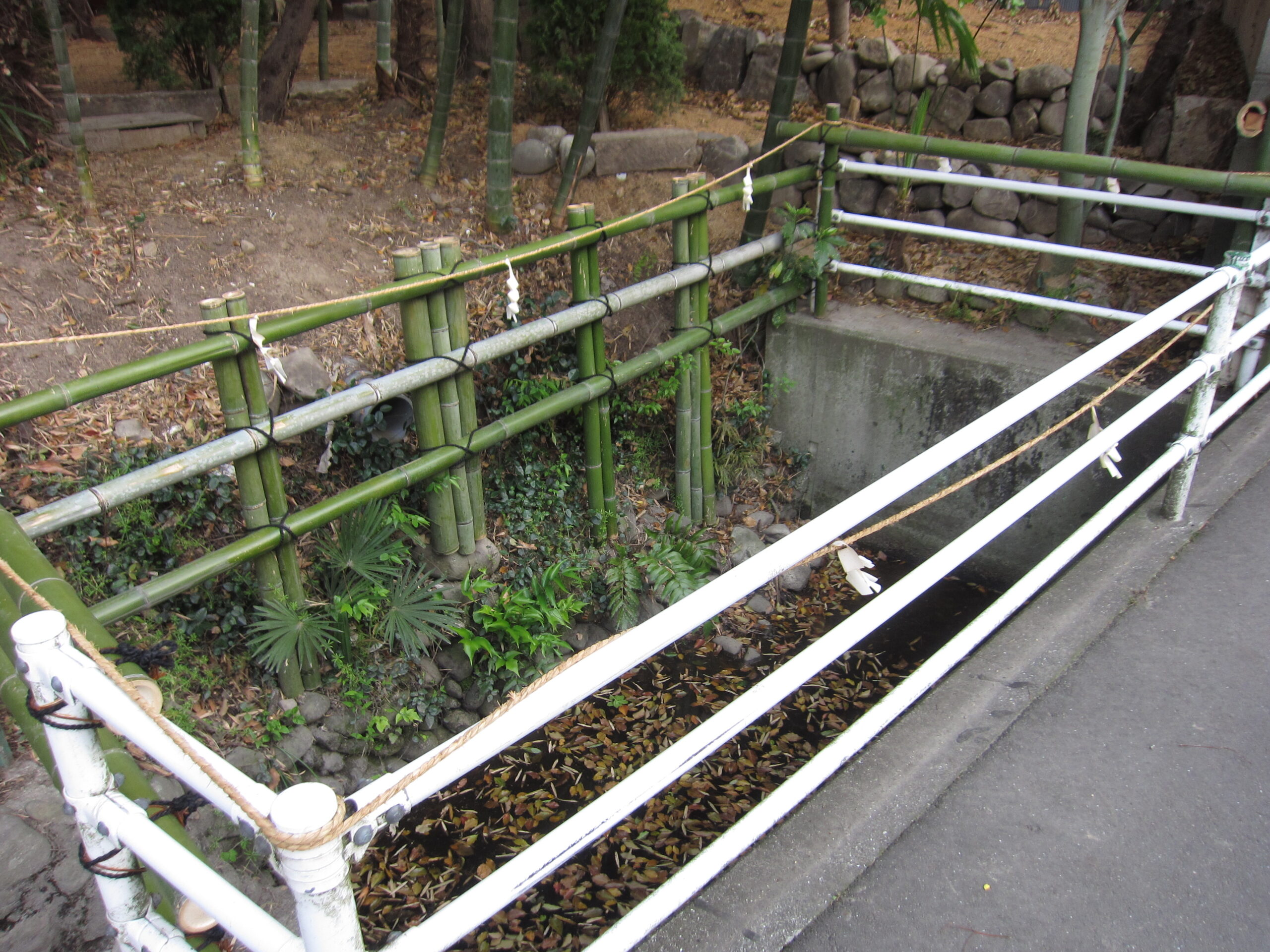
Tamura Shrine’s greatest mystery lies beneath the inner sanctuary (oku-den). Below its floor exists a deep pool called **”Sadamizu”** — and according to legend, **anyone who peers into it will die**.
This pool has never been opened or examined in the shrine’s 1,300-year history. A dragon god is said to dwell within, and the shrine’s formal name, “Sadamizu Daimyojin,” derives from this sacred water source. The deity is worshipped as a “god of water virtue” who governs the source of all life.
The entire area is a natural spring zone, and sacred springs still bubble up throughout the grounds — **Tamotozumi** (Sleeve Spring) and **Hanaizumi** (Flower Spring) — filling the shrine with the presence of water.
### “Department Store of the Gods”
Tamura Shrine’s grounds are packed with sub-shrines dedicated to an remarkable range of deities — Inari (fox deity), Tenjin (god of learning), Miyajima-sha (Benzaiten, goddess of arts and wealth), Hotei (god of happiness), and many more. Visiting Tamura Shrine is like getting blessings from dozens of gods in a single trip.
The standout is the **Golden Dragon statue** — a striking 3-meter figure. Legend says that **offering gold coins to the dragon will make you wealthy**, and visitors regularly place koban (gold coins) at its feet.
### The Sanuki Momotaro Connection
One of the enshrined deities, **Isaseri-hiko-no-Mikoto** (another name for Kibitsuhiko-no-Mikoto), is believed to be the real-life model for **Momotaro**, Japan’s legendary Peach Boy. In the Sanuki version of the tale, he gathered a dog from Inujima, a monkey from Saruou, and a pheasant from Kijigaya to battle the demons on Megijima (Demon Island) — an island you can actually visit by ferry from Takamatsu Port.
### Sunday Morning Market — 200-Yen Sanuki Udon
If you visit on a **Sunday morning**, you’re in for a treat. The shrine hosts a weekly morning market starting at 6:00 AM, where you can enjoy a bowl of **freshly made Sanuki udon for just 200 yen**. The slightly soft noodles in iriko (dried sardine) broth are simple but satisfying — and eating udon inside a 1,300-year-old shrine is an experience you won’t find anywhere else. The stall closes when the noodles run out, so come early.
—
## Spiritual Benefits
The five deities collectively known as **Tamura Okami** offer a wide spectrum of blessings:
– **Protection from evil and bad directions** — Tamura Shrine’s signature blessing
– **Traffic and travel safety** — Sarutahiko (god of roads)
– **Abundant harvest and water blessings** — Yamatototohi-momoso-hime (water deity)
– **Marriage and relationships** — Hime-no-miya sub-shrine
– **Safe childbirth and healing** — Sobakura-sha (protector of women)
– **Academic success** — Ichinomiya Tenmangu
– **Business prosperity and wealth** — Inari-sha, Miyajima-sha
– **Family harmony and fertility** — Hotei (one of the Seven Lucky Gods)
### Goshuin (Shrine Stamps)
| Type | Fee | Notes |
|——|—–|——-|
| Tamura Shrine stamp | 500 yen | Hand-written |
| Sanuki Seven Lucky Gods (Hotei) | 500 yen | Hand-written |
| Shin-Shikoku Mandala Pilgrimage #11 | 500 yen | Hand-written |
**Hours:** 9:00–17:00 at the shrine office.
### Omamori (Charms)
With approximately **100 varieties** of charms available, Tamura Shrine has one of the most extensive collections in Japan. Popular choices include the suction-cup traffic safety charm (designed for car dashboards) and the dragon-themed goshuincho (stamp book).
—
## Best Times to Visit
| Season | Event | Date |
|——–|——-|——|
| Spring | **Spring Grand Festival & Okacho Ritual** | May 7–8 |
| Summer | Toro Matsuri (Lantern Festival) | August 9–10 |
| Autumn | **Autumn Grand Festival** (lion dance, mikoshi) | October 7–8 |
| Winter | **Setsubun Festival** (~20,000 visitors) | February 3 |
| Weekly | **Sunday Morning Market** (udon for 200 yen) | Every Sunday, 6:00 AM |
**Top recommendation: May 7–8** for the Okacho Ritual, when a mosquito net is lowered into the forbidden deep pool — the most mystical ceremony unique to Tamura Shrine.
### Avoiding Crowds
– **Weekday mornings are best** — you may have the grounds to yourself
– **Sunday mornings are lively** but arrive by 7:00 AM for udon
– **January 1–3** is very crowded (20-minute parking wait possible)
– **February 3 (Setsubun)** draws about 20,000 visitors
—
## Visitor’s Guide
### Recommended Route (40 minutes – 1 hour)
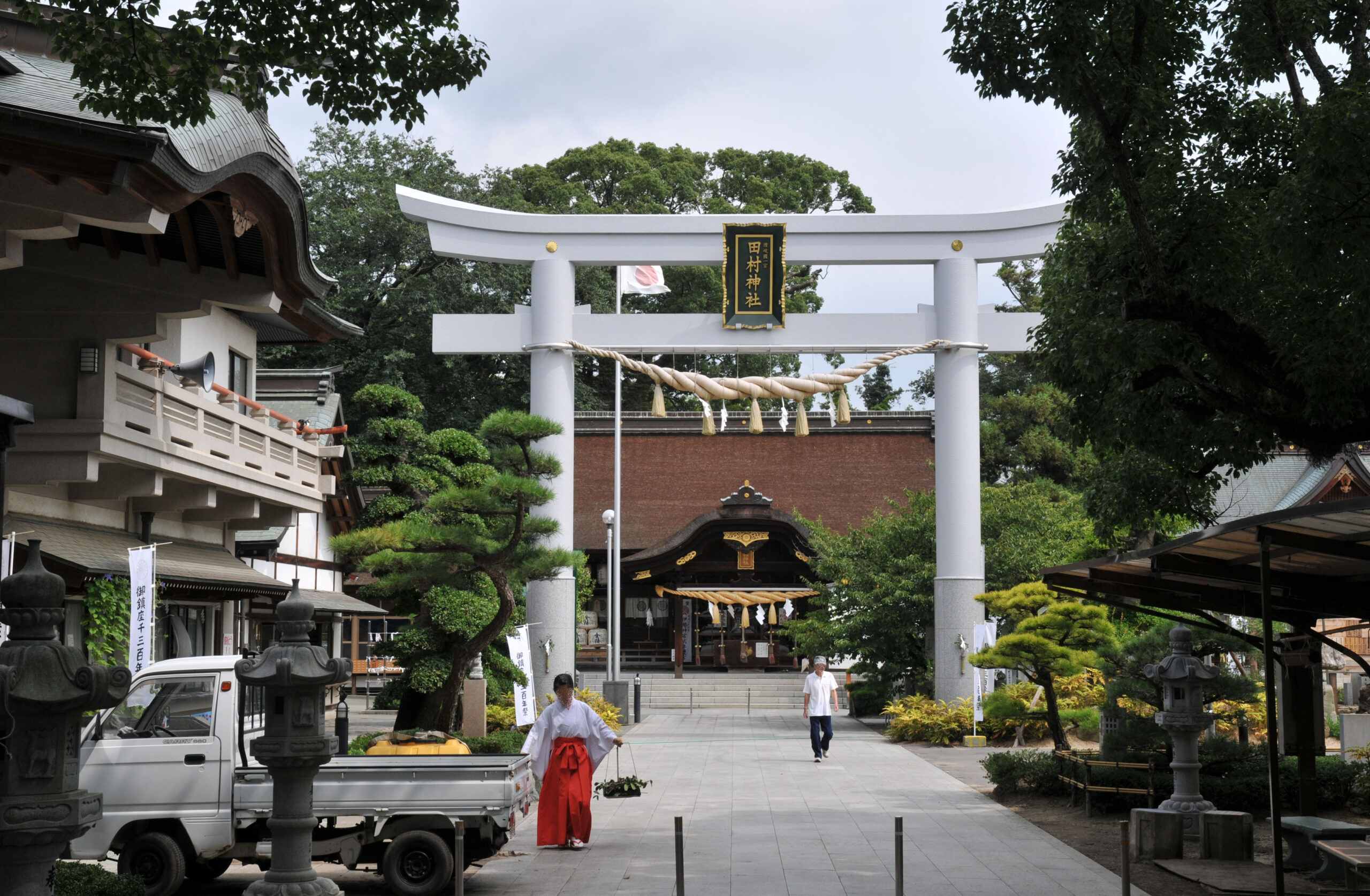
1. **Main torii gate** — look up at the “Tamura Jinja” plaque
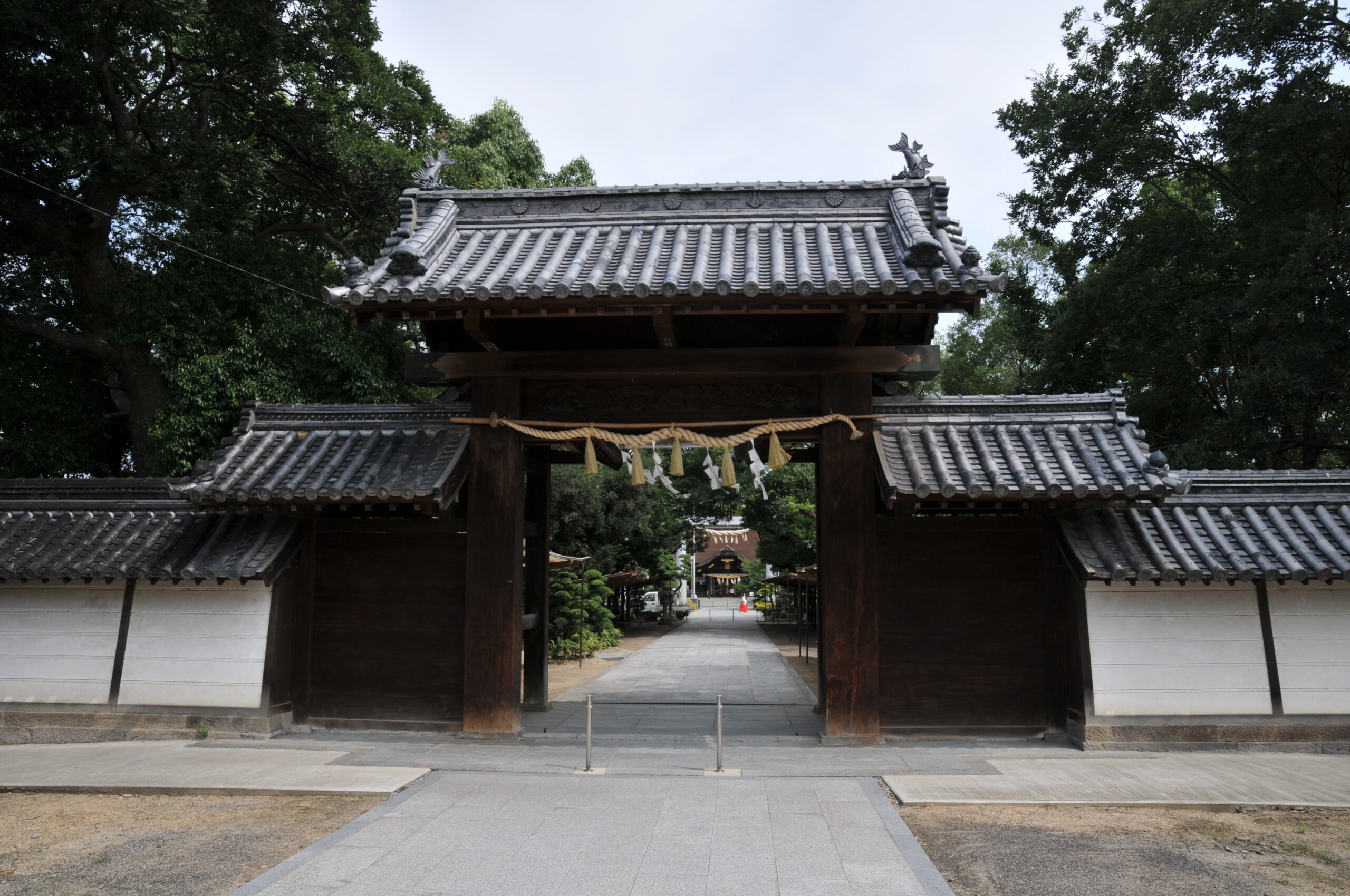
2. **Shrine gate** — pass through the dignified entrance
3. **Main hall worship** — pay respects to the five principal deities
4. **Golden Dragon statue** — try your luck with a gold coin offering
5. **Hime-no-miya** — for marriage blessings
6. **Seven Lucky Gods & zodiac statues** — find your birth-year animal
7. **Momotaro bronze statue** — the Sanuki version of the legend
8. **Sacred springs** — Hanaizumi and Tamotozumi
9. **Hotei** — the god of happiness and family harmony
### Photography Tips
| Spot | Tip |
|——|—–|
| Front torii with worship hall | Frame the plaque and hall together |
| Golden Dragon | Get close for dramatic scale |
| Shrine gate | Morning light creates beautiful contrast |
| Sacred springs | Capture the water and surrounding greenery |
**Note:** Photography inside the inner sanctuary is prohibited.
—
## Essential Information
| Detail | Information |
|——–|————-|
| Official name | Tamura-jinja (田村神社) |
| Address | 286 Ichinomiya-cho, Takamatsu-shi, Kagawa 761-8084 |
| Phone | 087-885-1541 |
| Office hours | 9:00 AM – 5:00 PM |
| Prayer reception | 9:30 AM – 6:00 PM (closed Tuesdays & Wednesdays) |
| Admission | Free |
| Parking | Large lots on both sides, free |
| Website | tamurajinja.com |
### Getting There
**By train:**
Kotoden Kotohira Line → Ichinomiya Station → 10-minute walk (about 30 min from Takamatsu Station)
**By car:**
Takamatsu-Nishi IC → 10 min / Takamatsu-Chuo IC → 15 min / Takamatsu Airport → 15 min
**By bus:**
Kotoden Bus to “Ichinomiya” stop → 1-minute walk
### Accessibility
The shrine grounds are relatively flat with paved stone paths. Wheelchair access is generally possible, though some areas have steps. Drive to the front parking lot for the most accessible entry point. Strollers work well on the paved sections; gravel paths in the back are less convenient.
### Pet Policy
The shrine’s website does not specify a pet policy. Please call ahead (087-885-1541) to confirm before visiting with pets.
—
## Nearby Attractions & Day Trip Ideas
### Sanuki Udon Crawl
No trip to Kagawa is complete without an udon crawl. Here are the top spots near Tamura Shrine:
| Restaurant | Specialty | Distance |
|———–|———–|———-|
| **Tamura Shrine Sunday Market** | Temple udon, 200 yen | On-site (Sundays only) |
| **Udon Baka Ichidai** | “Kama Butter Udon” (Japanese carbonara). Opens 6 AM | 15 min by car |
| **Ueharaya Honten** | Self-serve udon near Ritsurin Garden | 10 min by car |
| **Yamadaya** | Kama-bukkake udon in a cultural property farmhouse | 15 min by car |
### Pair with These Attractions
**Ritsurin Garden** (10 min by car): A Special Place of Scenic Beauty, 3.5 times the size of Tokyo Dome. One of Japan’s finest traditional gardens.
**Kotohira-gu (Kompira-san)** (40 min by car or Kotoden): 785 stone steps to the main shrine. On the same Kotoden line as Tamura Shrine — many visitors combine both in one day.
**Megijima (Demon Island)** (20 min by ferry from Takamatsu Port): The legendary “Onigashima” where Momotaro battled the demons. Complete the Momotaro legend journey that begins at Tamura Shrine.
### Full-Day Takamatsu Itinerary
1. **6:00 AM** — Sunday market udon at Tamura Shrine
2. **7:00 AM** — Morning worship at the shrine
3. **9:00 AM** — Ritsurin Garden (90 min)
4. **12:00 PM** — Second udon at Ueharaya Honten
5. **1:30 PM** — Kotohira-gu (785 steps, ~2 hours)
6. **5:00 PM** — Sunset at Takamatsu Port
—
## Visitor Reviews
> “The sheer number of sub-shrines is amazing. Inari, Tenjin, Seven Lucky Gods — it really is a ‘department store of gods.’ I needed more than an hour to see everything.”
> — Google Maps review
> “Came for the Sunday morning market. 200-yen udon in a shrine setting — simple but unforgettable. Combined with the morning worship, it was the perfect start to the day.”
> — Google Maps review
Visitors consistently praise the variety of the grounds and the unique Sunday market experience. “Allow more time than you think” is common advice. As a power spot, many report “feeling the presence of water” throughout the grounds — though the experience varies from person to person.
—
## FAQ
**Q: How long should I plan for a visit?**
A: About 40 minutes for the main highlights. Allow 1.5–2 hours if you want to explore all sub-shrines and enjoy the Sunday market.
**Q: Can I visit both Tamura Shrine and Kotohira-gu in one day?**
A: Yes. They’re on the same Kotoden Kotohira Line. Tamura Shrine (Ichinomiya Station) to Kotohira-gu (Kotoden-Kotohira Station) takes about 40 minutes.
**Q: What time does the Sunday market end?**
A: The market runs 6:00 AM – about 1:00 PM, but the udon stall closes when noodles run out. Arrive before mid-morning for the best chance.
**Q: Is there an English pamphlet?**
A: English information is limited. The official website is Japanese only, but the shrine grounds are straightforward to navigate. Basic shrine etiquette: two bows, two claps, one bow.
—
## Summary
Tamura Shrine is Kagawa Prefecture’s premier power spot — a 1,300-year-old sanctuary built over a forbidden dragon pool, packed with enough sub-shrines to earn the title “Department Store of the Gods,” and home to one of the most charming Sunday markets in Japan.
Whether you come for the mystical water deity, the 100 varieties of charms, the Momotaro connection, or simply a bowl of 200-yen udon eaten in the shadow of an ancient torii gate, Tamura Shrine offers an experience that’s both deeply spiritual and delightfully unexpected.
Power spots affect everyone differently. Visit Tamura Shrine and discover what this dragon-guarded sanctuary means for you.
—
We hope this guide helps you plan your visit to Tamura Shrine.
*Information in this article is current as of April 2026. Please check the official website for the latest details before your visit.*
—
Want to discover which power spots match your personal energy? Try our free compatibility diagnosis — it only takes 3 minutes.
→ Take the Free En-Profile Diagnosis