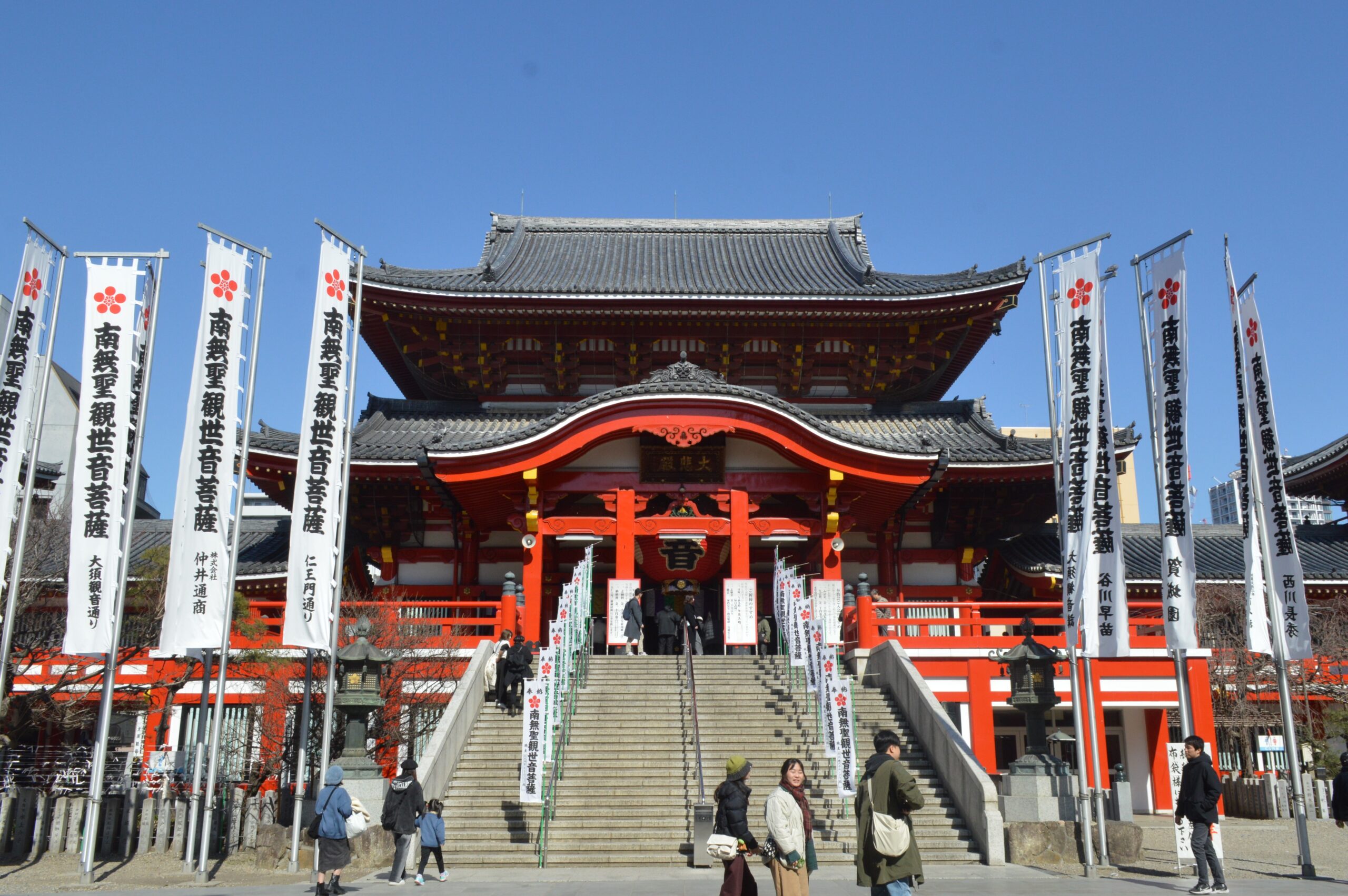
Step out of Osu Kannon subway station and you’ll find yourself facing a magnificent vermilion temple rising from the heart of Nagoya’s busiest district. Osu Kannon — officially Kitanosan Shinpuku-ji Hosho-in — is a Shingon Buddhist temple founded in 1333 and one of the “Three Great Kannon Temples of Japan.”
Home to a National Treasure manuscript of the Kojiki (Japan’s oldest historical chronicle), a lively antique market on the 18th and 28th of every month, and the sprawling Osu Shopping District with over 1,200 shops at its doorstep, Osu Kannon offers a uniquely Nagoya experience where spiritual devotion and vibrant street culture intertwine.
What Makes This Spot Special
A 700-Year-Old Temple in the Heart of Nagoya
Osu Kannon’s story begins in 1333 when the monk Noshin Shonin founded a temple in Osu Township, Owari Province (present-day Hashima City, Gifu Prefecture). The principal deity is Sho Kanzeon Bosatsu (Holy Avalokitesvara). The name “Osu” originates from this original location.
The pivotal moment came in 1612 when Tokugawa Ieyasu, while building Nagoya Castle, ordered the temple relocated to its current site as part of a massive urban restructuring known as “Kiyosu-goshi.” The temple became the anchor of “Minami-Teramachi” (Southern Temple Town), and its gates became the birthplace of what is now Nagoya’s largest shopping district.
The main hall was destroyed twice — once in a Meiji-era fire and again during World War II air raids. The current building, rebuilt in 1970 in reinforced concrete faithfully reproducing traditional architecture, stands as a stunning contrast to the modern cityscape around it.
The Osu Bunko Library — Home to a National Treasure
Osu Kannon houses the Osu Bunko, a remarkable collection of approximately 15,000 scrolls. Its crown jewel is the National Treasure Kojiki manuscript (3 volumes) — one of the oldest surviving copies of Japan’s foundational mythological chronicle, known in academic circles as the “Shinpuku-ji manuscript.”
The collection also includes rare texts such as the “Kanjo Shokka-shi” (Chinese historical economic texts) and “Chogyoku-shu,” making this temple one of Japan’s most significant repositories of classical literature.
Monthly Antique Markets and Temple Grounds
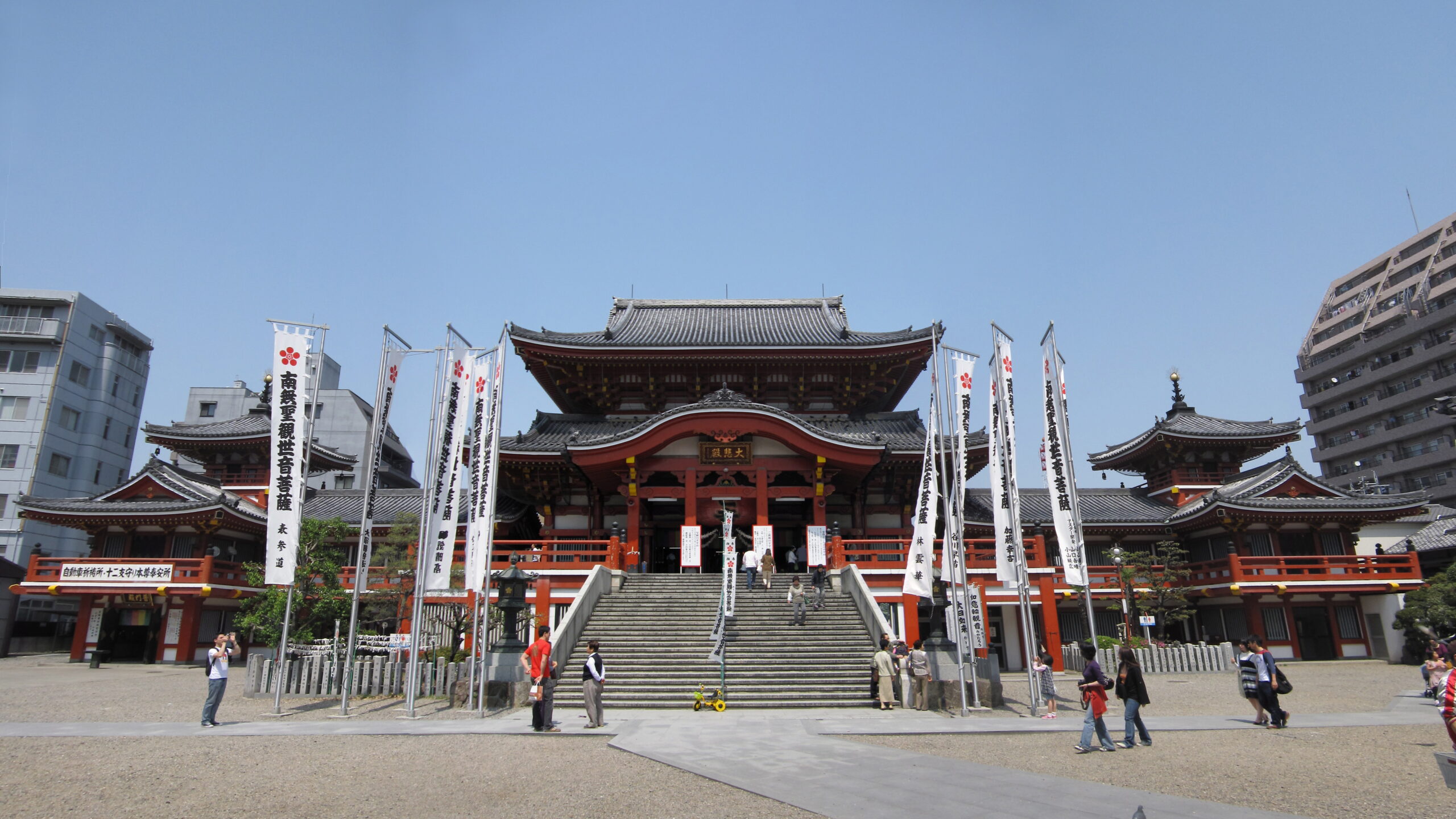
The antique markets on the 18th and 28th of each month are a highlight of any visit. The 18th marks Kannon’s holy day and the 28th is Fudo Myoo’s day. Over 200 stalls fill the temple grounds with Imari porcelain, vintage kimono, Showa-era collectibles, antique furniture, and curiosities.
Key spots within the temple grounds include:
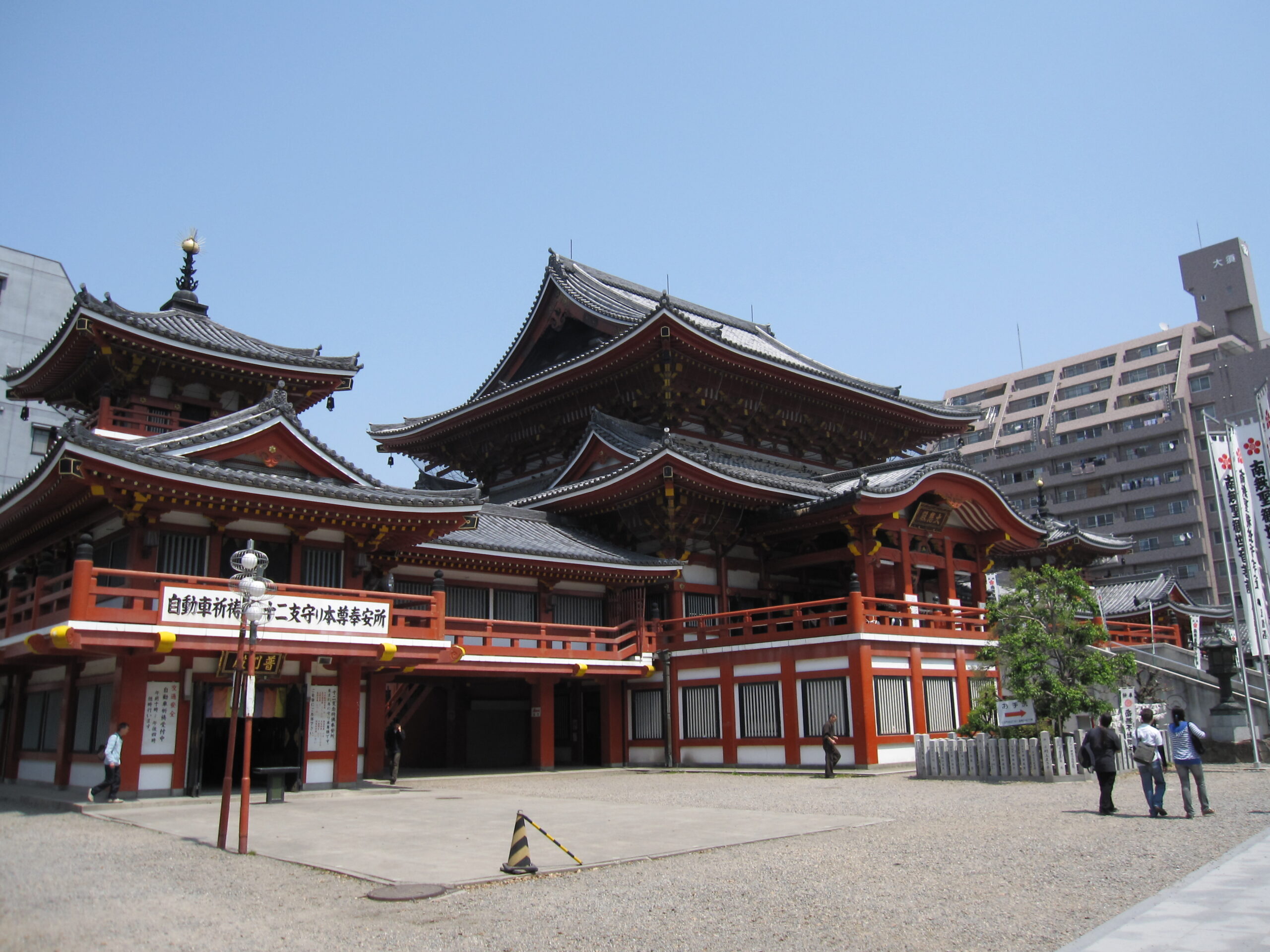
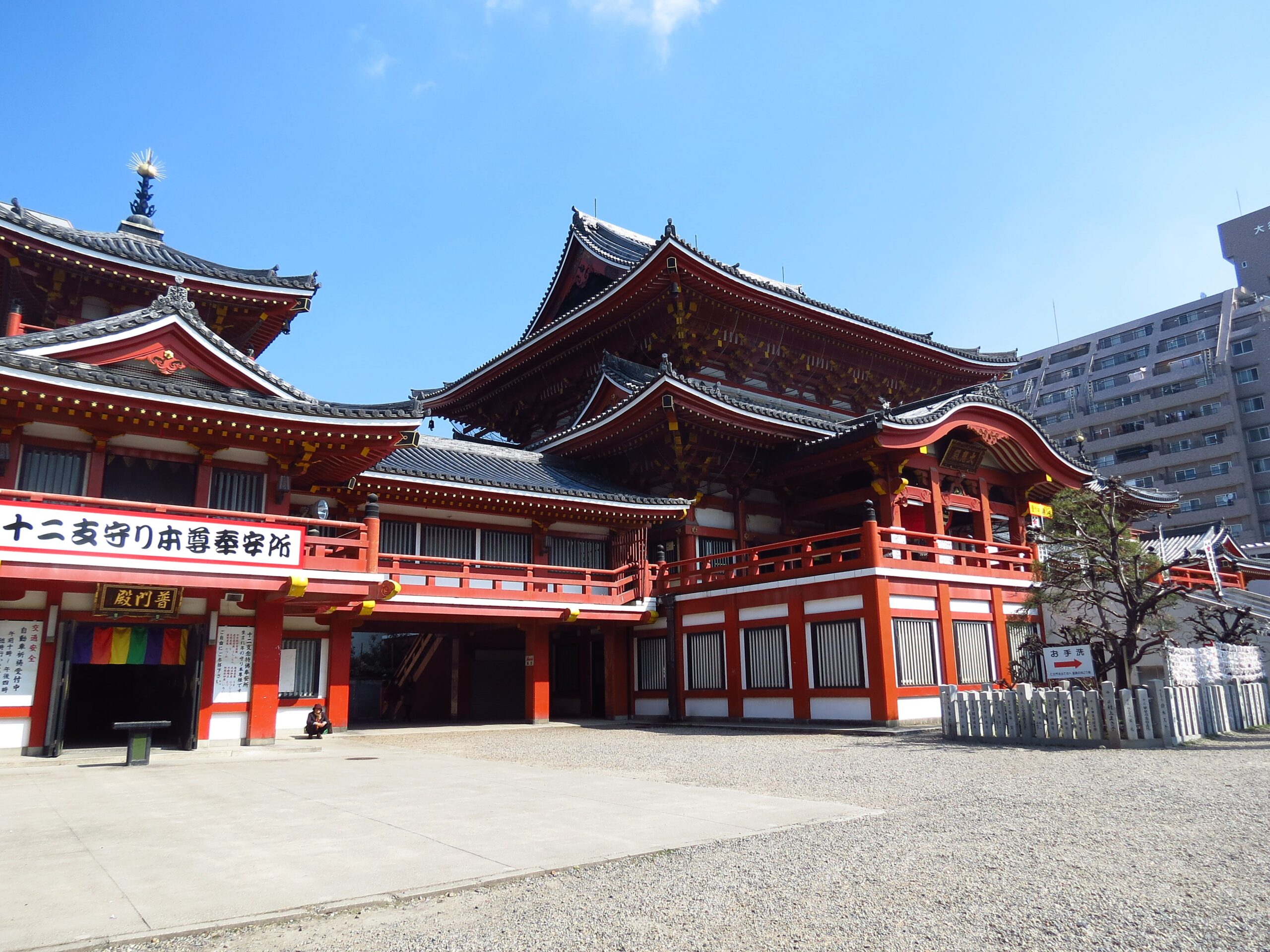
- Fumon-den — Hall of the Twelve Zodiac Guardian Deities, where you can pray to your birth-year guardian
- Bell Tower (Kasei no Kane) — Also known as the “Women’s Temple Bell”
- Shiun-den — Hall enshrining 99,000 Kannon statues
- Nio-mon Gate — The temple entrance flanked by guardian Nio statues
- Basho Haiku Monument, Kobo Daishi Statue, Doll Memorial — Historical monuments throughout the grounds
Spiritual Benefits
Protection from misfortune (Yakuyoke) — Osu Kannon’s primary blessing. The Setsubun bean-throwing ceremony is especially popular, with a unique tradition: instead of shouting “Oni wa soto!” (Demons out!), worshippers chant only “Fuku wa uchi! Fuku wa uchi!” (Fortune in! Fortune in!).
Family safety — Many families visit for prayers of household harmony, especially during the New Year period.
Business prosperity — With the Osu Shopping District at its doorstep, the temple has long been favored by merchants. Many shopkeepers visit before opening each morning.
Academic success — The temple’s mountain name “Kitanosan” reflects its connection to Kitano Tenmangu, associated with the deity of learning, Sugawara no Michizane.
Health and traffic safety — An automotive prayer hall on the grounds offers vehicle blessings.
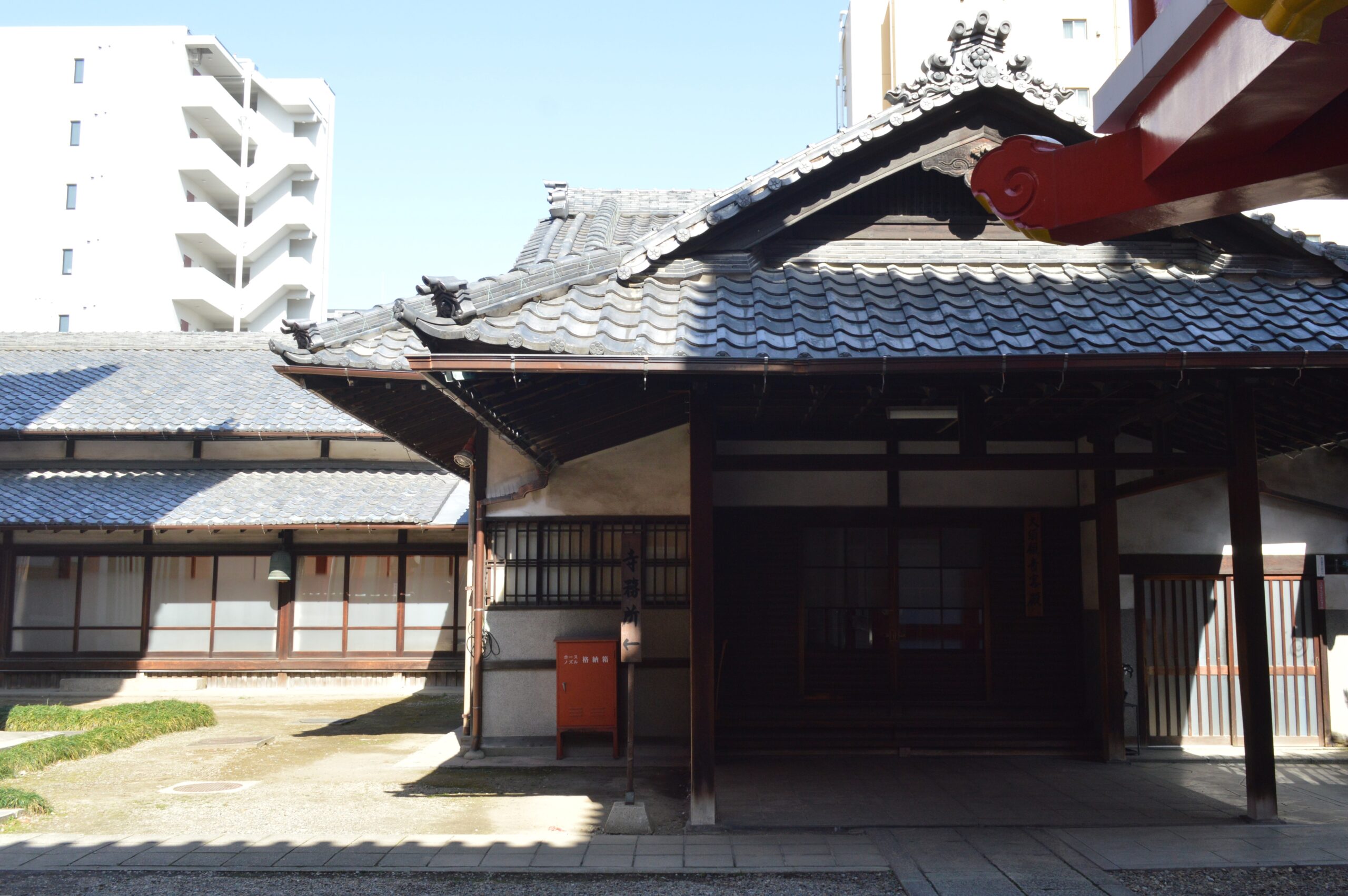
Popular items include zodiac guardian deity charms (available at Fumon-den) and goshuin temple stamps (available at the temple office, 9:00–17:00).
Best Times to Visit
New Year (January 1-3) ★★★★★
One of Nagoya’s most popular hatsumode destinations with over 500,000 visitors during the three-day period. Special New Year prayer ceremonies are held. For a quieter experience, visit after January 4 on a weekday.
Setsubun Festival (February 3) ★★★★★
The bean-throwing ceremony, yakuyoke prayers, and treasure ship procession make this the year’s most energetic event. Celebrity guests sometimes participate.
Osu Daidochonin Matsuri (October) ★★★★☆
A citizen-organized autumn festival running since 1978. Street performances and the oiran-dochu (courtesan procession) are the main attractions, transforming the entire Osu Shopping District into a festive stage.
Antique Market Days (18th & 28th monthly) ★★★★☆
Arrive early for the best finds. Stalls begin setting up around 7:00–8:00 AM, and choice items sell out by midday. Combining temple worship with antique hunting is the ideal way to spend the morning.
Recommended Hours
Weekday mornings, 6:00–9:00 AM offer the most peaceful atmosphere. The main hall opens at 6:00 AM. For combining worship with shopping district exploration, weekday 10:00 AM–1:00 PM is ideal. Weekend afternoons are the busiest times.
Visitor’s Guide
How to Visit (Allow 30-60 minutes)
Step 1: Enter through Nio-mon Gate
Pass through the gate, bowing to the guardian statues on either side.
Step 2: Worship at the Main Hall (Daihiden)
Climb the grand staircase and pray at the main hall. The formal Shingon prayer is “Namu Daishi Henjo Kongo,” but a simple bow with hands pressed together is perfectly acceptable.
Step 3: Visit Fumon-den for Zodiac Blessings
Pray to the guardian deity of your birth year. Zodiac charms are available here.
Step 4: Explore the Grounds
Visit the bell tower, Shiun-den, Basho’s haiku monument, and other landmarks. Goshuin stamps are available at the temple office.
Step 5: Head to Osu Shopping District
The shopping district begins right at the temple gates — perfect for post-worship exploration.
Tips for Visitors
- Photography is prohibited inside the main hall
- On antique market days, arrive early for both quieter worship and better selection
- The grounds are relatively barrier-free with few steps, suitable for wheelchairs and strollers
Practical Information
| Detail | Information |
|——–|————|
| Official Name | Kitanosan Shinpuku-ji Hosho-in |
| Common Name | Osu Kannon |
| Buddhist Sect | Shingon-shu Chizan-ha (Special Head Temple) |
| Principal Deity | Sho Kanzeon Bosatsu |
| Founded | 1333 |
| Address | 2-21-47 Osu, Naka-ku, Nagoya, Aichi 460-0011 |
| Phone | 052-231-6525 |
| Hours | Main Hall 6:00–19:00 / Temple Office 9:00–17:00 |
| Admission | Free |
| Parking | None on-site (use nearby coin parking lots) |
| Official Website | https://www.osu-kannon.jp/ |
Access
By Train (Recommended)
- Subway Tsurumai Line “Osu Kannon Station,” Exit 2 — immediate access
- From Nagoya Station: Take the Higashiyama Line to Fushimi Station, transfer to the Tsurumai Line, one stop to Osu Kannon Station (about 10 minutes, ¥240)
By Bus
- From Nagoya Station: Meitetsu Bus Route 18 (bound for Jingu-mae), alight at “Osu Kannon”
- From Sakae: Chu-Junkai loop bus, alight at “Osu Kannon”
By Car
- From Nagoya Expressway Route 2 (Higashiyama Line), Shirakawa Exit — about 2 minutes
- No on-site parking. Use nearby coin parking lots (approximately ¥200–300 per 30 minutes)
Nearby Attractions
Osu Shopping District — Nagoya’s Largest Market Street
The Osu Shopping District stretches from the temple gates with approximately 1,200 shops offering an eclectic mix of traditional stores, vintage fashion, electronics, anime and manga shops, and international cuisine. It’s often described as Nagoya’s most “chaotic and charming” neighborhood.
Must-Try Food
- Kompal Osu Main Branch — Iconic Nagoya kissaten (coffee shop). The ebi-furai sandwich (fried shrimp sandwich) is legendary. 3 minutes walk from the temple
- Nikomi no Takara — Miso nikomi udon (stewed miso noodles) specialist. A Nagoya culinary essential
- Yabaton — Famous for miso katsu (miso-glazed pork cutlet). Street food options available nearby
Nearby Temples and Shrines
- Banshoji Temple — Where Oda Nobunaga held his father’s funeral. Uniquely located inside the shopping arcade, featuring mechanical puppet performances
- Miwa Shrine — Known for matchmaking blessings. Heart-shaped ema (prayer plaques) are a popular photo spot
- Daikoin Temple (Akamon Myoo-den) — Recognizable by its striking red gate, enshrining Fudo Myoo
Other Nearby Spots
- Shirakawa Park — 10 minutes walk. A green urban oasis
- Nagoya City Science Museum — Features one of the world’s largest planetarium domes. Inside Shirakawa Park
- Nagoya City Art Museum — Collections including Modigliani and Laurencin. Inside Shirakawa Park
- Osu Engei-jo — Nagoya’s only yose (traditional comedy theater). Enjoy rakugo and manzai
Visitor Reviews
“I visit every month for the antique market on the 18th. I’ve found some wonderful old Imari pieces here. My routine is to pray first, then browse the stalls.” (From Google Maps reviews)
“Just 10 minutes from Nagoya Station — so convenient! Combined with Osu Shopping District, you can easily spend half a day here. Perfect for showing international friends around.” (From Google Maps reviews)
“Attended the Setsubun bean throwing. The Osu Kannon tradition of chanting ‘Fuku wa uchi! Fuku wa uchi!’ without ‘Oni wa soto!’ is unique and uplifting.” (From Google Maps reviews)
Frequently Asked Questions
Q. Can I get a goshuin (temple stamp)?
Yes. Available at the temple office from 9:00 to 17:00.
Q. Is there parking available?
There is no on-site parking. Please use nearby coin parking lots. Some Osu Shopping District facilities also have affiliated parking.
Q. Can I bring my pet?
Pets on leashes are welcome in the temple grounds, but not inside the main hall. There are pet-friendly cafes in the Osu Shopping District nearby.
Q. Is the temple wheelchair/stroller accessible?
The grounds are relatively barrier-free with few steps. A ramp provides access to the main hall.
Q. Does the antique market operate in rainy weather?
Light rain usually doesn’t cancel the market, but severe weather may. Check the official website on the morning of the 18th or 28th.
Summary
Osu Kannon is a rare temple where 700 years of spiritual heritage meets Nagoya’s most vibrant street culture. Pray for protection from misfortune, browse National Treasure manuscripts, hunt for antiques at the monthly market, and then step right into one of Japan’s most eclectic shopping districts for miso katsu and vintage finds.
With subway access putting it just minutes from Nagoya Station, Osu Kannon fits effortlessly into any Nagoya itinerary. Whether you’re a history enthusiast, a food lover, a bargain hunter, or a spiritual seeker, this temple delivers an experience you won’t find anywhere else in Japan.
—
💡 Want to discover your ideal power spot?
Beyond this location, Japan is home to countless spiritual power spots.
To find the ones that resonate most with you, try our free compatibility diagnosis (takes just 3 minutes).
あなたに最適なパワースポットを知りたい方へ