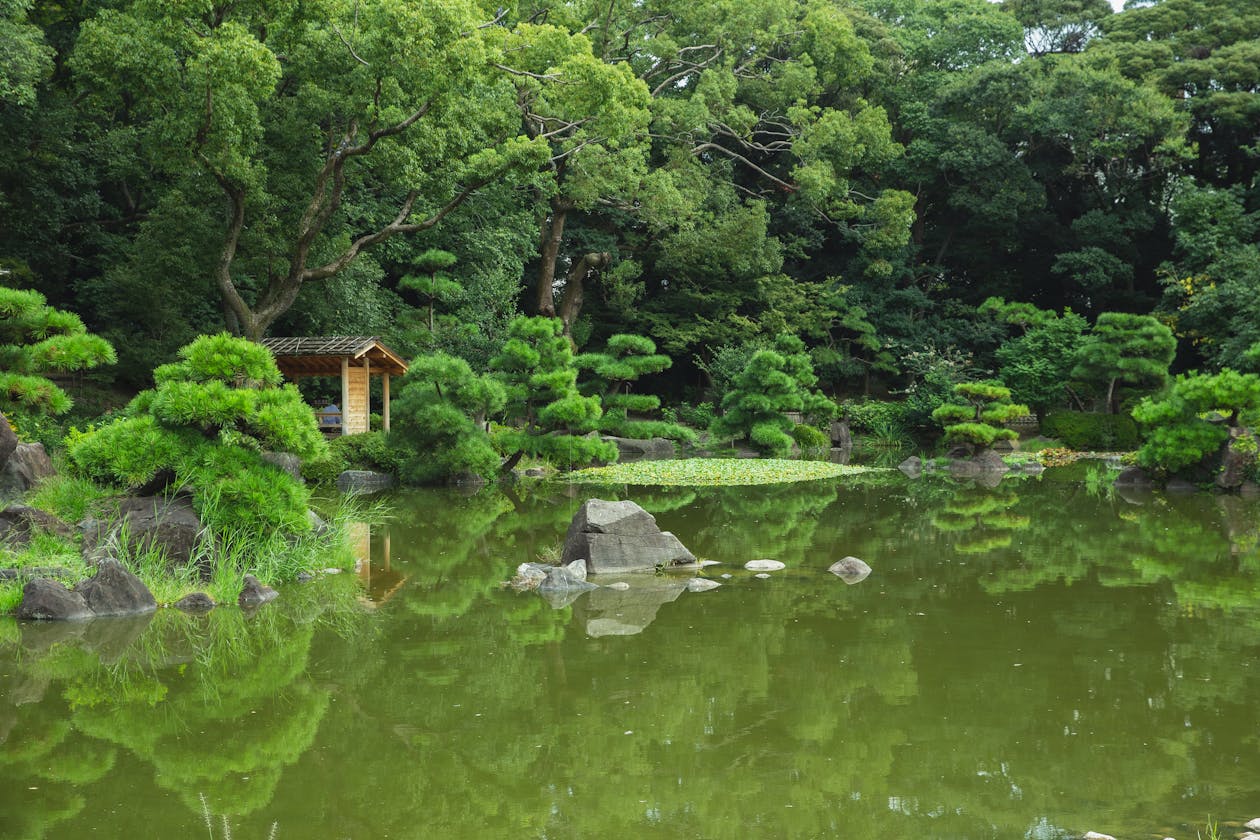
Just 9 minutes by local train from Ichinoseki Shinkansen station, then a 7-minute walk from JR Hiraizumi Station — Motsu-ji (毛越寺) is home to one of Japan’s most precious Pure Land gardens, preserved virtually intact from the 12th century. The vast Oizumi-ga-Ike pond mirrors the sky and surrounding trees, while the yarimizu water channel — the only surviving example of its kind from the Heian period — continues to carry water exactly as it did 900 years ago.
Founded in 850 by the great Buddhist master Jikaku Daishi Ennin, the temple reached its zenith under the Oshu Fujiwara clan, who built over 40 halls and 500 monks’ quarters in their quest to create a Buddhist paradise on earth. Though fire destroyed most structures over the centuries, the garden and foundation stones survived, earning UNESCO World Heritage status in 2011 as part of “Hiraizumi — Temples, Gardens and Archaeological Sites Representing the Buddhist Pure Land.”
What Makes This Place Special
A Pure Land Garden — Paradise Made Real on Earth
Motsu-ji’s greatest treasure is its Pure Land Garden, designated a Special Place of Scenic Beauty. The central Oizumi-ga-Ike pond stretches approximately 180 meters east to west. Around its shores, carefully composed features — sandy beaches (*suhama*), artificial hills, peninsular rock arrangements, and rugged coastal stone compositions — recreate in miniature the landscapes of seashores and mountains, expressing the Heian ideal of an earthly paradise.
Among Japan’s surviving Pure Land gardens, Motsu-ji stands apart for its scale and state of preservation. Nowhere else can you trace the complete 12th-century temple layout from foundation stones and garden features together.
The Yarimizu — Japan’s Oldest Garden Waterway
The yarimizu (garden water channel) that feeds Oizumi-ga-Ike is the only surviving example from the 12th century. Its gently curving channel features precisely placed bed stones, water-cutting stones, and receiving stones that produce different sounds as water flows over them. Each year on the fourth Sunday of May, the Gokusui-no-En (Winding Stream Banquet) is held beside this channel — poets in Heian-period court dress float sake cups on the current and compose waka poetry, recreating an elegant tradition over 800 years old.
A Core Component of the “Hiraizumi” World Heritage Site
In 2011, Motsu-ji was inscribed as part of the UNESCO World Heritage site “Hiraizumi — Temples, Gardens and Archaeological Sites Representing the Buddhist Pure Land.” The site was recognized under criteria ii (cultural interchange) and vi (outstanding universal significance), valued as a unique fusion of Pure Land Buddhist philosophy and Japan’s indigenous landscape aesthetic.
Living Testimony to the Oshu Fujiwara Golden Age
Foundation stones throughout the grounds reveal the scale of the original temple complex. At its peak, this remote northern outpost rivaled Kyoto itself as a center of culture and faith. It was here that Matsuo Basho, visiting in 1689, wrote his famous haiku about “the glory of three generations, vanished in a dream.”
Spiritual Benefits
Healing & Health — The principal deity is Yakushi Nyorai (the Medicine Buddha), revered for healing illness and protecting health. Health prayers are the most common form of devotion at Motsu-ji.
Purification & Inner Peace — The Pure Land Garden’s serene atmosphere offers a profound sense of spiritual cleansing. Combine your visit with a zazen (seated meditation) or shakyo (sutra copying) experience for deeper contemplation.
Academic Success & Focus — As a historic center of Tendai Buddhist scholarship, Motsu-ji attracts students preparing for exams. The zazen experience is particularly popular for cultivating mental clarity and concentration.
Family Safety & Longevity — Amida Nyorai enshrined in the Jogyodo Hall watches over family wellbeing and long life, drawing local worshippers throughout the year.
Best Time to Visit
Fresh Green + Gokusui-no-En (May) ★★★★★
The absolute best time. The garden wrapped in fresh spring greenery is the closest thing to an earthly paradise. The Gokusui-no-En (fourth Sunday of May; May 24, 2026, starting at 1:00 PM) is the year’s highlight. The Spring Fujiwara Festival (May 1–5) adds further spectacle, with the May 3 “Yoshitsune Procession” — a grand costumed parade from Motsu-ji to Chuson-ji.
Autumn Foliage (Late October–Early November) ★★★★★
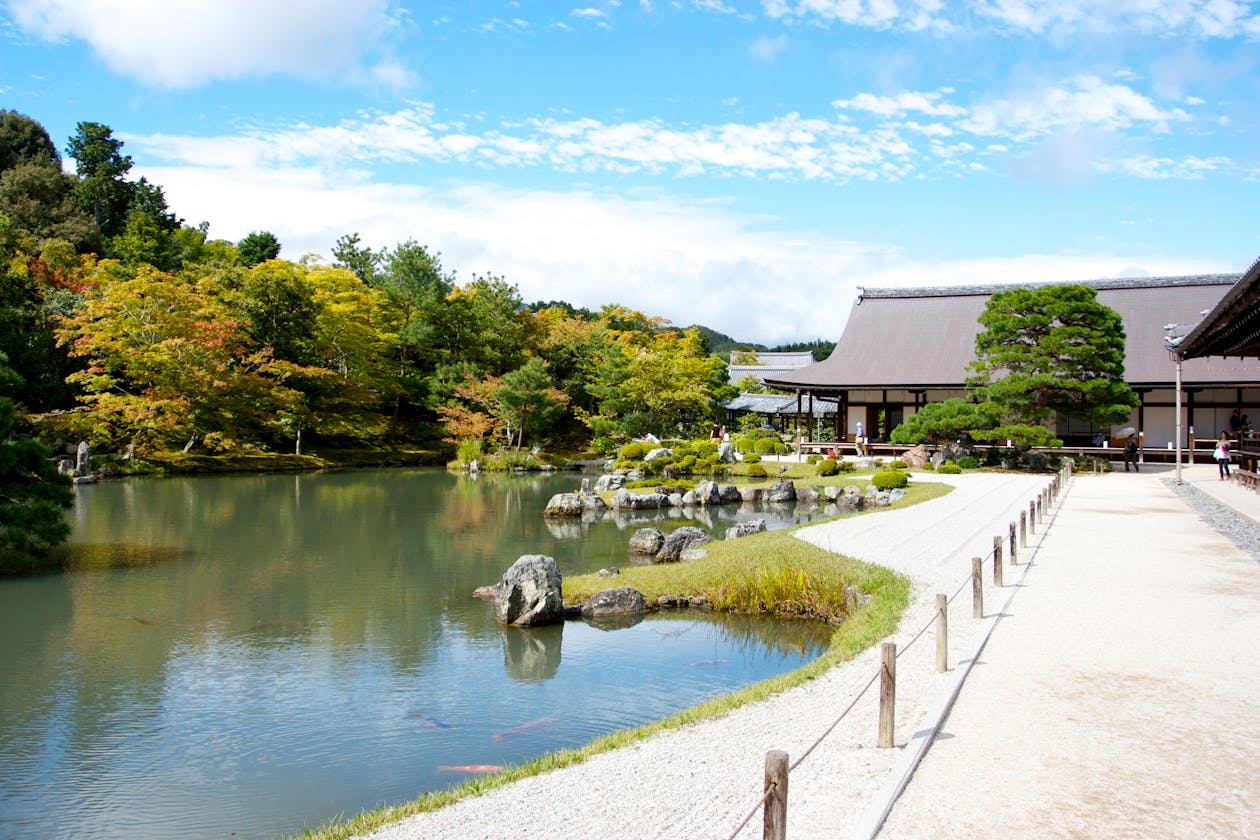
Red and golden leaves reflected in Oizumi-ga-Ike create one of Motsu-ji’s most breathtaking scenes. The walking path around the pond offers changing views with every angle.
Hagi Matsuri — Bush Clover Festival (September 15–30) ★★★★☆
Some 30,000 bush clover plants bloom across the grounds, painting the garden in autumn hues. Traditional dance performances (Ennen-no-Mai) and tea ceremonies are held during the festival.
Winter Snow (December–February) ★★★★☆
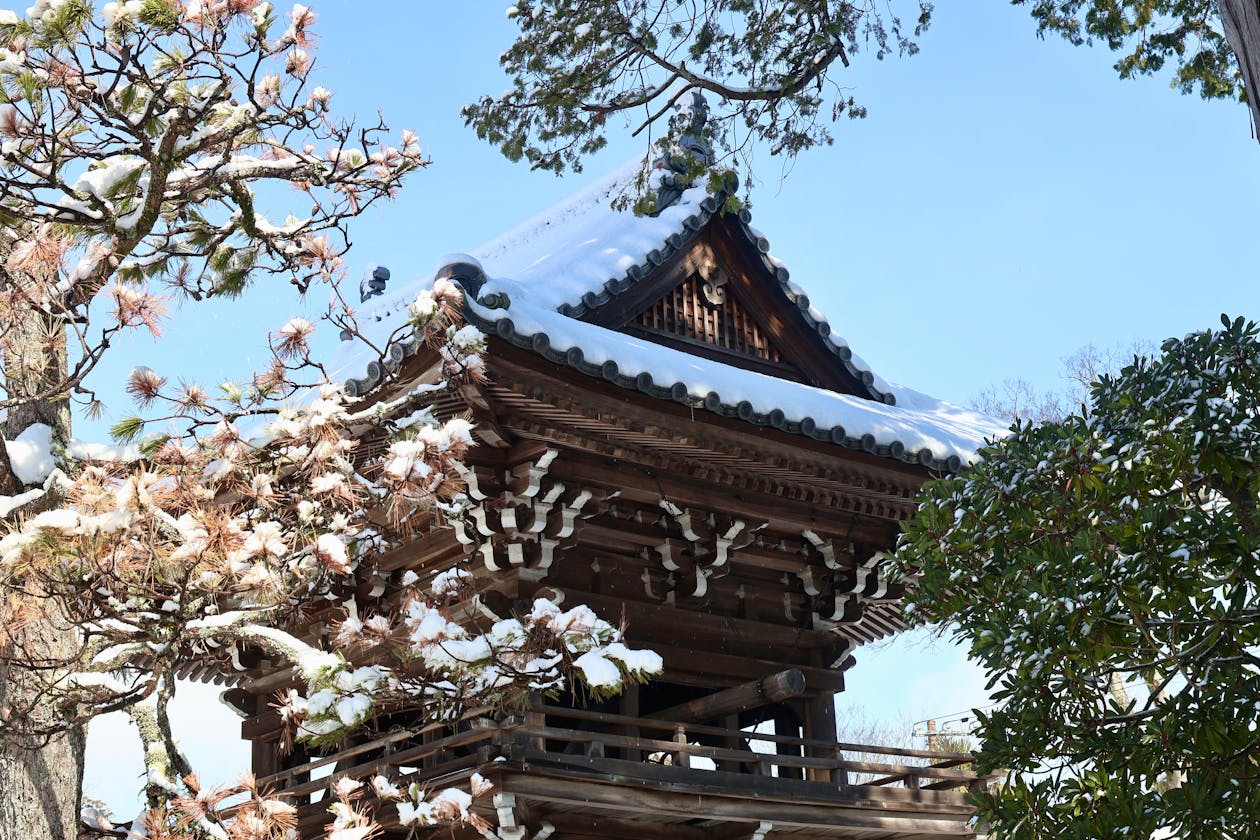
The garden under snow is pure silence. White-blanketed grounds with dark foundation stones rising through the snow make for extraordinary photography. Fewer visitors mean you can enjoy the garden at your own pace.
Best Time of Day
Opening time (8:30 AM): Fewest visitors, mirror-still pond surface, soft morning light on the garden — ideal for photography. Late afternoon (3:00–4:00 PM) also offers beautiful angled light that creates depth and shadow across the pond and trees.
Visitor’s Guide
Recommended Route (60–90 minutes)
Main gate → Main Hall (pray to Yakushi Nyorai) → Walk clockwise along the south shore of Oizumi-ga-Ike → Suhama & Peninsula rock arrangements (miniature coastal scenery) → Yarimizu (12th-century water channel) → Jogyodo Hall (Amida Nyorai, stage for Ennen-no-Mai dance) → Foundation stone groups (traces of the original temple complex) → Kaizando Hall (enshrining the founder Ennin) → Treasure Hall (if time permits) → Return to main gate
Key Highlights
Main Hall: Rebuilt in 1989 in Heian architectural style. Houses the principal image of Yakushi Nyorai. Amulets and goshuin (temple stamps) are available here.
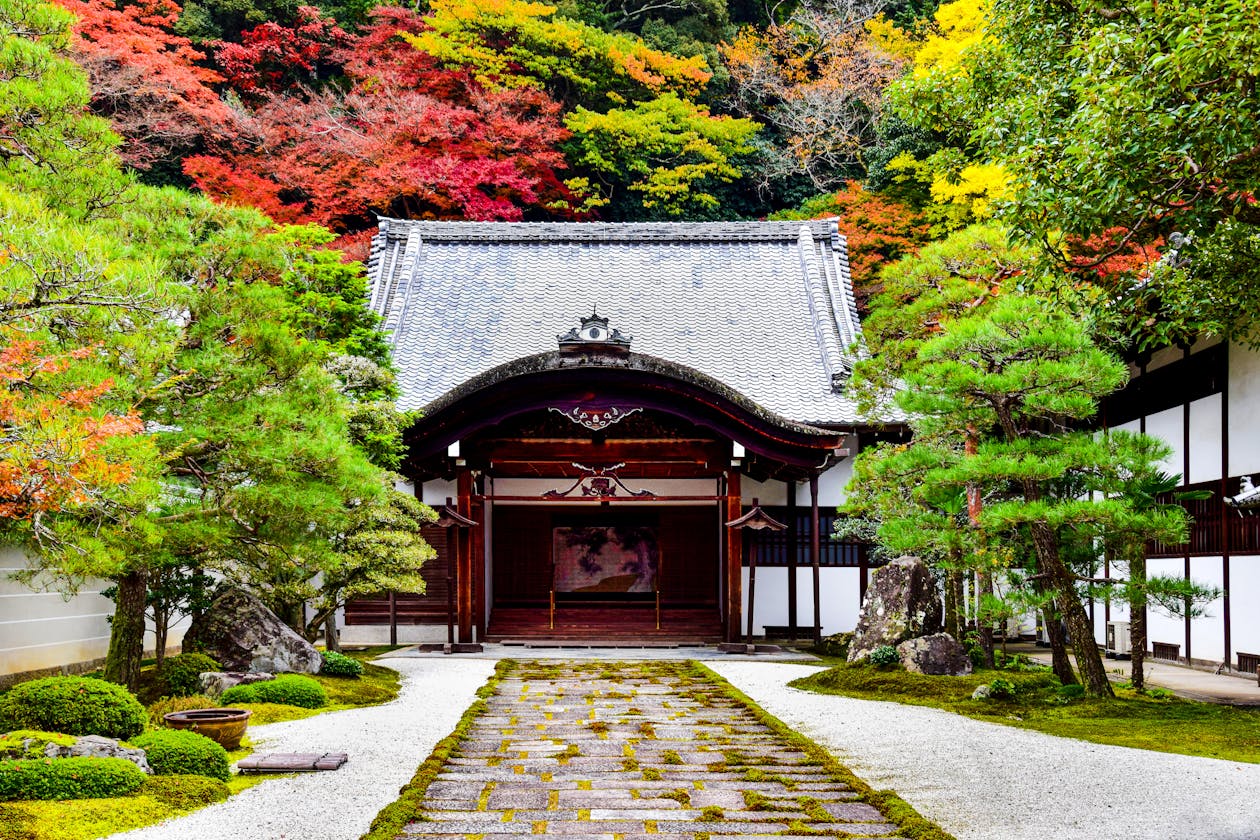
Jogyodo Hall: Reconstructed in 1728. Enshrines Amida Nyorai and Matara-jin. The stage for Ennen-no-Mai, a dance tradition designated a National Important Intangible Folk Cultural Property, performed annually on January 20.
Treasure Hall: Exhibits excavated Buddhist statues, paintings, and archaeological artifacts that reveal the extraordinary cultural sophistication of the Oshu Fujiwara era.
Kaizando Hall: Built in 1923 on a rise overlooking the pond, offering the best panoramic view of the entire Pure Land Garden.
Essential Information
| Detail | Information |
|——–|————|
| Official Name | Iosan Motsu-ji Kongooin (Tendai-shu Bekkaku Honzan) |
| Address | 58 Osawa, Hiraizumi, Nishiiwai-gun, Iwate 029-4102 |
| Hours | Mar 5–Nov 4: 8:30–17:00 / Nov 5–Mar 4: 8:30–16:30 |
| Closed | Open year-round |
| Admission | Adults ¥700, High school ¥400, Elementary/Jr high ¥200 |
| Parking | Municipal lot (330 spaces, ¥300 per car) |
| Official Website | https://www.motsuji.or.jp/ |
Getting There
By Train:
- JR Tohoku Main Line “Hiraizumi Station” → 7 min walk
- Ichinoseki to Hiraizumi: ~9 min by JR local train
- From Sendai: Shinkansen to Ichinoseki (~32 min) + local train to Hiraizumi (~9 min)
- From Tokyo: Shinkansen to Ichinoseki (~2 hr 26 min) + local train to Hiraizumi (~9 min)
By Car:
- Hiraizumi Smart IC (ETC only): ~5 min
- Hiraizumi-Maesawa IC: ~10 min
- Ichinoseki IC: ~15 min
Practical Advice: Hiraizumi is a compact town. Motsu-ji and Chuson-ji are about 1.5 km apart — walkable in 20 minutes. The Hiraizumi Loop Bus “Run Run” (¥200 per ride) is a convenient alternative.
Nearby Spots & Model Itinerary
Half-Day Course: “Motsu-ji + Chuson-ji”
1. 9:00 AM Arrive at Hiraizumi Station → walk to Motsu-ji (7 min)
2. 9:10 AM Explore Motsu-ji (60–90 min) — savor the Pure Land Garden
3. 10:30 AM Walk or bus to Chuson-ji (~20 min)
4. 10:50 AM Chuson-ji & Konjikido Golden Hall (60–90 min)
5. 12:30 PM Lunch at Hiraizumi Rest House — Maesawa beef or mochi cuisine
Full-Day Course: “Complete Hiraizumi”
After the morning temple circuit, visit Takadachi Gikeido (the legendary site of Yoshitsune’s final stand, with sweeping views of the Kitakami River) → Takkoku-no-Iwaya Bishamondo (a dramatic temple built into a cliff face, ~10 min by car). If time allows, extend to Genbikei Gorge in the Ichinoseki direction for spectacular rock formations and the famous *kakkō dango* (sweets delivered by basket across the gorge).
Hiraizumi Cuisine
The Hiraizumi-Ichinoseki area is one of Japan’s great mochi (rice cake) culture zones. Mochi-zen course meals feature dozens of varieties — azuki, zunda (edamame), walnut, shrimp — a unique local tradition.
- Maesawa Beef: Iwate’s premier wagyu brand, available at restaurants throughout Hiraizumi
- Mochi Cuisine: A distinctive local tradition with roots in ceremonial dining
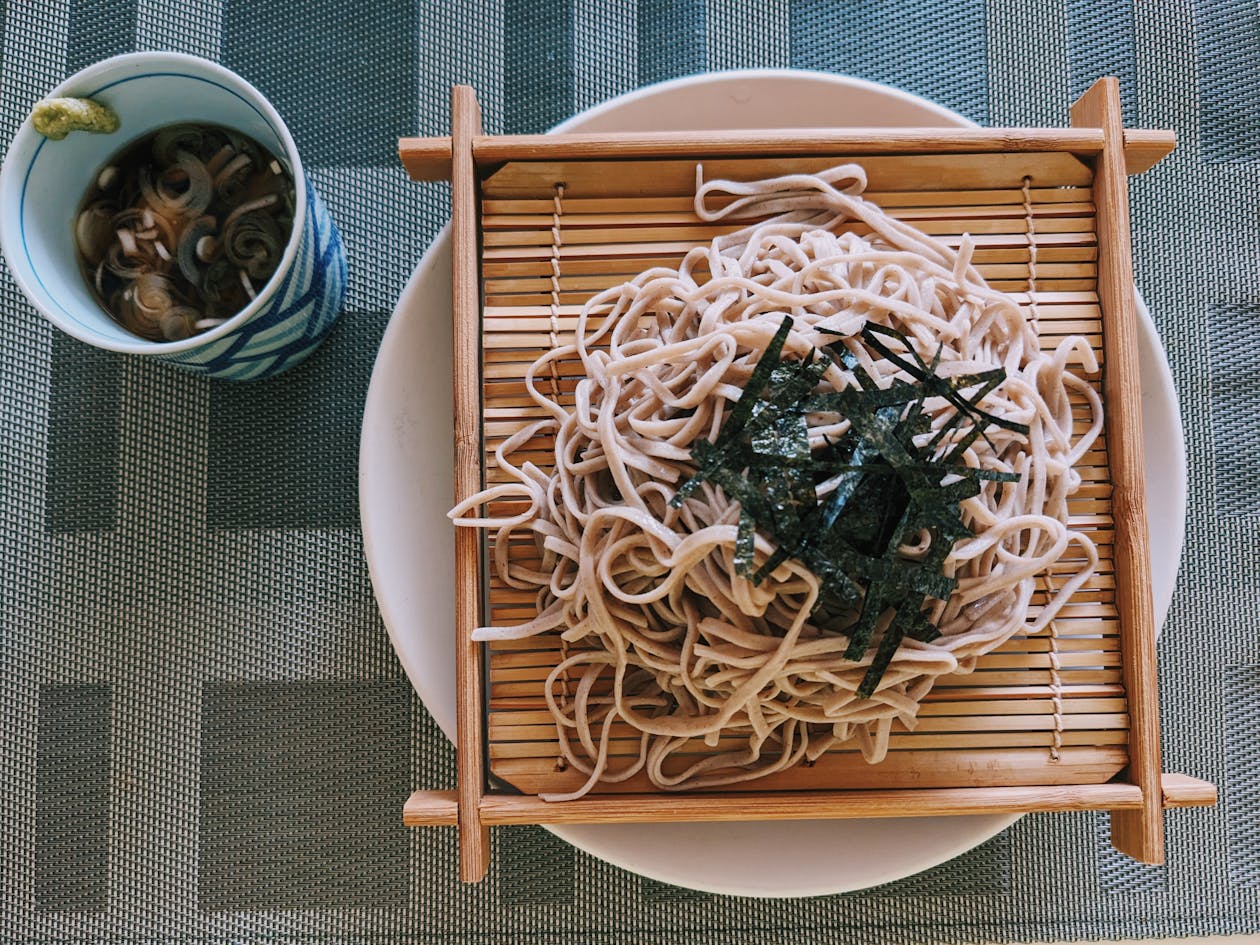
- Wanko Soba: Iwate’s signature noodle experience — small bowls of soba served in rapid succession
- Hiraizumi Rest House: Located at the Chuson-ji entrance, offering Maesawa beef, mochi dishes, and a large souvenir shop
Recommended Souvenirs
- Ennen-cha: Motsu-ji’s original tea blend
- Nanbu Ironware: Traditional Iwate cast-iron teapots — elegant and functional
- Iwate Confections: Kamome-no-Tamago (seagull eggs), Nanbu Senbei, and other regional sweets
Guide for Different Visitors
Wheelchair & Stroller Access
Motsu-ji’s garden is largely flat, making wheelchair access possible throughout the grounds. The Treasure Hall has an elevator. Accessible restrooms (wheelchair, ostomy, diaper-changing, baby seat) are available. Wheelchair rental is offered on a first-come, first-served basis (limited supply). The Pure Land Garden’s barrier-free accessibility is among the best of any power spot in Japan.
Visiting with Pets
Leash walking, carrying, and holding pets are not allowed. Small pets are permitted only in a cage, pet buggy, or carrier basket. Large dogs are not allowed. Service animals are welcome. Contact Motsu-ji in advance (0191-46-2331) for details.
Photography Tips
- Oizumi-ga-Ike panorama: Shoot from the south shore looking north for a composition of pond, hills, and sky. The morning mirror reflection is stunning
- Yarimizu water channel: Close-up shots of water flowing over ancient stones. Macro lenses shine here
- Peninsula rock arrangements: The essence of garden design. Morning sidelight brings out three-dimensionality
- Jogyodo Hall: In autumn, the contrast with background foliage is superb
Rainy Day Visit
A rainy day at the Pure Land Garden is a hidden gem. Ripples spreading across the pond, moss glowing green in the moisture, mist drifting over the yarimizu — the atmosphere becomes almost otherworldly. Wear shoes with good grip as paths can be slippery. Combine a rainy visit with the Treasure Hall and a zazen or shakyo experience (reservation required) for a contemplative half-day.
Frequently Asked Questions
Q: Should I visit Motsu-ji or Chuson-ji first?
A: We recommend starting with Motsu-ji. It’s closer to the station (7-minute walk), and the garden’s tranquility prepares your mind perfectly for the awe of Chuson-ji’s Golden Hall.
Q: How long does a visit take?
A: 40–60 minutes for the garden walk alone. With the Treasure Hall and Jogyodo Hall interior, allow 60–90 minutes. On Gokusui-no-En day, plan for 3+ hours.
Q: Are goshuin (temple stamps) available?
A: Yes. Available at the Main Hall during visiting hours.
Q: Can I visit from Sendai as a day trip?
A: Absolutely. It’s about 40 minutes each way by Shinkansen + local train. A half-day to full-day itinerary covering Motsu-ji and Chuson-ji is very popular with Sendai-based visitors.
Summary
Motsu-ji is a UNESCO World Heritage temple where a 900-year-old Pure Land Garden survives virtually intact. The vast Oizumi-ga-Ike pond, the ancient yarimizu water channel, and the foundation stones of a once-magnificent temple complex together tell the story of the Oshu Fujiwara clan’s dream of paradise on earth. From the elegance of May’s Gokusui-no-En to autumn’s fiery reflections and winter’s snow-covered silence, every season reveals a different facet of this extraordinary place.
Just 7 minutes on foot from Hiraizumi Station, with wheelchair-accessible grounds and easy combination with Chuson-ji, Motsu-ji makes for an unforgettable day trip from Sendai. For anyone traveling through Tohoku, this World Heritage Pure Land Garden is unmissable.
—
We hope this guide helps you plan your visit to Motsu-ji Temple.
*Information in this article is current as of April 2026. Please check the official website for the latest details before your visit.*
あなたに最適なパワースポットを知りたい方へ