Step off the train at Chichibu Station, walk just three minutes, and you’ll find yourself before the magnificent gate of one of Saitama Prefecture’s most sacred sites. Chichibu Shrine, the guardian deity of the Chichibu region, boasts a history spanning over 2,100 years and a main hall donated by Tokugawa Ieyasu himself in 1592.
What sets this shrine apart is its extraordinary collection of polychrome carvings. While Nikko Toshogu’s three monkeys preach “see no evil, hear no evil, speak no evil,” Chichibu’s “Genki Three Monkeys” deliver the opposite message: “see well, hear well, speak well.” Combined with the legendary “Chained Dragon,” “Tiger Raising Cubs,” and “North Star Owl,” each carving tells a captivating story. This compact yet richly detailed shrine, paired with the charming streets of Chichibu town, makes for a perfect day trip from Tokyo.
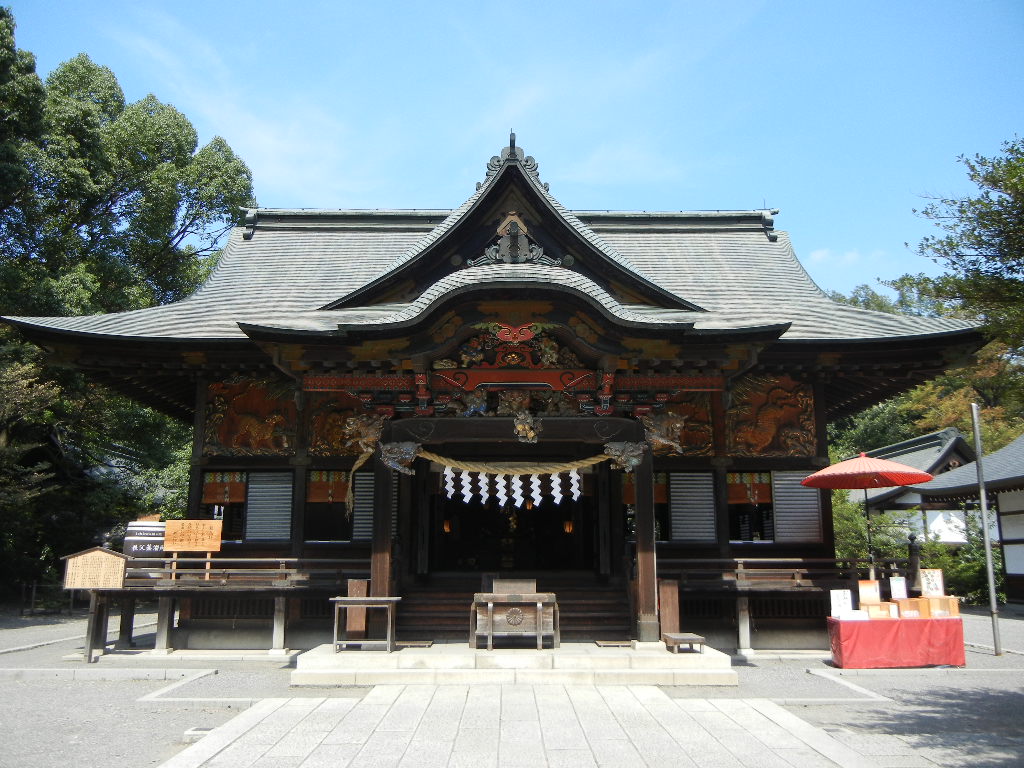
What Makes This Spot Special
A 2,100-Year-Old Shrine with Myoken Faith
According to shrine tradition, Chichibu Shrine was founded during the reign of Emperor Sujin, when Chichibu-hiko-no-mikoto enshrined the wisdom deity Yagokoro-omoikane-no-mikoto. The shrine appears in the Engishiki, a 10th-century compilation of governmental regulations, confirming its ancient significance.
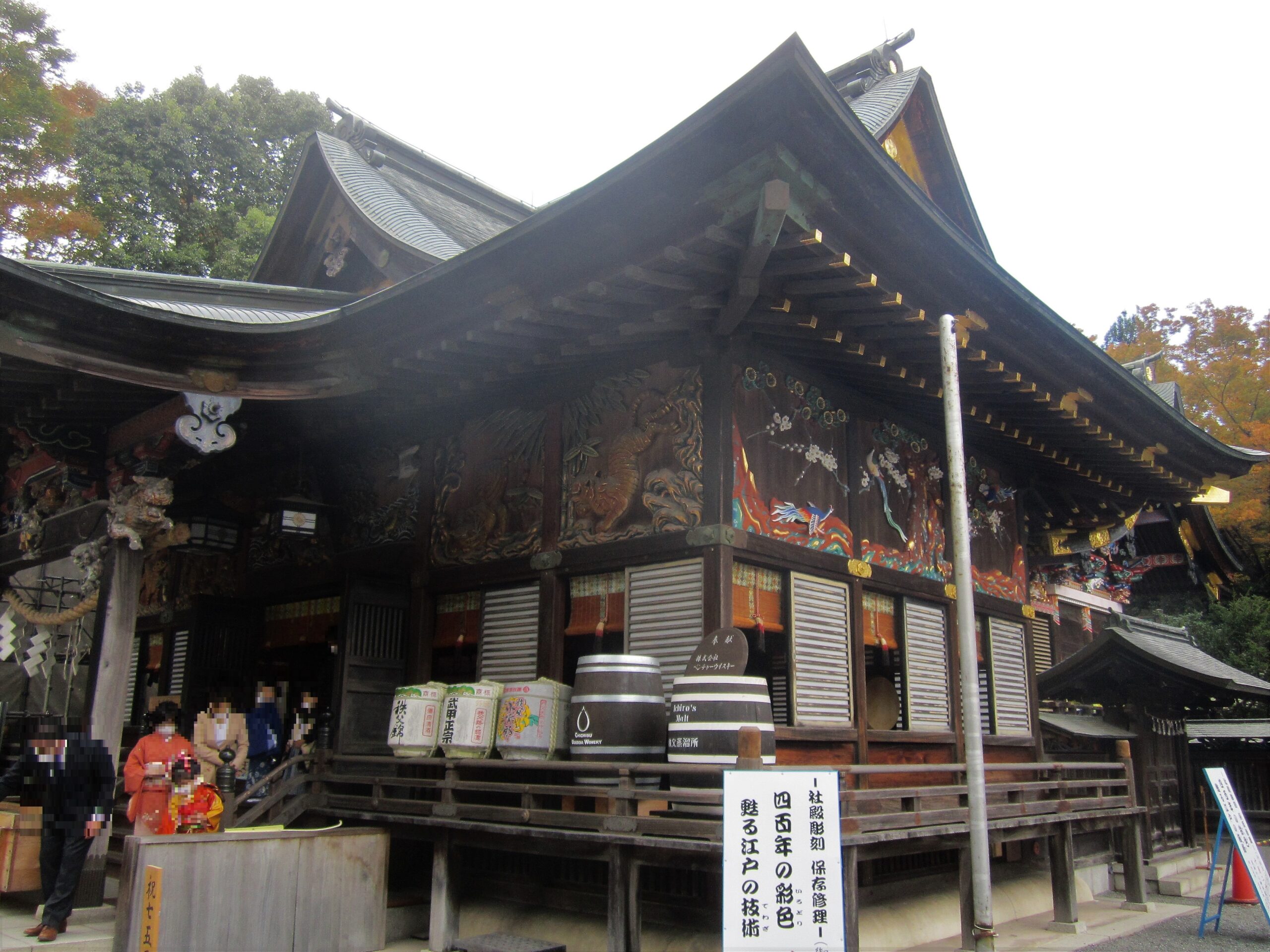
During the medieval period, the shrine merged with the Myoken faith — worship of the North Star — and became known as “Chichibu Myoken-gu.” Today, four deities are enshrined: Yagokoro-omoikane-no-mikoto (wisdom), Chichibu-hiko-no-mikoto (regional ancestor), Ame-no-minakanushi-no-kami (North Star deity), and Prince Chichibu. In 2014, the shrine celebrated its 2,100th anniversary, and the carvings underwent a vivid color restoration, returning them to their original 400-year-old brilliance.
Legendary Carvings Attributed to Hidari Jingoro
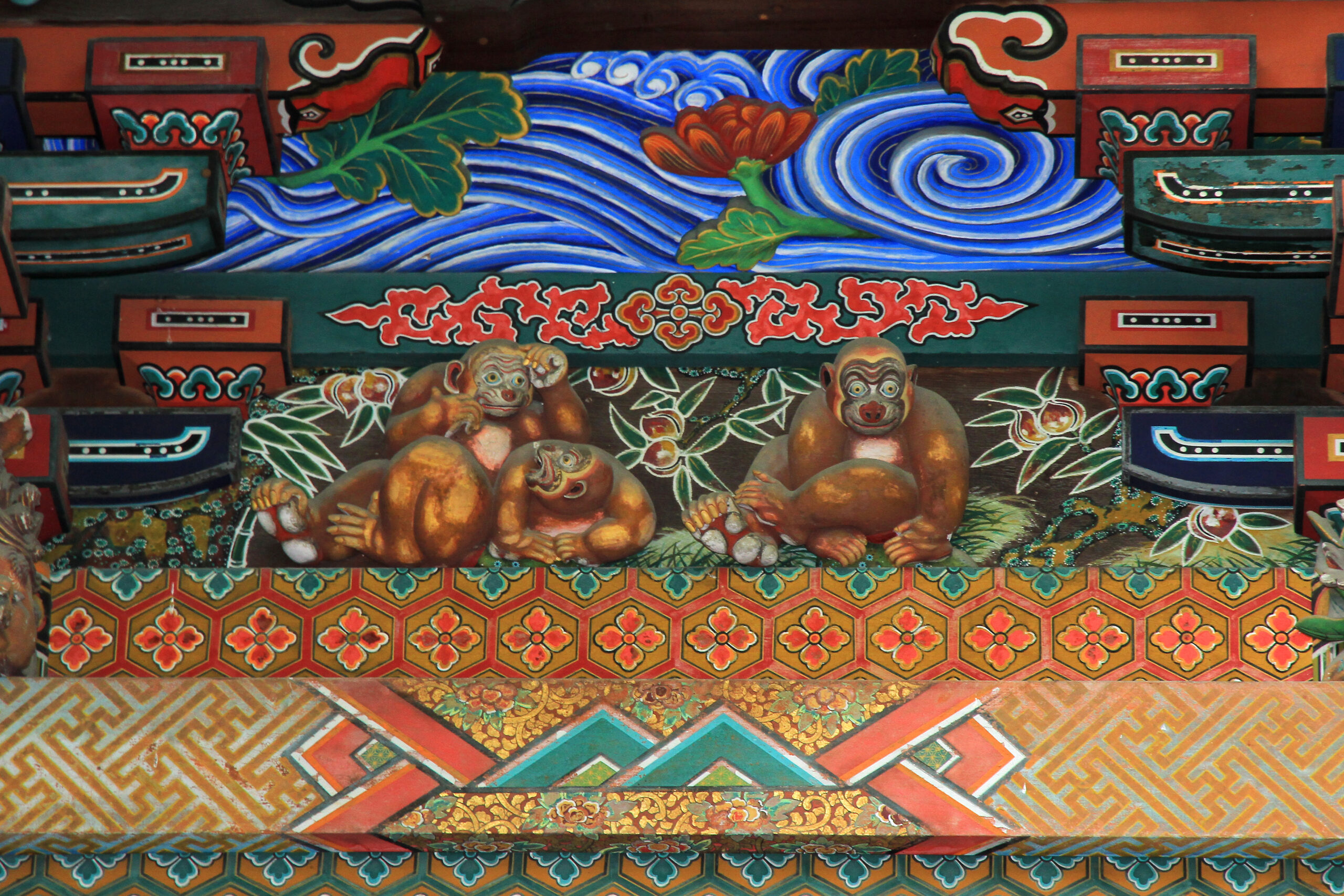
The shrine’s greatest treasure is its collection of polychrome carvings adorning all four sides of the main hall, traditionally attributed to the legendary craftsman Hidari Jingoro.
Genki Three Monkeys (front): Unlike Nikko’s passive monkeys, these three cheerful primates encourage active engagement with the world — a message that resonates deeply in modern times.
Chained Dragon (east): Legend says that whenever a dragon in a nearby pond went on a rampage, this carved dragon was found wet. The dragon was chained to prevent further incidents. The vivid blue dragon is a must-see.
Tiger Raising Cubs (south): A mother tiger playing with her cub symbolizes child-rearing and safe childbirth. Many visitors pray here for family blessings.
North Star Owl (north): This mysterious owl faces south but turns its head north, watching over the North Star deity. It symbolizes wisdom and academic achievement.
Chichibu Night Festival — A UNESCO Intangible Cultural Heritage
The Chichibu Night Festival, held every December 2-3, is one of Japan’s three greatest float festivals alongside Kyoto’s Gion Matsuri and Takayama’s Festival. Designated a UNESCO Intangible Cultural Heritage in 2016, the festival features magnificent floats parading from the shrine under winter fireworks — a spectacle drawing approximately 300,000 visitors each year.
Spiritual Benefits
Chichibu Shrine is known for a wide range of blessings, each connected to its four deities:
Academic Success — As the deity of wisdom, Yagokoro-omoikane-no-mikoto is especially popular with students during exam season.
Good Fortune & Protection — As the regional guardian shrine, Chichibu Shrine is highly regarded for warding off bad luck and providing directional protection.
Marriage & Family — The “Tiger Raising Cubs” carving has made the shrine a popular destination for couples hoping for children and safe childbirth. A sacred tree in the grounds is also known for matchmaking blessings.
Achievement of Great Aspirations — For over 2,100 years, this shrine has been a place where people bring their most important prayers. Many visitors come during major life transitions seeking clarity and determination.
Visitors often share that they feel “a sense of calm when looking up at the carvings” and “refreshed after taking a deep breath surrounded by Chichibu’s mountains.”
Best Time to Visit
Spring (March–May) ★★★★☆
Pleasant weather perfect for strolling through the shrine grounds and Bamba-dori street afterward. Cherry blossoms appear in mid-April. Weekdays offer a quieter experience, though Golden Week can be crowded.
Summer (June–August) ★★★☆☆
Chichibu’s basin geography means hot summers. Visit before 9:00 AM for comfortable temperatures. The Chichibu Kawase Festival in July is worth seeing.
Autumn (September–November) ★★★★★
The best season. The autumn foliage around the main torii gate is spectacular from late October to mid-November. Combine your visit with the ginkgo-lined avenue at Chichibu Muse Park for the ultimate autumn experience.
Winter (December–February) ★★★★★ (Festival period)
The Chichibu Night Festival on December 2-3 is the year’s highlight but extremely crowded. Outside the festival, winter is actually a hidden gem — few visitors and a serene atmosphere.
Best Times of Day
Early Morning (Opening–8:00 AM): Almost no visitors. The polychrome carvings under morning light are spectacular.
Morning (9:00 AM–Noon): Prayer reception opens at 9:00. The best time for goshuin (shrine stamps) with shorter waits.
Afternoon (1:00–4:00 PM): Changing light reveals different expressions in the carvings. Combine with Chichibu Festival Hall nearby.
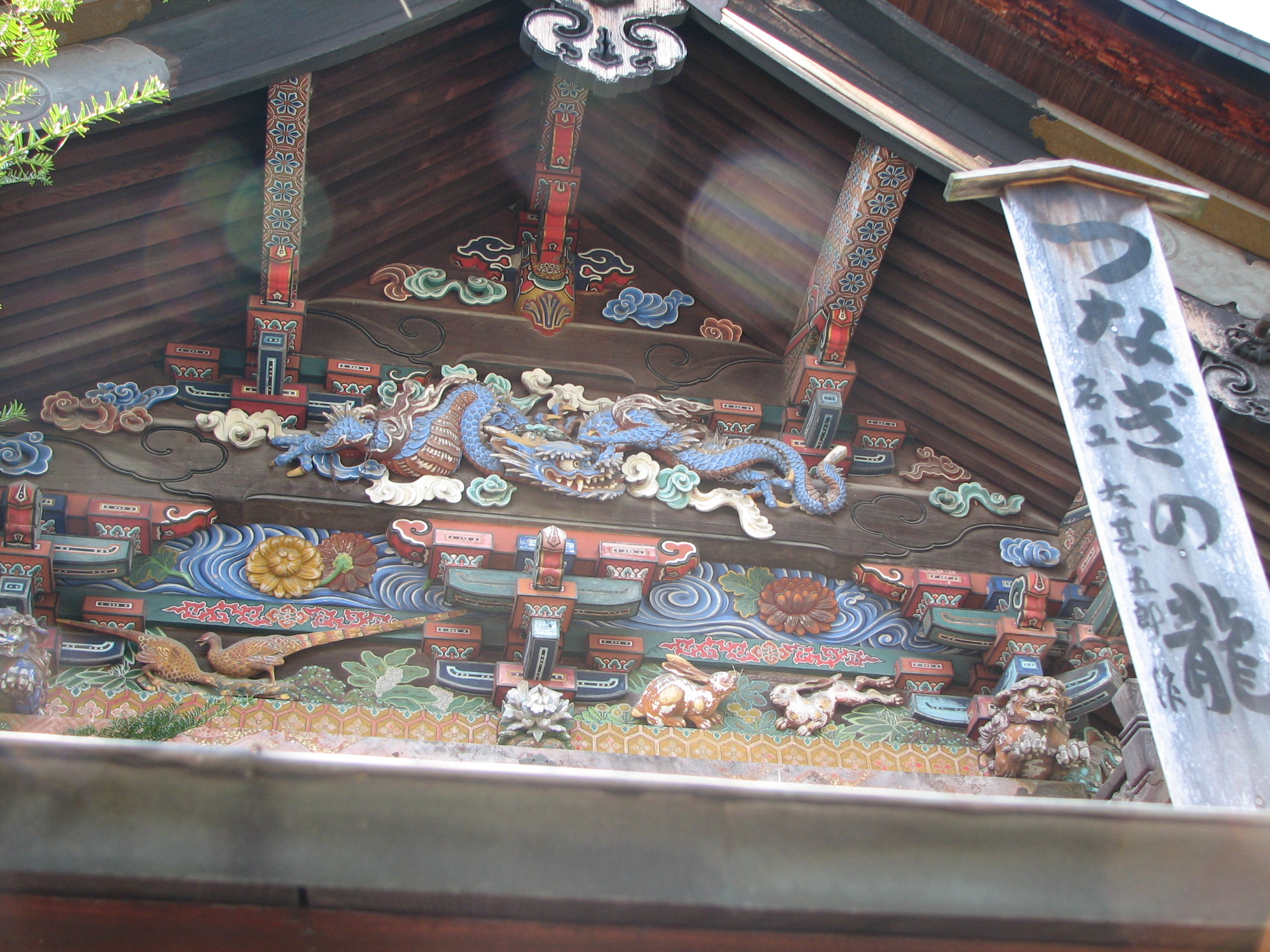
Visitor Guide
Recommended Route
1. Bow at the first torii gate before entering. Look for the “Chichibu Shrine” stone marker
2. Pass through the Shinmon gate, noting the decorative carvings on the gate itself
3. Purify your hands at the temizusha (water pavilion)
4. Pray at the haiden (worship hall) with two bows, two claps, one bow
5. Walk clockwise around the main hall to see all four carvings — the Chained Dragon (east), then the North Star Owl (north)
6. Visit the shrine office for goshuin and omamori (9:00 AM–5:00 PM)
Don’t Miss
- Allow about 15 minutes to circle the main hall and view all four carvings
- You can actually touch the chain on the “Chained Dragon”
- The “North Star Owl” is small — look carefully at the north side of the building
- Notice the baby tiger’s adorable expression in the “Tiger Raising Cubs” carving
Goshuin (Shrine Stamps)
- Fee: ¥500
- Hours: 9:00 AM – 5:00 PM
- Type: Hand-written and pre-written available
- Special: Limited edition goshuin during the Night Festival period. Check the official website for the latest offerings
What to Wear
- The grounds are mostly flat, but gravel paths make heels impractical
- Photography is generally permitted, but be respectful during ceremonies
- Pets: No clear policy on the official website. Call ahead at 0494-22-0262 to confirm
Basic Information
Access
- Address: 1-3 Bamba-cho, Chichibu City, Saitama 368-0041
- Nearest Station: Chichibu Station (Chichibu Railway) — 3-minute walk / Seibu-Chichibu Station (Seibu Line) — 15-minute walk
- From Ikebukuro: Seibu Laview express train, approximately 80 minutes (¥796 fare + ¥900 express surcharge ≈ ¥1,700 total)
- By Car: Approximately 50 minutes from Hanazono IC on the Kanetsu Expressway via Minano-Yorii Bypass (about 30 km)
- Parking: Free parking available (fills up quickly during busy periods; public transport recommended)
Hours & Fees
- Prayer Reception: Daily 9:00 AM – 4:30 PM
- Admission: Free
- Suggested Duration: 30 minutes for prayer only; about 1 hour including carvings tour
- Official Website: https://www.chichibu-jinja.or.jp/
- Phone: 0494-22-0262
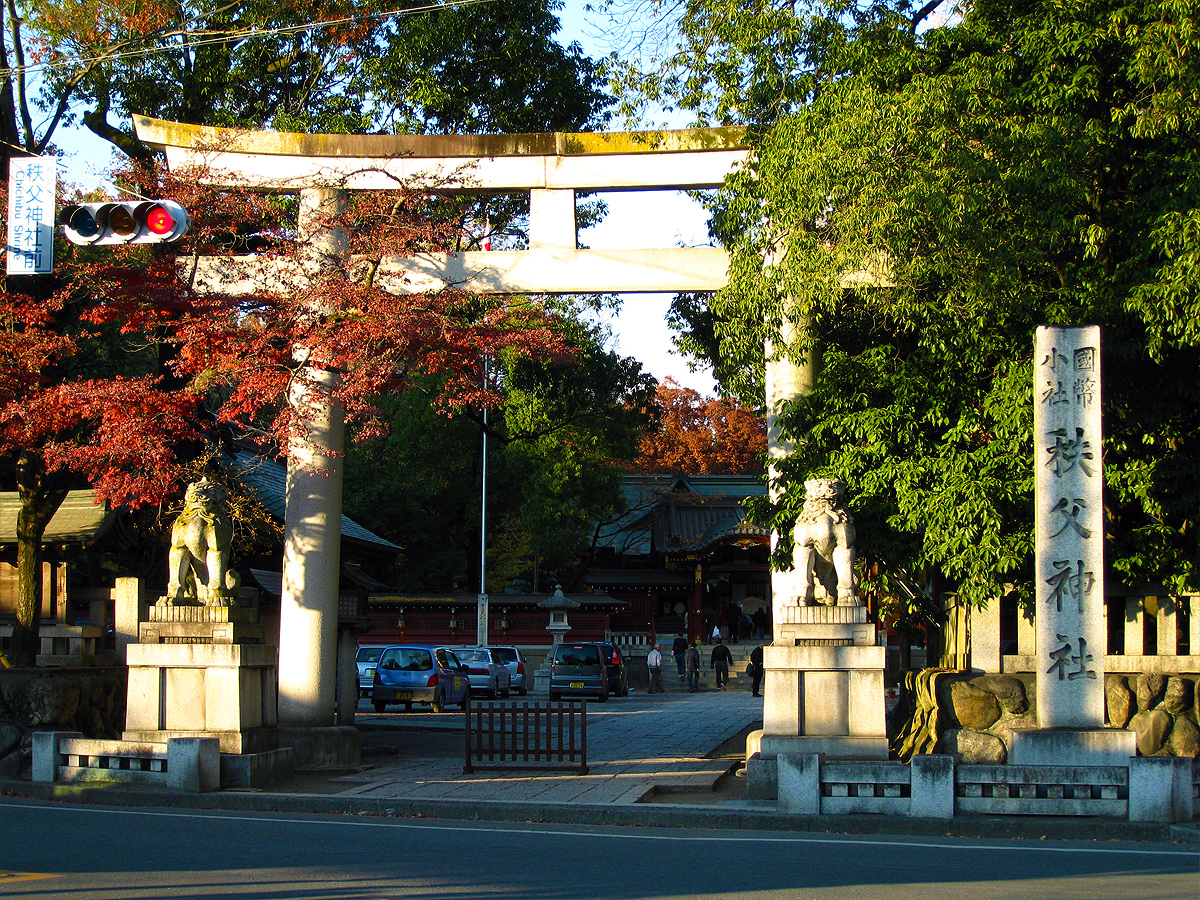
Nearby Attractions & Dining
Nearby Spots
Chichibu Festival Hall (1-minute walk) — Right next to the shrine. Features actual festival floats and an immersive video presentation of the Night Festival. Admission: ¥500 adults, ¥250 children. A must-visit if you can’t attend the actual festival.
Bamba-dori Street (adjacent) — The shrine’s historic approach lined with Taisho and early Showa-era architecture. Perfect for street food, shopping, and soaking up the atmosphere.
Chichibu Muse Park (15 minutes by car) — A vast nature park. The ginkgo avenue with over 500 trees turning golden is spectacular from late October to early November.
Local Cuisine
Chichibu Soba (Bamba-dori area) — Chichibu produces excellent buckwheat. Hand-made 100% soba noodles at local shops. Budget: ¥800–1,200.
Buta Miso Don (near Seibu-Chichibu Station) — Chichibu’s signature dish: charcoal-grilled miso-marinated pork served over rice. Sweet and savory perfection. Budget: ¥1,000–1,500.
Matsuri no Yu (directly connected to Seibu-Chichibu Station) — Hot spring facility with food court “Matsuri no Utage” serving local specialties. Admission: ¥1,100 weekdays. Perfect for relaxing after your visit.
Souvenirs
- Chichibu Mochi: Soft, chewy rice cakes — the classic Chichibu souvenir
- Shakushina-zuke: Local pickled greens with a mild, tangy flavor
- Chichibu Sake: Local sake brewed with mountain spring water
- Maple Sugar Sweets: Made from locally harvested maple syrup
Available at “Chichibu Miyage-ichi” (inside Matsuri no Yu) and shops along Bamba-dori.
Suggested Itineraries
Half-Day Course (About 3 hours)
10:00 AM Arrive at Seibu-Chichibu Station → 10:15 Chichibu Shrine visit & carvings (60 min) → 11:15 Chichibu Festival Hall (30 min) → 11:45 Lunch & stroll on Bamba-dori (60 min) → 12:45 Return to station
Full-Day Course (About 6 hours)
9:00 AM Arrive at Seibu-Chichibu Station → 9:15 Chichibu Shrine (60 min) → 10:15 Festival Hall (40 min) → 11:00 Lunch on Bamba-dori (60 min) → 12:00 Chichibu Muse Park (120 min) → 2:00 PM Matsuri no Yu hot spring & souvenirs (90 min) → 3:30 PM Depart
Visitor Reviews
Visitors to Chichibu Shrine consistently highlight these experiences:
“The carvings were far more impressive than I expected. The vivid colors of the Genki Three Monkeys were stunning. It’s more compact than Nikko, which actually makes it easier to appreciate each detail.” (Google Maps review)
“Super accessible from Chichibu Station — just a few minutes’ walk. Combined with Bamba-dori, it makes a great half-day trip. Budget at least an hour if you love carvings, though.” (Google Maps review)
“I visited during the Night Festival. The shrine grounds were packed, but there was this incredible mix of festival energy and sacred atmosphere. The winter fireworks were absolutely breathtaking.” (Google Maps review)
FAQ
Q: How long does a visit take?
A: About 30 minutes for prayer only. Allow approximately 1 hour to walk around and admire all four sides of carvings.
Q: Is the shrine wheelchair/stroller accessible?
A: The grounds are relatively flat, though some areas have gravel. The Heisei-den hall has ramps and an elevator, and accessible restrooms are available. Call ahead for detailed accessibility information.
Q: Can I get goshuin (shrine stamps)?
A: Yes, both hand-written and pre-written stamps are available. ¥500, from 9:00 AM to 5:00 PM.
Q: How crowded is the Night Festival?
A: Extremely crowded — about 300,000 visitors over December 2-3. Arrive early in the morning to secure a good viewing spot.
Q: Are pets allowed?
A: There is no clear policy on the official website. Call 0494-22-0262 to confirm before visiting.
Summary
Chichibu Shrine is a remarkable power spot where 2,100 years of history meets Tokugawa-era artistic mastery. The four legendary carvings — the Genki Three Monkeys, Chained Dragon, Tiger Raising Cubs, and North Star Owl — each tell a unique story that you won’t find at any other shrine in Japan.
Just 80 minutes from Ikebukuro by express train and a 3-minute walk from Chichibu Station, it’s one of the most accessible major shrines for a Tokyo day trip. After your visit, explore the charming Bamba-dori street, try Chichibu soba or buta miso don, and soak in the hot springs at Matsuri no Yu.
Whether you’re seeking academic success, good fortune, family blessings, or simply a culturally enriching experience, Chichibu Shrine delivers it all in a beautifully compact package.
—
We hope this guide helps you plan a wonderful visit to Chichibu Shrine.
*Information in this article is current as of April 2026. Please check the official website for the latest details before your visit.*
—
Discover Your Ideal Power Spot
Japan is home to countless spiritual places, each with unique energy. Want to find the power spot that resonates best with you personally? Try our free compatibility diagnosis — it takes just 3 minutes.
あなたに最適なパワースポットを知りたい方へ