A volcanic gorge carved by 100,000 years of flowing water. Basalt columns rising 80 meters like the pillars of a cathedral. A waterfall named after a vessel from which the sun goddess herself poured water from heaven. And a cave where she once hid, plunging the entire world into darkness.
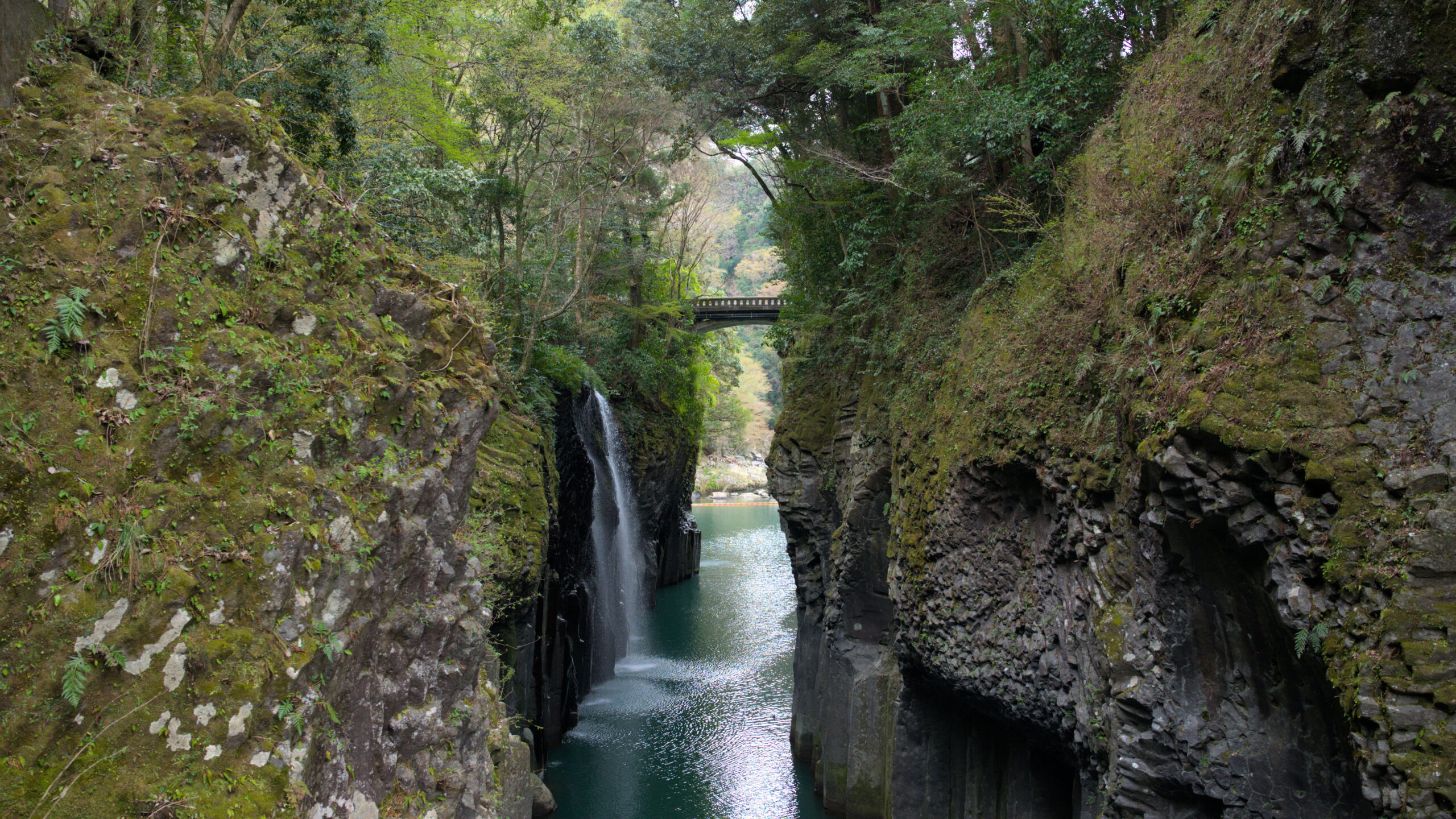
Takachiho Gorge (高千穂峡) in Miyazaki Prefecture is where Japanese geology and Japanese mythology converge in a way that exists nowhere else. The gorge formed when pyroclastic flows from Mount Aso — one of the world’s largest calderas — filled this river valley with lava approximately 100,000 years ago. As the lava cooled, it fractured into hexagonal columns called columnar jointing. Over millennia, the Gokase River carved through this hardened basalt, creating a narrow canyon with walls reaching 80–100 meters. The gorge is designated a National Monument and Natural Scenic Beauty.
But geology is only half the story. This is also the land of Tenson Korin — the mythical descent of the gods to Earth — and the site of the Amanoiwato cave, where the sun goddess Amaterasu hid and brought darkness to the world. For many visitors, standing in this gorge feels like standing at the intersection of earth science and creation mythology.
—
Why This Place Matters
Columnar Basalt — A Volcanic Cathedral
What makes Takachiho Gorge visually stunning is its columnar jointing (柱状節理). When Mount Aso’s pyroclastic flows poured into the Gokase River valley roughly 100,000 years ago, the lava cooled rapidly and contracted into hexagonal columns — a geological process that creates formations resembling organ pipes or cathedral pillars. These columns rise up to 80–100 meters from the water’s surface, creating one of Japan’s most dramatic natural landscapes.
Manai Falls — Japan’s Top 100 Waterfalls
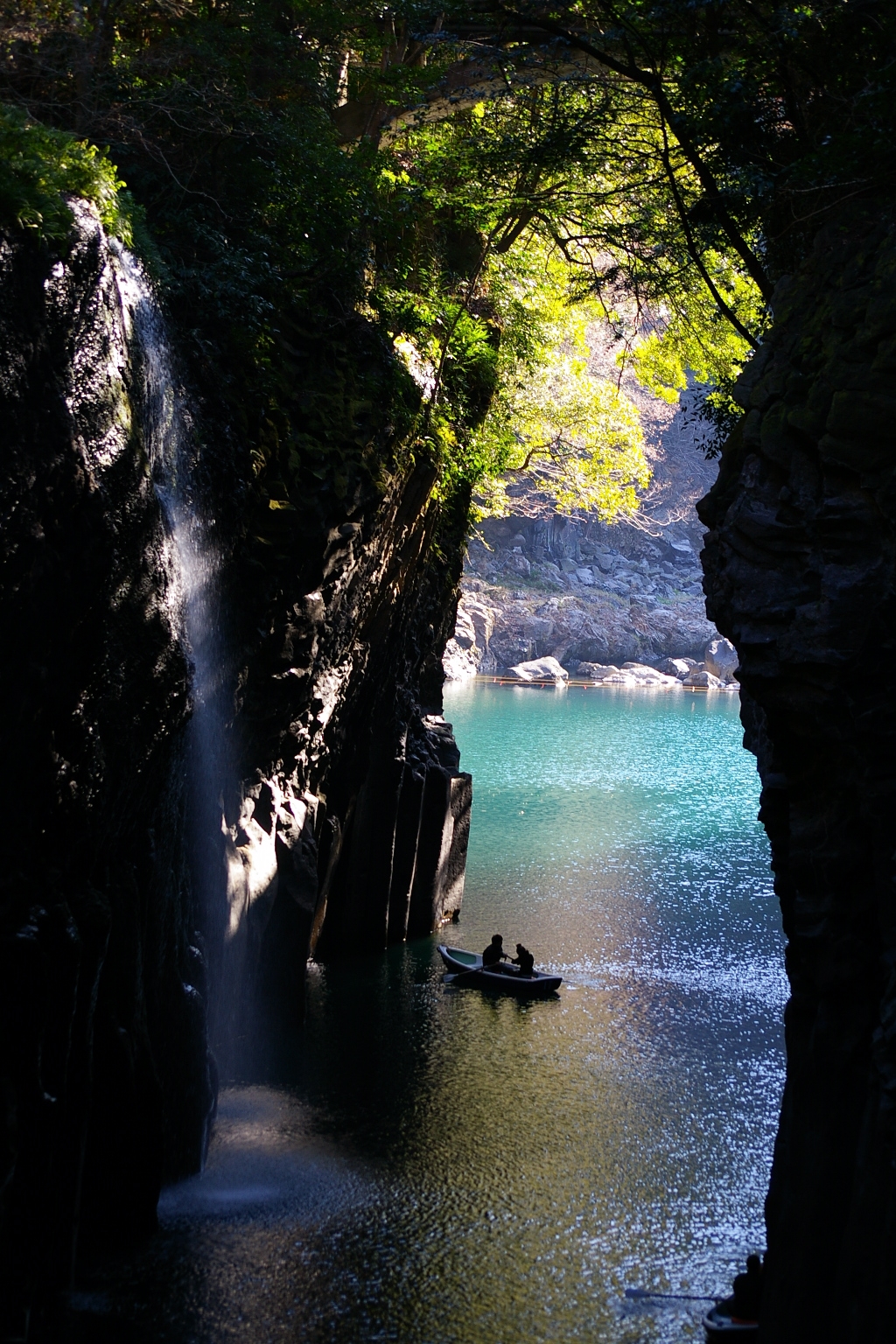
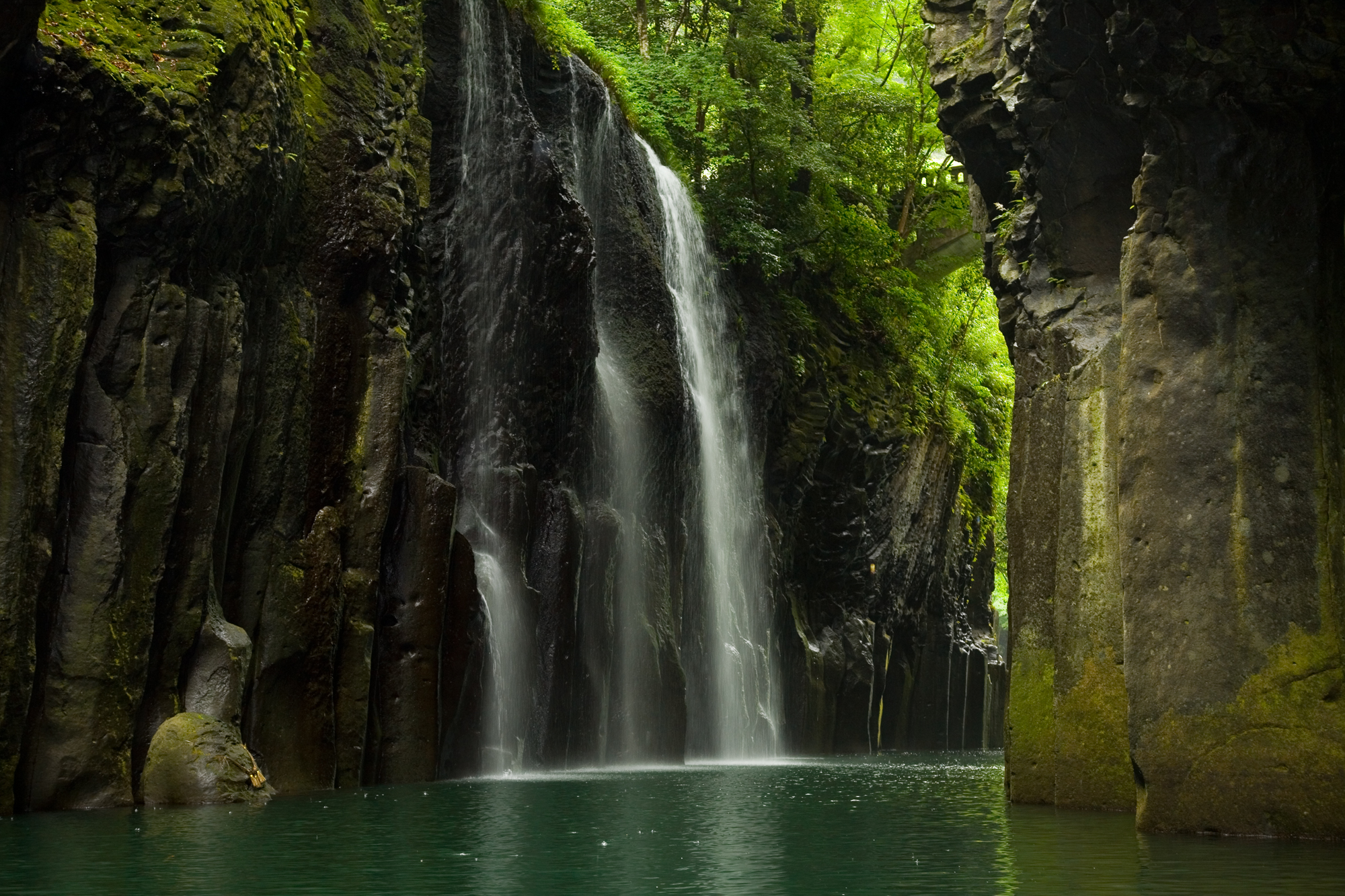
The gorge’s centerpiece is Manai Falls (真名井の滝), a 17-meter waterfall that drops directly from the cliff top into the emerald river below. Its name comes from a Shinto myth: the sun goddess Amaterasu is said to have poured water from a sacred heavenly vessel called “Manai” into this gorge.
Seeing the falls from a rental boat — close enough to feel the spray on your face — is the signature Takachiho experience.
The Birthplace of Japanese Mythology
Takachiho is the setting for two of the most foundational stories in Japanese mythology:
Tenson Korin (天孫降臨): According to the Kojiki (712 CE) and Nihon Shoki (720 CE), the sun goddess Amaterasu sent her grandson Ninigi-no-Mikoto from the heavens to rule the earthly realm. He descended upon a peak in Takachiho — an event that established the divine lineage of Japan’s Imperial family. This makes Takachiho, quite literally, the place where Japan’s origin story begins.
The Amanoiwato Legend (天岩戸): After a conflict with her brother Susanoo, Amaterasu retreated into a cave called Amanoiwato and sealed it shut, plunging the world into darkness. Eight million deities gathered at a nearby riverbed — Amano Yasukawara — to devise a plan. The goddess Ame-no-Uzume performed an ecstatic dance that made the gods roar with laughter, luring Amaterasu to peek out. The god Ame-no-Tajikarao flung the boulder aside, and light returned to the world.
—
Spiritual Benefits
While Takachiho Gorge is not a shrine or temple, its mythological significance has made it one of Japan’s most revered spiritual landscapes for millennia.
Renewal and new beginnings: The Amanoiwato story — light returning after total darkness — resonates deeply with anyone facing a turning point. Many visitors come seeking a sense of fresh start.
Romantic bonds: At nearby Takachiho Shrine, the Meoto Sugi (husband-and-wife cedar trees) are said to bless couples who walk around them hand-in-hand three times with eternal love.
Purification and reset: The sound of Manai Falls echoing off columnar basalt walls, the emerald water, the cool air deep in the gorge — the overwhelming natural beauty provides a visceral sense of cleansing that visitors consistently describe.
—
Best Time to Visit
By Season
Autumn foliage (late October – early November) — The top recommendation. Red and orange maples contrast dramatically against the dark basalt walls and emerald water. Night illuminations add another dimension. However, expect heavy crowds; boat reservations are essential.
Late spring (May – June) — The gorge wrapped in vibrant green. Illuminations begin mid-May. Comfortable temperatures and fewer crowds than autumn make this the best-kept secret season.
Spring (late March – April) — Cherry blossoms and emerging greenery. Pleasant walking temperatures.
Summer (July – September) — The gorge stays cool, offering relief from Japan’s summer heat. But the rainy season (June–July) may suspend boat operations. Nagashi somen (flowing noodles) are a summer-only experience.
Winter (December – February) — Quiet and uncrowded. Morning temperatures can drop below freezing. No illuminations.
By Time of Day
| Time | Experience |
|——|———–|
| 8:30 (boat opening) | Fewest visitors. Misty, ethereal atmosphere. Best for photographers. |
| 10:00–12:00 | Sunlight reaches the gorge floor — water turns brilliant emerald. Best light for photos. |
| 12:00–13:00 | Brief lull as visitors break for lunch. |
| Evening (illumination season) | Spotlights on cliffs and falls create a mysterious atmosphere. May–November, until 22:00. |
—
Visitor Guide
Boat Ride (Allow 30 minutes)
The most popular activity. Rowing beneath Manai Falls and through the columnar basalt canyon is an experience you cannot replicate from the trail.
Prices (2026)
| Day | Price per Boat | Duration | Capacity |
|—–|—————|———-|———-|
| Tue–Thu | ¥4,100 | 30 min | Up to 3 people |
| Fri–Mon, holidays, peak | ¥5,100 | 30 min | Up to 3 people |
Reservations
- Online booking: Opens exactly 14 days before your visit date at 9:00 AM JST. Closes 2 days before at 9:00 AM.
- Autumn weekends sell out within minutes of opening. Set an alarm.
- Book through the official Takachiho Tourism Association website.
Same-Day Tickets
- First-come, first-served. Pay at the counter and receive a timed return ticket.
- Wait times: 30 min on weekdays, 2+ hours during peak seasons.
- Strategy: Arrive before 8:30 AM, or target 12:00–13:00 when crowds thin for lunch.
Walking Trail (Allow 30–40 minutes)
The approximately 1 km trail along the gorge passes:
- Manai Falls viewpoint — The classic elevated view of the waterfall and boats below
- Onokoro-jima — A mythological island from Japan’s creation story
- Oni-Hachi’s Strength Stone — A massive boulder said to have been hurled by a legendary demon
- Three Bridges viewpoint — The only spot where Shinbashi, Takachiho Ohashi, and Shinto Takachiho Ohashi bridges are visible simultaneously
What to Wear and Bring
- Shoes: The trail is mostly paved but includes steep stairs. Comfortable walking shoes recommended.
- Layers: The gorge is shaded and cool even in summer. In autumn/winter, warm layers are essential.
- Boat riders: You may get splashed. Wear clothes you don’t mind getting wet.
—
Practical Information
| Detail | Information |
|——–|————-|
| Name | Takachiho Gorge (高千穂峡 / たかちほきょう) |
| Location | Mitai, Takachiho Town, Nishiusuki District, Miyazaki Prefecture |
| Admission | Free (gorge trail); boat rental separate |
| Facilities | Restrooms and shops near parking lots |
| Illumination | Mid-May – November, until 22:00 |
| Contact | Takachiho Tourism Association: 0982-73-1213 |
Access
By car
- From Kumamoto: Route 57 → Route 325, approximately 2 hours
- From Fukuoka: Kyushu Expressway → Mashiki IC → Routes 57/325, approximately 3 hours
- From Miyazaki: Higashi-Kyushu Expressway → Nobeoka → Route 218, approximately 2.5 hours
Parking (updated April 2026)
| Lot | Fee | Notes |
|—–|—–|——-|
| 1st Oshioi | ¥1,000 | Closest to boats & Manai Falls |
| 2nd Araragi | ¥1,000 | Near trail entrance |
| 3rd Ohashi | ¥800 | Newly charged from April 2026 |
| 4th Oshikata | ¥500 | Newly charged from April 2026 |
| 5th Taguchino | Free | Furthest from gorge |
Highway bus
- Fukuoka (Hakata) → Takachiho Bus Center: approximately 3.5 hours, ¥5,000–7,000, 4 buses daily
- Kumamoto → Takachiho Bus Center: approximately 3 hours, approximately ¥2,700
Train + bus
- JR Nobeoka Station → Takachiho Bus Center: Miyazaki Kotsu bus, approximately 90 min, ¥1,880
- Takachiho Bus Center to gorge: 30–40 min walk or 5 min by taxi
*Note: There is no train station in Takachiho. The former Takachiho Railway closed after typhoon damage in 2005.*
—
Nearby Attractions
Takachiho Shrine (20-minute walk from gorge)
Over 1,900 years of history. The chief shrine of Takachiho’s 88 shrines. Giant 800-year-old cedar trees tower over the grounds, and the Meoto Sugi (couple’s cedar) is a beloved spot for couples.
Yokagura Night Dance: Performed nightly at the shrine’s kagura hall, 20:00–21:00, ¥1,000 admission. Four acts from the 33-part sacred dance cycle retell the Amanoiwato myth. Designated a National Important Intangible Folk Cultural Property.
Amanoiwato Shrine (10–15 min by car)
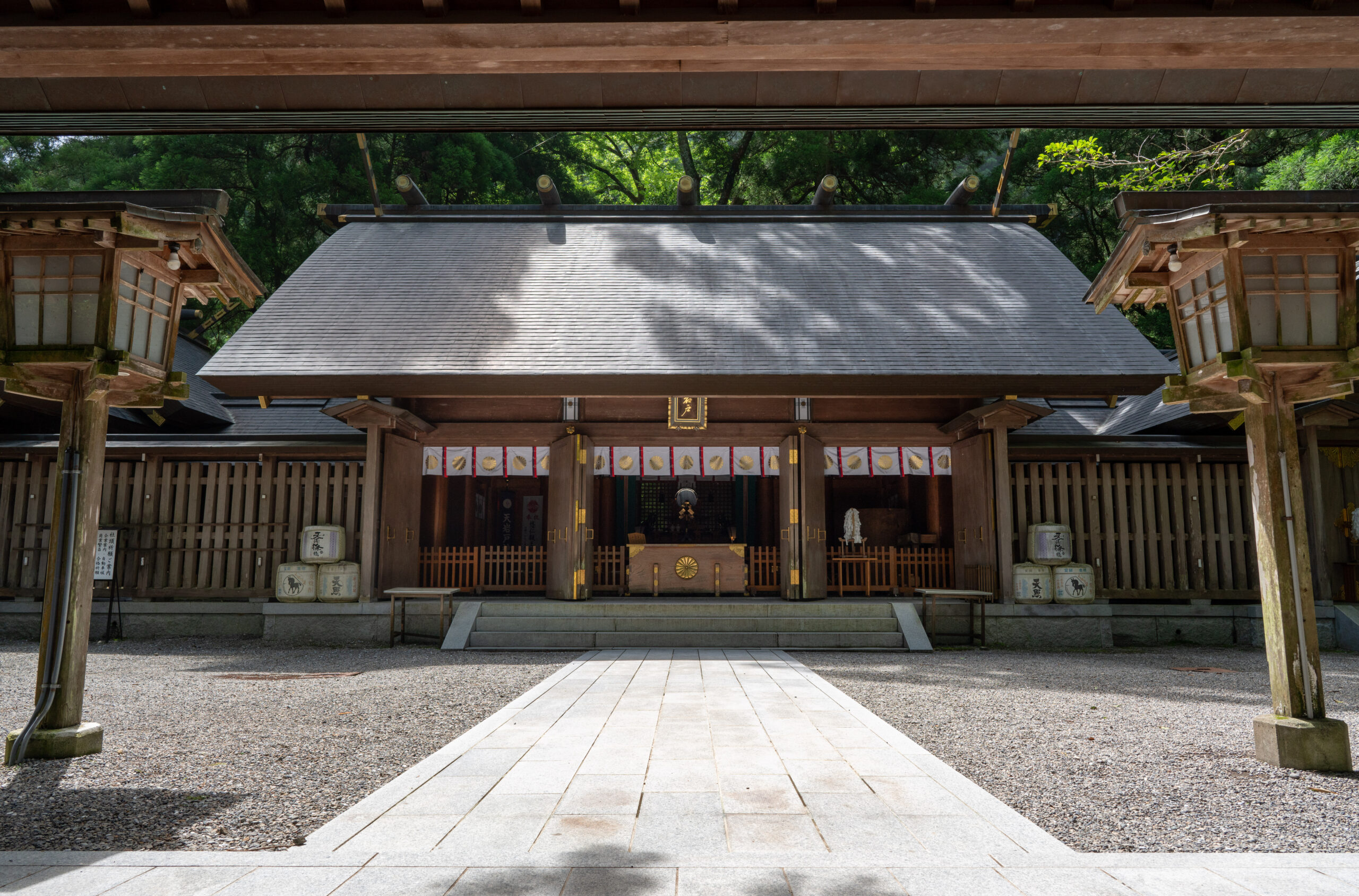
The shrine enshrining the cave where Amaterasu hid. From Nishi Hongu, priest-guided viewings of the sacred cave across the river run 15 times daily (photography strictly prohibited). Higashi Hongu enshrines Amaterasu herself.
Amano Yasukawara (10-minute walk from Amanoiwato Shrine)
The riverbed cave where eight million deities gathered to plan how to lure Amaterasu out. Measuring 40 meters wide and 30 meters deep, the cave entrance is filled with hundreds of small stone cairns stacked by visitors making wishes. Many describe this as the most spiritually powerful site in all of Takachiho.
Kunimigaoka Viewpoint (15 min by car)
A 513-meter elevation viewpoint. On cool, calm autumn mornings (September–November, 5:30–7:00 AM), conditions sometimes produce a sea of clouds (unkai) blanketing the Takachiho valley — one of the most spectacular natural phenomena in Kyushu.
Takachiho Amaterasu Railway
A tourist cart ride along the abandoned Takachiho Railway tracks, crossing the Takachiho Railway Bridge at 105 meters above the gorge — one of the highest railway bridges in Japan. A 30-minute round trip with breathtaking aerial views of the canyon.
Local Food
- Takachiho Beef: Award-winning wagyu (Prime Minister’s Award at the National Wagyu Competition). Available as steak, yakiniku, and beef soba.
- Nagashi Somen: Flowing noodles — said to have originated in Takachiho. Catch thin noodles as they flow down a bamboo flume. Summer only.
- Chicken Nanban: Miyazaki’s signature dish — fried chicken with sweet vinegar and tartar sauce.
Suggested Day Itinerary
| Time | Activity |
|——|———-|
| 8:00 | Arrive at 1st Oshioi parking lot |
| 8:30 | Boat ride at Manai Falls |
| 9:30 | Walk the 1 km gorge trail |
| 11:00 | Visit Takachiho Shrine |
| 12:00 | Lunch (Takachiho beef or nagashi somen) |
| 13:30 | Drive to Amanoiwato Shrine (10 min) |
| 14:00 | Priest-guided cave viewing + walk to Amano Yasukawara |
| 15:30 | Kunimigaoka viewpoint |
| 20:00 | Yokagura performance at Takachiho Shrine |
—
Visitor Reviews
> “Seeing Manai Falls from the boat is a hundred times more impressive than any photo. The spray hits your face as you look up at those basalt columns — 30 minutes passes in an instant.”
> — Google Maps review
> “Amano Yasukawara left the deepest impression. The silence, the hundreds of stone piles, the massive cave — I found myself putting my hands together in prayer without even thinking about it. More moving than the gorge itself.”
> — Jalan review
> “We couldn’t get a boat reservation and waited 90 minutes for same-day tickets. Autumn weekends fill up the moment reservations open two weeks out. But it was worth every minute of the wait.”
> — Google Maps review
The boat reservation battle is real. If you’re visiting in autumn, treat booking like buying concert tickets — be ready the moment slots open.
—
Frequently Asked Questions
Q. What if I can’t get a boat reservation?
A. Same-day tickets are available first-come, first-served. Arrive before 8:30 AM to minimize wait time. And the gorge trail viewpoints offer spectacular views of Manai Falls even without a boat.
Q. Can I visit on a rainy day?
A. The walking trail is accessible in rain, but boats may be suspended during heavy rain or high water. Amanoiwato Shrine and Takachiho Shrine are fine in the rain. The yokagura performance is indoors.
Q. Is the gorge wheelchair accessible?
A. The Manai Falls observation deck is barrier-free. However, the trail includes steep stairs and is not fully accessible. Boats require stairs to reach the boarding dock. Both Takachiho Shrine and Amanoiwato Shrine can be reached by car close to the main buildings.
Q. Is it suitable for children?
A. Yes. Children can ride the boats (3-person capacity). The trail has stairs, so hold small children’s hands. The yokagura performance is one hour — engaging enough to hold children’s attention.
Q. How much time do I need?
A. Gorge only: minimum 2 hours (boat + trail). Including Amanoiwato Shrine and yokagura: a full day is recommended.
—
Summary
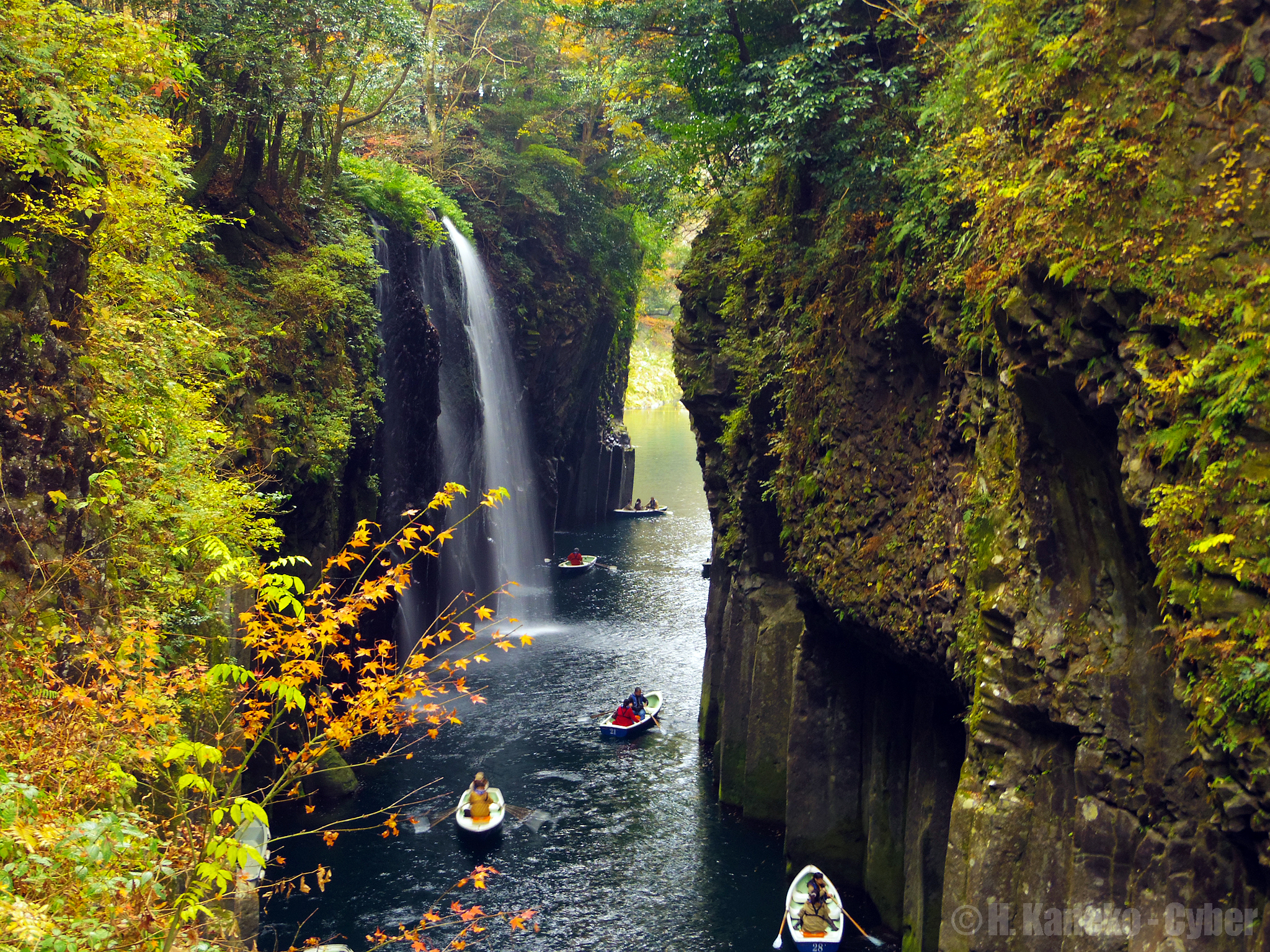
Takachiho Gorge is where 100,000 years of volcanic geology meets the origin story of Japan itself.
Columnar basalt walls rising from emerald water. A 17-meter waterfall named after a divine vessel. A cave where the sun goddess hid and plunged the world into darkness. A riverbed cave where eight million gods gathered to bring light back. Every corner of this landscape carries a story that is literally foundational to Japanese culture.
Row a boat beneath Manai Falls and feel the spray on your face. Walk to Amano Yasukawara and stand in the silence among hundreds of stone wishes. Watch the Amanoiwato myth performed live in sacred dance at the shrine. These are experiences that cannot be replicated anywhere else in the world.
Getting to Takachiho takes effort — there’s no train station, no shinkansen stop. But that remoteness is part of why the mythology endures, and why arriving feels like stepping into another world entirely.
—
*Information in this article is current as of April 2026. Boat prices, parking fees, and schedules may change — please check the Takachiho Tourism Association website for the latest details before your visit.*
—
Want to discover the power spot that suits you best?
Did you know that different people have different “compatibility” with different power spots? The same location can feel completely different depending on who visits.
If you’d like to find the power spot that resonates most with you, try our free compatibility diagnosis — it takes just 3 minutes.
あなたに最適なパワースポットを知りたい方へ