Todai-ji Temple, located in Nara City, Nara Prefecture, is the head temple of the Kegon school of Buddhism, established in the Nara period (8th century) by imperial decree of Emperor Shomu. Home to the beloved “Great Buddha of Nara” (Daibutsu), the Vairocana Buddha statue stands approximately 15 meters tall and weighs about 250 tons—an overwhelming scale that continues to inspire profound awe and reverence in all who visit.
Registered as a UNESCO World Heritage Site in 1998 as part of the “Historic Monuments of Ancient Nara,” Todai-ji welcomes approximately 3 million visitors annually, making it one of Japan’s most iconic destinations and a powerful spiritual site. With roughly 1,300 years of history, this temple complex houses numerous National Treasures and Important Cultural Properties, preserving the finest achievements of Japanese Buddhism. Just a 20-minute walk from Kintetsu Nara Station, strolling along the approach while interacting with Nara Park’s friendly deer, visitors naturally feel their minds and bodies becoming purified.
Highlights and Attractions
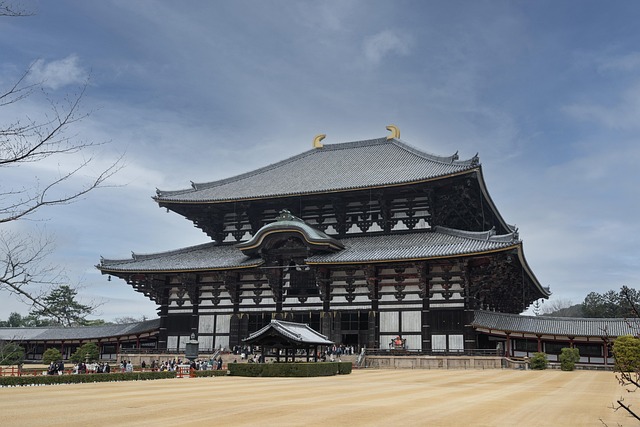
The symbol of Todai-ji, the Great Buddha Hall (Daibutsuden), is one of the world’s largest wooden structures. The current building, reconstructed in 1709 during the Edo period, is approximately two-thirds the size of the original, yet still boasts impressive dimensions: 57.5 meters wide, 50.5 meters deep, and 49.1 meters tall.
Upon stepping inside, visitors are immediately struck by the overwhelming presence of the Great Buddha. Officially known as “Vairocana Buddha,” this deity symbolizes the cosmic truth described in the Avatamsaka Sutra (Flower Garland Sutra). Standing 14.98 meters tall (approximately 18 meters including the pedestal), the massive figure instantly captivates all who behold it. The raised right hand forms the “Abhaya Mudra” (fear-not gesture), conveying “be not afraid,” while the left hand’s “Varada Mudra” (boon-granting gesture) promises “I shall grant your wishes”—messages of boundless compassion.
The Buddha’s “rahotsu” (spiral hair curls) number 966, each measuring approximately 22 centimeters in diameter, 21 centimeters in height, and weighing about 1.2 kilograms.
Proceeding along the approach, visitors are greeted by the South Great Gate (Nandaimon), standing 25.46 meters tall. Reconstructed in 1199 during the Kamakura period under the guidance of the monk Chogen, this gate houses the Nio Guardian statues (Kongo Rikishi) created by master sculptors Unkei, Kaikei, and their fellow Kei school artists.
The “A-gyo” and “Un-gyo” figures, each approximately 8.4 meters tall, are said to have been completed in just 69 days. Their powerful, dynamic forms are considered the supreme masterpieces of Japanese sculptural history, believed to purify the hearts and bodies of those who pass through while warding off evil spirits.
Nigatsu-do (February Hall), perched on the hillside east of Daibutsuden at the foot of Mount Wakakusa, is famous as the stage for “Shuni-e” (the Water-Drawing Ceremony). This religious observance, held annually from March 1st through the 14th, has continued unbroken since 752 CE—marking its 1,273rd occurrence in 2024.
From Nigatsu-do’s balcony-style architecture, visitors can enjoy panoramic views of Nara city. Particularly at dusk, watching the setting sun bathe Todai-ji’s buildings in crimson light creates memories that last a lifetime. As the saying goes, “When Shuni-e ends, spring arrives”—this ceremony has become a beloved harbinger of spring in Nara.
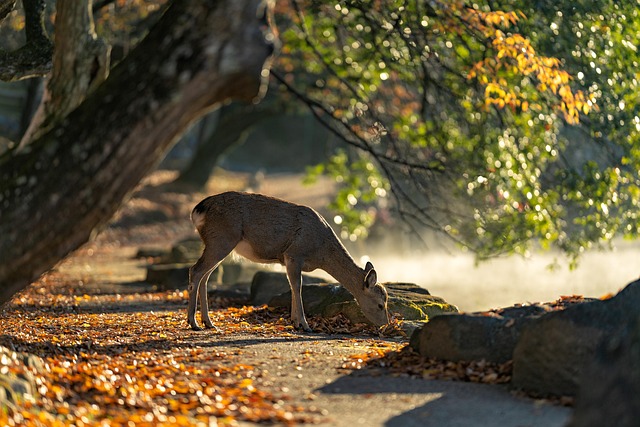
Todai-ji’s grounds seamlessly merge with Nara Park, where approximately 1,200 deer roam freely. These deer have been cherished as sacred animals since ancient times. According to legend, the deity Takemikazuchi-no-mikoto, enshrined at Kasuga Taisha, arrived in Nara riding a white deer—thus deer came to be revered as divine messengers.
The experience of interacting with deer while walking toward Daibutsuden is uniquely Todai-ji. With deer crackers in hand (200 yen), visitors can enjoy friendly exchanges with these gentle creatures.
Spiritual Benefits
Todai-ji’s founding traces back to Emperor Shomu’s edict for the Great Buddha’s construction in 743 CE. During an era plagued by epidemics and famine, the temple was established to pray for the nation’s peace. Thus, Todai-ji’s Great Buddha is said to bestow blessings of good health and national tranquility.
Inside Daibutsuden, one pillar features a hole famous for “pillar crawling.” This opening measures the same size as the Buddha’s nostril (37 cm tall × 30 cm wide), and successfully crawling through is believed to bring blessings of good health and protection from illness.
The Kegon school’s teachings expound the grand worldview that “all existence is interconnected.” Through encountering these profound teachings, visitors are said to receive wisdom for perceiving the true nature of things.
During examination season especially, the temple fills with students praying for academic success, seeking to receive the “light of wisdom” emanating from the Great Buddha.
The Shuni-e ceremony at Nigatsu-do is a religious observance where monks confess the nation’s sins and pray for world peace and abundant harvests. By placing oneself in this sacred space of unbroken prayer spanning 1,273 years, visitors may receive blessings for fulfilled wishes and protection from misfortune.
During Shuni-e, it is said that being touched by sparks from the “Otaimatsu” (great torches) carried by the practicing monks ensures a year of good health.
“Standing before the Great Buddha, my daily worries seem so small. I visit every New Year to express gratitude for the past year’s blessings and receive energy for the year ahead.” (Male, 50s, Osaka)
“I attempted the pillar crawl. The moment I squeezed through that narrow opening, I mysteriously felt my body become lighter. I’m praying for my children’s healthy growth.” (Female, 30s, Kyoto)
Best Times to Visit
March, when Shuni-e takes place, is Todai-ji’s most sacred time of year. The “Otaimatsu” ceremony on March 12th is particularly spectacular—massive torches approximately 8 meters long race across Nigatsu-do’s balcony while sparks dance into the night sky, creating memories to last a lifetime. However, this day draws enormous crowds, requiring arrival at least 2 hours early to secure a viewing spot.
Cherry blossoms reach full bloom on temple grounds in April. The combination of Daibutsuden and cherry blossoms epitomizes Japanese spring. This is also the season when fawns are born in Nara Park amid fresh green grass.
The “Mantoe” (Ten Thousand Lantern Ceremony) on August 15th illuminates Daibutsuden with approximately 2,500 lanterns, creating a mystical atmosphere. The normally inaccessible nighttime Buddha Hall is specially opened, allowing visitors to worship the Great Buddha bathed in soft lantern light (19:00–22:00).
However, Nara summers are extremely hot—heat stroke prevention is essential for daytime visits. Early morning visits (opening at 8:00) are recommended.
From mid to late November, maple and ginkgo trees around Daibutsuden display brilliant autumn colors, creating stunning compositions with the historic architecture. The view from Nigatsu-do is particularly exceptional, overlooking Nara city painted in autumn hues.
The “Great Buddha Autumn Festival” on October 15th features children’s processions and traditional court music performances.
From New Year’s Day through January 3rd, the temple is crowded with hatsumode (first shrine visit) worshippers. However, the special experience of free admission to Daibutsuden on New Year’s Day from midnight to 8:00 AM is not to be missed. Greeting the Great Buddha at the year’s first moment carries profound solemnity.
Mid-January through February sees fewer visitors, making it an ideal time for peaceful worship. Consider combining your visit with viewing the Wakakusayama Yamayaki (mountain burning ceremony) on the fourth Saturday of January.
- Early Morning (8:00–9:00): Fewest visitors just after opening for quiet worship
- Mid-Morning (9:00–11:00): Relatively uncrowded with shorter waits for goshuin
- Late Afternoon (16:00–closing): Beautiful views of Daibutsuden in western sunlight
Worship and Visitor Guide
Todai-ji remains an active religious site. Please observe the following etiquette:
1. Nandaimon Gate: Bow slightly to the Nio guardians before passing through
2. Temizuya (water pavilion): Purify hands and mouth before worship (left hand → right hand → mouth → left hand → ladle handle)
3. Daibutsuden: Maintain quiet inside; photography allowed but flash prohibited
4. Worship: Place palms together, bow once, and silently offer your prayers
Basic Course (approx. 90 minutes)
1. Nandaimon Gate & Nio Guardians (15 min)
2. Daibutsuden & Vairocana Buddha (30 min)
3. Nigatsu-do & Sangatsu-do (30 min)
4. Goshuin collection (15 min)
Comprehensive Course (approx. 3 hours)
1. Todai-ji Museum (30 min)
2. Nandaimon Gate & Nio Guardians (20 min)
3. Daibutsuden & Vairocana Buddha (45 min)
4. Nigatsu-do, Sangatsu-do & Shigatsu-do (45 min)
5. Shosoin Repository exterior (20 min) *Interior not open to public
6. Kaidan-in Hall (20 min)
Goshuin (300 yen each)
- Daibutsuden: “Kegon,” “Rushanabutsu,” etc.
- Nigatsu-do: “Namugan”
- Kaidan-in: “Shitenno”
- Hokke-do (Sangatsu-do): “Fukukenjaku Kannon”
Popular Omamori (Charms)
- Daibutsu-mamori (800 yen): Embroidered image of the Great Buddha for good fortune
- Academic Success Charm (700 yen): Popular with students
- Traffic Safety Charm (1,000 yen): Car sticker type available
Pillar Crawling Guide
Inside Daibutsuden, behind and to the right of the Great Buddha, a pillar features a hole said to be the same size as the Buddha’s nostril.
- Hole dimensions: 37 cm (H) × 30 cm (W)
- Benefits: Good health, protection from misfortune
- Notes: Lines can form during busy times; adults with larger builds may not fit
- Tip: Weekday mornings are relatively less crowded
Basic Information
Address: 406-1 Zoshicho, Nara City, Nara Prefecture 630-8587
By Train
- 20-minute walk from Kintetsu Nara Station
- From JR Nara Station: City loop bus to “Daibutsuden Kasuga Taisha-mae,” then 5-minute walk
By Car
- 15 minutes from Daini-Hanna Road “Horai IC”
- 20 minutes from Nishi-Meihan Expressway “Tenri IC”
Parking
- Nara Prefectural Daibutsu-mae Parking: 1,000 yen/visit (approx. 70 spaces)
- GS Park Todai-ji Saidaimon Parking: 300 yen/30 minutes
Visiting Information
| Item | Details |
|——|———|
| Hours | Apr–Oct: 7:30–17:30; Nov–Mar: 8:00–17:00 |
| Daibutsuden Admission | Adults 600 yen, Elementary students 300 yen |
| Todai-ji Museum | Adults 600 yen (Combined ticket with Daibutsuden: 1,000 yen) |
| Closed | Never (Open year-round) |
| Recommended Duration | Basic 90 min, Comprehensive 3 hours |
- Phone: 0742-22-5511
- Official Website: https://www.todaiji.or.jp/
Nearby Attractions and Dining
Kasuga Taisha Shrine (15-minute walk)
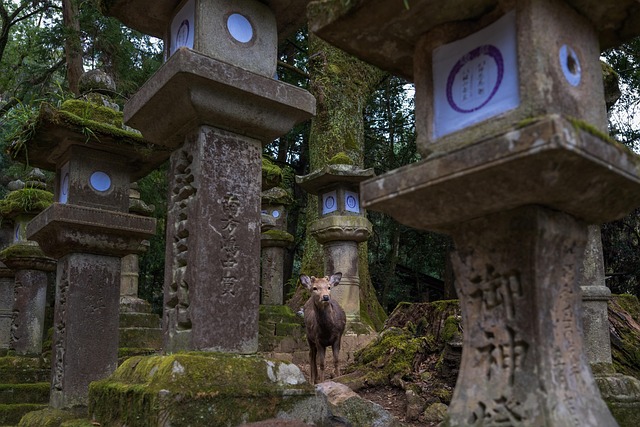
A World Heritage Site rivaling Todai-ji in significance. Approximately 3,000 stone and bronze lanterns create a mystical atmosphere. During Setsubun (February) and Obon (August) festivals, all lanterns are lit.
Kofuku-ji Temple (10-minute walk)
Head temple of the Hosso school, famous for its Ashura statue. The five-story pagoda (50.1 meters tall) is an iconic symbol of Nara. The National Treasure Hall allows close viewing of Buddhist statues including the famous Ashura.
Nara National Museum (5-minute walk)
A national museum specializing in Buddhist art. The annual “Shosoin Exhibition” (late October–early November) showcases rarely-seen treasures from the Shosoin Repository.
Mount Wakakusa (20-minute walk)
A gentle 342-meter mountain offering panoramic views of Nara city. Its night view has been selected as one of Japan’s “New Three Great Night Views.” The January mountain-burning ceremony is a beloved winter tradition.
Shizuka Koen-ten (10-minute walk)
- Genre: Kamameshi (pot rice)
- Specialties: Nara Seven-Variety Kamameshi (1,650 yen), Shiitake Kamameshi (1,430 yen)
- Hours: 11:00–20:00 (L.O. 19:30)
- Features: Authentic pot rice cooked to order; expect lines at this popular spot
Kasuga Ninaichaya (15-minute walk)
- Genre: Japanese cuisine, sweets
- Specialties: Manyo Kayu/seasonal rice porridge (1,100 yen), Kakinoha-zushi set (1,320 yen)
- Hours: 10:00–16:00
- Features: Atmospheric teahouse along Kasuga Taisha approach
Nakatanido (15-minute walk)
- Genre: Traditional sweets
- Specialties: High-speed mochi pounding performance, Yomogi Mochi (150 yen each)
- Hours: 10:00–19:00
- Features: Famous for ultra-fast mochi-pounding performances seen on TV
Kakinoha-zushi Honpo Tanaka Nara Main Store (12-minute walk)
- Genre: Local cuisine
- Specialties: Kakinoha-zushi assortment (8 pieces, 1,296 yen)
- Hours: 9:00–19:00
- Features: Perfect souvenir of Nara’s signature local dish
Nara Souvenirs
- Narazuke: Traditional pickles preserved in sake lees
- Deer Sable Cookies: Baked goods shaped like Nara Park deer
- Kakinoha-zushi: Mackerel or salmon sushi wrapped in persimmon leaves
- Sumi (Ink Sticks): Nara is Japan’s top producer of traditional ink
- Itto-bori: Traditional one-knife carved deer and Buddha figurines
Model Courses
Half-Day Course (approx. 4 hours)
9:00 Depart Kintetsu Nara Station
↓ 20-minute walk (enjoying deer in Nara Park)
9:20 Todai-ji worship (90 min)
10:50 Yomogi mochi break at Nakatanido (20 min)
11:10 Kofuku-ji Temple & Five-Story Pagoda (40 min)
11:50 Kamameshi lunch at Shizuka (60 min)
Full-Day Course (approx. 8 hours)
9:00 Depart Kintetsu Nara Station
9:20 Todai-ji worship (120 min)
11:20 Manyo Kayu lunch at Kasuga Ninaichaya (60 min)
12:20 Kasuga Taisha worship (60 min)
13:20 Nara National Museum (90 min)
14:50 Naramachi district stroll & shopping (90 min)
16:20 Kofuku-ji Temple & Five-Story Pagoda (40 min)
17:00 Kintetsu Nara Station
Visitor Reviews
“I was speechless at the overwhelming scale” (Male, 40s, Tokyo)
“The moment I first saw the Great Buddha, I got goosebumps at its sheer size. Thinking that people 1,300 years ago created this makes me feel the true power of the Japanese spirit. I also tried the pillar crawl—barely made it as an adult! (laughs)”
“The Otaimatsu torches are a lifetime memory” (Female, 60s, Kanagawa)
“I went to see the Otaimatsu on March 12th. The sight of blazing torches rising one after another on Nigatsu-do in the night was truly otherworldly. I bathed in the sparks and prayed for a year of good health. I highly recommend preparing thoroughly for the cold.”
“A wonderful experience with my child” (Female, 30s, Hyogo)
“I visited with my 5-year-old daughter. Feeding deer, crawling through the pillar, marveling at the Buddha’s size—it became an unforgettable experience for her too. The grounds are extensive, so I recommend comfortable walking shoes.”
Frequently Asked Questions
Q: How long does a visit take?
A: About 30–40 minutes for Daibutsuden only; approximately 90 minutes including Nigatsu-do. Allow 3 hours if visiting the Todai-ji Museum and Kaidan-in as well.
Q: How many types of goshuin are available?
A: Different goshuin are available at each hall—Daibutsuden, Nigatsu-do, Kaidan-in, Hokke-do, etc. Visiting all locations yields over 10 varieties.
Q: Can I bring a stroller?
A: The area around Daibutsuden has many gravel paths, but strollers are permitted. You can enter Daibutsuden with a stroller. Nigatsu-do involves stairs, so a baby carrier is recommended there.
Q: Is wheelchair access available?
A: Daibutsuden has ramps and is wheelchair accessible. The approach from Nandaimon to Daibutsuden is also paved.
Q: Do the deer bite?
A: When you have deer crackers, they’ll bow to ask for them. If you give the crackers without teasing, bites are rare. Young children should be accompanied by adults.
Summary
Todai-ji stands as a sacred site of Japanese Buddhism with approximately 1,300 years of history, a UNESCO World Heritage Site, and Nara’s premier power spot. The Vairocana Buddha, enshrined within the world’s largest wooden structure, captivates visitors with its overwhelming scale and bestows blessings of good health, academic success, and fulfilled wishes.
The Nio Guardian statues at Nandaimon Gate, the breathtaking views from Nigatsu-do, the 1,273-year tradition of Shuni-e, and Nara Park’s sacred deer—Todai-ji offers a uniquely harmonious space where Japanese history, culture, and nature come together.
From spring cherry blossoms to summer’s Mantoe lantern ceremony, autumn foliage, and winter’s first shrine visit, the temple reveals different faces throughout the seasons. Just 20 minutes on foot from Kintetsu Nara Station, day trips from Kyoto or Osaka are easily arranged.
Why not spend time in ancient Nara, touched by the Great Buddha’s compassion, purifying your mind and body? You’re sure to forget daily stresses and gain renewed vitality.
—
💡 Want to Find Your Ideal Power Spot?
Beyond this location, Japan has countless power spots waiting to be discovered. If you’d like to find the power spot that matches you best, try our free compatibility diagnosis (takes only 3 minutes).
→ Take the Free En-Profile Diagnosis
—
*Information in this article is current as of January 2025. Please check the official website for the latest information before your visit.*
💡 あなたに最適なパワースポットを知りたい方は
無料の相性診断をお試しください(3分で完了)
📚 この記事を読んだ方におすすめ
※ 関連記事はWordPress管理画面で設定してください