Toyokawa Inari, located in Toyokawa City, Aichi Prefecture, is one of Japan’s Three Great Inari shrines and a sacred destination for business prosperity. Despite its name suggesting a Shinto shrine, Toyokawa Inari is actually a Soto Zen Buddhist temple officially known as “Myogon-ji.” This unique blend of Buddhist tradition and Inari worship attracts over 5 million visitors annually.
Upon entering the temple grounds, visitors are immediately struck by the breathtaking sight of “Senbon Nobori” (thousand banners)—rows upon rows of red fabric banners fluttering in the wind, creating an almost otherworldly atmosphere. The path to the inner sanctuary is lined with over 1,000 fox stone statues, offered by devotees whose prayers were answered, creating a mystical landscape unlike anywhere else in Japan.
Historical figures including the Warring States period lord Imagawa Yoshimoto and the famous Edo-era magistrate Ooka Tadasuke were devoted worshippers here. Today, business owners and entrepreneurs from across Japan come to pray for commercial success. Just one hour from Nagoya by train, Toyokawa Inari offers visitors a powerful spiritual experience combined with delicious local cuisine.
Highlights and Attractions
Toyokawa Inari ranks alongside Fushimi Inari Taisha (Kyoto) and Yutoku Inari Shrine (Saga) as one of Japan’s Three Great Inari sites. However, what sets Toyokawa Inari apart is that it’s not actually a Shinto shrine but a Soto Zen Buddhist temple. Its official name is “Enpukuzan Myogon-ji,” founded in 1441 by the Zen priest Tokai Gieki.
The principal deity enshrined here is “Toyokawa Dakini Shinten,” a celestial being derived from ancient Indian mythology. Often depicted riding a white fox, this deity became associated with Inari fox worship over the centuries. This fusion of Buddhist and Inari traditions makes Toyokawa Inari a uniquely Japanese spiritual site that defies simple categorization.
The most striking feature of Toyokawa Inari is the “Senbon Nobori” (thousand banners). Over 1,000 red fabric banners donated by worshippers line the pathways, creating a stunning visual display that seems to transport visitors to another realm. On sunny days, the contrast between the blue sky and crimson banners makes for spectacular photographs.
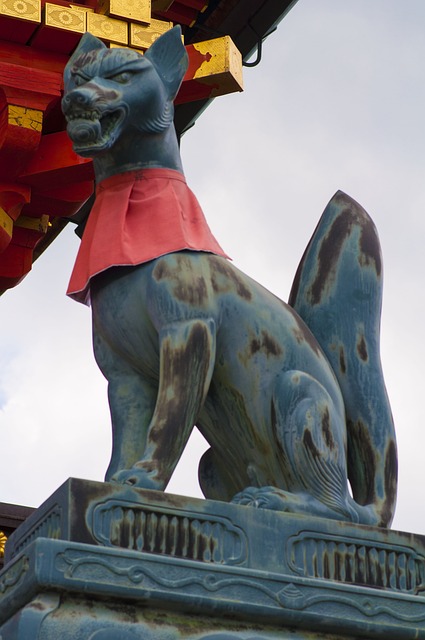
The “Reiko-zuka” (Spirit Fox Mound) near the inner sanctuary is a must-see power spot. Here, over 1,000 fox statues of various sizes have been offered by devotees whose prayers were answered. From moss-covered ancient statues to newly placed offerings, this collection testifies to centuries of deep faith. Many believe that visiting the Reiko-zuka increases the likelihood of having one’s prayers answered.
Toyokawa Inari’s history is intertwined with some of Japan’s most famous historical figures. During the Warring States period, the powerful lord Imagawa Yoshimoto prayed here for victory before battles, including before the fateful Battle of Okehazama. In the Edo period, Ooka Tadasuke, the legendary magistrate of Edo (Tokyo), was a devoted worshipper who invited a branch of Toyokawa Inari to be established in the capital—this became the present-day Toyokawa Inari Tokyo Betsuin in Akasaka.
After the Meiji Restoration, industrialists like Shibusawa Eiichi and numerous politicians made pilgrimages here, spreading Toyokawa Inari’s reputation as an especially efficacious temple for business success throughout Japan.
Spiritual Benefits
Toyokawa Inari’s most famous benefit is business prosperity. The principal deity, Toyokawa Dakini Shinten, is believed to be a celestial being who governs treasure and wealth. Business owners, entrepreneurs, and merchants have long sought blessings here for commercial success. During New Year, businesspeople from across Japan flock to pray for prosperity in the coming year.
The temple’s “Yuzukin” (fortune money) charm is particularly popular for attracting wealth. Carrying this small charm in your wallet is said to ensure you’ll never lack for money.
Beyond business success, Toyokawa Inari is known for blessings of family safety and protection from bad luck. Many visitors come for yakuyoke (purification during unlucky years). Prayer services at the main hall take about 20 minutes and start from 5,000 yen.
The “Enmusubi Inari” (Matchmaking Inari) within the temple grounds is popular among those seeking romantic fulfillment. Tying a red string and making a wish is said to bring wonderful encounters and relationships.
“I visited when I was considering starting my own business. I kept the Yuzukin charm in my wallet, and six months later, an unexpected investment opportunity came my way. I successfully launched my company.” (40s, Male, Nagoya)
“My family visits every New Year. I love the unique atmosphere of the Reiko-zuka—visiting always makes me feel refreshed and focused.” (50s, Female, Toyohashi)
Best Times to Visit
From mid to late April, the temple’s approximately 200 cherry trees burst into bloom. The combination of cherry blossoms and the thousand red banners creates a uniquely beautiful scene found only at Toyokawa Inari. The weather is pleasant, making it ideal for worship. Golden Week can be crowded, but weekdays offer a more relaxed experience.
The Toyokawa Summer Festival in August features illuminated grounds creating a magical atmosphere. However, summers in Aichi are extremely hot—heat stroke precautions are essential. Early morning or evening visits are recommended.
November’s Autumn Grand Festival draws many worshippers. As the season progresses, ginkgo and maple trees throughout the grounds display beautiful autumn colors. The comfortable temperatures make this an ideal time for thoroughly exploring the temple.
The first three days of New Year are the busiest, with approximately 1.5 million visitors. Expect long queues throughout New Year’s Day—mid-January visits are recommended for a calmer experience. The Setsubun Festival on February 3rd features bean-throwing ceremonies and draws large crowds.
- Early Morning (6:00-8:00): Few visitors; enjoy the serene atmosphere and excellent photography conditions
- Mid-Morning (9:00-11:00): Temple office opens for charms and goshuin
- Afternoon (1:00-3:00): Combine worship with lunch in the temple town
- Evening (4:00-5:00): Beautiful views of the thousand banners in sunset light
Worship and Visitor Guide
As Toyokawa Inari is a Buddhist temple, worship practices differ from Shinto shrines:
1. At the Main Gate: Bow slightly before entering
2. At the Temizuya: Purify hands and mouth (same as at shrines)
3. At the Main Hall: Place palms together in prayer and bow. Do NOT clap (as you would at a Shinto shrine)
4. Incense Offering: Light incense at the burner in front of the main hall. Wafting the smoke over yourself is believed to purify the body
Main Hall
The current structure was rebuilt in 1930 and features an impressive irimoya-style roof. The interior houses the principal deity and is the center of worship.
Senbon Nobori (Thousand Banners)
Red banners line the pathway from the main hall to the inner sanctuary. Visitors can donate a banner (from 3,000 yen) with their name and wishes inscribed.
Reiko-zuka (Spirit Fox Mound)
Over 1,000 fox statues crowd this mystical space—offerings from worshippers whose prayers were answered. Statues range from ancient, moss-covered figures to recent additions.
Oku-no-in (Inner Sanctuary)
Located at the deepest part of the temple grounds, this is considered an especially powerful spiritual spot that many visitors seek out.
Daikoku-do
This hall enshrines Daikokuten, the god of fortune and wealth, making it popular with those seeking financial blessings.
- Goshuin: Three varieties available, 300 yen each. Both pre-written and hand-written options
- Yuzukin: Fortune money charm popular for wealth attraction (500 yen)
- Business Success Charm: For commercial prosperity (800 yen)
- Matchmaking Charm: For romantic fulfillment (800 yen)
- Protection Charm: For safety from misfortune (800 yen)
Basic Information
Address: 1 Toyokawa-cho, Toyokawa City, Aichi Prefecture 442-0033
By Train:
- 5-minute walk from JR Iida Line “Toyokawa Station”
- 5-minute walk from Meitetsu Toyokawa Line “Toyokawa-Inari Station”
- About 60 minutes from Nagoya Station by Meitetsu limited express
By Car:
- About 10 minutes from Tomei Expressway “Toyokawa IC”
- About 15 minutes from Shin-Tomei Expressway “Shinshiro IC”
General Information
- Visiting Hours: Grounds open 24 hours (Main Hall: 5:00-18:00)
- Closed: Never
- Admission: Free
- Recommended Time: 60-90 minutes
- Parking: Paid parking available (500 yen/day for regular vehicles)
- Official Website: https://www.toyokawainari.jp/
- Phone: 0533-85-2030
Nearby Attractions and Dining
Toyokawa Inari Omotesando
The temple’s approach is lined with approximately 100 souvenir shops and restaurants. The famous “inari-zushi” (fried tofu pocket sushi) is a must-try—perfect for eating while strolling.
Mikawa Kokubunji Ruins (10 minutes by car)
The remains of a Nara-period national temple, now preserved as a historical park for history enthusiasts.
Toga Shrine (20 minutes by car)
The ichinomiya (first-ranked shrine) of Mikawa Province. Many visitors combine this with Toyokawa Inari for a complete spiritual tour.
Monzen Soba Yamabiko (1-minute walk)
- Genre: Soba and Udon
- Specialties: Kitsune Soba (850 yen), Inari-zushi Set (1,200 yen)
- Hours: 10:00-17:00
- Closed: Wednesdays
Okitsune Honpo (2-minute walk)
- Genre: Inari-zushi and Japanese Sweets
- Specialties: Original Okitsune Burger (350 yen), Inari-zushi (6 pieces, 600 yen)
- Hours: 9:00-17:00
- The originator of Toyokawa’s famous inari-zushi
Kissaten Matsuya (3-minute walk)
- Genre: Café and Light Meals
- Specialties: Ogura Toast (450 yen), Blend Coffee (400 yen)
- Hours: 8:00-18:00
- A charming retro Showa-era café
Unagi Matsuya (5-minute walk)
- Genre: Eel Cuisine
- Specialties: Una-ju (3,500 yen), Hitsumabushi (4,000 yen)
- Hours: 11:00-14:00, 17:00-20:00
- Authentic eel using Mikawa-raised fish
Local Souvenirs
- Inari-zushi: Toyokawa Inari’s signature food—each shop has its own recipe
- Kitsune Senbei: Fox-shaped rice crackers
- Toyokawa Inari Manju: Buns stamped with a fox design
- Inari Monaka: Fox-shaped wafer sweets with sweet bean filling
Model Courses
Half-Day Course (About 3 hours)
10:00 Toyokawa Inari worship (90 min)
11:30 Inari-zushi lunch on Omotesando (45 min)
12:30 Temple town strolling and souvenir shopping (45 min)
Full-Day Course (About 6 hours)
9:00 Toyokawa Inari worship (90 min)
10:30 Brunch on Omotesando (60 min)
11:30 Temple town exploration (60 min)
12:30 Drive to Toga Shrine
13:00 Toga Shrine worship (60 min)
14:30 Mikawa Kokubunji Ruins (45 min)
15:30 Café break in Toyokawa City
Visitor Reviews
“I Truly Felt Business Prosperity” (50s, Male, Shizuoka)
“I run a restaurant and visit every New Year. Without fail, my sales improve in years when I come here. I always keep the Yuzukin charm in my wallet. The atmosphere at Reiko-zuka is unique—I never tire of visiting.”
“Overwhelming Scale” (30s, Female, Tokyo)
“I was overwhelmed by the power of the thousand banners and the Reiko-zuka. The scale was beyond my imagination, and I got plenty of Instagram-worthy photos. The inari-zushi was delicious too—perfect for a day trip.”
“Our Family’s Regular Spot” (40s, Female, Nagoya)
“I’ve been coming with my family since childhood. The grounds are spacious but mostly flat, so it’s easy to bring small children. Eating our way through the temple town is always a highlight.”
Frequently Asked Questions
Q: Does the parking lot get crowded?
A: The first three days of New Year and festival days see heavy congestion. Weekdays and early mornings usually offer easy parking. Many private parking lots are also available nearby.
Q: Can I receive a goshuin?
A: Three types of goshuin are available for 300 yen each. Both pre-written and hand-written options are offered, though only pre-written may be available during busy periods.
Q: Are pets allowed?
A: Pets are not permitted on the temple grounds.
Q: Is wheelchair access available?
A: The area around the main hall is barrier-free. However, the path to the Reiko-zuka includes stairs and is not wheelchair accessible.
Q: How long does a visit take?
A: About 30 minutes for just the main hall. Allow 60-90 minutes to see the Reiko-zuka and Oku-no-in as well.
Summary
Toyokawa Inari stands as one of Japan’s Three Great Inari sites, renowned for blessings of business prosperity and financial fortune. Its unique nature as a Buddhist temple centered on Inari worship, the spectacular thousand banners, and the mystical fox mound make it an unforgettable destination.
For over 500 years, historical figures from Imagawa Yoshimoto to Ooka Tadasuke have sought blessings here. Today, that spiritual power continues to draw visitors from across Japan. Just one hour from Nagoya, the temple offers easy access, and combined with the temple town’s famous inari-zushi, it makes for a perfect day trip.
Whether you’re seeking business success, drawn to unique spiritual atmospheres, or simply love exploring power spots, Toyokawa Inari delivers an extraordinary experience. Come discover the blessings of business prosperity and good fortune at this remarkable temple.
—
💡 Want to Find Your Ideal Power Spot?
Beyond this location, Japan has countless power spots waiting to be discovered. If you’d like to find the power spot that matches you best, try our free compatibility diagnosis (takes only 3 minutes).
→ Take the Free En-Profile Diagnosis
—
*Information in this article is current as of January 2025. Please check the official website for the latest information before your visit.*
💡 あなたに最適なパワースポットを知りたい方は
無料の相性診断をお試しください(3分で完了)
📚 この記事を読んだ方におすすめ
※ 関連記事はWordPress管理画面で設定してください