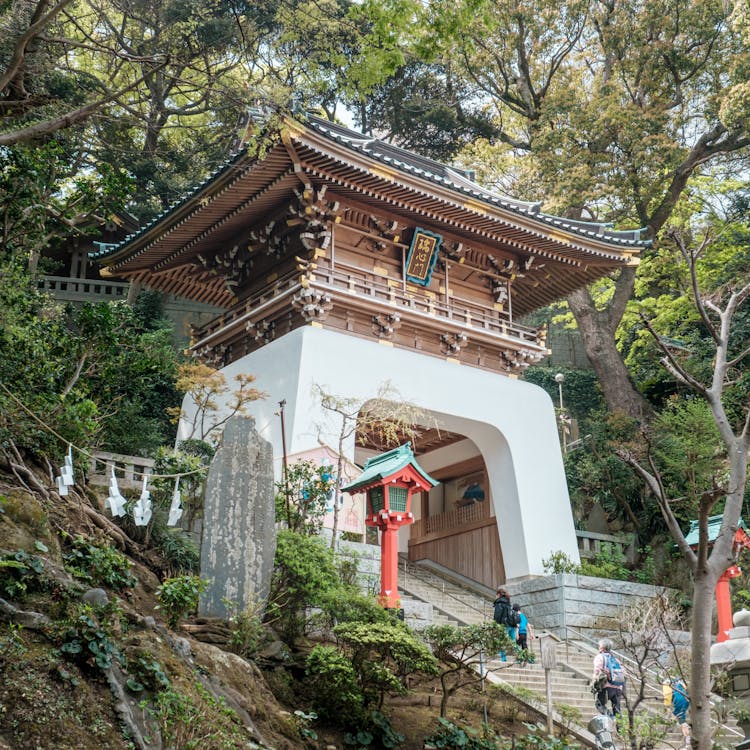
Located on Enoshima Island, the symbol of Shonan in Fujisawa City, Kanagawa Prefecture, Enoshima Shrine is a venerable shrine known as one of Japan’s Three Great Benzaiten. Said to have been founded during the reign of Emperor Kinmei approximately 1,500 years ago, this ancient shrine comprising three sanctuaries—Hetsu-miya, Nakatsu-miya, and Okutsu-miya—draws approximately 1.5 million worshippers annually.
The enshrined deities are three sister goddesses—Tagitsuhime-no-Mikoto, Ichikishimahime-no-Mikoto, and Tagorihime-no-Mikoto. Collectively known as “Enoshima Okami,” they are known for blessings particularly appealing to women, including artistic talent enhancement, financial fortune, and matchmaking.
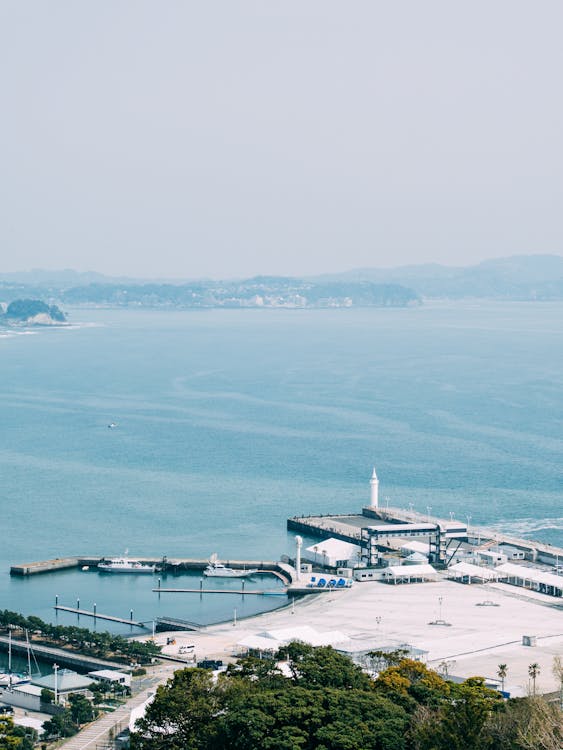
As a sacred site of Benzaiten worship and a power spot for romantic fulfillment, Enoshima Shrine enjoys tremendous popularity among couples and groups of women. The spectacular views overlooking Sagami Bay, historic shrine buildings, and mysterious sea caves—this power spot offers a special experience to all who visit.
The Allure of This Sacred Site
History and Origins
Enoshima Shrine’s founding is said to date to 552 (13th year of Emperor Kinmei’s reign). According to legend, a heavenly maiden descended from heaven and created the island, after which a deity was enshrined.
During the Nara period, many eminent monks including En no Ozunu, Kukai, and Nichiren practiced asceticism here. Particularly during the Kamakura period, Minamoto no Yoritomo prayed here for victory before his campaign against the Oshu Fujiwara clan, and the shrine continued to gather the faith of the warrior class.
During the Edo period, “Enoshima pilgrimage” became hugely popular among common people. Travelers on the Tokaido road would stop at Enoshima to worship Benzaiten, making it a major leisure activity. The bustling scenes are depicted in Utagawa Hiroshige’s ukiyo-e prints, conveying the prosperity of those times.
Due to the Meiji-era separation of Shinto and Buddhism, Benzaiten came to be enshrined as the Eight-Armed Benzaiten statue in the Hōanden hall, but she is still beloved as “Benten-sama” today, drawing worship from many people including those in the entertainment and music industries.
Architecture and Natural Features
Enoshima Shrine comprises three sanctuaries: Hetsu-miya, Nakatsu-miya, and Okutsu-miya.
Hetsu-miya: Located closest to the island entrance, enshrining Tagitsuhime-no-Mikoto. Founded in 1206 (Kennei 1) by Minamoto no Sanetomo. The current shrine building was renovated in 1976 (Showa 51). Within the grounds is “Hōanden,” housing one of Japan’s Three Great Benzaiten, the “Eight-Armed Benzaiten” statue (National Important Cultural Property).
Nakatsu-miya: Located mid-island, enshrining Ichikishimahime-no-Mikoto. Founded in 853 (Ninju 3) by Jikaku Daishi Ennin. The vermillion shrine building is beautiful, and views of Sagami Bay can be seen from the grounds.
Okutsu-miya: Located at the island’s far end, enshrining Tagorihime-no-Mikoto. The ceiling of the worship hall features a painting of “The All-Seeing Turtle,” which mysteriously seems to meet your eyes from any angle.
At the far end of Enoshima are sea caves called “Iwaya.” These caves formed by wave erosion have been considered a sacred site of dragon god worship since ancient times and are known as a place where Kobo Daishi and Saint Nichiren practiced asceticism.
What Makes This Spot Special
What sets Enoshima Shrine apart from other shrines is that “the entire island is a power spot.”
Walking the approach path and progressing from Hetsu-miya to Nakatsu-miya to Okutsu-miya, you gradually leave the everyday world behind and feel enveloped in sacred air. The sense of accomplishment upon reaching the Iwaya caves at the far end and the mystical energy there are exceptional.
The shrine is also famous as a power spot for “romantic fulfillment.” At the “Lovers’ Hill and Dragon Love Bell” in the grounds, it is said that the sound of bells rung by couples deepens their bond. Couples continuously dedicate matchmaking ema (votive tablets).
Since Benzaiten is also the deity of performing arts and music, many artists and musicians visit to pray for success.
Spiritual Benefits and Effects
Known Spiritual Benefits
Enoshima Shrine is known for various blessings:
Matchmaking & Romance: Enshrining three sister goddesses gives powerful matchmaking blessings. The “Lovers’ Hill and Dragon Love Bell” is popular as a couples’ sacred spot.
Artistic Talent & Talent Blossoming: Benzaiten is the deity of performing arts and music. Many entertainment professionals including artists, musicians, and actors visit.
Financial Fortune & Money Luck: Benzaiten is also a deity of wealth. Washing money at “Zeniarai Hakuryuou” (Money-Washing White Dragon King) is said to increase financial fortune.
Beauty & Beautiful Appearance Prayers: Benzaiten is also a goddess of beauty, said to offer blessings that enhance women’s beauty.
Winning Fortune & Victory Prayers: From the history of Minamoto no Yoritomo praying for victory, there are also blessings for competitive matters.
The Unique Energy of This Site
What many worshippers sense at Enoshima Shrine is “feminine energy” and “water power.”
This shrine enshrining three sister goddesses is filled with soft, nurturing feminine energy. Many women report that worshipping here helps them recognize their inner beauty and charm.
Also, being an island surrounded by sea, the water energy is extremely powerful. Water symbolizes purification, washing away negative things accumulated in body and mind.
Visitor Testimonials
> “The shrines are beautiful, set within the serene forest of Enoshima. It’s a beautiful shrine with a lot of good places to take pictures!”
> — TripAdvisor review
> “The views that you get in between the three shrines are breathtaking! Beautiful buildings and nature with some nice views of Sagami Bay.”
> — TripAdvisor review
> “When you arrive at the top, you can see the bay and island of Enoshima spread out before you. It is a wonderful experience to visit the shrine while enjoying the beautiful view.”
> — TripAdvisor review
(Based on visitor reviews from TripAdvisor)
Best Times to Visit
Spring (March–May)
Late March to early April features beautiful cherry blossoms. Cherry trees bloom along the approach, and you can enjoy spring on Enoshima. Golden Week is very crowded, but weekdays are relatively empty. The mild weather is ideal for worship.
Recommendation: ★★★★★
Summer (June–August)
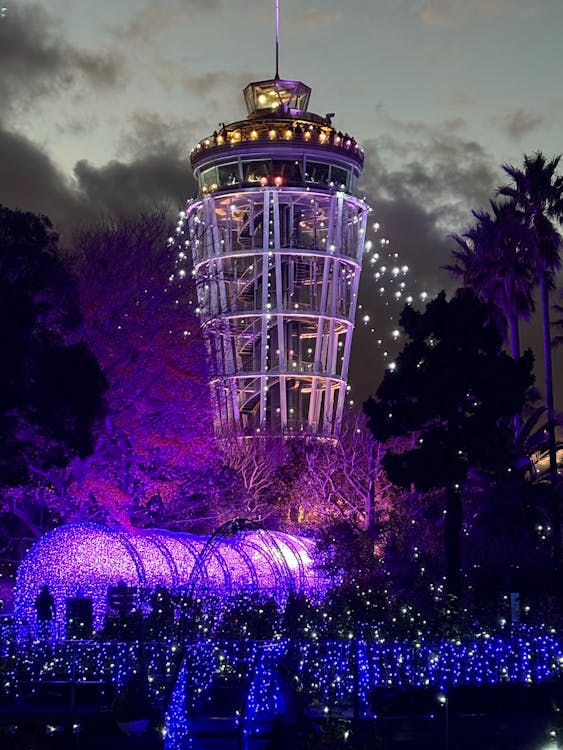
The most bustling season for Enoshima. Very crowded with beachgoers and worshippers. Summer nights feature the illumination event “Enoshima Lanterns,” creating a fantastical atmosphere. Heat protection is essential.
Recommendation: ★★★☆☆
Autumn (September–November)
Tourist season calms down for leisurely worship. October–November has clear air, with spectacular views of Sagami Bay and Mount Fuji. Peak autumn foliage is mid to late November.
Recommendation: ★★★★★
Winter (December–February)
“Enoshima Sea Candle Illumination” (late November–February) is a popular winter event. New Year’s worship draws about 100,000 visitors, causing major crowds. After mid-January it’s relatively empty, with Mount Fuji clearly visible in the crisp air.
Recommendation: ★★★★☆
Best Times of Day
Early Morning (6:00–8:00 AM): Few worshippers for a quiet shrine experience. Ideal for photography.
Morning (9:00 AM–12:00 PM): Amulet and goshuin reception begins. Relatively empty.
Afternoon (1:00–5:00 PM): Most crowded time. Especially busy on weekends and holidays.
Evening (5:00 PM–Sunset): Sunset over Sagami Bay is spectacular. Winter features illuminations.
Visitor’s Guide
Basic Worship Etiquette
1. Pass through the Bronze Torii: Bow at the large torii at Enoshima’s entrance before entering the island.
2. Climb the Approach: Pass through the shopping street and go up via stone steps or “Escar” (paid escalator).
3. Worship at Hetsu-miya: Purify at the temizuya, bow twice, clap twice, bow once. Also view the Eight-Armed Benzaiten at Hōanden (admission ¥200).
4. To Nakatsu-miya: Worship at the beautiful vermillion shrine building. Enjoy the view from the observation deck.
5. To Okutsu-miya: Worship at the farthest shrine. The “All-Seeing Turtle” ceiling painting is a must-see.
6. Visit the Iwaya Caves: Experience the sacred site of dragon god worship in the sea caves (admission ¥500).
This Spot’s Special Features
Zeniarai Hakuryuou (Money-Washing White Dragon King): Located in Hetsu-miya grounds; washing money here increases financial fortune.
Lovers’ Hill & Dragon Love Bell: A couples’ sacred spot. Ring the bell and attach a padlock to the fence for love fulfillment.
Eight-Armed Benzaiten: One of Japan’s Three Great Benzaiten, enshrined in Hōanden. National Important Cultural Property.
Enoshima Sea Candle: Observation lighthouse. The 360-degree panorama from 101.56 meters above sea level is spectacular.
Iwaya Caves: Sacred site of dragon god worship where Kobo Daishi and Saint Nichiren practiced.
Dress Code and What to Bring
- Clothing: The approach has many slopes and stairs, so comfortable walking shoes are essential. Avoid heels.
- What to Bring: Offering coins, goshuin stamp book, camera, drinks
- Note: Those who find stairs difficult can use the “Escar” (paid escalator).
Basic Information
Access
Address: 2-3-8 Enoshima, Fujisawa City, Kanagawa Prefecture
By Train:
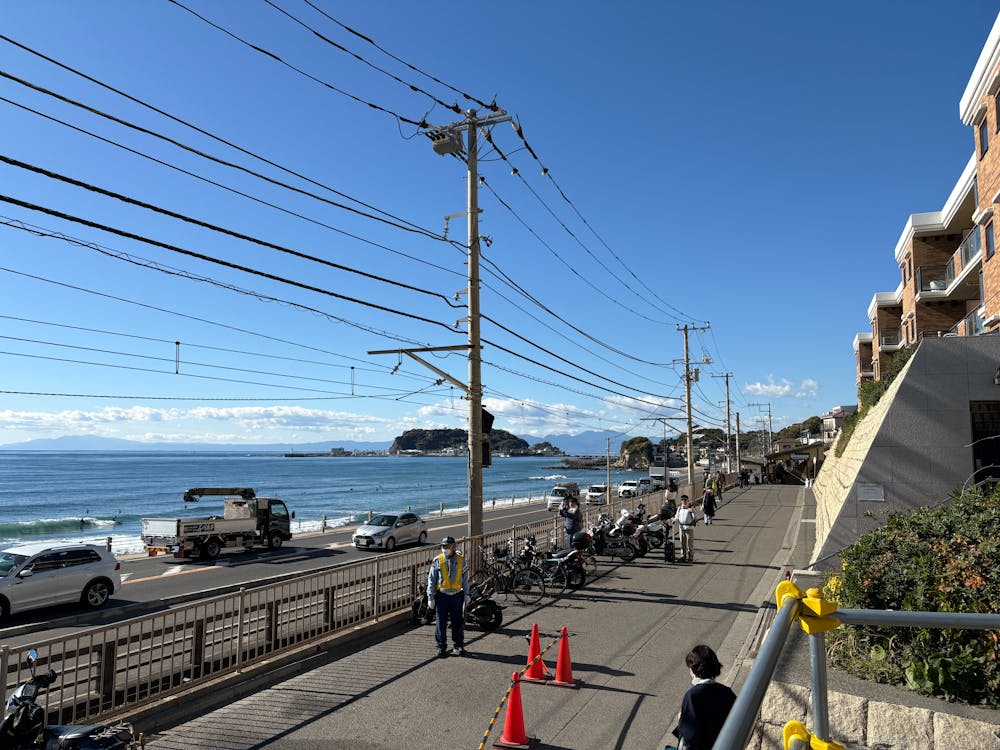
- About 20-minute walk from Odakyu Enoshima Line “Katase-Enoshima Station”
- About 25-minute walk from Enoshima Electric Railway “Enoshima Station”
- About 27-minute walk from Shonan Monorail “Shonan-Enoshima Station”
By Car:
- About 1 hour via Yokohama Shindo → Route 1 → Route 134
- Parking: Enoshima Nagisa Parking (¥400+/hour) and multiple others
Visiting Information
- Worship Hours: Grounds freely accessible (Hōanden 8:30 AM–4:30 PM)
- Closed: None
- Admission: Free (Hōanden ¥200, Iwaya ¥500)
- Escar: Adults ¥360 (3 sections)
- Duration: 30 min for Hetsu-miya only, 2–3 hours for all three shrines + Iwaya
- Official Website: https://enoshimajinja.or.jp/
- Contact: 0466-22-4020
Area Information
Nearby Attractions
Enoshima Aquarium (15-min walk)
Popular for its large tank recreating Sagami Bay and Jellyfish Fantasy Hall. Dolphin shows are a highlight. Admission ¥2,500.
Enoshima Samuel Cocking Garden (on island)
Tropical-atmosphere botanical garden. Enoshima Sea Candle (observation lighthouse) is located here. Admission ¥200.
Katase Nishihama & Kugenuma Beach (10-min walk)
Representative Shonan beaches. Bustling with swimmers and surfers in summer. Scenic spot with views of Mount Fuji.
Recommended Restaurants
Enoshima-tei (along approach)
- Established in Meiji 42 (1909)
- Specialties: Fresh Shirasu (whitebait) Bowl (¥1,650), Boiled Shirasu Bowl (¥1,430)
- Hours: 10:00 AM–sunset
Kaisaku (along approach)
- Fresh seafood
- Specialties: Grilled Turban Shell (market price), Seafood Bowl (¥2,200)
- Hours: 9:00 AM–6:00 PM
Il Chianti Cafe Enoshima (on island)
- Italian with popular scenic terrace
- Specialties: Shirasu Pizza (¥1,650), various pasta
- Hours: 11:00 AM–9:00 PM
Asahi Honten (along approach)
- Originator of famous “Whole-Grilled Octopus Senbei”
- Specialty: Whole-Grilled Octopus Senbei (¥400)
- Hours: 9:00 AM–6:00 PM
Souvenirs & Local Products
- Shirasu (Whitebait): Enoshima specialty. Fresh, boiled, tsukudani, etc.
- Enoshima Tako Senbei: Crispy crackers made from pressed whole octopus
- Meoto Manju: Classic Enoshima souvenir. White and brown varieties
- Enoshima Beer: Locally brewed craft beer
Model Itineraries
Half-Day Course (approx. 3 hours)
10:00 AM Arrive at Katase-Enoshima Station
10:20 AM Cross Benten Bridge to Enoshima
10:40 AM Hetsu-miya worship, view Benzaiten at Hōanden
11:15 AM Nakatsu-miya worship
11:45 AM Okutsu-miya worship
12:15 PM Lunch (Fresh Shirasu Bowl)
1:15 PM End
Full-Day Course (approx. 6 hours)
9:30 AM Arrive at Katase-Enoshima Station
9:50 AM To Enoshima
10:15 AM Hetsu-miya, Zeniarai Hakuryuou
10:45 AM Nakatsu-miya, Lovers’ Hill & Dragon Love Bell
11:15 AM Samuel Cocking Garden, Sea Candle
12:00 PM Okutsu-miya
12:30 PM Lunch
1:30 PM Iwaya Caves (1 hour)
2:45 PM Shopping street stroll, souvenir shopping
3:30 PM Enoshima Aquarium (1.5 hours)
5:00 PM End
Visitor Reviews and Experiences
> “Walking the path from Hetsu-miya through to Okutsu-miya, you gradually feel more immersed in the sacred atmosphere. The Iwaya caves at the very end have a mysterious energy.”
> — Google Maps review
> “The escalators are very helpful, especially in summer heat, but I recommend walking by the stairs at least once to enjoy the full experience of the approach.”
> — TripAdvisor review
Practical tips from reviewers: wear comfortable shoes as there are many steps, visit early morning to avoid crowds, bring coins for offerings at each of the three shrines, and check the shirasu fishing season (fresh whitebait is unavailable January to mid-March).
(Based on visitor reviews from TripAdvisor and Google Maps)
Frequently Asked Questions
Q: Do I need to visit all three shrines?
A: If time is limited, just Hetsu-miya is fine, but visiting all three is recommended if possible. Each has different blessings.
Q: There are many stairs—is it okay for elderly visitors?
A: There is a paid escalator called “Escar” that easily reaches the Hetsu-miya and Nakatsu-miya area. However, stairs remain for Okutsu-miya and Iwaya.
Q: Can I receive goshuin stamps?
A: Available at Hetsu-miya’s shrine office (¥500). Original goshuin stamp books (¥1,500) are also available.
Q: When can I eat fresh shirasu?
A: Fresh shirasu is unavailable during the fishing ban from January to mid-March. Boiled shirasu is served year-round.
Summary
Enoshima Shrine, enshrining one of Japan’s Three Great Benzaiten, is a power spot representing Shonan. With approximately 1,500 years of history, this shrine is known for blessings particularly appealing to women, including matchmaking and romance, artistic talent enhancement, and financial fortune improvement.
The worship journey across the island from Hetsu-miya to Nakatsu-miya to Okutsu-miya is truly a “sacred pilgrimage.” The sensation of gradually leaving the everyday world and being enveloped in sacred air is a special experience available only here. The sense of accomplishment upon reaching the Iwaya caves at the far end is also exceptional.
Access from central Tokyo is convenient, making day trips entirely feasible. Gazing at the Shonan sea, savoring fresh shirasu, receiving Benzaiten’s blessings—time spent on Enoshima will surely become an unforgettable memory.
—
Want to discover the power spot that’s right for you?
Beyond this location, Japan is home to countless power spots. To find the one most suited to you, try our free compatibility assessment (takes just 3 minutes).
→ Take the Free En Profile Assessment
—
Information in this article is current as of December 2025. Please verify the latest details via the official website before visiting.
あなたに最適なパワースポットを知りたい方へ